80 kruna 1919
Market Prices
8 salesAbout This Note
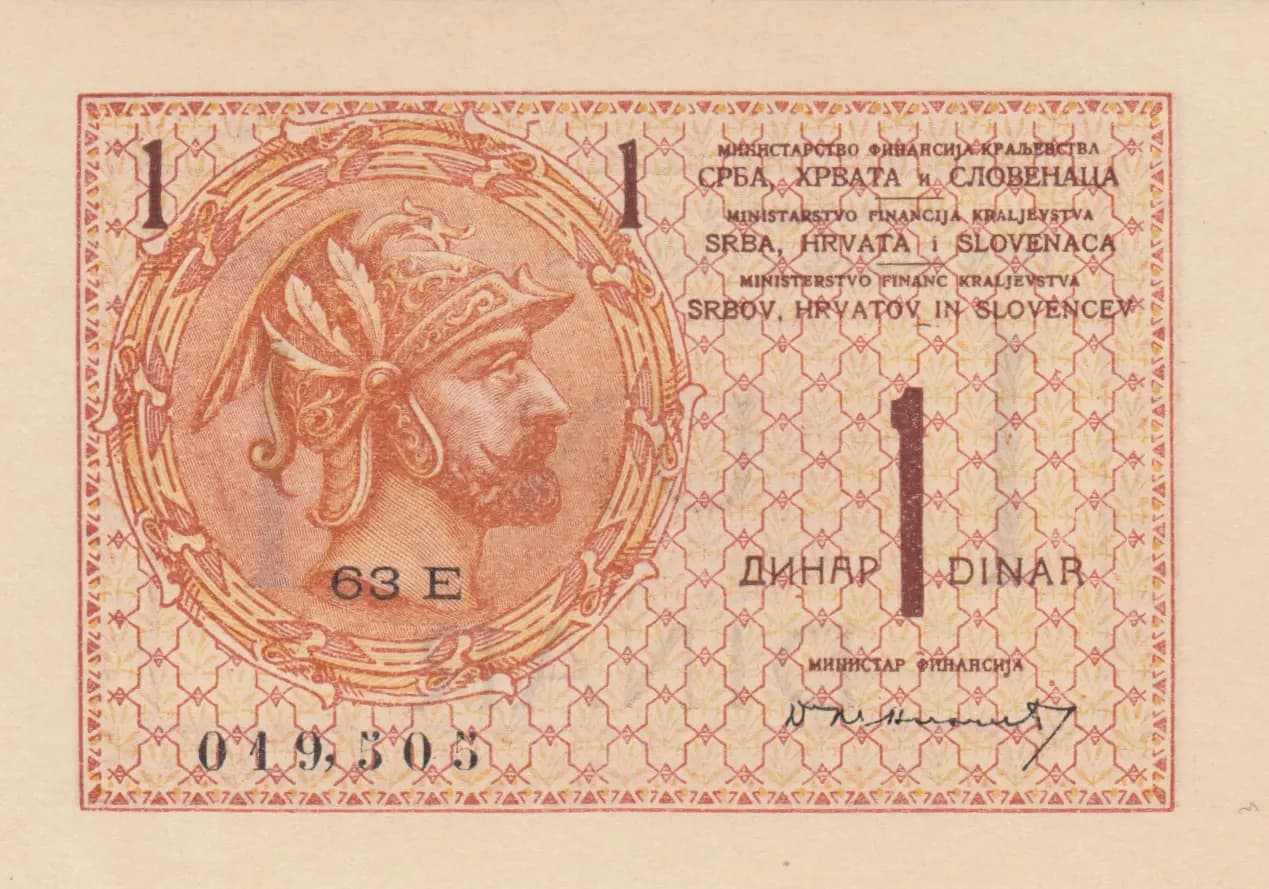
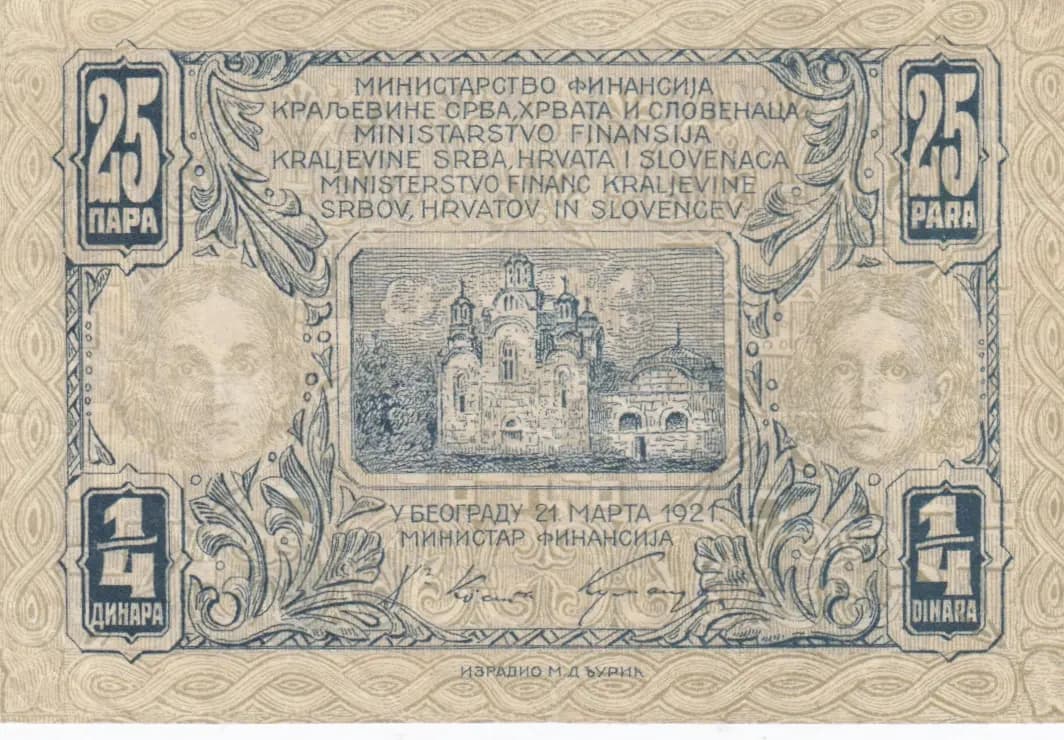
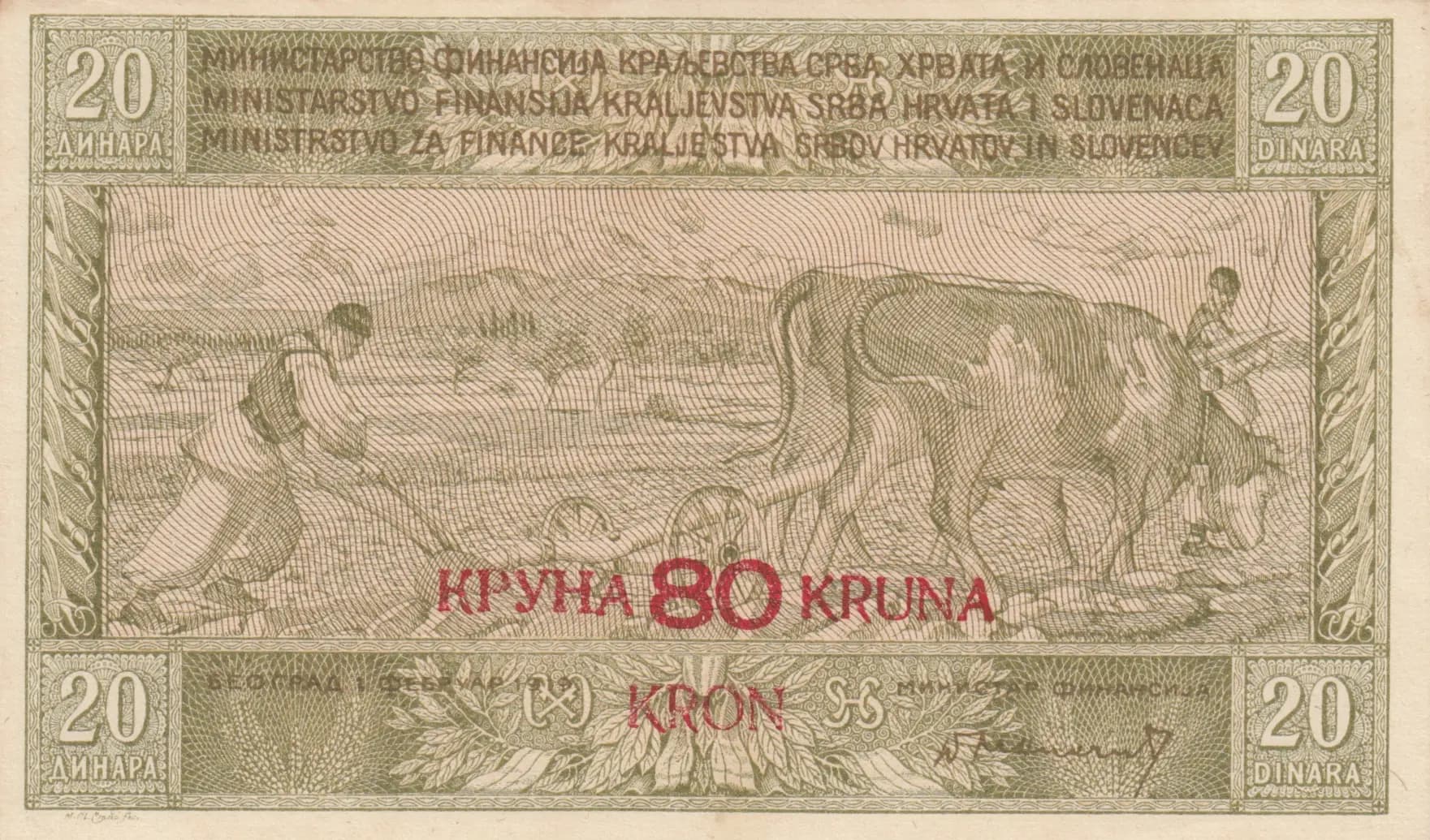
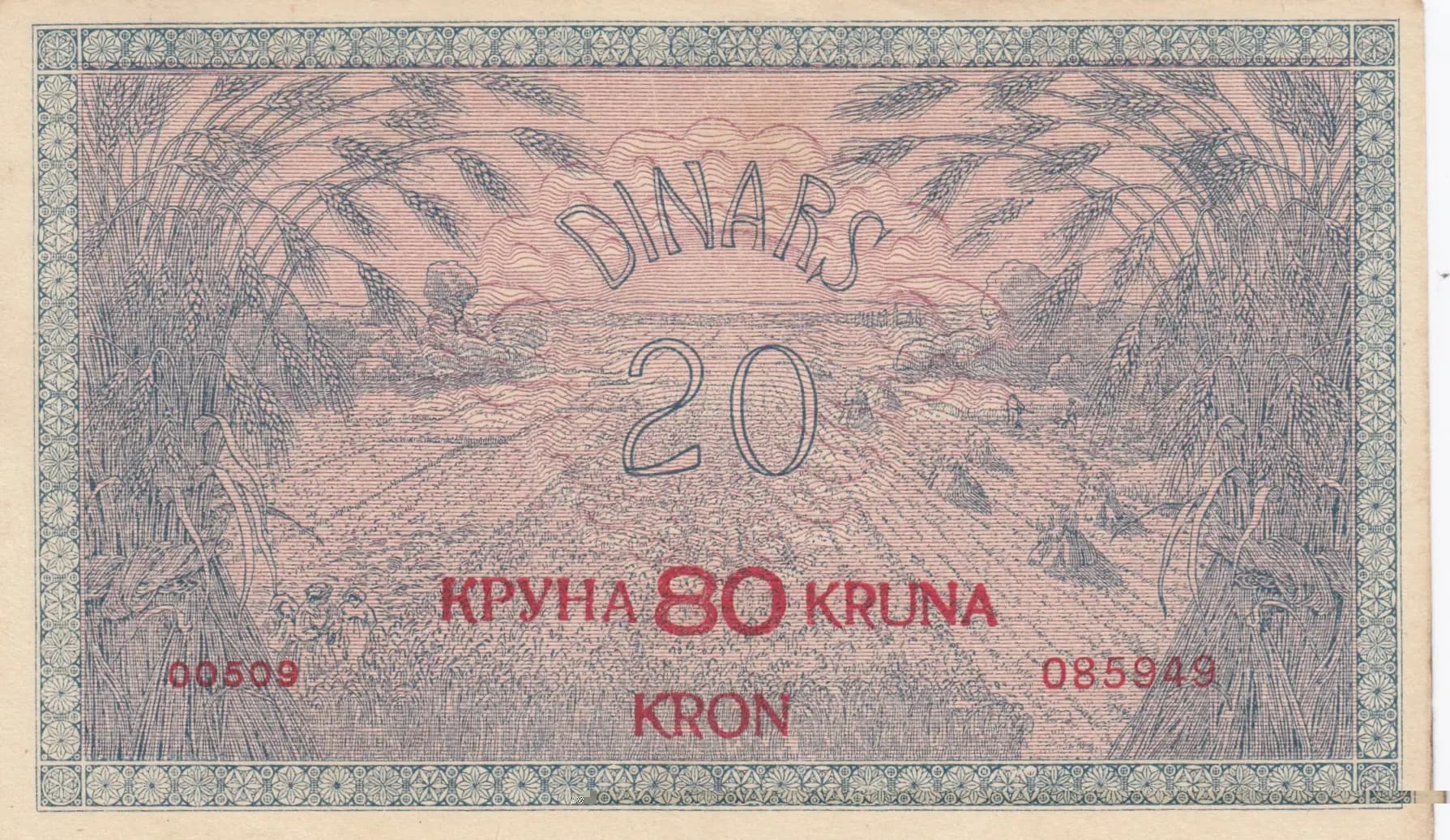
This is a striking example of the 1919 Yugoslav 80 Kruna (overprinted on 20 Dinara), issued by the Ministerstvo Financija of the newly formed Kingdom of Serbs, Croats and Slovenes. The note features beautifully engraved agricultural imagery on both sides—plowing with oxen on the reverse and wheat fields with a radiant sun on the obverse—reflecting the agrarian identity of the young nation. Graded AU, this specimen exhibits the warm patina of age with excellent structural integrity, displaying fine line engraving detail throughout and the characteristic red overprint text showing the currency conversion.
Common. The 1919 Yugoslav issues were produced in substantial quantities as the foundational currency of the new nation, and while early 20th-century Balkan notes have moderate collector appeal, this denomination remains readily available in the market. eBay pricing data confirms this assessment: Fine examples sell for $22–$52, VG grades for around $67, and even PMG 63 examples have sold for approximately $575, suggesting a healthy supply. AU specimens are less common than circulated grades but do not command premium rarity prices.
This banknote was issued in early 1919, immediately following the collapse of the Austro-Hungarian Empire and the formation of the Kingdom of Serbs, Croats and Slovenes (which would later become Yugoslavia). The imagery—oxen plowing, wheat fields, and a radiant sun—symbolized the nation's agrarian foundation and optimistic future. The dual currency denomination (80 Kruna on 20 Dinara) reflects the transitional monetary chaos of the period, as the new state attempted to establish its own currency while managing the legacy of Austro-Hungarian crowns still in circulation.
The obverse (front) depicts an idealized agricultural landscape dominated by a rising or radiant sun symbol in the background, flanked by wheat or grain fields on both sides, representing the nation's agricultural prosperity. The reverse (back) features a classical allegorical female figure in repose, posed among agricultural or landscape elements in the engraving tradition, symbolizing fertility, harvest, or the nation itself. Both sides employ ornamental geometric border patterns with repeating floral-like motifs and laurel wreath designs in the corners, typical of early 20th-century Central European banknote design. The composition emphasizes the pastoral virtues of the new South Slavic state.
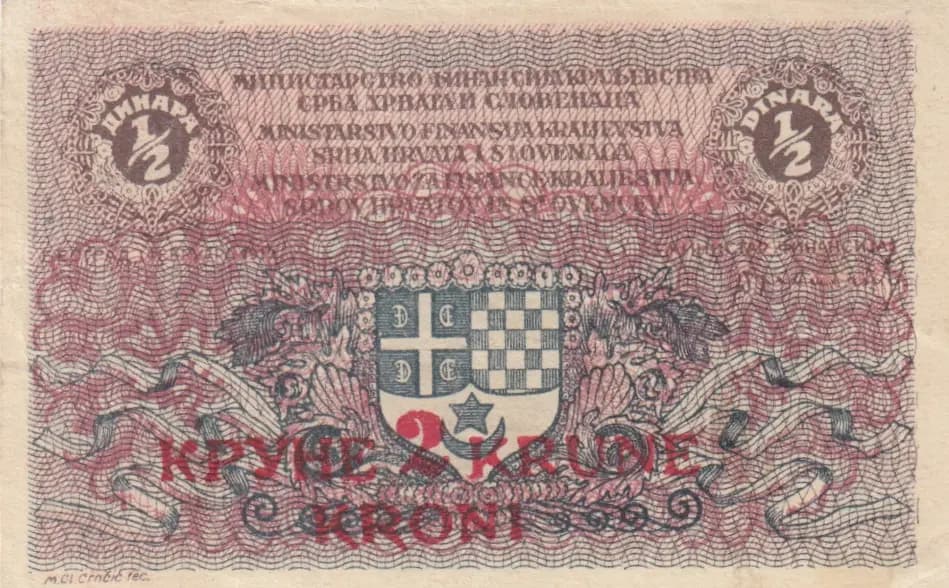
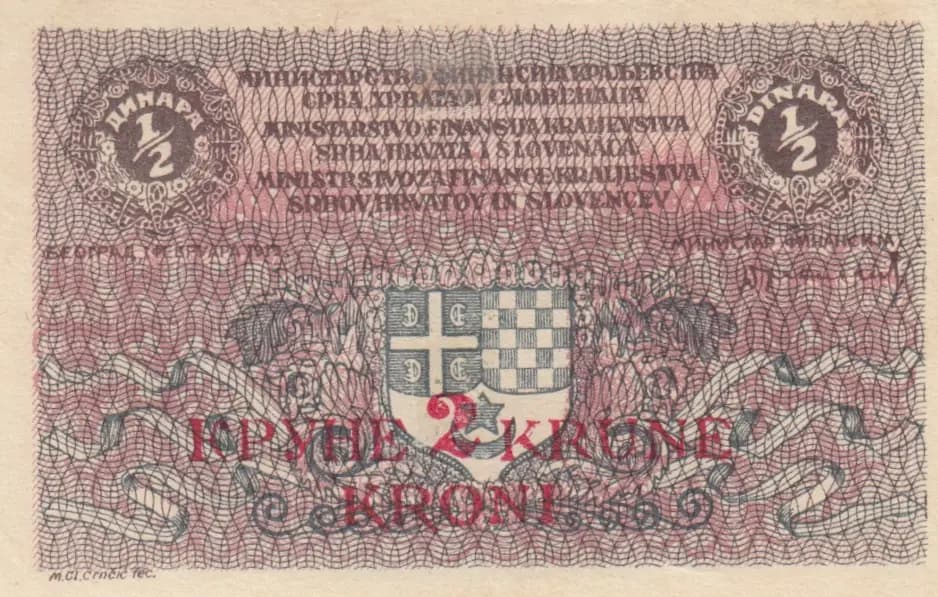
Front Side: '20 DINARA' (20 Dinara); 'KRUNA 80 KRUNA' (Crown 80 Crown); 'KRON' (Crown); Serial numbers '005090' and '085944' in red. Back Side: 'ДИНАРА' (Dinara in Cyrillic); 'МИНИСТАРСТВО ФИНАНСИЈА КРАЉЕВСТВА СРБЕ ХРВАТСКЕ И СЛОВЕНАЦА' (Ministry of Finance of the Kingdom of Serbs, Croats and Slovenes in Serbian Cyrillic); 'MINISTERSTVO FINANCIJA KRÁLOVSTVÍ SRBOV HRVATOV IN SLOVENCEV' (Ministry of Finance of the Kingdom of Serbs, Croats and Slovenes in multilingual/Latin script); 'KRUNA 80 KRUNA' (Crown 80 Crown); 'KRON' (Crown).
This note was produced using fine line engraving, the dominant security printing method of the era. The intricate linework visible throughout both sides, the precision of the geometric border patterns, and the detailed rendering of the allegorical figures and landscape elements are characteristic of steel plate engraving. The red serial numbers and overprint text ('KRUNA 80 KRUNA') were applied as secondary printing, likely via lithography or letterpress. This was standard practice for the Austro-Hungarian successor states' first currency issues.
This note shows the characteristic red overprint ('KRUNA 80 KRUNA') that marks the 1919 issue as a conversion/transitional currency note. The Pick catalog lists P-18 as a single base variant (80 Kronen on 20 Dinara), though there may be minor variations in serial number prefixes or overprint placement. The serial numbers visible on this specimen (005090 and 085944) appear to be standard printing variations rather than a distinct variety. No major known varieties (such as signature variants or date changes) have been reported for this Pick number in standard catalogs.