2 krone 1919
Market Prices
20 salesAbout This Note
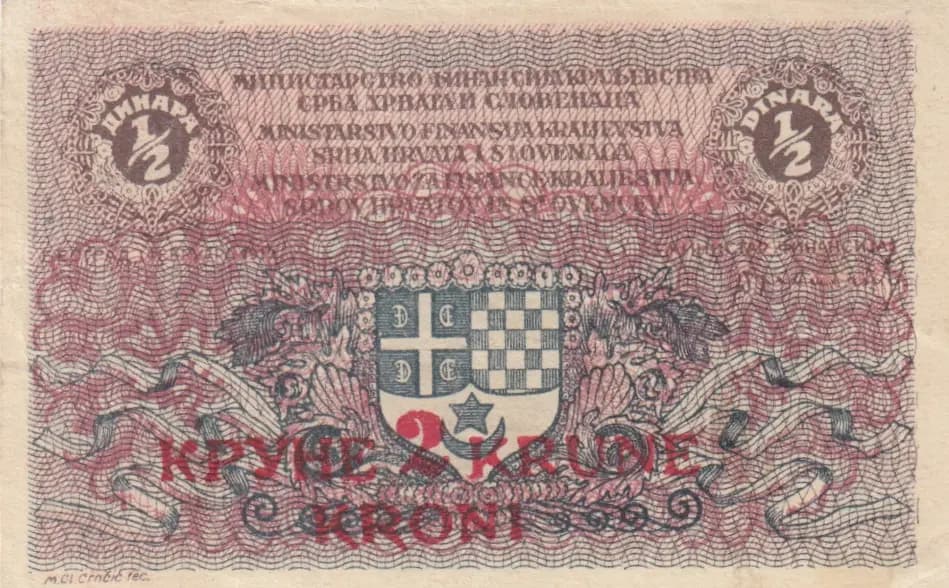
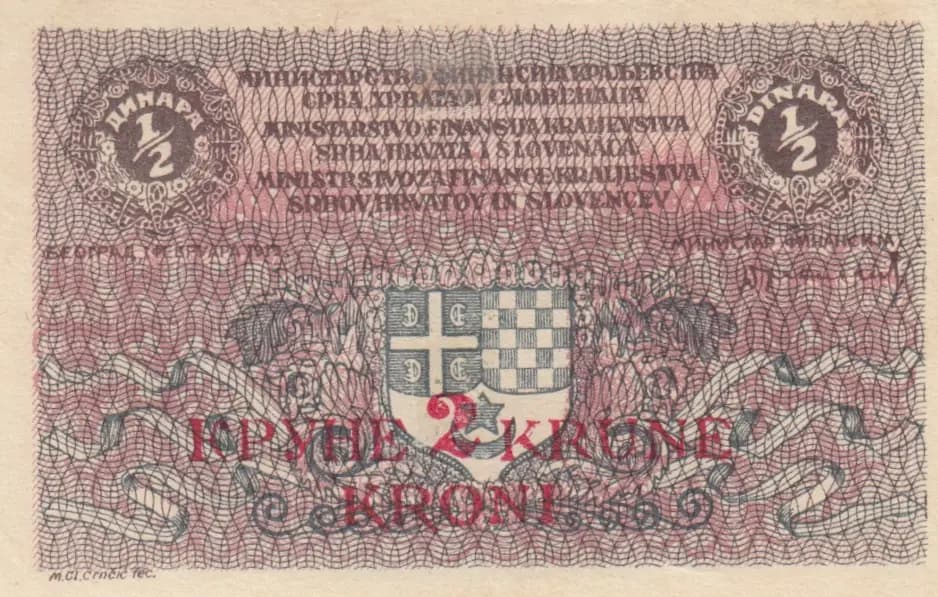
This is a 2 Kronen on 1/2 Dinara note from the Kingdom of Serbs, Croats and Slovenes, issued in 1919 by the Ministry of Finance during the early period of South Slavic unification. The note features the distinctive checkered coat of arms with a cross (the heraldic symbol of the newly formed kingdom) prominently displayed on the obverse, surrounded by intricate security printing with wavy line patterns in red, brown, and tan. Despite showing expected aging with some foxing and ink fading consistent with over a century of storage, the note remains in respectable condition with visible serial numbers and legible inscriptions throughout.
Common. eBay market data shows consistent sales in the $3–15 range across various conditions over the past decade, with even graded examples (PMG 50–58) selling for approximately $12–22. The 2016 catalog value for UNC is listed at $35, which aligns with the modest secondary market activity. This note was part of a regular issue from a newly established state with adequate print runs to meet circulation demands, and examples remain readily available to collectors.
This banknote was issued in February 1919, immediately following the dissolution of Austria-Hungary and the formation of the Kingdom of Serbs, Croats and Slovenes—a transitional state that would eventually become Yugoslavia. The coat of arms depicted on the obverse, featuring the checkered shield with a cross, represents the unified Serbian, Croatian, and Slovenian territories. The Ministry of Finance (Ministarstvo Financija) overprint indicates this was part of the early monetary consolidation effort as the new kingdom began establishing its own financial institutions separate from the defunct Austro-Hungarian crown.
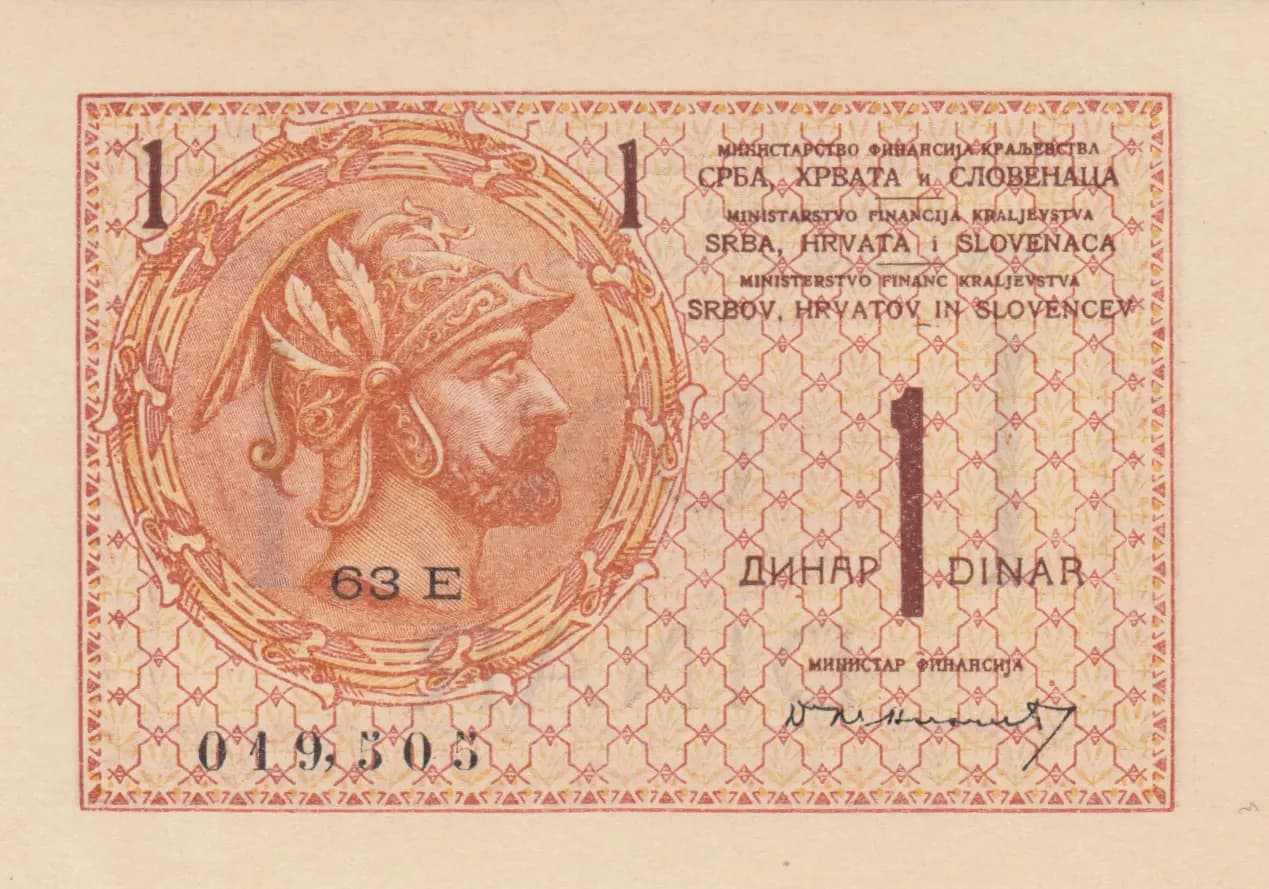
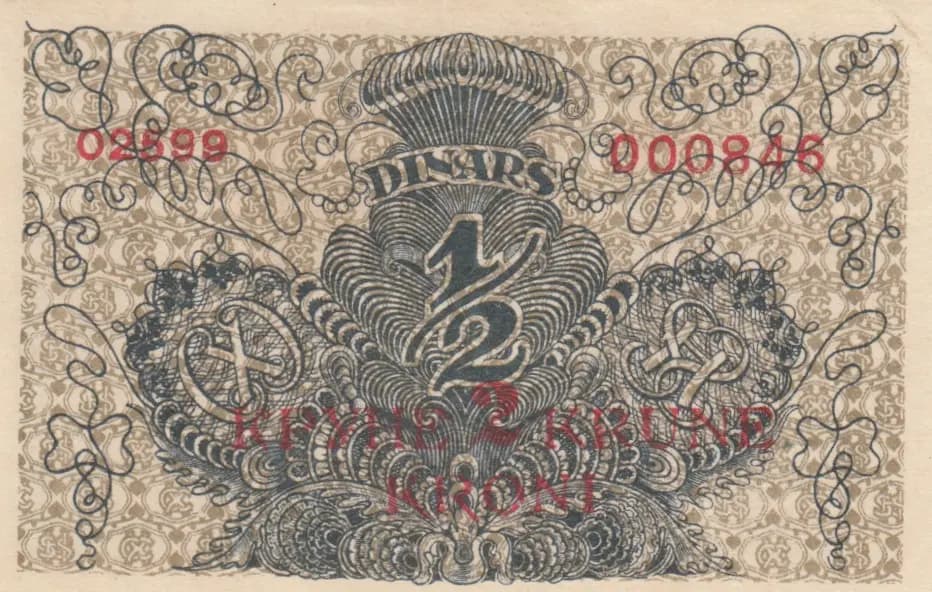
The obverse features the coat of arms of the Kingdom of Serbs, Croats and Slovenes—a quartered shield with the characteristic checkered field and central cross—centered and flanked by two circular heraldic emblems in the top corners. The entire design is surrounded by a complex ornamental border with wavy line security printing. The reverse displays a large denomination medallion with '1/2' prominently centered within elaborate baroque-style scrollwork and floral ornamentation, with a crown-like design above. The overall aesthetic reflects the transitional nature of this issue, combining traditional Austro-Hungarian security printing techniques with new iconography representing the unified South Slavic state.
Front side: 'IMPRIME 2 KRONE' (Printed 2 Krone); 'KRALJEVSTVO SRBA, HRVATA I SLOVENACA' (Kingdom of Serbs, Croats and Slovenes); 'MINISTARSTVO FINANCIJA' (Ministry of Finance); 'SRBIJA, HRVATSKA I SLOVENIJA' (Serbia, Croatia and Slovenia). Back side: '1/2' (One half); 'DINARS' (Dinars); Serial numbers '02899' and '900845' printed in red.
Intaglio (engraved) printing with multicolor security elements. The intricate wavy line background patterns, decorative scrollwork, and ornamental details are characteristic of security printing methods typical of Austro-Hungarian and early Yugoslav monetary production. The red overprinted text and serial numbers indicate a secondary printing pass. The note exhibits the high-quality engraving standards of the Vienna or Prague printing houses that typically produced Austro-Hungarian successor state currency.
This specimen is identified as Pick P-14a (2 Kronen on 1/2 Dinara), representing the variant overprinted with the new denomination and issuer information following the 1919 currency transition. The Pick catalog recognizes five variants for base number P-14, including the 1000 Dinara (P-140s), 50,000 Dinara (P-142s), 500,000 Dinara (P-143s), and 1 Novi Dinar (P-145). Serial numbers 02899 and 900845 are visible; examination of serial number prefixes and any subtle design variations would determine if this note represents a specific printing run or signature variety, though no major variants are noted in standard catalogs for this denomination.