40 kruna 1919
Market Prices
28 salesAbout This Note
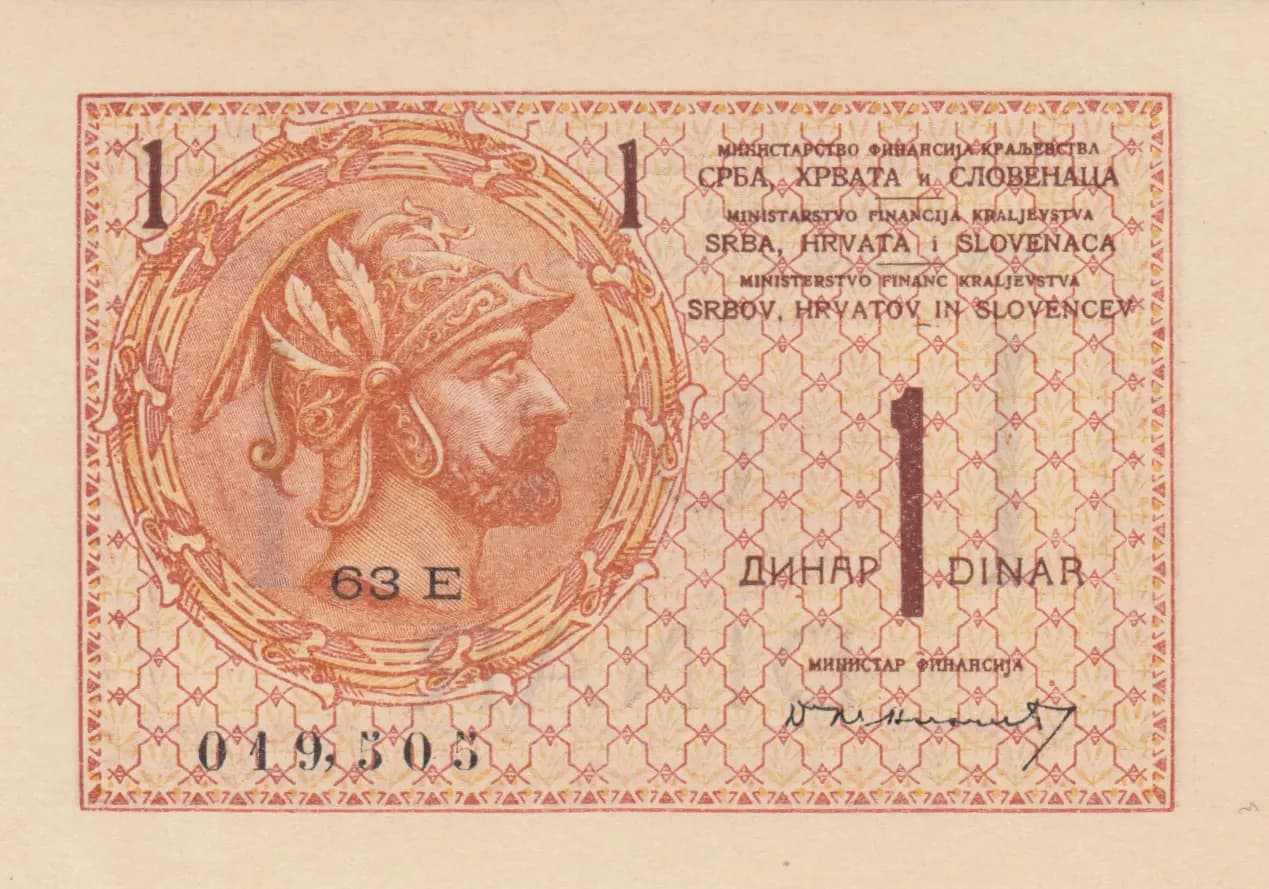
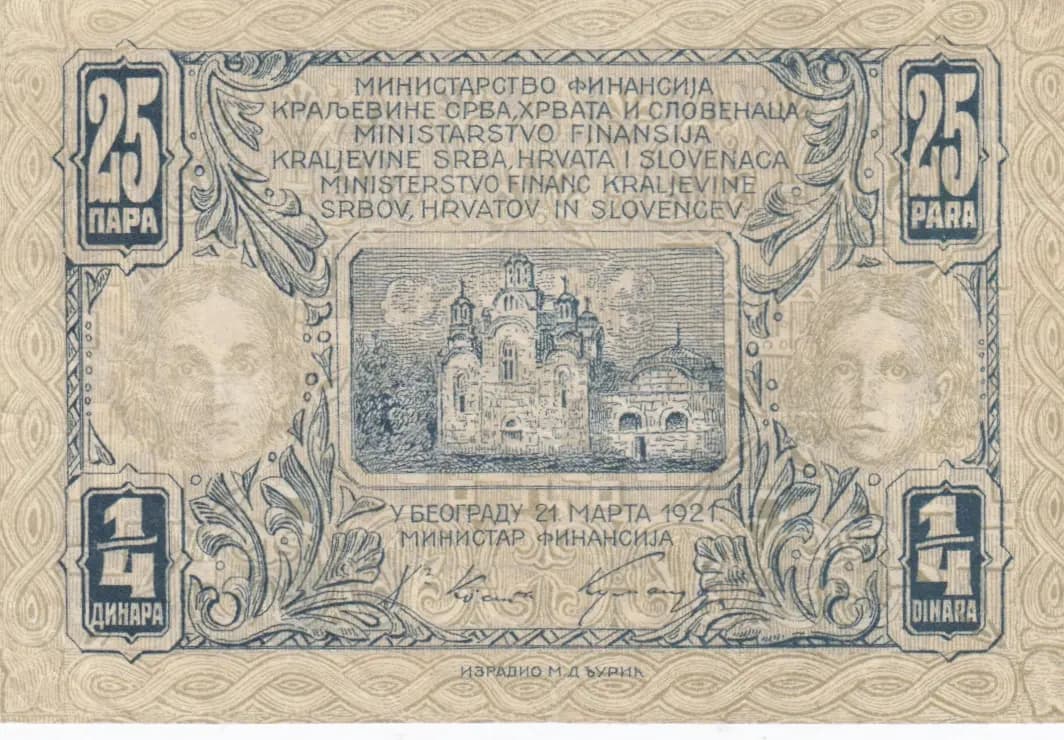
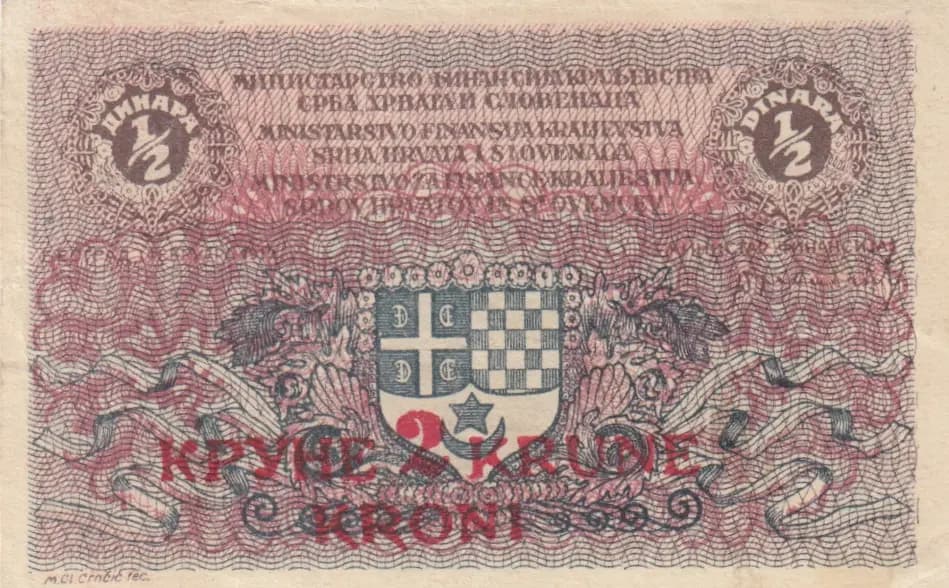
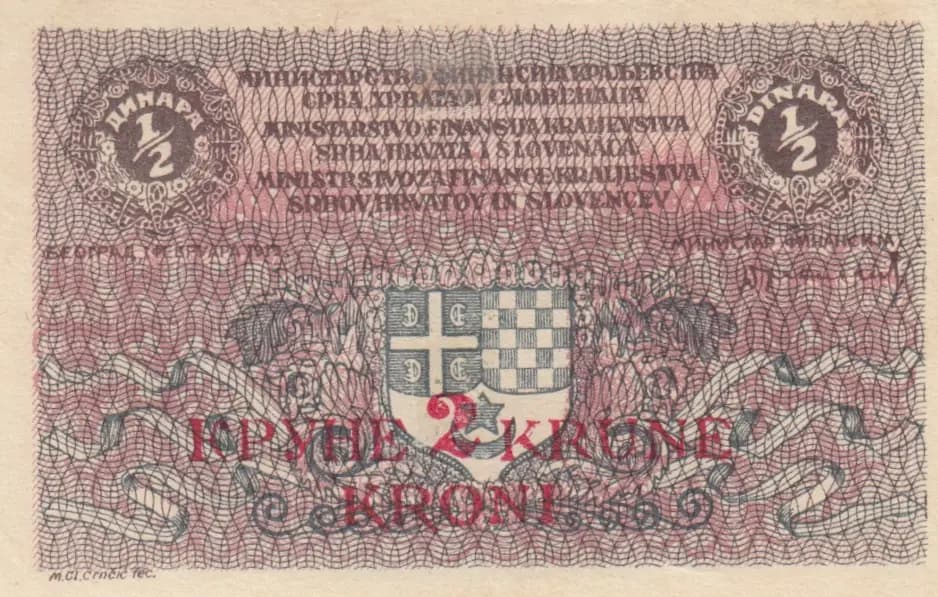
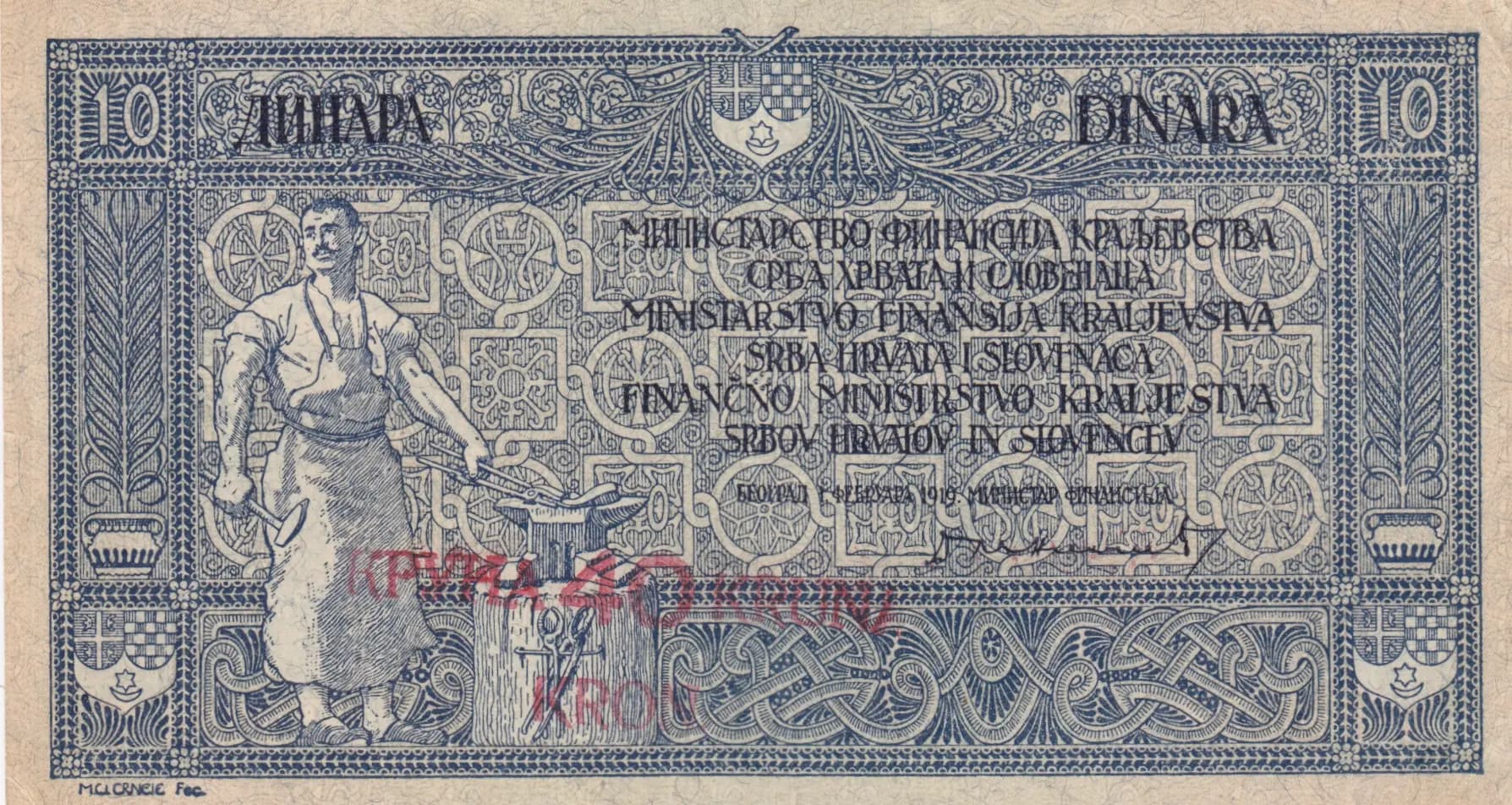
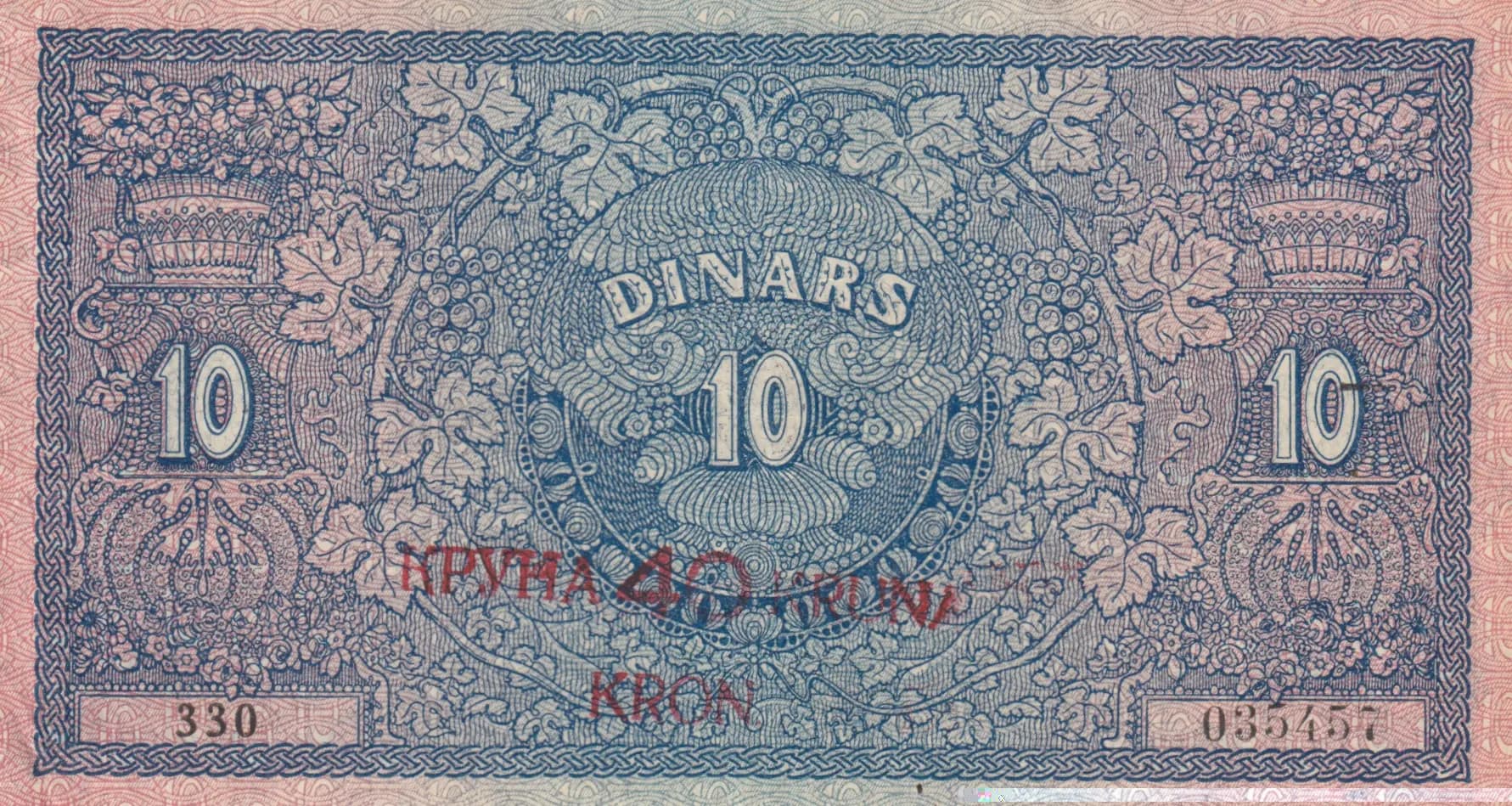
This is a Yugoslavia 40 Kruna note from 1919 issued by the Ministerstvo Financija (Ministry of Finance) of the Kingdom of Serbs, Croats and Slovenes, graded VF. The note features elaborate ornamental design with an allegorical female figure on the obverse and a distinctive circular medallion with eagle/owl motif surrounded by grapevines on the reverse, both rendered in fine line engraving. A prominent red overprint stamp crosses the center, typical of post-WWI Yugoslav currency, and the note shows age-appropriate patina with cream and pink toning consistent with early 20th century paper stock.
Common. This note appears frequently in the secondary market based on eBay auction data showing consistent sales over multiple years, with prices ranging from $1-$72 depending on condition. VF examples have sold in the $10-$56 range, indicating steady but not premium demand. The 2016 catalog valuation of $60 for VF aligns with observed market prices. The note was part of a standard issue from the newly formed Yugoslav state and represents an early currency of significant historical interest but substantial surviving quantities.
This note was issued in February 1919, immediately following the establishment of the Kingdom of Serbs, Croats and Slovenes after the Austro-Hungarian Empire's collapse in World War I. The multilingual inscriptions in Serbian, Croatian, and Slovenian on the obverse reflect the new nation's tri-ethnic composition, while the allegorical female figure and heraldic eagles symbolize the newly unified South Slavic state. The red overprint stamp served as a security and verification measure during the chaotic early years of Yugoslav currency stabilization.
The obverse features a seated allegorical female figure in classical style on the left side, personifying the newly formed Yugoslav state, positioned next to an elaborate shield or tablet. A central coat of arms with multi-part shield design occupies the top center, representing the heraldic symbols of the kingdom's constituent regions. The reverse displays a prominent circular medallion containing an eagle or owl (likely representing national sovereignty or wisdom) within an ornate wreath of grapevines and foliage, symbolizing prosperity and agricultural wealth. Both sides employ dense, interlocking geometric and floral ornamental borders in the Art Nouveau style popular during this period. The color scheme—blue and cream on the obverse, pink/rose and blue on the reverse—reflects the printing techniques of the era.
OBVERSE: 'MINISTARSTVO FINANCIJA KRALJEVSTVA SRBIJE HRVATSKE I SLOVENACA' / 'MINISTARSTVO FINANSIJA KRALJEVSTVA SRBIJE HRVATATE SLOVENIJE' / 'FINANCIJALNO MINISTARSTVO KRALJEVSTVA SRBIJA' (Ministry of Finance of the Kingdom of Serbs, Croats and Slovenes - in multiple South Slavic languages); denomination markers showing '40' Kruna. REVERSE: '40 DINARA' or similar denomination marking; serial number segments '330' and '035445' visible in corners; partial text 'RIJATAL 2-2 A STVARANJA' (Creation-related inscription, partially obscured by overprint); ornamental text in Serbo-Croatian framing the design.
Intaglio engraving (line engraving), characteristic of high-security banknote production of the 1919 era. The fine line work, complex geometric patterns, and detailed ornamental borders visible in the images are consistent with steel plate engraving. The printer mark 'MCLRNCIE Fac' (likely Bradbury, Wilkinson & Co. or similar London security printer) suggests professional European banknote production, though the exact security printer for this Yugoslav emission would require Pick catalog confirmation. The red overprint was applied separately post-printing as a security and identification measure.
The note displays a red overprint stamp across the center, consistent with the known issue type for this denomination. Serial number segments visible (330 and partial 035445) suggest potential variety classification by serial number prefix, though without access to comprehensive serial number documentation for this Pick number, specific prefix varieties cannot be definitively identified. The multilingual inscriptions in three South Slavic languages on the obverse are a characteristic feature of this 1919 issue period representing the Kingdom of Serbs, Croats and Slovenes' attempt to accommodate all constituent nations. No signature varieties or major design variants are apparent from the visual analysis of this specimen.