25 para= 1/4 dinar 1921
Market Prices
33 salesAbout This Note
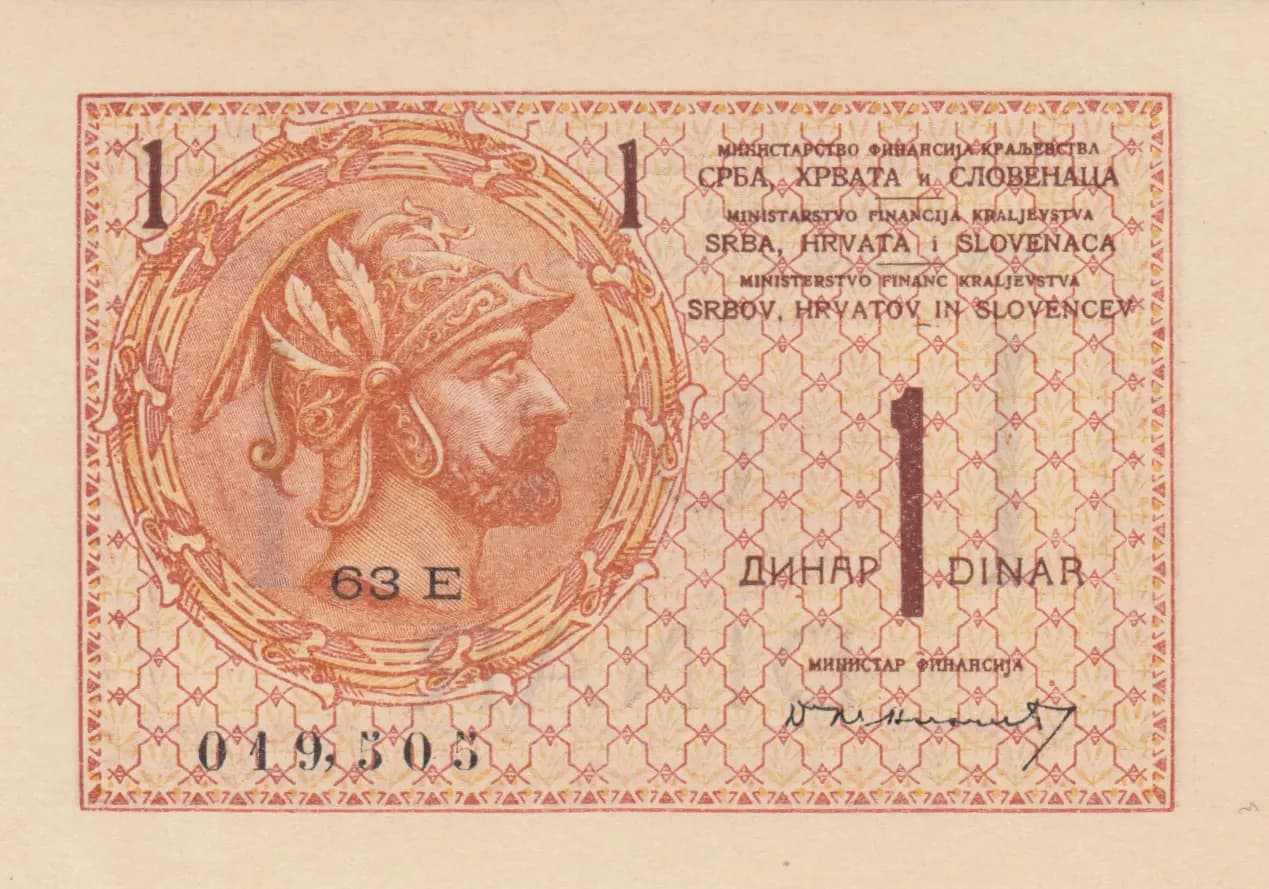
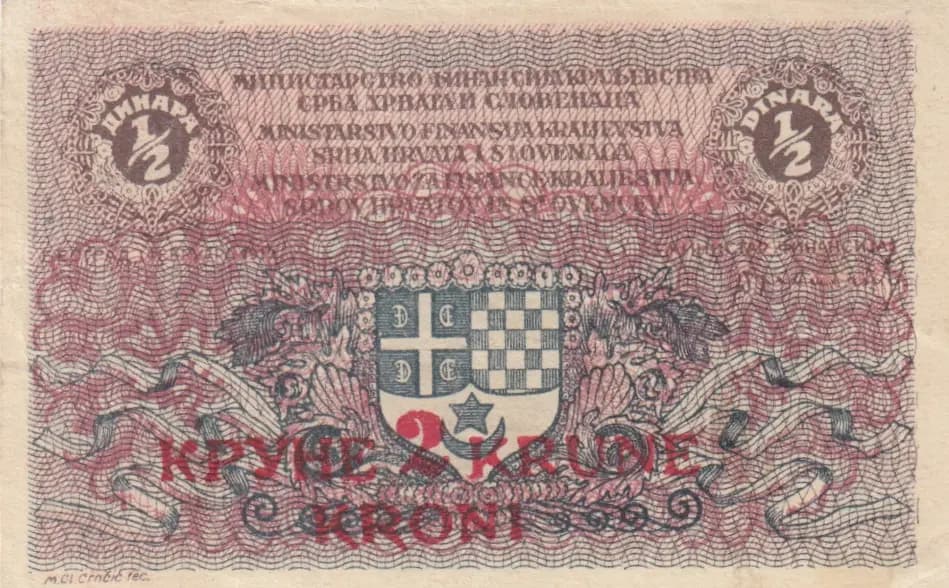
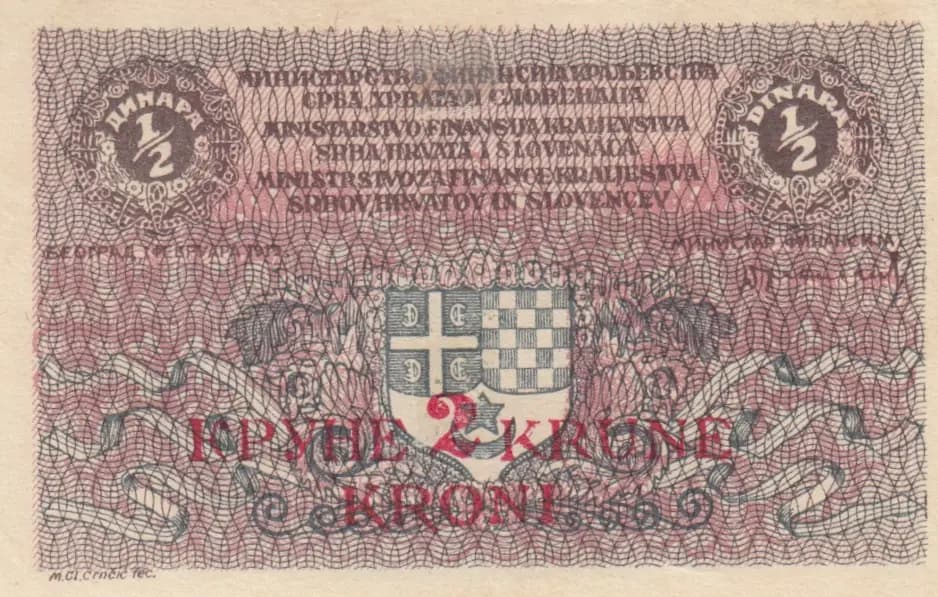
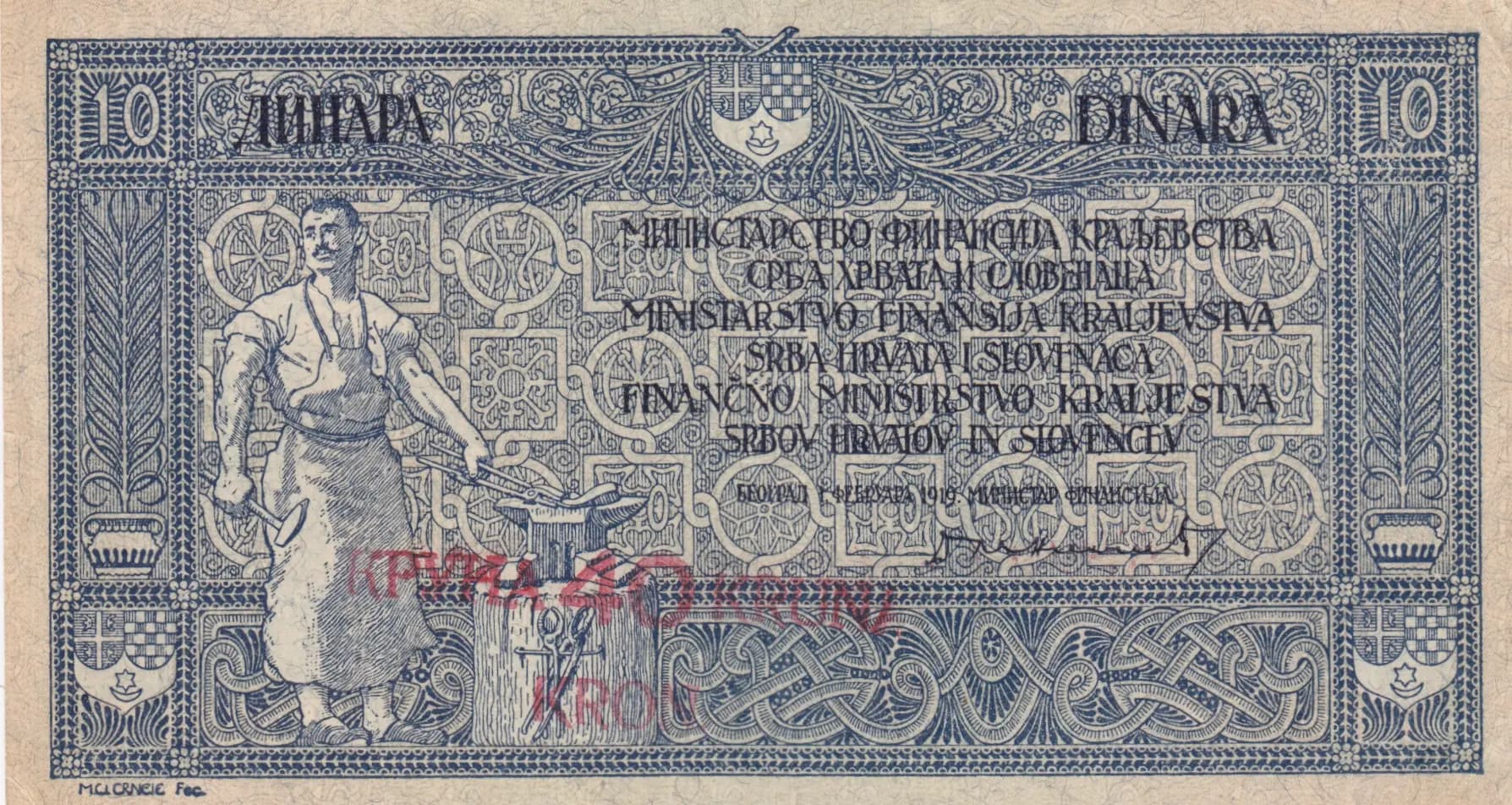
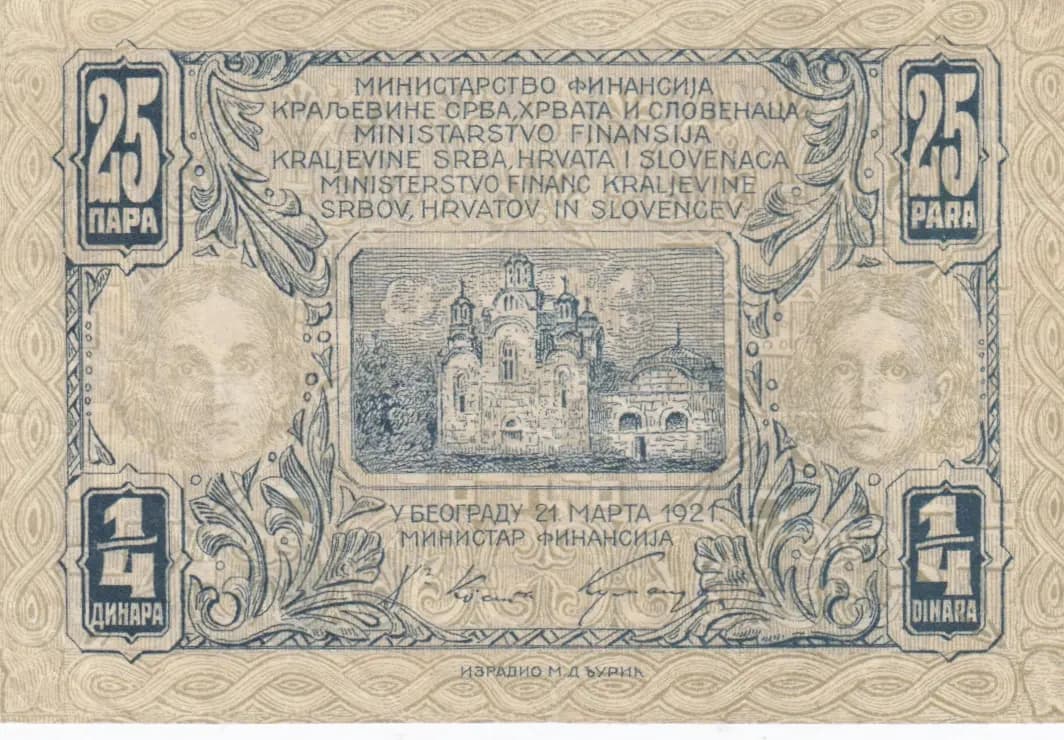
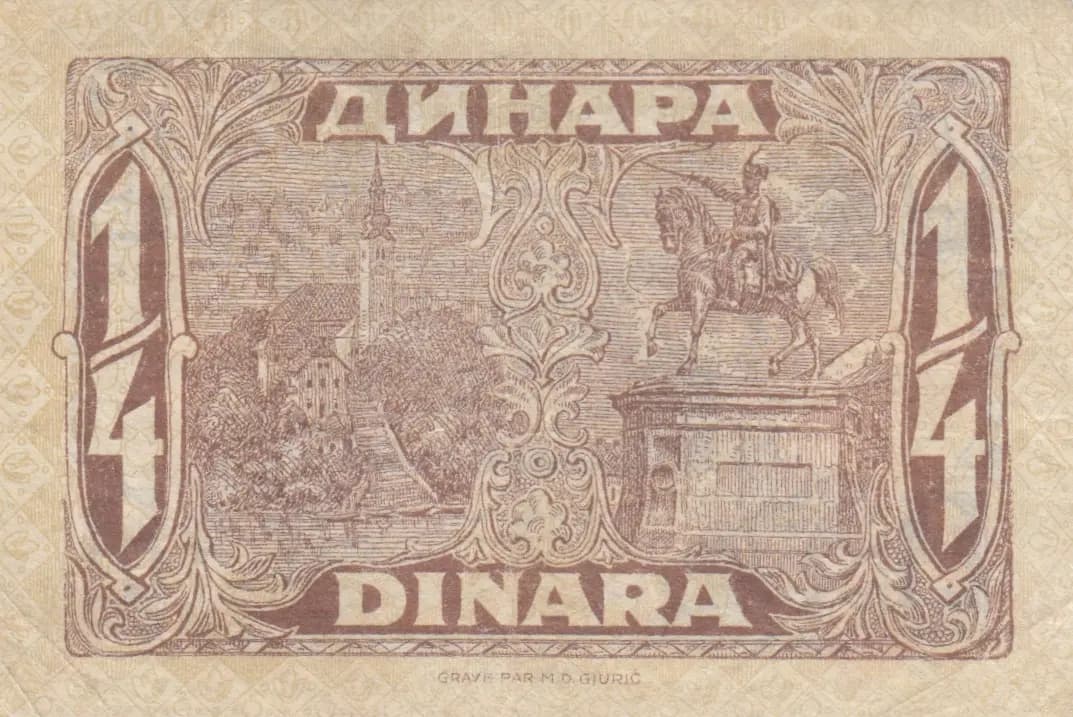
This is a VF-grade example of Yugoslavia's 1921 25 Para note (Pick P-13), featuring a striking blue and olive color scheme on the obverse with portraits flanking a central Gračanica monastery vignette. The reverse displays brown tones with St. Mary's church on Bled Island and the Ban Jelačić equestrian monument, representing the geographic and cultural unity of the newly formed Kingdom of Serbs, Croats and Slovenes. The note exhibits excellent preservation with sharp printing, minimal wear, and no significant damage—a particularly nice example of this early Yugoslav currency.
Common. This is a regular issue of Yugoslavia's earliest banknotes with substantial circulation. eBay price tracking from realbanknotes.com shows consistent sales in the $2–$30 range depending on condition, with VF specimens regularly selling for $3–$9, placing it squarely in the common category. The 2016 catalogue valuation of $9 in VF condition further confirms widespread availability. Print runs for early Yugoslav denominations were significant, and this note did not have a restricted circulation period.
Issued on March 24, 1921, just weeks after the formal proclamation of the Kingdom of Serbs, Croats and Slovenes (December 1918), this 25 Para note represents the first unified currency following the collapse of the Austro-Hungarian Empire. The architectural vignettes—Gračanica monastery from medieval Serbia and the Church of Mary on Bled Island from Slovenia—deliberately emphasized the shared Orthodox and Catholic heritage across the new kingdom's diverse regions. The inclusion of Ban Jelačić, a 19th-century Croatian national hero, further reinforced the political consolidation of previously separate South Slavic territories.
The obverse features dual male portraits in ornamental frames positioned left and right, likely representing Serbian and Croatian/Slovenian leadership of the period, flanking a central rectangular vignette of Gračanica Monastery near Prizren, Kosovo—a significant Serbian Orthodox medieval site. The reverse displays two distinct vignettes: on the left, a detailed cityscape or landscape representing Slovenian territory, and on the right, an equestrian statue depicting Ban Jelačić (Josip Jelačić), the acclaimed 19th-century Ban of Croatia, serving as a unifying symbol of South Slavic nationalism. Ornate guilloche patterns, scrollwork borders, and geometric corner elements frame both sides, with the denomination prominently displayed in all four corners using distinctive numeral frames. Bilingual inscriptions in both Cyrillic (Serbian) and Latin script (Croatian/Slovenian) appear throughout, emphasizing the multicultural nature of the new state.
FRONT: Ministerstvo Financija (Ministry of Finance), Kraljevine Srba, Hrvata i Slovenaca (Kingdom of Serbs, Croats and Slovenes), 25 Pára = 1/4 Dinara, U Beogradu 24 Marta 1921 (In Belgrade, March 24, 1921), Ministar Finansija (Minister of Finance), Izdano M.D. Burgn (Issued by M.D. Burgn). BACK: Dinara (Dinar), 1/4 (Quarter), Gravi par M.B. Giuric (Engraved by M.B. Giuric).
Intaglio engraving, as evidenced by the fine line guilloche background patterns, the precise detail in the ornamental borders, and the crisp portrait and vignette engravings characteristic of high-security banknote production of the 1920s. The engraver M.B. Giuric is credited on the reverse. The printing demonstrates the professional standards of the Ministerstvo Financija's security printing operations, likely executed by a state-authorized security printer.
This specific note is dated 21.03.1921 (March 21, 1921 per catalog data) or 24.03.1921 (March 24, 1921 per the visual inscription), representing the inaugural issue from the Ministerstvo Financija. The note exhibits signatures of the Minister of Finance and engraver credits (M.D. Burgn on obverse, M.B. Giuric on reverse). While the external references list multiple transliteration variants of the issuing authority name across different scripts, this represents a single note variety. No major known variants (overprints, color variations, or signature changes) are documented for Pick P-13 within the VF grade range. The bilingual Cyrillic/Latin script format is standard for all examples of this issue.