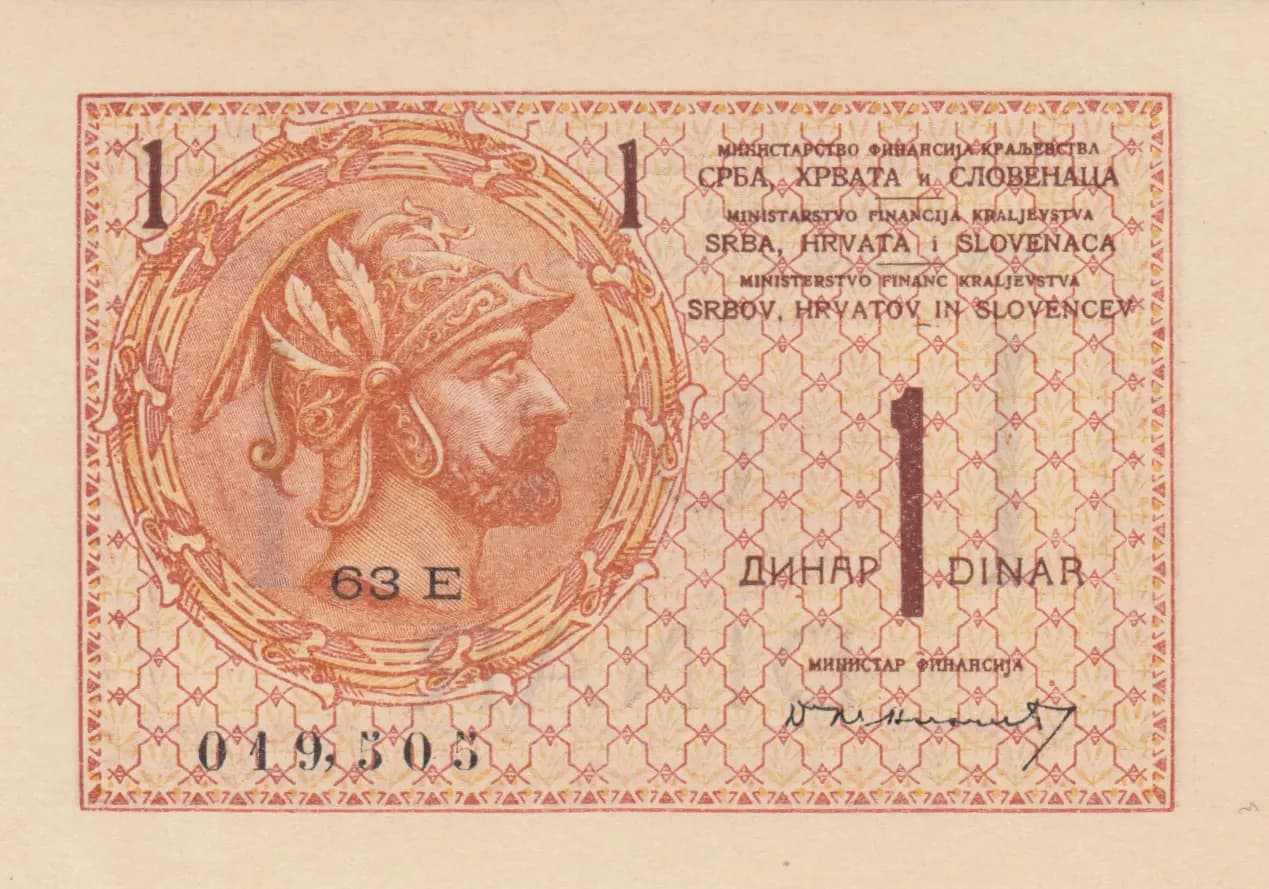
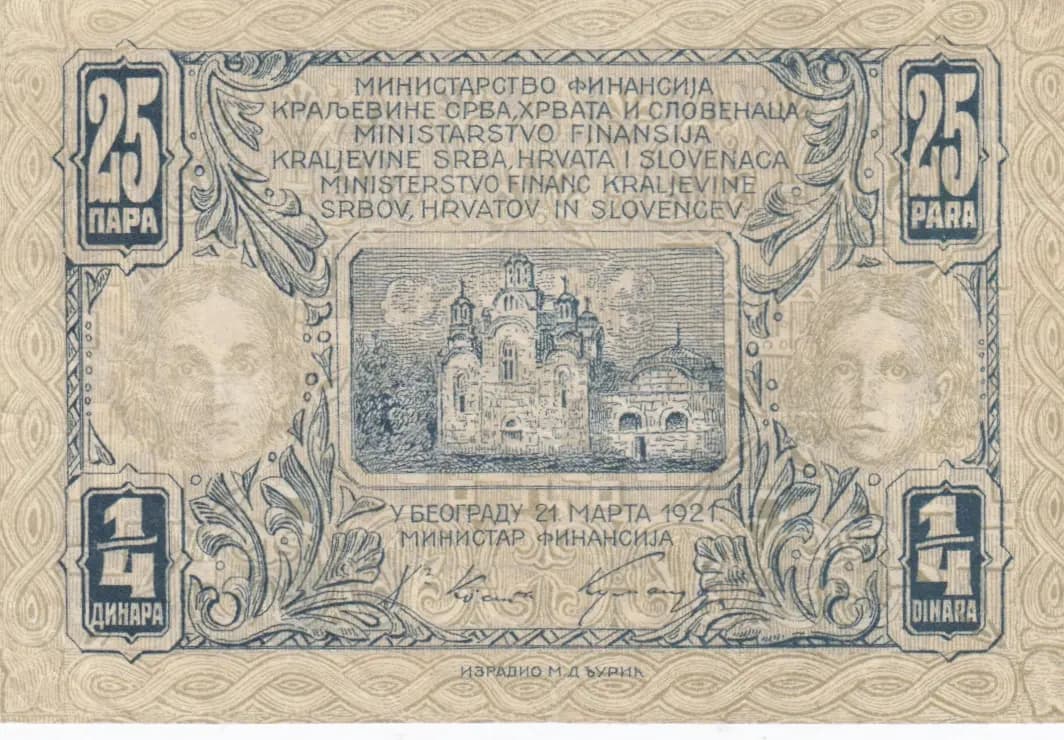
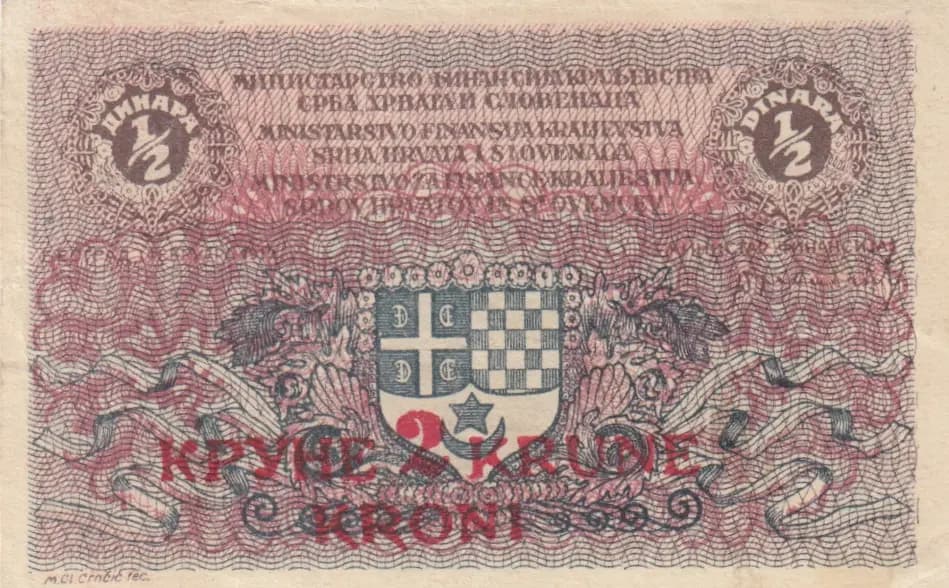
50 dinara 1946
Market Prices
16 salesAbout This Note
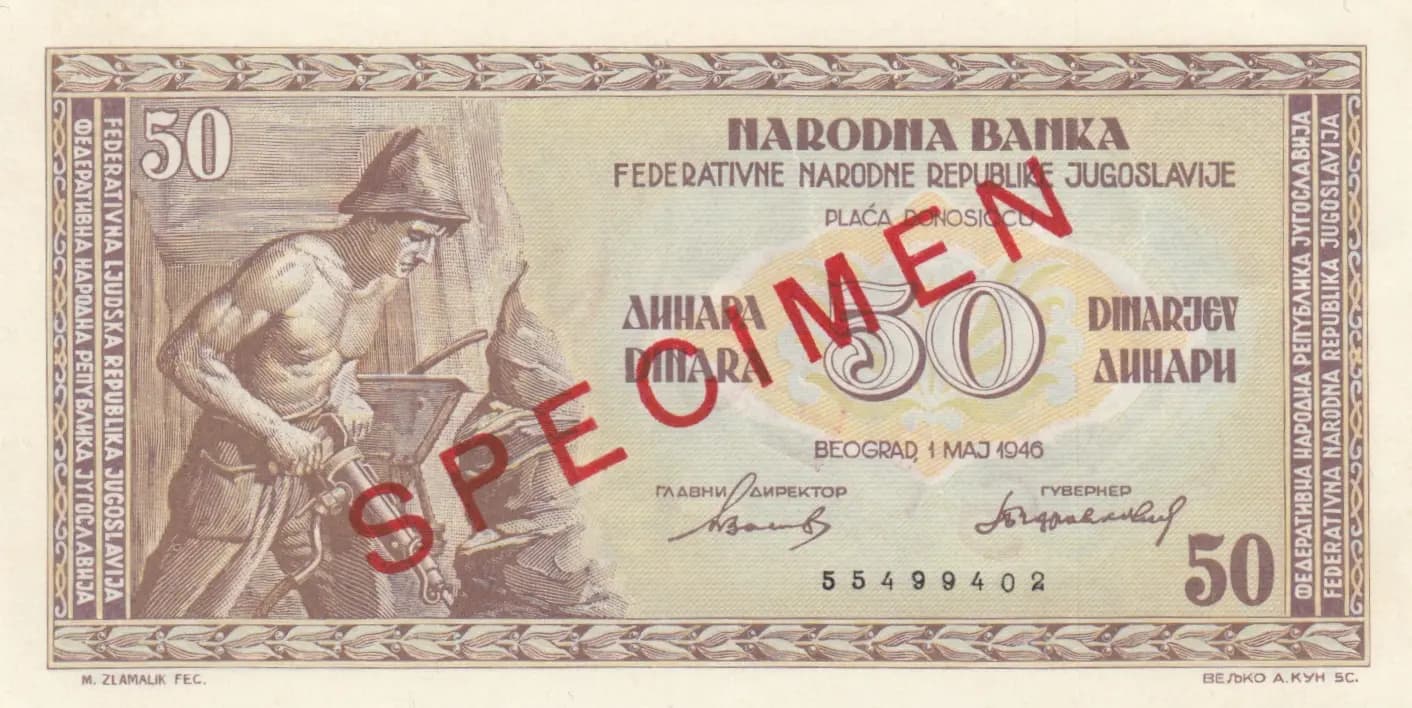
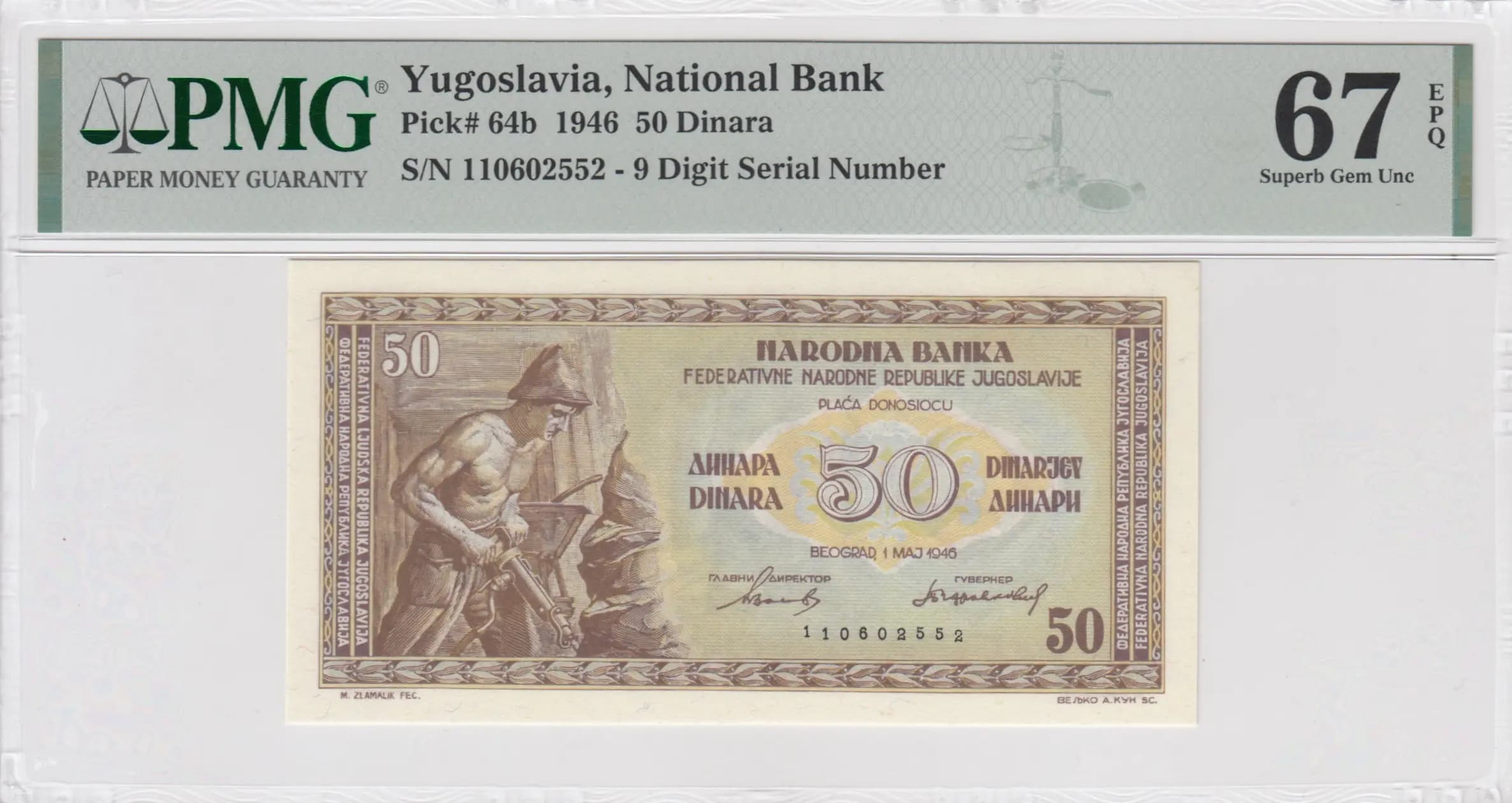
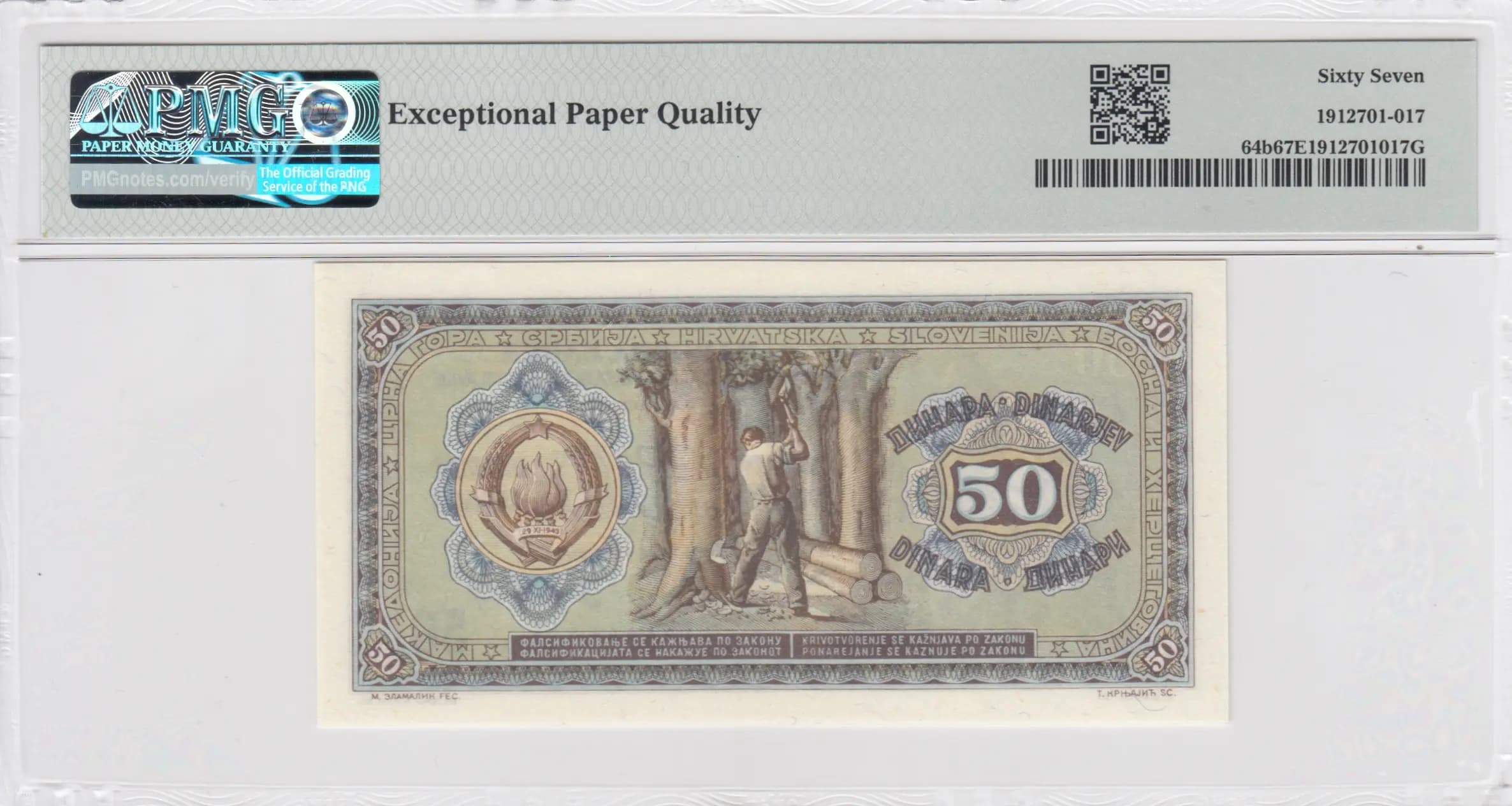
This is a PMG 67 EPQ example of the Yugoslavia 50 Dinara from May 1, 1946, representing an early postwar issue from the newly established Federative People's Republic. The note exhibits pristine uncirculated condition with exceptional preservation, crisp borders, and clear printing throughout. The front features a bearded miner in traditional dress rendered in warm brown and sepia tones against a cream background, while the reverse showcases classical figures in a woodland setting alongside the Yugoslav coat of arms, making this an important early example of postwar Yugoslav currency design.
Common. This is a regular issue from Yugoslavia's first postwar currency series with substantial print runs. eBay market data shows consistent availability across multiple graded examples, with PMG 67 specimens selling in the $45-$61 range historically (2019-2020), which is typical pricing for common postwar European notes in high grades. The 2016 catalog value of $80 UNC further confirms this is a standard circulation issue rather than a scarce or rare variety.
Issued on May 1, 1946, this banknote marks the beginning of the Federative People's Republic of Yugoslavia under Josip Broz Tito, following the nation's liberation from Axis occupation. The imagery—depicting a miner on the obverse and a woodcutter on the reverse—reflects the socialist ideology and emphasis on labor that characterized the new communist state. The coat of arms featuring a flame or torch symbol represents the revolutionary transformation and the heroic struggle of the Yugoslav peoples during World War II.
The obverse features a portrait of a bearded laborer—identified as a miner based on the catalog designation—depicted in profile on the left side wearing traditional clothing and shown engaged in work. The figure is rendered in fine sepia and brown tones against a cream and beige underprint with multicolored security elements. Ornamental borders frame the composition with repeating geometric and floral motifs typical of mid-20th century Yugoslav currency design. The reverse displays two classical figures in a woodland landscape setting, likely representing the woodcutter vignette described in the catalog, flanked by the Yugoslav national coat of arms on the left (featuring a distinctive flame or torch symbol within a circular shield) and the denomination '50' within an ornamental cartouche on the right. The back retains the same cream and beige color scheme with brown and sepia embellishments.
FRONT: 'Narodna Banka Federativne Narodne Republike Jugoslavije' (National Bank of the Federative People's Republic of Yugoslavia) | 'Plaća Donosiocu' (Pays to Bearer) | 'Dinara' / 'Dimara' (Dinara - currency denomination in different script variants) | '50' (denomination) | 'Beograd 1 Maj 1946' (Belgrade, May 1, 1946) | 'Glavni Direktor' (Chief Director) | 'Guverner' (Governor) | Serial Number: 110602552. BACK: 'Bopa Srbija Hrvatska Slovenija' (Serbia, Croatia, Slovenia) | 'Dimara Dinarem' (Dinara) | '50' (denomination) | 'Zakoni se Kaznjuje po Zakonu Ponjaranje se Kaznuje po Zakonu' (Counterfeiting is punishable by law).
This note was produced using intaglio (engraved steel plate) printing, evident from the fine line work, portrait vignette detail, and precise border ornamentation visible in the visual analysis. The multicolor underprint and layered color application suggest the use of multiple plate passes or color separation techniques typical of Yugoslavian National Bank security printing of the immediate postwar period. The banknote exhibits the high-quality engraving standards characteristic of Yugoslav currency production under the new socialist state.
This is cataloged as Pick P-64b, the second issue variant (2nd issue) identified by the 9-digit serial number format (visible as 110602552). The catalog data indicates P-64b is distinguished by the 9-digit serial numbering system, differentiating it from the first issue variant P-64a. No overprints, date variations, or signature varieties are apparent in the visual analysis of this particular specimen.