5 dinara 1944
Market Prices
9 salesAbout This Note
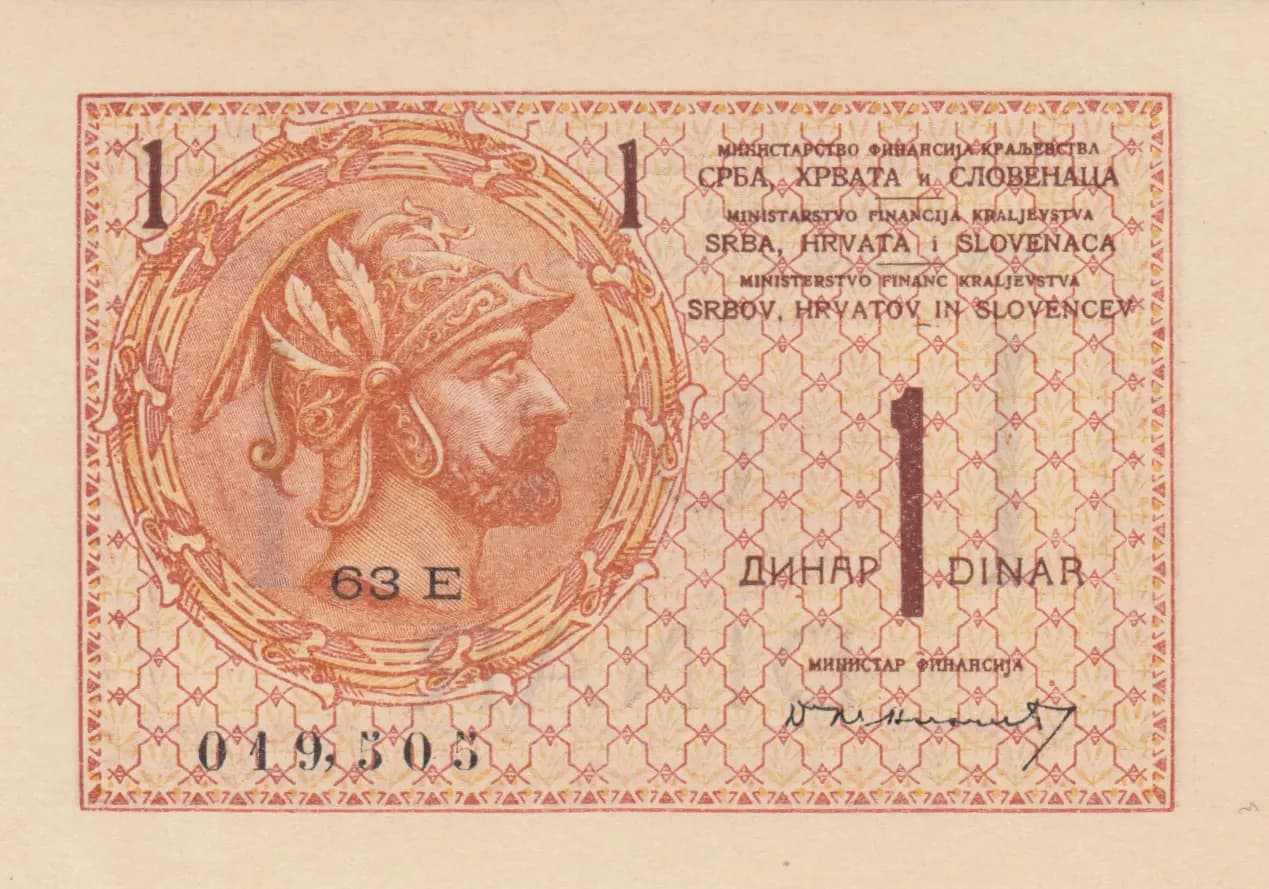
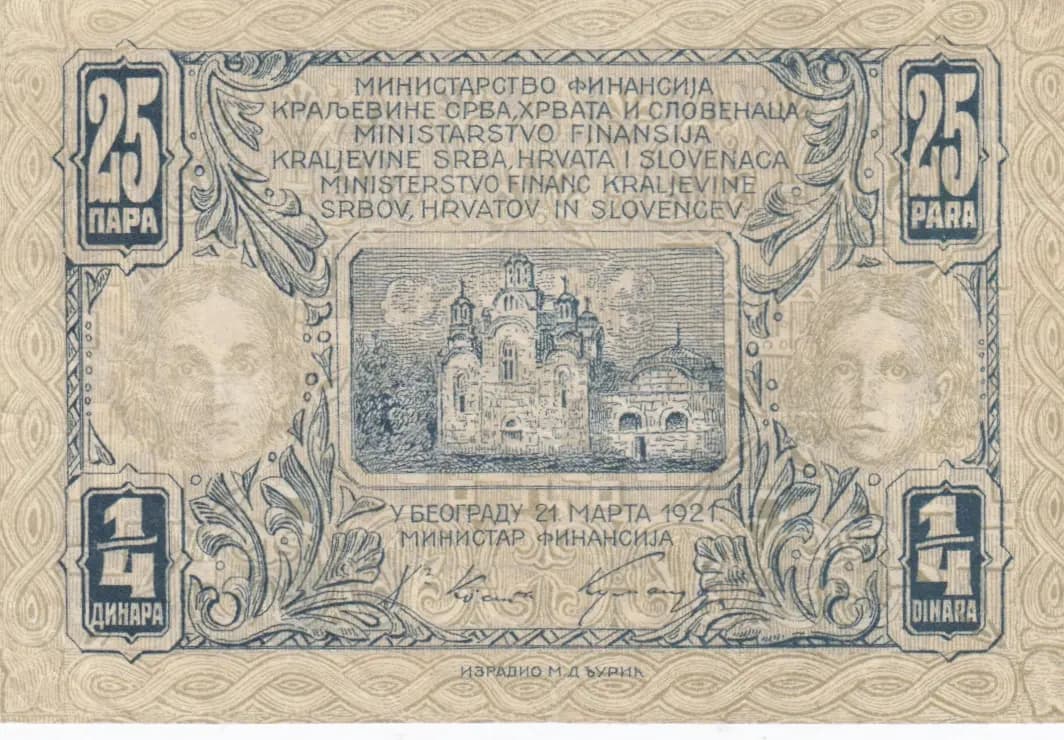
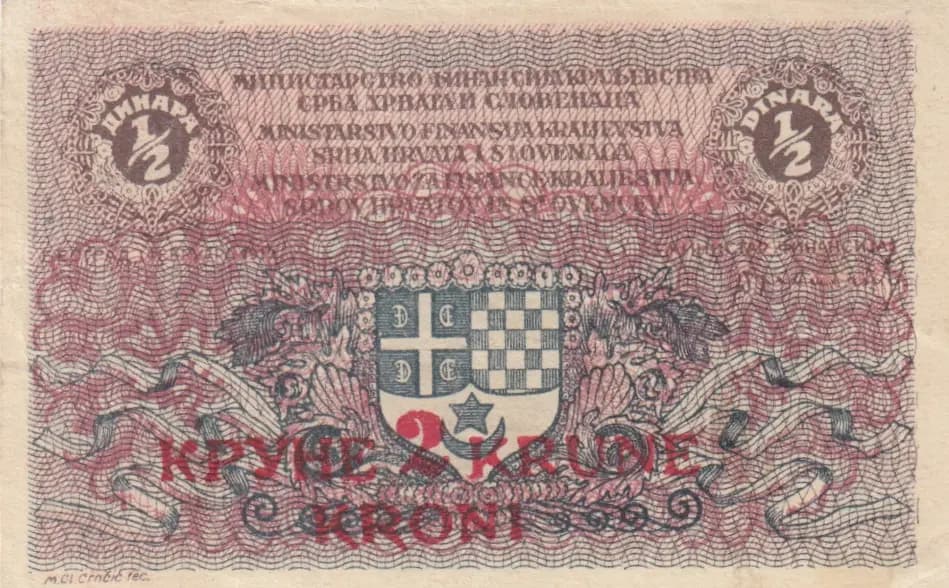
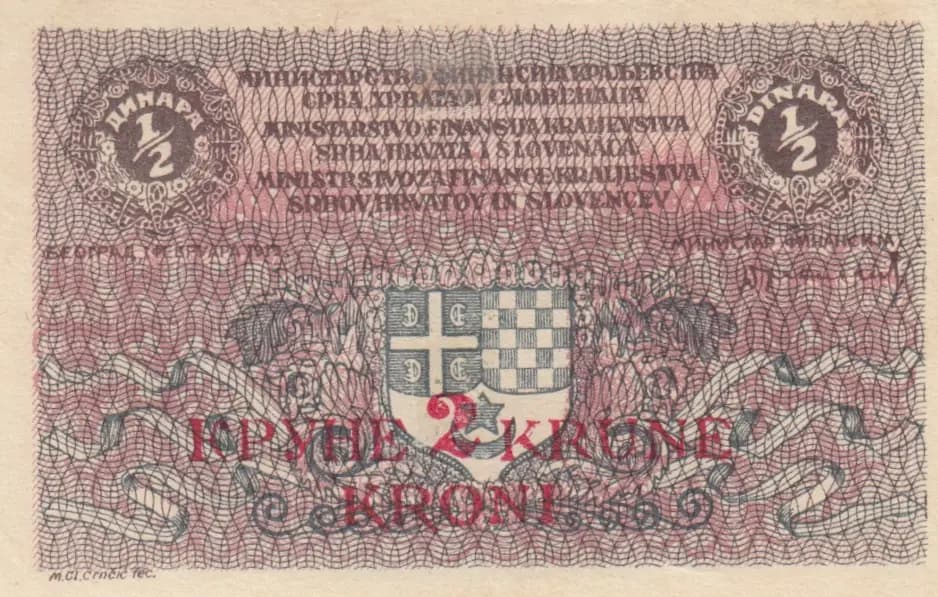
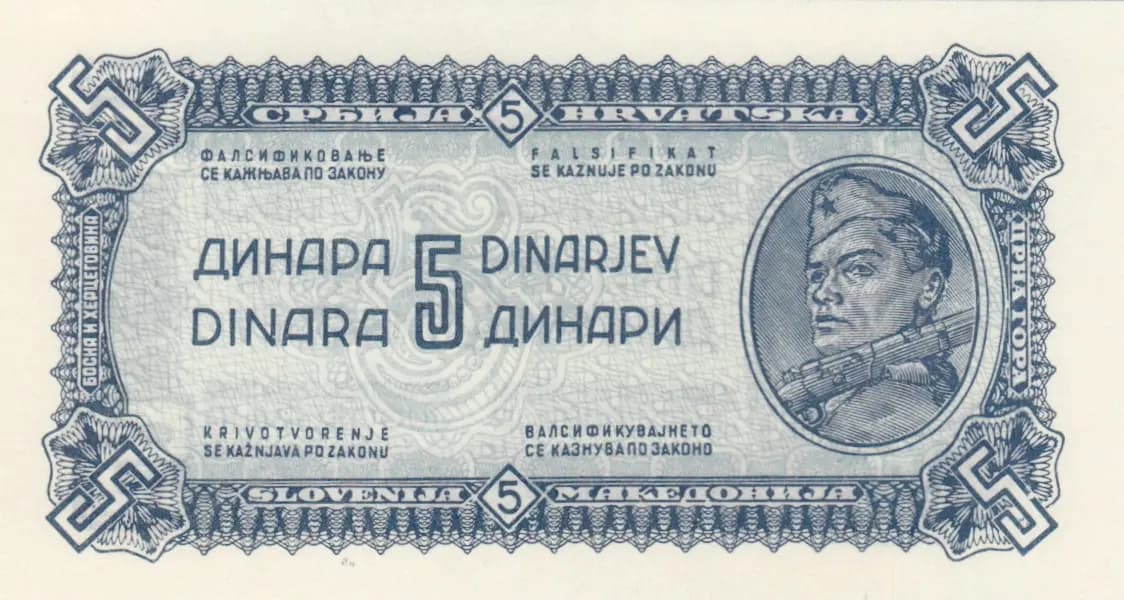
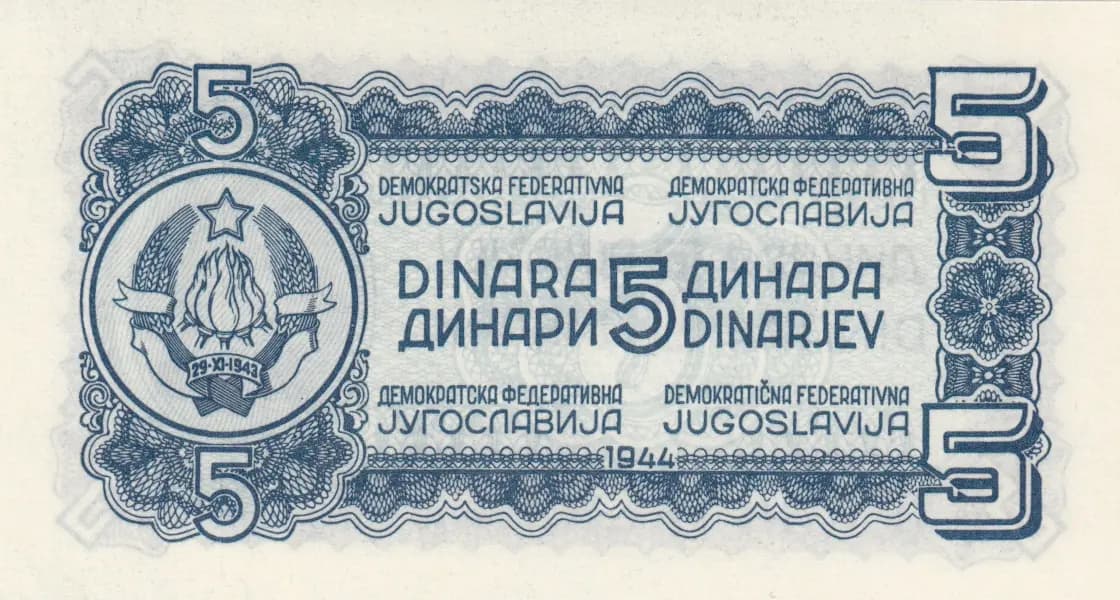
This is a stunning UNC example of the 1944 Yugoslav 5 dinara note (Pick P-49a), issued by the Democratic Federal Republic of Yugoslavia during the pivotal final year of World War II. The note features crisp, pristine printing with ornate decorative borders, a portrait of Partisan Milivoje Rodić in military uniform on the obverse, and the Yugoslav coat of arms on the reverse. Based on recent market data, UNC examples of this historically significant note command approximately $15-16.50 at auction, making it an accessible yet important example of wartime Yugoslav currency.
Common. The 1944 Yugoslav 5 dinara note is a standard issue wartime note with substantial surviving quantities. Market evidence from eBay transactions demonstrates consistent availability, with UNC examples averaging $15-16 and historically trading as low as $5-6 in lower grades. The catalog 2016 valuation of $25 for UNC represents collector retail rather than scarcity premium. No evidence of low print runs, recall issues, or short-lived circulation supports a rarity designation.
This note was issued on November 29, 1943 (as marked on the reverse), though dated 1944, during the Yugoslav Partisan resistance movement's final push against Axis occupation. The prominence of the partisan portrait and the new Democratic Federal Yugoslavia designation reflect the political transformation underway—the Partisans under Josip Broz Tito were already establishing state institutions even before the war's end in May 1945. The bilingual Cyrillic/Latin inscriptions and references to constituent republics (visible in 'HRVATSKA,' 'SLOVENIJA,' 'MAKEDONIJA') underscore the federal structure being built for post-war Yugoslavia.
The obverse features a portrait of Milivoje Rodić, a Partisan commander who later achieved the rank of colonel in the Yugoslav People's Army, shown in left profile wearing military uniform and cap. The reverse displays the coat of arms of the Democratic Federal Republic of Yugoslavia—a five-pointed star above a torch or flame design, encircled by a laurel wreath, symbolizing the unity and revolutionary character of the new federal state. Both sides are framed by ornate decorative borders composed of repeating geometric and floral patterns. The note employs dual-language inscription throughout (Cyrillic and Latin scripts) reflecting the multinational composition of Yugoslavia. Notably, swastika symbols appear in all four corners of the obverse—a period design element predating the Nazi appropriation of the symbol, reflecting its use in pre-war Yugoslav heraldic and decorative traditions.
OBVERSE: 'HRVATSKA' (Croatia); 'SLOVENIJA MAKEDONIJA' (Slovenia Macedonia); 'ДИНАРА 5 DINARJEV' and 'DINARA 5 ДИНАРИ' (5 Dinara in both scripts); 'FALSIFIKUVANJE SEKAJNAVA PO ZAKONU' / 'FALSIFIKAT SE KAZNUJE PO ZAKONU' (Falsification is punished by law); 'KNJOTVORENJE SE KAZNIJAVA PO ZAKONU' (Counterfeiting is punished by law). REVERSE: 'DEMOKRATSKA FEDERATIVNA JUGOSLAVIJA' (Democratic Federal Yugoslavia in both Latin and Cyrillic scripts); 'DINARA 5 ДИНАРА' and 'ДИНАРИ 5 DINARJEV' (5 Dinara); '1944' and '29.XI.1943' (date markings indicating issue date of November 29, 1943).
Intaglio (engraved) printing, evidenced by the crisp, fine line work visible in the detailed border patterns, geometric designs, and portrait rendering. The ornate decorative elements and security-oriented fine engraving are characteristic of high-security banknote production of the era. The printer for this series is not definitively documented in standard catalogs, though it was produced under the auspices of the Democratic Federal Republic of Yugoslavia's nascent currency authorities.
This is catalogued as Pick P-49a. The PMG Population Report indicates a single variant (P-49b) is recognized for this base Pick number, suggesting minimal variation within the issue. The note's specific variety within P-49a cannot be definitively determined without inspection of serial numbers, signatures, or printer marks, which are not fully discernible in the provided images. The date marking of 29.XI.1943 on the reverse is consistent with the official authorization date rather than a circulation date, so no date variation is present on this type.