1 dinar 1944
Market Prices
20 salesAbout This Note
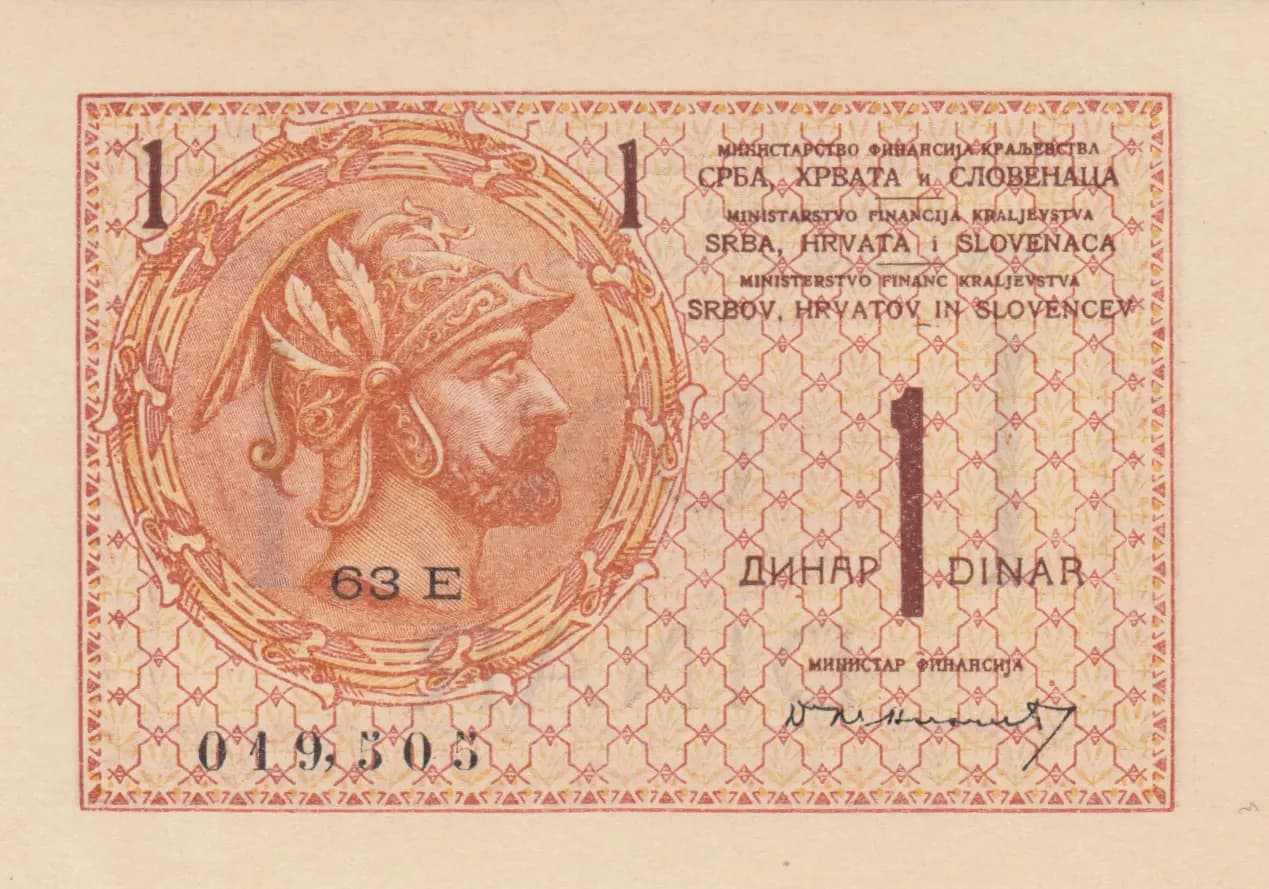
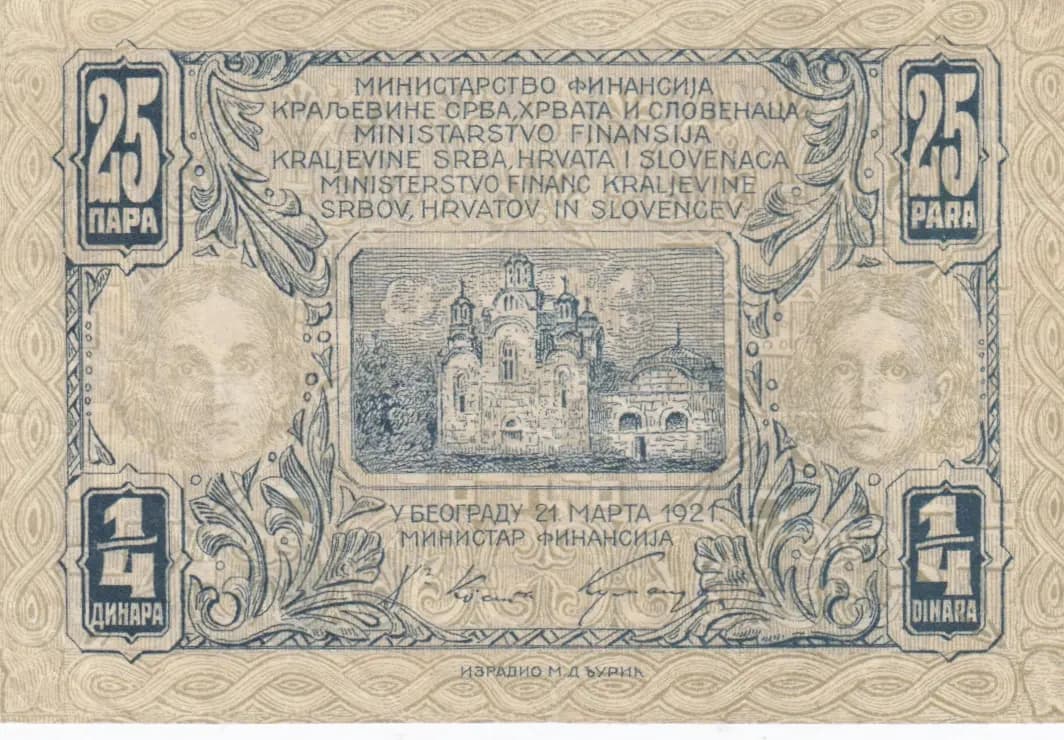
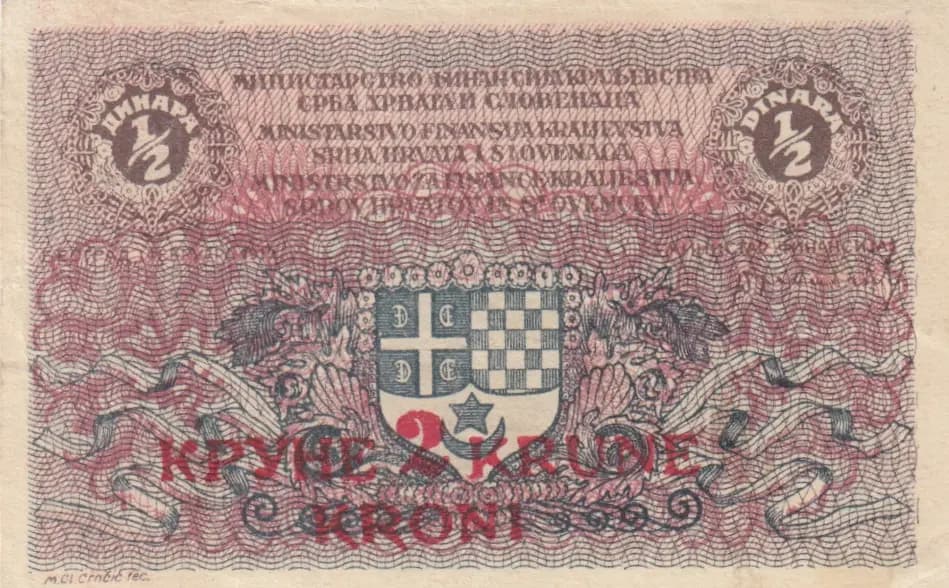
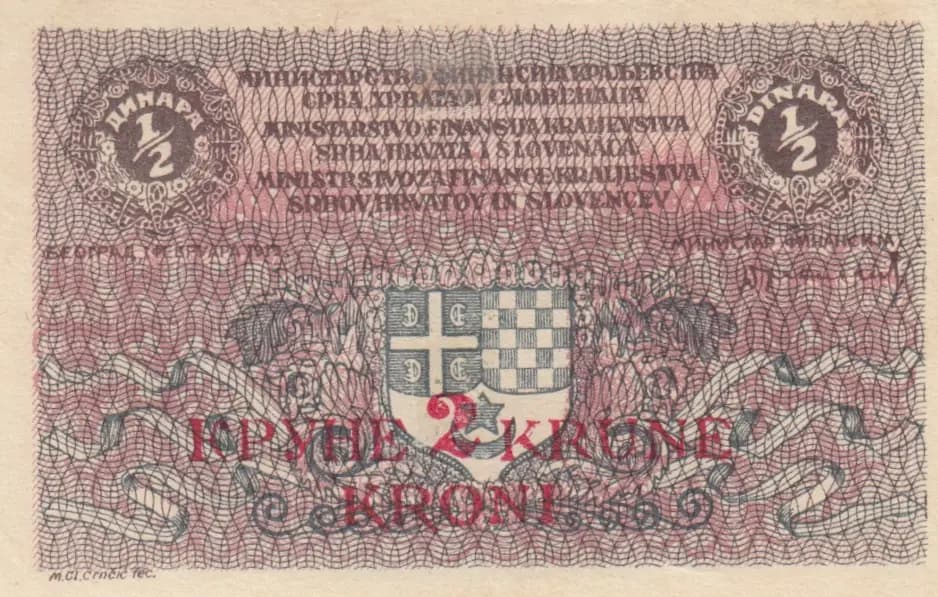
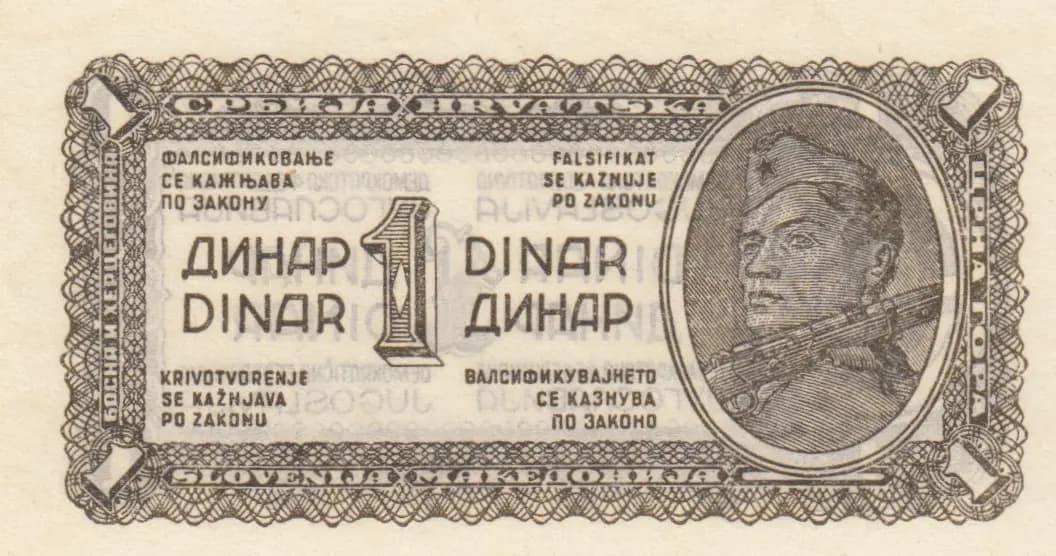
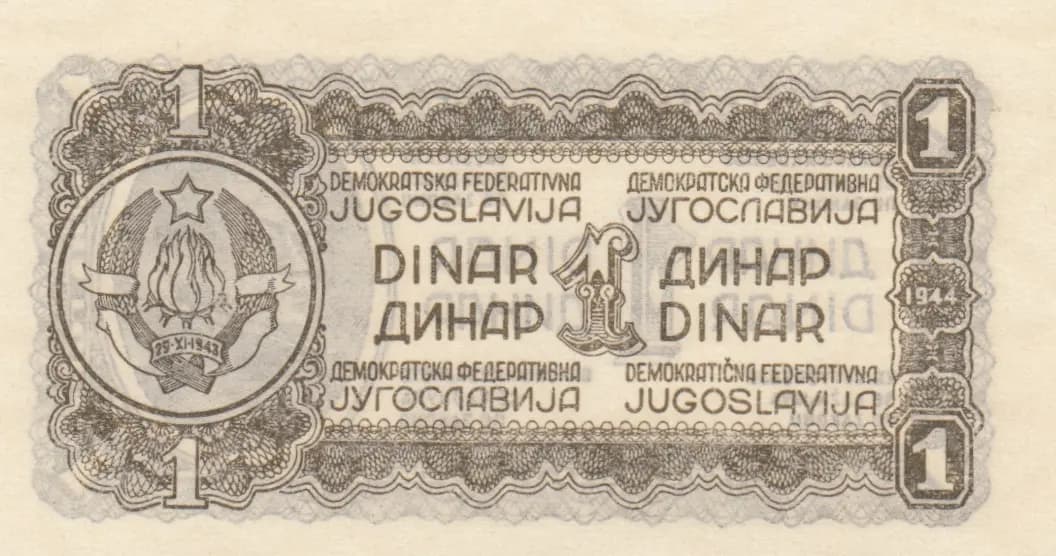
This is a beautiful uncirculated example of the 1944 Yugoslav 1 Dinar note, Pick P-48a, featuring a portrait of partisan Milivoje Rodić on the obverse and the coat of arms of the Democratic Federal Republic of Yugoslavia on the reverse. The note displays excellent condition with crisp, clean surfaces and light natural aging consistent with an 80-year-old banknote, showing no folds, tears, or circulation wear. The ornate decorative borders and dual-script inscriptions (Cyrillic and Latin) reflect the multicultural character of the newly-formed socialist federation.
Common. The eBay price data provided shows consistent sales of UNC examples in the $4-$5.50 range from 2012-2026, with even PMG-graded examples (PMG 64-67) rarely exceeding $35. Catalog values from 2016 list UNC specimens at $10, confirming this is a frequently available note in the collector market. The Democratic Federal Yugoslavia 1944 issues were produced in significant quantities and survive in good numbers today.
Issued in 1944 by the partisan government of Yugoslavia under Josip Broz Tito, this note commemorates the Partisan struggle for liberation during World War II. The portrait of Milivoje Rodić, a decorated partisan officer, represents the military leadership that established the Democratic Federal Republic, while the five-pointed star and torch on the reverse emblem symbolize the socialist ideals and revolutionary fervor of the new Yugoslav state. The dual-language format (Cyrillic and Latin scripts) reflects Yugoslavia's commitment to recognizing all constituent republics and nationalities within the federation.
The obverse features a right-facing profile portrait of Milivoje Rodić, a prominent Yugoslav partisan officer who would later achieve the rank of colonel, depicted in military uniform with decorative insignia within an oval frame. The reverse displays the heraldic coat of arms of the Democratic Federal Republic of Yugoslavia, consisting of a shield containing a torch or eternal flame surmounted by a five-pointed red star, flanked by wheat or oak branches symbolizing agricultural prosperity and national strength. Both sides feature elaborate decorative borders with intricate geometric and floral patterns characteristic of 1940s security printing. The denomination numeral '1' appears in all four corners of the note in decorative frames. The color scheme employs warm browns, tans, and cream tones typical of banknotes from this era.
Front side: 'ДИНАР' / 'DINAR' (Dinar denomination in Cyrillic and Latin); 'ФАЛСИФИКУВАЊЕ СЕ КАЗЊАВА ПО ЗАКОНУ' / 'FALSIFIKAT SE KAZNUJE PO ZAKONU' (Counterfeiting is punished by law); 'КРИВОЛТОРЕЊЕ СЕ КАЗЊАВА ПО ЗАКОНУ' / 'VALSIFIKUVANJETO SE KAZNUVA PO ZAKONO' (Falsification is punished by law). Back side: 'ДЕМОКРАТСКИ ФЕДЕРАТИВНА' / 'DEMOKRATSKO FEDERATIVNA' (Democratic Federal); 'ЈУГОСЛАВИЈА' / 'JUGOSLAVIJA' (Yugoslavia); 'ДИНАР' / 'DINAR' (Dinar denomination repeated in both scripts); '1944' (year of issue in Arabic numerals).
This note was produced using intaglio (engraved) printing, evident from the crisp detail of the portrait, the intricate border patterns, and the precise line work visible in the heraldic design. The multi-pass printing with carefully aligned color work suggests professional security printing from a government or established security printer facility. The quality of impression and registration indicates sophisticated lithographic or combination printing techniques typical of Yugoslav state currency production in the 1944 period.
This specimen is catalogued as Pick P-48a (thin paper variety). The PMG population report identifies three distinct varieties for this base Pick number: P-48a (thin paper), P-48b (thick paper), and P-48c (unstated variant). Paper thickness differences are a documented variety point for this issue, likely reflecting different production runs or paper suppliers. Serial number prefixes and specific signature variants may exist but are not clearly visible in the provided images. Further examination of the serial number would be needed to determine specific signature or printing authority variants.