1/2 lira 1944
Market Prices
3 salesAbout This Note
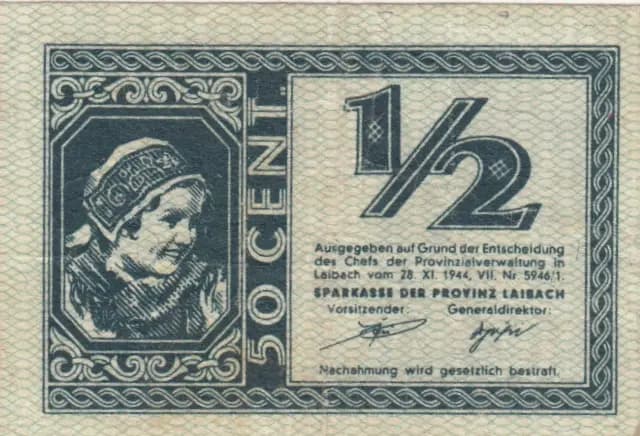
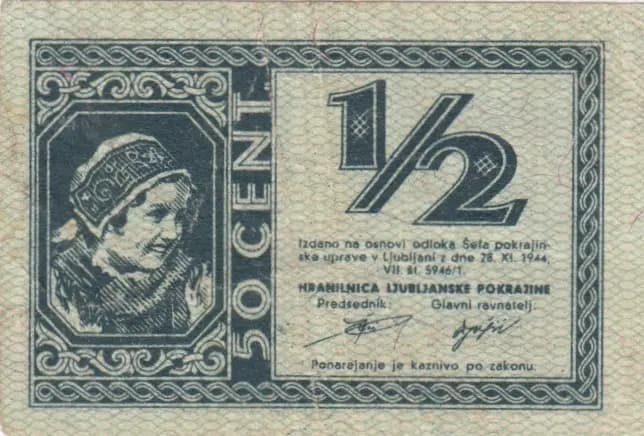
This 1/2 Lira (50 Cent) note from 1944 is a bilingual regional banknote issued by the Hranilnica Ljubljanske Pokrajine (Treasury of the Ljubljana Region) during the complex final year of World War II in Yugoslavia. The VF specimen displays crisp impressions with excellent preservation, featuring a striking bilingual design with German text on the obverse and Slovenian on the reverse, reflecting the contested political and linguistic situation in Ljubljana at that moment. The ornate Celtic-style decorative borders and classical portrait frame design are well-preserved, making this an interesting historical document of a short-lived regional emergency currency.
Common. This regional note had a practical circulation purpose and was issued in sufficient quantities to serve the Ljubljana Region's monetary needs in late 1944. eBay market data confirms common status: recent PMG 65 examples sold for $66-$78, while older EF examples sold for under $34, and catalog valuations from 2008 list this VF specimen at only $7.50. Print run information is not exceptionally limited for this issuer. The Pick catalog recognizes only one variant (P-R16), and PMG population data shows only modest grading activity, consistent with a common but not heavily collected regional issue. Regional emergency notes from WWII Yugoslavia are generally available to collectors.
This note was issued on November 28, 1944, by the provincial administration in Ljubljana (Laibach in German), a period when the city was transitioning from Nazi occupation toward Yugoslav communist control. The bilingual nature—German administrative text paired with Slovenian translations—reflects the complex sovereignty claims and administrative structures existing in Ljubljana during the final months of WWII. The provincial savings bank (Sparkasse/Hranilnica) issued this emergency currency to meet local monetary needs during the chaotic end stages of the war in the Balkans.
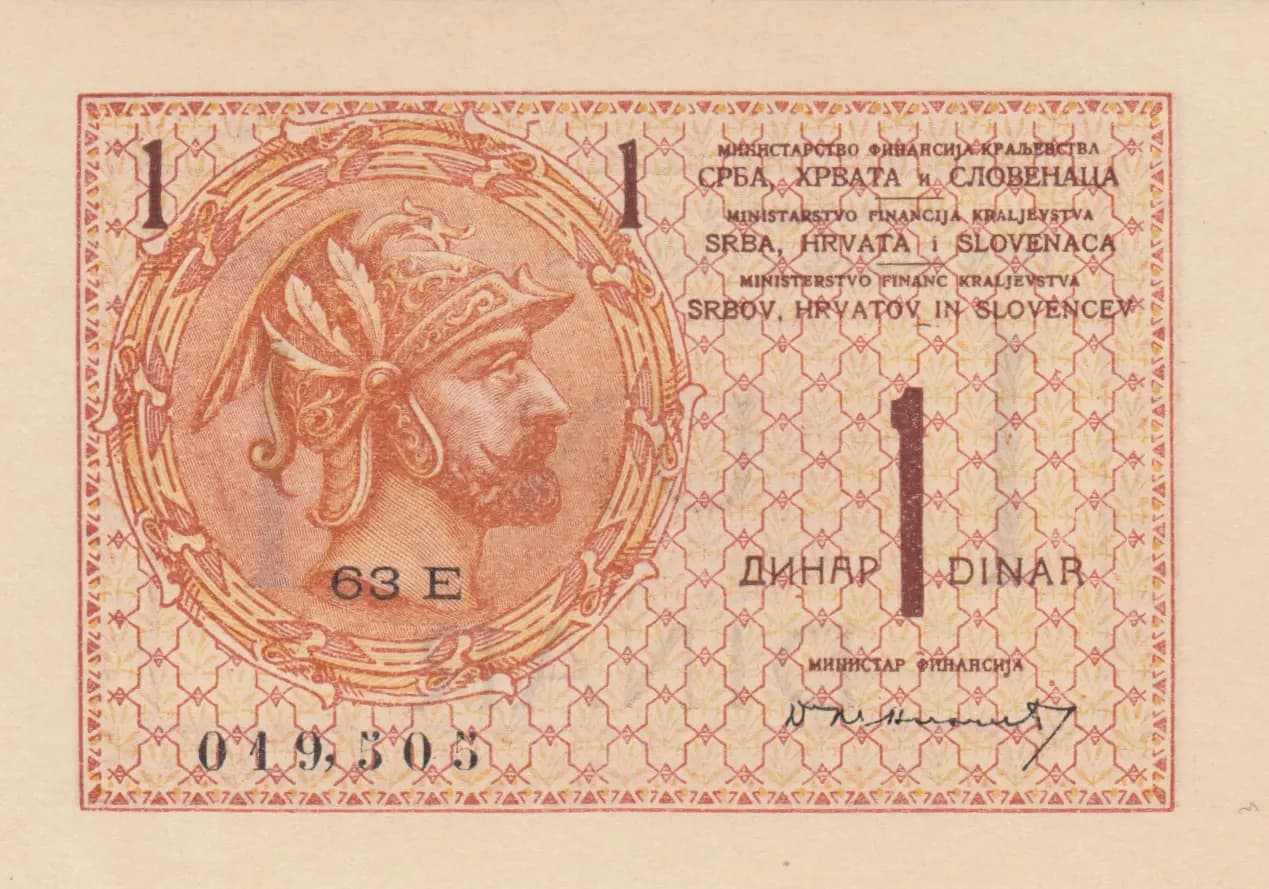
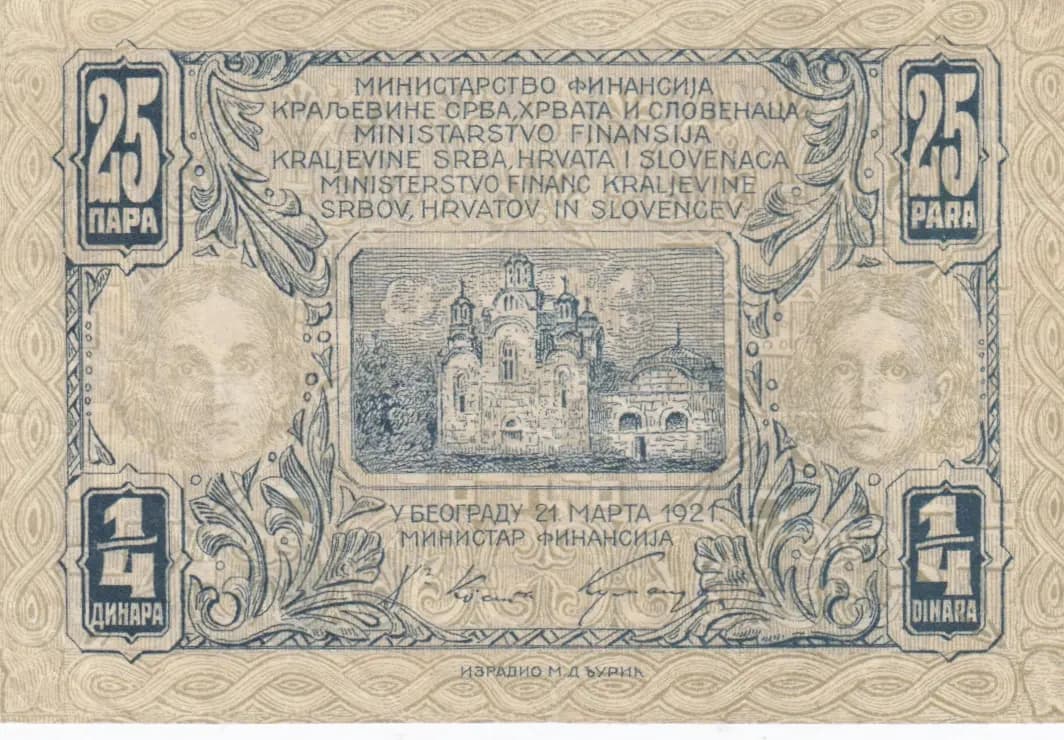
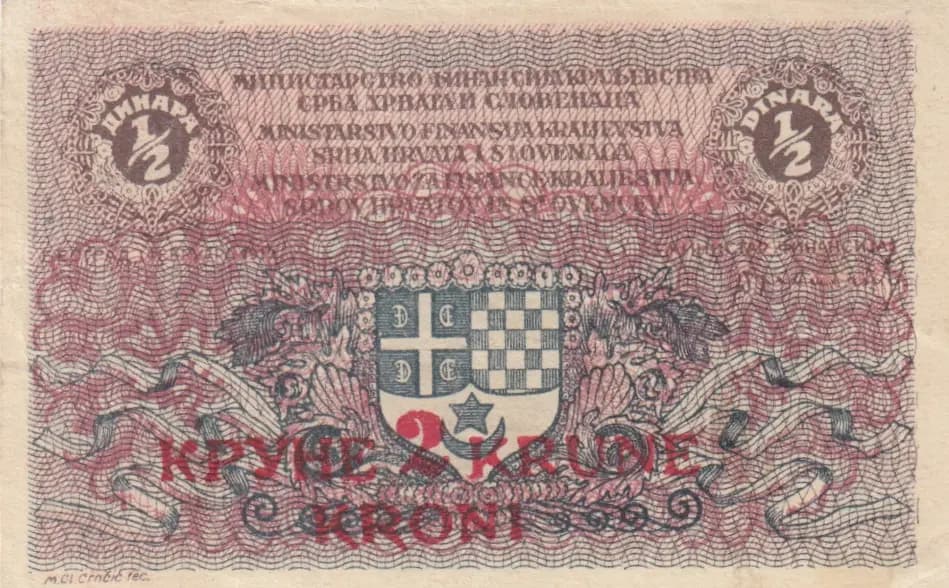
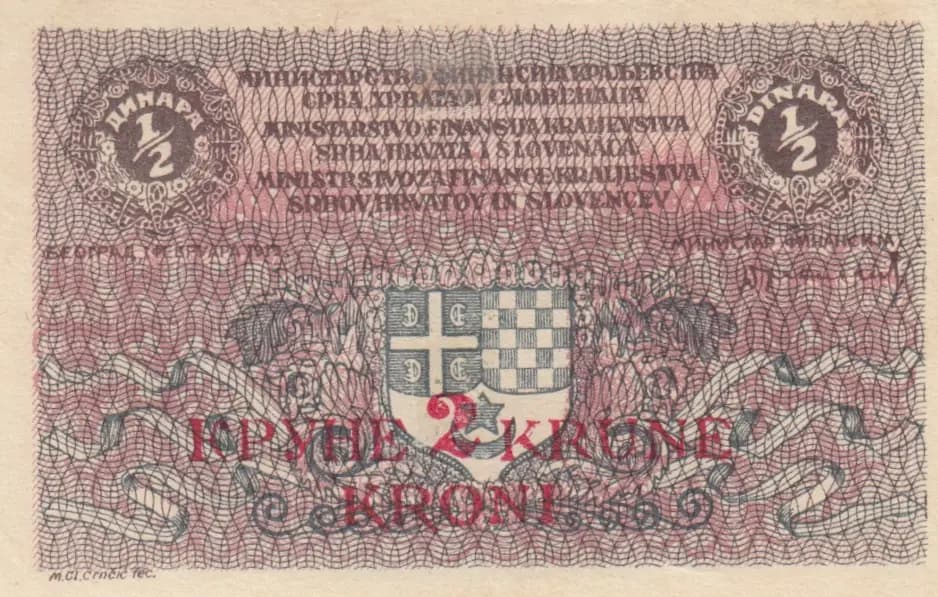
This bilingual regional note features a classical, symmetrical design typical of Central European mid-20th century currency. The obverse and reverse each present an identical profile portrait facing left within an ornate rectangular frame adorned with interlocking Celtic or geometric patterns—this appears to be a regional or symbolic figure rather than a specific identified historical personage, rendered in classical engraving style. The portrait subject wears what appears to be traditional headwear consistent with Slovenian or Yugoslav regional dress. The denomination '1/2' is prominently displayed in large numerals on the right side of each face. The color scheme employs dark blue/navy, cream, and gray tones, creating a formal, official appearance. Corner flourishes and fine line-work throughout the decorative border frame served as contemporary anti-counterfeiting measures. The bilingual text layout—German on front, Slovenian on reverse—underscores this note's status as a transitional administrative currency reflecting Ljubljana's complex geopolitical position in late 1944.
FRONT (German side): 'SPARKASSE DER PROVINZ LAIBACH' (Savings Bank of the Province of Ljubljana); 'Ausgebeben auf Grund der Entscheidung des Chefs der Provinzialverwaltung in Laibach vom 28. XI. 1944, VII. Nr. 5044/1' (Issued on the basis of the decision of the Chief of the Provincial Administration in Ljubljana from 28 XI 1944, VII No. 5044/1); 'Vorsitzender' (Chairman); 'Generaldirektor' (General Director); 'Nachshmung wird gesetzlich bestraft' (Counterfeiting will be punished by law). REVERSE (Slovenian side): 'HARRISON LJUBLJANSKE POKRAJINE' (Treasury of the Ljubljana Region); 'Izdano na osnovi odloka Šefa pokrajinske uprave v Ljubljani z dne 28. XI. 1944, VII. št. 5044/1' (Issued on the basis of the decree of the Chief of the Regional Administration in Ljubljana from 28 XI 1944, VII No. 5044/1); 'Predsednik' (President); 'Glavni računalnik' (Chief Accountant); 'Ponarejanjo je kaznivo po zakonu' (Counterfeiting is punishable by law). Both sides display denomination markings '1/2' and '50 CENT'.
Based on the crisp fine line-work visible in the ornate borders, the classical portrait rendering, and the precise denomination numerals, this note was produced using intaglio (engraving and/or steel plate printing), the standard security printing method for European banknotes of this era. The sharp detail in the decorative Celtic-style frames and the consistent ink impression across both sides are characteristic of professional bank note security printing. The specific printer is not definitively documented in standard catalogs, though this type of regional Austrian/Slovenian emergency currency was often produced by established European security printers or local state printing facilities during the WWII period.
PMG catalogs only one variant for Pick R16 (50 Cent = 1/2 Lira denomination). No major varieties have been documented for this specific issue with respect to serial number prefixes, signature variations, or overprints. The bilingual design (German obverse/Slovenian reverse) is the standard format for this Pick number and constitutes the single recognized variety. Minor variations in printing quality or slight registration shifts may exist across different printings from the issuing period, but these are not cataloged as distinct varieties in standard numismatic references.