250 fils 1965 replacement
About This Note
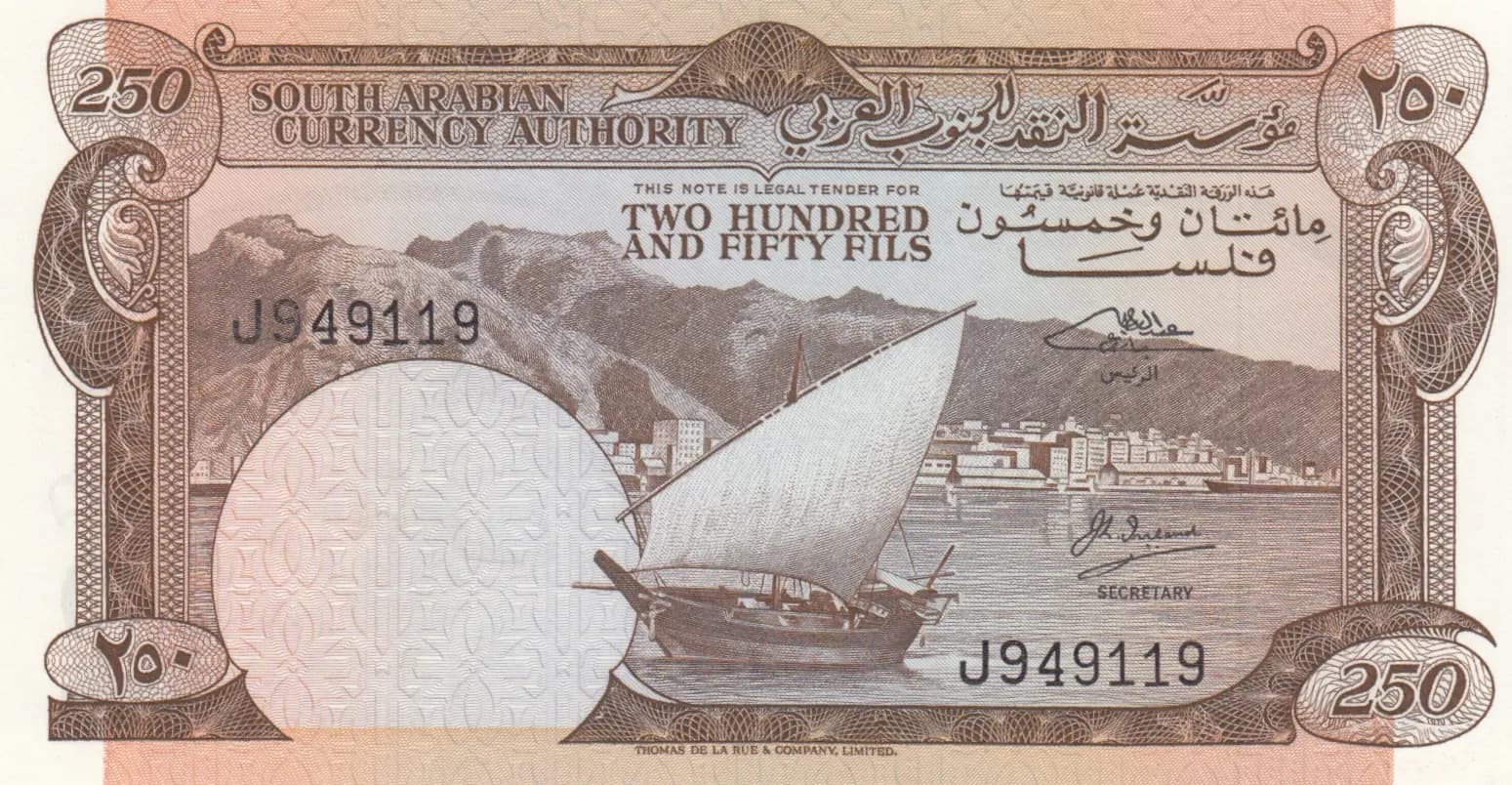
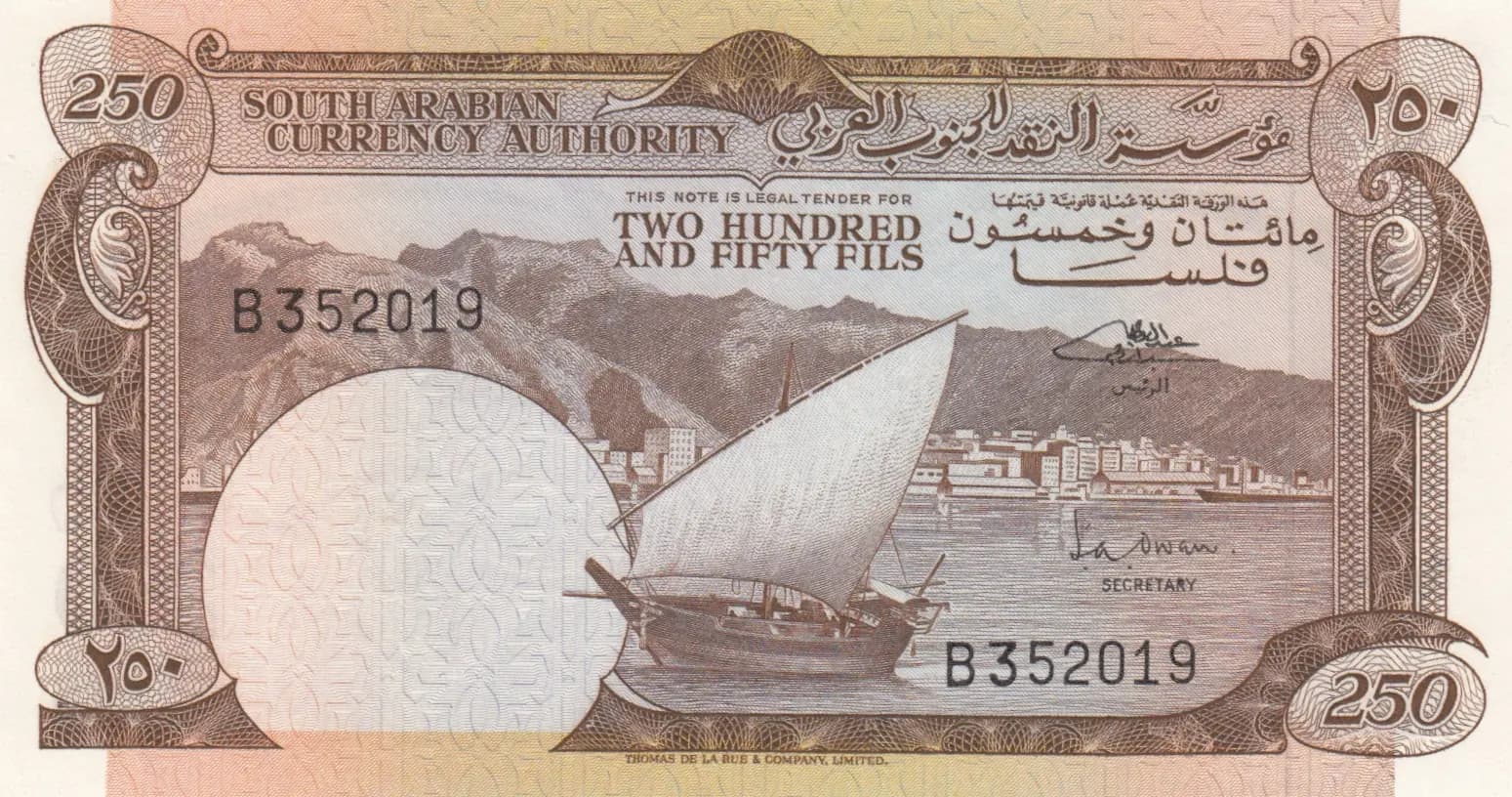
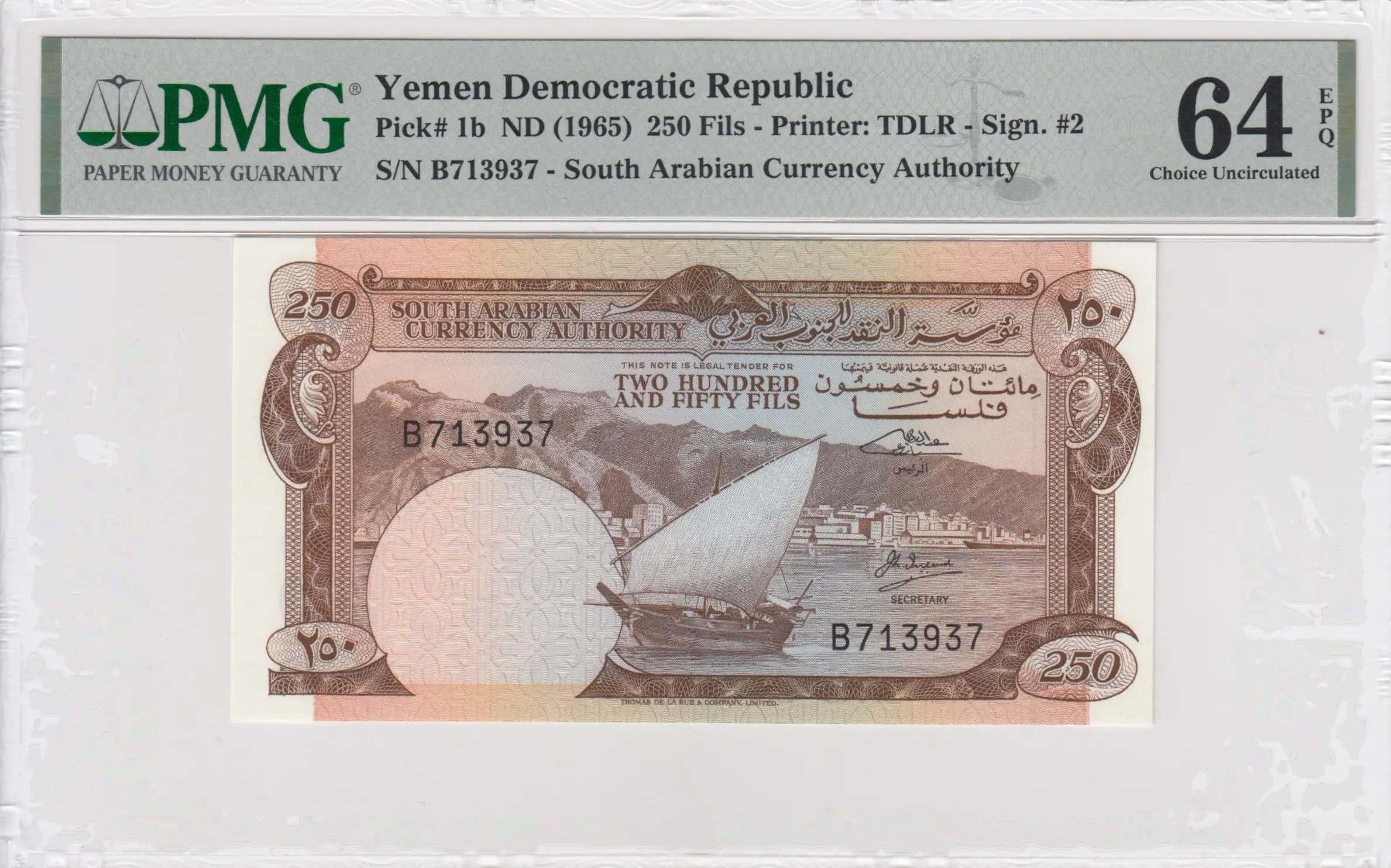
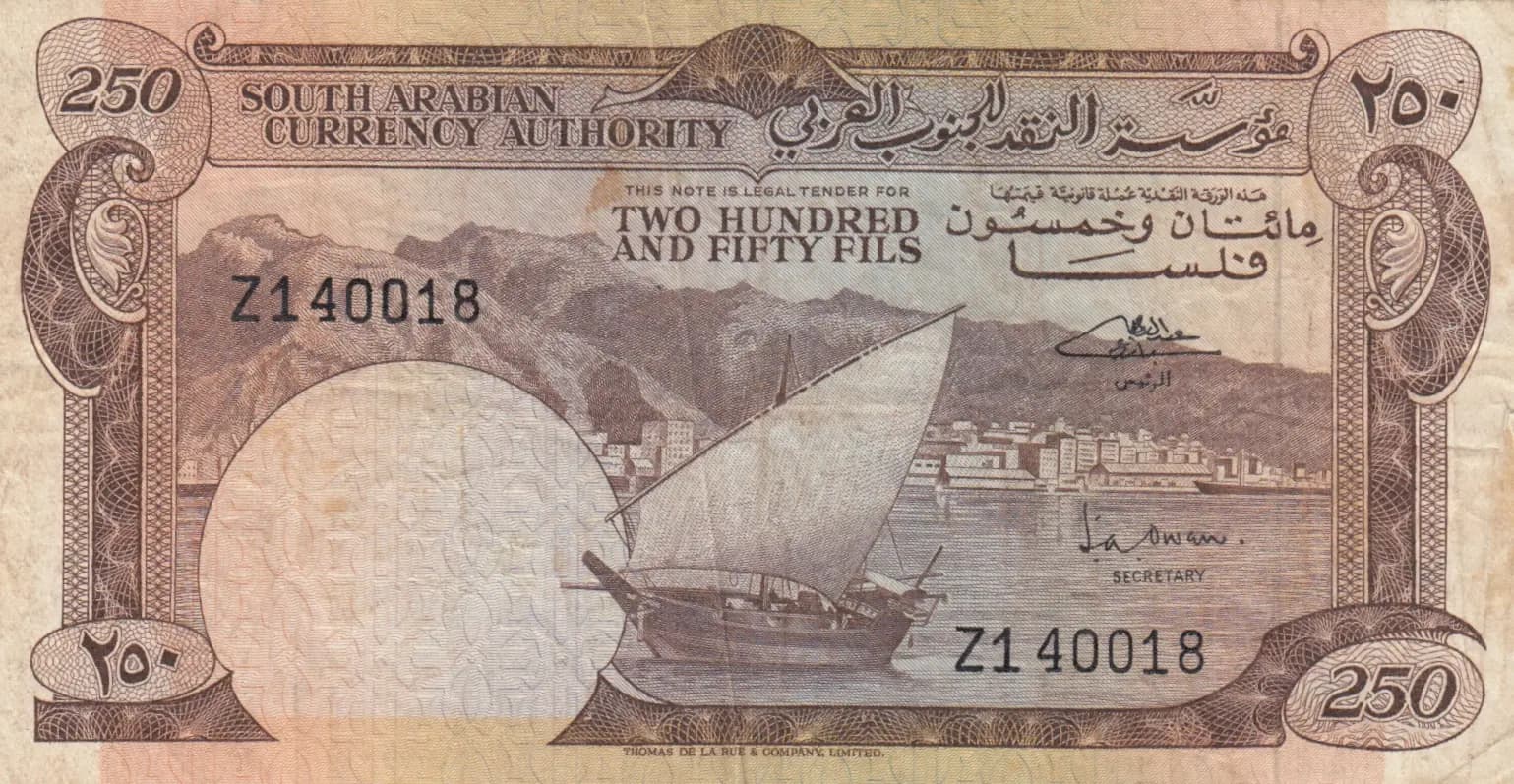
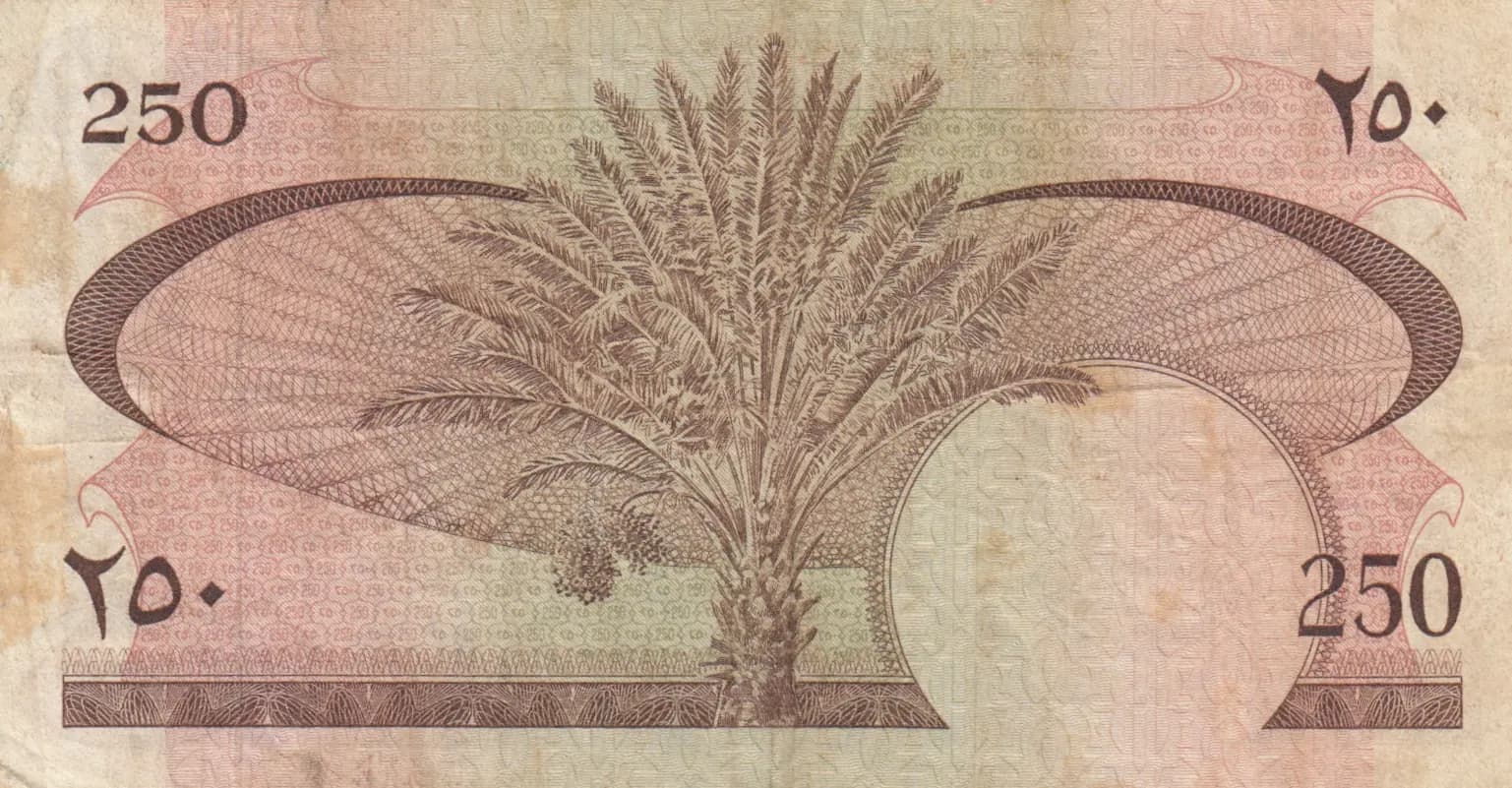
This 250 fils banknote from 1965 represents an early emission from the South Arabian Currency Authority, featuring a striking seaport vignette with traditional dhows on the obverse and an ornate palm tree design on the reverse. The note exhibits moderate circulation wear consistent with its age, including creasing and discoloration, yet retains clear legibility of all inscriptions and design elements. As a replacement note (indicated by the asterisk in Pick P-1a*), this represents a scarcer variety within the series.
Uncommon. While the South Arabian Currency Authority operated only briefly (1964-1967) before the region's political reorganization, this denomination in replacement variety (P-1a*) is less frequently encountered than the standard issue. The specific condition grade (F - Fine) and the replacement note designation suggest this is not a high-circulation common type, though it is not exceptionally rare. Replacement notes from short-lived regional authorities typically have smaller print runs than standard issues.
The South Arabian Currency Authority issued this note during a transitional period in South Arabian history, bridging the colonial era and movements toward independence. The maritime imagery of the seaport and traditional sailing vessels reflects the region's historical importance as a trading hub, particularly Aden's significance as a major port city. The dual English-Arabic inscriptions exemplify the bilingual nature of official communications in the post-colonial Arabian Peninsula during the mid-1960s.
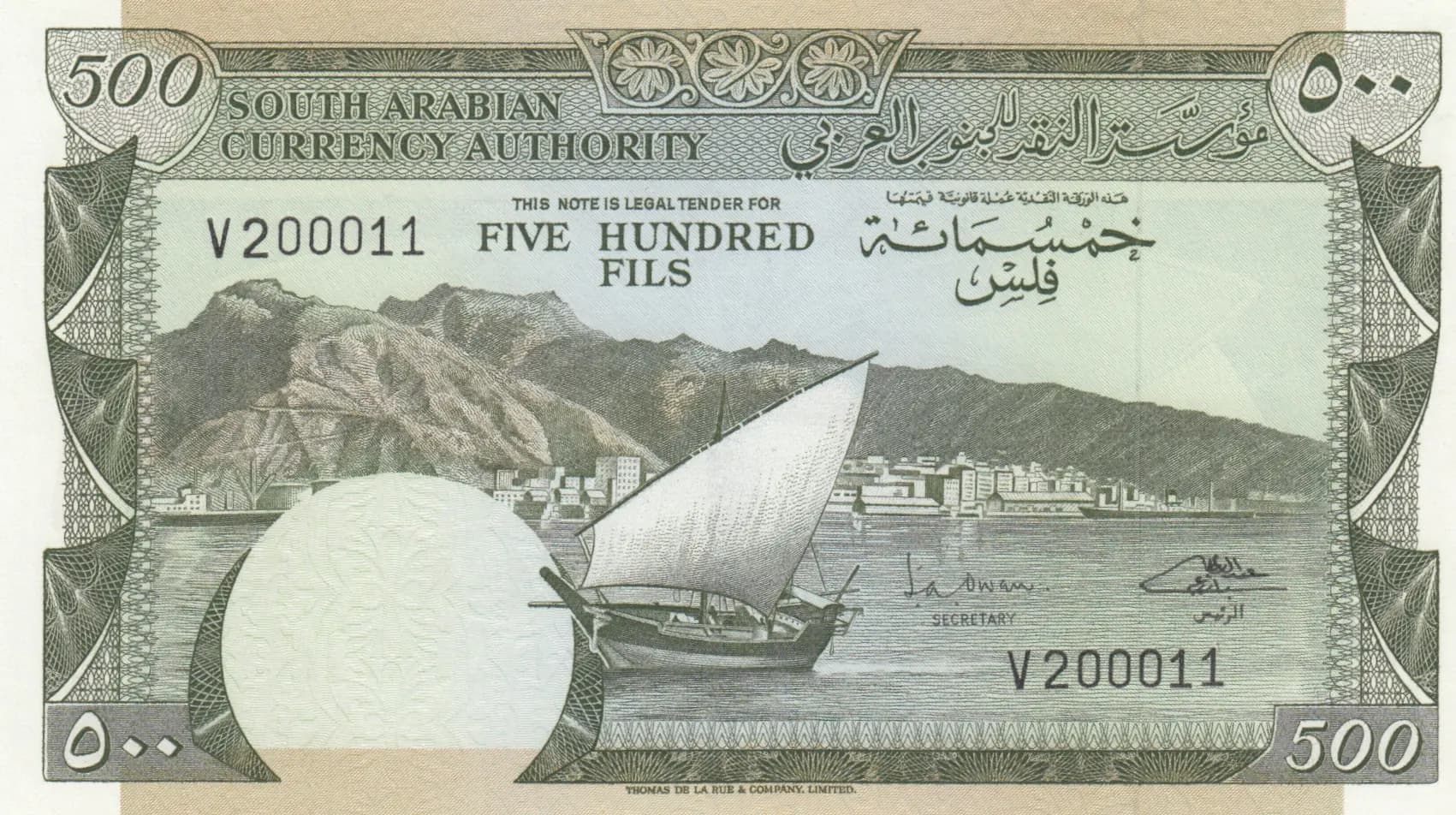
The obverse depicts a harbor scene representing Aden or another major South Arabian port, featuring traditionally rigged dhows anchored in the harbor with a coastal city silhouette and mountains visible in the background. The design is framed by ornate spiral and guilloche border ornaments in the corners, with a circular watermark area positioned on the left side. The reverse displays a symmetrical, botanically-inspired palm tree illustration rendered in fine detail, characteristic of De La Rue's ornamental engraving style, surrounded by decorative borders with denomination numerals in the corners. The color palette shifts between warm sepia tones on the obverse and pink-rose to greenish-tan hues on the reverse.
Front side: '250' (denomination numerals); 'SOUTH ARABIAN CURRENCY AUTHORITY' (English issuer); 'هيئة الرقابة النقدية' (Arabic: Currency Control Authority); 'THIS NOTE IS LEGAL TENDER FOR TWO HUNDRED AND FIFTY FILS' (English legal tender clause); 'مائتان وخمسون فلس' (Arabic: Two hundred and fifty fils); Serial number 'Z140018'; 'SECRETARY' (signature line); 'THOMAS DE LA RUE & COMPANY, LIMITED' (printer attribution); Back side: '250' and '٢٥٠' (denomination in English numerals and Arabic numerals respectively).
This note was produced using intaglio (line engraving) printing, executed by Thomas De La Rue & Company, Limited, the renowned British security printer. The fine line engraving is evident throughout both sides, particularly in the detailed rendering of the dhow rigging, palm fronds, and ornate guilloche border patterns. The security features include watermark areas visible as light circular regions on both sides, typical of De La Rue's security printing methods from this period.
This is cataloged as Pick P-1a* (replacement note), denoted by the asterisk. The serial number prefix 'Z' and the specific serial number Z140018 may indicate a later printing or replacement batch. The replacement notes from the South Arabian Currency Authority are generally scarcer than the original P-1a issue, making the asterisk designation significant for collectors.