250 fils 1965
Market Prices
8 salesAbout This Note
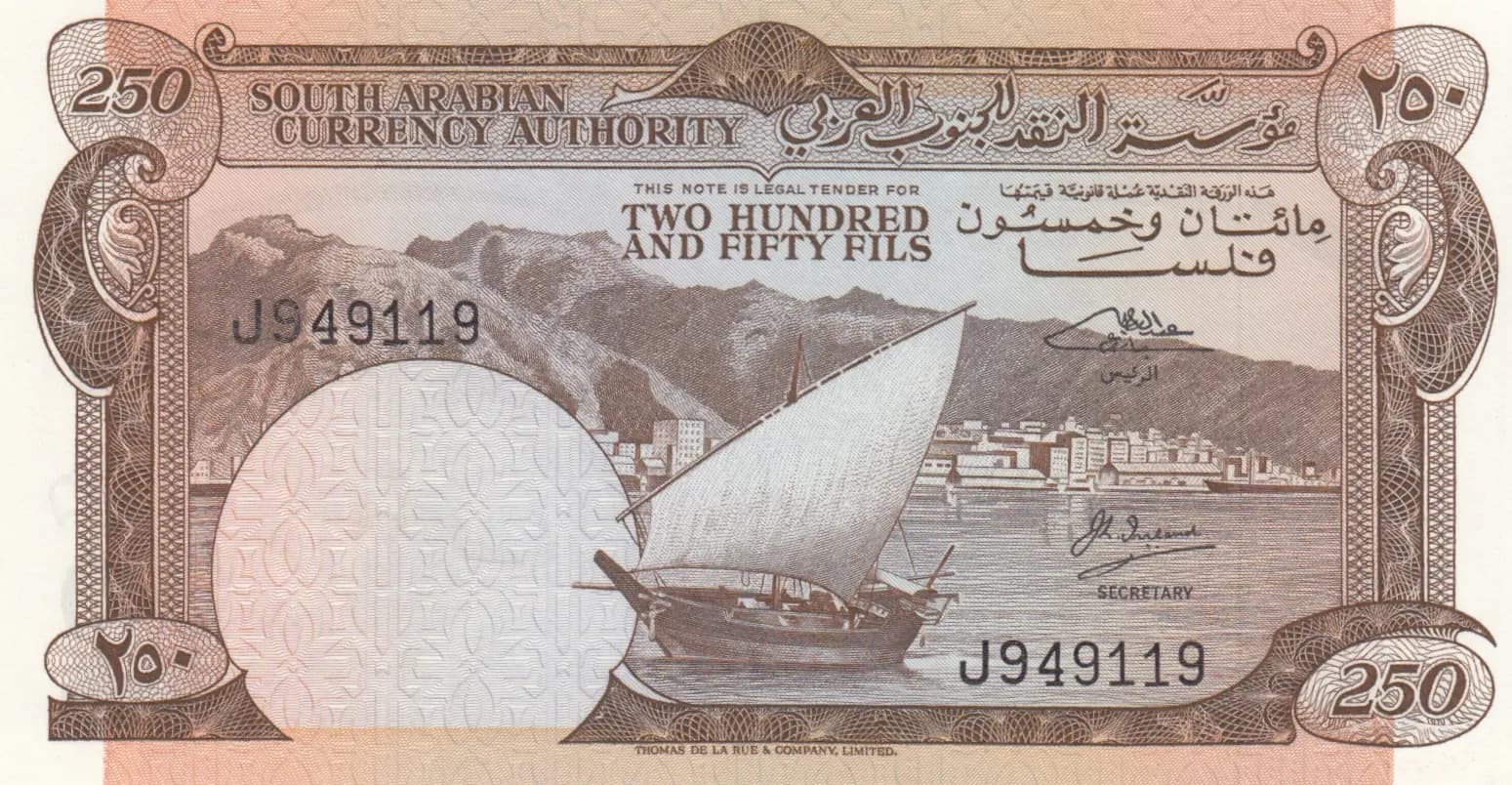
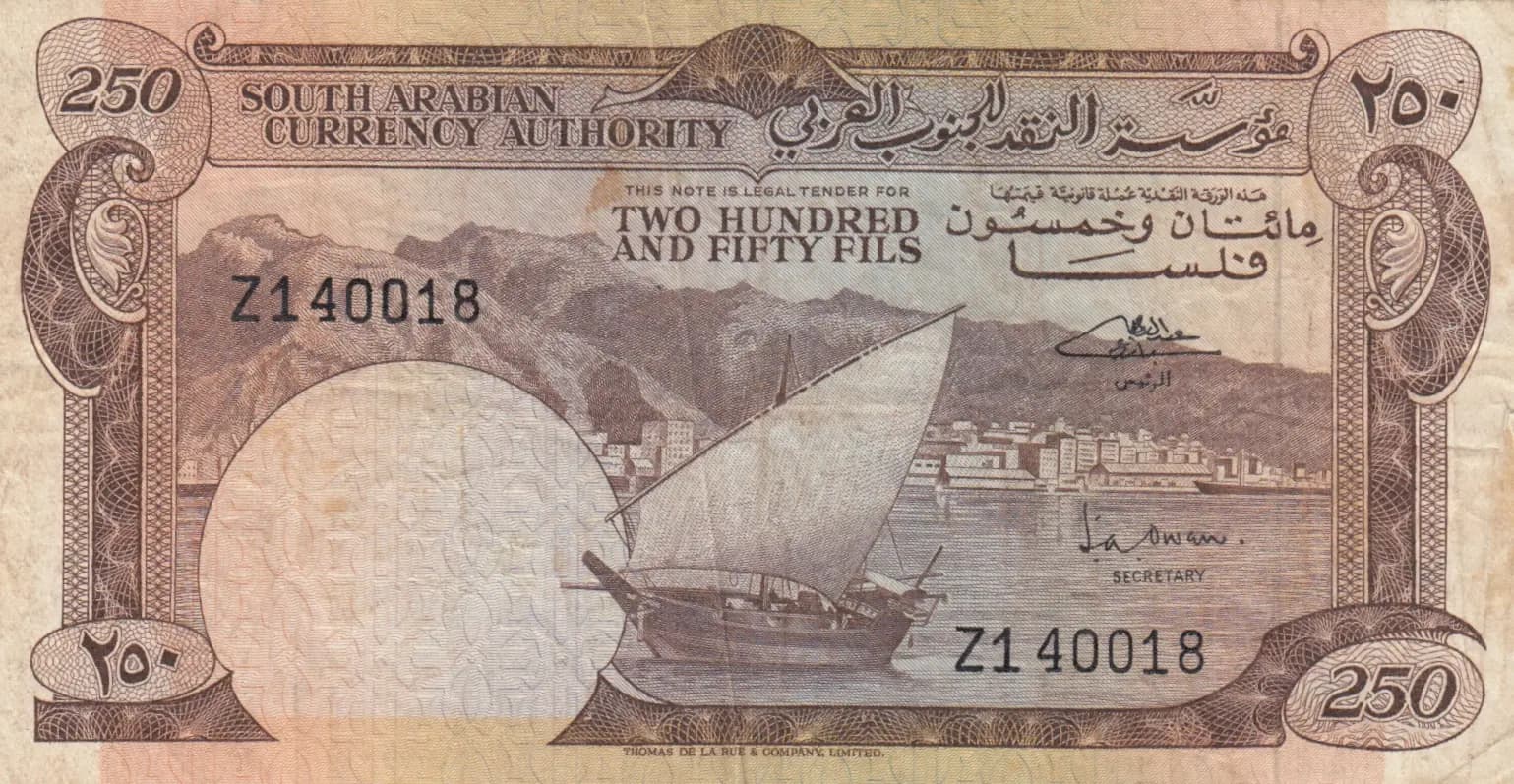
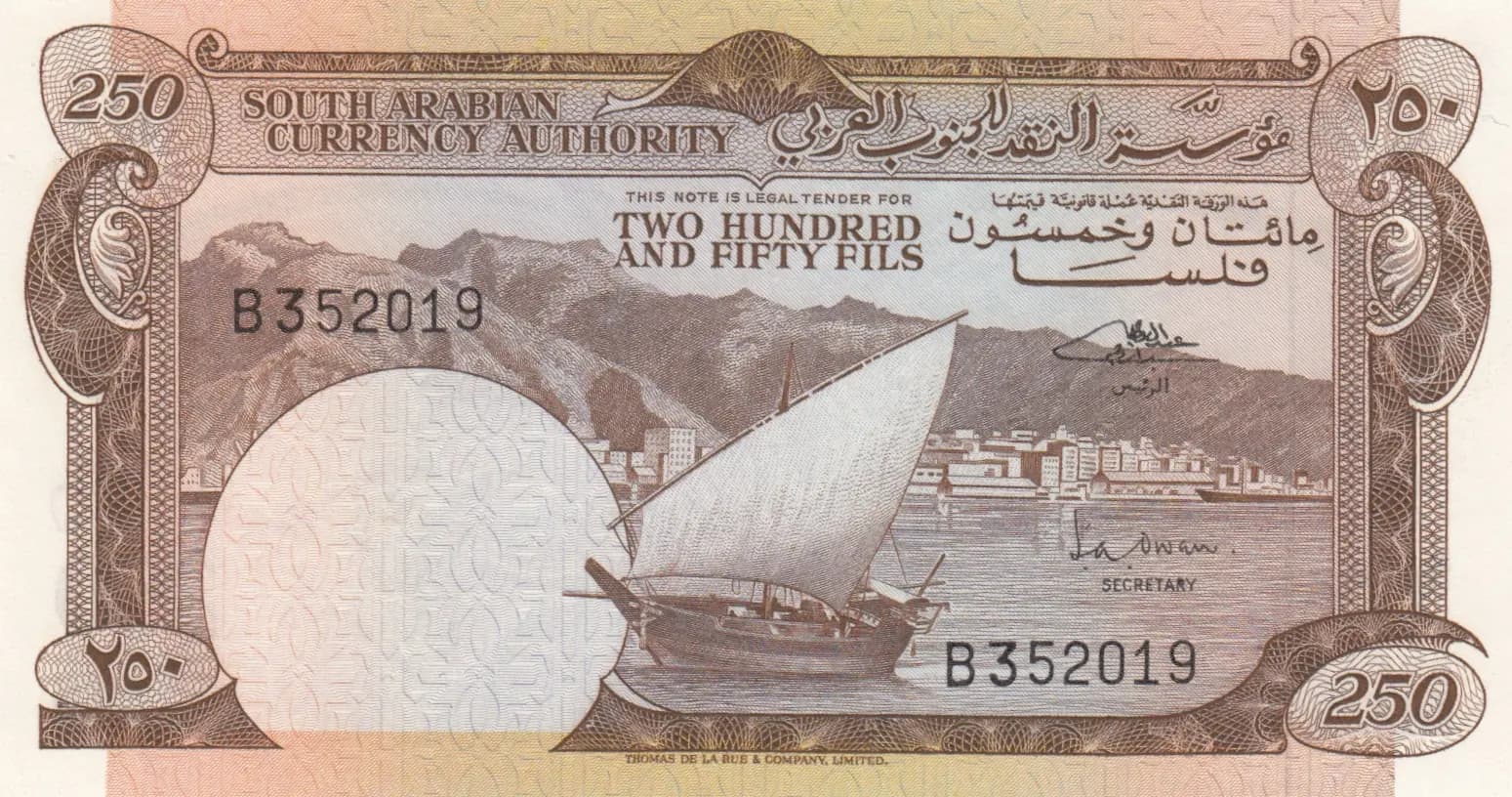
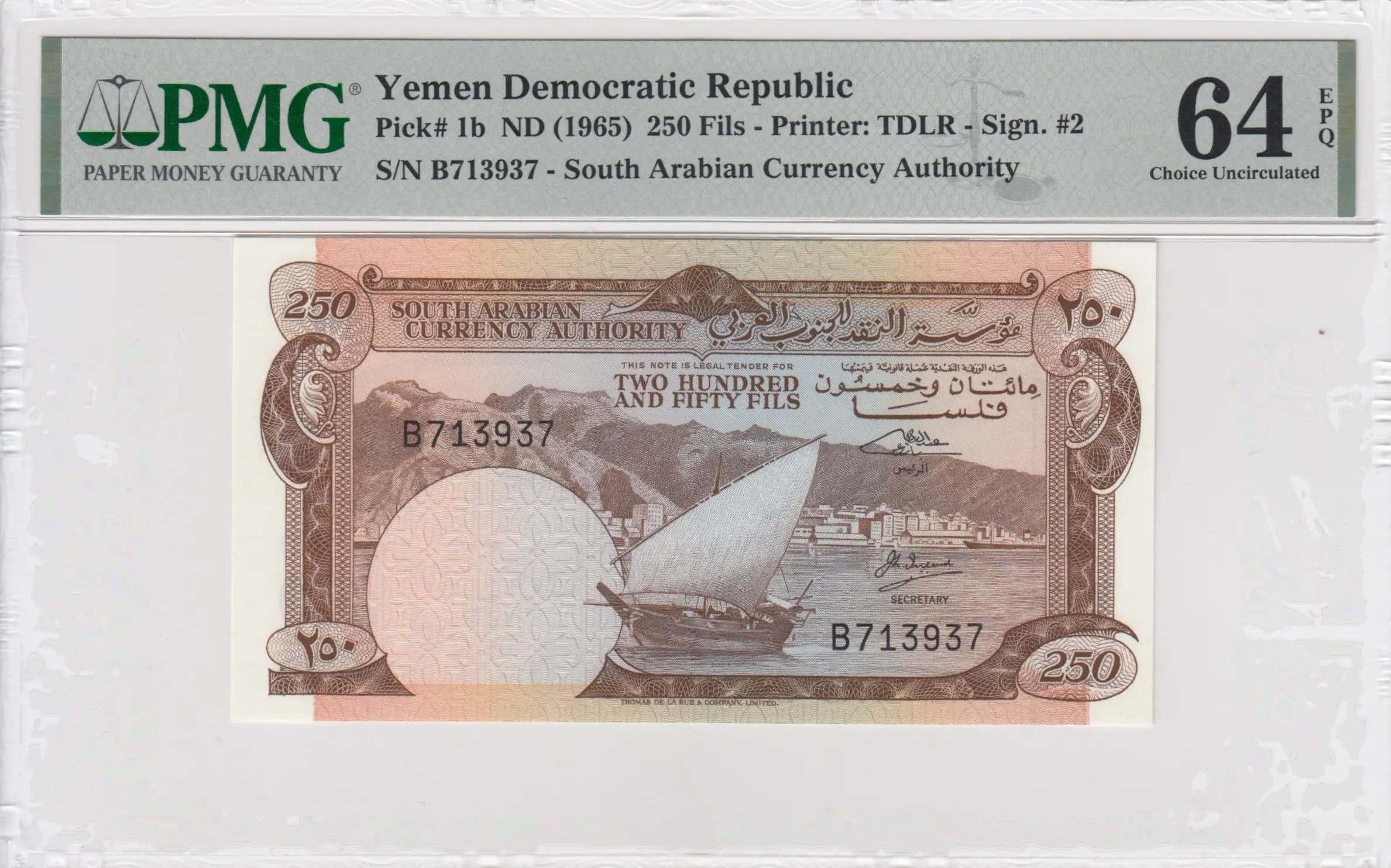
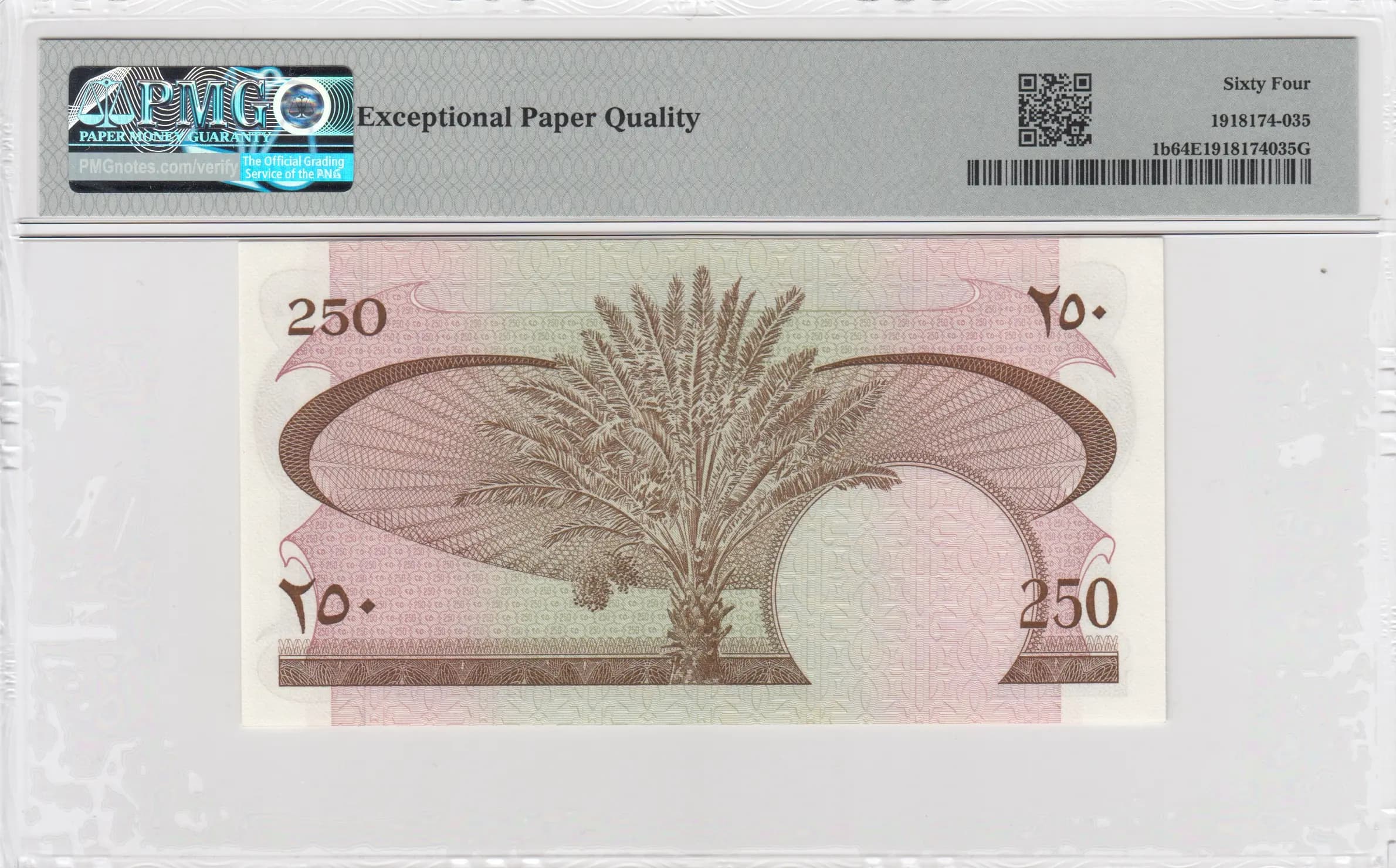
A PMG 66 EPQ example of the South Arabian Currency Authority's 250 fils note from 1965, displaying exceptional preservation with sharp, crisp printing throughout and no visible wear. The obverse features a striking maritime scene with a traditional dhow sailing vessel against coastal mountains and settlements, while the reverse showcases a detailed engraving of a date palm tree—both iconic symbols of South Arabian geography and culture. This is a scarce early issue from the short-lived South Arabian Currency Authority, making it a notable piece of Middle Eastern monetary history.
Scarce. While not extremely rare, South Arabian Currency Authority notes from 1965 are significantly less common than later Yemeni issues due to the short operational period of the issuing authority (the South Arabian Currency Authority functioned only briefly before political changes). The market evidence from realbanknotes.com shows PMG 67 examples selling in the $23-$64 range historically, with more recent 2025 sales at $44.59, indicating modest collector demand and limited supply compared to common global banknotes. The PMG 66 EPQ grade represents superior preservation that should command a premium relative to the catalogue VF ($25) and UNC ($135) valuations from 2019, placing this specific example in the upper echelon of available specimens.
Issued by the South Arabian Currency Authority in 1965, this note represents a transitional period in South Arabian monetary independence, predating the later unified Yemeni state. The depicted dhow sailing vessel and date palm tree reflect the region's maritime heritage and agricultural economy, while the English and Arabic bilingual inscriptions underscore the British influence during the South Arabian protectorate period. The South Arabian Currency Authority operated for a limited timeframe, making notes from this issuer particularly significant for collectors of Middle Eastern and transitional currency.
The obverse depicts a coastal maritime scene as its primary design element, featuring a traditional Arab dhow sailing vessel prominently positioned on water in the center-right portion of the note. The composition includes mountainous terrain in the background and a settlement with period architecture visible in the upper right, establishing the geographic context of South Arabia. A large circular watermark featuring the regional arms is positioned on the left side. The reverse showcases a botanically detailed engraving of the date palm (Phoenix dactylifera), a culturally and economically significant plant throughout the Arabian Peninsula, rendered with fine cross-hatching and linework against a subtly color-graded background. Both sides are framed by ornate decorative scrollwork borders in the corners, typical of mid-20th century currency design. The color scheme employs brown, tan, cream, and peach tones on the obverse, with pink, green, tan, and cream on the reverse, creating visual distinction between sides.
Obverse (Front): English text reads 'SOUTH ARABIAN CURRENCY AUTHORITY,' 'THIS NOTE IS LEGAL TENDER FOR,' and 'TWO HUNDRED AND FIFTY FILS' with denomination '250' in corners and 'SECRETARY' signature line. Arabic text (السلطة النقدية للجنوب العربي) translates to 'South Arabian Currency Authority,' (هذا الورقة نقد شرعي) 'This note is legal tender,' and (مائتان وخمسون فلس) 'Two hundred and fifty fils' with Arabic numeral denomination (ق - Qaf). Serial number B713937 is visible. Reverse (Back): Denomination numerals '250' appear in corners with Arabic (ق - Qaf) markings corresponding to the fils currency designation.
This note was produced using steel engraving and intaglio printing methods, as evidenced by the fine line work, cross-hatching details, and crisp impression quality visible throughout both sides. The detailed botanical rendering of the date palm and the intricate decorative borders demonstrate the high-quality engraving work characteristic of security printing from this era. The watermark integration and the precision of the denomination numerals and inscriptions indicate professional security printer standards. Specific printer attribution for South Arabian Currency Authority notes of this period is typically associated with De La Rue or similar British security printers given the protectorate relationship, though definitive confirmation would require additional research into this issuer's documentation.
This example bears the serial number B713937 with the 'B' prefix, which represents one of the known serial number varieties for this issue. The signature line marked 'SECRETARY' corresponds to the standard authorized signatory format for South Arabian Currency Authority notes. Pick catalog P-1b designation indicates this is the second cataloged variety of the 250 fils denomination from this issuer. The 1965 date aligns with the earliest emissions from this authority; later varieties exist with 1967 dating. No overprints or unusual markings are visible on this specimen, indicating it represents the standard base design without special designations.