250 fils 1965
Market Prices
17 salesAbout This Note
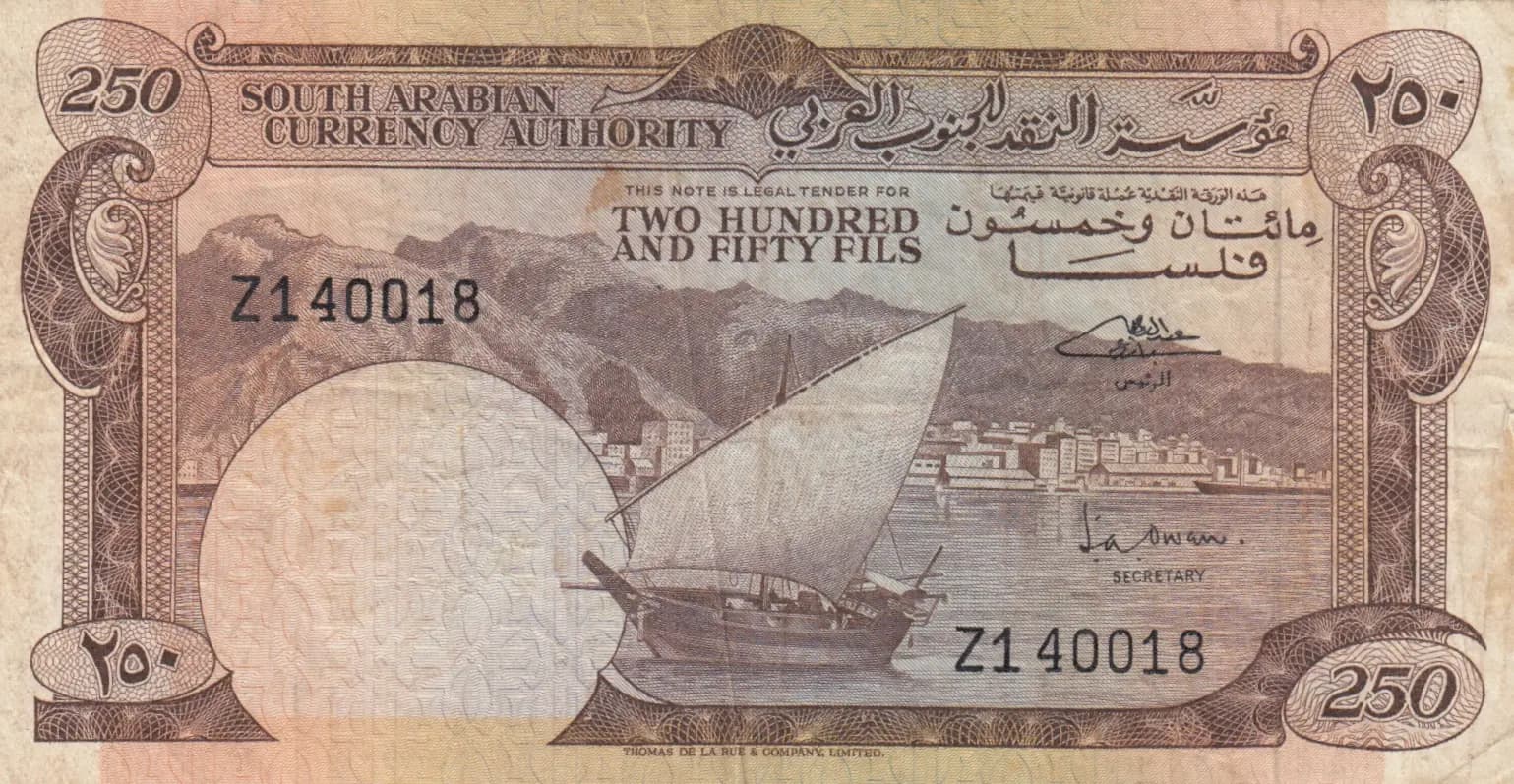
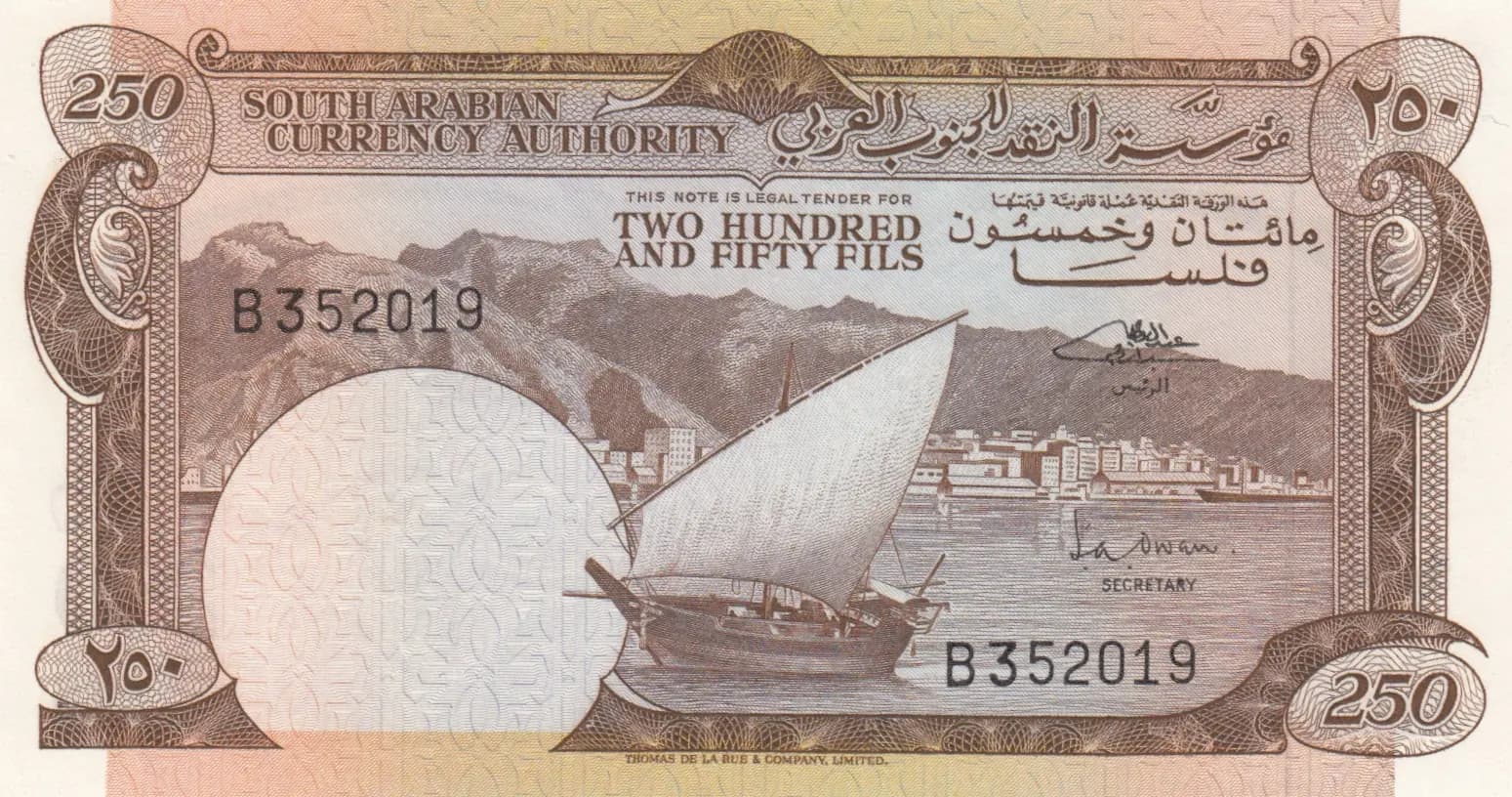
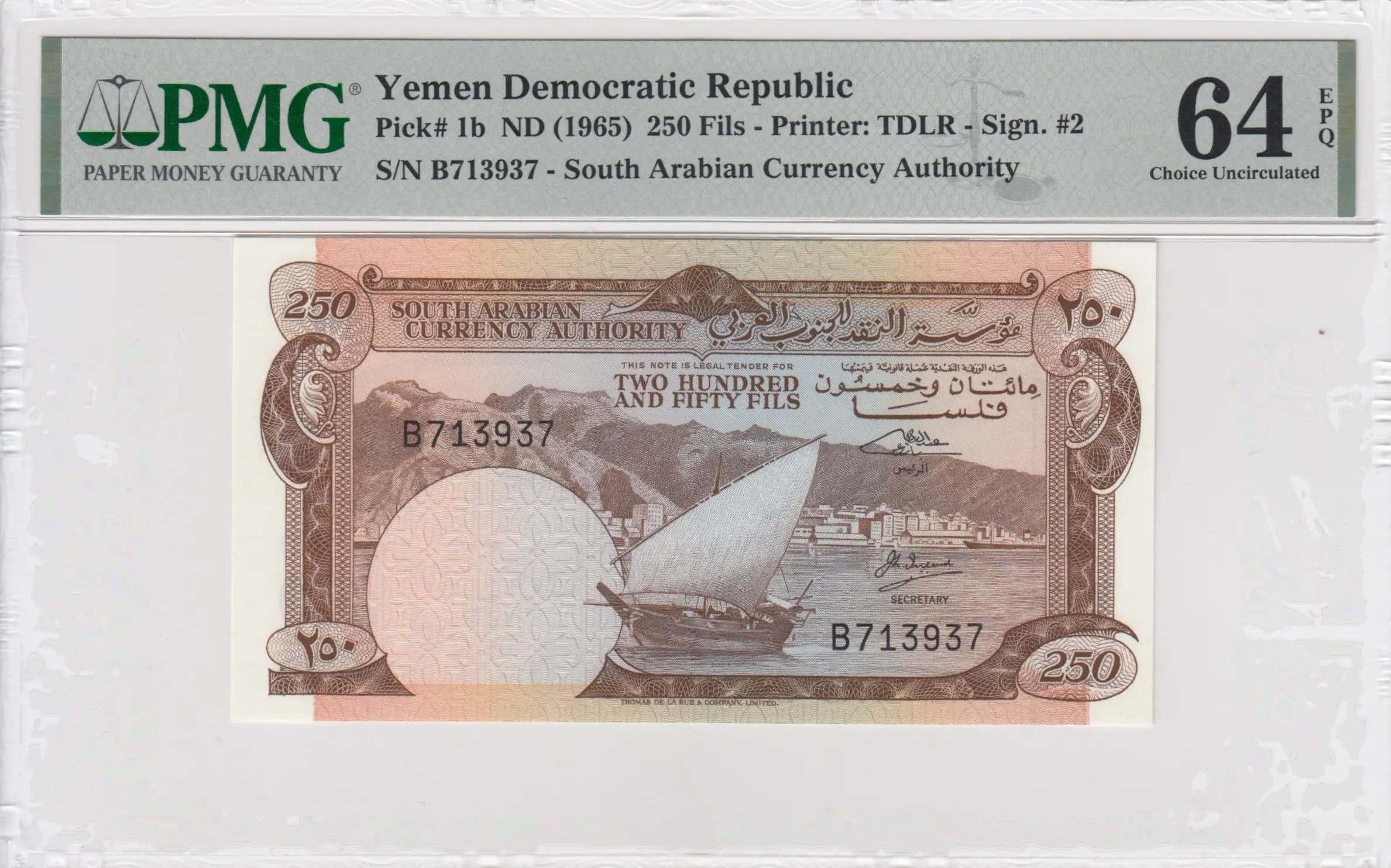
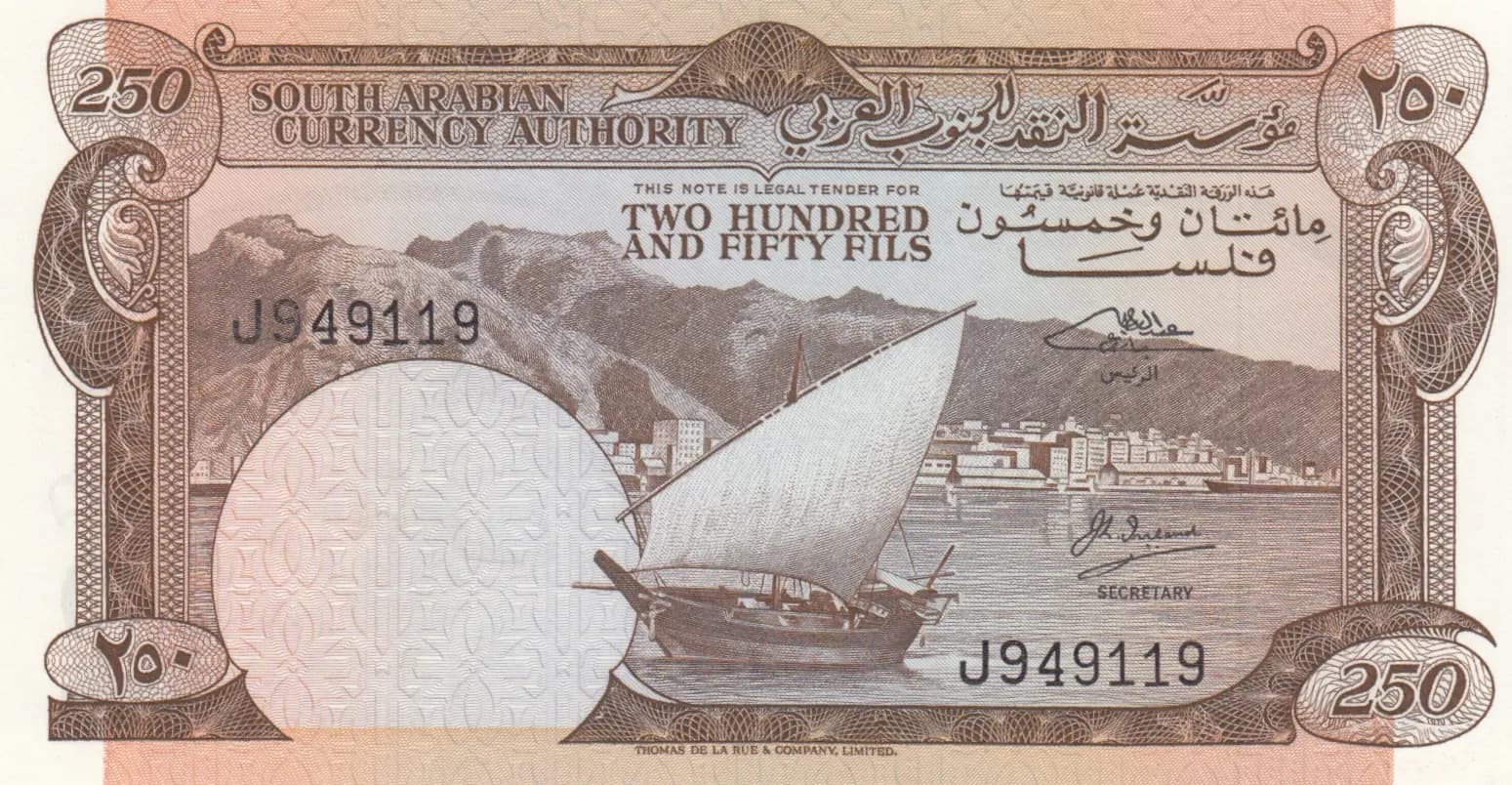
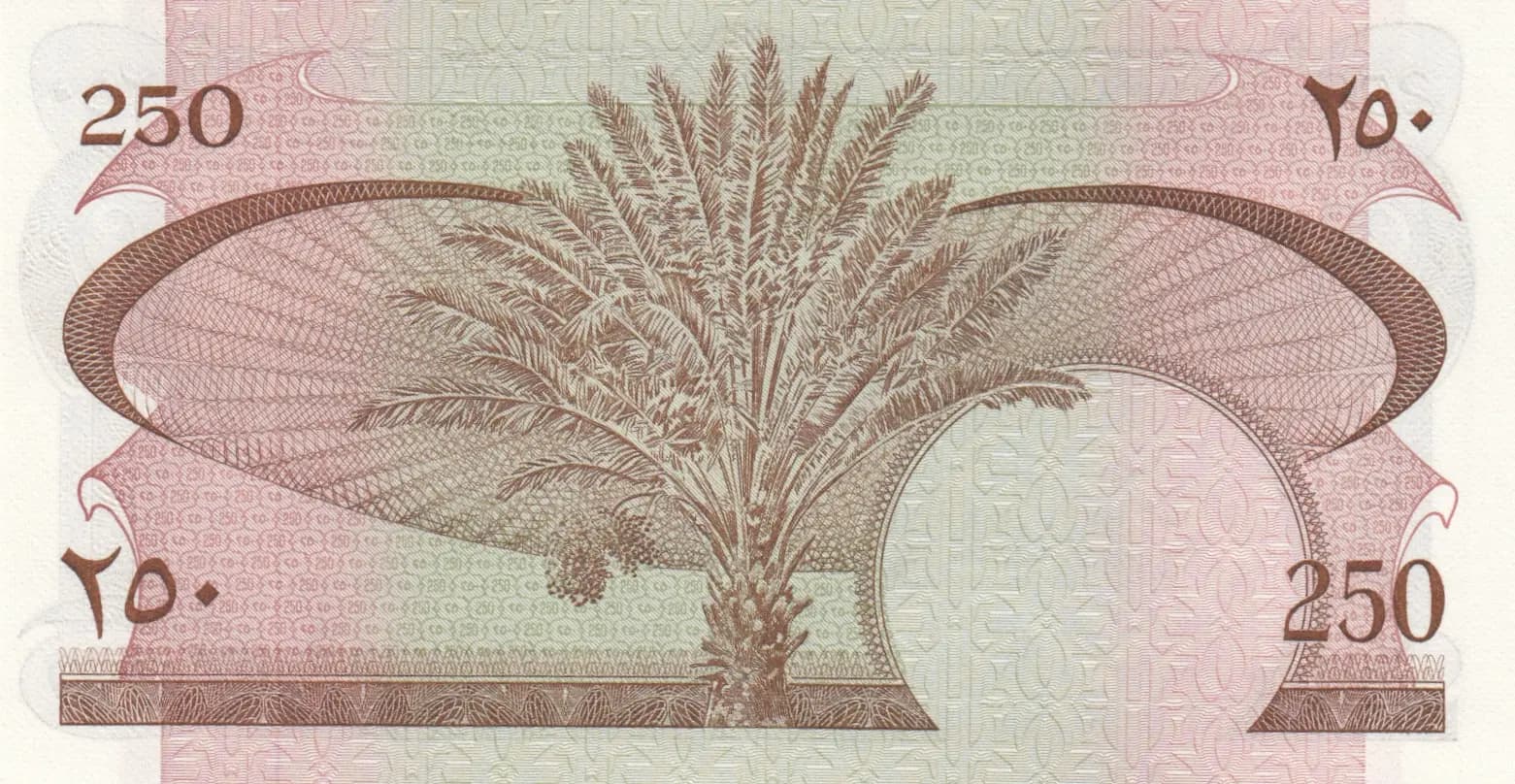
This is a 250 fils note from the South Arabian Currency Authority, issued in 1965 and graded UNC. The obverse features a stunning maritime scene with a traditional dhow sailing vessel, coastal cityscape, and mountainous backdrop rendered in warm earth tones with intricate ornamental borders. The reverse showcases a detailed date palm tree in pink and green tones, symbolizing the region's agricultural heritage. Both sides display the crisp, clean appearance expected of uncirculated examples, with fine engraving work and prominent circular watermark areas characteristic of Thomas de la Rue printing.
Common. This is a regular issue from a short-lived but legitimate currency authority with what appears to be a substantial print run. The eBay price history provided shows consistent trading at moderate levels ($4–$46 depending on grade), with UNC examples selling in the $23–$32 range, well within the normal range for common 20th-century foreign banknotes. The 2019 catalogue value of $110 for UNC likely reflects collector demand rather than scarcity. No evidence of recall, reprinting variations, or restricted distribution exists. High-grade examples are readily available on the market.
This note was issued by the South Arabian Currency Authority during a transitional period in Yemen's monetary history, as the region moved toward unification and modernization in the mid-1960s. The choice of imagery—the traditional dhow representing maritime trade heritage and the date palm symbolizing the region's agricultural and cultural identity—reflects South Arabian identity during this pivotal era before the merger with North Yemen. The bilingual English-Arabic inscriptions and reference to 'South Arabian Republic' document the formal governance structures of this brief autonomous period.
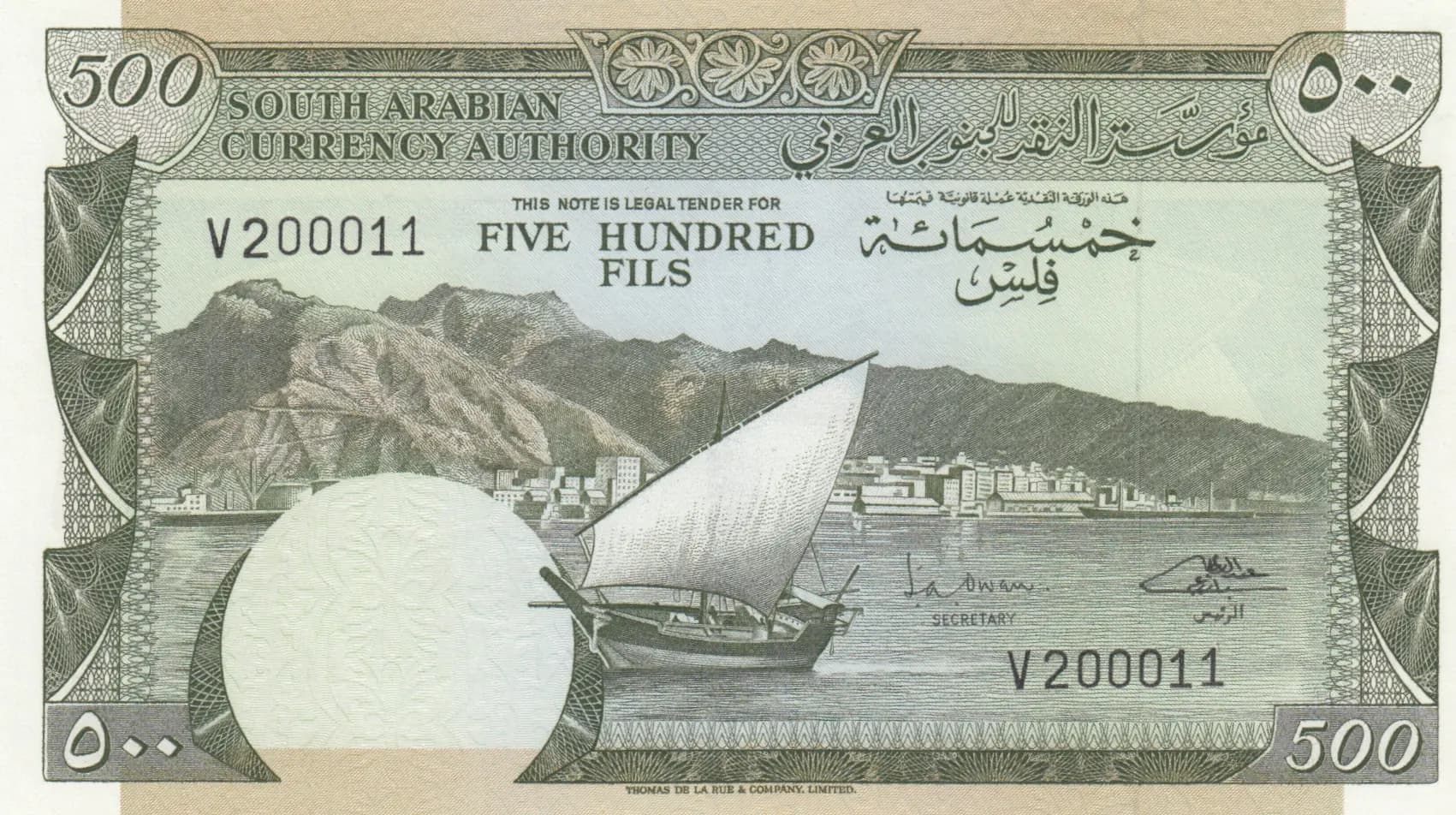
The obverse presents a picturesque harbor scene featuring a traditional Arab sailing dhow with a single triangular sail as the central focal point, positioned on water with a bustling coastal city featuring multi-story buildings rising on the right side and a mountainous landscape in the background on the left. The composition is framed by ornamental corner designs featuring intricate spiral and cross-hatching patterns typical of high-security banknote engraving. The reverse displays a prominently rendered date palm tree (Phoenix dactylifera) in the center, a botanically significant symbol of Arabian agriculture and prosperity, set against horizontal background bands that transition in color from pink to green to beige, creating visual depth. Both sides incorporate large circular watermark areas and employ fine-line engraving throughout to create security and aesthetic value.
FRONT: '250' (denomination in Arabic numerals, appears in all four corners); 'SOUTH ARABIAN CURRENCY AUTHORITY' (English, issuing authority); 'THIS NOTE IS LEGAL TENDER FOR TWO HUNDRED AND FIFTY FILS' (English, legal tender declaration); 'الجمهورية العربية الجنوبية' (Arabic: 'South Arabian Republic'); 'مائتان وخمسون فلس' (Arabic: 'Two hundred and fifty fils'); 'J949119' (serial number); 'SECRETARY' (English, signature line); 'THOMAS DE LA RUE & COMPANY, LIMITED' (English, printer identification). BACK: '250' (denomination, top left and bottom right); 'يم' (Arabic: 'YM', Yemen abbreviation).
Intaglio (photogravure) engraving, the standard security printing method for banknotes during this period. The note was printed by Thomas de la Rue & Company, Limited, as identified in the lower portion of the obverse—one of the world's premier banknote security printers. The fine line work, intricate cross-hatching in ornamental areas, detailed rendering of the dhow and palm tree, and the presence of integrated watermark areas are all characteristic of professional intaglio banknote production. The multicolored appearance results from multiple passes of different colored inks in the intaglio process.
Pick catalog number P-1a indicates this is the first denomination in the first series of South Arabian Currency Authority notes (1965). The serial number 'J949119' visible on this specimen suggests letter-prefixed serial numbering was used. This particular note's variety would be distinguished by its serial number prefix ('J' in this case) and signature variants if present. No major overprints, date variations, or significant die varieties are known for this Pick number. The note represents the standard design and printing without notable varieties beyond standard serial number progression.