250 fils 1965
Market Prices
8 salesAbout This Note
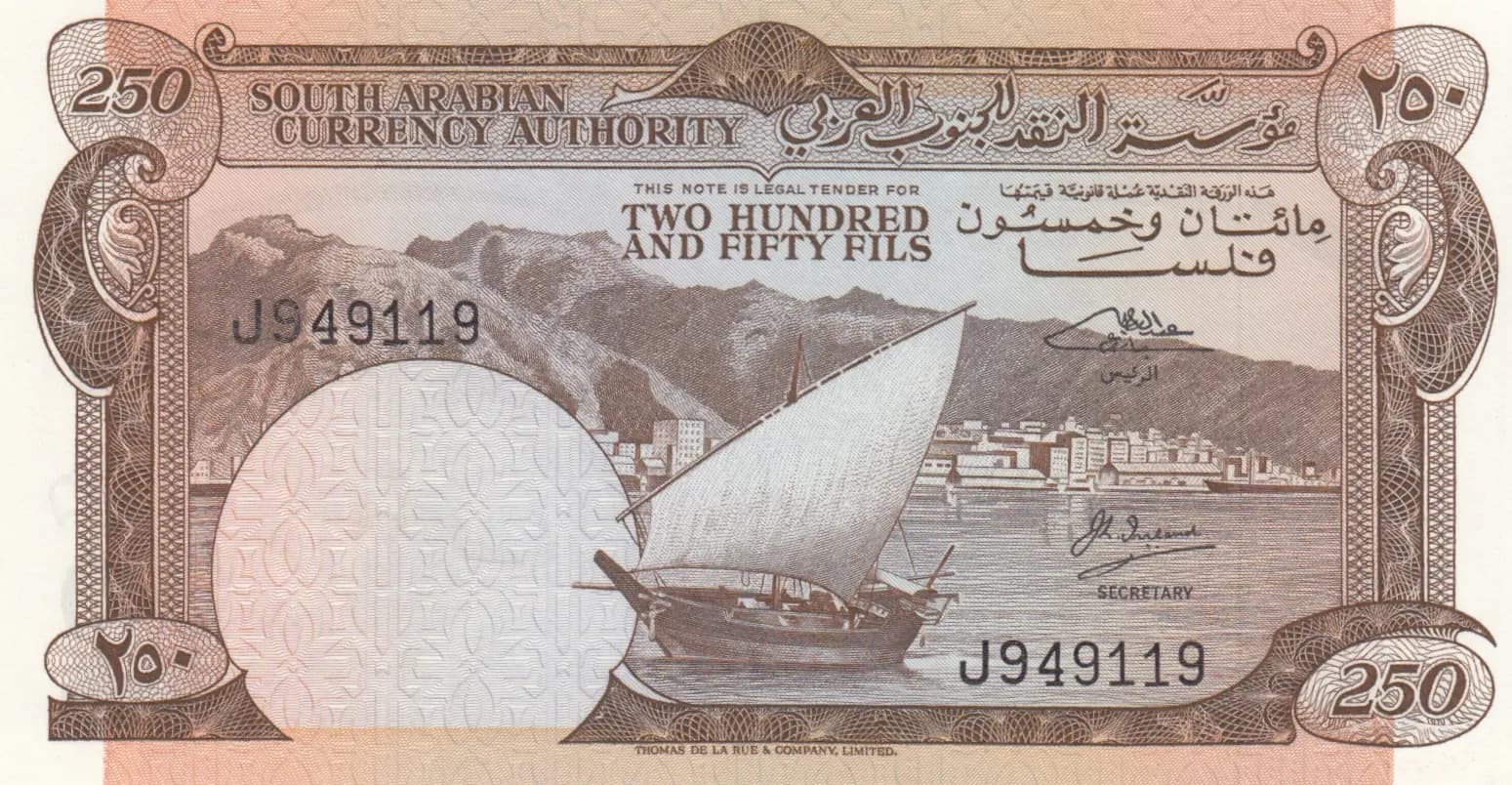
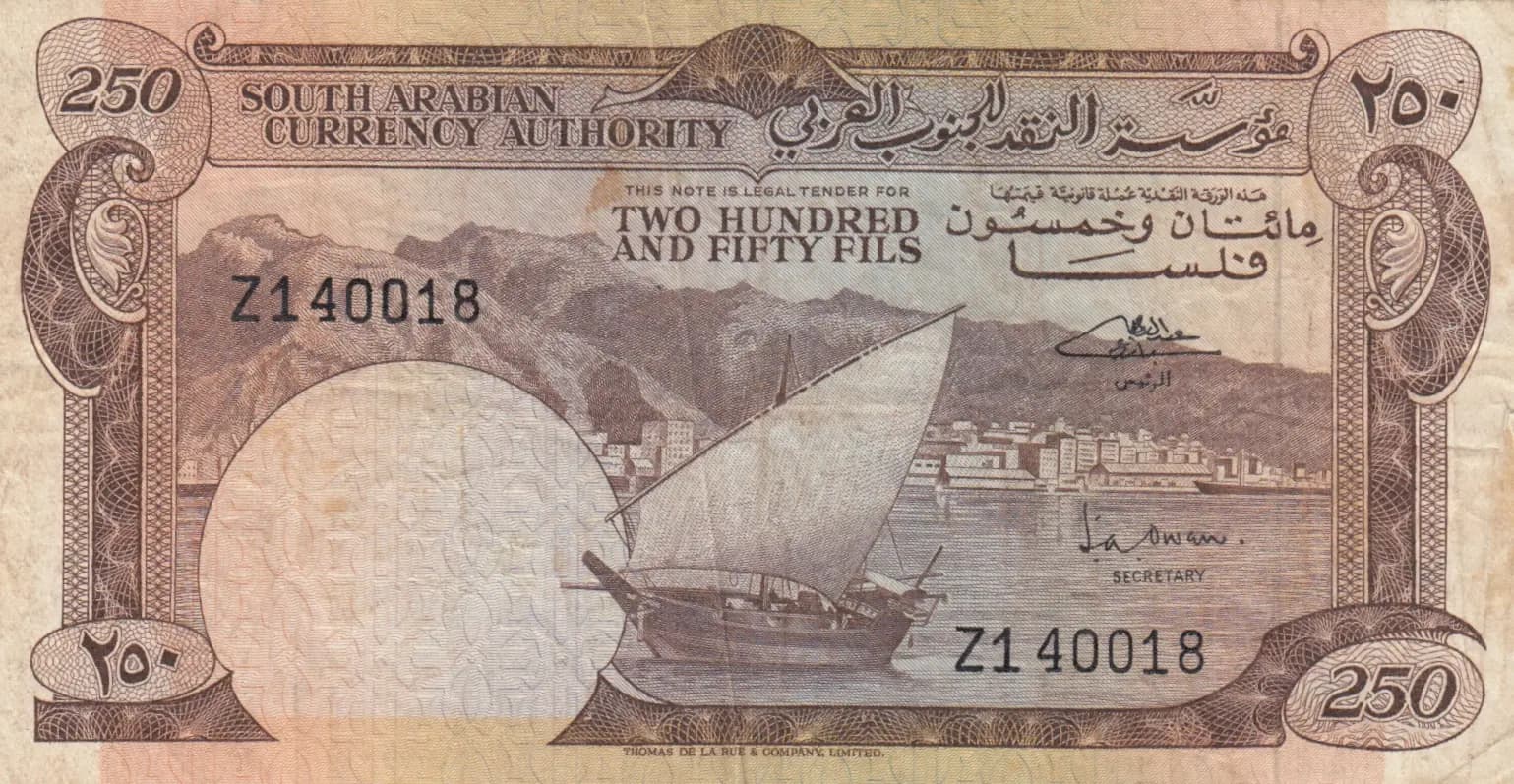
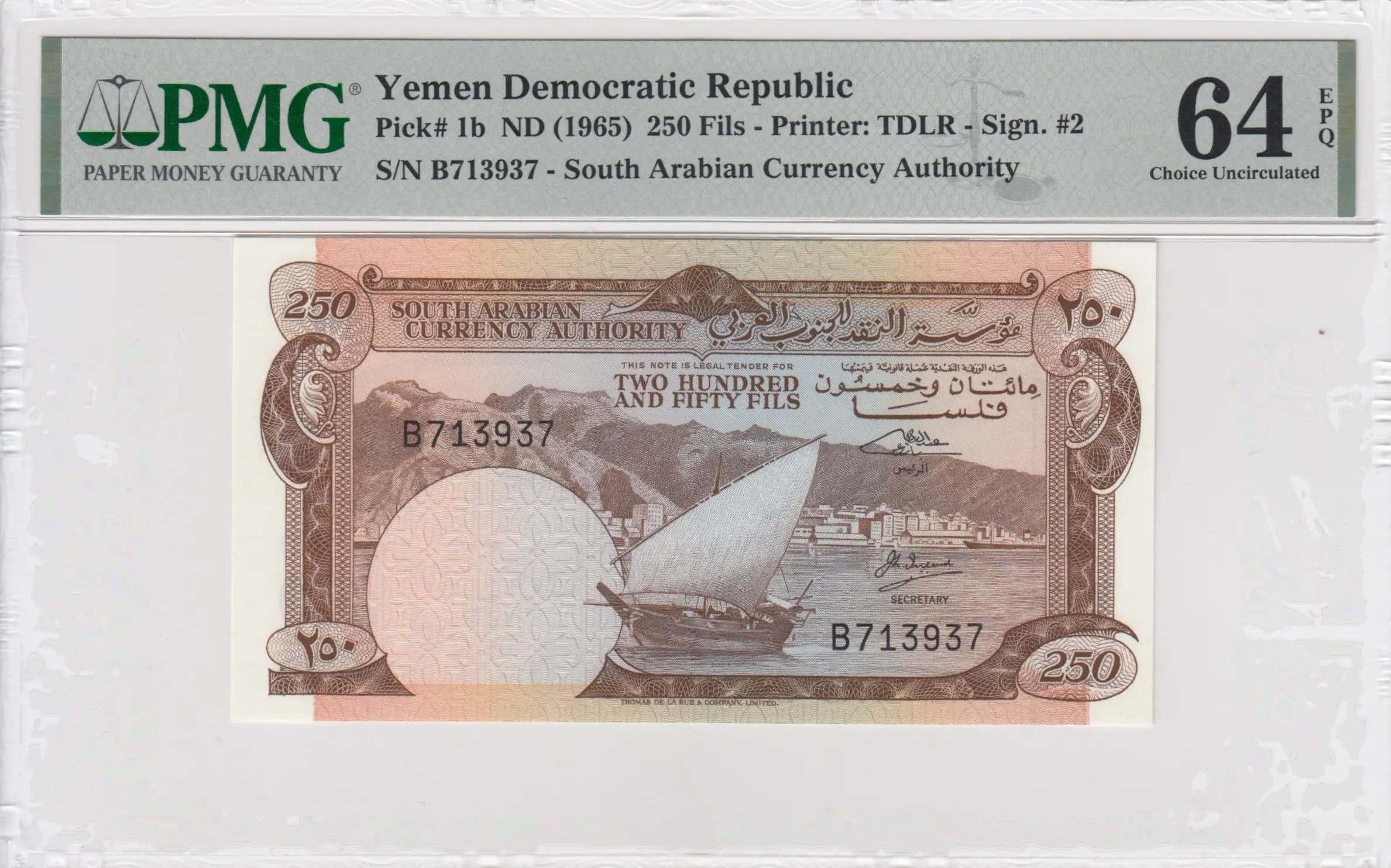
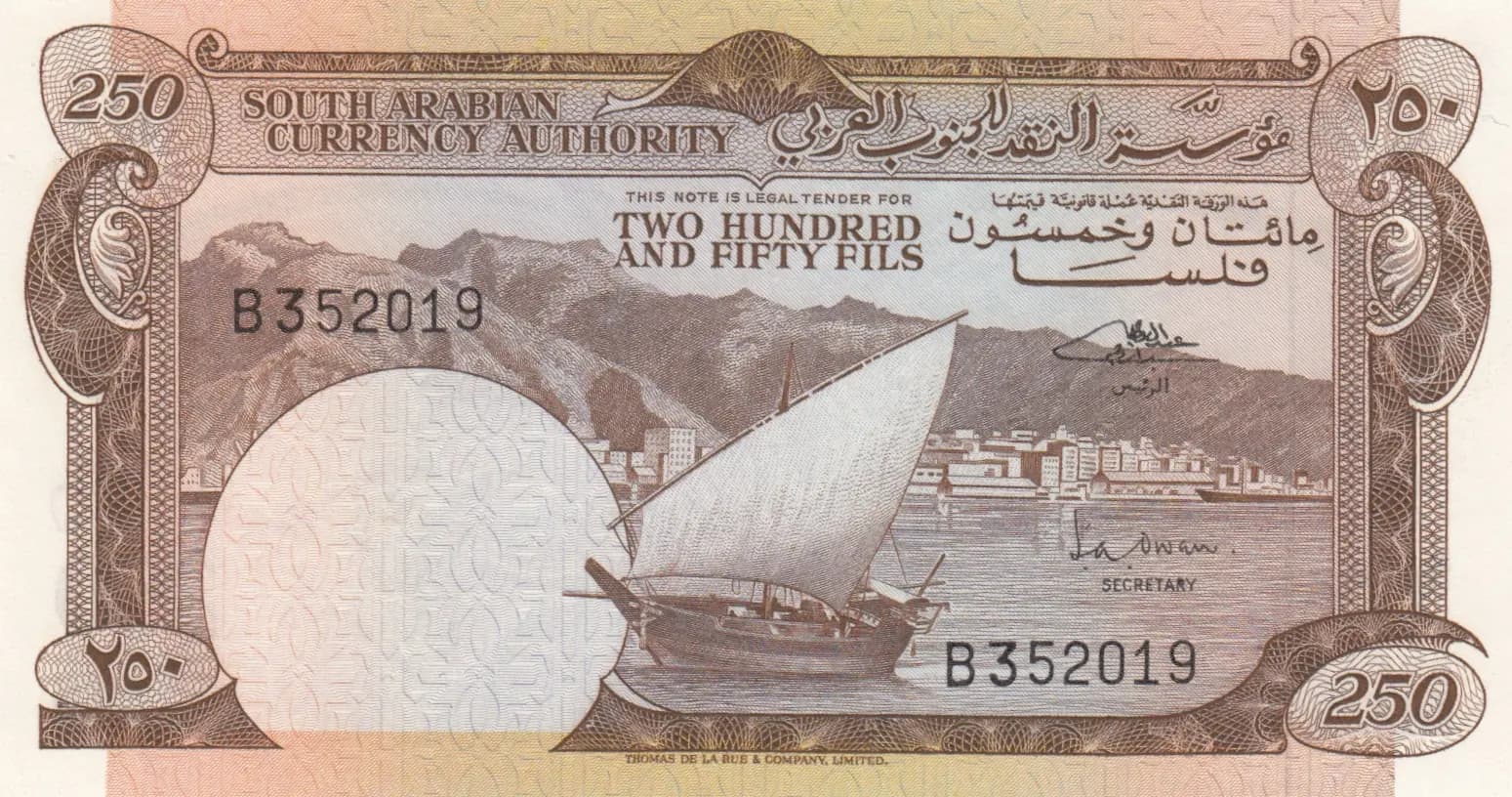
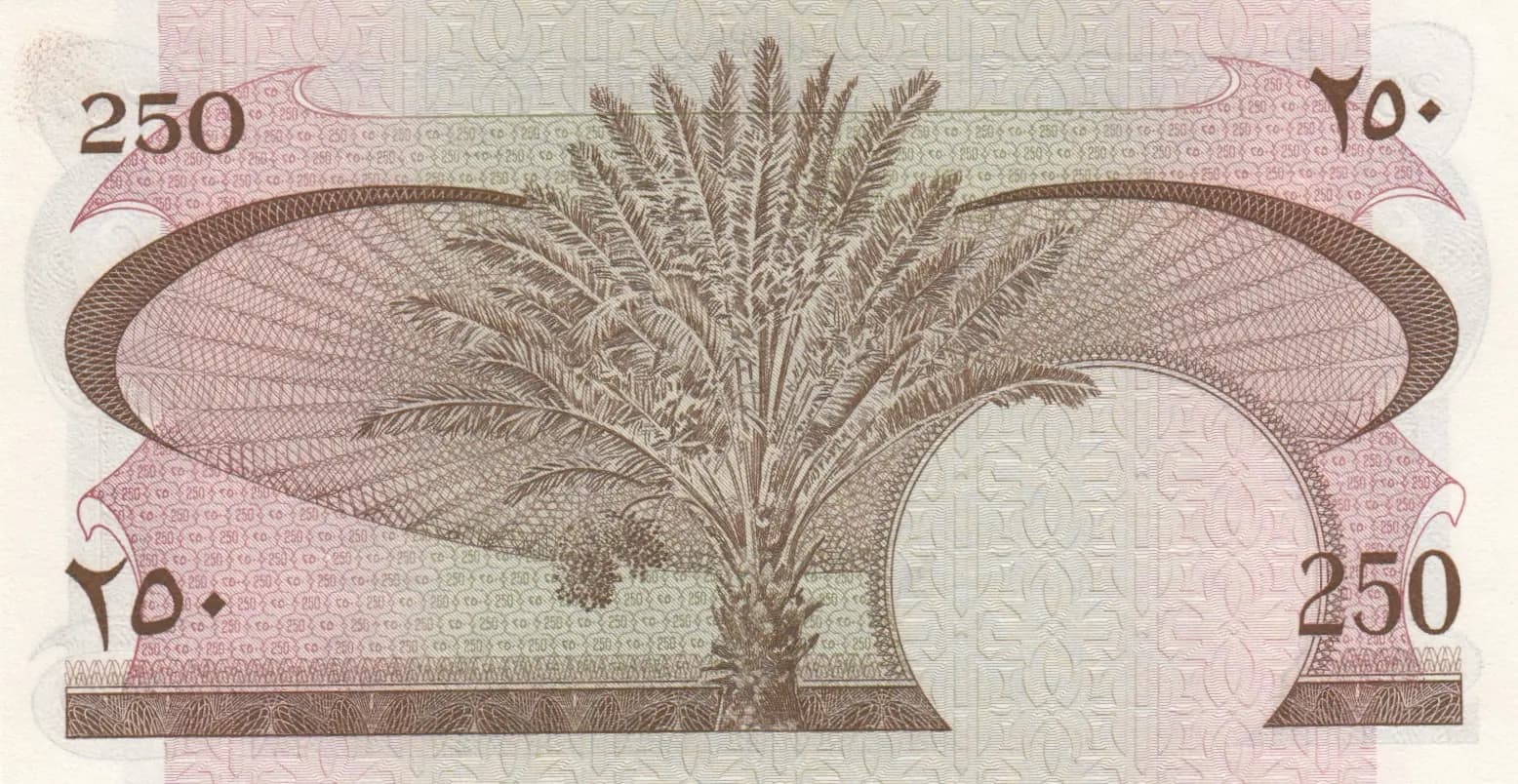
This is a stunning uncirculated example of the South Arabian Currency Authority's 250 fils note from 1965, featuring exceptional preservation with sharp, crisp printing throughout. The obverse displays a striking traditional dhow sailing vessel against a mountainous coastal backdrop, while the reverse showcases an elegantly engraved palm tree as its central motif. The ornate scrollwork borders, fine line engraving, and bilingual Arabic-English inscriptions exemplify the high-quality craftsmanship of mid-1960s Arabian currency design, making this an attractive piece for collectors of Middle Eastern numismatics.
Common. While the South Arabian Currency Authority's brief three-year tenure (1964-1967) might suggest rarity, the eBay market data provided shows consistent sales volume at modest prices ($16-63 depending on grade), with VF examples selling for approximately $20-28 and UNC examples valued around $135 in 2019. The regular circulation of these notes and continued availability in the collector market indicate this is a commonly encountered note despite its historical significance. The denomination 250 fils was a standard mid-range denomination that would have been produced in substantial quantities during the authority's operational period.
This note was issued during a pivotal period in South Arabian history, just prior to the establishment of the People's Republic of South Yemen in 1967. The depicted dhow vessel and palm tree symbolize the maritime trading heritage and agrarian traditions of the Arabian Peninsula, while the coastal cityscape with minaret reflects the region's Islamic cultural identity. The South Arabian Currency Authority's brief tenure (1964-1967) makes notes from this issuer historically significant, as they represent a transitional monetary system for a territory undergoing rapid political transformation.
The obverse features a circular portrait medallion on the left side containing an unidentified male figure, positioned alongside the central composition of a traditional Arab dhow with billowing triangular sail. The background depicts a fortified coastal settlement with architectural structures and mountainous terrain, likely representing a significant trading port of South Arabia. The reverse showcases a meticulously engraved palm tree as the dominant central image, surrounded by decorative geometric and floral border patterns with corner ornaments. The overall design employs earth tones (browns, tans, creams) on the obverse and warmer hues (pinks, greens) on the reverse, creating visual distinction between the two sides while maintaining design cohesion through the ornate scrollwork and border framework.
FRONT SIDE: 'South Arabian Currency Authority' (English and Arabic equivalent: ميسرة الجنوب العرب); 'This note is legal tender for Two hundred and fifty pils/fils' (English: 'TWO HUNDRED AND FIFTY PILS'; Arabic: مائتان وخمسون فلس); Denomination '250' appears in multiple locations; Serial number: B352019; Signature line marked 'SECRETARY'. BACK SIDE: Denomination '250' and '50' in Arabic numerals; '٪ 250' in Arabic. All text appears in bilingual format reflecting the administrative standards of the South Arabian Currency Authority.
This note was produced using intaglio (engraved) printing, evidenced by the fine line engraving visible throughout the design, the crisp definition of the ornamental scrollwork, detailed rendering of the dhow's rigging and the palm fronds, and the precise bilingual typography. The intricate border designs, watermark space, and color gradations are characteristic of high-security currency production standards of the 1960s. The specific printer for South Arabian Currency Authority notes of this period was typically De La Rue or similar established security printers, though conclusive attribution would require additional documentation.
This example displays serial number B352019, indicating the B-series printing run. Known varieties for Pick-1b (250 fils 1965) include variations in signature configurations on the secretary line and potential serial number prefix variations (A, B series), though detailed variety catalogs for South Arabian Currency Authority notes remain limited in published numismatic literature. The UNC condition grade and sharp printing quality suggest this is from an early printing run with minimal press wear.