10 shillings 1960
Market Prices
About This Note
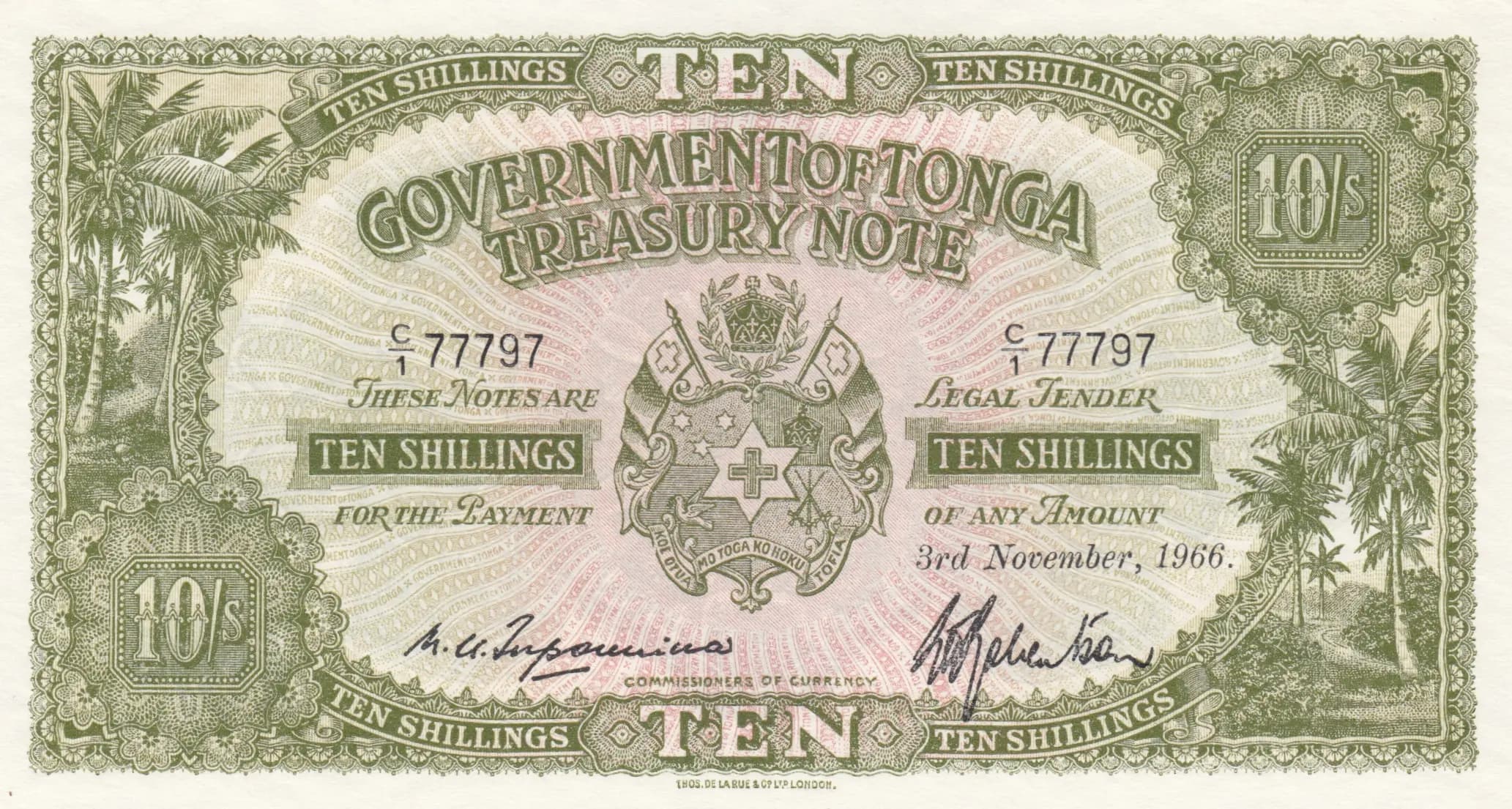
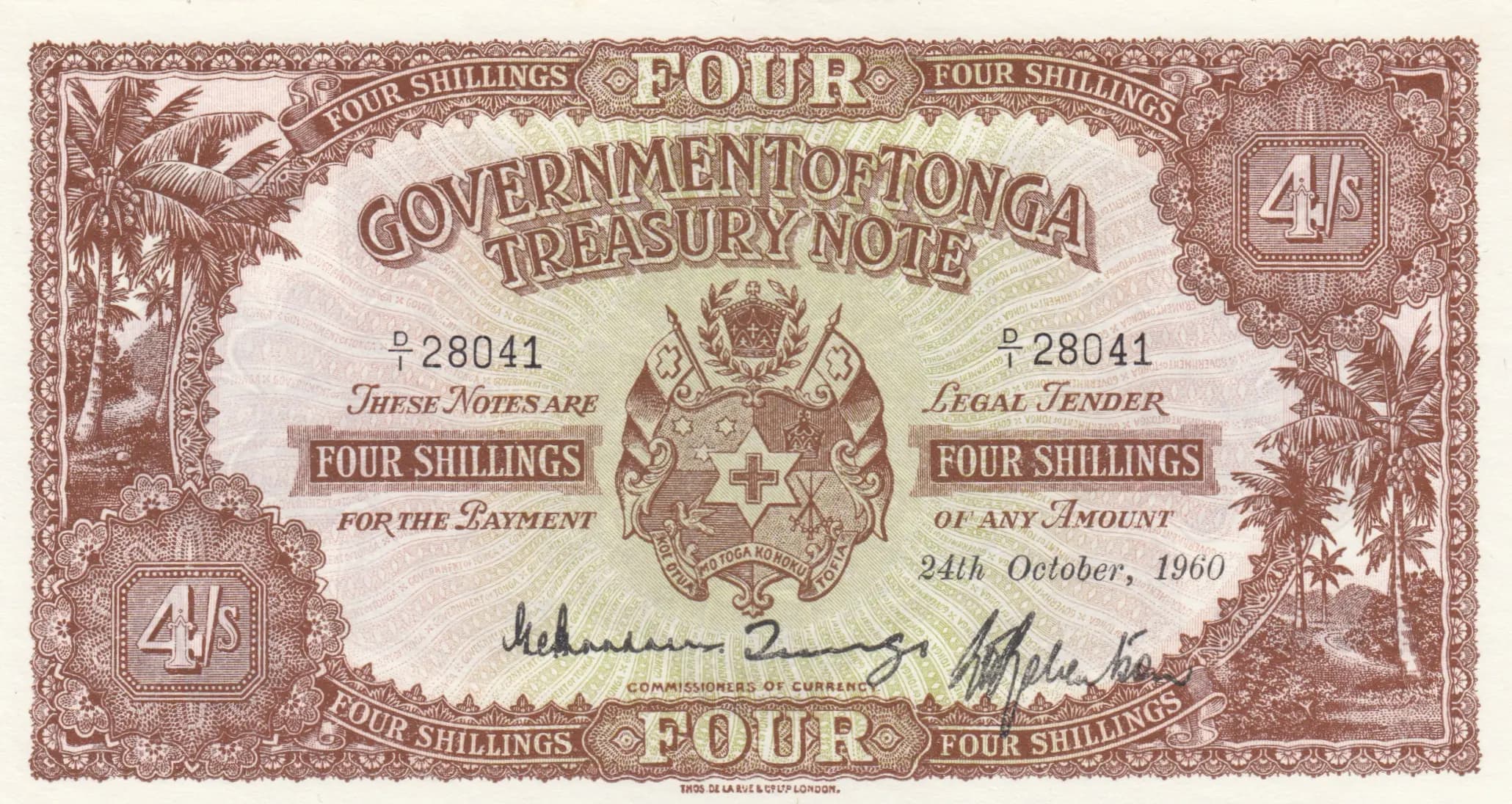
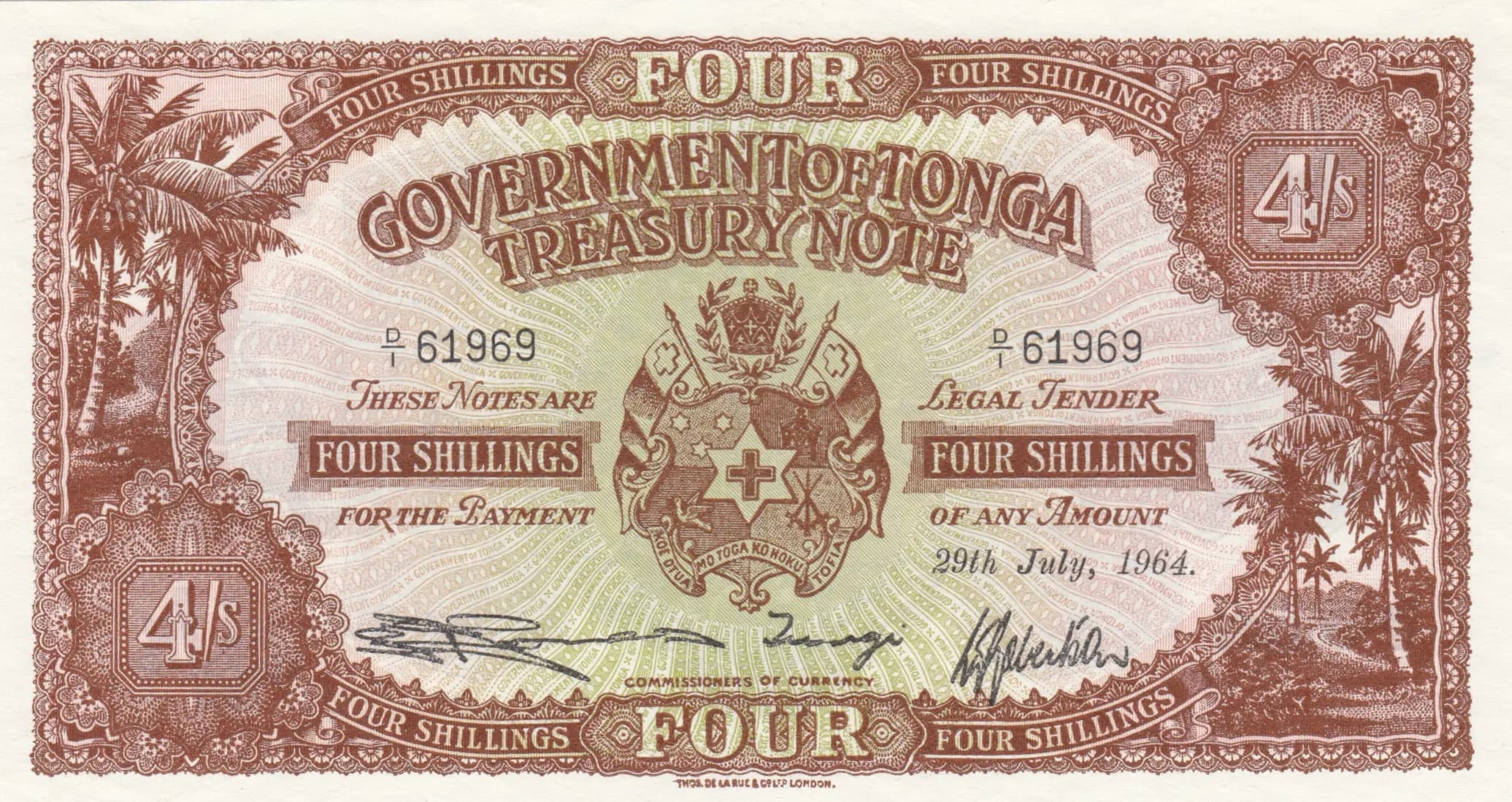
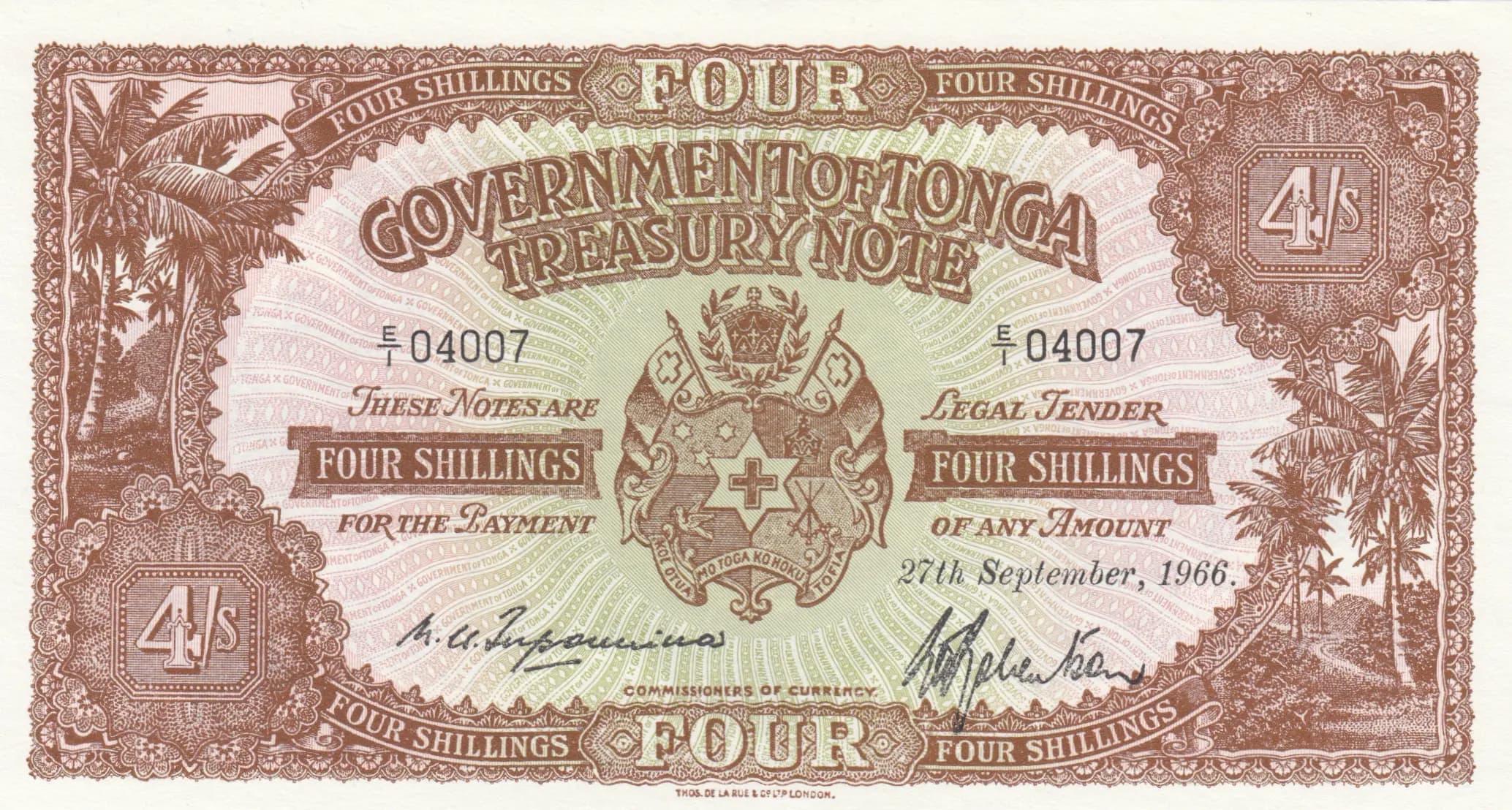
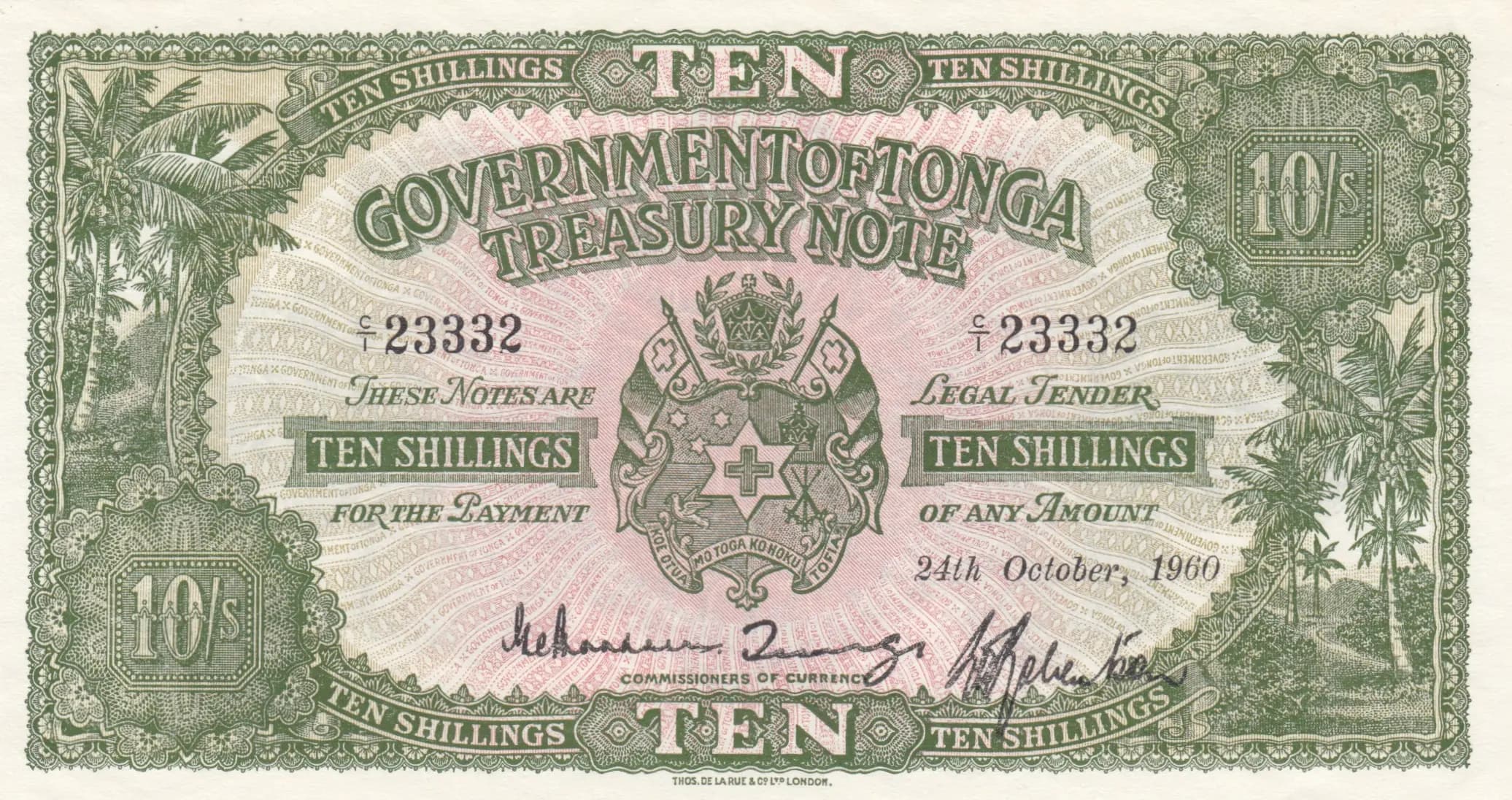
This is an exceptional example of Tonga's 1960 Government Treasury Note for 10 Shillings (Pick-10d), graded UNC and displaying pristine condition throughout. The note features an elegant green and pink color scheme with a commanding central heraldic coat of arms flanked by national flags, surrounded by ornate decorative borders with fine engraving work. The sharp printing clarity, bright paper stock, and complete absence of wear marks make this an outstanding specimen representative of early Tongan currency during the nation's transition period.
Common. While this is a desirable early Tongan note in exceptional condition, the Pick-10d variant was part of a standard circulation series issued 1960-1966 by a government treasury with no documented scarcity issues. eBay market data shows typical UNC examples trading in the $160-$250 range, indicating reasonable supply despite the specialized collector interest. The multiple catalogued variants (P-10a through P-10e) suggest substantial print runs across the series. The UNC grade commands premium pricing relative to circulated examples, but the note itself remains accessible to collectors and is not scarce in the absolute sense.
Issued on 24 October 1960, this treasury note represents Tonga's monetary sovereignty during a pivotal period when the kingdom was asserting greater financial independence under the Government of Tonga. The prominent display of the heraldic coat of arms with its crowned shield and national flags reflects the formal institutional authority of the Tongan state, while the dual-language inscriptions (English and Tongan) document the post-colonial linguistic identity of the nation. This series (P-10a through P-10e variants) circulated during 1939-1966, spanning Tonga's pre-independence and early independence era.
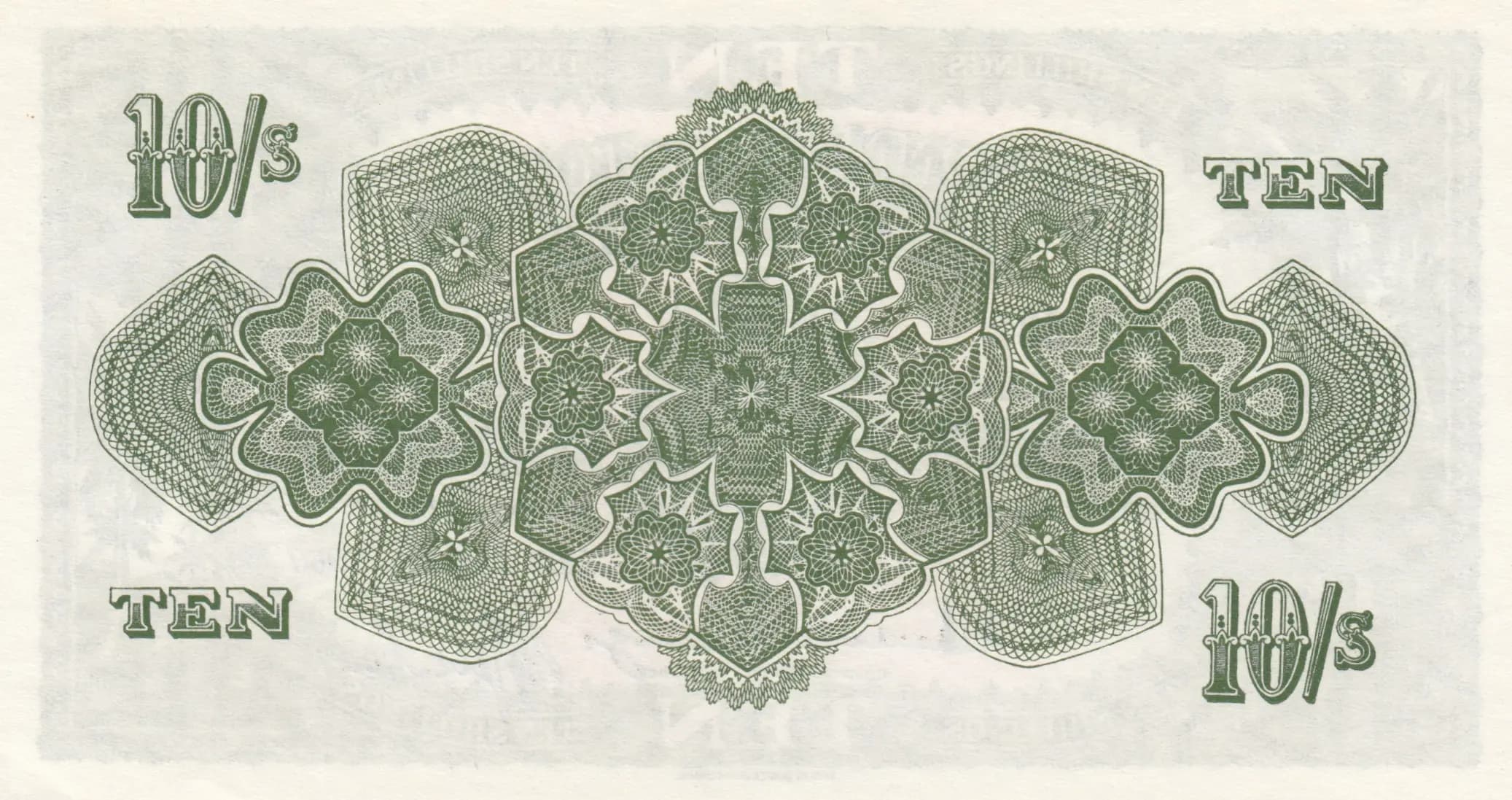
The obverse features a formal treasury note design dominated by a heraldic coat of arms at center, comprising a crowned shield with a cross and floral elements, flanked by two national flags representing Tonga's sovereignty. The design is surrounded by an intricate green guilloche border with floral and geometric patterns, while the central background employs a pink/salmon underprint with radiating lines creating visual depth. The reverse displays a striking ornate circular medallion in mandala-like symmetrical design with fine cross-hatching and geometric-floral patterns, rendered in green on a cream background. Both sides employ sophisticated security engraving techniques with detailed line work throughout.
Front side: 'TEN SHILLINGS' (denomination, English); 'GOVERNMENT OF TONGA' (issuing authority); 'TREASURY NOTE' (note type); 'THESE NOTES ARE LEGAL TENDER FOR THE PAYMENT OF ANY AMOUNT' (legal tender declaration); '24th October, 1960' (issue date); 'c23332' (serial number); 'COMMISSIONERS OF CURRENCY' (authorizing officials); '10/s' (denomination abbreviation); 'TONGA NO HOTOA' (Tongan language text, likely meaning 'Tonga's Treasury' or similar institutional reference). Back side: '10/s' and 'TEN' repeated in corners (denomination markers).
Intaglio engraving (line engraving and recess printing), executed by Thomas de la Rue, London—the renowned British security printer responsible for many Commonwealth banknotes. The fine line work, complex cross-hatching, intricate guilloche borders, and precise geometric patterns visible throughout are characteristic of de la Rue's high-security intaglio methodology. The multi-color underprinting (pink/salmon base with green overprint elements) indicates sophisticated multi-plate color registration typical of de la Rue's mid-20th century production standards.
This note is identified as Pick-10d, one of five known variants in the 10 Shillings series (P-10a, P-10c, P-10d, P-10e documented by PMG). The variants within this series are distinguished by signatures of Commissioners of Currency and potentially subtle date or printer's mark variations. The observed serial number 'c23332' and the 24 October 1960 issue date confirm this as the initial 1960 emission. The Pick catalog system differentiates variants by commissioner signatures; collectors should verify signature combinations to confirm exact variety, as this impacts cataloging precision.