4 shillings 1966
Market Prices
5 salesAbout This Note
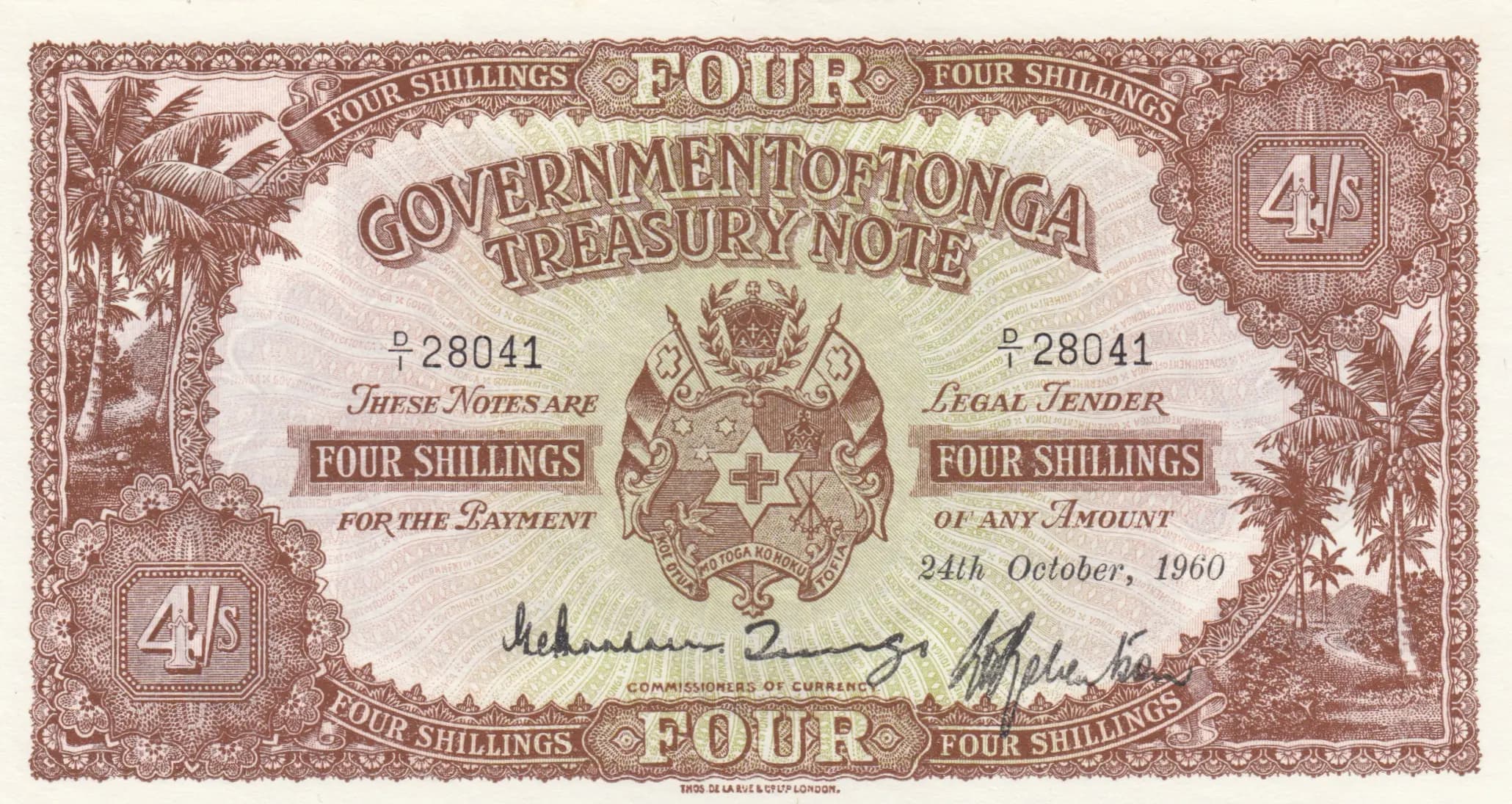
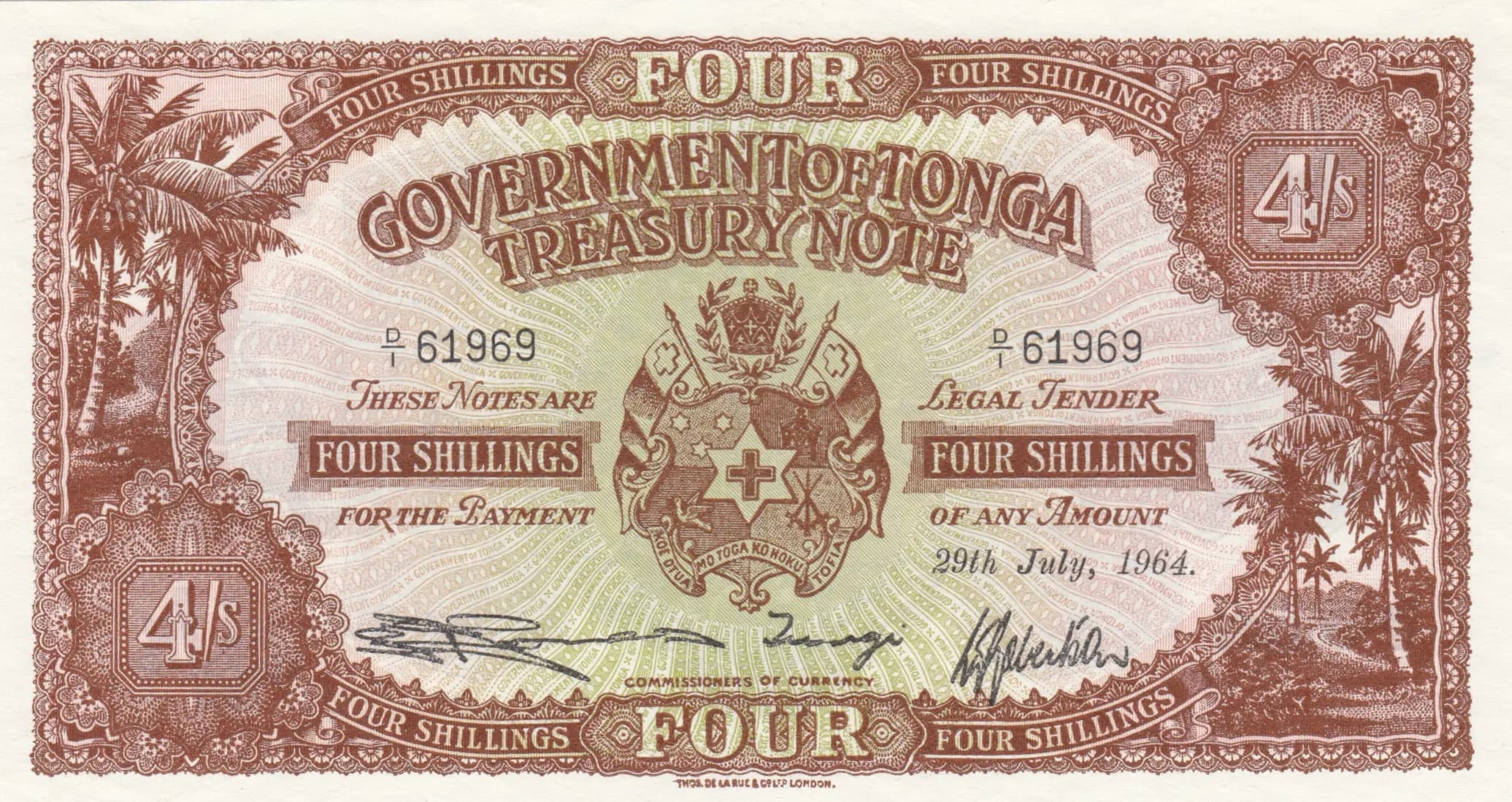
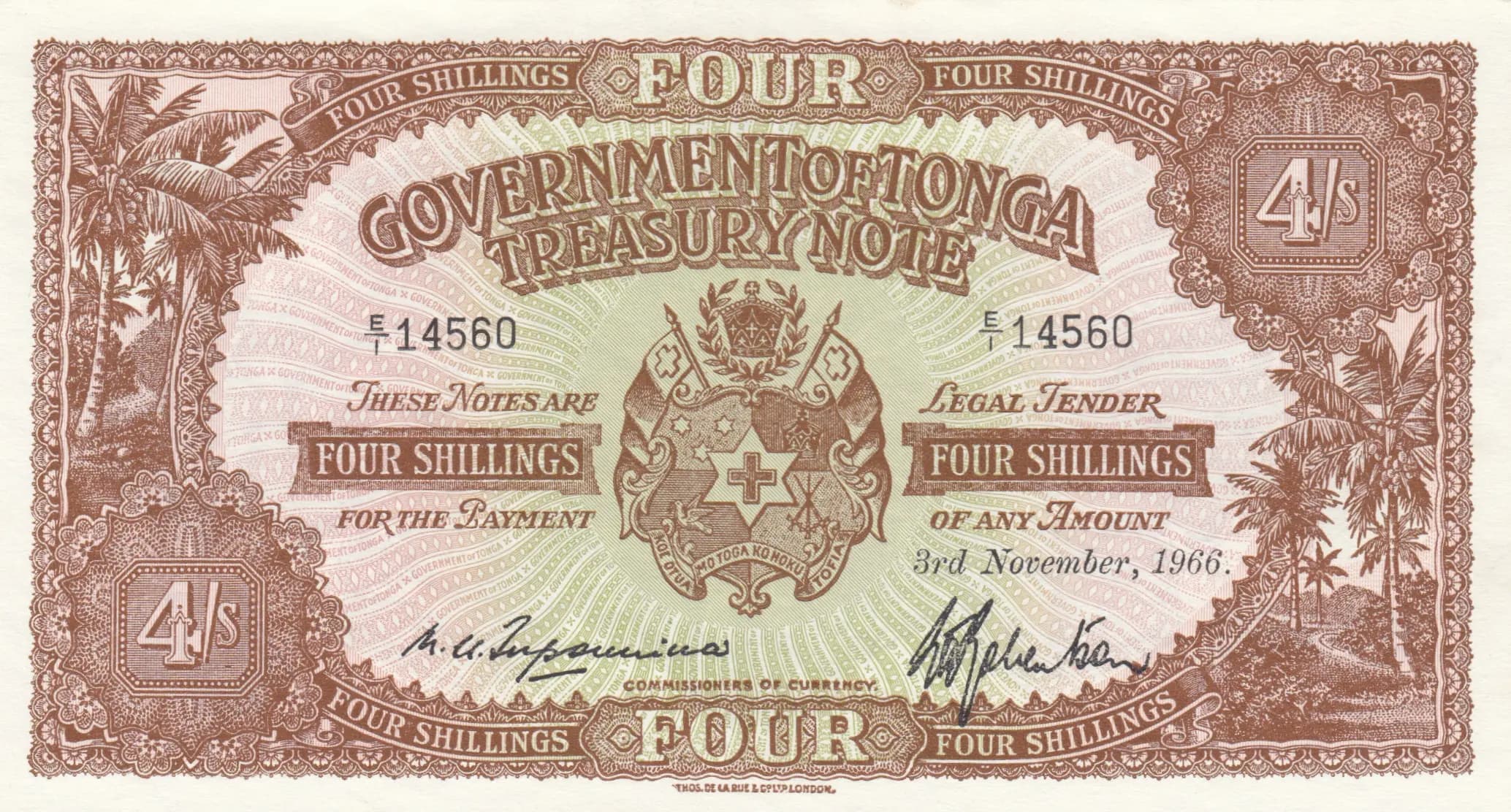
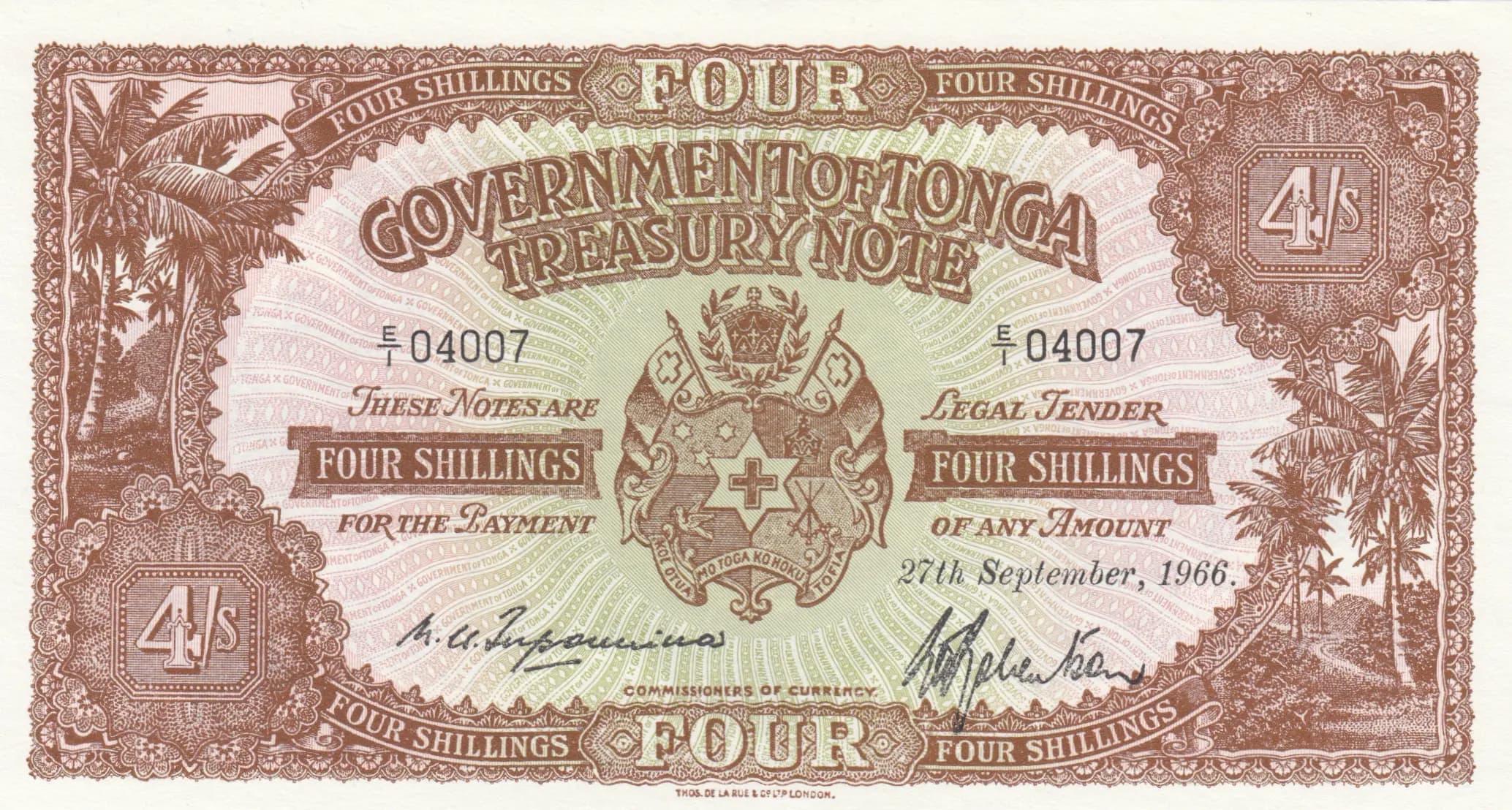
This is an exceptional example of Tonga's 4 Shillings Treasury Note from 1966, graded UNC and featuring the distinctive brown and sepia intaglio design characteristic of Thomas de la Rue's Commonwealth currency work. The note displays crisp, uncirculated condition with sharp impressions throughout, depicting Tonga's coat of arms with crossed flags and wreath in an ornate central oval, flanked by palm tree motifs—symbols deeply connected to the Pacific island nation's identity. This particular variety (P-9d) represents the final authorized issue before decimalization, making it a historically significant piece of Tongan numismatic heritage.
Common. The catalog value for UNC specimens is $100 (2019), and eBay market data from 2023 shows an UNC example selling for $99.99, consistent with catalog pricing. The presence of multiple graded examples in the PMG population report and regular eBay sales activity at modest prices indicates adequate circulation in the collector market. While these notes are no longer in regular use and represent a transitional currency period, the print run was sufficient to ensure availability in the current market.
Issued on 27th September 1966, this Treasury Note was produced during a critical period in Tonga's transition toward independence (achieved in 1970), when the Government of Tonga maintained currency control through the Commissioners of Currency. The heraldic imagery—the coat of arms with crossed flags and crowned wreath—reflects Tonga's status as a protected state under British influence while asserting its own national symbols. This shilling-based currency would soon give way to the Tongan Paʻanga system, making these final shilling notes historically important transitional documents.
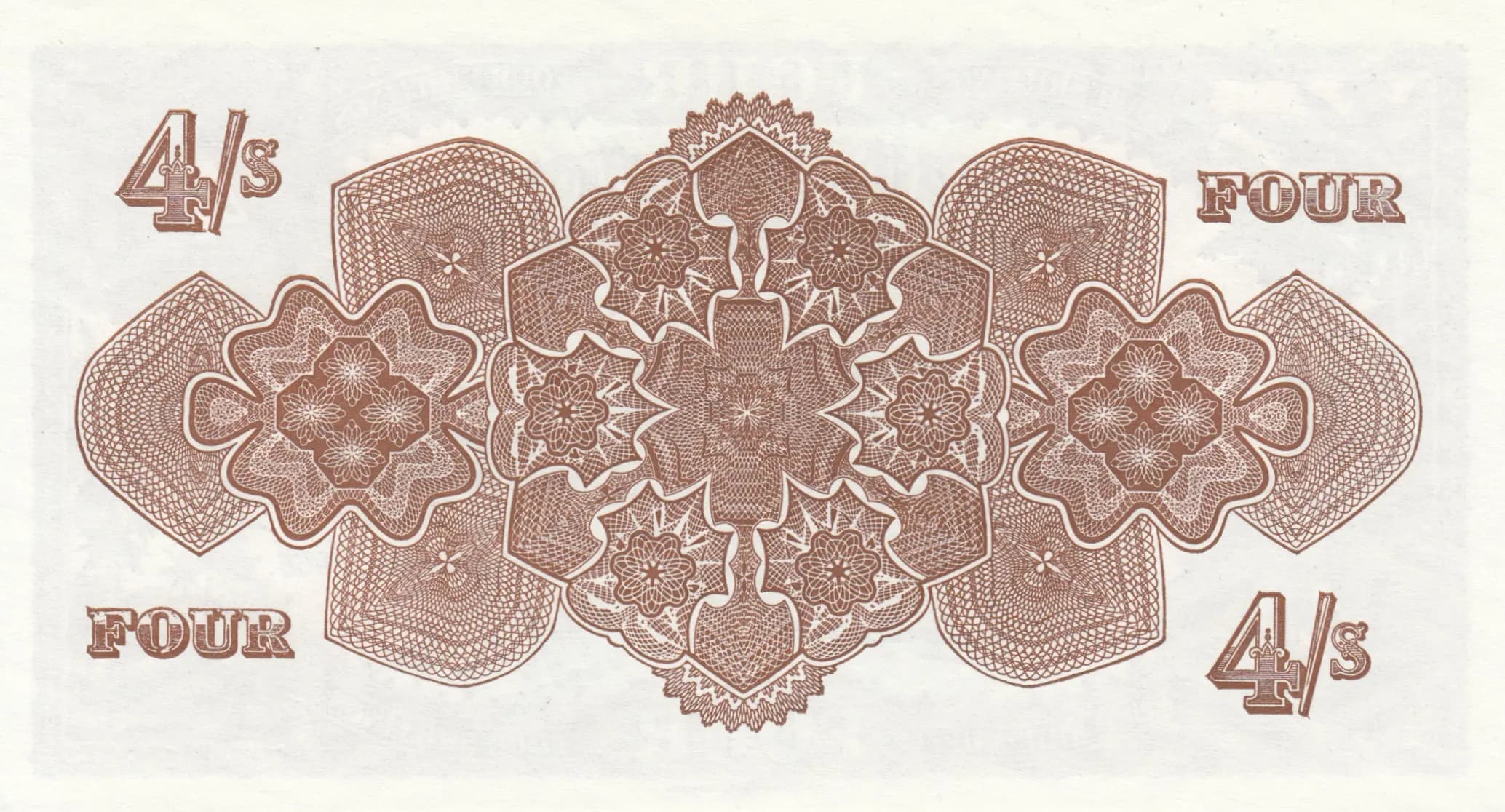
The obverse features the coat of arms of Tonga as its central motif—an oval shield flanked by crossed flags (representing Tonga's sovereignty and maritime heritage) and encircled by a decorative wreath, topped with a crown. This heraldic device is surrounded by intricate geometric and floral border patterns typical of high-security Commonwealth currency design. Palm trees appear in the left and right margins, iconic symbols of Tongan geography and culture. The reverse displays a large circular ornamental medallion with highly detailed floral and geometric intaglio patterns radiating outward in a symmetrical design, creating visual depth and security through complexity. The color scheme throughout is a warm brown and sepia on cream background, chosen for both aesthetic appeal and printing durability.
FRONT: 'GOVERNMENT OF TONGA' (issuing authority); 'TREASURY NOTE' (note type); 'FOUR SHILLINGS' (denomination, appears at left and right); '4/S' (abbreviated denomination); 'THESE NOTES ARE LEGAL TENDER FOR THE PAYMENT OF ANY AMOUNT' (legal tender declaration); '27th September, 1966' (authorization date); 'COMMISSIONERS OF CURRENCY' (authorizing body); Serial number 'E/F 04007' (appears twice). BACK: '4/S' and 'FOUR' (denomination markers in corners).
Intaglio/recess engraving by Thomas de la Rue & Company, London—evidenced by the fine line work, sharp denomination marks, intricate geometric patterns, and crisp impressions visible throughout both sides. The security printing includes detailed geometric background patterns and multi-layered engraved elements designed to prevent counterfeiting. The note exhibits the characteristic high-quality intaglio finish and paper stock typical of TDLR's Commonwealth currency production during the 1960s.
This is identified as Pick number P-9d, one of four documented varieties (P-9a, P-9c, P-9d, P-9e) for the base 4 Shillings Treasury Note. The visual analysis confirms printer TDLR (Thomas de la Rue), and the date of 27th September 1966 on the note matches the catalog data indicating this is from the final authorized issue period (1960-1966). The serial number format 'E/F 04007' represents the letter prefix system used for this series. Without additional comparative materials, the distinguishing characteristics between P-9d and other varieties (P-9a, P-9c, P-9e) cannot be definitively established from this single example, though variations likely involve signature changes, security feature modifications, or serial number prefix designations across the series.