4 shillings 1964
Market Prices
5 salesAbout This Note
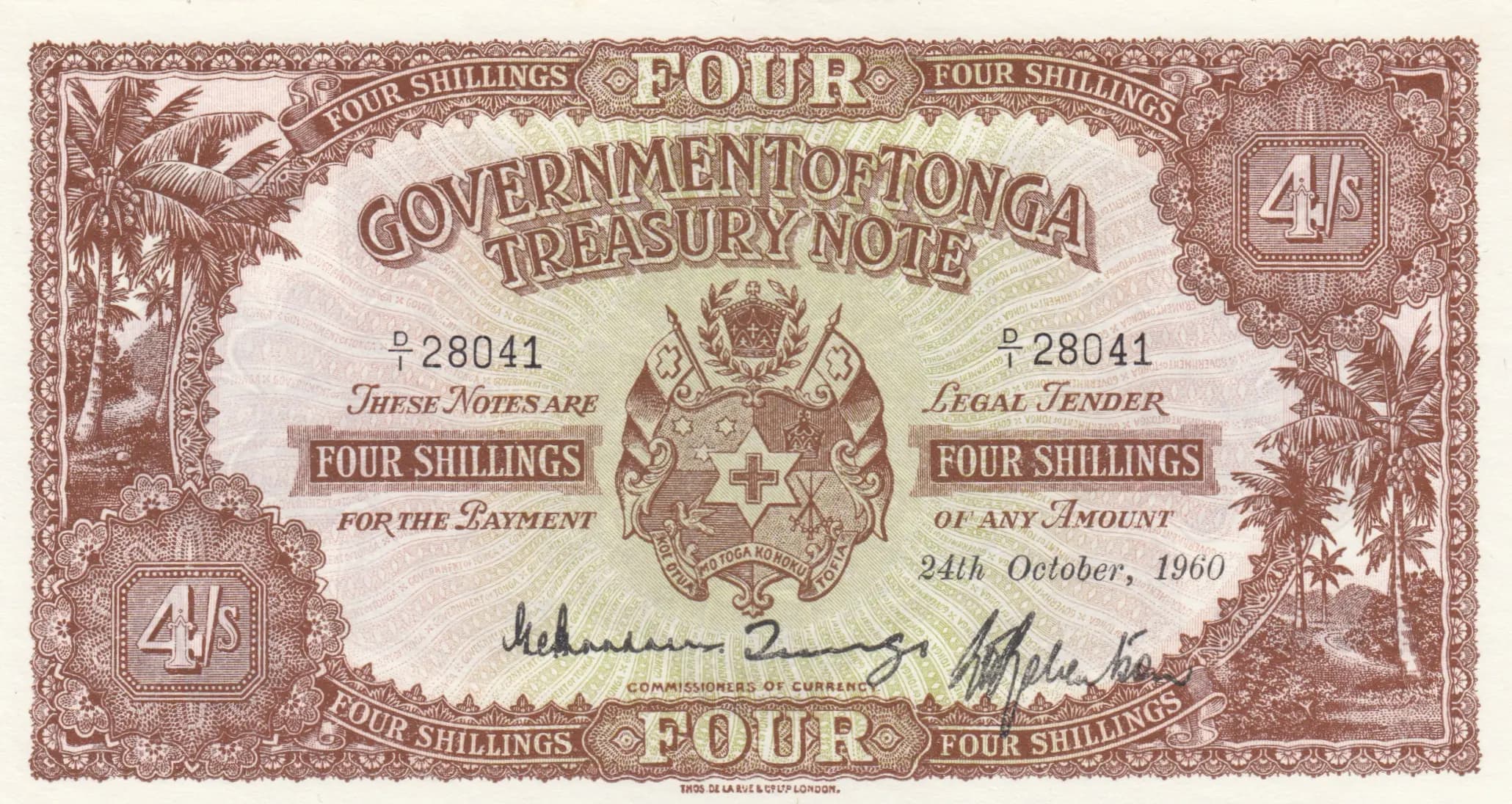
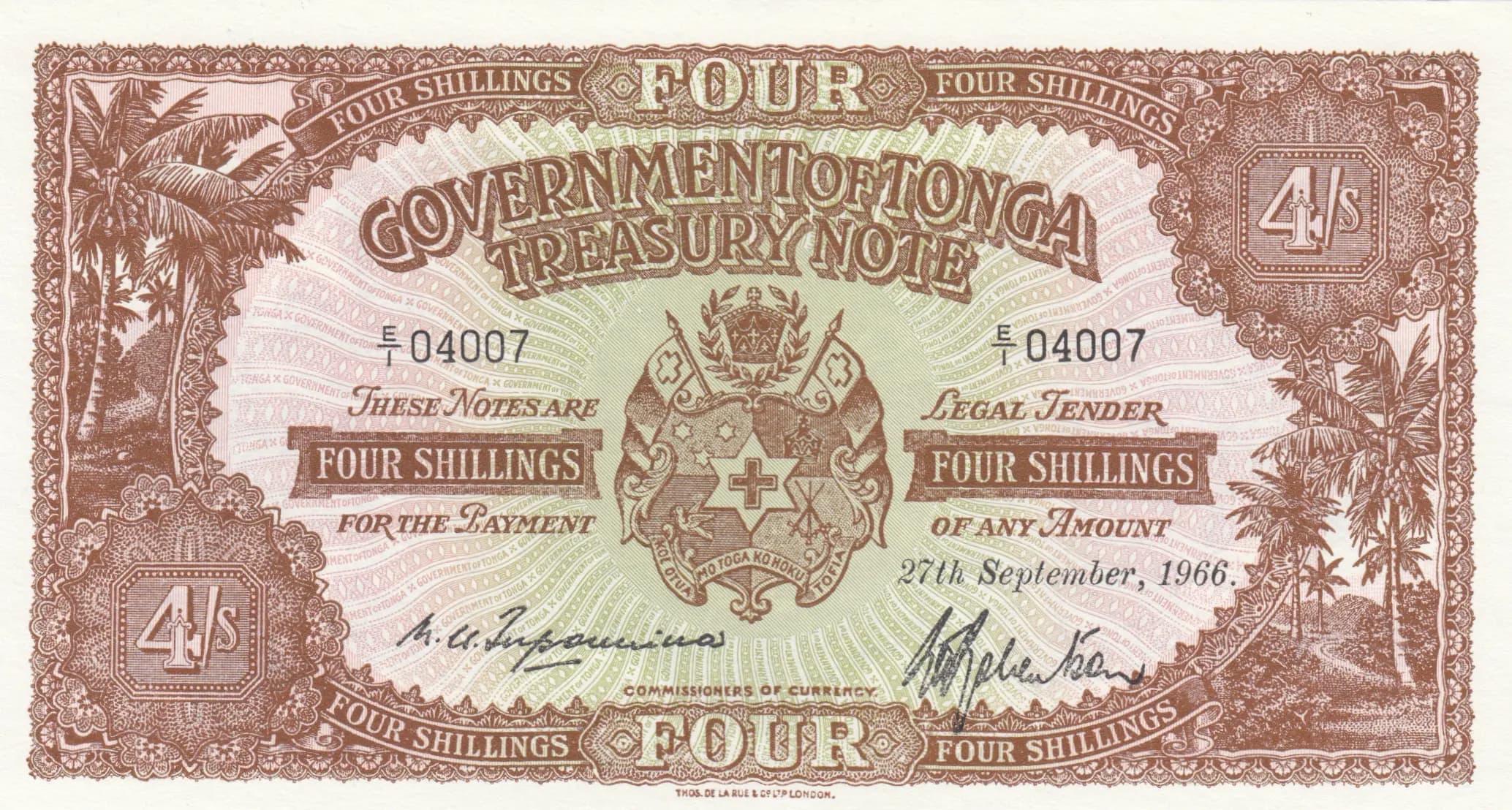
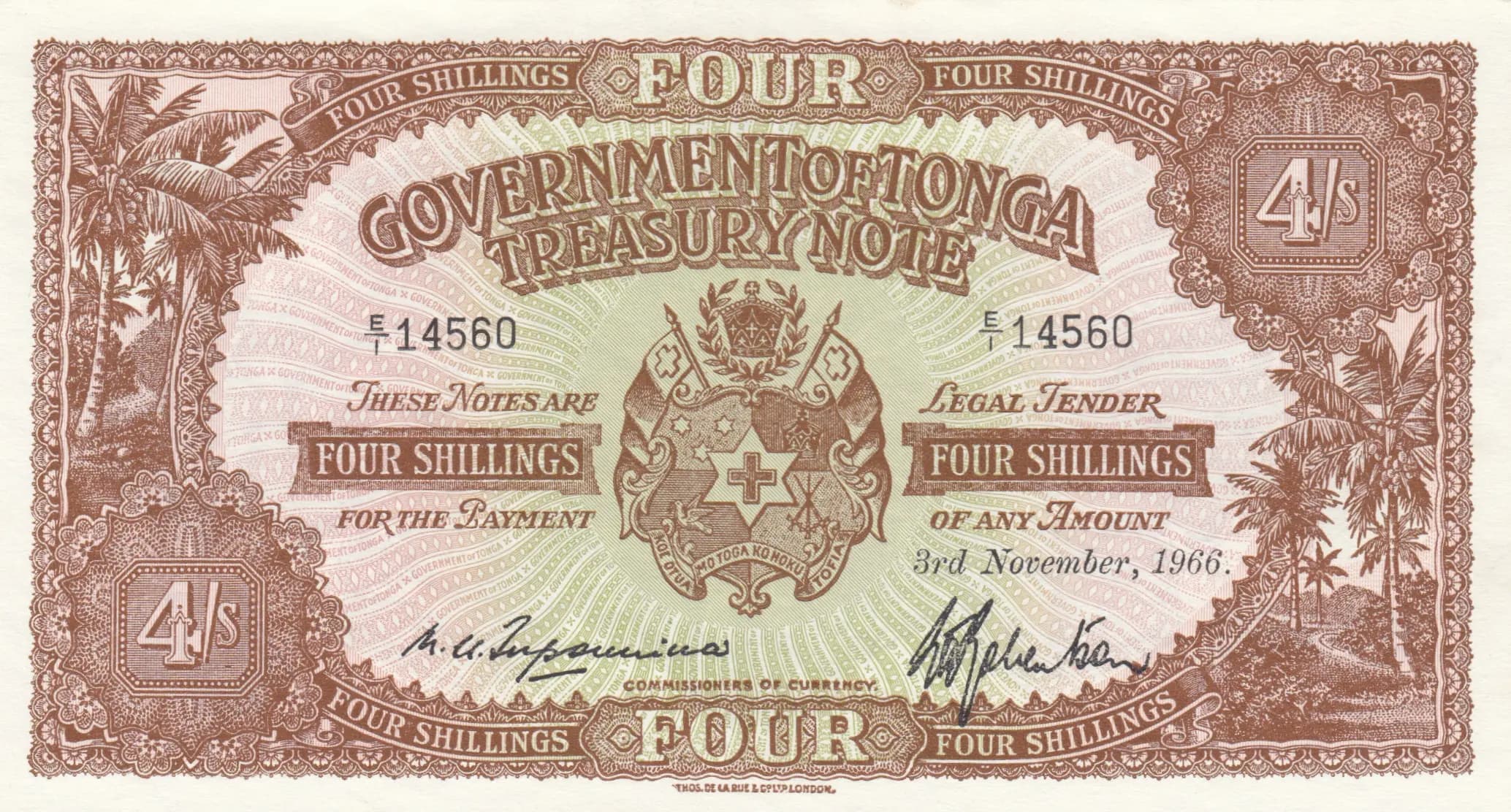
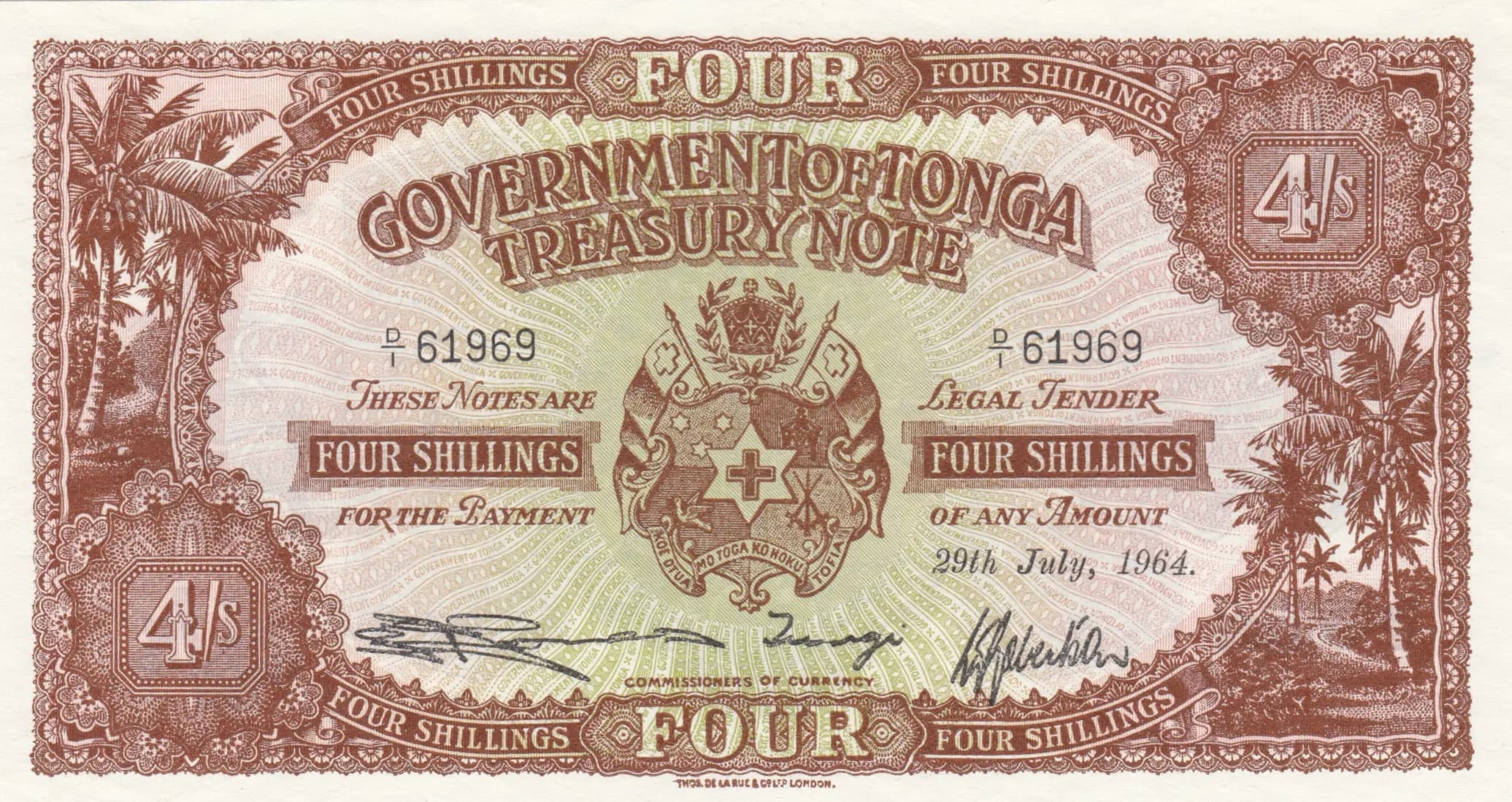
This is an exceptional UNC example of Tonga's 4 Shillings treasury note from 1964, printed by Thomas de la Rue & Co Ltd in London. The note displays pristine condition with sharp, clear printing throughout, featuring the Tongan coat of arms with crossed flags and crown at center, surrounded by ornate brown engraving on a cream background. This Pick-9d variant represents an important piece of Tongan monetary history during the pre-independence period, with strong market demand reflected in recent eBay sales of similar UNC examples reaching $99.99.
Common. The eBay market data provided shows multiple UNC sales averaging around $100, with sales occurring regularly (2023, 2021, 2016, 2014). Market prices below $200 for circulated to UNC examples, combined with consistent availability in the secondary market, indicate this is a commonly available note for collectors. While the Pick-9d variant exists alongside P-9a, P-9c, and P-9e, the base denomination and issue period (1960-1966) was produced in sufficient quantity that all variants remain readily obtainable.
Issued on 29th July 1964 by the Government of Tonga's Treasury under the authority of the Commissioners of Currency, this note was produced during Tonga's final years as a British protected state (independence followed in 1970). The prominent display of the Tongan coat of arms with crossed flags and crown symbolized Tonga's sovereignty and cultural identity during this transitional period. The use of the shilling denomination reflects Tonga's adoption of the British currency system, which remained in place until decimalisation.
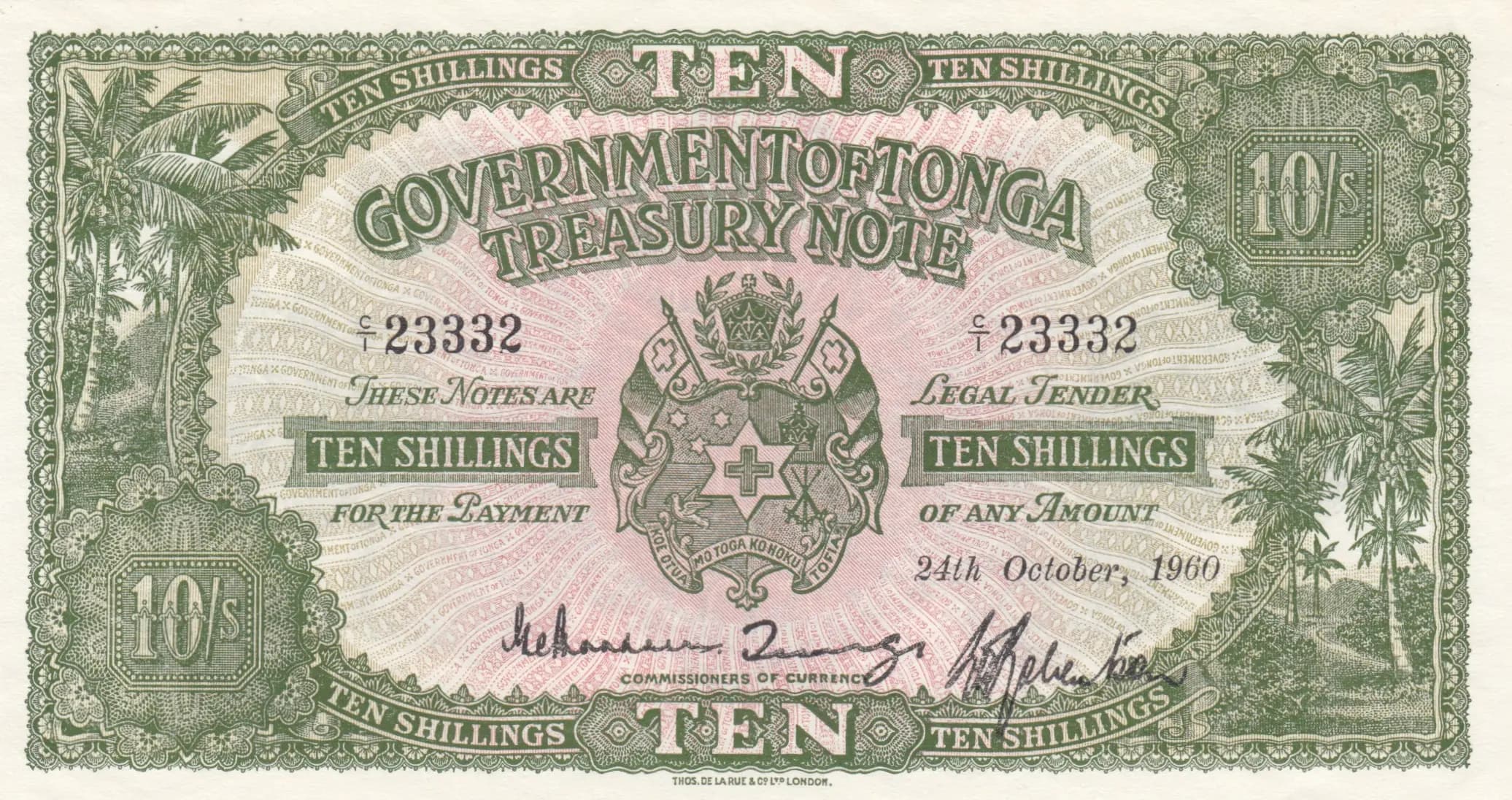
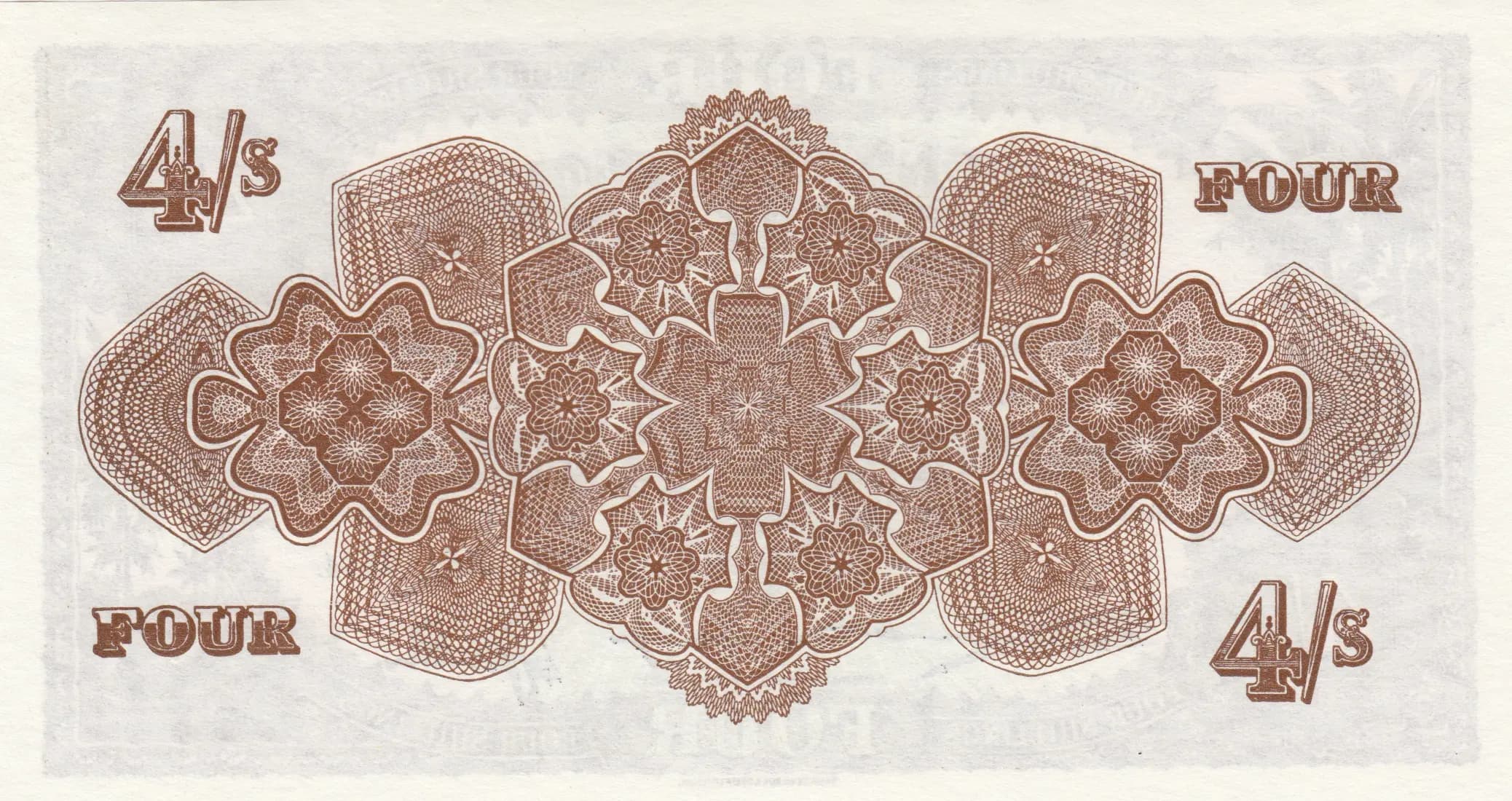
The obverse features the Tongan coat of arms as the central focal point, displaying a crown at the apex with crossed flags below, all enclosed within ornate wreath designs and decorative flourishes. Tropical palm trees are incorporated as corner vignettes in the upper left and right, reflecting Tonga's island geography and cultural identity. The denomination 'Four Shillings' appears in all four corners with additional '4/S' abbreviations. Fine ornamental borders in brown reddish tones frame the design on a light cream background. The reverse displays a large, symmetrical ornate central medallion featuring complex geometric floral patterns with interlocking star and flower motifs, also in brown on cream, with denomination indicators repeated in all four corners. The overall design exemplifies De la Rue's high-security engraving aesthetic typical of Commonwealth treasury notes from this era.
FRONT SIDE: 'Government of Tonga' / 'Treasury Note' / 'Four Shillings' (appears multiple times) / '4/S' (denomination abbreviation) / 'These notes are legal tender for the payment of any amount' / Serial numbers: 'D 61969' and 'P 61969' / Issue date: '29th July, 1964' / 'Commissioners of Currency' / 'Thos. De La Rue & Co Ltd London' (printer attribution) / 'Go Tonga Ko Mou' (Tongan: Government of Tonga). BACK SIDE: '4/S' (appears in four corners) / 'Four' (denomination text in corners). All text appears in English and Tongan languages.
Intaglio engraving (line engraving) throughout, executed by Thomas de la Rue & Co Ltd of London. The note exhibits characteristic security features of De la Rue's work including fine-line guilloche patterns, intricate background patterning, and complex ornamental designs. The sharp, clear impression visible on both obverse and reverse indicates professional-grade currency printing with careful attention to detail and registration. Multiple layers of engraved security elements including decorative borders, wreath designs, and geometric patterns were employed to prevent counterfeiting.
This note is catalogued as Pick-9d, representing one of four known varieties for the 4 Shillings denomination (P-9a, P-9c, P-9d, P-9e exist). All variants share the same printer (TDLR/Thomas de la Rue & Co Ltd) and design elements. The observed serial numbers 'D 61969' and 'P 61969' suggest different printing batches or signatures variants. The specific date of 29th July 1964 on this example helps identify it within the 1960-1966 issue period. The two signatures visible at the bottom represent different Commissioners of Currency responsible for authorizing the note at the time of printing.