1 pa'anga 1967
“8.12.67”
Market Prices
2 salesAbout This Note
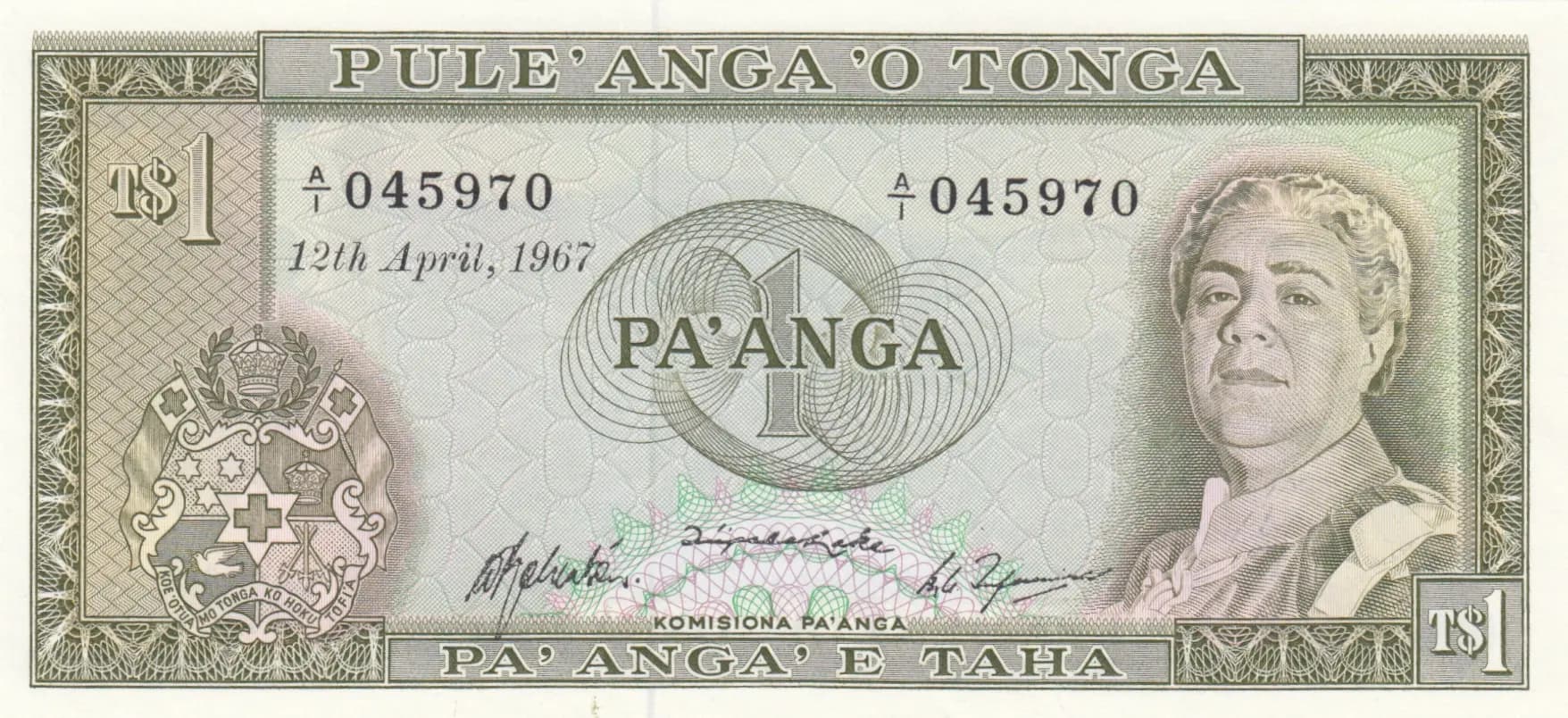
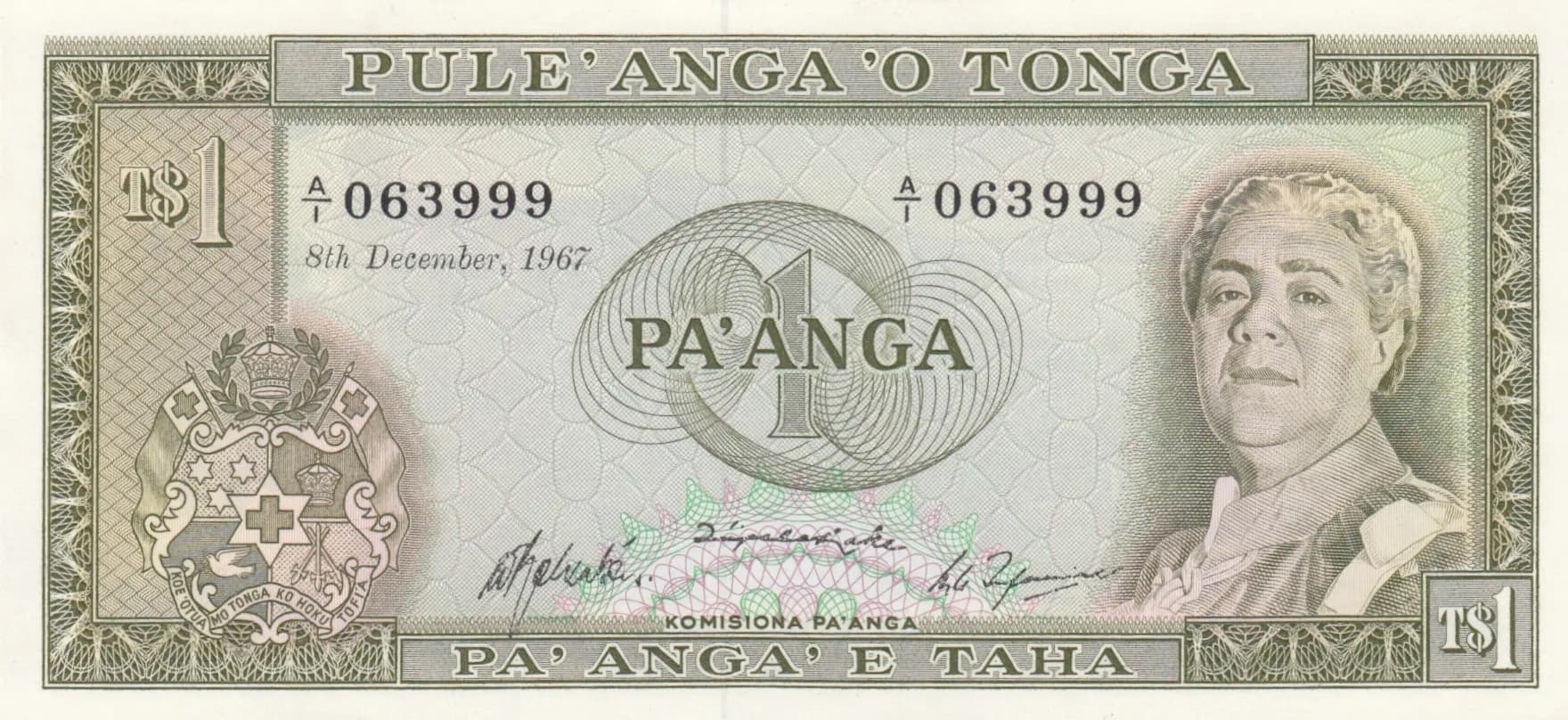
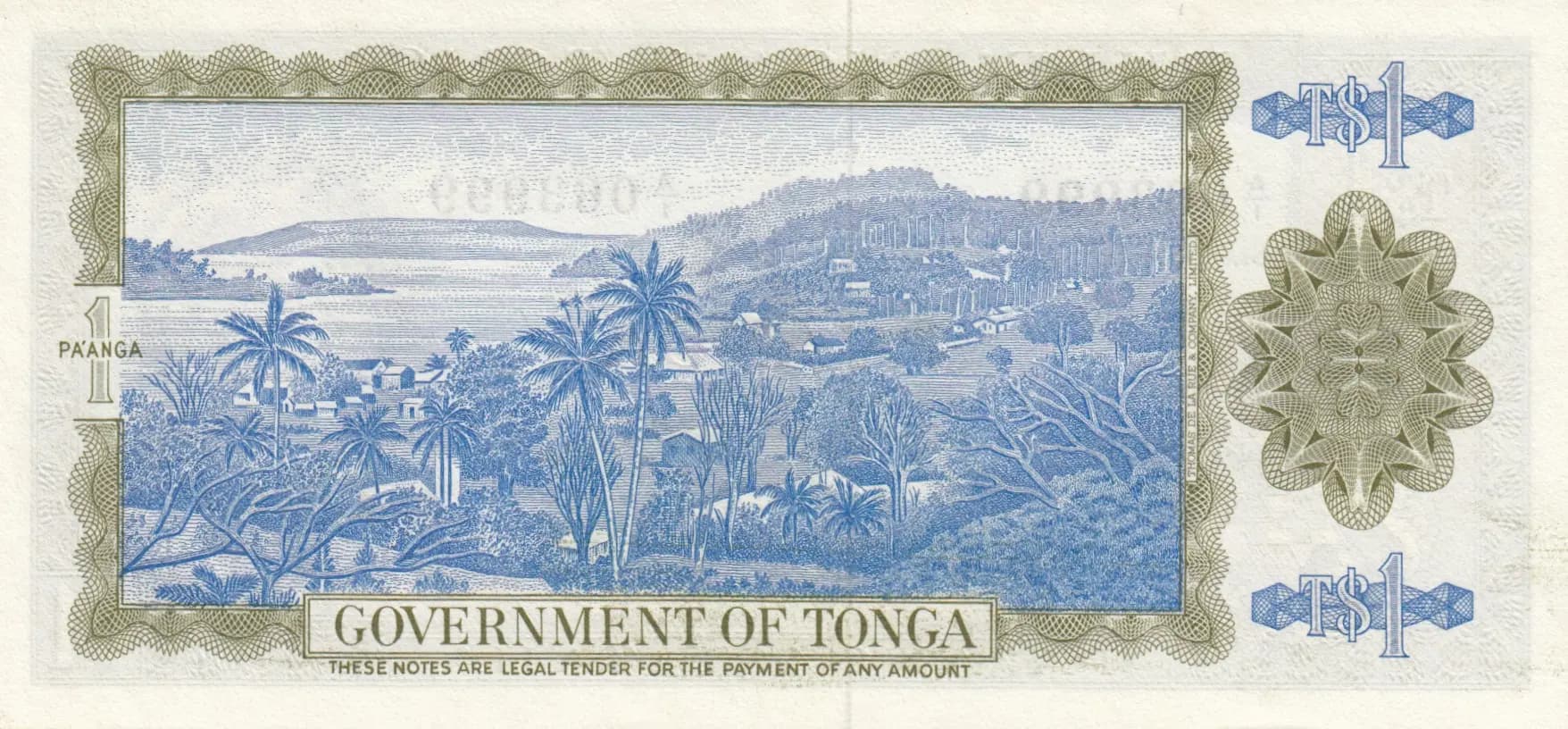
A pristine uncirculated example of Tonga's inaugural pa'anga currency issue from December 8, 1967, featuring elegant engraved design elements including a heraldic coat of arms, formal portrait, and scenic tropical landscape vignette on the reverse. The note displays exceptional condition with no signs of circulation, sharp impressions, and well-preserved cream and blue coloration typical of early Commonwealth currency commissions. This early post-independence issue represents a significant numismatic artifact from Tonga's transition to monetary sovereignty.
Common. The 1967 Tongan pa'anga represents an early but straightforward currency commission issue without known print run restrictions or subsequent recalls. As the inaugural year of an independent nation's currency, reasonable quantities were produced for circulation. The Pick 14b variety designation indicates this is a standard catalogued issue without significant scarcity factors. Uncirculated examples command modest premiums typical of early Commonwealth currency issues but remain accessible to collectors.
Issued on December 8, 1967, this banknote commemorates Tonga's formal independence and establishment of its own currency system under the Pule'anga 'o Tonga (Kingdom of Tonga). The heraldic coat of arms on the obverse symbolizes the monarchy's constitutional authority, while the reverse landscape vignette depicting a coastal settlement with mountains and palm trees reflects Tonga's island geography and cultural identity. This Currency Commission issue represents the early centralized authority for monetary management in the newly independent nation.
The obverse features a formal three-quarter profile portrait of a dignitary in suit and collar positioned on the right side, likely a government official or member of the Tongan royal family. The left side displays an ornate heraldic coat of arms with a shield design incorporating crosses and crown-like ornamental elements, reflecting Tongan monarchical symbolism. A prominent circular medallion with concentric line work dominates the center, serving as the denomination focus. The reverse showcases an engraved landscape vignette depicting a characteristic Tongan coastal settlement with mountainous terrain in the background, palm trees indicating tropical flora, and what appears to be government or colonial-era buildings dotting a hillside overlooking a bay or ocean. Ornate geometric border patterns frame both sides, with decorative star or flower motifs in green accent the right margin of the reverse.
FRONT SIDE: 'Pule'anga 'o Tonga' (Kingdom of Tonga); 'Pa'anga' (currency unit); 'Komisiona Pa'anga' (Currency Commission); 'Pa'anga'e Taha' (One Pa'anga); '1$' (One dollar equivalent); Date: '8th December, 1967'; Serial number: 'A 063999'. BACK SIDE: 'Government of Tonga'; 'These notes are legal tender for the payment of any amount'; 'Pa'anga' (currency unit); '1$' (One dollar denomination).
Intaglio engraving (recess printing) on unwatermarked paper, characteristic of Commonwealth currency commission issues of the 1960s. Multiple color printing visible with primary tan/beige and black inks on obverse, blue and green supplementary inks on reverse. Fine line work, detailed portraiture, and complex geometric borders indicate professional security printing typical of De La Rue or similar Commonwealth security printers, though specific printer attribution requires additional research. The intricate engraving patterns and sharp impressions throughout suggest high-quality steel plate production.
Pick 14b designation indicates this is the second catalogued variety of the 1 pa'anga 1967 issue. The serial number prefix 'A' and specific serial number 'A 063999' should be noted. The December 8, 1967 date is consistent with the official issue date. Collectors should cross-reference signature varieties and any subsequent overprints or printer designations visible under magnification. Known varieties typically include different serial number prefixes (A, B, etc.) and potentially different signature combinations on the Currency Commission authorities.