5 kronor 1942
Market Prices
3 salesAbout This Note
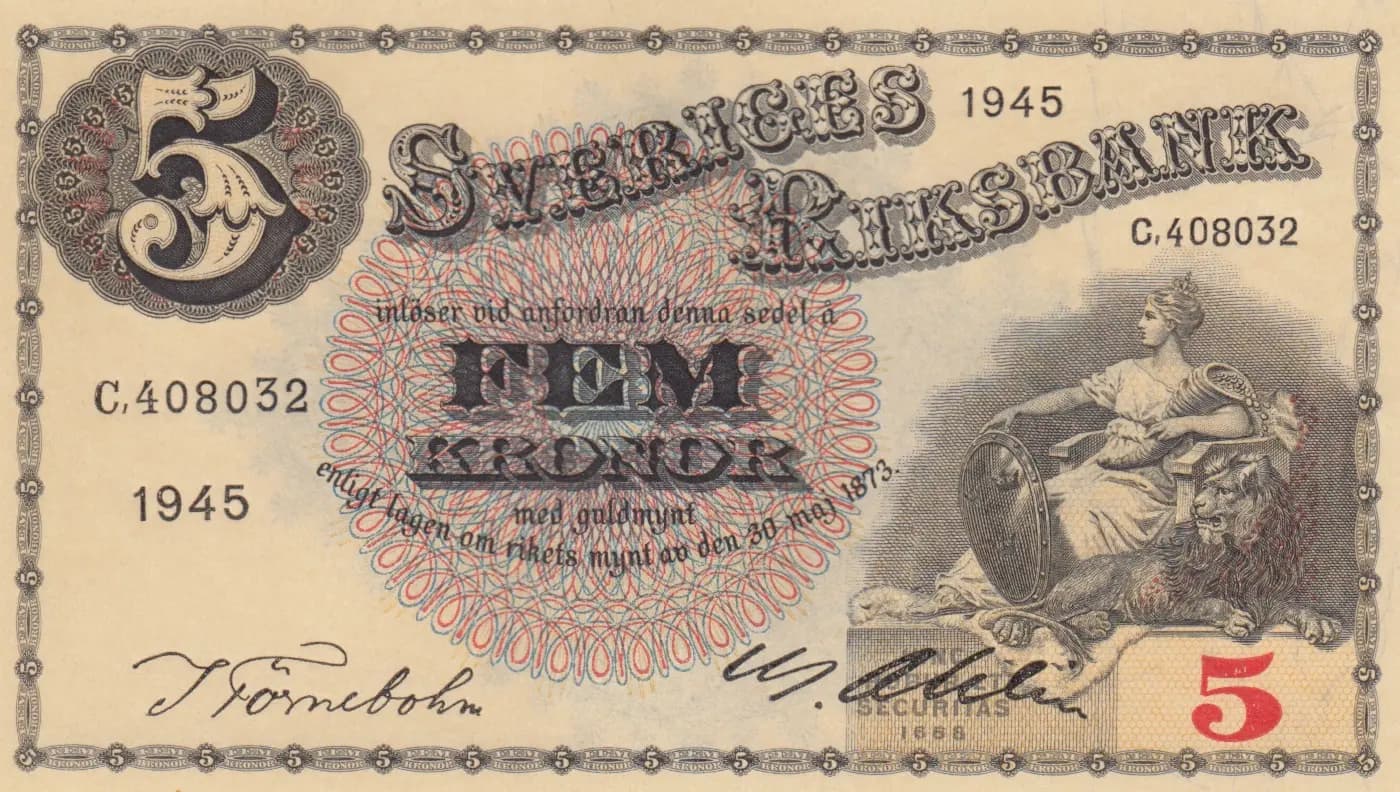
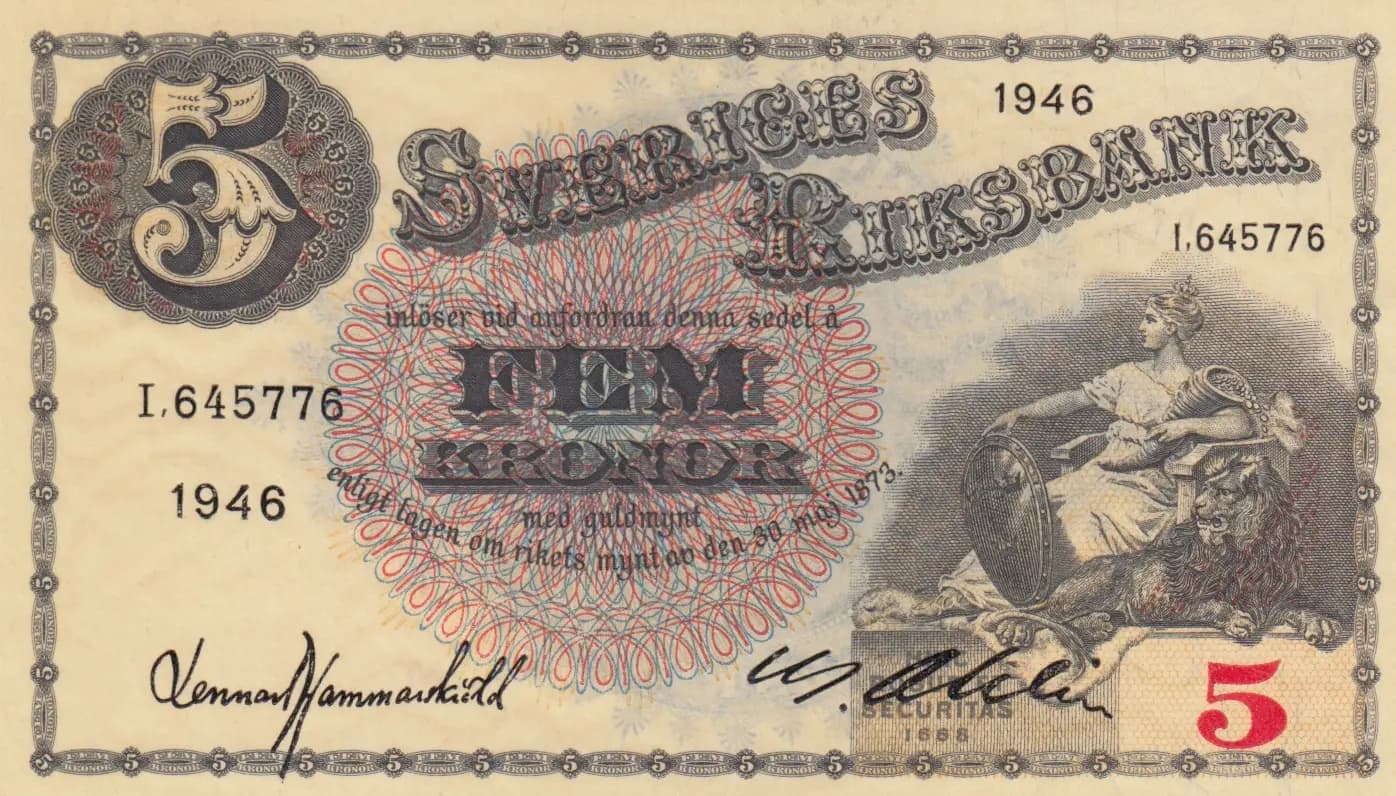
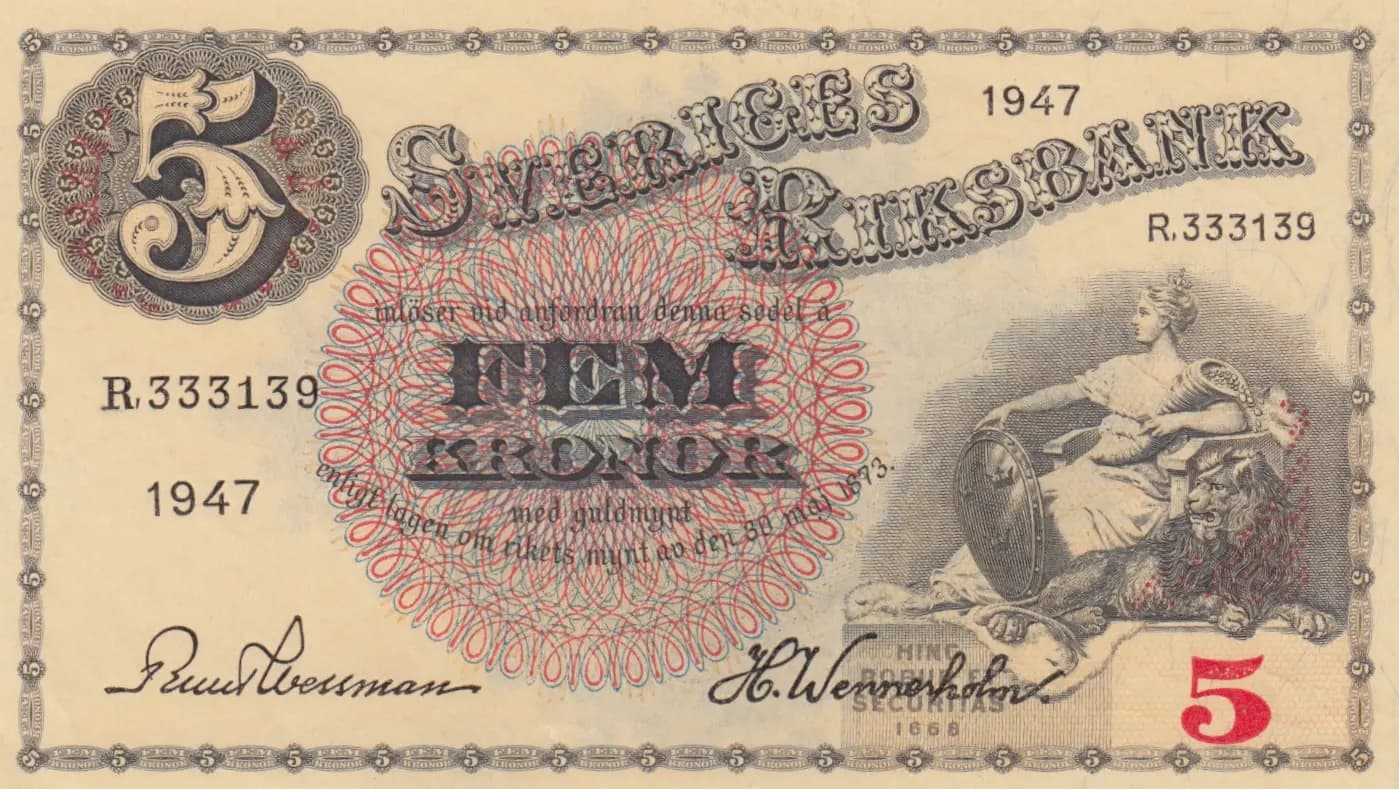
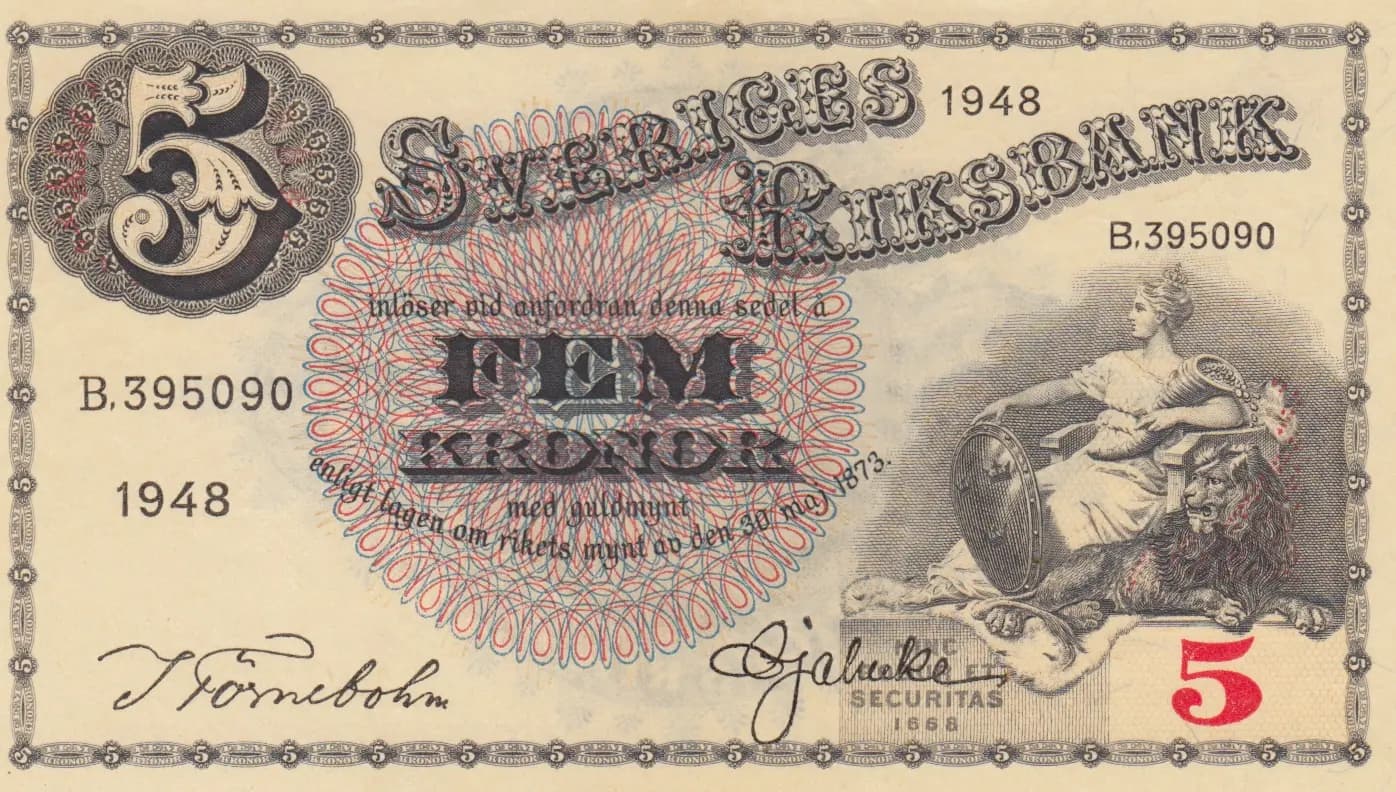
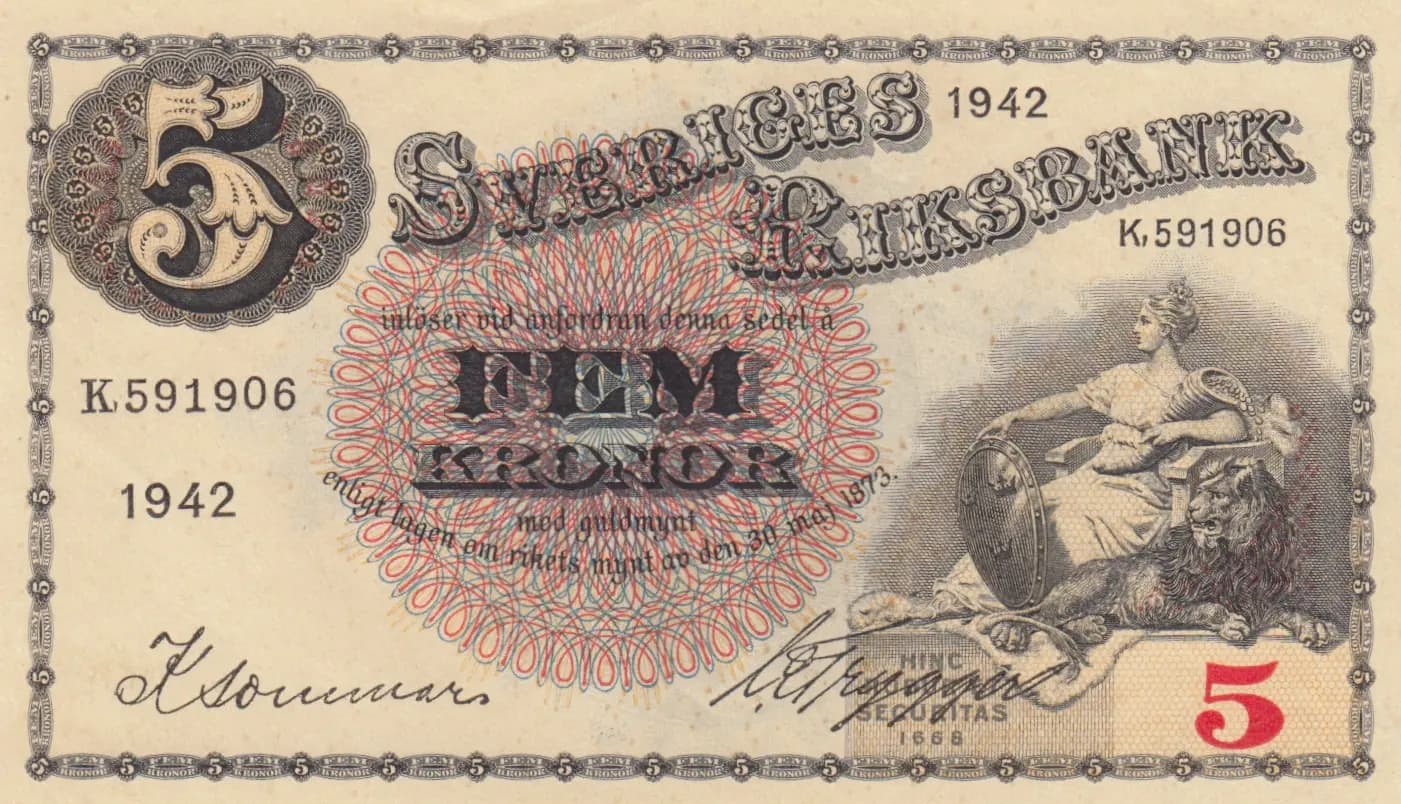
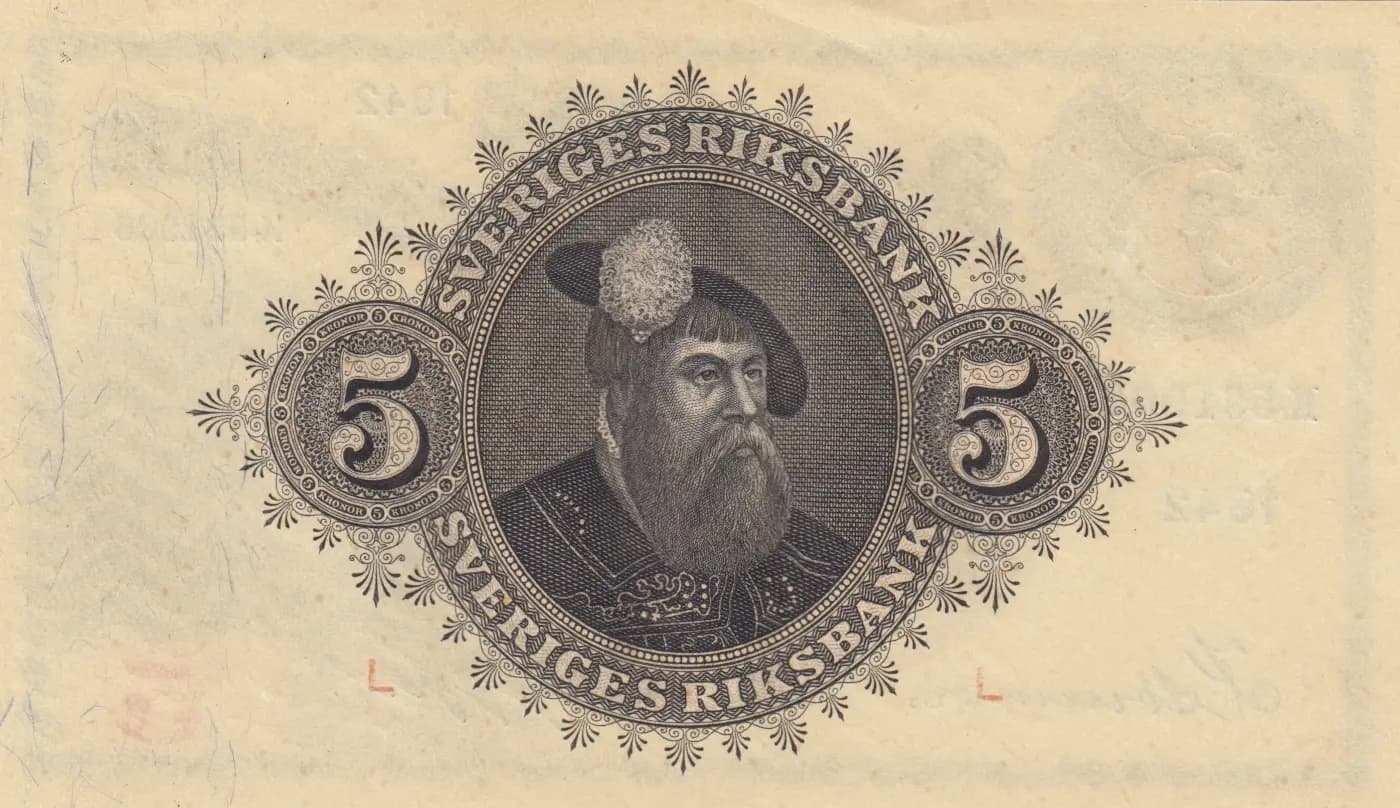
This is a Swedish 5 kronor banknote from 1942 (Pick P-33y), featuring the allegorical figure of Svea on the obverse and King Gustav Vasa on the reverse. The note displays typical circulation wear with age-related yellowing, foxing, and creasing, though it retains good overall legibility and detail. The striking red rosette security overprinting and ornate engraved vignettes remain clearly visible, characteristic of this mid-20th century Swedish currency design.
Common. Market evidence from realbanknotes.com shows recent sales of comparable grades (AUNC, PMG 65) ranging from $9.50 to $18.50 between 2016-2020, with catalog values for UNC at $9 as of 2016. These modest prices and consistent availability of sales data indicate this is a standard circulating issue from a major central bank with large print runs. The P-33y designation covers the 1942 issue within a broader series issued 1918-1952.
Issued during World War II by Sveriges Riksbank, this 5 kronor note represents Swedish currency during a period of strict neutrality and economic constraint. The design reflects Sweden's historical identity through Svea, the national personification of Sweden depicted with a lion and shield, while King Gustav Vasa on the reverse honors the 16th-century founder of the Vasa dynasty who established Swedish independence. The note's continued circulation through 1952 reflects Sweden's post-war economic recovery and the longevity of this particular design series.
The obverse features Svea, the female allegorical personification of Sweden, depicted in classical dress seated beside a heraldic lion and holding a shield or medallion, within an ornate oval frame. The denomination numeral '5' appears prominently in the upper left corner and lower right. Red decorative overprinting in a rosette/spiral pattern covers the center, providing additional security. The reverse depicts King Gustav Vasa, the bearded 16th-century founder of the Vasa dynasty, shown in historical attire with a high collar or ruff, surrounded by an ornate octagonal frame with floral and geometric motifs. Both sides feature 'SVERIGE RIKSBANK' inscriptions and complex intaglio engraving with fine line work.
Front side: 'SVERIGES RIKSBANK' (Sweden's Central Bank), '5' (denomination), '1942' (issue year), 'FEMTIO KRONOR' (Fifty Kronor—base denomination text), 'TIOÉ KRONOR' (Ten Kronor—overprint text), signatures 'Klommani' and 'Wilhelm'. Back side: 'SVERIGES RIKSBANK' (Sweden's Central Bank), '5' (denomination in decorative circles).
Intaglio (engraved) printing on the primary design elements, with additional letterpress or flexographic red overprinting for the security rosette pattern. The fine line work visible in both the Svea vignette and Gustav Vasa portrait, combined with the detailed ornamental borders, is characteristic of high-quality intaglio bank note production of the 1940s. No specific private security printer attribution is standard for this Swedish series.
Pick catalog number P-33y specifically denotes the 1942 issue variant of this 5 kronor design. Signature varieties exist, with this example bearing signatures attributed to 'Klommani' and 'Wilhelm' (likely senior bank officials of the period). Serial number prefix 'K.591906' suggests this is from a standard production batch. The visible red security overprinting is a characteristic feature of this issue period and would be consistent across notes from this printing.