5 kronor 1945
Market Prices
2 salesAbout This Note
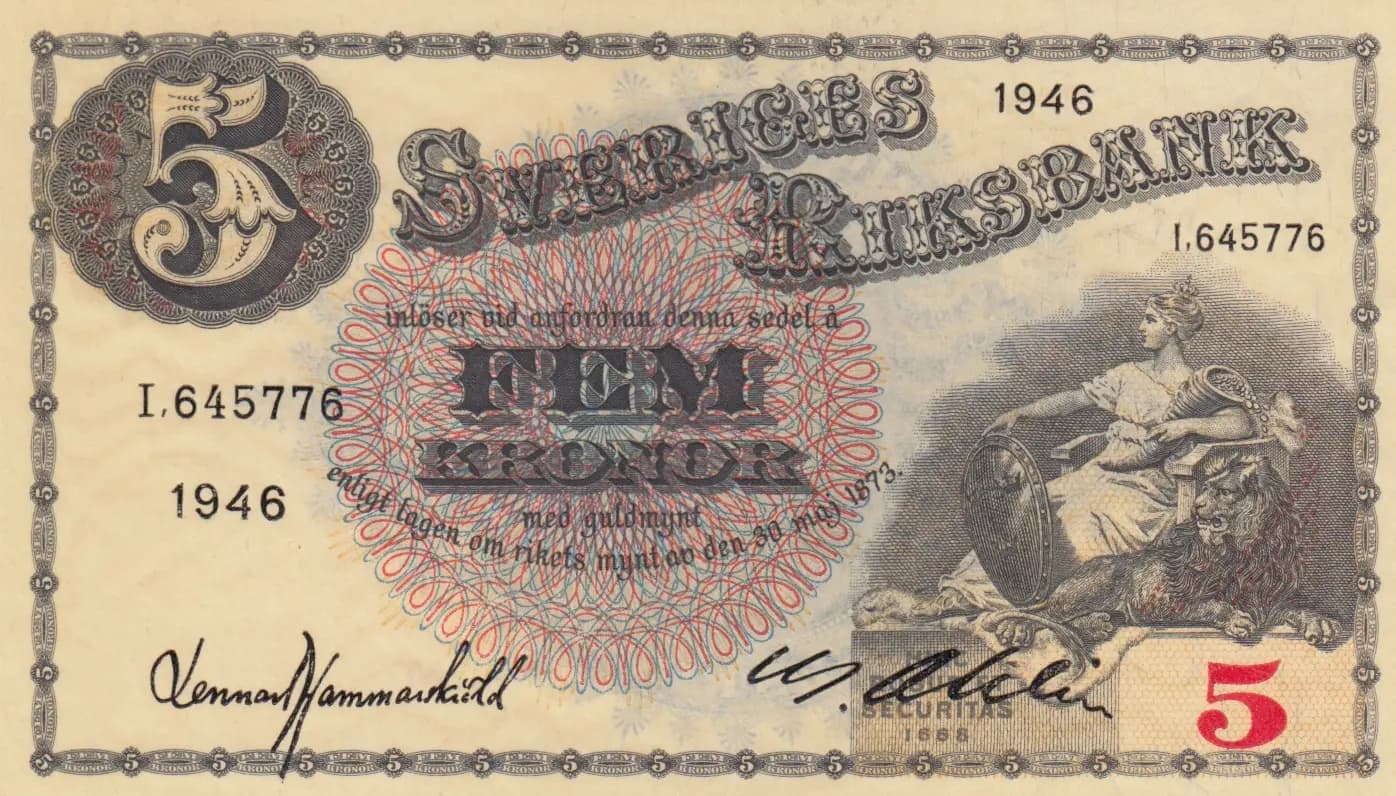
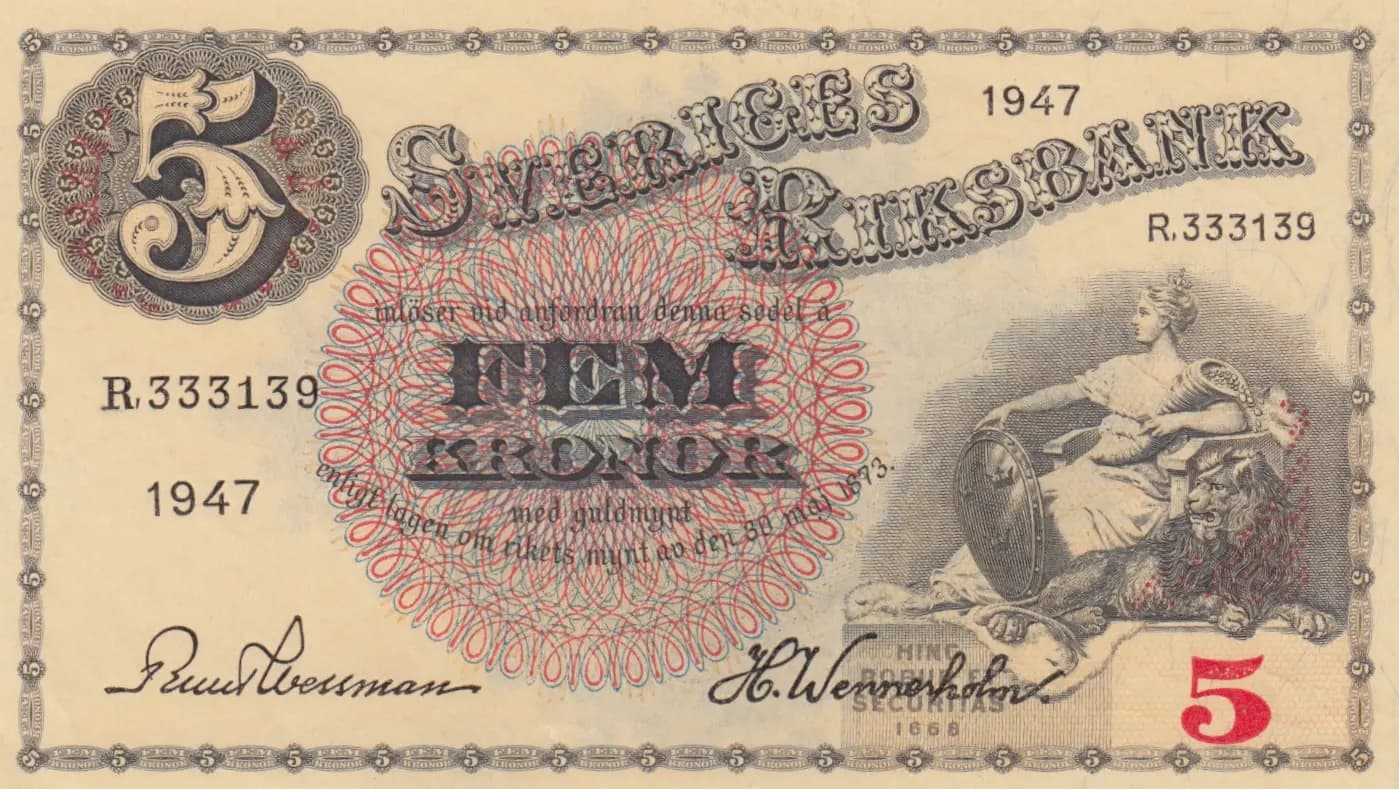
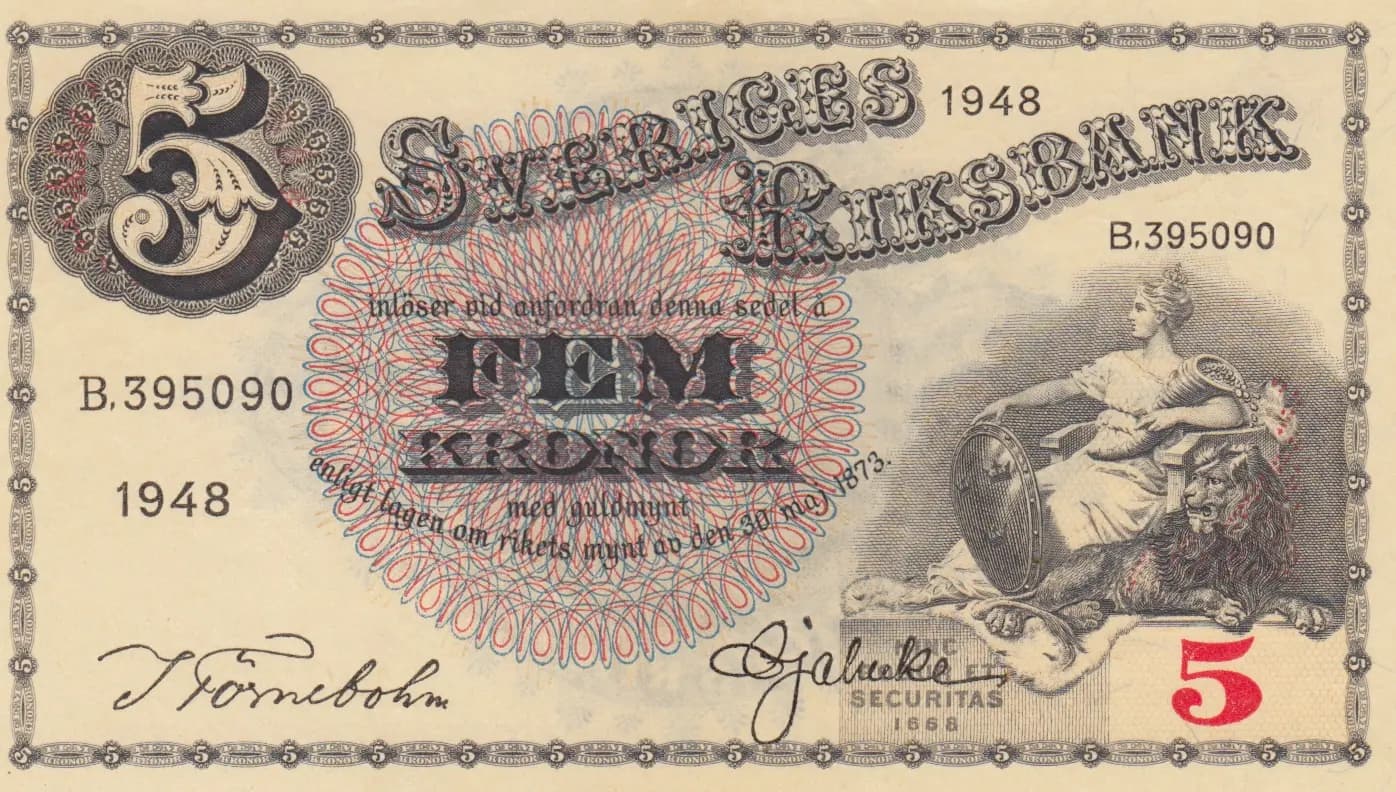
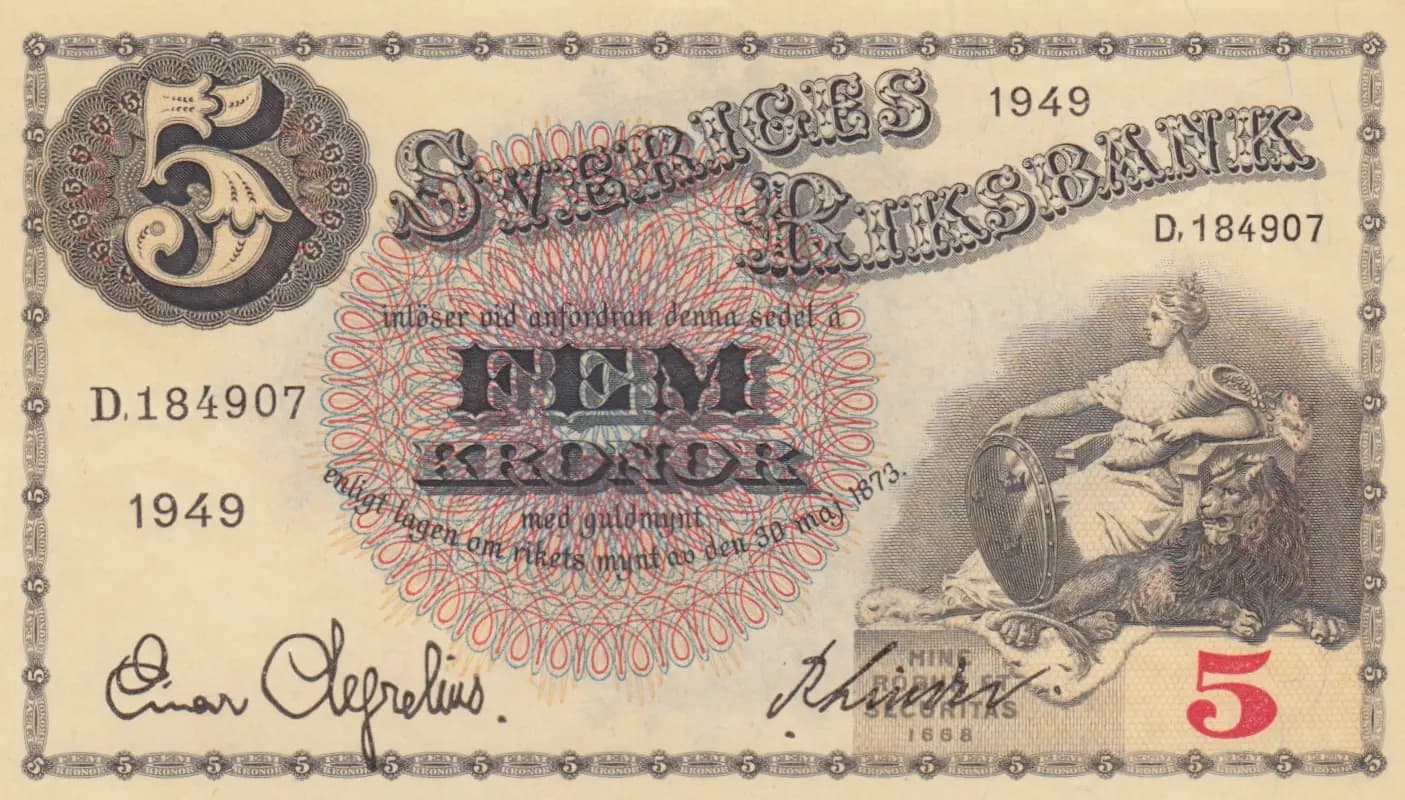
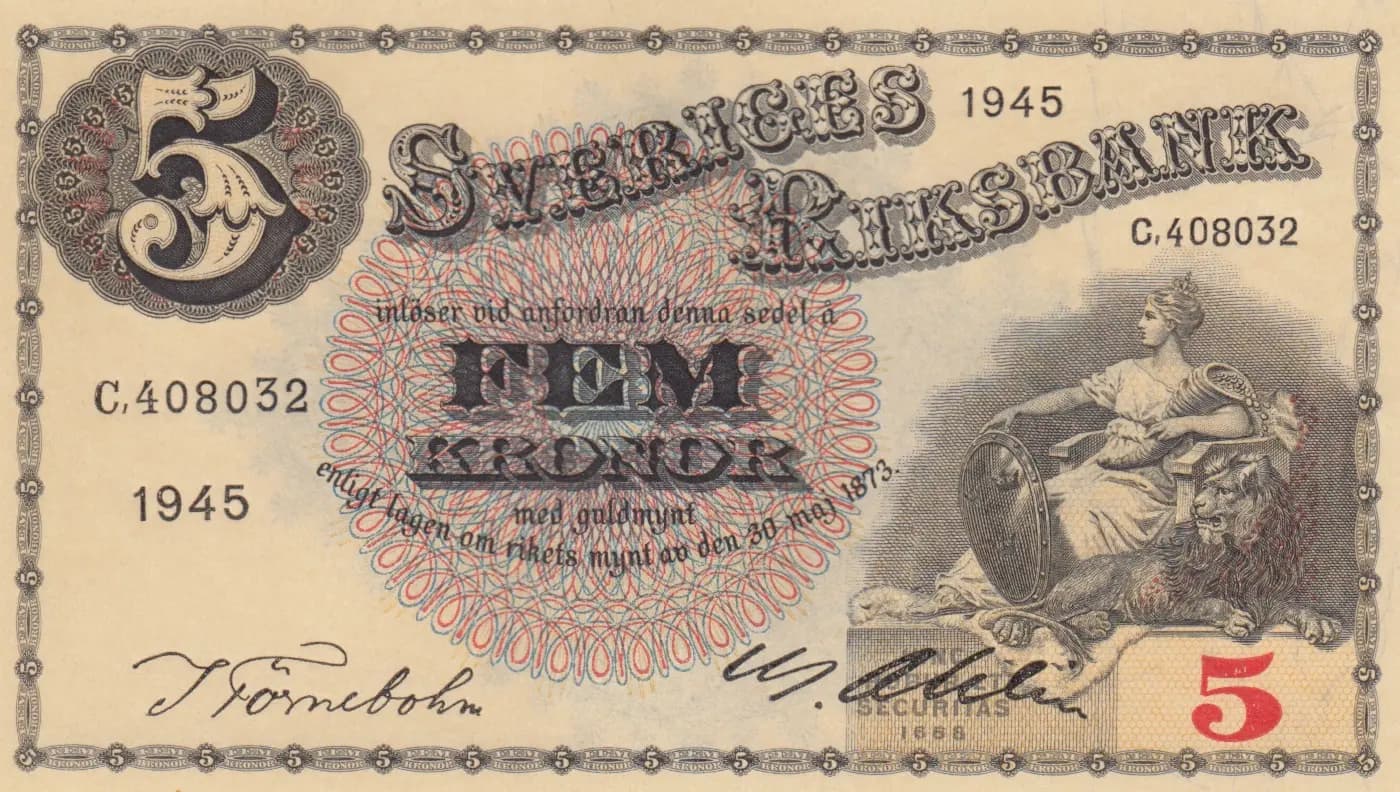
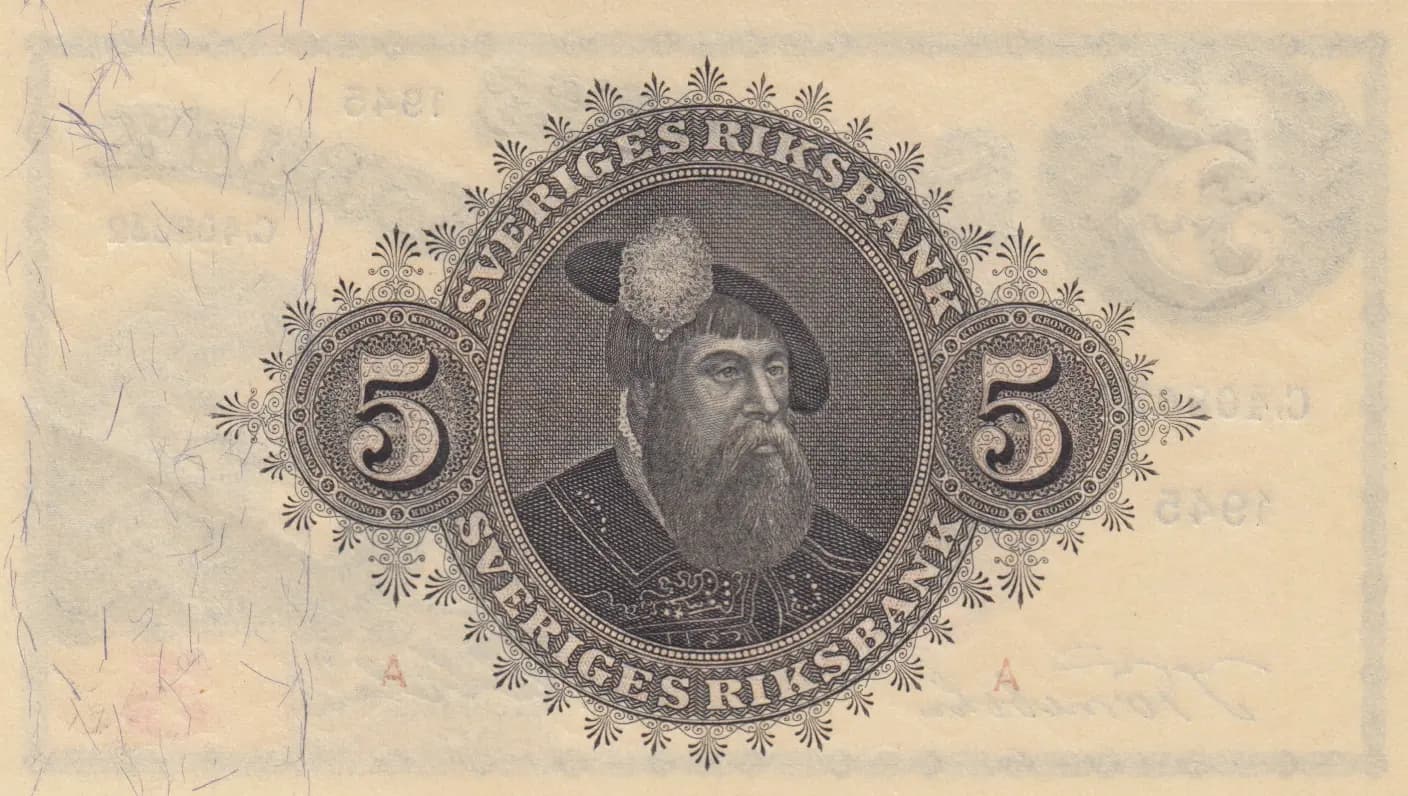
This is a Swedish 5 kronor banknote from 1945, issued by Sveriges Riksbank during the final years of World War II. The note features the allegorical figure of Svea on the obverse seated with a lion, and King Gustav Vasa on the reverse within an ornate circular medallion. The specimen shows moderate circulation wear consistent with age, including visible creases, folds, and discoloration, though the intricate engraving and guilloché security patterns remain clearly defined.
Common. This note is from a regular-issue series (P-33ab) that circulated widely from 1918-1952 across Sweden, with substantial print runs to meet demand for this moderate denomination. eBay market data confirms common status, with VF specimens selling for approximately $5.50 and UNC catalog values at $10 (2016). The moderate pricing and consistent availability in the secondary market are strong indicators of a common, widely-circulated note type with no scarcity premium.
The 1945 dating places this note at the end of the Second World War, a period when Sweden maintained official neutrality while managing complex economic and political pressures. The continued use of classical allegorical imagery (Svea, the personification of Sweden) and the historical portrait of King Gustav Vasa I (16th century founder of the Vasa dynasty) reflects Sweden's emphasis on national continuity and institutional stability during the turbulent wartime period. This denomination and design series remained in circulation for decades, demonstrating the durability and public trust in Sveriges Riksbank's currency during this era.
The obverse features Svea, the classical allegorical female personification of Sweden, depicted in draped classical clothing seated beside a lion (representing Swedish strength and sovereignty). She holds a shield or circular emblem as a symbol of protection. The portrait occupies the right portion of the note and is surrounded by elaborate ornamental borders featuring repeating floral and geometric patterns in the neoclassical style typical of Swedish banknote design. The reverse displays a portrait of King Gustav I Vasa (1496-1560), the founder of the Vasa dynasty and central figure in Swedish independence, shown in profile wearing period royal dress and a decorative hat, enclosed within an ornate circular medallion. Both sides feature large numerals '5' in decorative cartouches. The central security element on the front comprises intricate red and black guilloché pattern work with fine line engraving throughout.
Front side: '5' (denomination), '1945' (year of issue), 'SVERIGES RIKSBANK' (Sweden's Central Bank), 'FEM KRONA' (Five Kronor - note: visual analysis transcribed as 'TIEM KRONA' but should read 'FEM KRONA'), 'C.408032' (serial number), signature area with names including 'Tömebohrn' and 'W. Ahlul' (likely official signatures or place names). Back side: '5' (denomination on both sides), 'SVENSKA RIKSBANK' (Swedish Central Bank - variant spelling), 'RIKETS RIK[ET]' (of the Realm).
Intaglio (copperplate) engraving, the standard security printing method for Swedish banknotes of this era. The note exhibits fine line engraving characteristic of high-security currency production, with complex guilloché patterns in red and black providing anti-counterfeiting security. The ornate border patterns, portrait engraving detail, and the layered decorative elements all indicate professional banknote security printing typical of Sveriges Riksbank's contracted security printers of the 1940s.
The Pick catalog designation P-33ab indicates a specific variety within the 5 kronor 1918-1952 series. The serial number 'C.408032' and the signature combination visible on this specimen may help identify the precise sub-variety. Swedish banknote varieties of this period are typically distinguished by signature combinations (representing different officials or time periods), serial number prefixes, and minor printing variations. The 1945 date confirms this note's position within the later years of this series' circulation. Without access to a comprehensive Swedish banknote variety catalog, specific sub-variety details cannot be definitively assigned, but the combination of date, serial prefix, and signatures should allow identification against detailed P-33ab references.