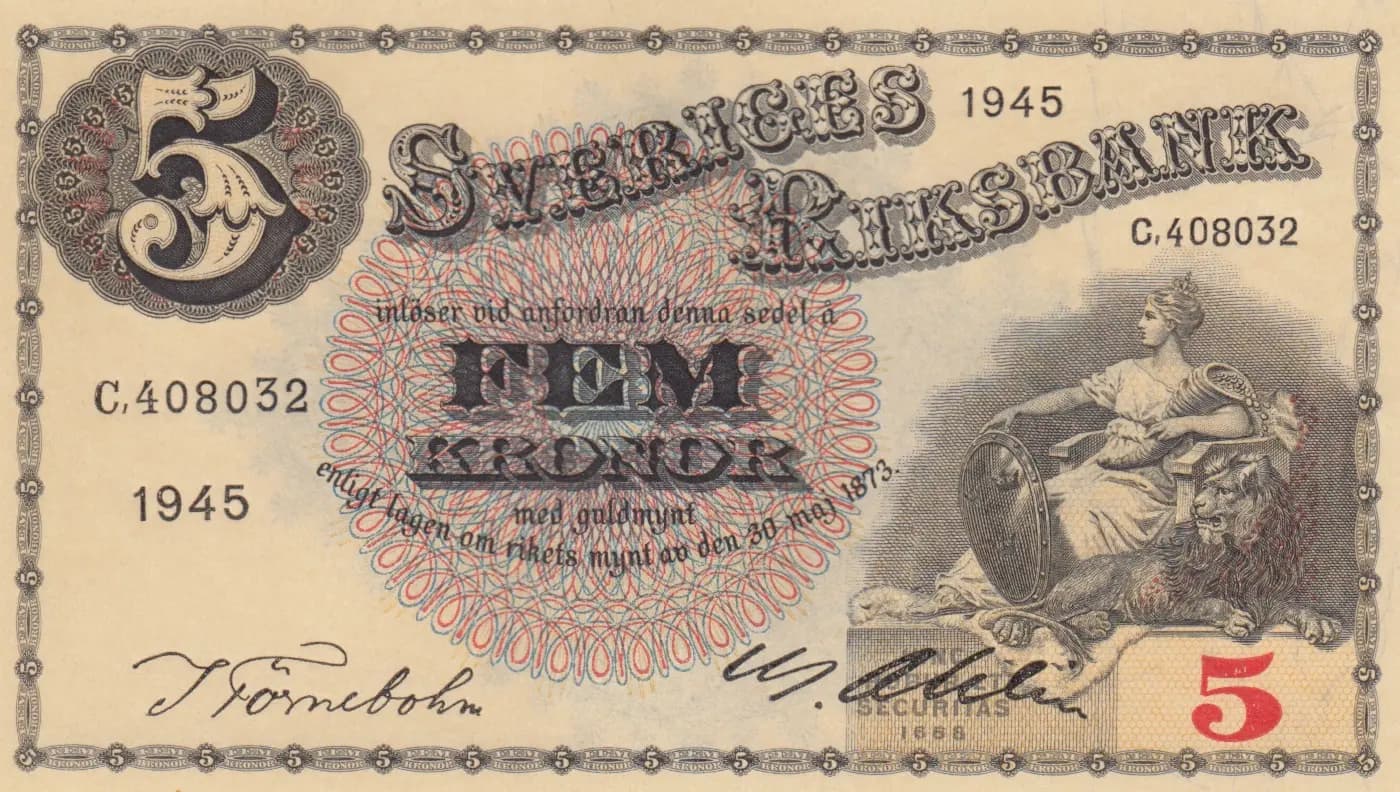
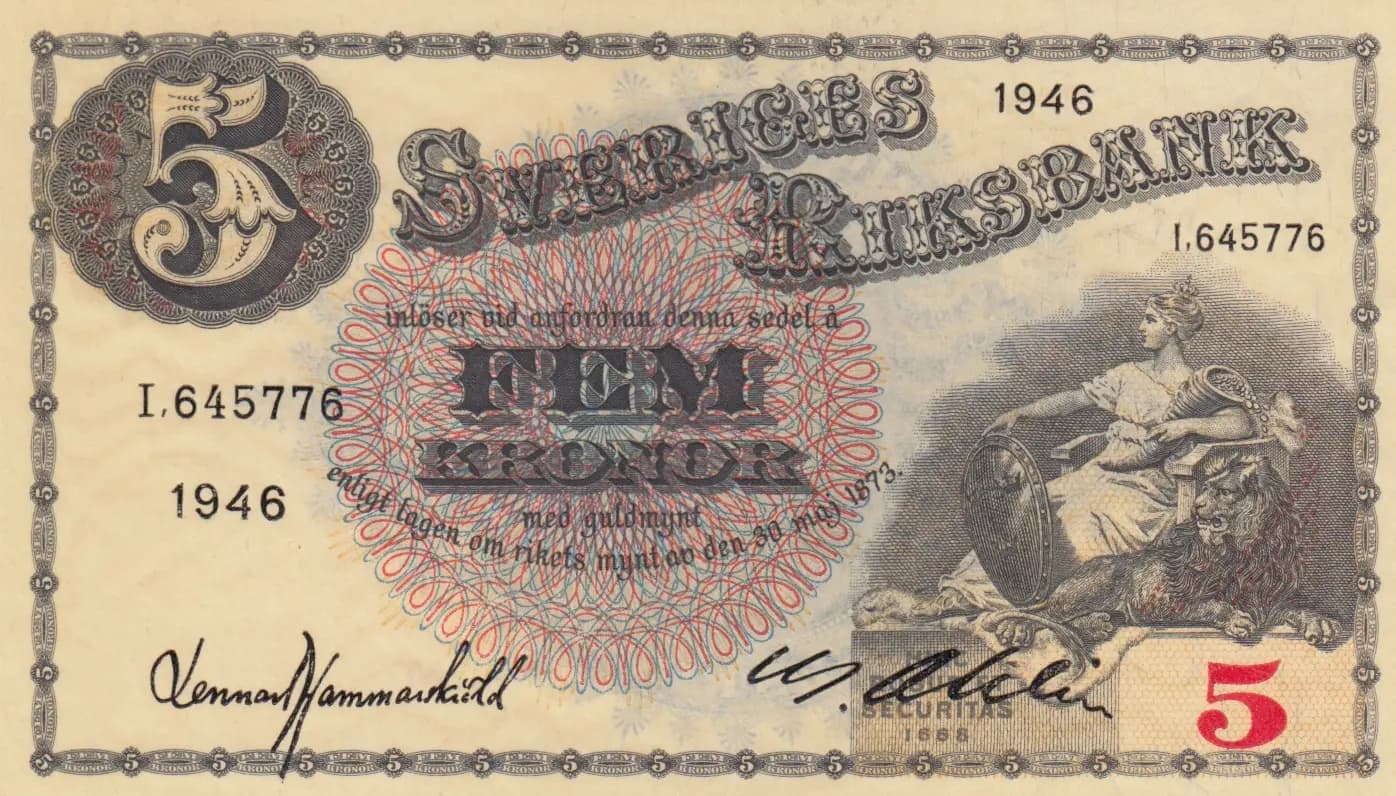
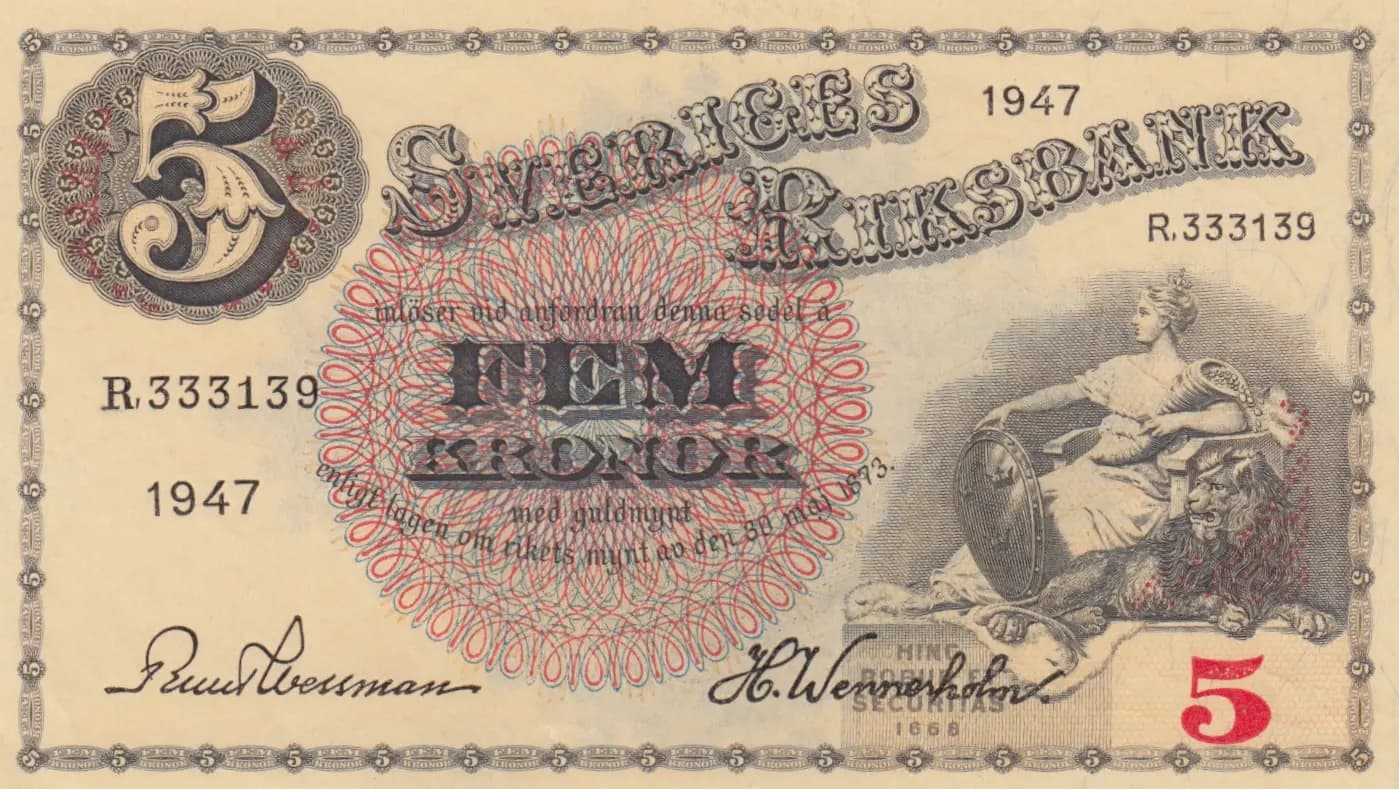
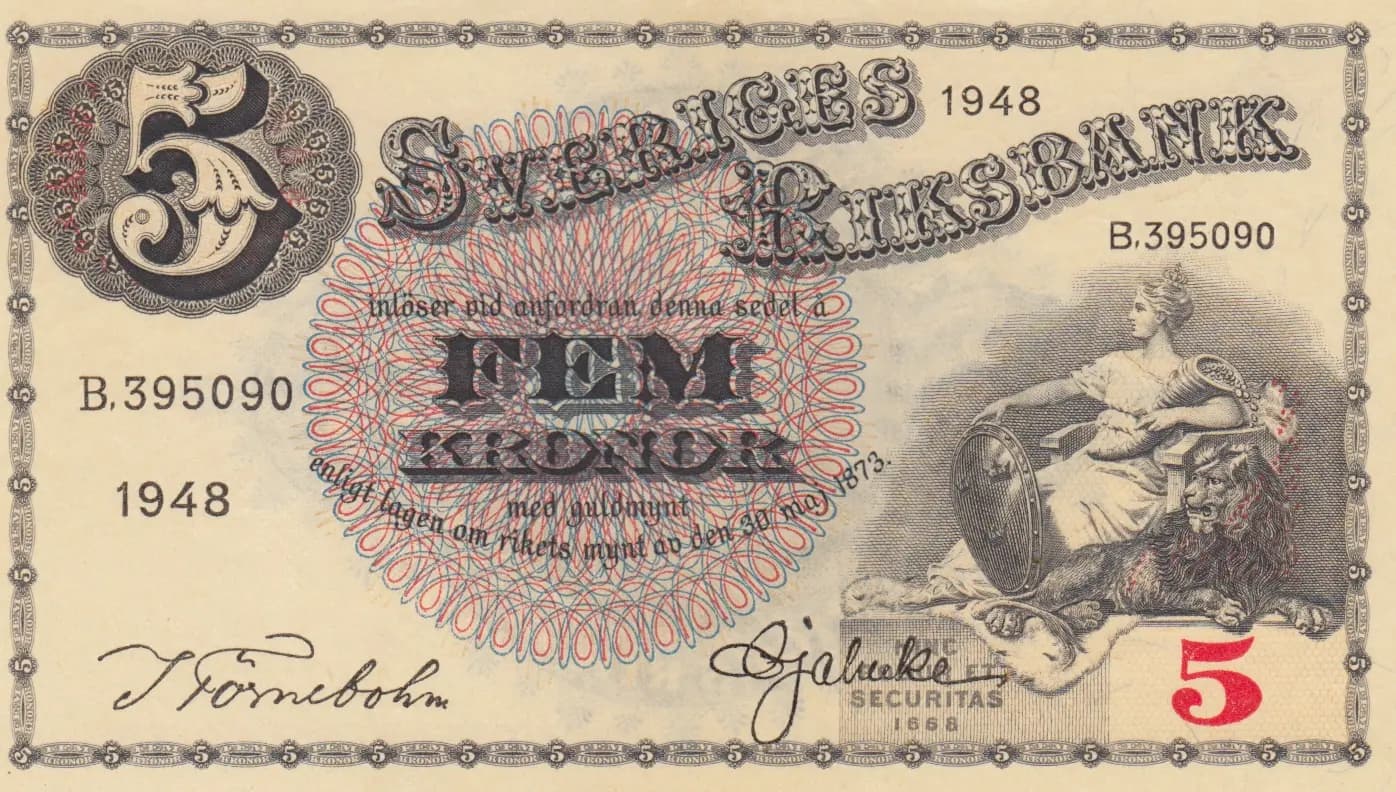
5 kronor 1941
Market Prices
5 salesAbout This Note
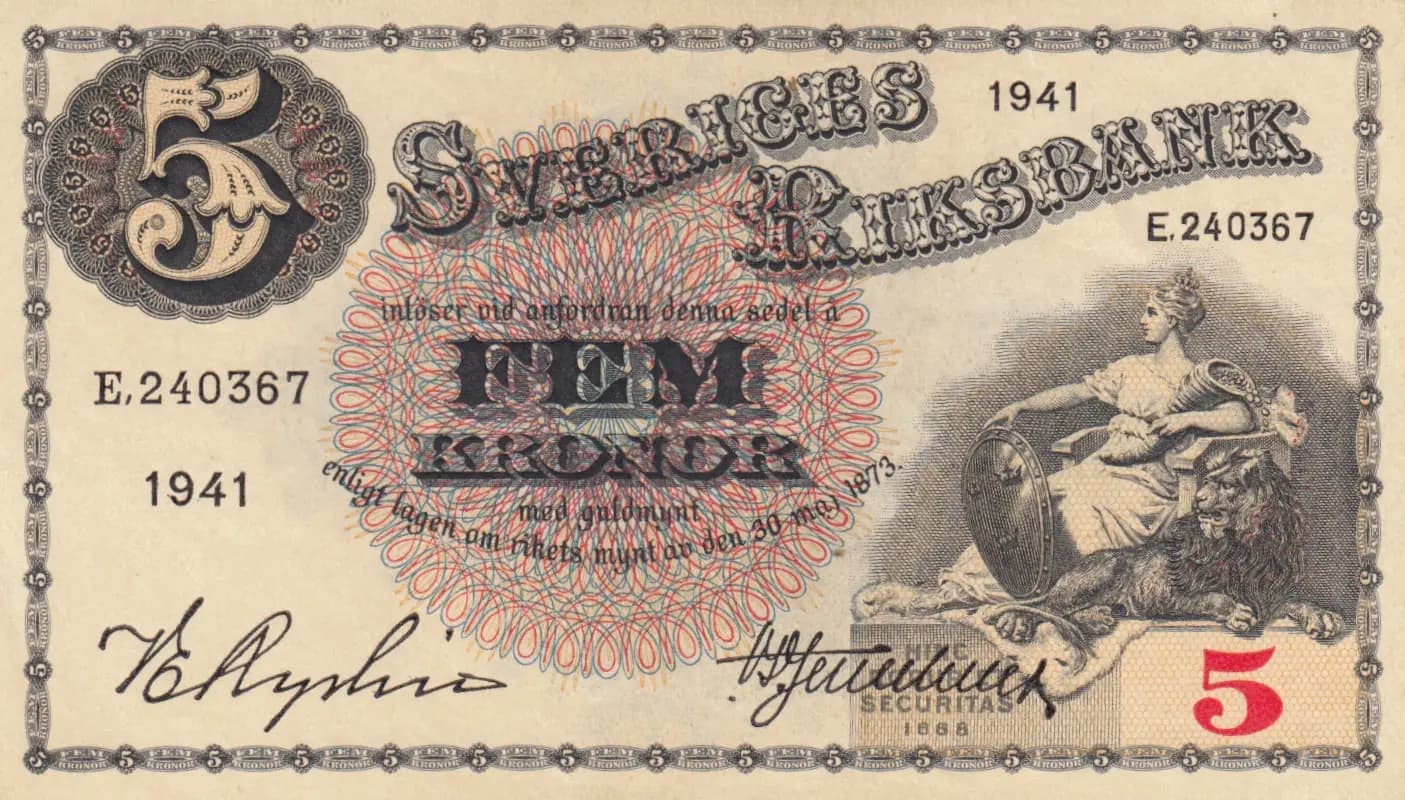
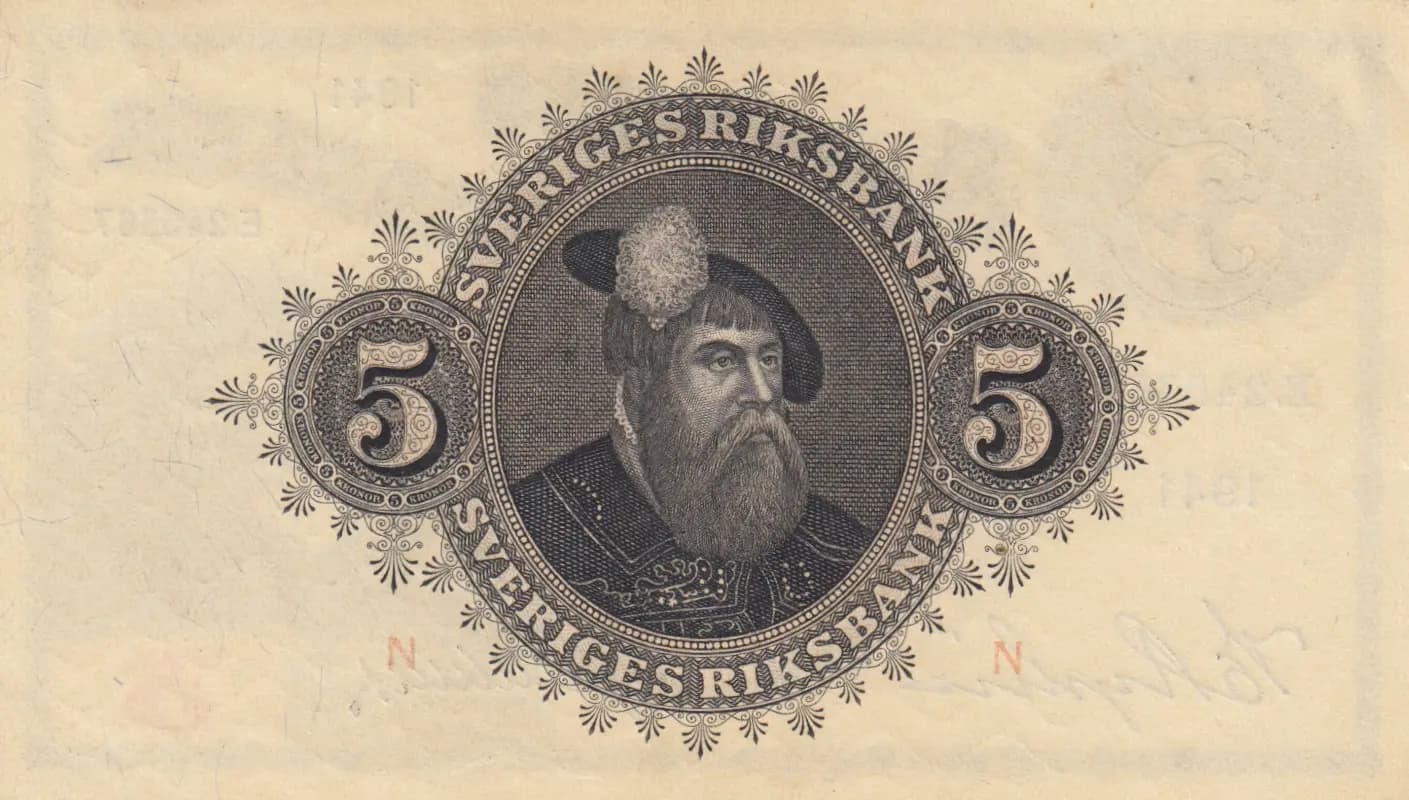
This is a Swedish 5 kronor note from 1941 (Pick P-33x) in uncirculated condition, featuring a striking classical female figure (Svea) with lion and shield on the obverse. The note displays an interesting overprint combination with 'TIOT KRONOR' (ten kronor) and 'FIVE' in black, suggesting this may be from a currency conversion or emergency issue period. The reverse presents an ornate portrait of a bearded historical figure within elaborate decorative borders, with the note showing excellent preservation consistent with UNC grade.
Common. eBay market data shows regular sales activity with notes in various grades (F, AUNC, PMG 58, PMG 66) ranging from $3.86 to $73, with UNC catalog value listed at $10 (2016 reference). The note was issued during a standard circulation period (1918-1952 per external reference) with typical print runs. The UNC grade specimen observed here represents a well-preserved example of a frequently encountered denomination, and current market prices indicate strong common-grade availability.
Issued during World War II by Sveriges Riksbank, this 5 kronor note reflects Sweden's complex position as a neutral country navigating wartime economic pressures. The allegorical figure of Svea (representing Sweden personified) with her protective lion symbolizes national sovereignty and stability, while the classical iconography conveys confidence in the currency. The presence of overprinted denominations suggests currency control measures or denomination standardization efforts undertaken during the 1940s.
The obverse features Svea, the personification of Sweden, depicted as a classical female figure in flowing robes seated with a heraldic lion and ornamental shield, surrounded by elaborate geometric and floral borders typical of high-security banknote design of the era. The reverse presents a bearded male portrait in historical dress, identified as King Gustav Vasa (founder of the Vasa dynasty and Swedish independence), centered within an intricate circular ornamental frame with radiating fan-like patterns and symmetrical floral decorative elements. Both sides employ numerals '5' within ornamental cartouches, and the overall design emphasizes security through complexity and fine-line engraving.
Front side: '5' (denomination), 'SVENSKA' (Swedish), 'TIOT KRONOR' (Ten kronor - overprint), 'FIVE' (Five - English language overprint), '1941' (year of issue), 'E.240367' (serial number), 'SECURITAS' (Latin: Security/Safety), '1888' (historical reference date). Back side: 'SVENSKA' (Swedish), 'RIKSBANK' (National Bank/Central Bank), '5' (denomination - appears twice in circular ornaments), 'N' (printer or variety mark).
Intaglio (recess) engraving on bank note paper, characteristic of Sveriges Riksbank production. The crisp overprinting in black and red text appears to be letterpress or additional intaglio work applied after initial printing. The fine detail, elaborate borders, and portrait engraving are consistent with Swedish state banknote security printing standards of the 1940s, likely produced by Stockholms Banknots AB or similar authorized Swedish security printer.
Serial number E.240367 identifies this as a specific printing unit within the 1941 issue. The presence of both 'TIOT KRONOR' and 'FIVE' overprints suggests this belongs to a specific overprinted variety, potentially related to currency reform or denomination clarification during wartime. The 'N' marking visible on the reverse may indicate printer attribution or a specific printing batch. The date '1888' appearing on the obverse likely references the establishment year of the security printing company or bank note design tradition rather than the issue date.