1000 dinara 1942
Market Prices
8 salesAbout This Note
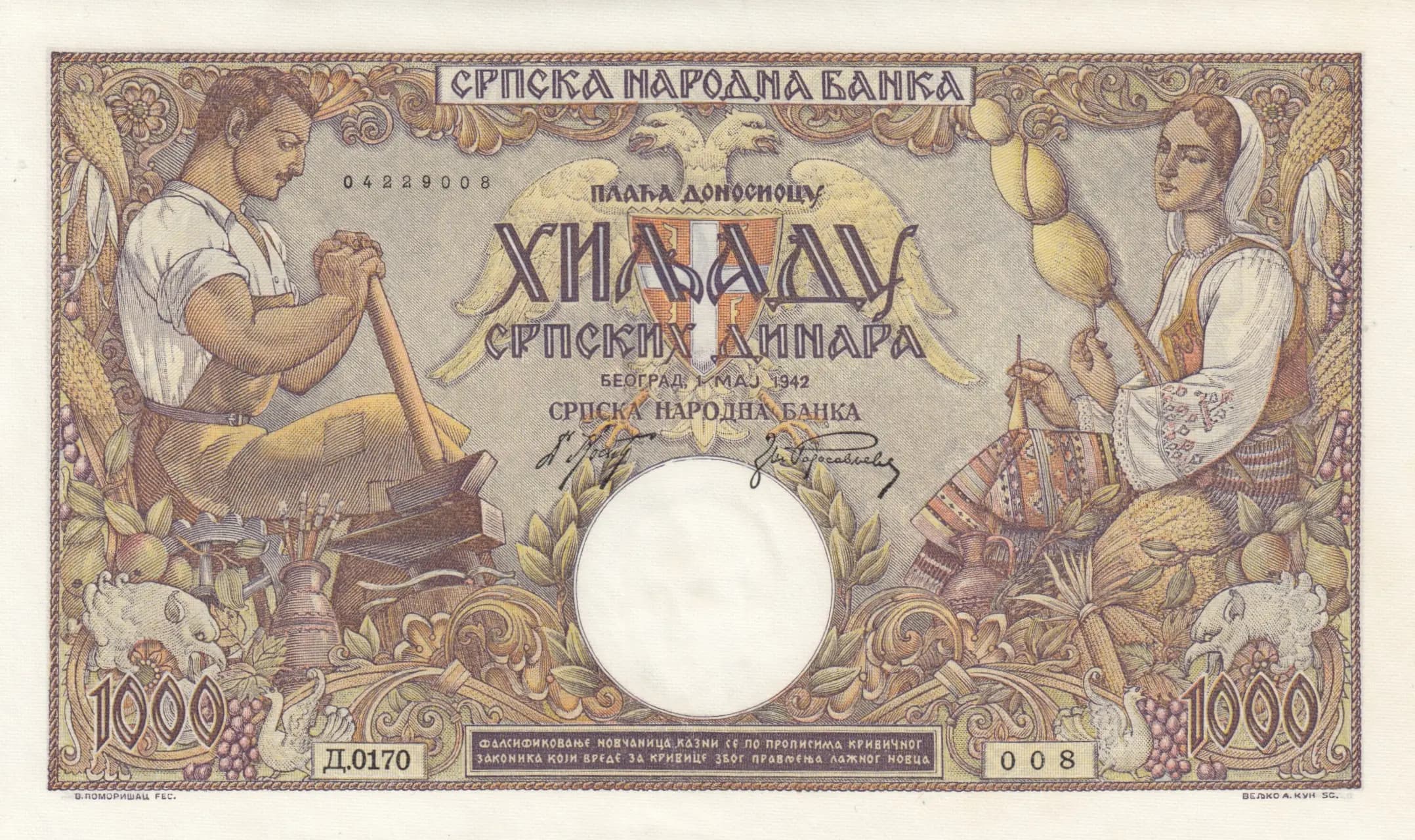
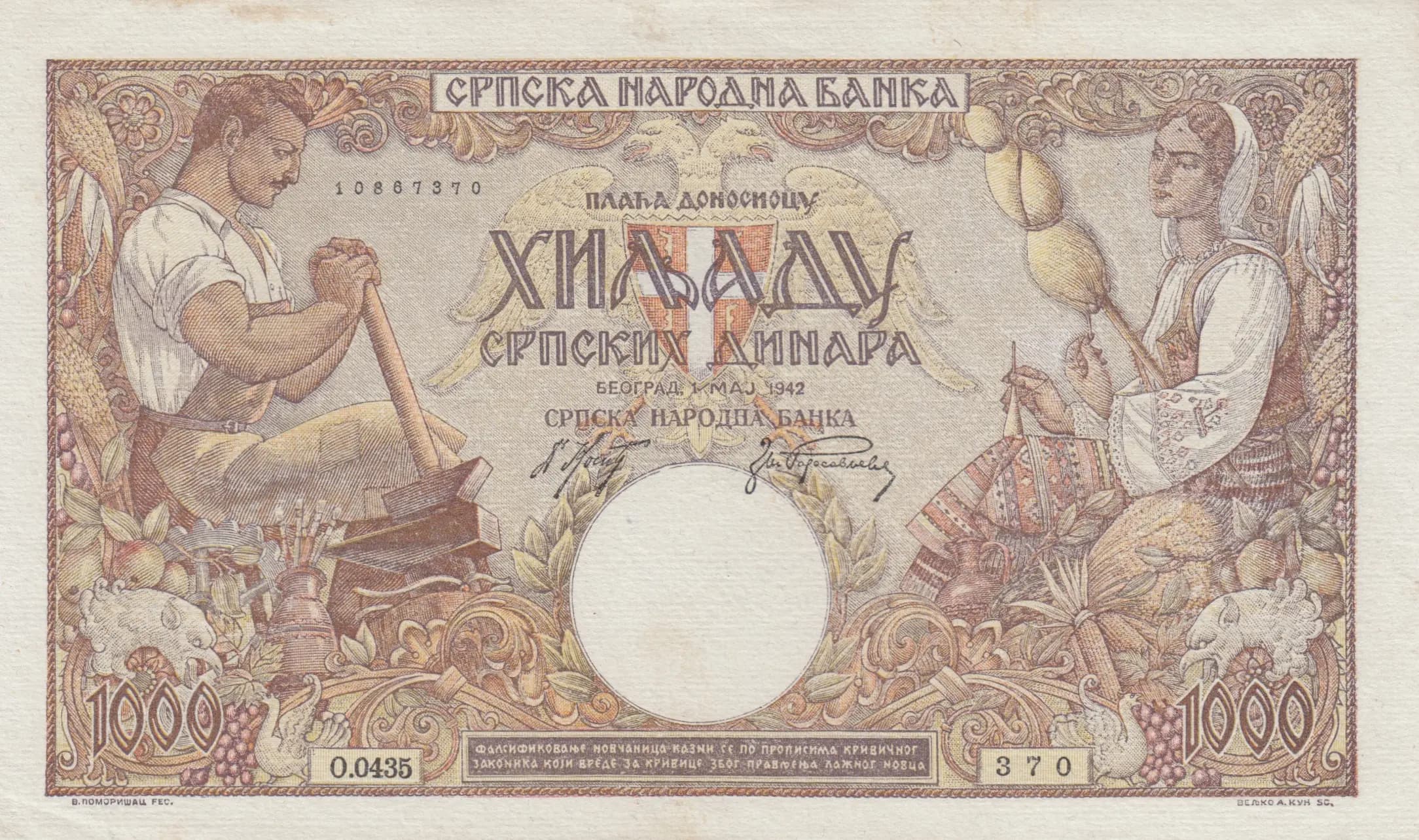
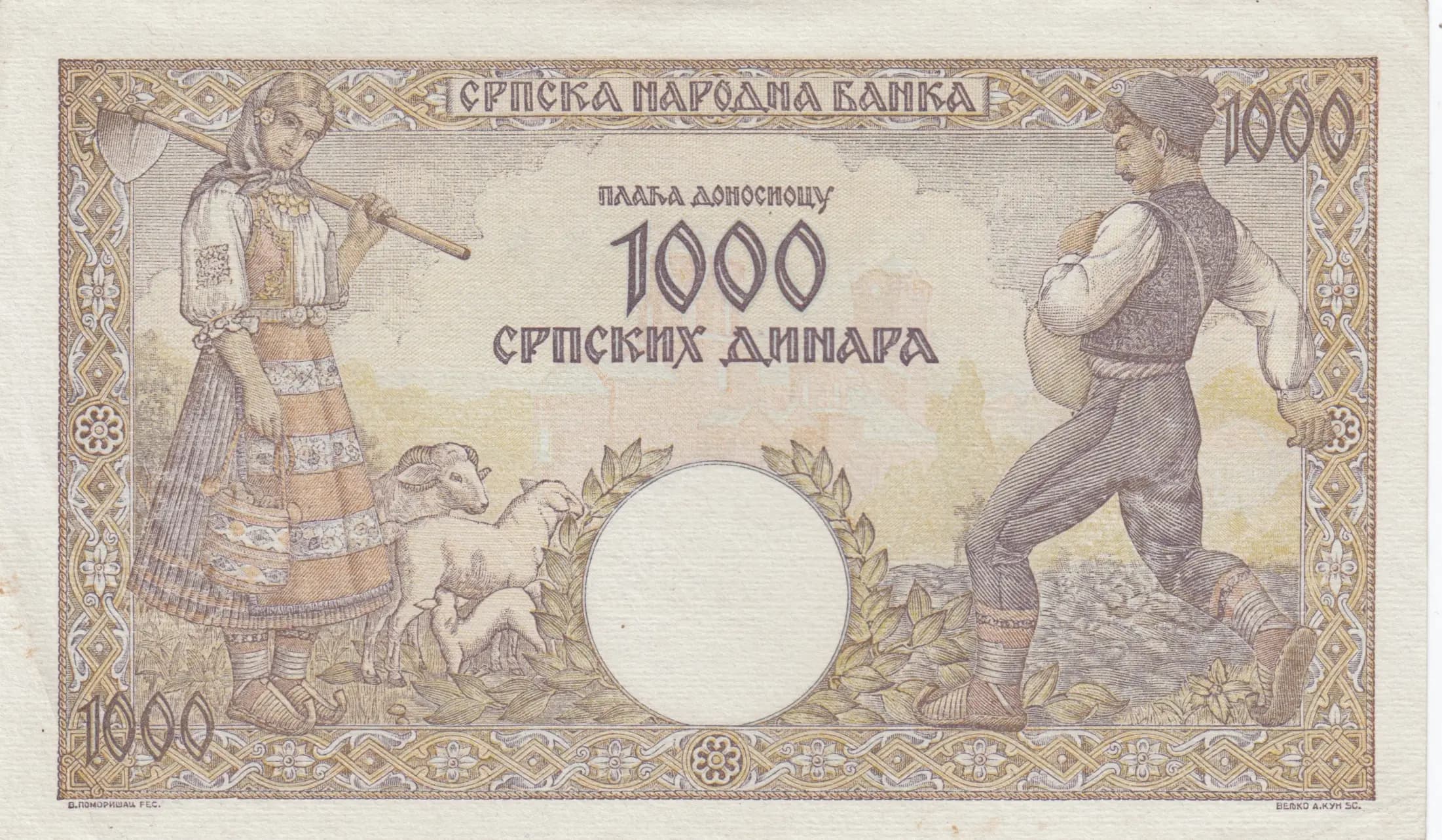
This 1000 Serbian Dinara note from May 1, 1942 is an excellent example of wartime Serbian currency issued by the Srpska Narodna Banka. The note displays the characteristic brown and multicolor palette with ornate Art Deco-influenced borders and traditional Serbian figures in period dress. In AU condition, it exhibits light aging consistent with an 80+ year old note—visible creasing and foxing—yet maintains sharp legibility of all inscriptions and serial numbers, making it an attractive specimen for Serbian numismatic collections.
Common. The 1000 Dinara 1942 P-32b is a standard issue banknote with no documented scarcity in the numismatic record. eBay price tracking shows consistent sales in the $10-25 range for AU/UNC specimens across multiple years (2013-2020), with even professionally graded PMG 66 examples selling for under $75. This pricing pattern, combined with the fact that it was a regular issue during an extended occupation period, indicates robust survivor populations. No evidence of limited print runs or recall issues exists for this Pick number.
Issued during the Second World War occupation of Serbia, this banknote reflects the Srpska Narodna Banka's continued operations under complex political circumstances. The obverse depicts a blacksmith and traditionally-dressed woman representing Serbian rural and industrial labor, while the reverse features peasant and farmer figures—imagery emphasizing agrarian and working-class themes typical of 1940s Serbian national symbolism. The May 1942 date places this note during the period of Yugoslav Axis occupation, making it a historically significant artifact of wartime Serbian monetary policy.
The obverse features two female figures in traditional Serbian dress flanking a central circular watermark area: on the left, a woman in white holding agricultural products (representing rural prosperity and harvest), and on the right, a woman in richly embroidered traditional costume representing Serbian cultural heritage. The reverse depicts two male figures—a woodsman or laborer on the left holding an axe, and a muscular farmer or worker on the right—again flanking the central circular watermark. Both sides feature elaborate geometric borders with diamond patterns, floral medallions, laurel wreaths, and grape cluster ornaments in the corners, typical of interwar and wartime Serbian banknote design. The intricate engraved border work and ornamental frames showcase fine Art Deco influence blended with traditional Serbian motifs.
Front side: 'СРПСКА НАРОДНА БАНКА' (Serbian National Bank); 'ПЛАЋА ДОНОСИОЦУ' (Pays to Bearer); 'ХИЉАДУ СРПСКИХ ДИНАРА' (One Thousand Serbian Dinars); 'БЕОГРАД, 1.МАЈ 1942' (Belgrade, May 1, 1942); Serial number: 1088 7370; 'ФАКСИМИЛOVANJE НОВЧАНЦА КАЗНИ СЕ ПО ПРОППИСИМА КРИВИЧНОГ ЗАКОНИКА КОЈИ ВРЕДИ ЗА КРНЕЖЦЕ ЗЕЛО-ПРАВОЧНА ЛОЖНОГ НОВЦА' (Counterfeiting banknotes is punishable under criminal law provisions applicable to forgers of genuine currency). Back side: 'СРПСКА НАРОДНА БАНКА' (Serbian National Bank); 'ПЛАЋА ДОНОСИОЦУ' (Pays to Bearer); '1000 СРПСКИХ ДИНАРА' (1000 Serbian Dinars).
Intaglio (engraved) printing, a security method standard for the Srpska Narodna Banka during this period. The fine line engraving visible throughout the design, intricate geometric patterns, detailed border work, and complex ornamental elements are characteristic of high-security intaglio production. The watermark (woman's head) and multiple signature areas visible in the center indicate professional security printer standards of the 1940s era.
This specimen is identified as Pick 32b, one of two catalogued variants (32a and 32b) for the 1000 Dinara 1942 issue. The distinction between varieties typically relates to signature combinations or minor design differences; however, the visual analysis does not reveal sufficient detail to definitively distinguish this note's specific variant characteristics beyond the Pick catalog assignment. Serial number 1088 7370 suggests this is from the regular production run.