1000 dinara 1942
Market Prices
27 salesAbout This Note
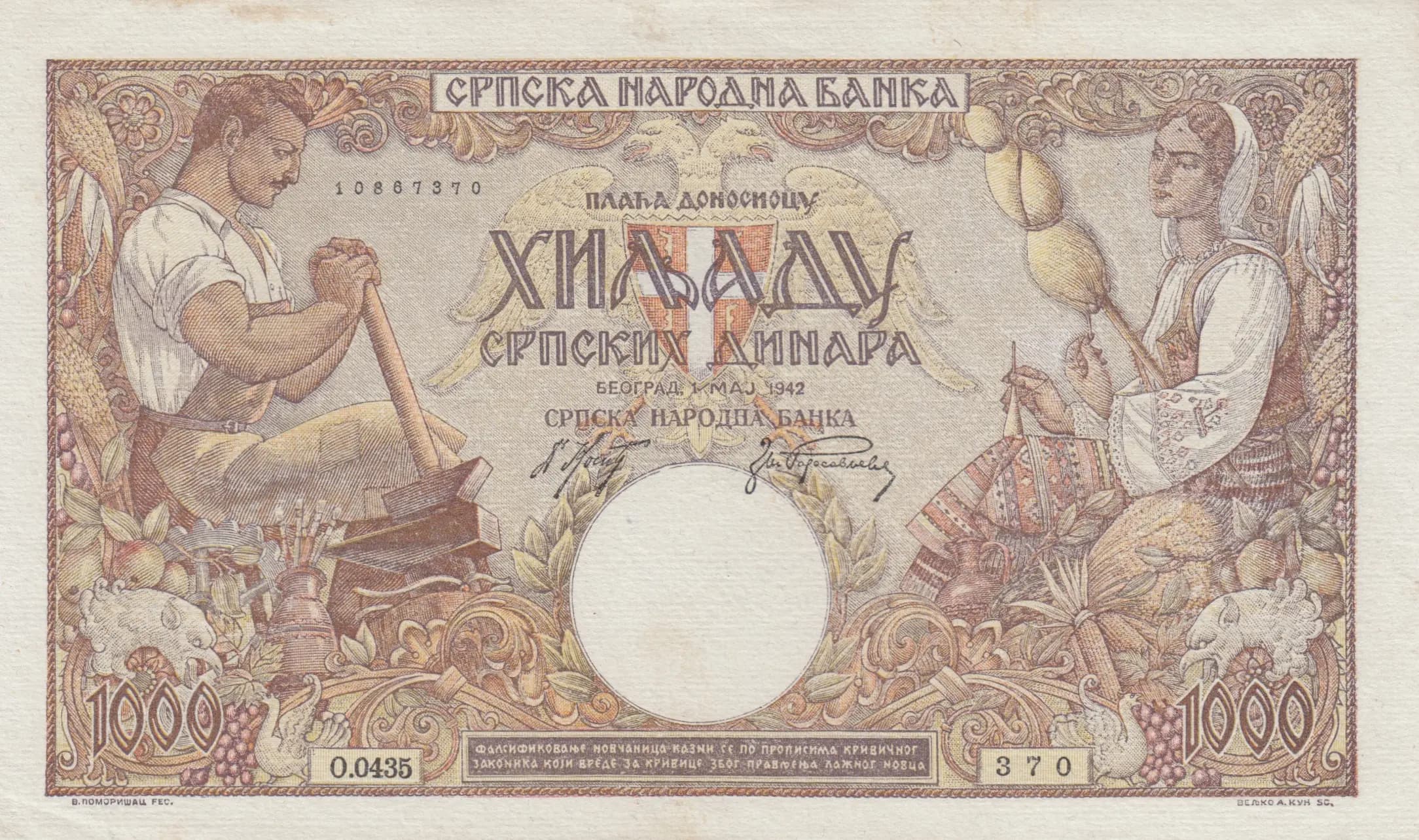
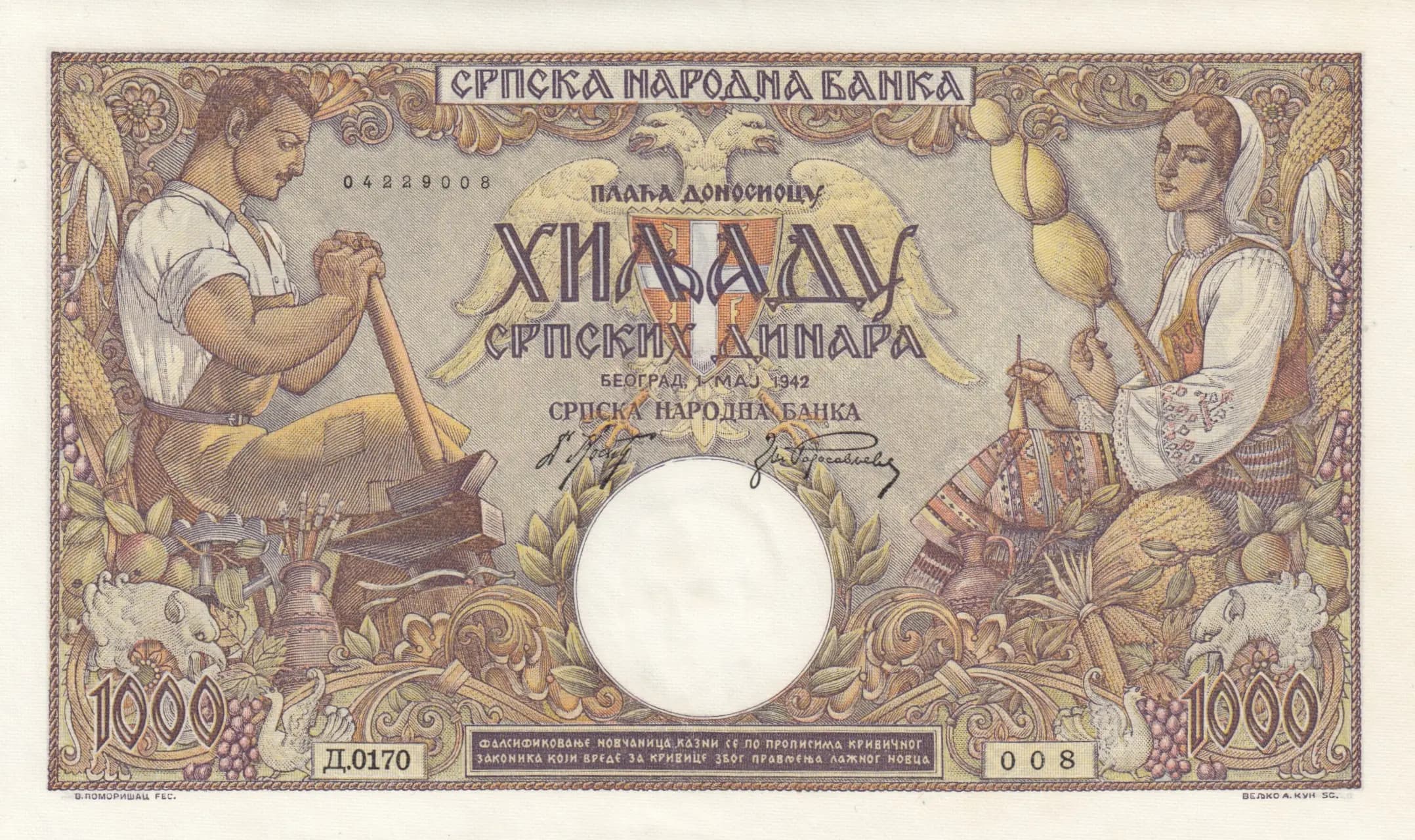
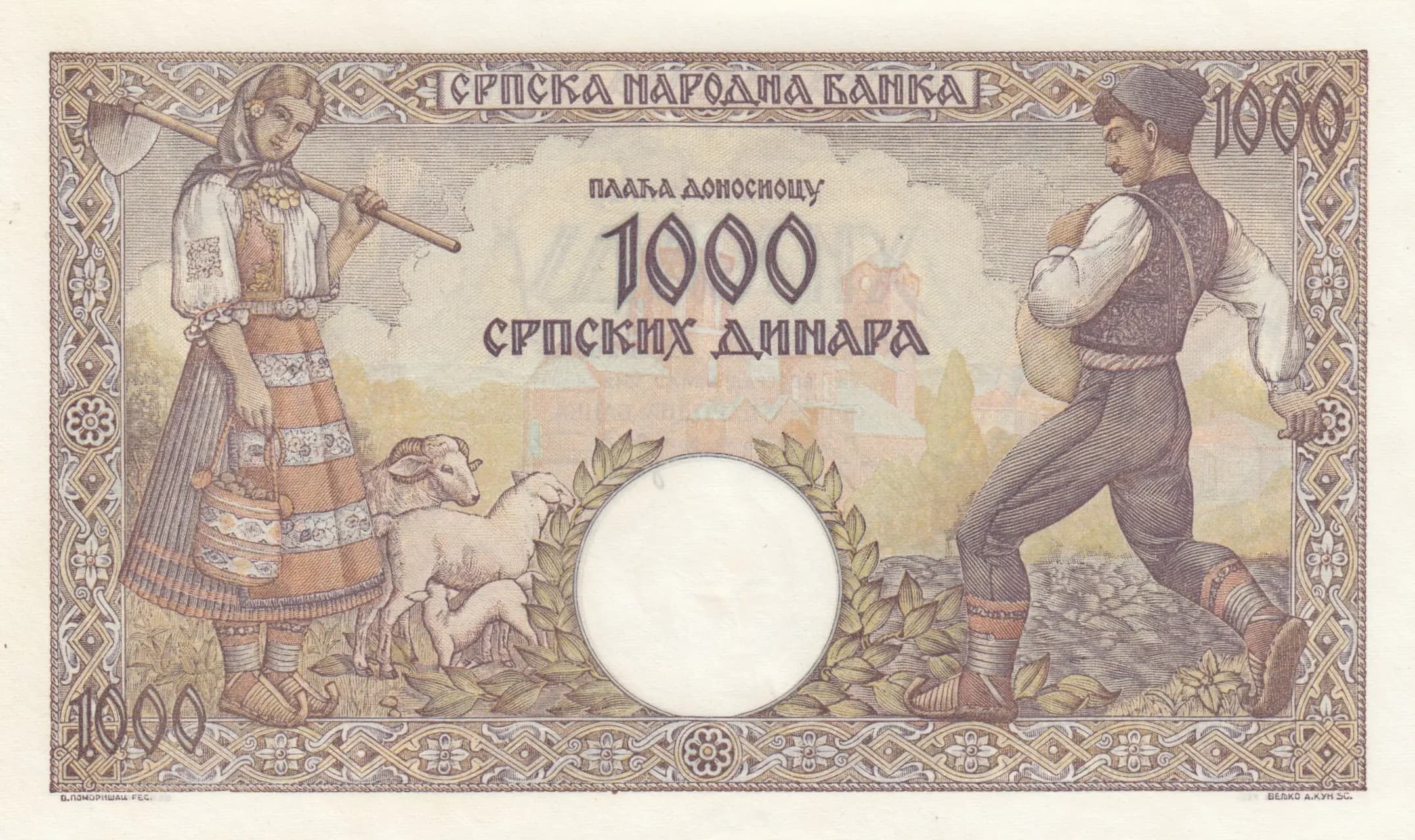
This 1000 Serbian Dinara note from 1942 is presented in uncirculated condition with exceptionally sharp engraving and vibrant color preservation across both sides. The note features striking Art Nouveau-style decorative borders in brown, gold, and cream tones, with allegorical female figures representing agriculture on the obverse and traditional Serbian folk figures on the reverse. The exceptional condition, coupled with its historical significance as a WWII-era Serbian National Bank issue, makes this an attractive example for collectors of Balkan numismatics.
Common. The eBay price history shows consistent sales in the $8-$25 range for circulated and lightly circulated examples (EF/AUNC grades), with uncirculated examples cataloging at $45 according to 2016 reference values. The regular issue status and stable market pricing across multiple years indicate this is a frequently available note in the collector market. While historically significant as a WWII-era issue, the print run was substantial enough that examples remain readily obtainable.
Issued on May 1, 1942, during the German occupation of Serbia in World War II, this banknote was produced by the Srpska Narodna Banka (Serbian National Bank) under complex political circumstances. The imagery celebrates Serbian agricultural heritage and traditional folk culture, with the allegorical female figures on the obverse symbolizing harvest and prosperity, while the reverse depicts idealized peasant figures in traditional Serbian folk costume, reflecting nationalist themes common in Serbian currency design of this period.
The obverse features two allegorical female figures in classical dress representing agricultural abundance: the left figure holds agricultural implements (scythe or similar tools), while the right figure carries fruits and produce. Both are framed within ornate Art Nouveau borders incorporating wheat stalks, grape clusters, and putti (cherub figures) in the corners, symbolizing Serbia's agrarian wealth. The reverse depicts a peasant couple in traditional Serbian folk costume—the woman on the left wears embroidered traditional clothing with a characteristic headscarf, while the man on the right wears an embroidered vest in traditional Serbian style. Both sides feature large blank circular areas intended for watermarks (noted as King Petar watermark), surrounded by intricate geometric and floral border patterns characteristic of early 20th-century Serbian banknote design.
Front side: 'СРПСКА НАРОДНА БАНКА' (Serbian National Bank), 'ПАЛМА ДОНОСИОЦУ' (To the Bearer), 'ХИЉАДУ СРПСКИХ ДИНАРА' (One Thousand Serbian Dinars), 'БЕОГРАД, 1. МАЈ 1942' (Belgrade, May 1, 1942), serial number '04229008' with suffix '008', reference code 'Д.0170', and two official signatures. Back side: 'СРПСКА НАРОДНА БАНКА' (Serbian National Bank), 'ПАЛМА ДОНОСИОЦУ' (To the Bearer), '1000 СРПСКИХ ДИНАРА' (1000 Serbian Dinars).
Intaglio engraving (line engraving), a traditional security printing method producing the sharp detail visible throughout the note's design. The fine line work, ornate borders, and geometric security patterns characteristic of intaglio production are evident in both the allegorical figures and the decorative elements. The banknote was likely produced by a Austro-Hungarian or German security printer operating under occupation, consistent with 1942 Serbian currency production practices.
Cataloged as Pick 32a. The PMG population report indicates two variants exist (P-32a and P-32b), though specific distinguishing characteristics between variants are not detailed in available references. The observed serial number '04229008' with reference code 'Д.0170' and suffix '008' may be relevant to future variant identification, but without access to comprehensive variant documentation, this example is cataloged as the standard P-32a variety. Serial number patterns, signature varieties, and possible minor design variations may exist between printings.