100 dinara 1905
Market Prices
1 saleAbout This Note
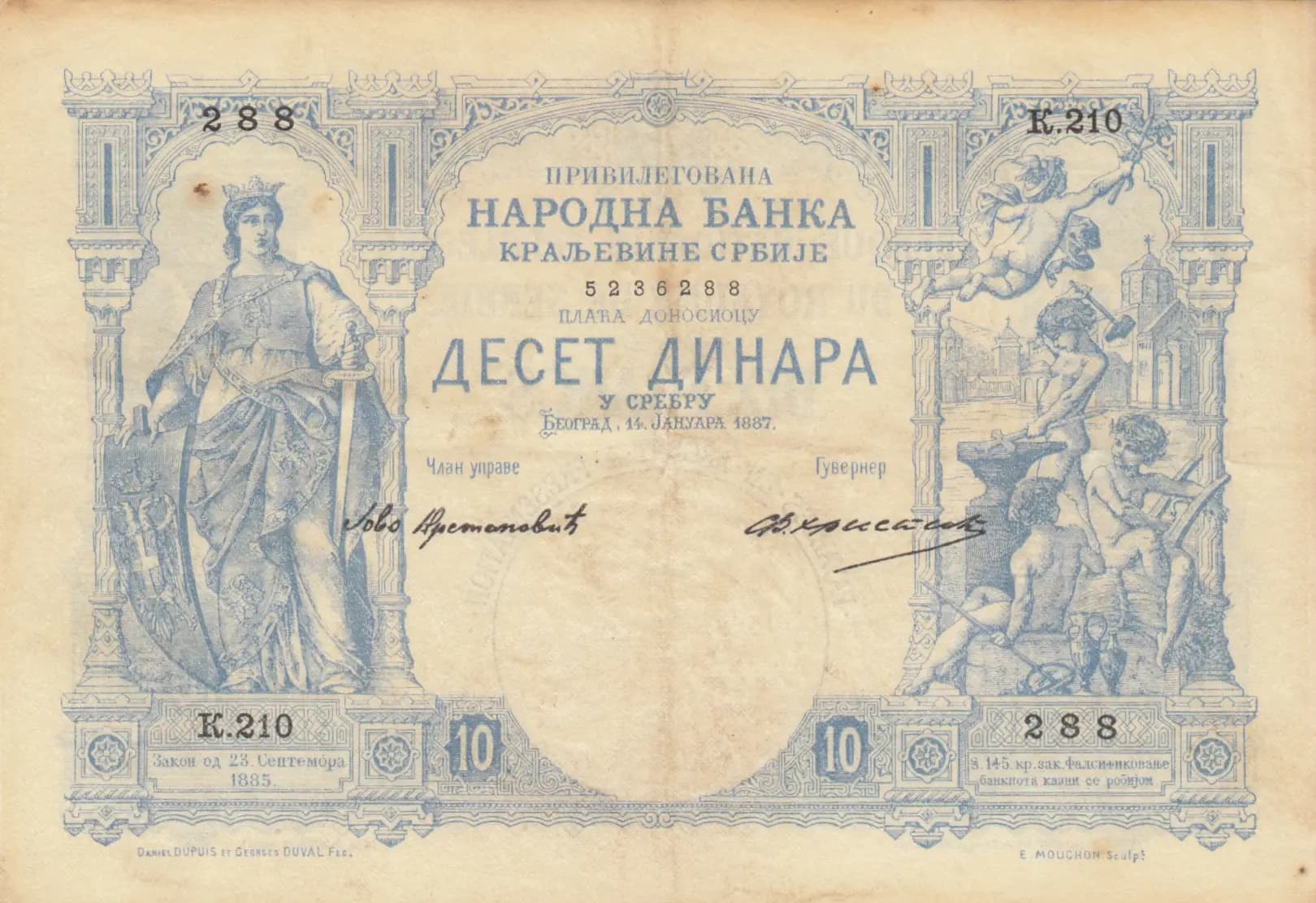
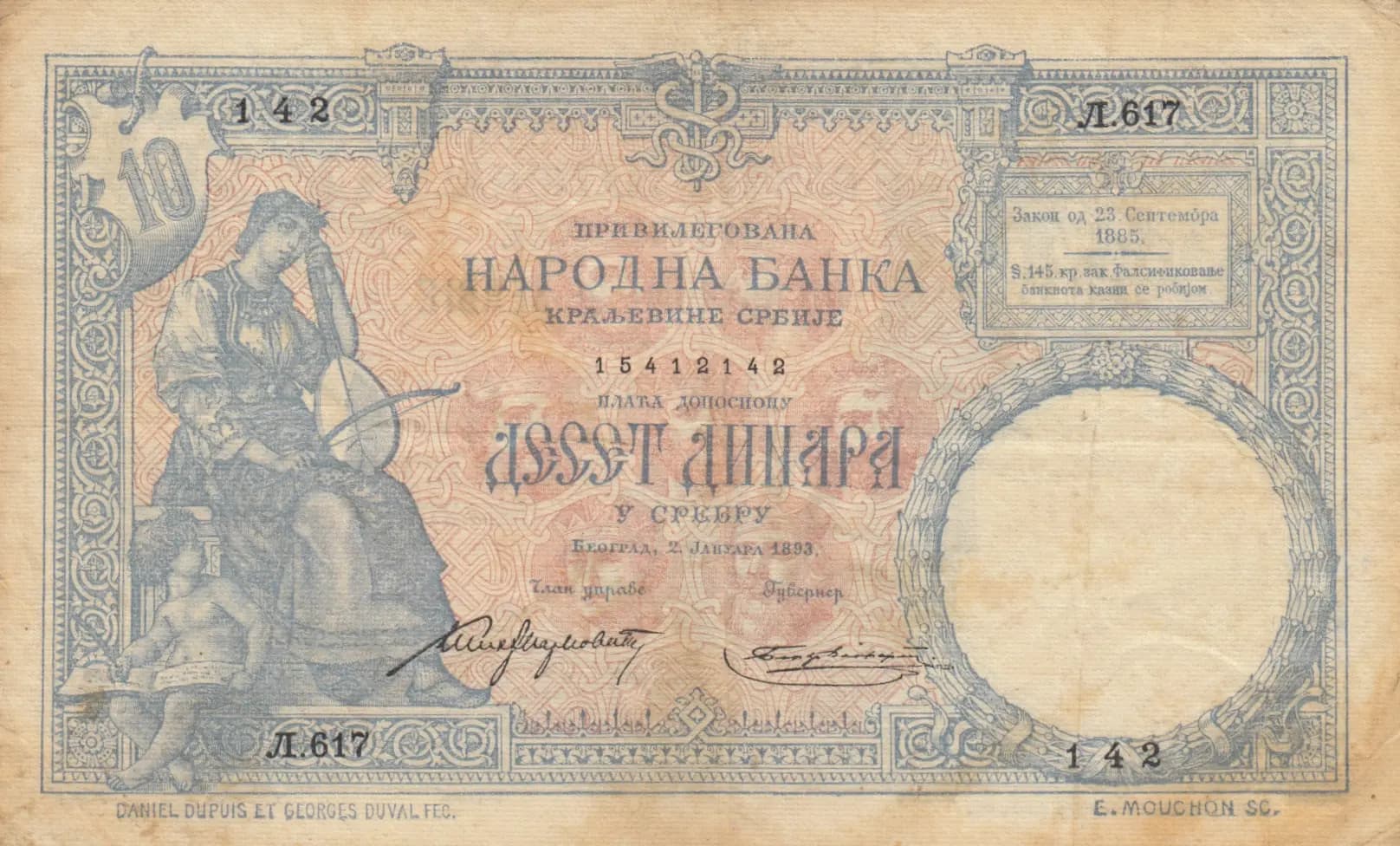
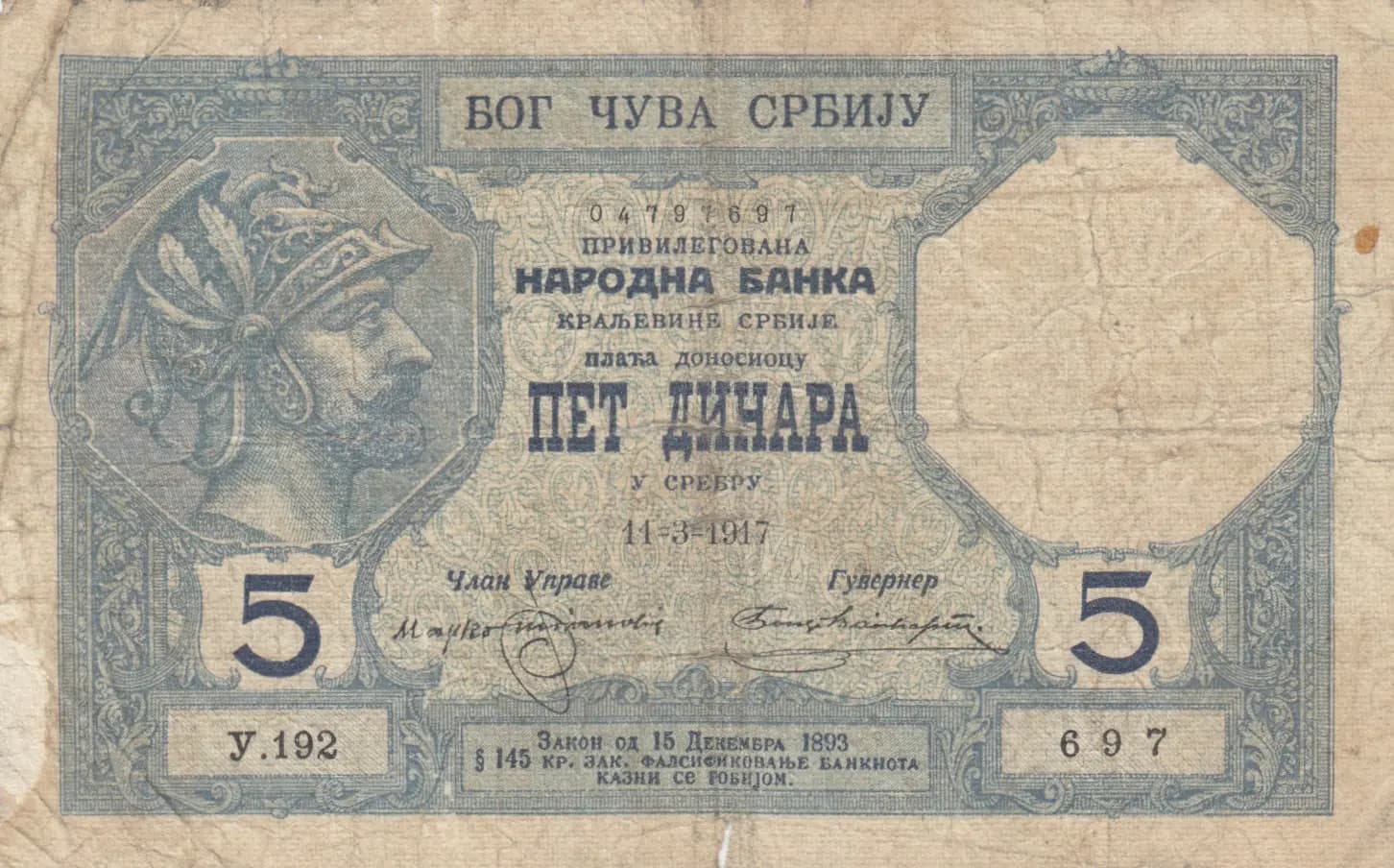
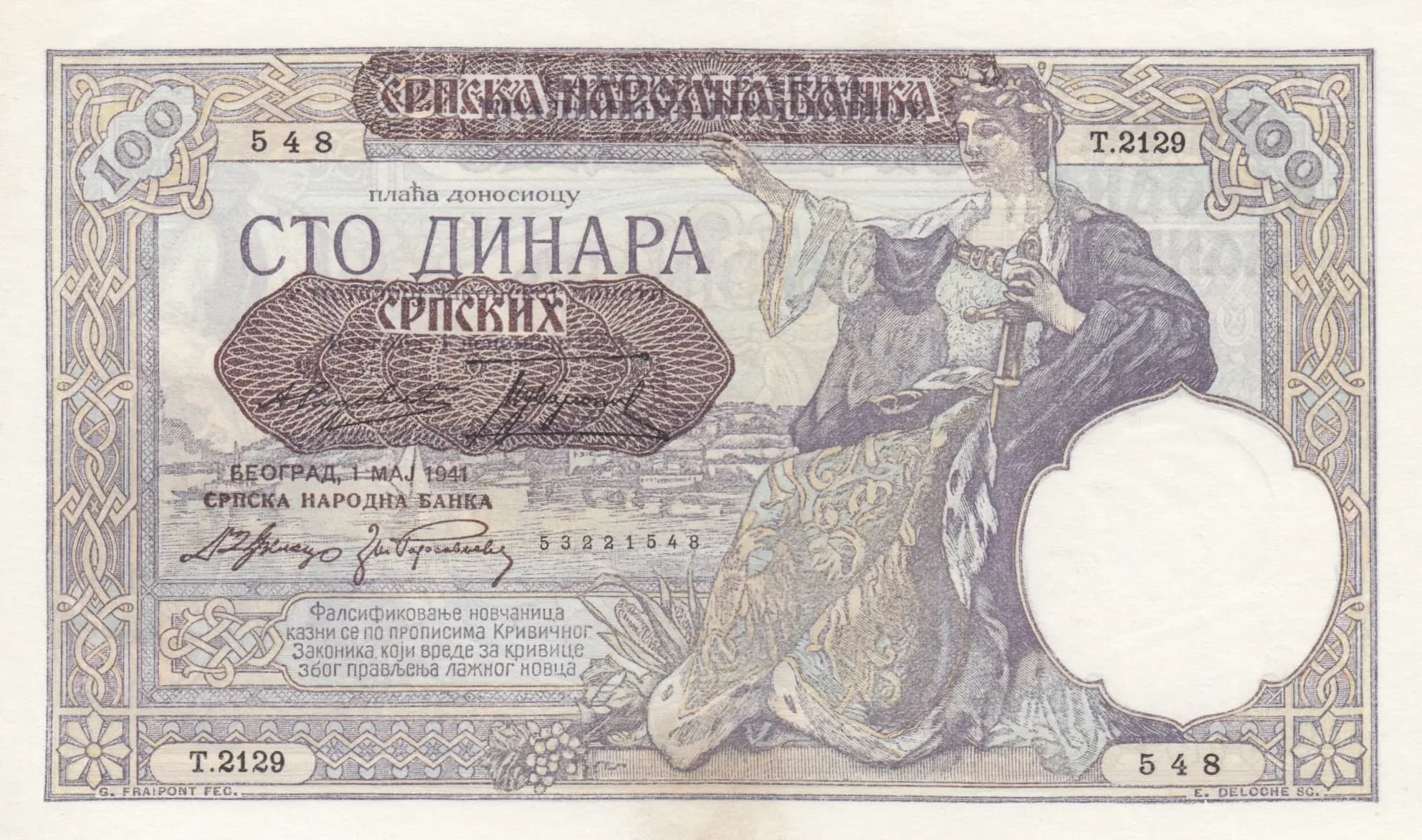
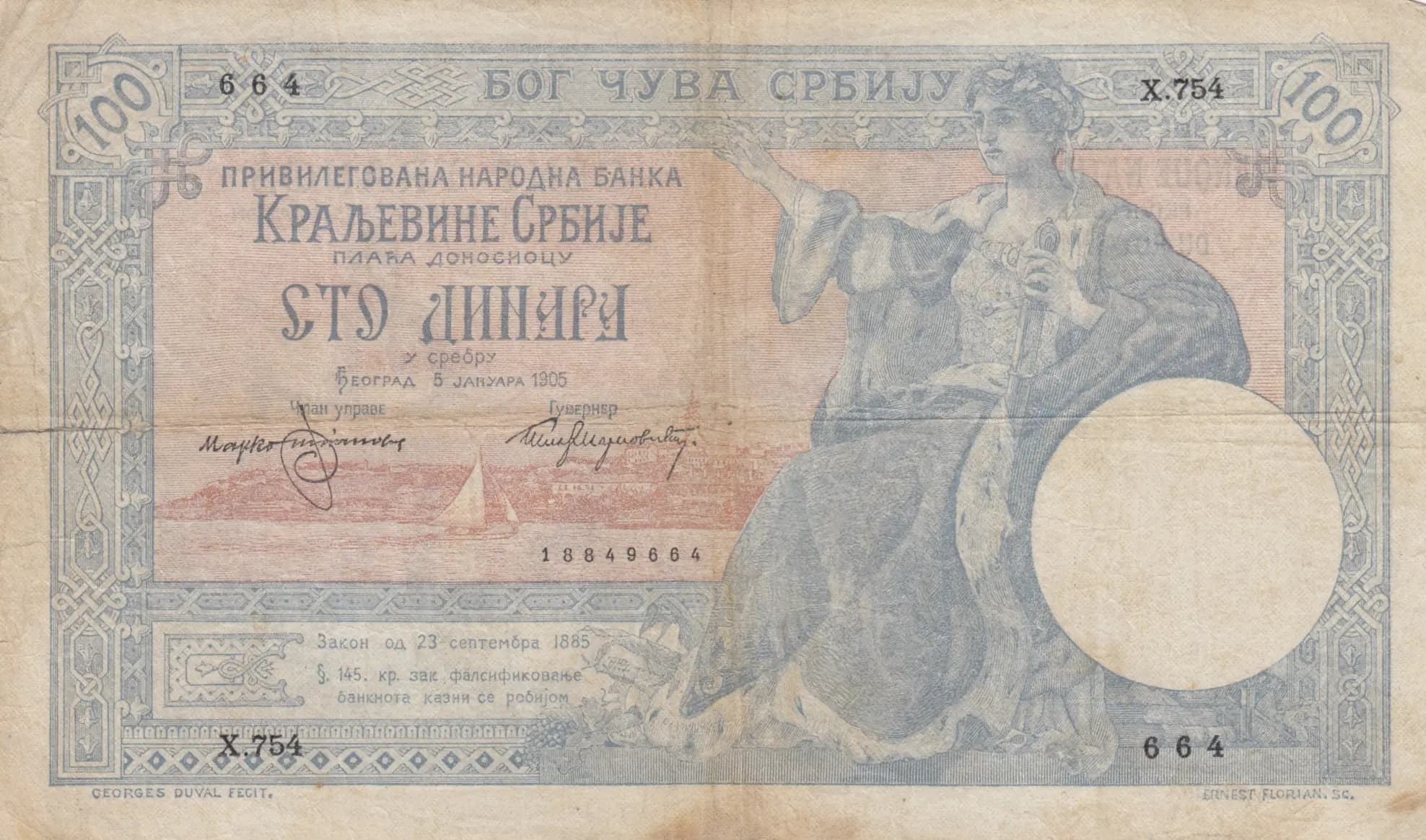
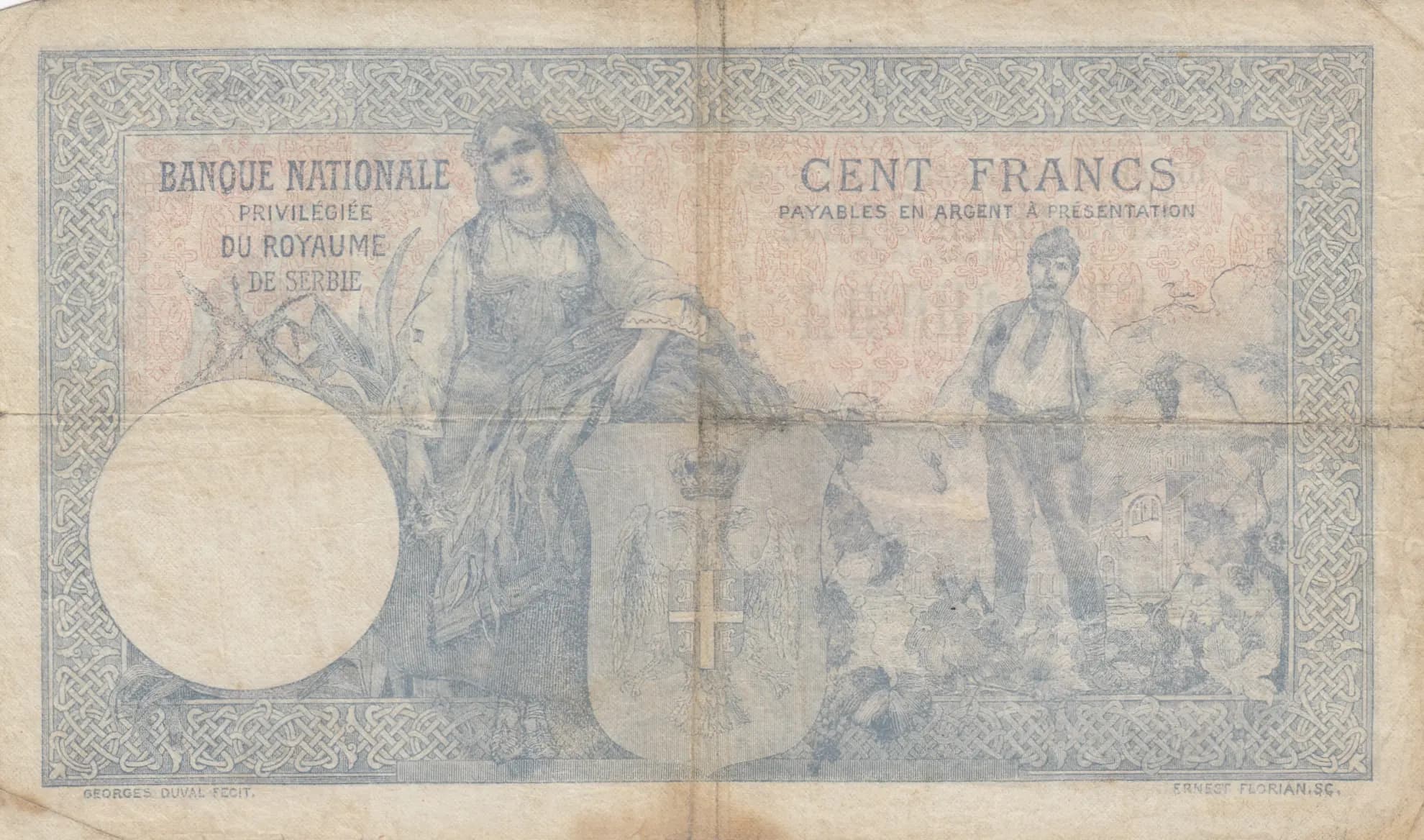
This is a Serbian 100 Dinara note from 1905, issued by the Privilegovana Narodna Banka Kraljevine Srbije (Privileged National Bank of the Kingdom of Serbia), graded as Fine (F). The note displays the characteristic blue-grey and brown color scheme of early Serbian currency, featuring a bearded male portrait on the obverse and allegorical female figures representing Serbia's agricultural wealth on the reverse. The note shows age-appropriate wear including creases, folds, and tan patina consistent with over 115 years of aging, making it a historically significant example of early 20th-century Balkan currency.
Common. The 1905 100 Dinara (P-12) is a regular issue from a reasonably large print run of the Privilegovana Narodna Banka. Market data from realbanknotes.com shows an F-grade specimen sold for $23.50 on eBay in 2017, well below the $120 catalog value for this grade, indicating steady availability in the collector market. The catalog value differential and actual sale price suggest the market for this note is relatively liquid with consistent supply, typical of common early 20th-century European banknotes.
This note was issued on January 5, 1905, during a pivotal period in Serbian history following the May Overthrow of 1903, which marked a shift toward Serbian independence and modernization. The inscription 'БОГ ЧУВА СРБИЈУ' (God Protects Serbia) and the Orthodox cross shield on the reverse reflect the strong ties between Serbian national identity and the Serbian Orthodox Church. The dual Serbian Cyrillic and French inscriptions illustrate Serbia's position between Eastern Orthodox tradition and Western European financial practices during the early 20th century.
The obverse features a portrait of a bearded male figure in formal dress positioned on the right side, identified as representing Serbian authority or leadership during the period. The reverse displays two allegorical female figures in classical Greco-Roman dress: a seated figure on the left holding agricultural/harvest items (wheat bundles, symbolizing Serbia's agrarian economy) and a standing figure on the right. A central shield bearing an Orthodox cross dominates the reverse composition, reinforcing Serbian Orthodox identity. Both sides feature intricate ornamental borders with geometric patterns and fine line work typical of late 19th-century European bank note engraving. The landscape elements visible on the obverse suggest Belgrade or Serbian fortifications. A large circular watermark area is present on both sides, intended as a security feature against counterfeiting.
OBVERSE: 'БОГ ЧУВА СРБИЈУ' (God Protects Serbia) | 'ПРИВИЛЕГОВАНА НАРОДНА БАНКА КРАЉЕВИНЕ СРБИЈЕ' (Privileged National Bank of the Kingdom of Serbia) | 'ПЛАЋА ДОНОСНОЦУ' (Pays to Bearer) | 'СТО ДИНАРА' (One Hundred Dinars) | 'У СРБИЈИ' (In Serbia) | 'БЕОГРАД 5 ЈАНУАРА 1905' (Belgrade, January 5, 1905) | 'Члан управе' (Chairman of Board) | 'Guvernер' (Governor) | 'Закон од 23 септембра 1885' (Law from September 23, 1885) | 'GEORGES DUVAL FECIT' (Engraved by Georges Duval) | 'ERNEST FLORIAN, SC.' (Ernest Florian, Sculptor). REVERSE: 'BANQUE NATIONALE PRIVILÉGIÉE DU ROYAUME DE SERBIE' (Privileged National Bank of the Kingdom of Serbia) | 'CENT FRANCS' (One Hundred Francs) | 'PAYABLES EN ARGENT À PRÉSENTATION' (Payable in Silver on Presentation) | 'GEORGES DUVAL FECIT' (Engraved by Georges Duval) | 'ERNEST FLORIAN, SC.' (Ernest Florian, Sculptor).
This note was produced using the intaglio (engraving) printing method, characteristic of high-security currency production of the era. The fine line work, cross-hatching, and detailed ornamental patterns visible throughout are hallmarks of engraved banknote production. The engraving was executed by Georges Duval with sculptural work by Ernest Florian, professional security printers of the period. The dual-color printing (blue-grey on brown underprint) was achieved through multiple passes of the intaglio process, a standard technique for banknotes of this period.
According to the PMG Population Report, this Pick number (P-12) exists in at least three cataloged variants: P-12a (Thick Paper), P-12c (Thin Paper), and P-12x (unspecified). The visual analysis does not provide sufficient detail to definitively determine which paper variety this specific specimen represents, though the aged tan patina and visible creases are consistent with historical paper stock of the period. Serial numbers visible on the note (664, X.754, 18849664) indicate this is an early-to-mid series specimen, though without comparison to known production sequences, the exact rarity within the print run cannot be determined from the images alone.