100 dinara 1941
Market Prices
111 salesAbout This Note
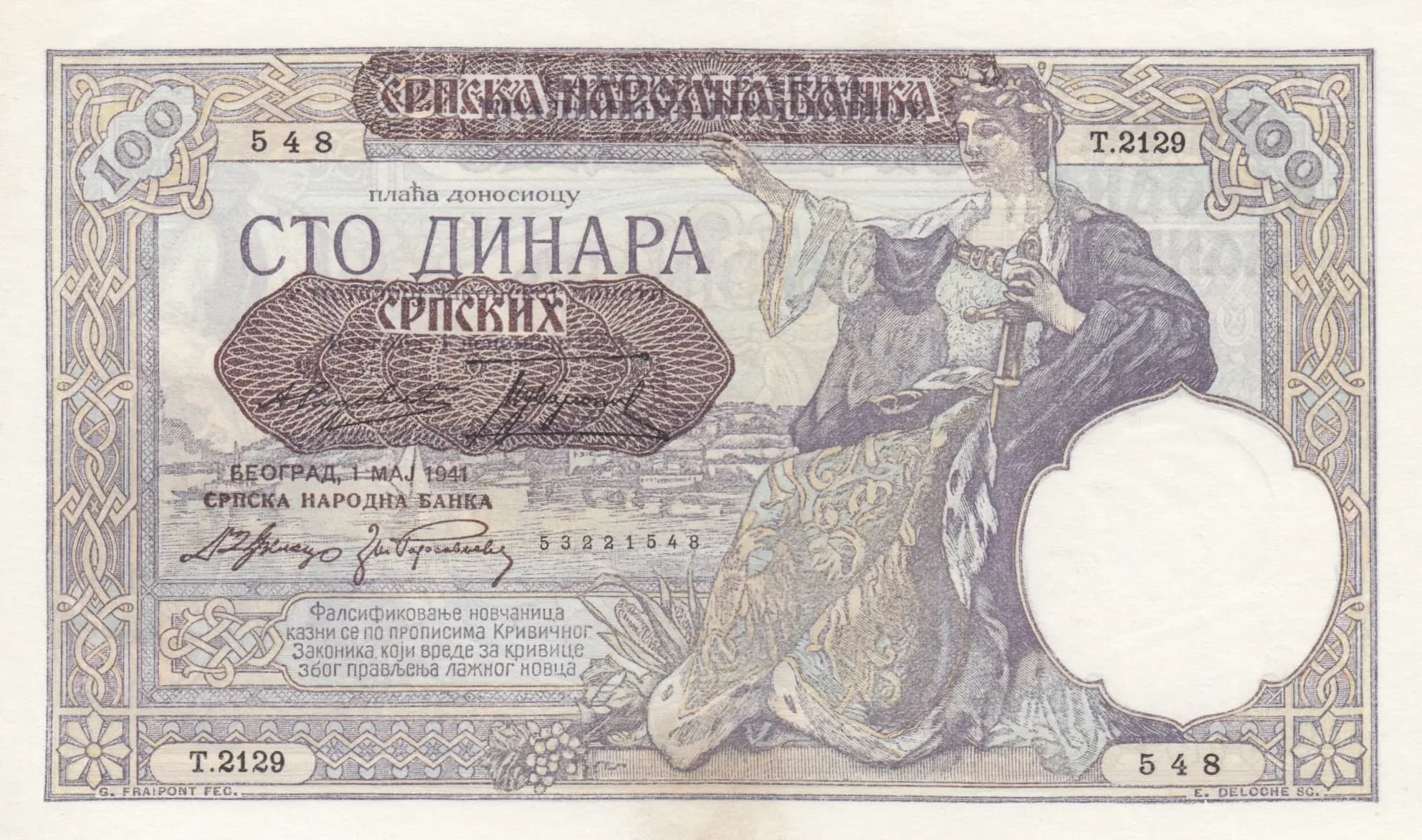
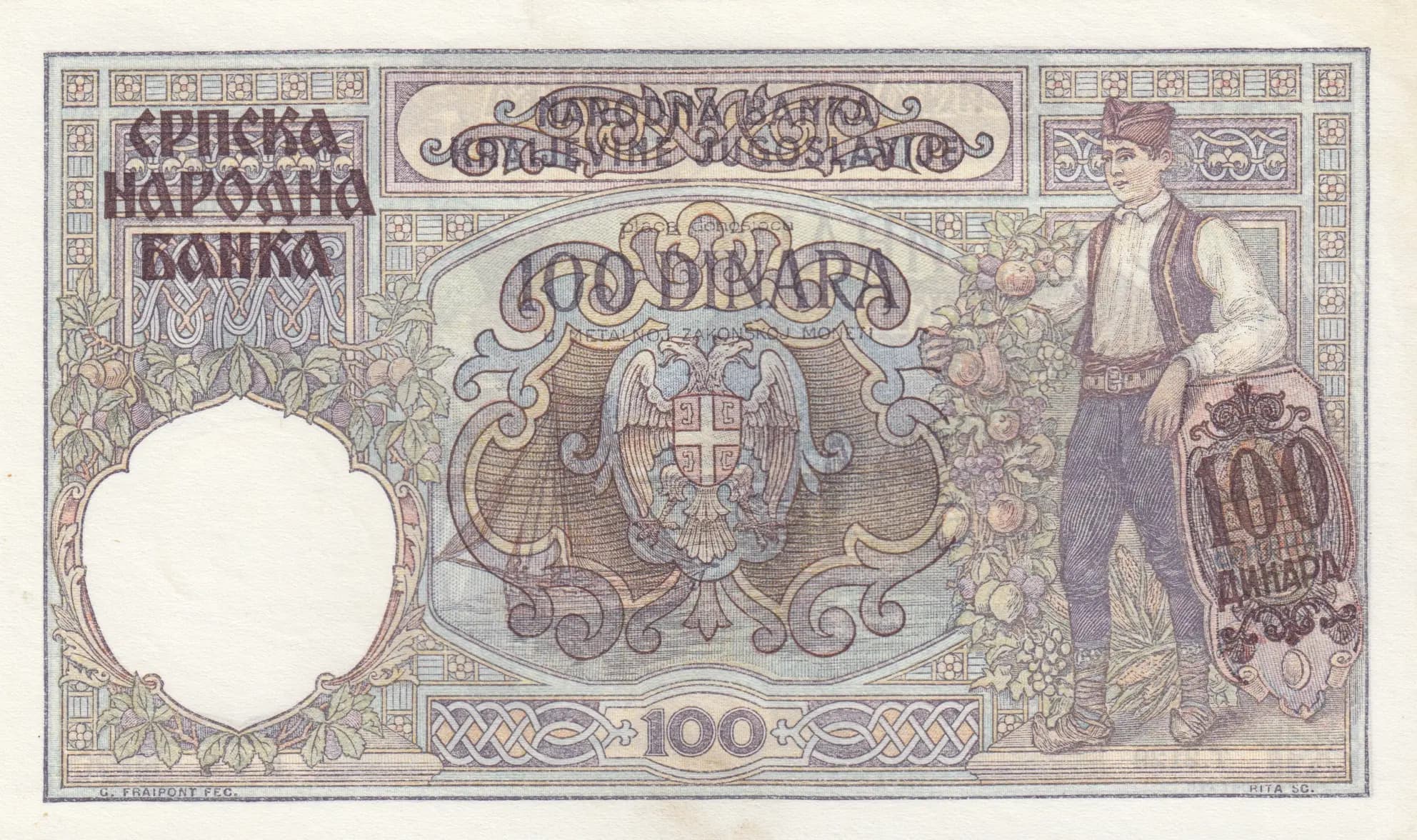
This is a beautifully engraved 100 Serbian Dinara note from 1941, issued by Srpska Narodna Banka on May 1st during a pivotal moment in Serbian history. The note displays exceptional craftsmanship with fine-line engraving throughout, featuring classical allegorical imagery on the front (a seated female figure holding a palm frond) and Serbian national heraldry on the back (double-headed eagle with shield). In uncirculated condition as described, this note shows no creases, tears, or significant wear, making it an excellent example of wartime Serbian currency design.
Common. While this is a historically significant note from occupied Serbia in 1941, market data from realbanknotes.com shows extensive trading history with hundreds of sales documented. Uncirculated examples have sold for $4.46 to $79.88 over the past decade, with most UNC sales clustering in the $5-40 range, indicating steady availability. The 2016 catalogue value for UNC was only $12.50. The large number of eBay transactions across all grades (VF, EF, AUNC, UNC) spanning over a decade confirms this is not a scarce date or variety. Print runs from the Srpska Narodna Banka in 1941 were substantial enough that these notes remain readily available to collectors today.
Issued on May 1, 1941, this note was produced during the German occupation of Serbia, just weeks after the Yugoslav kingdom's collapse in April 1941. The allegorical female figure on the front represents Liberty or Victory, while the back features the Serbian national coat of arms—the double-headed eagle with the characteristic Serbian cross (Cyrillic cross with four smaller crosses)—symbols of Serbian sovereignty and cultural identity maintained even under occupation. This denomination and design reflect the transitional period when German-controlled Serbia established its own banking authority separate from the Yugoslav National Bank.
The front features a classical allegorical composition with a seated female figure in Greco-Roman robes positioned on the right side, holding a palm frond symbolizing peace or victory. Behind her stands a landscape view of Belgrade with its riverside setting visible beneath a large oval medallion featuring fine crosshatching (likely a watermark area). Ornate Celtic-style interlacing patterns and geometric borders frame all corners, with decorative floral and vine motifs along the edges. The back depicts a standing male figure in traditional Serbian folk costume with embroidered vest and white shirt, balanced against a central heraldic composition of a double-headed eagle with spread wings, superimposed over a shield bearing the Serbian cross with four smaller crosses in the corners—the historic coat of arms of Serbia. Hop plant and vine decorative elements frame the heraldic imagery. The color scheme throughout employs light cream/beige as the base with purple, mauve, and brown accents for the design elements and gold highlights.
FRONT SIDE: 'СРПСКА НАРОДНА БАНКА' (Serbian National Bank) — 'плаћа доносиоцу' (pays to bearer) — 'СТО ДИНАРА' (one hundred dinara) — 'СРПСКИХ' (Serbian) — 'БЕОГРАД, 1 МАЈ 1941' (Belgrade, 1 May 1941) — 'Фалсификоље новчаница казни се по прописима Кривичног економика...' (Counterfeiting banknotes is punished according to the provisions of Criminal law regarding counterfeit money production) — 'G. FRAIPORT FEC.' (G. Fraiport made this) — 'E. DELOCHE SC.' (E. Deloche engraved this) — Serial identifiers: 548, T.2129, 5382164B. BACK SIDE: 'СРПСКА НАРОДНА БАНКА' (Serbian National Bank) — 'ДОБРА БЛАГАЈНА' (Good Treasury) — '100' (denomination) — 'U.C. FRAIPORT FEC.' (U.C. Fraiport made this) — 'RITA SC.' (Rita engraved this).
Intaglio engraving (line engraving), a premium security printing method evidenced by the fine-line detail work, intricate geometric patterns, and complex portrait rendering visible throughout both sides. The craftsmanship credits to engravers E. Deloche and Rita confirm professional bank note production. The crosshatching patterns and geometric border designs serve dual purposes—artistic enhancement and security features to prevent counterfeiting. This technique was the standard for central bank currency production in this era.
This specimen shows the standard P-23 variety with issue date of May 1, 1941 (БЕОГРАД, 1 МАЈ 1941). The serial number visible is 5382164B with control letters T.2129 and printer notation 548. No overprint is visible on this example, though the catalog note references that this Pick number was originally an overprint on Yugoslavia P-27. The visual analysis confirms this is the regular issued version without overprint, representing the standard circulation variety of P-23.