100 dinara 1943
Market Prices
31 salesAbout This Note
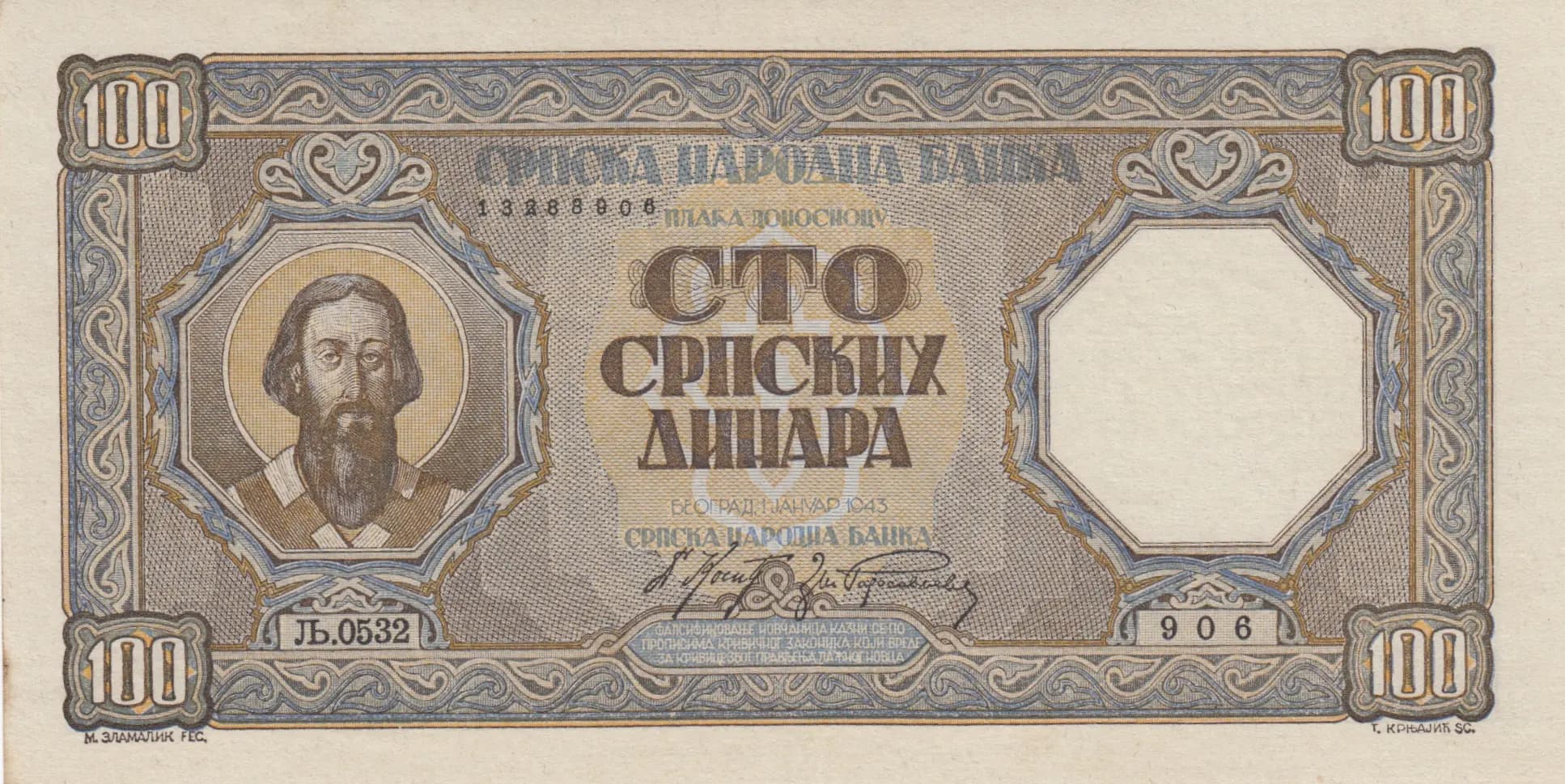
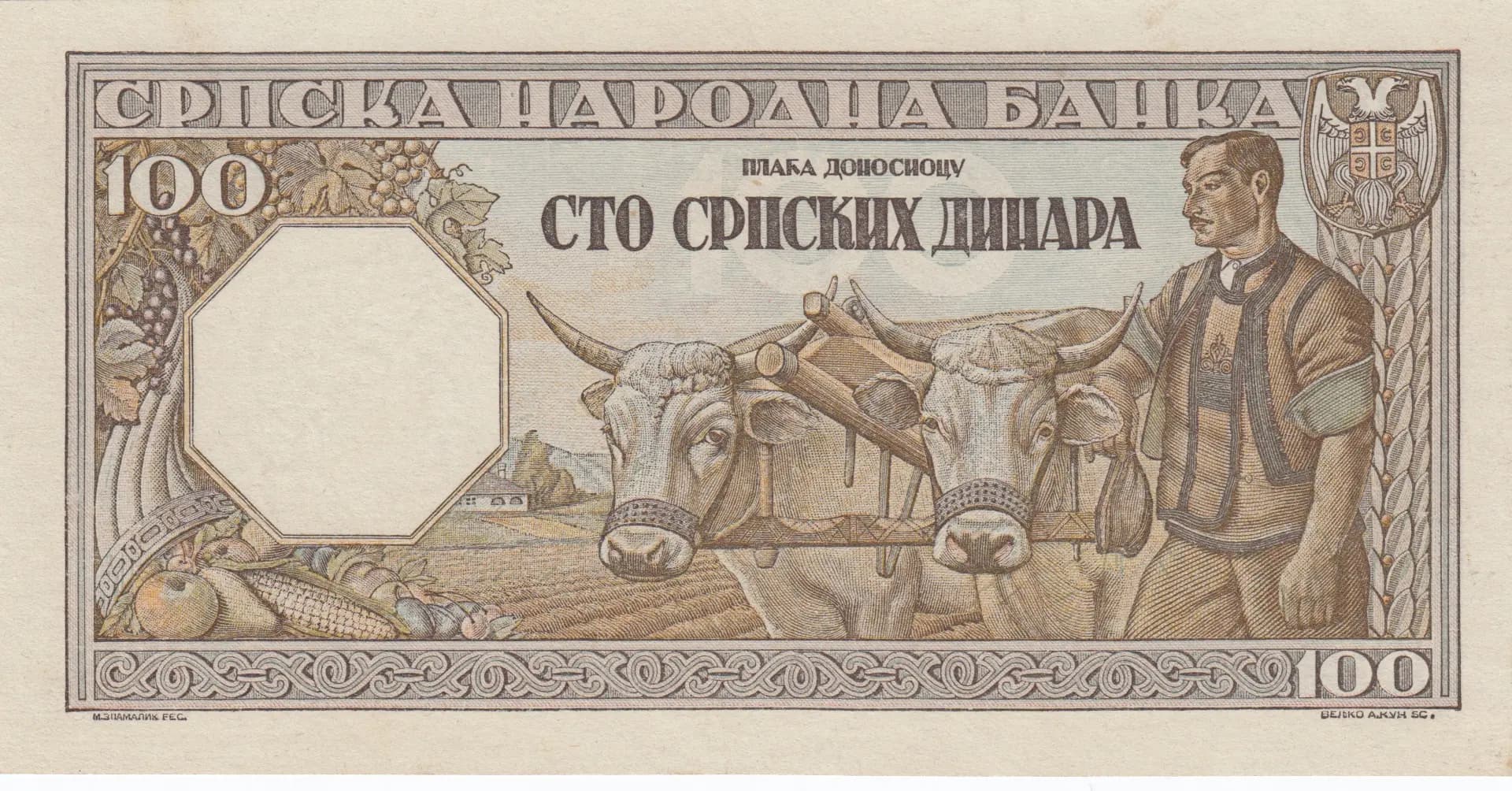
This 100 Dinara note from 1943 represents a beautifully engraved example of Serbian wartime currency, depicting St. Sava on the obverse and an agricultural scene with oxen on the reverse. The note displays exceptional condition consistent with UNC grading, featuring crisp impressions, vibrant color separation between brown, blue, and tan elements, and minimal wear typical of lightly handled specimens. The fine detail work and ornamental borders showcase the skilled engraving of this historical issue.
Common. Secondary market evidence (eBay transaction history from 2010-2024) shows consistent trading activity with numerous sales in the $2–$25 range for circulated grades, and UNC specimens historically selling for $30–$32. The 2016 catalog value of $50 for UNC reflects moderate collector demand. The PMG population report indicates only standard and specimen variants exist. High print runs during wartime issuance and continued availability in the collector market confirm this as a common date for the series.
Issued by Srpska Narodna Banka in November 1943 during the Yugoslav occupation in World War II, this banknote reflects Serbia's continued monetary operations under German control. The imagery—St. Sava of Serbia on the obverse representing the nation's spiritual heritage, and the agricultural scene with peasant and oxen on the reverse symbolizing rural prosperity—served propaganda purposes while maintaining connection to Serbian national identity. The 'Payable to Bearer' inscription reflects the standard currency practices of the period.
The obverse features St. Sava of Serbia, the medieval saint and founder of the Serbian Orthodox Church, depicted in an ornate oval portrait frame with elaborate decorative borders featuring scrollwork, geometric guilloche patterns, and vine motifs in blue and tan. The reverse presents an allegorical scene celebrating agricultural production—a peasant in traditional Serbian clothing stands with oxen, representing the nation's rural foundation. The composition includes symbolic imagery of agricultural abundance (wheat sheaves, grapes, and farming implements) within decorative octagonal framing and ornamental wreaths. The coat of arms or national emblem appears prominently in the upper right of the reverse.
FRONT: 'СТО СРПСКИХ ДИНАРА' (One Hundred Serbian Dinars) — 'НАРОДНА БАНКА' (National Bank) — 'БЕОГРАД, НОВЕМБАР 1943' (Belgrade, November 1943) — Serial number prefix 'ЛБ 0532' with suffix '906' — Engraver attribution 'М. ЗЛАМНИК ГРС' (M. Zlamnik, engraver). BACK: 'СРПСКА НАРОДНА БАНКА' (Serbian National Bank) — 'ПЛАЋА ДОНОСИОЦУ' (Payable to Bearer) — 'СТО СРПСКИХ ДИНАРА' (One Hundred Serbian Dinars) — Printer/engraver attribution 'БЕЛКО АКУН БГД' (Belko Akun, Belgrade) and 'М. ЗЛАМНИК ГРС' (M. Zlamnik).
Intaglio engraving (line engraving) on a light brown and tan underprint base, characteristic of high-security banknote production of the World War II era. The fine line work, complex ornamental patterns, and geometric guilloche elements visible throughout both sides demonstrate traditional engraving techniques used by the printer Belko Akun of Belgrade. The color separation between brown, blue, and tan tones indicates multi-pass printing typical of period security currency.
This specimen carries serial number prefix 'ЛБ 0532' with suffix '906'. The note is a regular issue (not a specimen or special variant as denoted by Pick P-33 base listing). The PMG catalog notes two variants exist: P-33 (standard) and P-33s (specimen). This example represents the standard circulation issue. The engraver attribution 'М. ЗЛАМНИК ГРС' (M. Zlamnik) and printer attribution 'БЕЛКО АКУН БГД' are consistent with known production details of this issue. The November 1943 Belgrade date on the obverse is consistent with documented issuance of this denomination.