5 rublei 1917
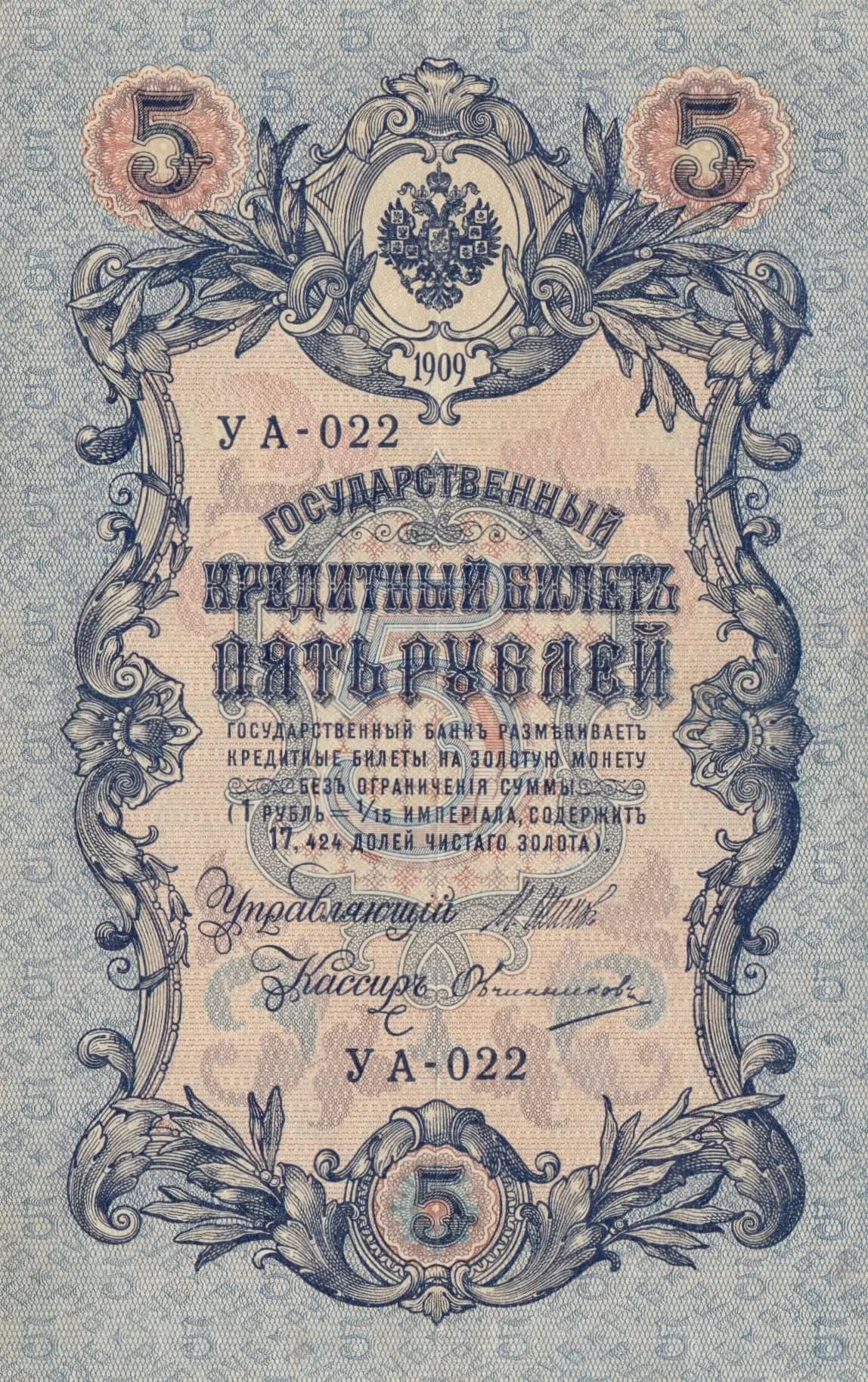
“Sig.Ovchinnikov”
About This Note
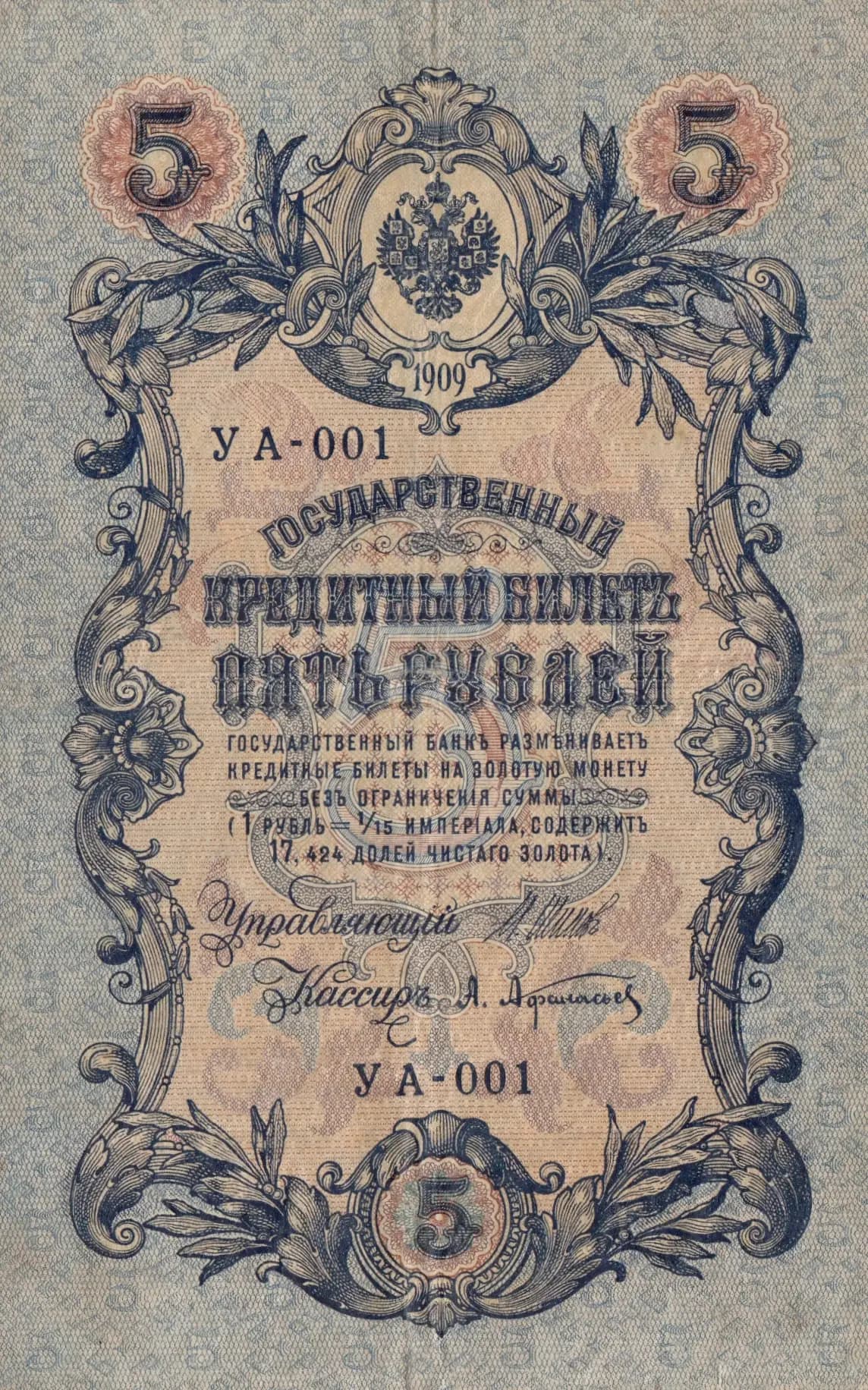
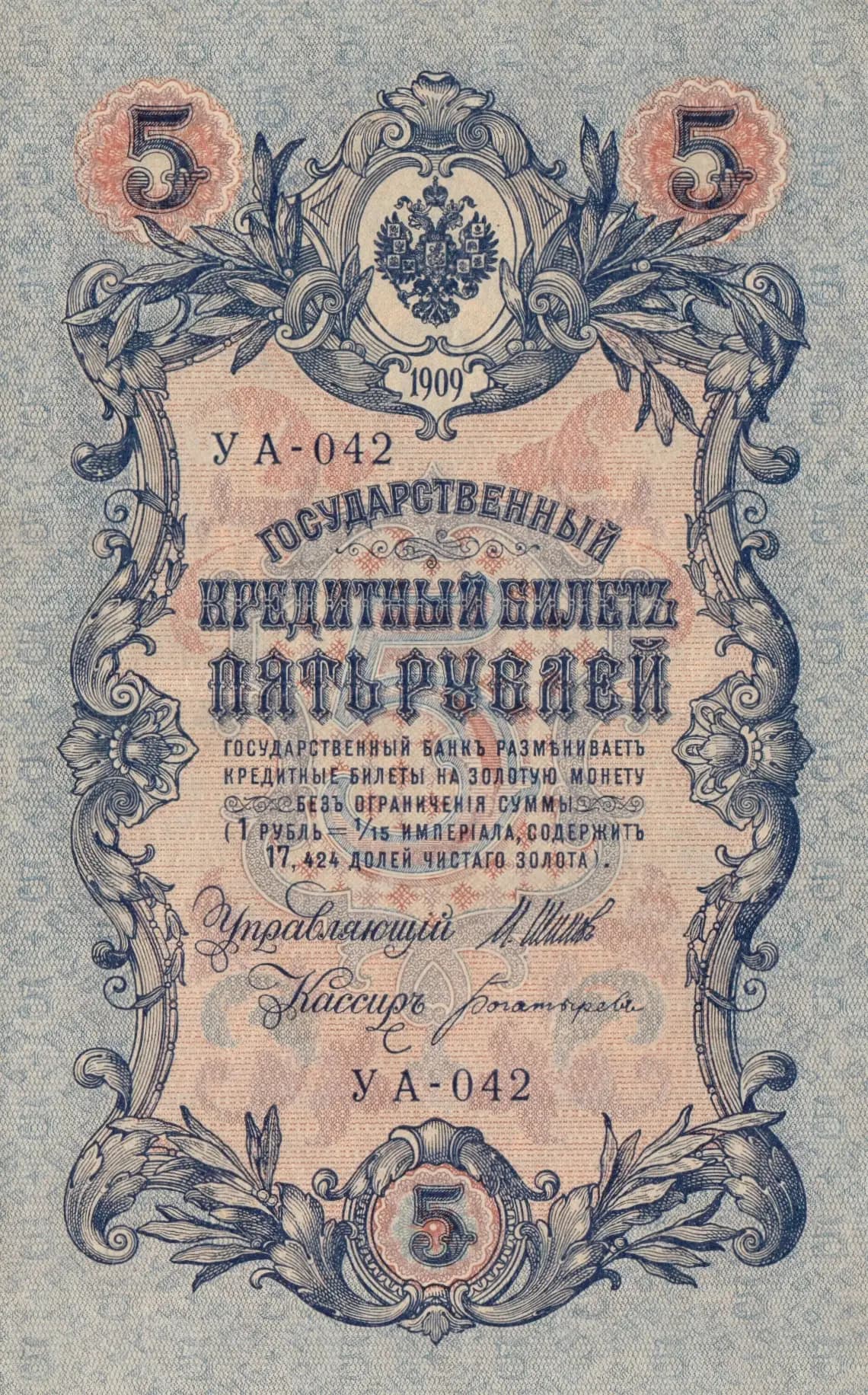
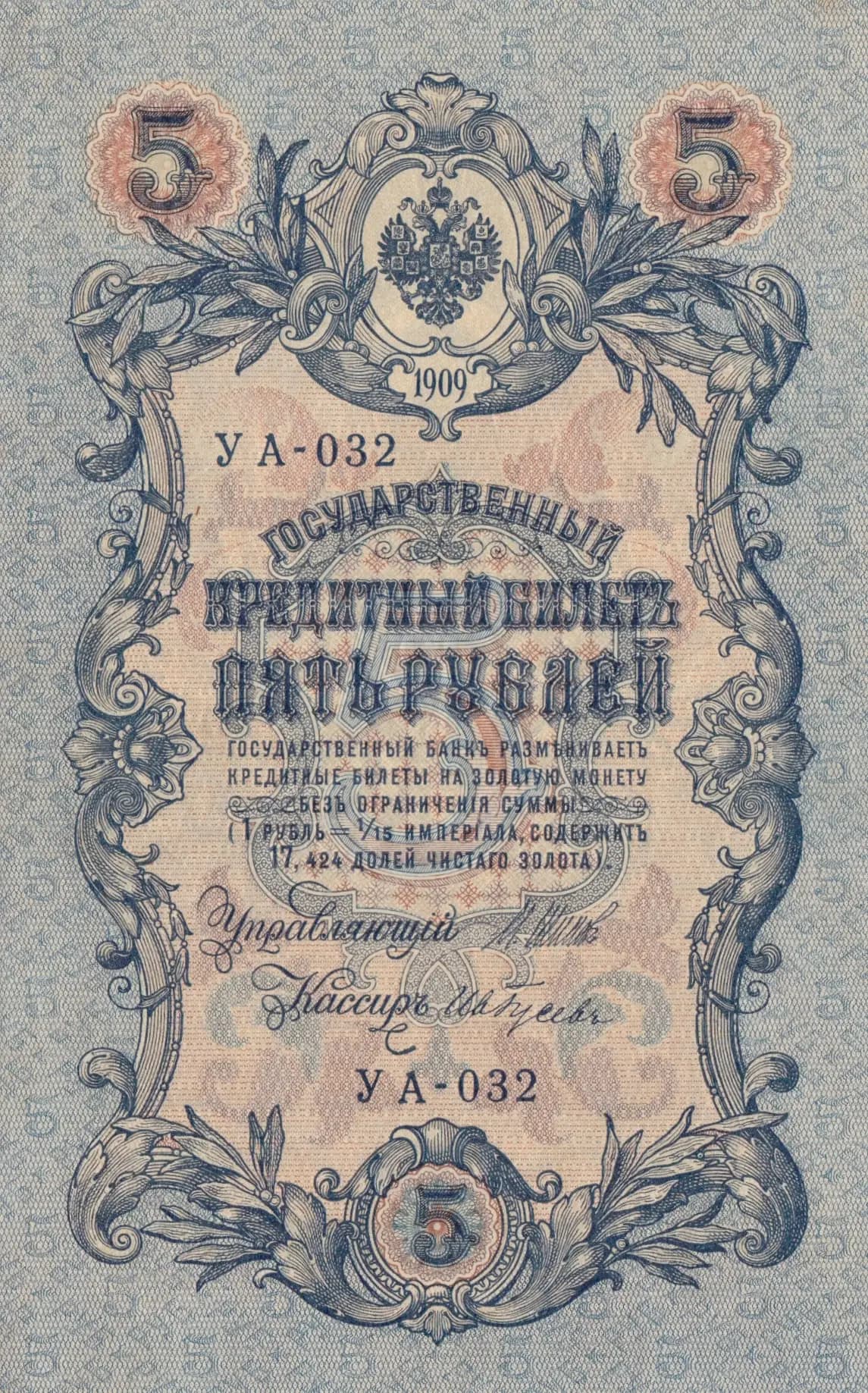
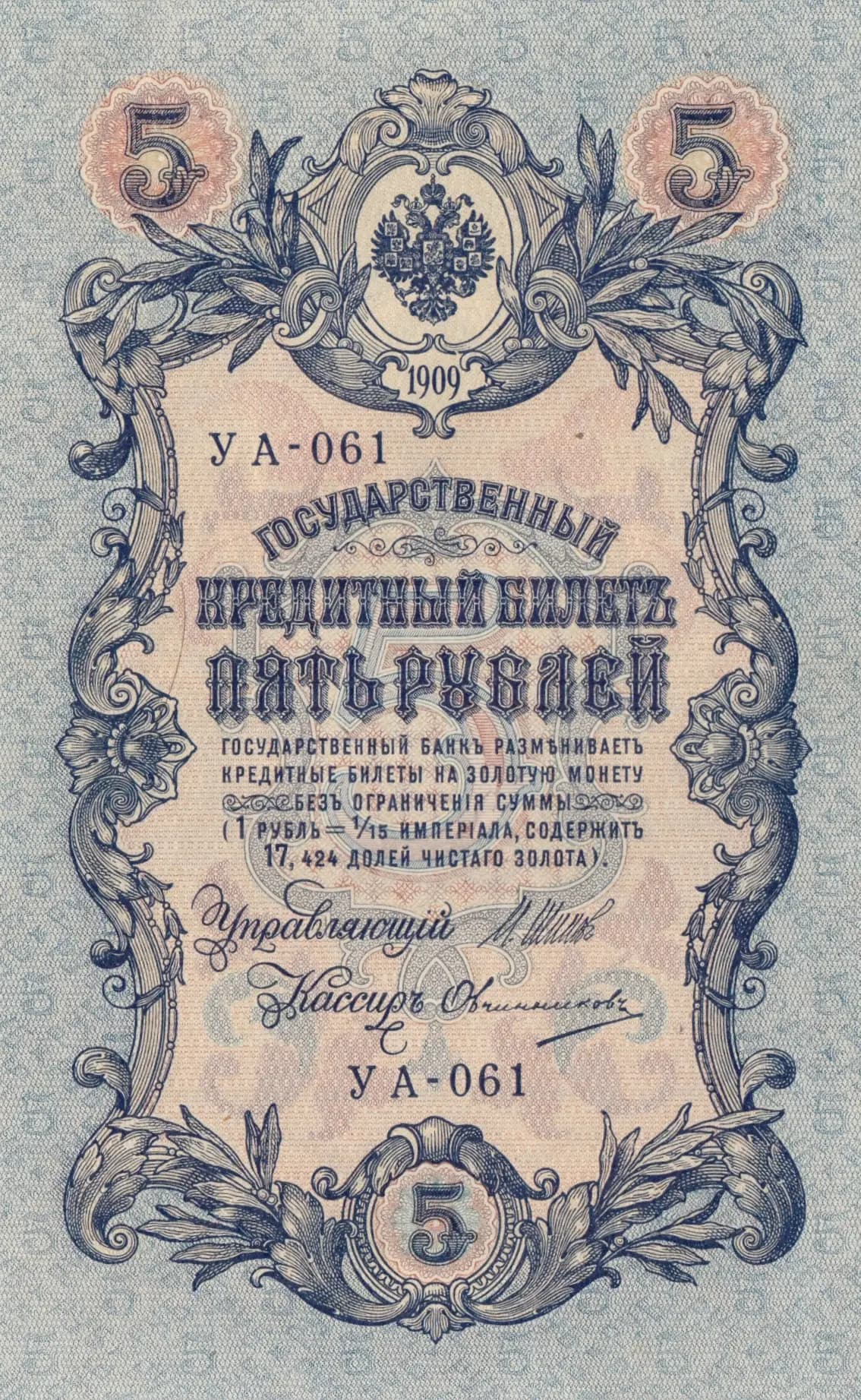
This is an AU-grade 5 Ruble note from the Russian SFSR, issued in 1917 during the revolutionary period. The note features exquisite Imperial heraldry including the double-headed eagle with crown, scepter, and orb, rendered in a sophisticated multi-color design with ornate scrollwork borders in blue, peach, and cream tones. Despite being cataloged as a 1917 issue, the note bears a 1909 date reference and carries the signature of Ovchinnikov, representing a transitional piece from Imperial to Soviet authority.
Common. The 1917 5 Ruble notes from the Russian SFSR were issued in substantial quantities during the transitional period, and while specific print run data for this exact Pick variety is not definitively documented, the circulation history and surviving population of these notes indicates they were produced in large numbers. These notes continued to circulate into the Soviet period and many examples survive. The AU condition grade and the signature of Ovchinnikov do not indicate particular rarity—Ovchinnikov-signed notes of this denomination appear with reasonable regularity in the collector market. Unless this specific serial number range or variety carries documented scarcity, it should be classified as a common note of its type.
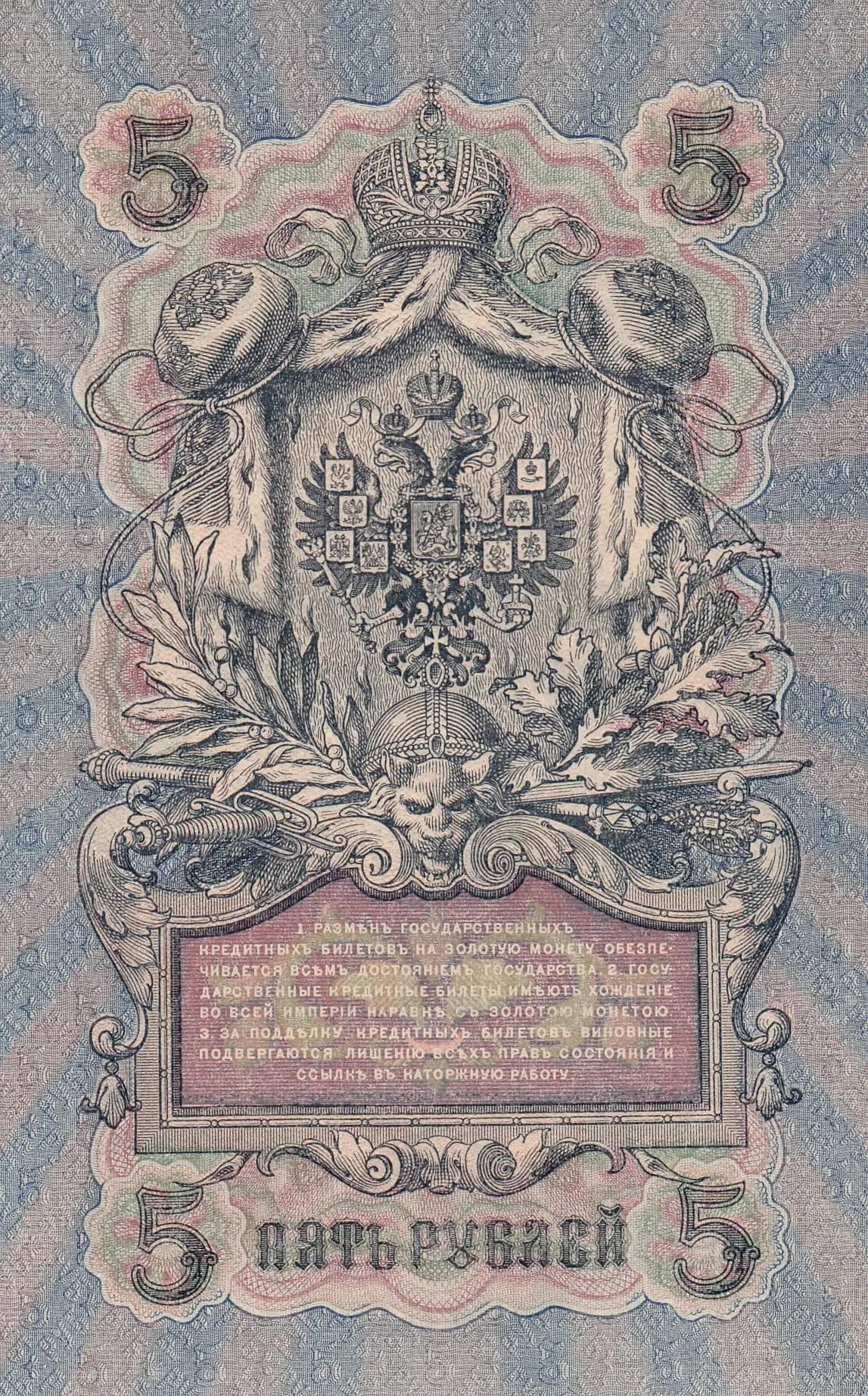
Issued during the tumultuous 1917 period following the Russian Revolution, this note represents the final phase of Imperial Russian credit currency before Soviet reorganization. The elaborate Imperial coat of arms, ermine fur stoles, and emphasis on gold backing reflect the Tsarist monetary system's claims to sound currency, even as political authority was collapsing. The prominent legal warning against counterfeiting and promises of gold exchange underscore the desperation of the Imperial/Provisional Government to maintain financial credibility during the transition from Tsarist to Bolshevik control.
This is a classically ornate Imperial Russian credit note exemplifying late 19th/early 20th-century Russian State Bank design. The obverse and reverse both prominently feature the Russian Imperial double-headed eagle (Двуглавый орёл), shown crowned and holding the traditional symbols of imperial authority: a scepter in one talon and an orb (держава) in the other. The eagle is positioned within or above an ornamental shield forming the state coat of arms, flanked by ermine fur stoles (горностайные меха) denoting imperial dignity. The design incorporates elaborate Art Nouveau-influenced scrollwork borders with floral and botanical motifs, creating a sense of security through complexity. The denomination '5' appears in multiple decorative cartouches positioned in the upper left, upper right, and lower sections of both sides. The color palette—light blue-grey background with peach/salmon, dark blue, and cream accents—creates visual distinctiveness and represents sophisticated period chromolithography. The overall design reflects the Imperial Russian monetary authority's effort to project stability and legitimacy during a period of profound political upheaval.
FRONT SIDE: The note identifies itself as 'ГОСУДАРСТВЕННЫЙ КРЕДИТНЫЙ БИЛЕТ' (State Credit Note) for 'ПЯТЬ РУБЛЕЙ' (Five Rubles). The key text states: 'ГОСУДАРСТВЕННЫЙ БАНК РАЗМЕНИВАЕМЫЕ КРЕДИТНЫЕ БИЛЕТЫ НА ЗОЛОТУЮ МОНЕТУ БЕЗЪ ОГРАНИЧЕНИЯ СУММЫ' (The State Bank exchanges Credit Notes for Gold Coins without limit of sum), with technical specifications: '(1 РУБЛЬ = 1/15 ИМПЕРИАЛА, СОДЕРЖИТ 17,424 ДОЛЕЙ ЧИСТОГО ЗОЛОТА)' (1 Ruble = 1/15 Imperial, contains 17.424 parts of pure gold). Signature lines read 'Управляющий Банк' (Bank Manager) and 'Кассир' (Cashier). Serial number: УА-061. BACK SIDE: 'РАЗМЕН ГОСУДАРСТВЕННЫХ КРЕДИТНЫХ БИЛЕТОВ НА ЗОЛОТУЮ МОНЕТУ ОБЕСПЕЧИВАЕТСЯ ВСЕМ ДОСТОЯНИЕМЪ ГОСУДАРСТВА. В ЕГО ГОСУДАРСТВЕННЫЕ КРЕДИТНЫЕ БИЛЕТЫ ИМЕЮТ ХОЖДЕНИЕ ВО ВСЕЙ ИМПЕРИИ НАРАВНЕ СО ЗОЛОТОЮ МОНЕТОЮ.' (Exchange of State Credit Notes for Gold Coins is secured by the entire property of the State. Its State-owned Credit Notes circulate throughout the entire Empire at par with gold coins). Legal warning: 'ПОДДЕЛКУ КРЕДИТНЫХ БИЛЕТОВ ПРЕСЛЕДУЕТ ЗАКОН С ПОЛОВИННУЮ ШТРАФУ И ССЫЛКУ В КАТОРЖНУЮ РАБОТУ.' (Counterfeiting of Credit Notes is prosecuted by law with heavy penalties and exile to hard labor).
This note employs chromolithography, the standard security printing technique for Russian Imperial State Bank notes of the 1909-1917 period. The multiple color separations visible in the visual analysis—including the complex interplay of blue-grey, peach, green, and dark blue-black inks—indicate professional security printing with careful color registration. The extremely fine detail in the ornamental borders, the eagle's features, and the serif typography suggests engraved steel plates used in the lithographic process. This represents the work of Russia's primary banknote security printer of the period, likely the State Printing Works (Государственная типография) or a contracted security printer such as those used by the Imperial State Bank. The intentional complexity of the design—multiple colors, fine line work, and intricate heraldic detail—served as built-in security features against contemporary counterfeiting methods.
Pick catalog number P-35(2-9) indicates this is part of the second group of varieties within the 5 Ruble 1917 issue, specifically variety number 2-9. The note bears signature of Ovchinnikov (Овчинников), who served as a Bank Manager (Управляющий) during this period. The serial number УА-061 places this in the УА (Cyrillic) prefix series. The date marking of 1909 on a cataloged 1917 issue reflects the Imperial practice of dating notes to the original authorization year rather than the issue year—this note was authorized under Imperial decree in 1909 but printed and issued in 1917 under the Provisional Government/early Soviet authority. Collectors should note the distinction between the authorization date (1909) and the historical issuance period (1917).