5 rublei 1917
“Sig.Ovchinnikov”
About This Note
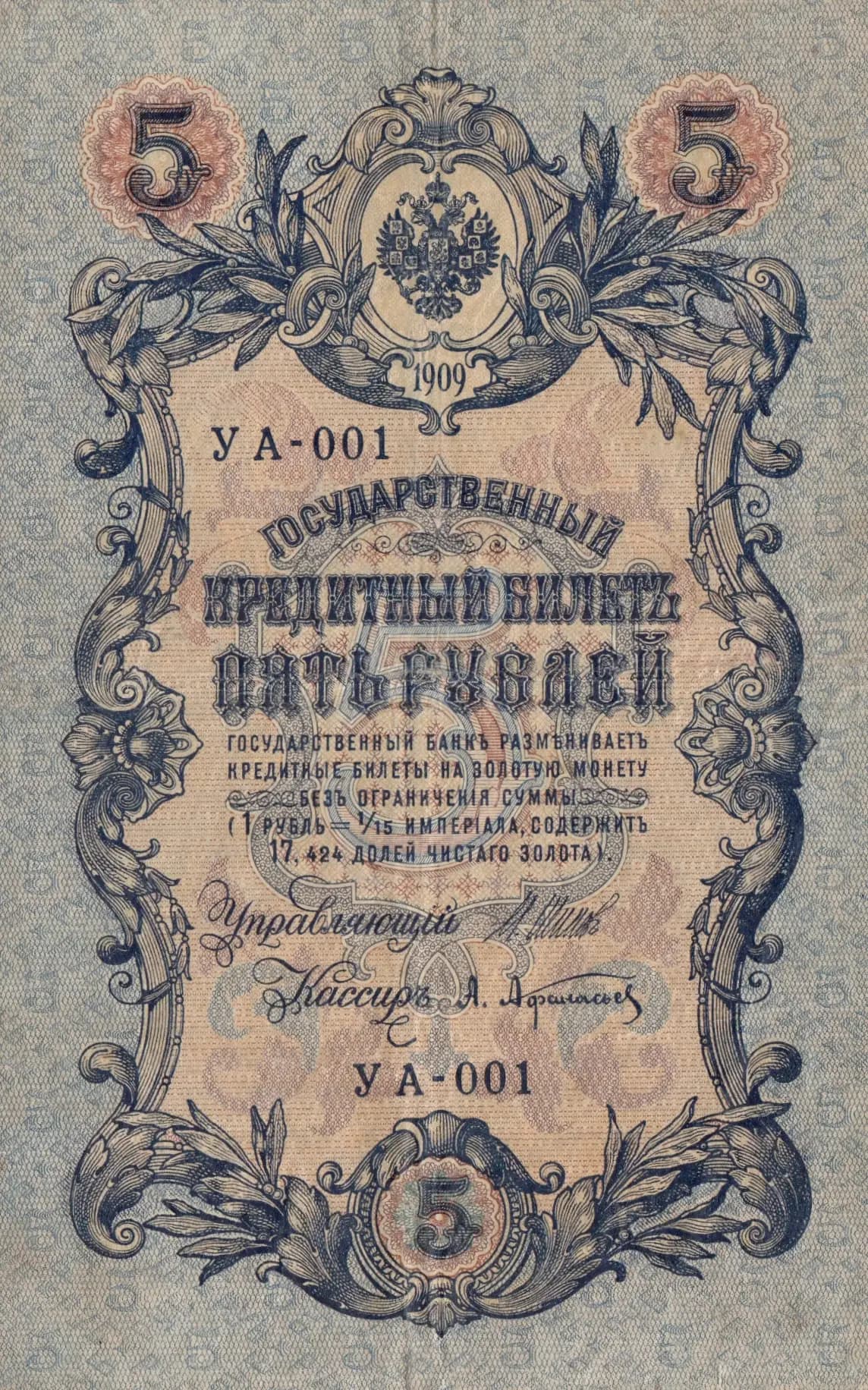
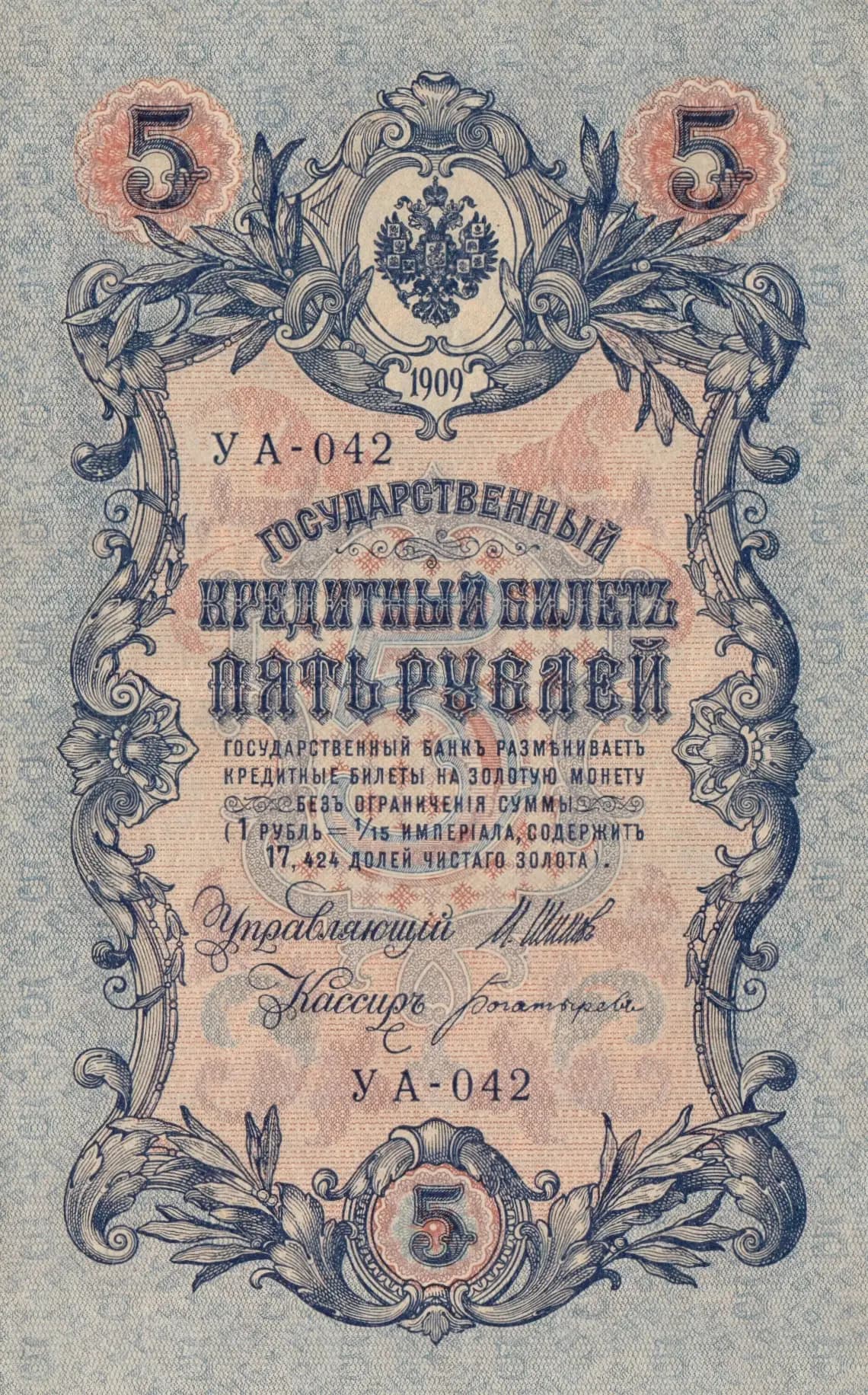
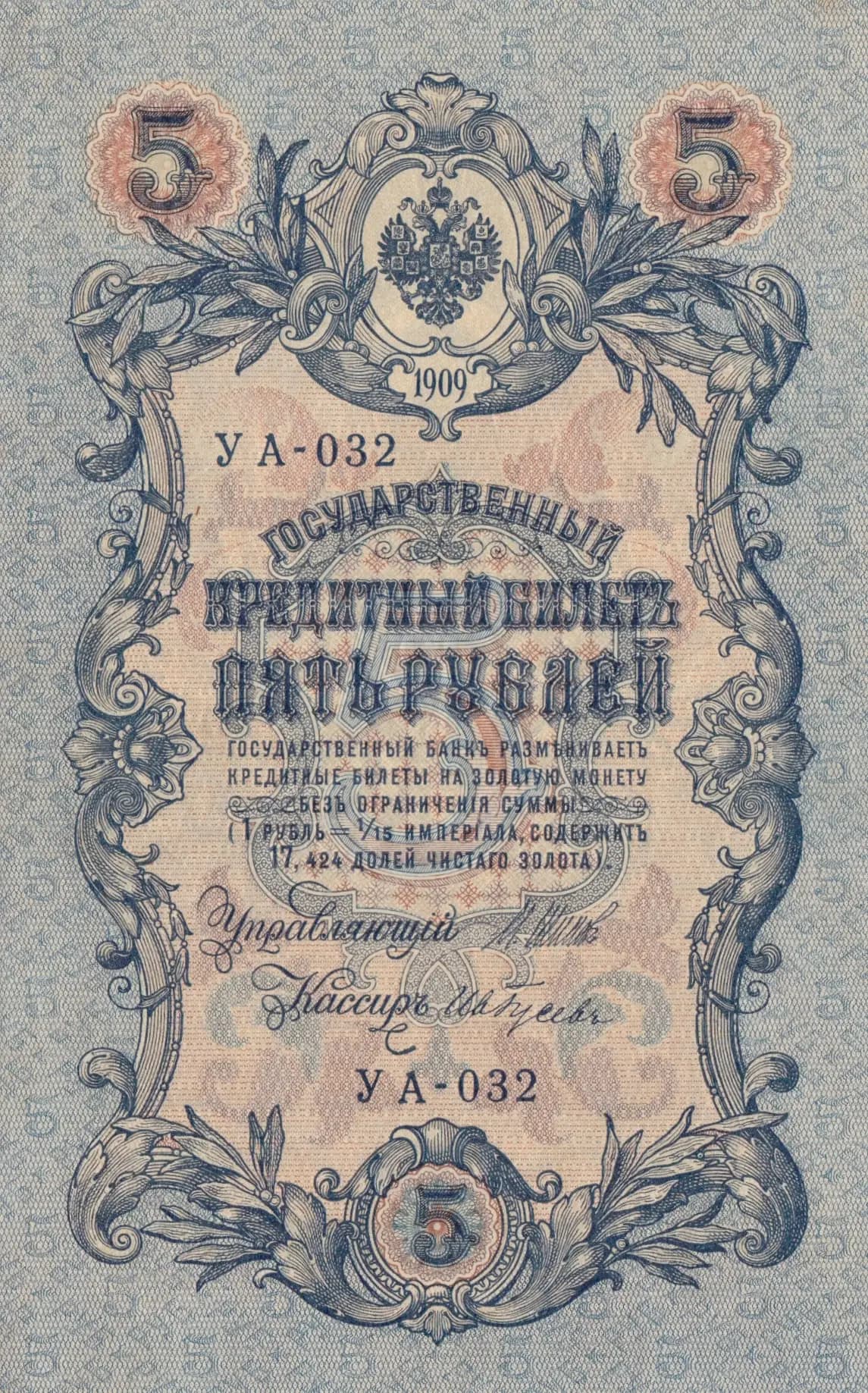
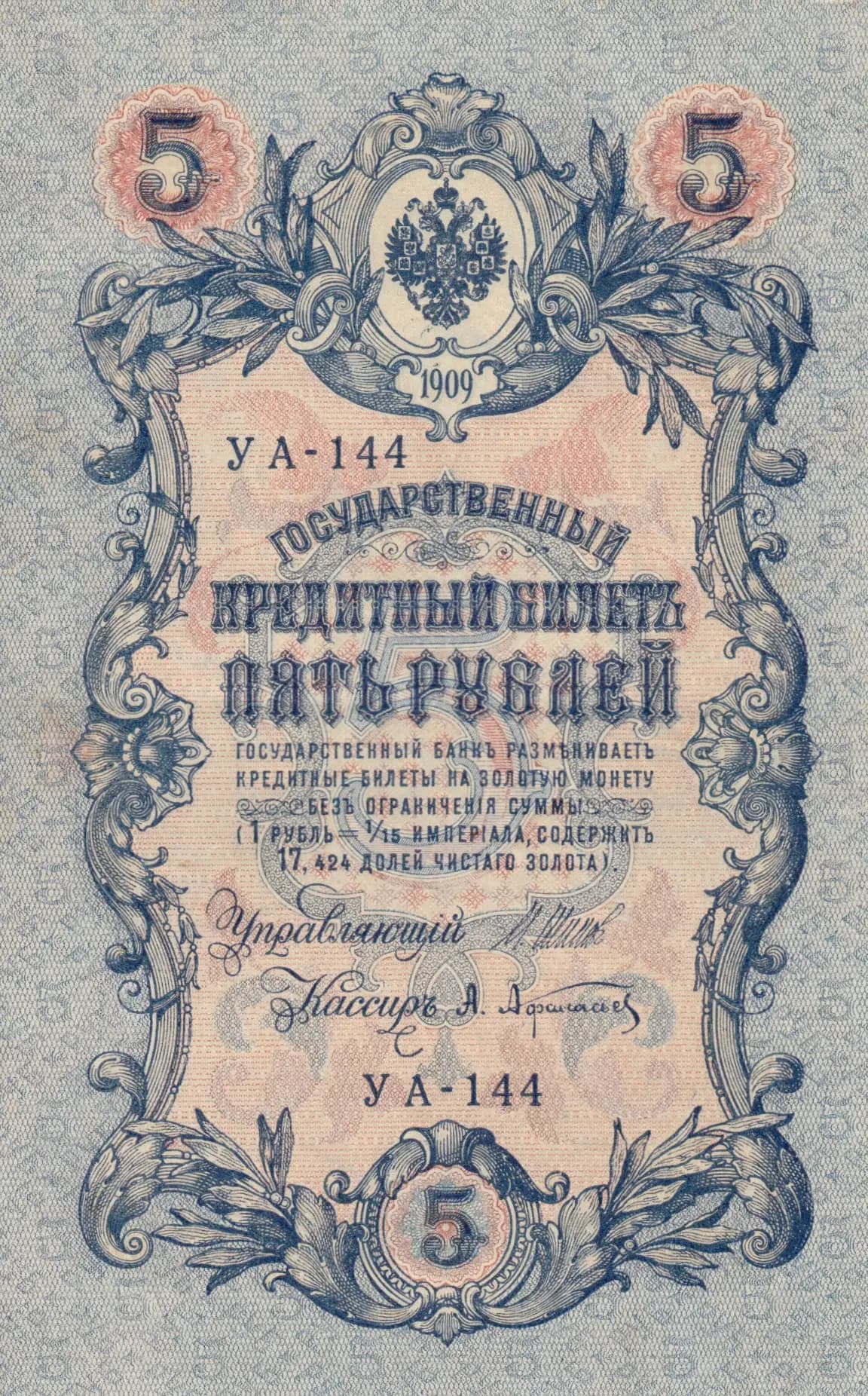
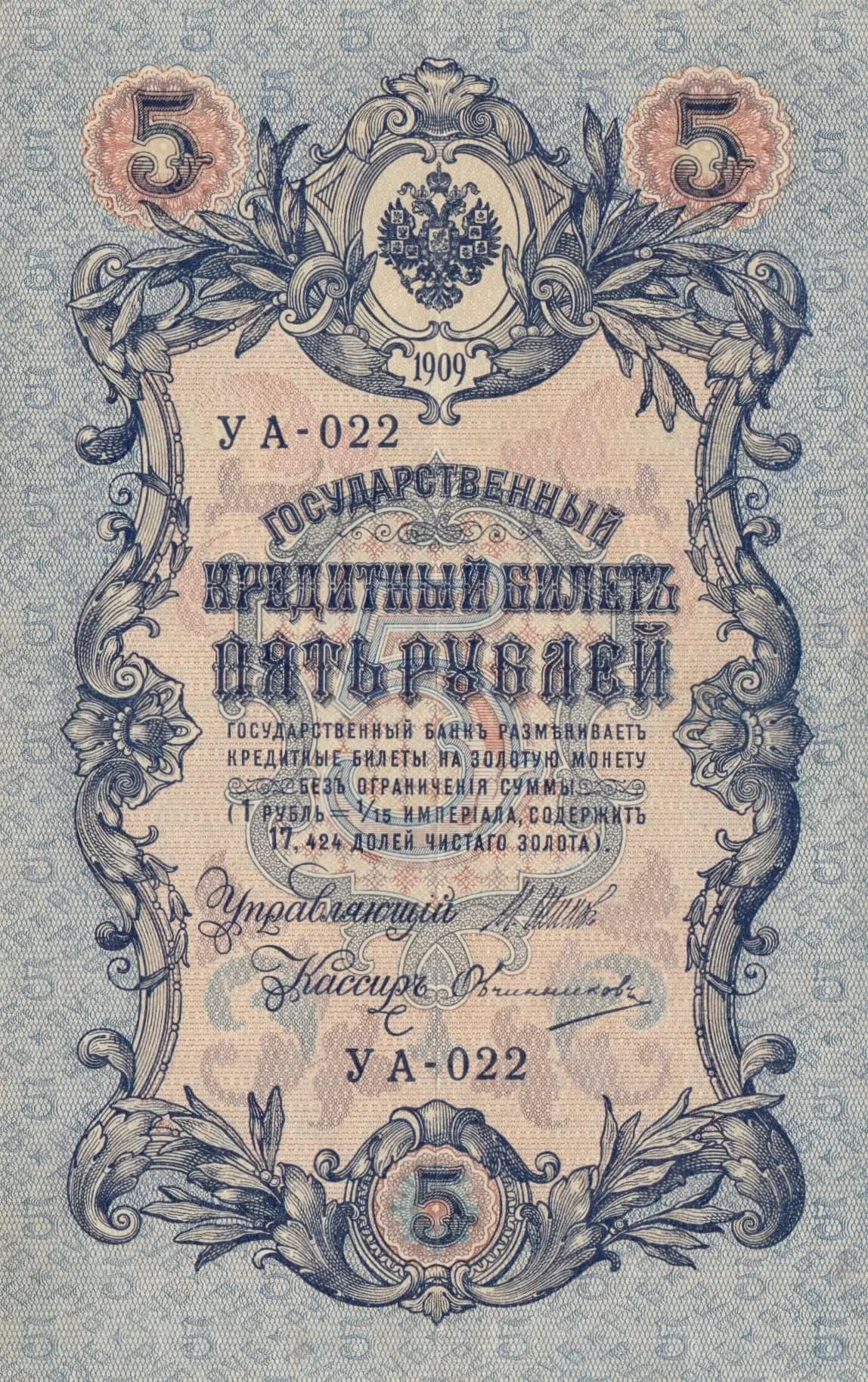
A handsome example of the Russian Provisional Government's 5 rubles from 1917 (Pick P-35), presented in VF condition with vibrant coloring and sharp engraving throughout. The note showcases the imperial Russian eagle and elaborate baroque-style ornamentation in pale blue-gray and pink/salmon tones, reflecting the transitional period between the Romanov era and revolutionary change. The serial number УА-022 and signature block for Ovchinnikov add to its collector appeal as a historically significant piece from Russia's brief democratic interregnum.
Common. The 5 rubles Provisional Government notes of 1917 (Pick P-35 series) were issued in substantial quantities as part of the regular currency supply during the Provisional Government's brief tenure (March-October 1917). While the Provisional Government itself was short-lived, these notes circulated widely and survived in reasonable numbers. The VF condition grade noted here is desirable but not exceptionally rare. No evidence of a restricted print run, special overprints, or major recall exists for this denomination and issuer. These notes typically appear on the market at moderate collector prices and are considered accessible examples of Russian revolutionary-era currency.
Issued by the Russian Provisional Government in 1917 following the abdication of Tsar Nicholas II, this 5 rubles note represents a fascinating numismatic artifact of political transition. The design retains the imperial double-headed eagle with crown and references the 1909 imperial gold standard backing, demonstrating the new government's attempt to maintain financial continuity and confidence during revolutionary upheaval. The gold redemption promises printed on both sides became meaningless within months as the Bolsheviks seized power and repudiated the currency, making these notes historical witnesses to Russia's collapse into civil war.
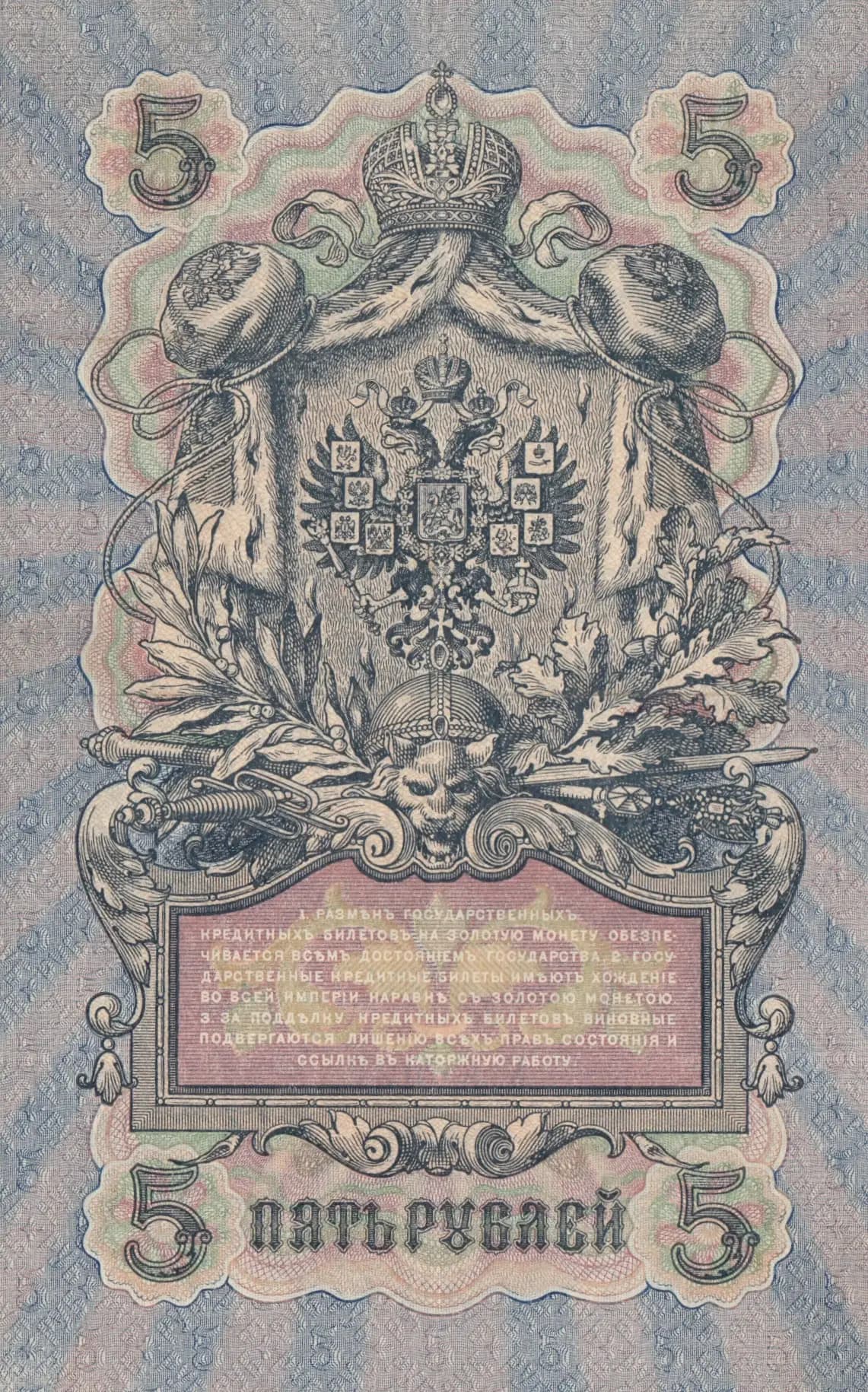
The obverse and reverse of this 5 rubles note feature symmetrical, highly ornate baroque-style engraving characteristic of late Imperial Russian currency design. The central motif on both sides is the Russian Imperial double-headed eagle wearing the imperial crown—a symbol of state authority the Provisional Government retained to project legitimacy. The reverse displays this eagle in grander form, flanked by imperial orbs (symbols of sovereignty) and surmounted by the complex multi-compartment imperial coat of arms shield, depicting the heraldic achievements of the Russian Empire's regions. Both sides are framed by elaborate scrollwork, floral filigree, and geometric patterns in the neoclassical-baroque tradition. The pale blue-gray and pink/salmon color scheme, combined with fine navy engraving lines, creates a sophisticated, security-conscious design. Large denomination numerals '5' in scalloped circular cartouches anchor the corners. The overall composition conveys imperial majesty while the inscribed gold-standard guarantees were meant to reassure a panicked public of financial stability.
FRONT SIDE: Main title reads 'ГОСУДАРСТВЕННЫЙ КРЕДИТНЫЙ БИЛЕТ ПЯТИРУБЛЕЙ' (State Credit Bill, Five Rubles). Denomination numerals '5' appear in scalloped circles at top corners. The eagle cartouche is dated '1909'. Serial number 'УА-022' appears. Extended text states: 'THE STATE BANK EXCHANGES CREDIT BILLS FOR GOLD COINS WITHOUT SUM LIMITATION (1 RUBLE = 1/15 IMPERIAL, CONTAINING 17.424 PARTS OF PURE GOLD).' Signature blocks indicate 'Управляющий' (Managing Director) and 'Кассир' (Cashier). BACK SIDE: Denomination 'ПЯТИРУБЛЕЙ' (Five Rubles) with numeral '5' in scalloped circles. Extended legal text guarantees: 'The exchange of state credit bills for gold coins is secured by all the wealth of the state. Circulating throughout the entire empire on an equal basis with gold coins.' Additional fine-print text addresses legal status and international standing of the credit bills.
This note was produced using steel engraving/intaglio printing, the standard security printing method for Russian Imperial and Provisional Government currency. The intricate fine-line work, sharp detail preservation in the ornamental borders, and the precise, multi-layered baroque patterns visible throughout are characteristic of engraved plate printing. The State Bank's security printers (likely the Russian State Printing Works in St. Petersburg, which handled official currency production) produced these notes with multiple color passes to achieve the pale blue-gray base with pink/salmon accents and navy engraving details. The technique provided security through the difficulty of reproducing the fine-line complexity and multiple-color coordination.
Serial number УА-022 with Cyrillic prefix 'УА' places this within the standard series. The signature block space for Ovchinnikov (noted in collector notes) would represent one of the various signature combinations known for this issue, as the Provisional Government employed different officials in managing and cashier roles during its brief existence. Pick catalog number P-35(1-9) indicates this is part of a series with multiple varieties, likely distinguished by signature combinations, date variations, or printer marks. No visible overprints, specimen markings, or emergency issues are apparent in the observed imagery, suggesting this is a standard circulation issue rather than a specialized variety.