5 rublei 1917
“Sig.Gusev”
About This Note
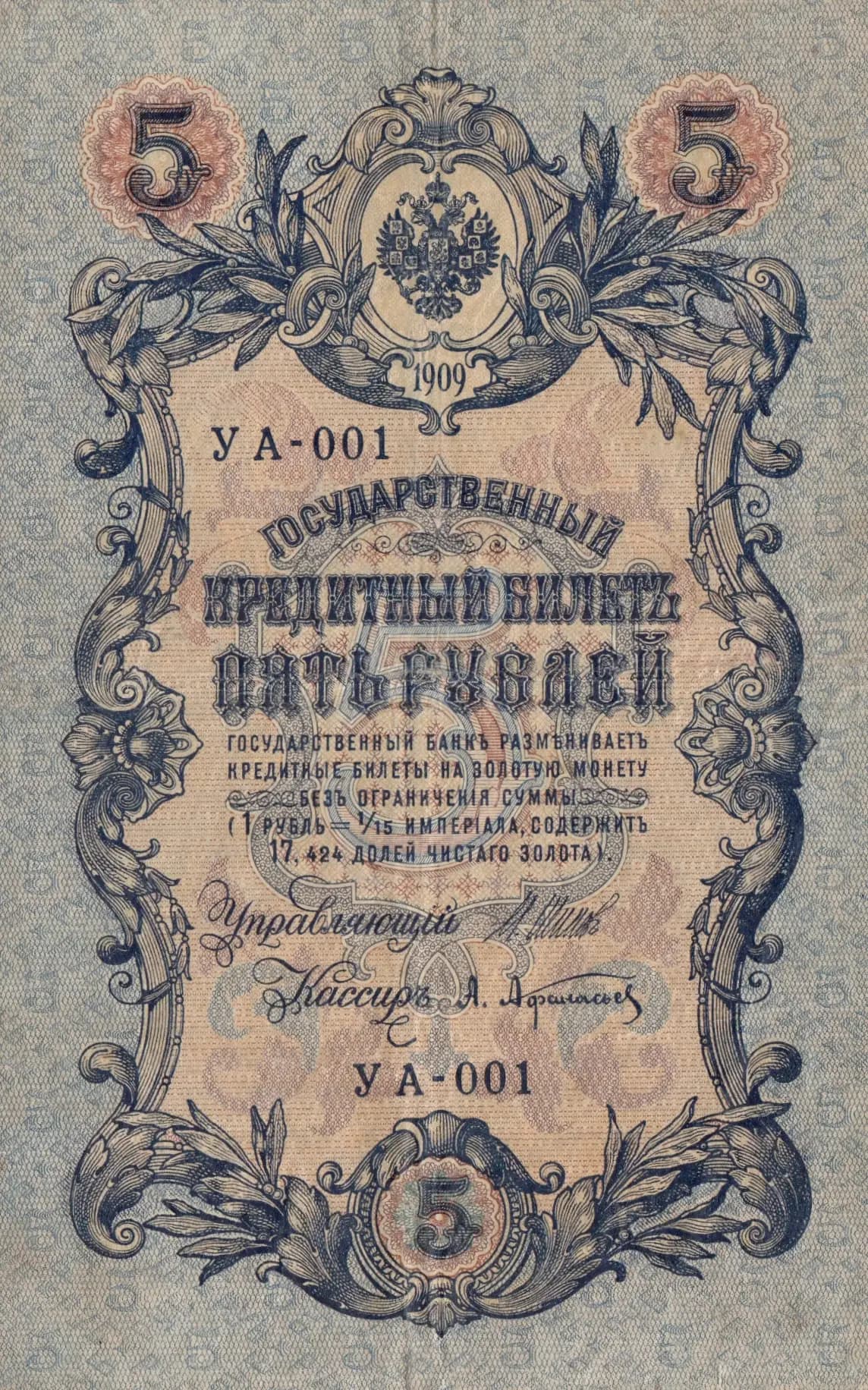
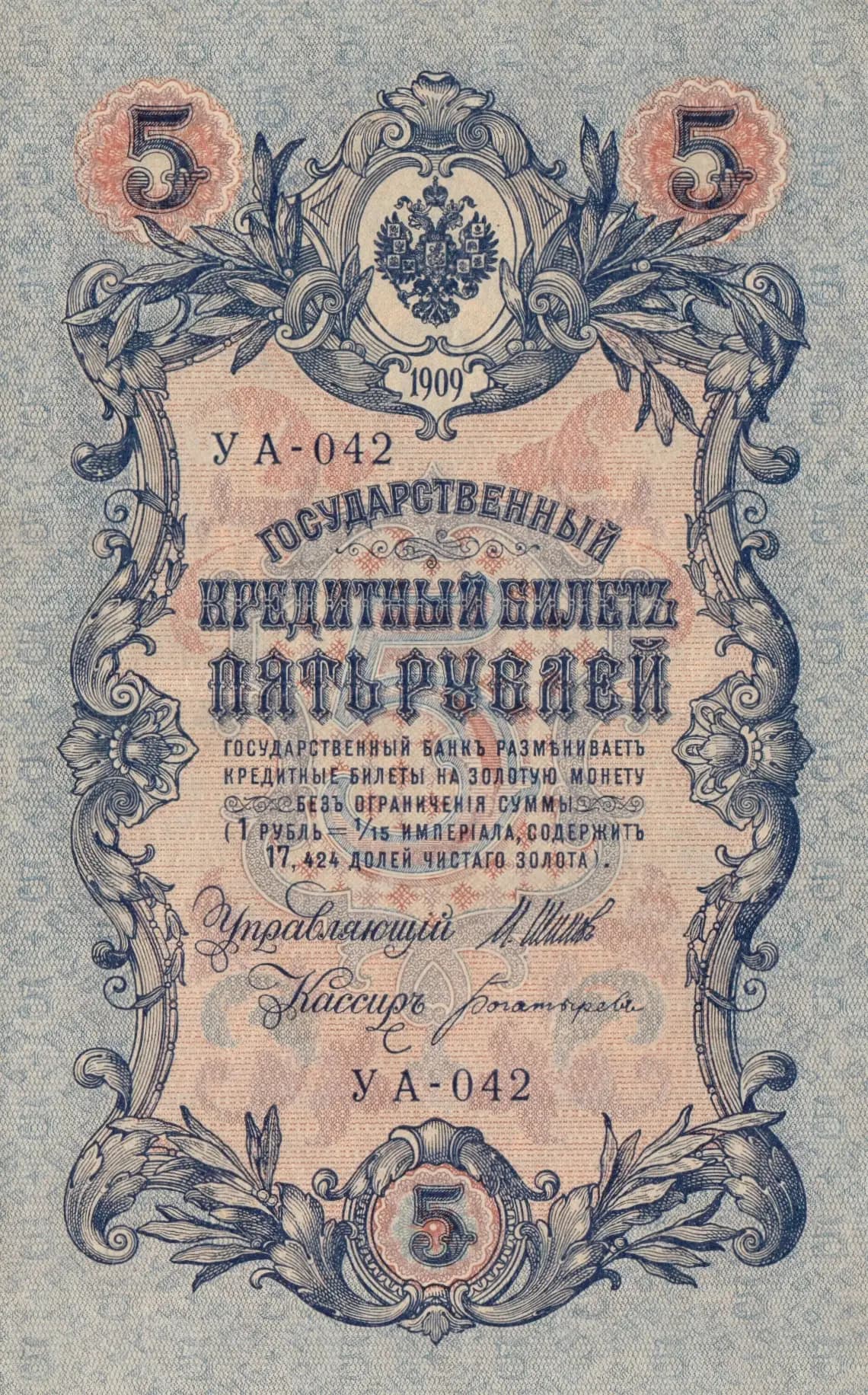
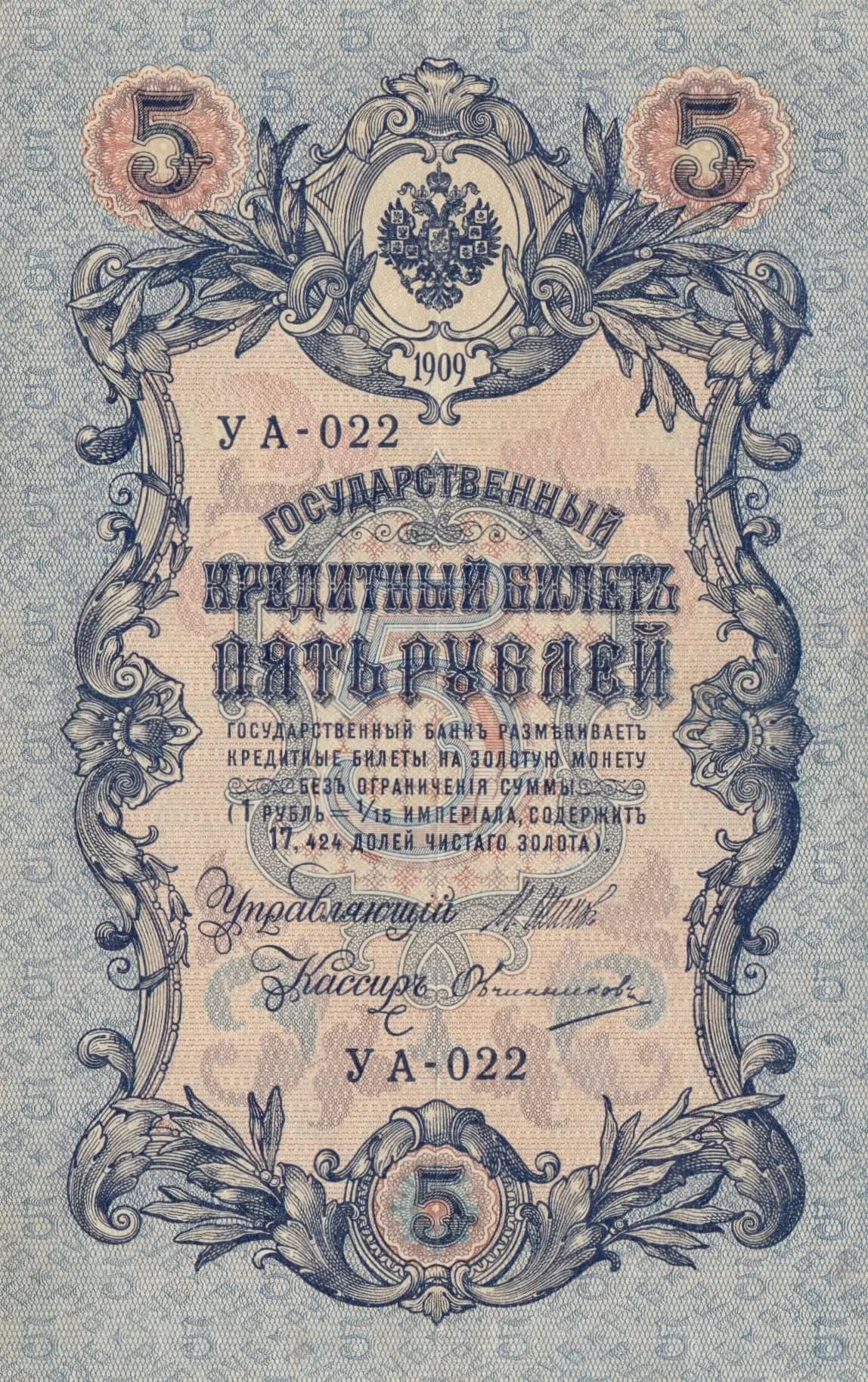
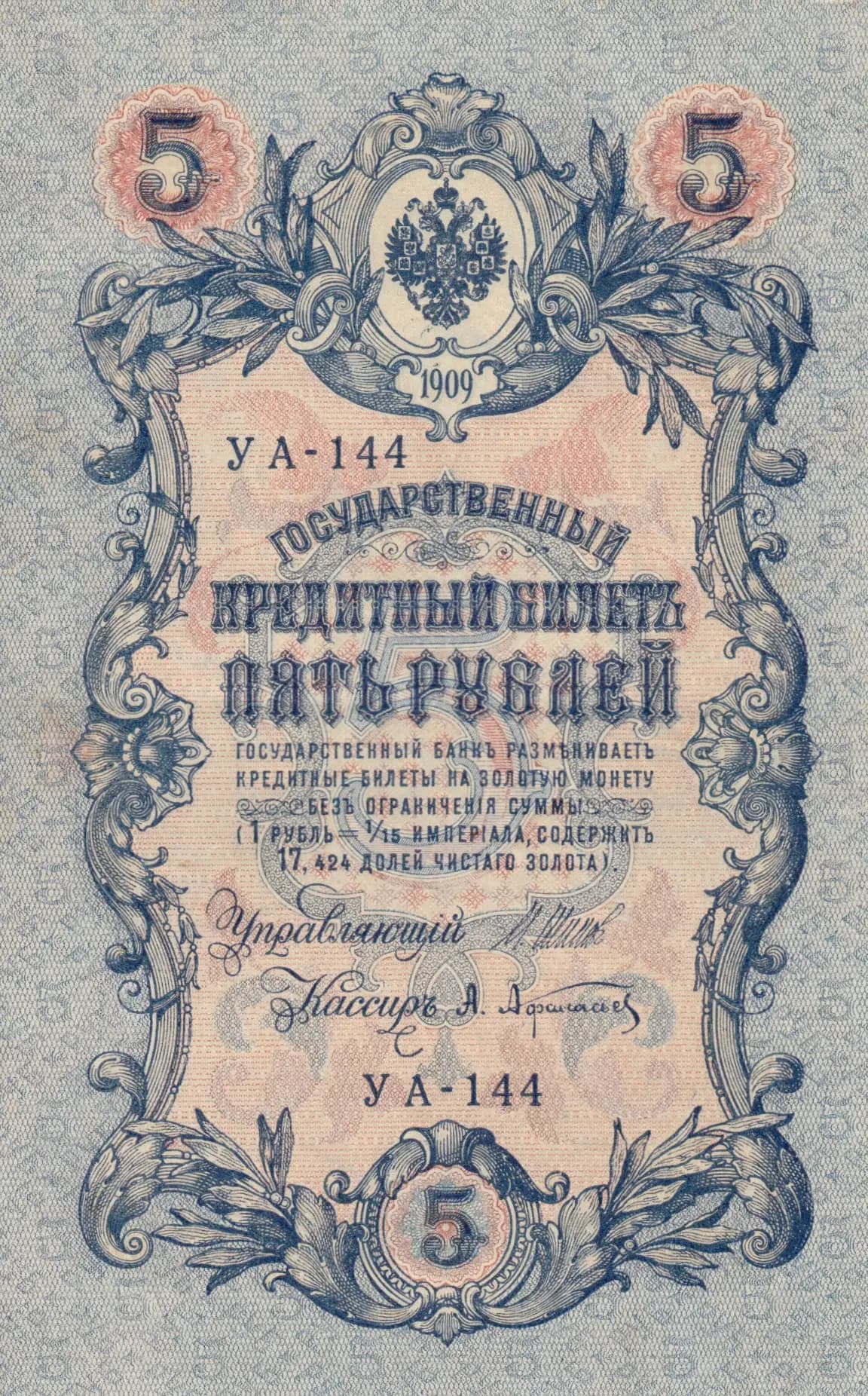
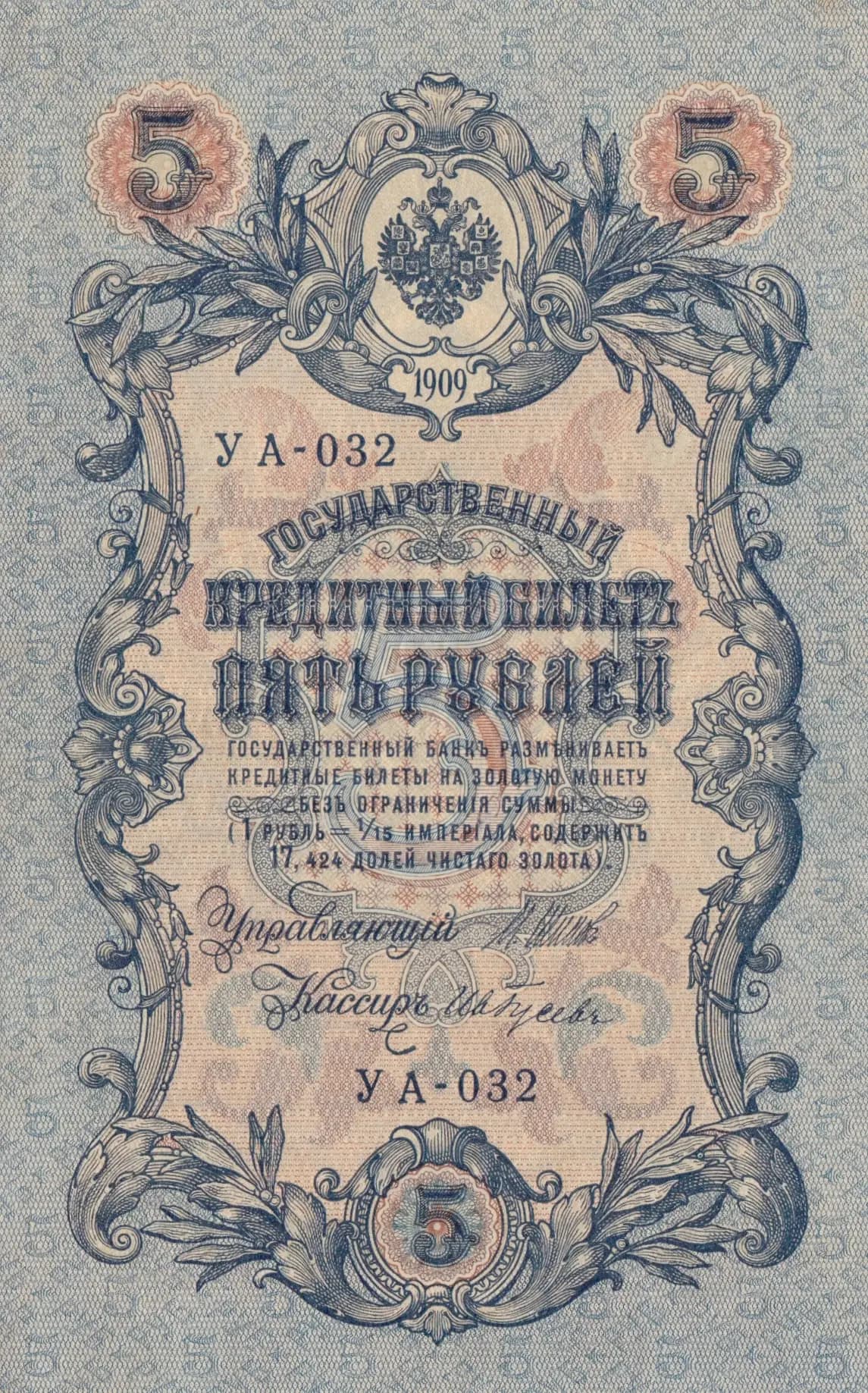
An exceptional example of a Russian 5 Rubles banknote from the Provisional Government period (1917), presenting in AU condition with pristine, crisp printing throughout. The note showcases the imperial double-headed eagle and elaborate heraldic imagery characteristic of pre-revolutionary Russian currency, with striking pale gray-blue and salmon-pink color scheme. This specimen, signed by Gusev, represents a significant transitional piece from the final years of Tsarist financial authority before the Soviet takeover.
Common. The 5 Rubles denomination from the 1917 Provisional Government issue was produced in substantial quantities and circulated widely during its brief issuance period before being demonetized following the Bolshevik takeover in October 1917. While the Provisional Government's authority was short-lived, the denomination itself was not recalled or destroyed en masse, allowing numerous examples to survive. Examples regularly appear in the collector market at modest valuations. The AU condition grade is more noteworthy than the note's inherent rarity.
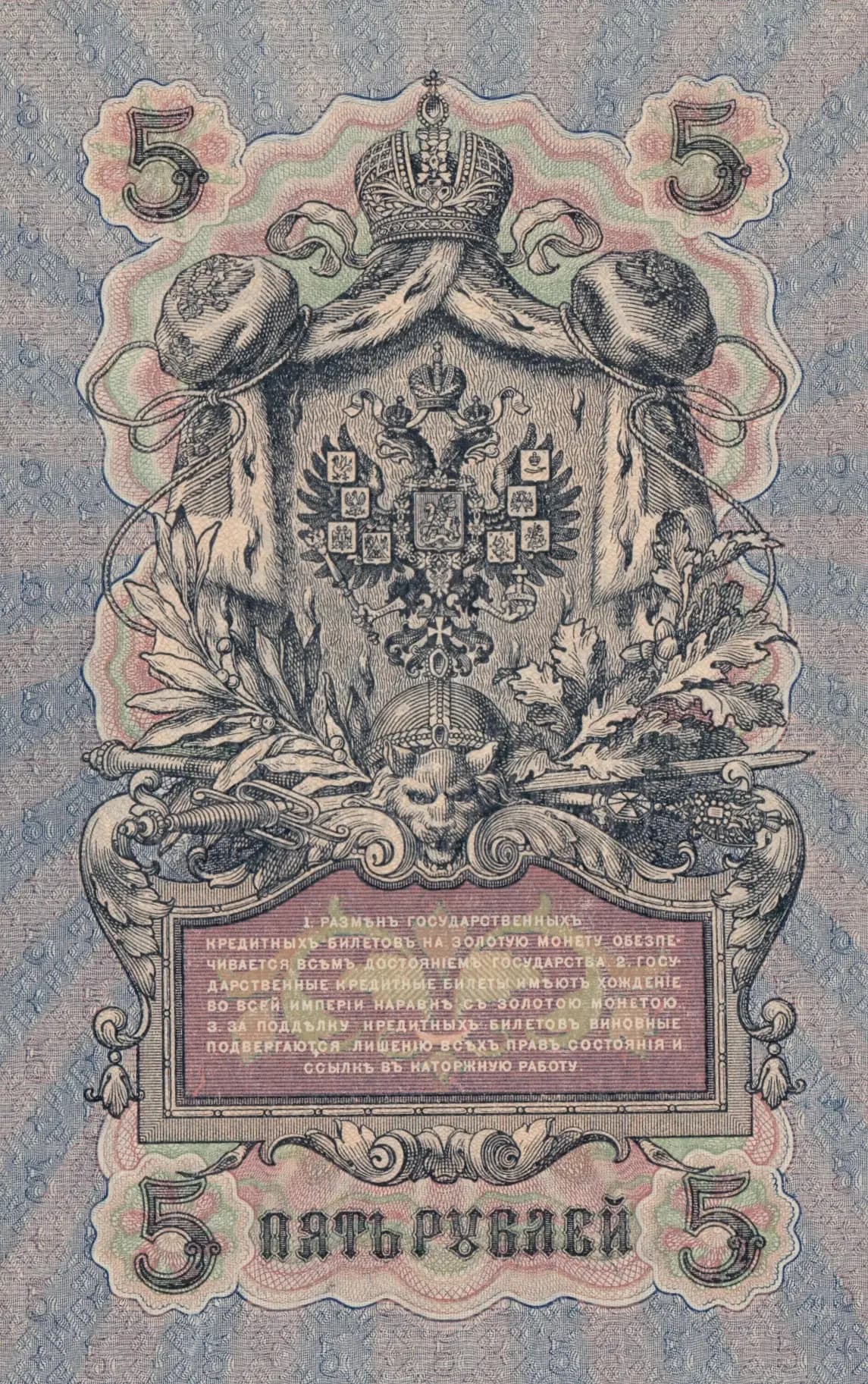
Issued during the brief tenure of the Russian Provisional Government (February-October 1917), this banknote bridges the autocratic Tsarist era and the Soviet period. The elaborate imperial heraldry—particularly the double-headed eagle with imperial crown and the detailed coat of arms—reflects the government's attempt to maintain continuity with Tsarist financial authority while navigating revolutionary upheaval. The legal text warning of hard labor for counterfeiting underscores the state's desperate efforts to maintain currency stability during a period of profound political and economic crisis.
The obverse and reverse both feature the Russian imperial double-headed eagle with an imperial crown, containing the intricate imperial coat of arms with multiple shield divisions. The front presents the heraldic emblem surrounded by baroque scrollwork and floral wreaths in an ornate, symmetrically balanced composition. The reverse expands the heraldic theme, flanking the central eagle with military and state symbols: a saber representing military power, laurel wreaths and oak branches symbolizing victory and strength, and fortress/architectural elements at the base representing state institutions. Denomination numerals appear in decorative rosette frames in all corners. The overall aesthetic combines classical baroque ornamentation with imperial Russian symbolism, reflecting the Provisional Government's desire to maintain imperial prestige during its precarious nine-month tenure.
FRONT: Denomination '5' in decorative rosettes (top left and bottom right); Serial number designation 'УА-032'; Date marking '1909' (referencing the original design year). BACK: Denomination '5' in all four corners within decorative frames; 'ПЯТЬ РУБЛЕЙ' (Five Rubles); Legal text: 'Credit bills are secured by gold coins - guaranteed by all the wealth of the state. In state credit bills they have circulation throughout the entire empire on an equal basis with gold coins. Therefore credit bills guilty are subject to deprivation of state rights and exile to hard labor.' This inscription served as both a declaration of backing and a stern counterfeiting deterrent.
Intaglio engraving (line engraving), the standard security printing method for high-value Russian Imperial banknotes. The intricate detail visible in the heraldic imagery, baroque scrollwork, and ornamental borders—combined with the crisp, precise printing observed throughout the specimen—confirms professional security printing. This note was produced by the State Printing Works (Государственный печатный двор) in St. Petersburg, the primary printer for Imperial Russian currency during this period.
This specimen exhibits the signature of Gusev (Сигнатура Гусев), identifying it within the narrow window of Provisional Government fiscal administration (approximately March-October 1917). The serial number designation 'УА-032' suggests this note is from an early printing series. The date '1909' refers to the original Imperial design dating from the reign of Nicholas II, which the Provisional Government reused without modification—a pragmatic choice reflecting the government's brief existence and limited resources. Different signature variants exist for this Pick number, with Gusev being a documented variant of Provisional Government era issues.