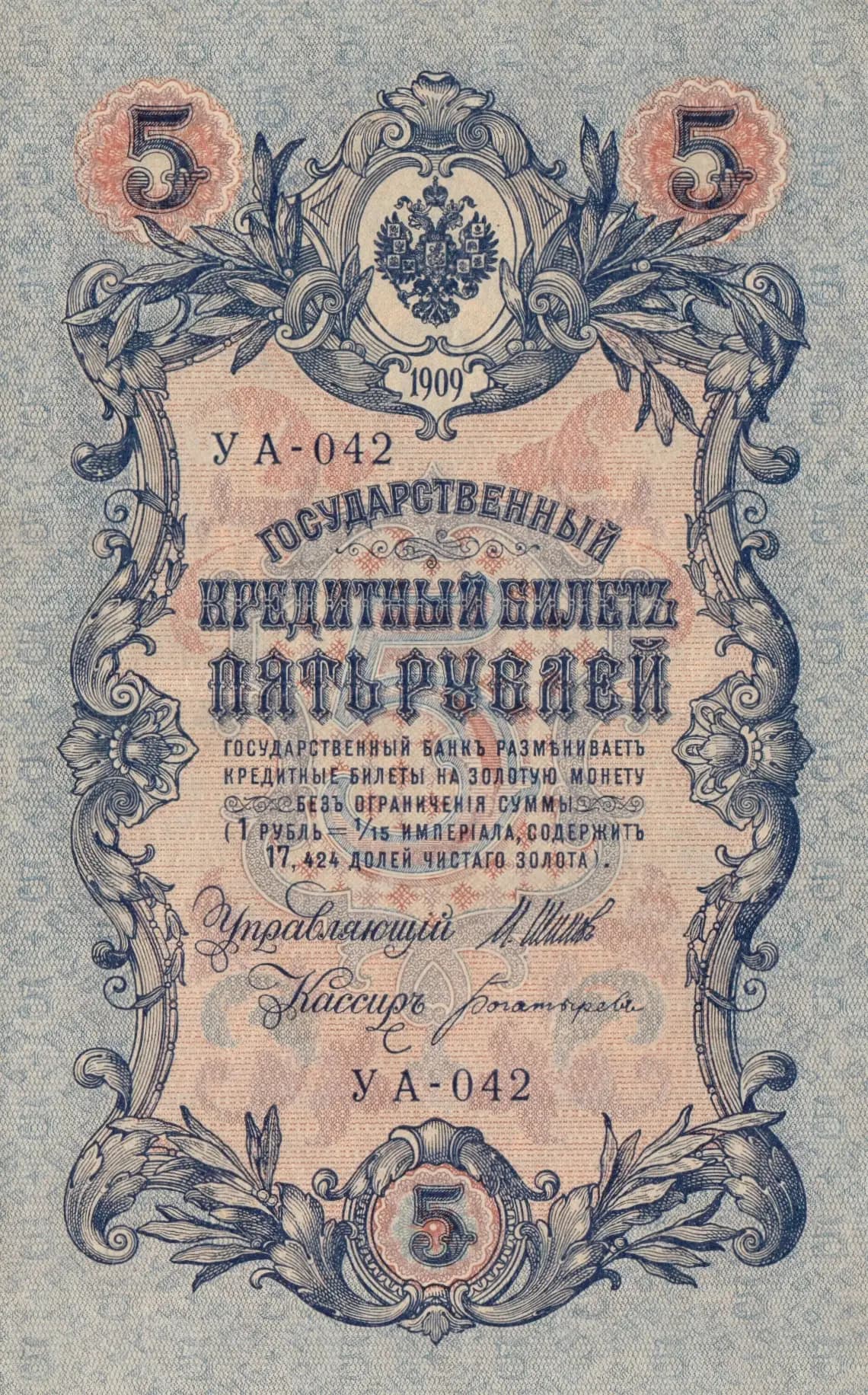
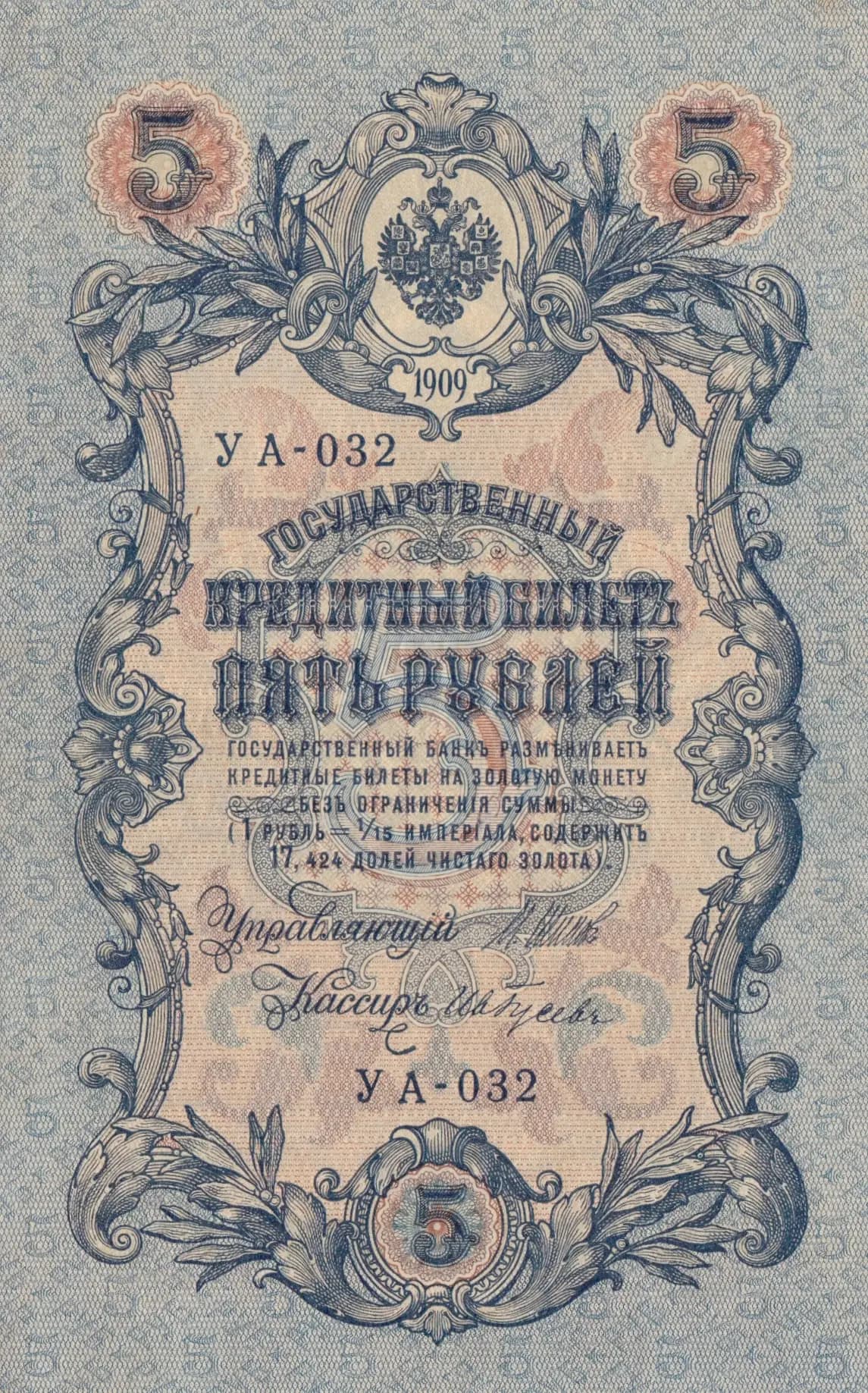
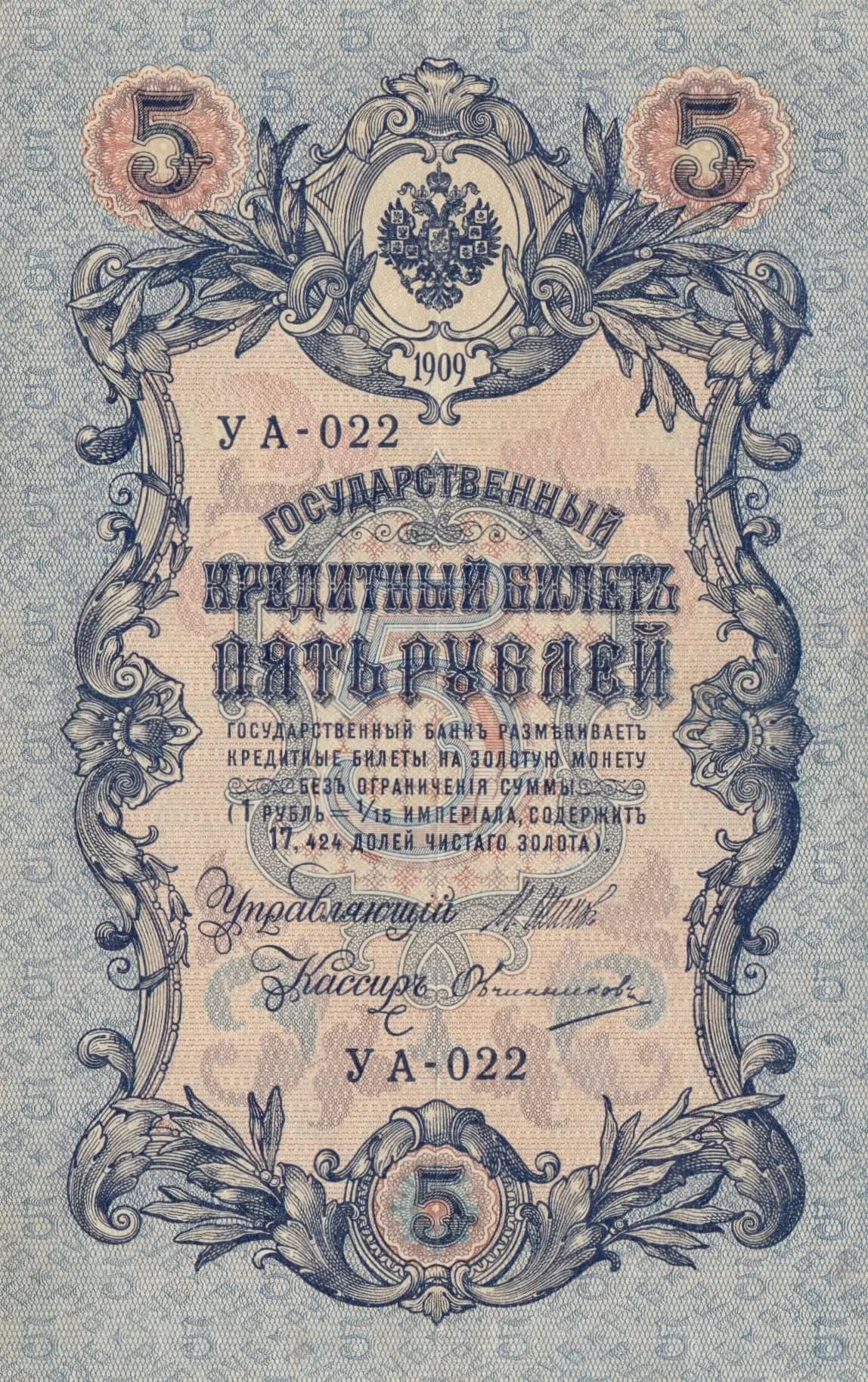
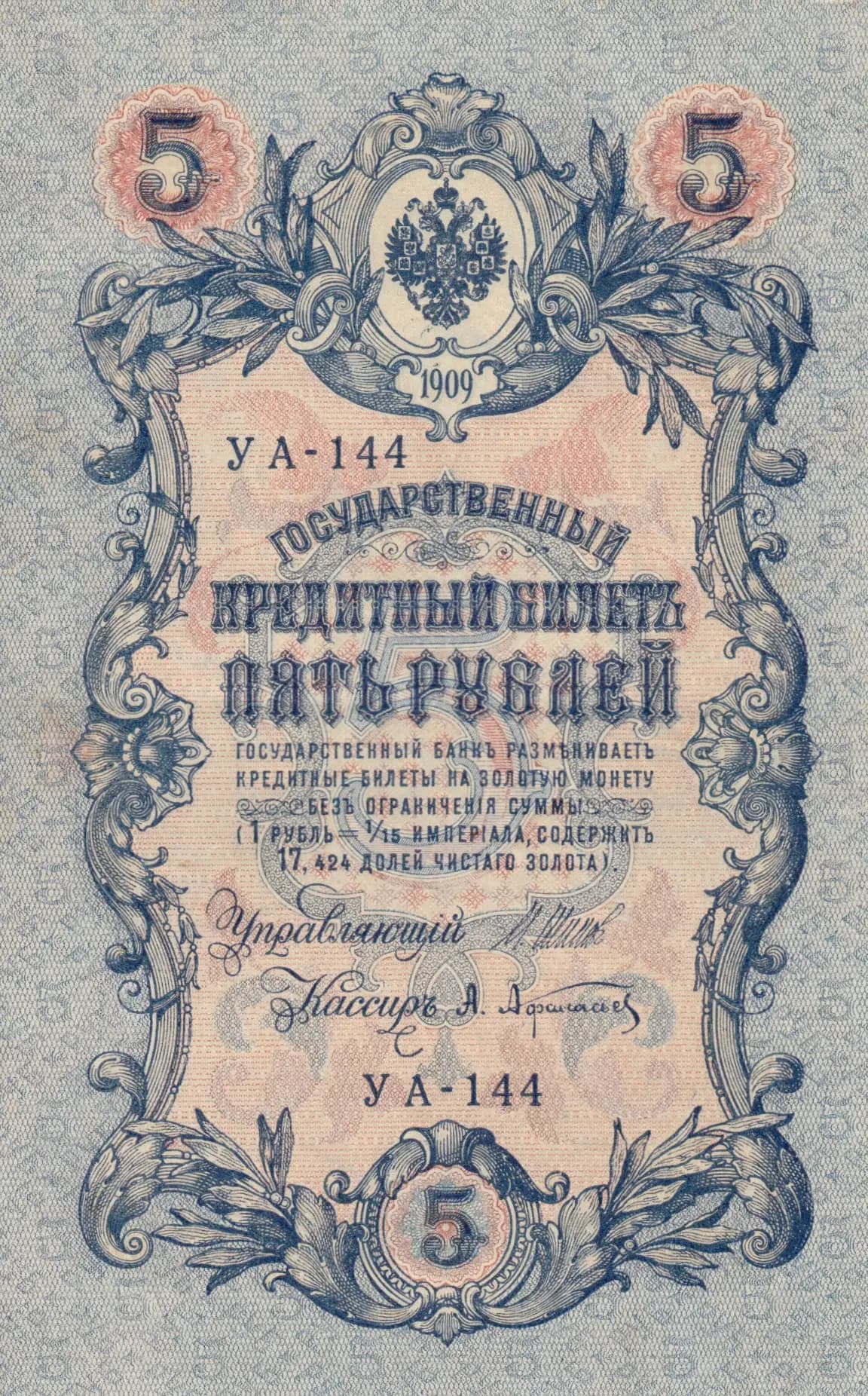
5 rublei 1917
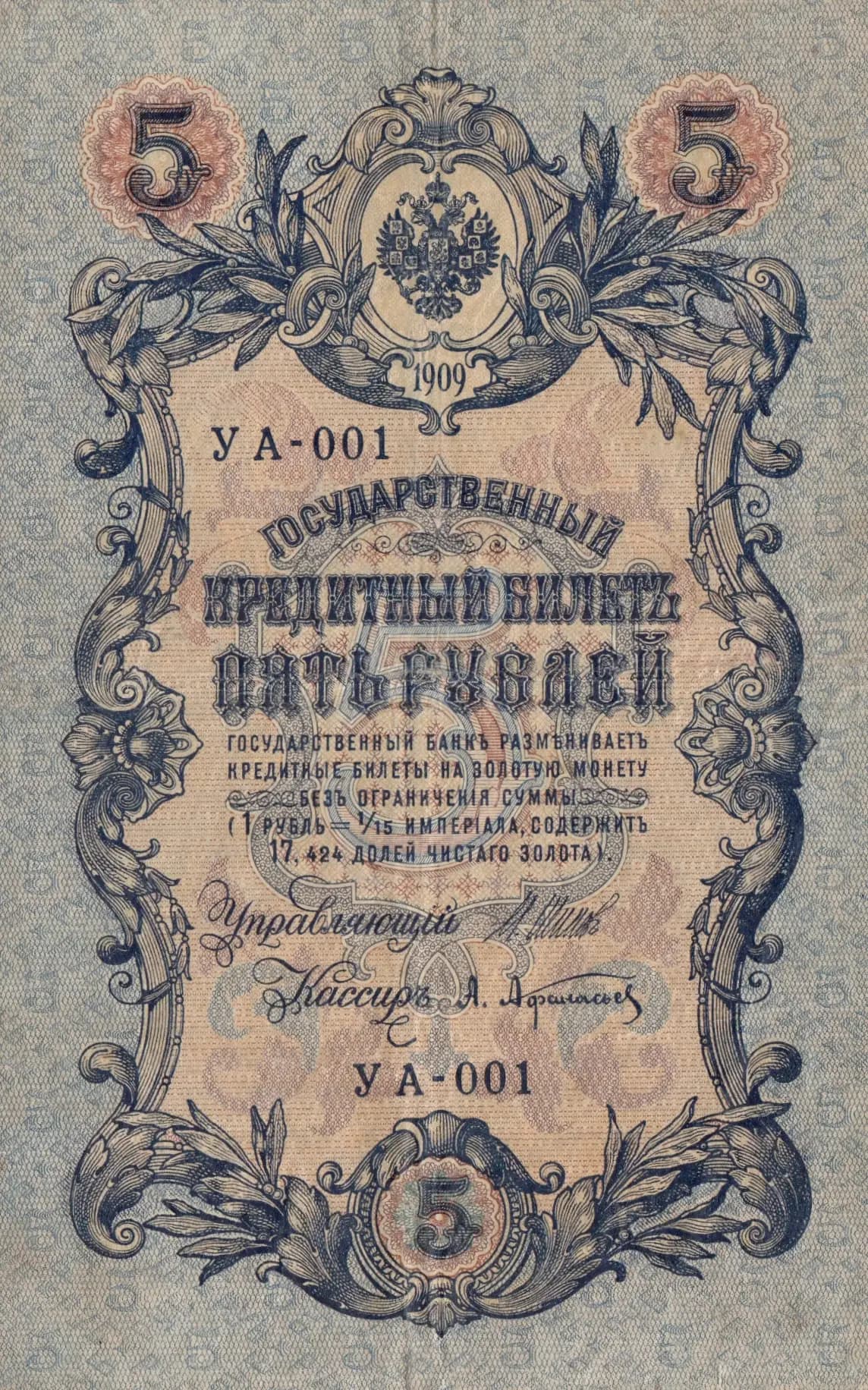
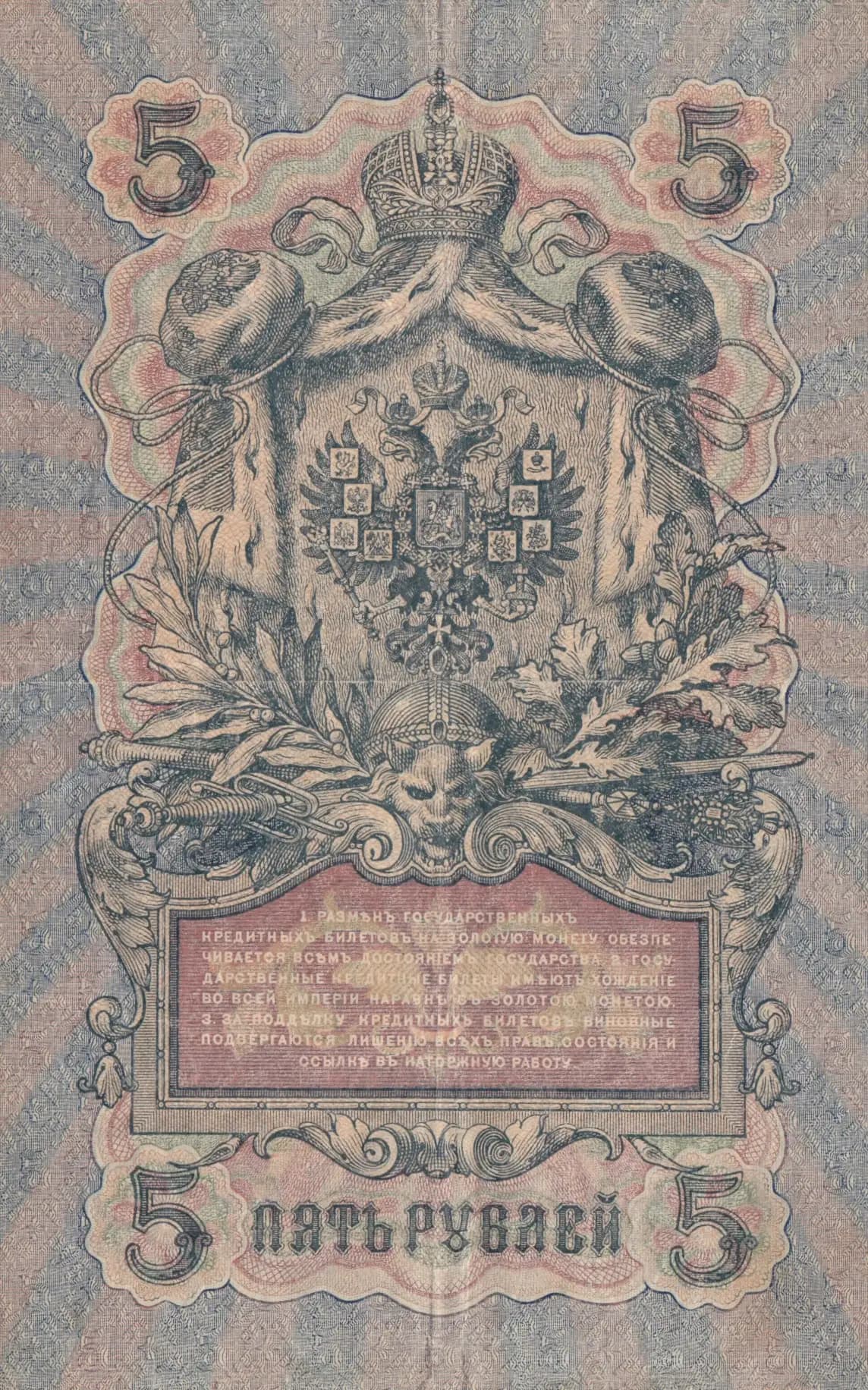
“Sig.Afanasev”
About This Note
This is a VF-grade 5 Ruble note issued by the Russian Provisional Government in 1917, representing a fascinating transitional piece between Imperial and Soviet currency eras. The note displays exceptional ornamental engraving with intricate baroque-style scrollwork in navy blue and pink/salmon, centered on the Imperial Russian double-headed eagle coat of arms. The well-preserved example shows moderate aging consistent with historical circulation, with the signature of Afanasev visible—a notable authenticating feature for this politically significant issue.
Common. This is a standard issue of the Russian Provisional Government's 5 Ruble note from 1917. While the 1917 Provisional Government period was historically significant and lasted only months, these notes were issued in substantial quantities before the Bolshevik takeover in October 1917. The note's circulation is evidenced by the moderate wear and aging patterns observed in this VF-grade example. 1917 Russian notes remain readily available to collectors in typical condition grades, with pricing reflecting their historical interest rather than scarcity. The Afanasev signature does not represent an unusual variety that would elevate rarity.
This 1917 emission marks a critical moment in Russian monetary history, issued by the short-lived Provisional Government that ruled between the abdication of Tsar Nicholas II and the Bolshevik seizure of power. The note retains full Imperial heraldry, including the crowned double-headed eagle with globes, reflecting the government's attempt to maintain continuity with Tsarist legitimacy despite revolutionary pressure. The text references the state's gold backing and patriotic obligations, encapsulating the monetary uncertainty and nationalist appeals of this turbulent transitional period.
This note exemplifies late Imperial Russian banknote design, featuring the Imperial Russian double-headed eagle coat of arms as the dominant central element on both sides. The eagle is depicted wearing an imperial crown, with globes held in its talons, symbolizing sovereignty and imperial reach. The design is framed by an elaborate baroque-style cartouche with ornate scrollwork, floral botanical elements, and leaf motifs rendered in navy blue and pink/salmon ink against a cream/beige background. The denomination numeral "5" appears in decorative rosette circles positioned symmetrically at top and bottom of the front side and at all four corners of the reverse. The note employs a dense, intricate engraved border design that serves both aesthetic and security functions. The Cyrillic inscriptions identify this as a "Государственный кредитный билет" (State Credit Note), emphasizing the monetary authority's gold backing obligation—a critical assertion during the chaotic 1917 period.
FRONT SIDE: Denomination "5" in rosette circles (top left and right). Year "1909" (original Imperial issue year). Serial number: "УА-001" (UA-001). Main text reads "ГОСУДАРСТВЕННЫЙ КРЕДИТНЫЙ БИЛЕТ" (State Credit Note). Additional inscriptions include gold redemption clause: "ГОСУДАРСТВЕННЫЙ БАНК РАЗМЕНИВАЕМЬ КРЕДИТНЫЕ БИЛЕТЫ НА ЗОЛОТУЮ МОНЕТУ БЕЗ ОГРАНИЧЕНИЯ СУММЫ (1 РУБЛЬ = 1/15 ИМПЕРИАЛА, СОДЕРЖИТЬ 7,424 ДОЛЕЙ ЧИСТОГО ЗОЛОТА)" (The State Bank exchanges credit notes for gold coin without limitation of sum; 1 ruble = 1/15 imperial, containing 7.424 grains of pure gold). Signatures read "Управляющий Банк" (Managing Bank) and "Кассир Д. Гремяслов" (Cashier D. Gremyaslov). REVERSE SIDE: Denomination "5" in corner rosettes. Main text: "РАЗМIНЬ ГОСУДАРСТВЕННЫХ КРЕДИТНЫХ БИЛЕТОВ НА ЗОЛОТУЮ МОНЕТУ ОБЕЗПЕЧЕНЪ ВСЕМИ ДОСТОЯНИЕМЪ ГОСУДАРСТВА. В СЛУЧАЕМЪ ГОСУДАРСТВЕННЫХЪ ЧРЕЗВЫЧАЙНЫХ СОБЫТIЙ ОБЕЗПЕЧЕНИЕ ЗОЛОТОМЪ МОНЕТОЮ ПОДЛЕЖИТЬ КРЕДИТНЫМИ БИЛЕТАМИ, ВЫДАННЫМИ ПОДЛЕЖАЩИХЪ ЛИЦЕНЗО ВСЕХЪ ПРАВОСТОЯЩИХЪ СЕМЬИ ВЪ ПАТРИОТНУЮ РАБОТУ" (The exchange of state credit notes for gold coin is secured by all the resources of the state; in case of extraordinary state events, the security in gold coin is subject to credit notes issued under all legal rights by the family in patriotic work). Denomination text: "ПЯТЬ РУБЛЕЙ" (Five Rubles).
This note was produced using traditional intaglio engraving, evidenced by the fine detail, consistent line work, and the complex three-color printing (navy blue, pink/salmon, and black) visible throughout the design. The intricate scrollwork, heraldic details of the double-headed eagle, and precise typography are characteristic of high-security engraved banknote production. The State Bank of Russia's security printing facilities, which had produced Imperial notes under the Tsarist regime, continued production for the Provisional Government using existing plates and established engraving techniques. The Pick catalog reference P-35(1-1) indicates a primary variety of the 1917 emission.
This example represents Pick catalog number P-35(1-1), the primary variety of the 5 Ruble Provisional Government issue. The note is identified by the signature of Afanasev (Afanasev), a key authenticating feature. The serial number prefix "УА" (UA) indicates a standard issue sequence. No overprints or emergency markings are evident. The note retains the original 1909 date marking from the Imperial-era plate, which was common practice—the Provisional Government often reused existing engraved plates rather than creating entirely new designs, a practical necessity during the transition period. Varieties of this issue are primarily distinguished by signature variations and serial number prefixes; this example's Afanasev signature is a noted variety marker for Pick P-35(1-1).