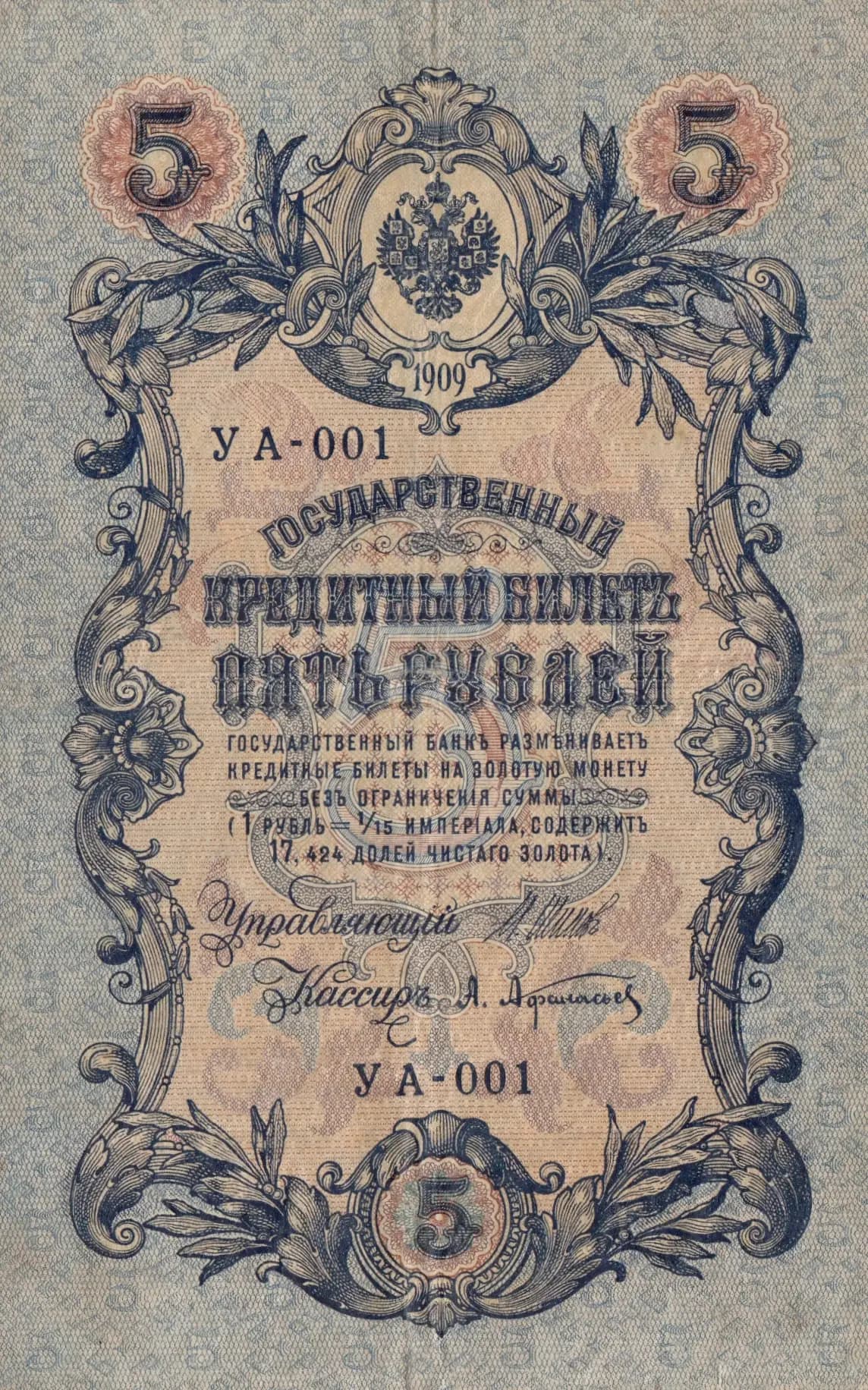
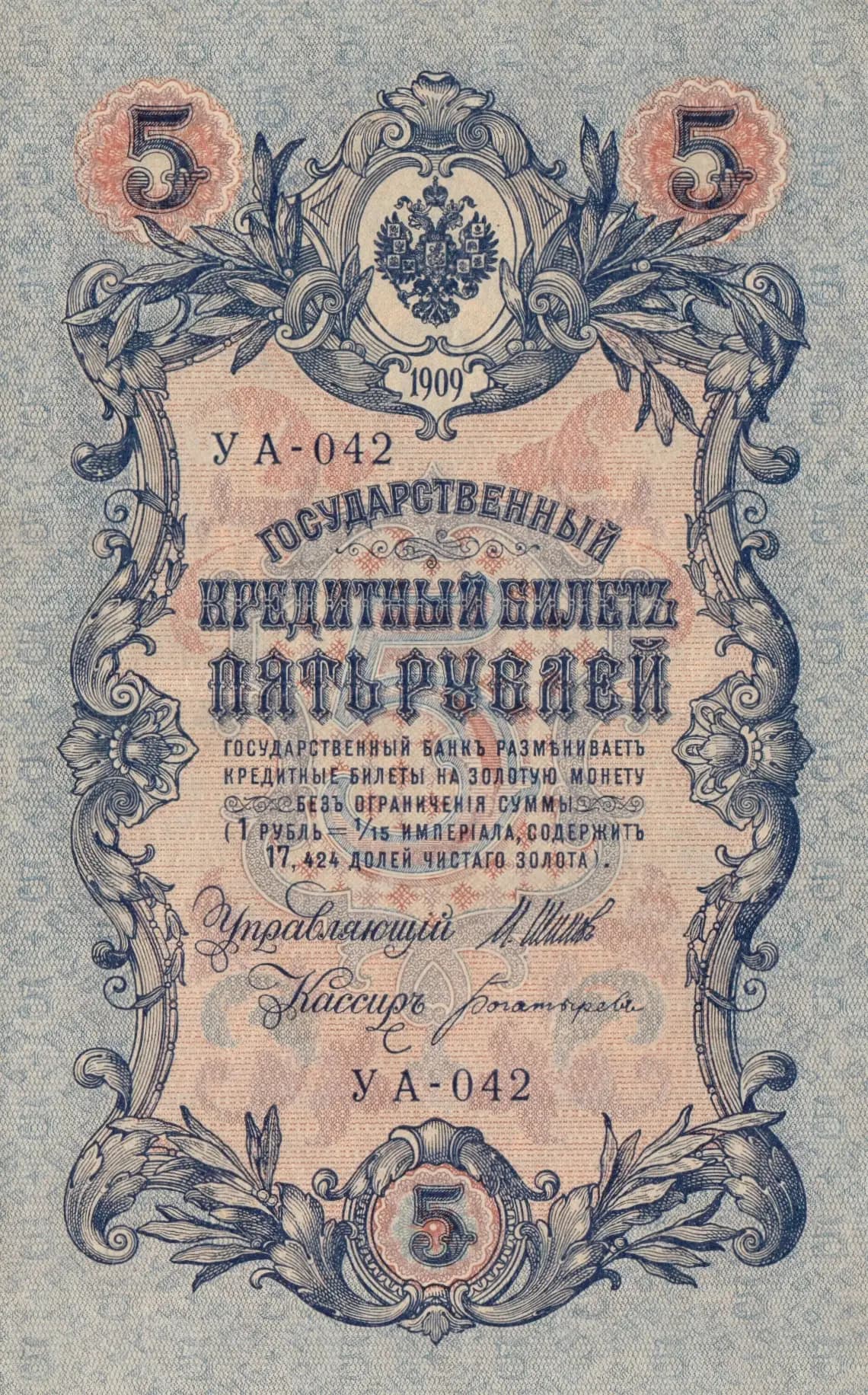
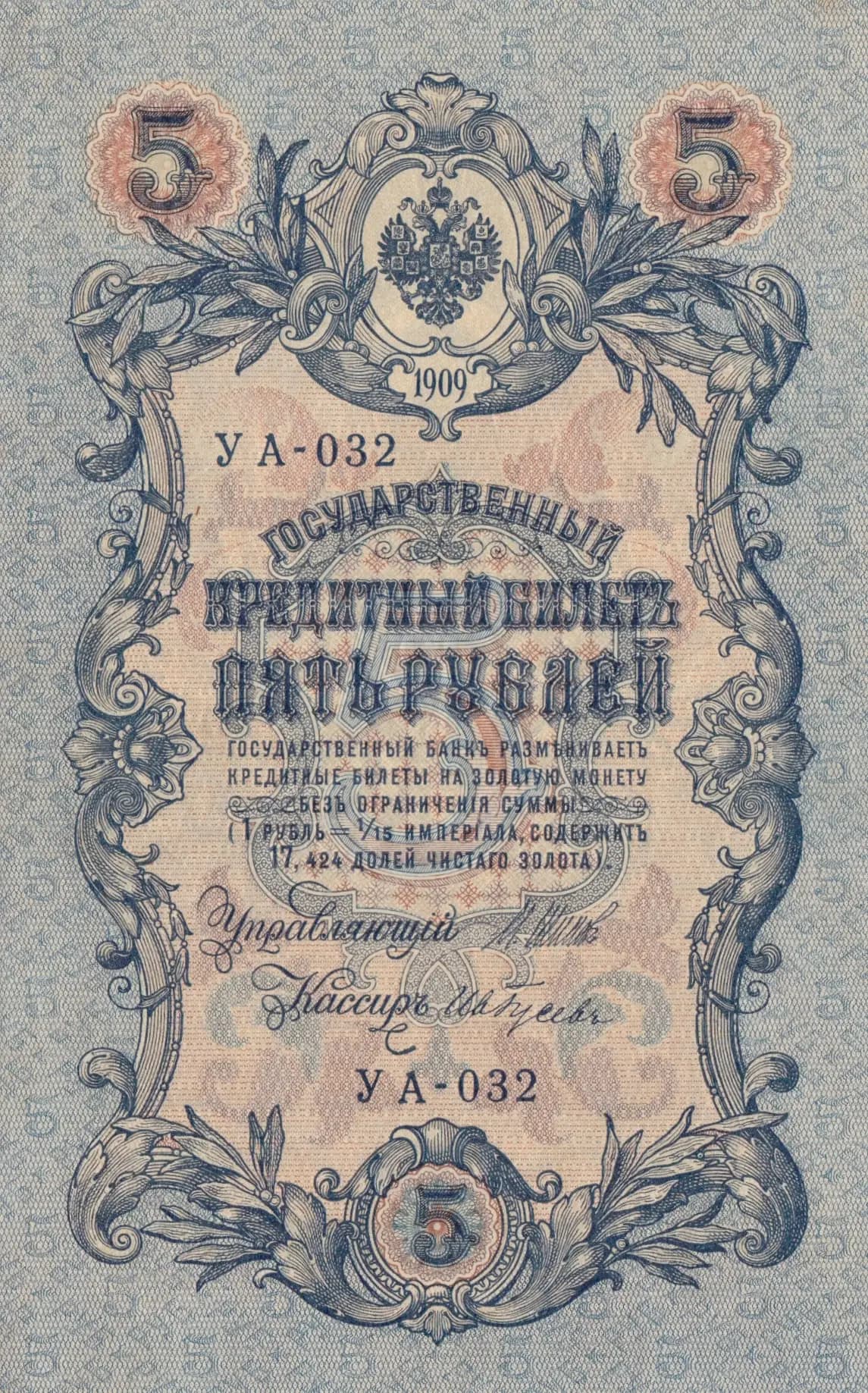
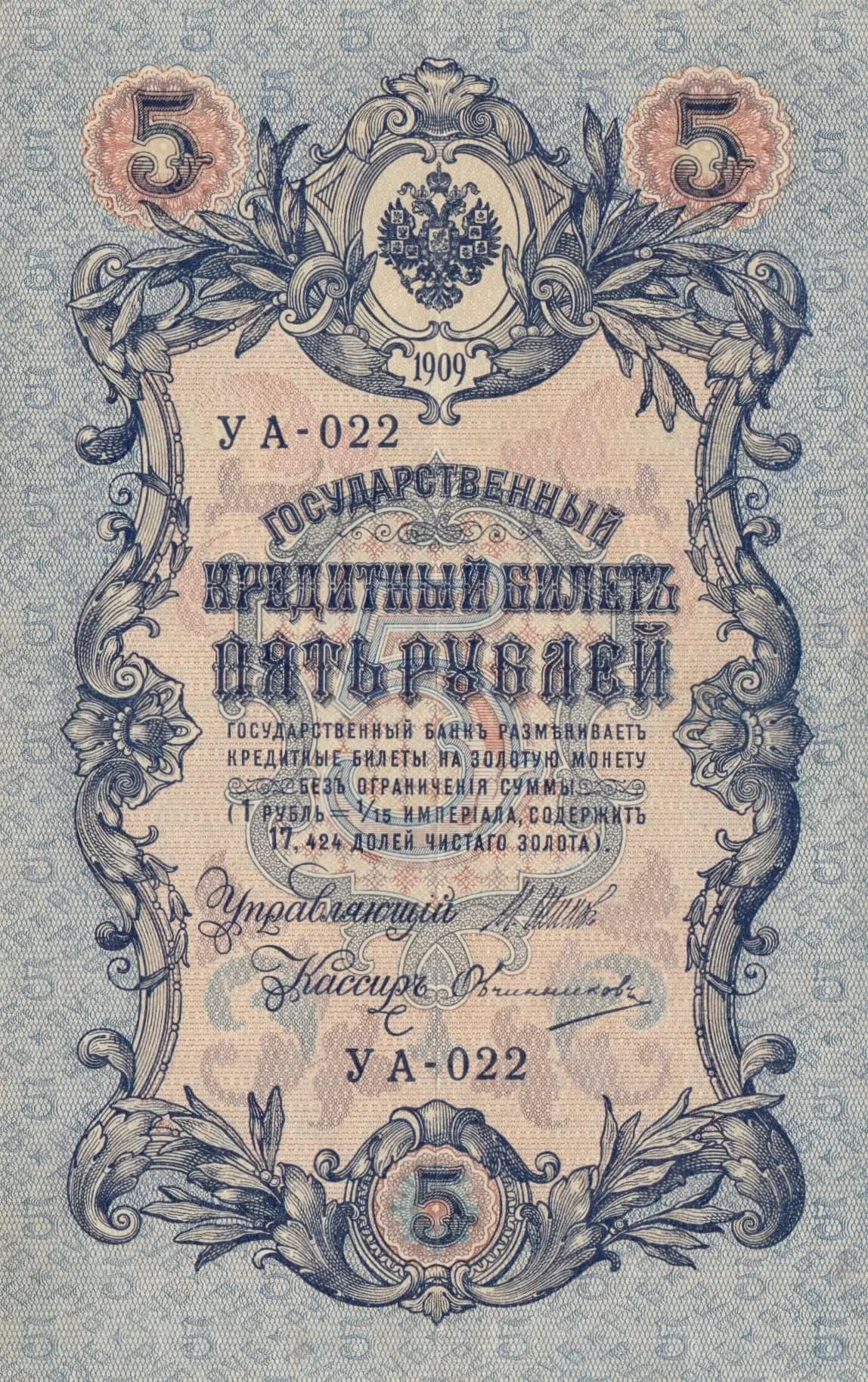
5 rublei 1917
“Sig.Ivanov”
About This Note
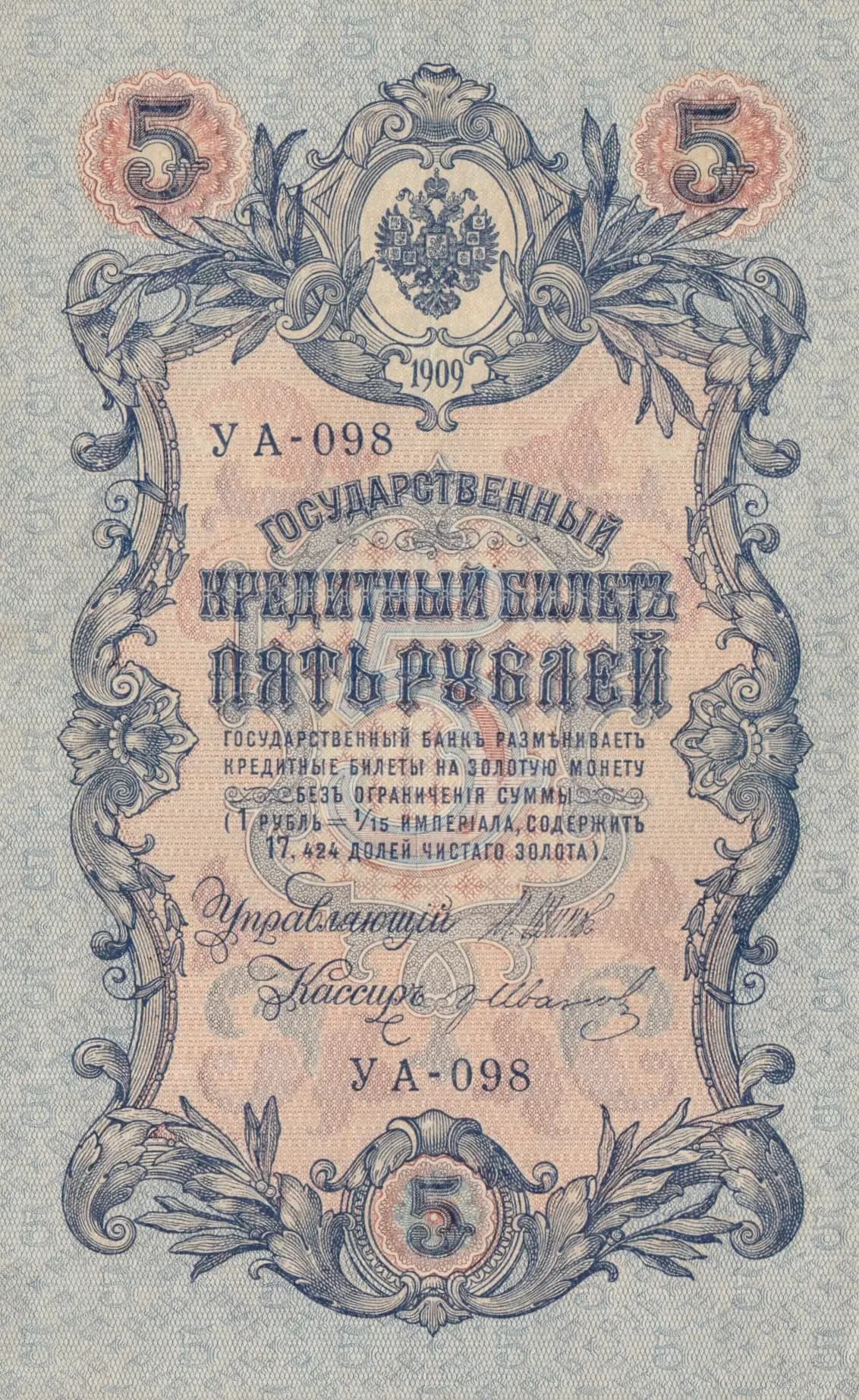
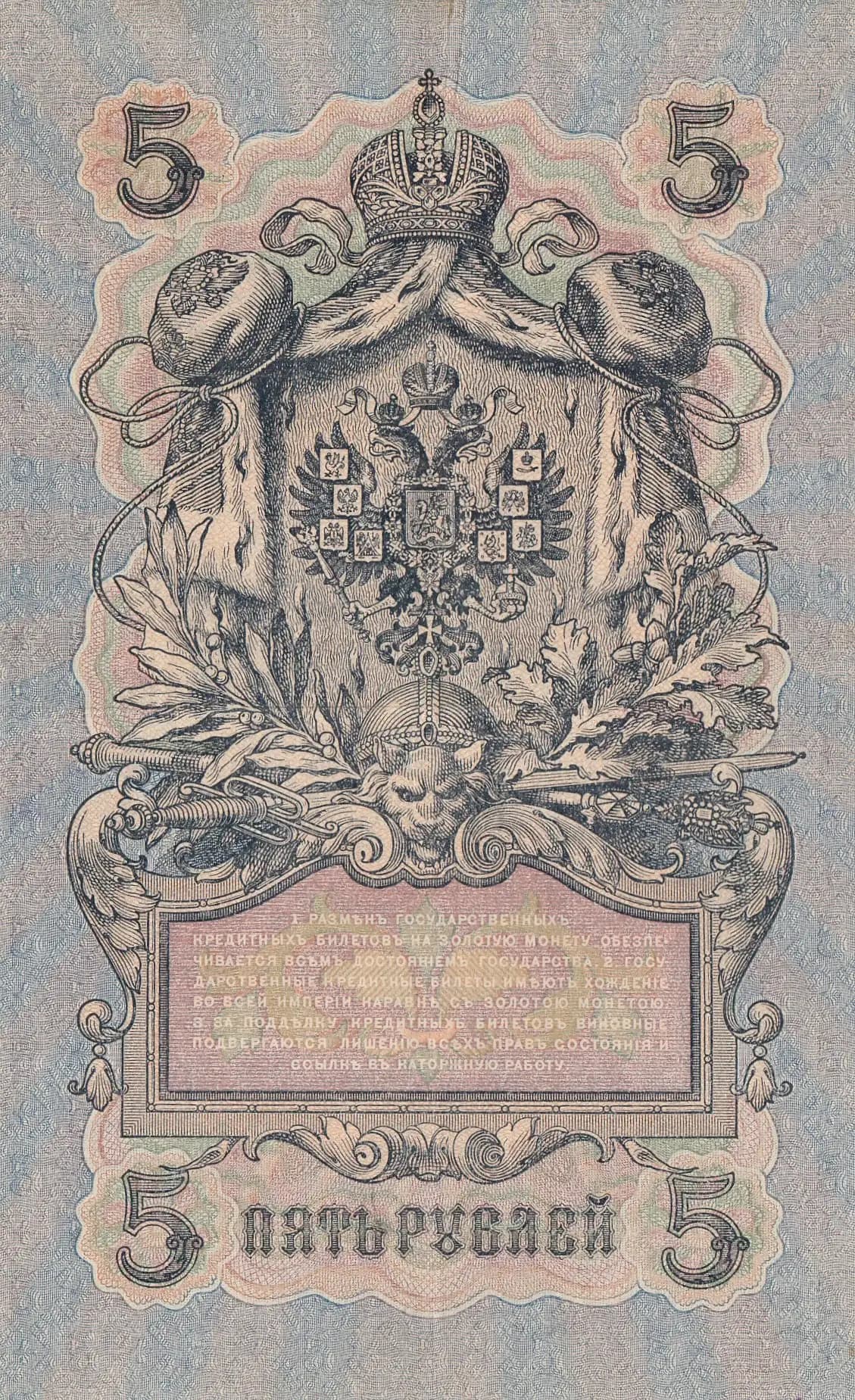
This is a VF-graded 5 Ruble note from the Russian SFSR (1917), Pick P-35(2-7), featuring the iconic Imperial Russian double-headed eagle coat of arms rendered in fine engraved detail across both sides. The note displays crisp, clean printing with excellent color preservation in pale blue-gray, pink, and navy tones, with no visible creasing or wear consistent with its VF condition grade. The ornate rococo-style borders and heraldic elements make this an attractive example of early Soviet-era currency that carries both historical and numismatic significance as a transitional piece from Imperial to Soviet monetary systems.
Common. The 5 Ruble 1917 (Pick P-35) was issued during a period of high inflation and massive currency circulation as the Russian state attempted to maintain financial order during the Revolution. While the SFSR government's tenure over monetary policy was brief (1917-1922), these notes were printed in substantial quantities and survive in considerable numbers today. The VF condition grade is relatively frequently encountered for this denomination and period. Collector interest exists primarily for historical rather than scarcity reasons. No evidence suggests restricted print runs, recalls, or survival rarity that would elevate this to scarce or rare status.
Issued during the tumultuous 1917 period in Russia, this note represents a critical transitional moment when the newly-formed Russian Socialist Federative Soviet Republic maintained continuity with Imperial-era credit instruments. The persistence of the Imperial double-headed eagle and gold-standard exchange language on the obverse and reverse reflects the SFSR's initial attempt to maintain financial credibility during the Revolution, before the eventual shift to purely Soviet symbolism and the abandonment of gold backing. The inscriptions promising unlimited gold-coin exchange represent the last gasp of Russia's historic gold standard system, which would be completely dismantled within years as the Soviet regime consolidated power.
Both sides of this note feature the Imperial Russian coat of arms as the dominant central element—a crowned double-headed eagle holding orbs and scepters, rendered within an elaborate oval cartouche on the obverse and at the apex of a complex heraldic achievement on the reverse. The reverse displays an expanded heraldic composition with a shield containing multiple crowned eagles and regional emblems representing the constituent territories of the Russian Empire. The entire design is framed by ornate rococo-style scrollwork, floral botanical elements, and on the reverse, laurel wreaths and palm fronds symbolizing state authority and imperial grandeur. Denomination numerals '5' appear in circular corner elements on both sides. The overall aesthetic reflects the refined engraving traditions of Imperial Russian currency, with meticulous fine-line work and botanical ornamentation characteristic of high-security banknote production of the Imperial era.
FRONT SIDE: 'ГОСУДАРСТВЕННЫЙ КРЕДИТНЫЙ БИЛЕТ ПЯТЬРУБЛЕЙ' (State Credit Bill Five Rubles) | 'ГОСУДАРСТВЕННЫЙ БАНК РАЗМЕНИВАЕТ КРЕДИТНЫЕ БИЛЕТЫ НА ЗОЛОТУЮ МОНЕТУ БЕЗ ОГРАНИЧЕНИЯ СУММЫ' (The State Bank Exchanges Credit Bills for Gold Coins Without Limit of Sum) | '1 РУБЛЬ = 1/15 ИМПЕРИАЛА, СОДЕРЖИТ (17,424 ДОЛЕЙ ЧИСТОГО ЗОЛОТА)' (1 Ruble = 1/15 Imperial, Contains 17.424 Parts of Pure Gold) | 'Управляющий' (Director) and 'Кассир' (Cashier) | Serial number: УА-098 | Date: 1909 | Denomination: 5 | REVERSE SIDE: 'ПЯТЬРУБЛЕЙ' (Five Rubles) | 'РАЗМЕН ГОСУДАРСТВЕННЫХ КРЕДИТНЫХ БИЛЕТОВ НА ЗОЛОТУЮ МОНЕТУ ОБЕСПЕЧИВАЕТСЯ ВСЕМИ ГОСУДАРСТВА В ГОДУ' (The Exchange of State Credit Bills for Gold Coins is Ensured by All of the State in the Year) | Legal penalty text regarding counterfeiting: counterfeiting government credit bills subjects violators to deprivation of all state rights and hard labor.
Intaglio engraving (copperplate/steel-plate engraving), the standard security printing method for Imperial and early Soviet Russian banknotes. The fine detail, precise line work, ornate scrollwork, and consistent ink impression visible across both sides confirm professional banknote-grade engraved production. This note was likely produced at the State Printing Works (Государственная типография) in St. Petersburg, the primary Russian banknote printer during this period. The 1909 date marking on the obverse indicates this design block was originally created during the late Imperial period and continued in use under the early SFSR regime.
The visible serial number УА-098 and 1909 date marking on this example represent the standard varieties for Pick P-35(2-7). The prefix 'УА' indicates a specific production batch from the Imperial printing works. The 1909 date reflected on the obverse is the design date from the Imperial period, not the 1917 issue date—a common feature of notes continued from Imperial stock. No overprints, currency marks, or signature variations appear evident in the visual analysis that would indicate a distinct sub-variety within the P-35 catalog listing.