5 rublei 1917
“Sig.Gusev”
About This Note
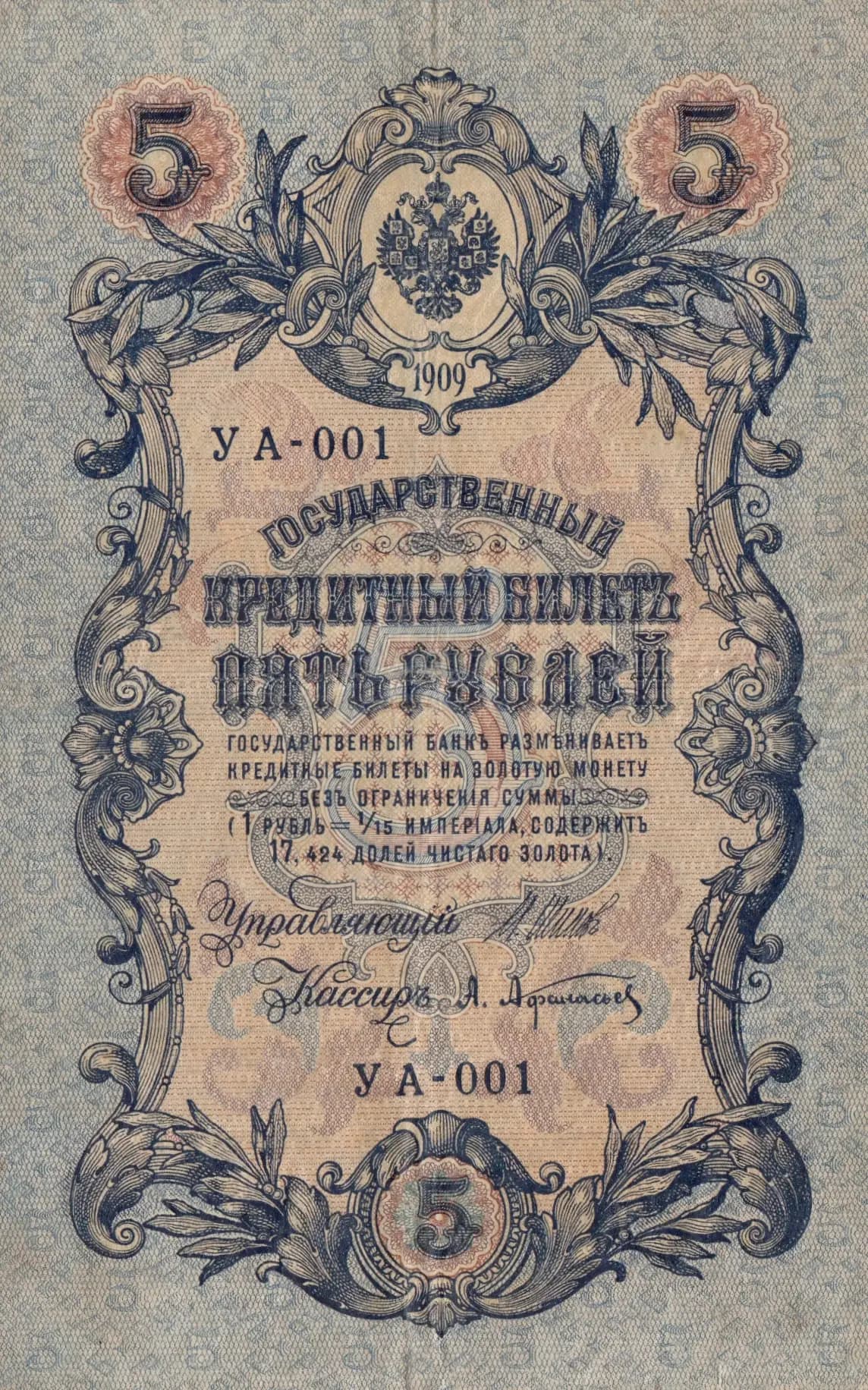
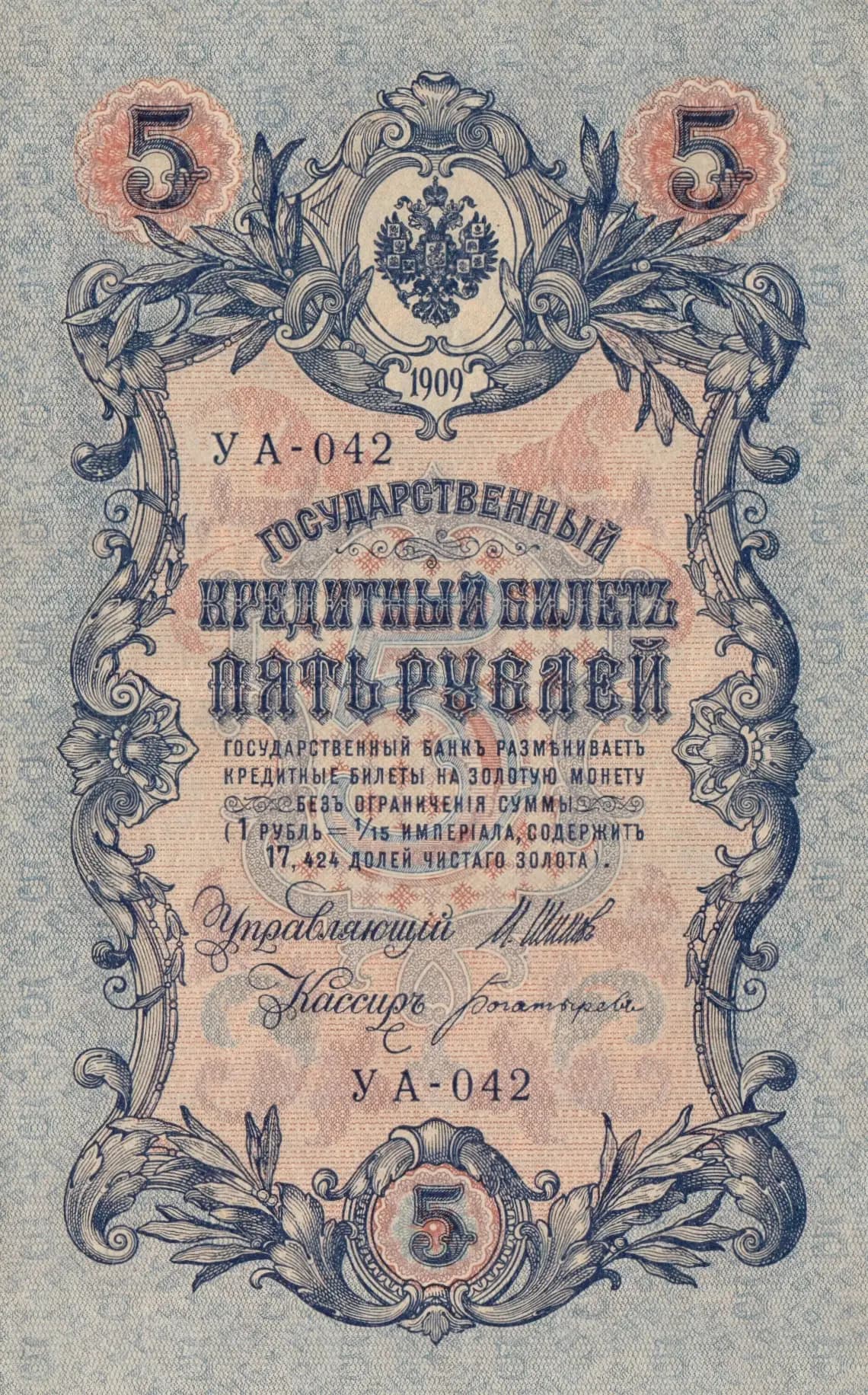
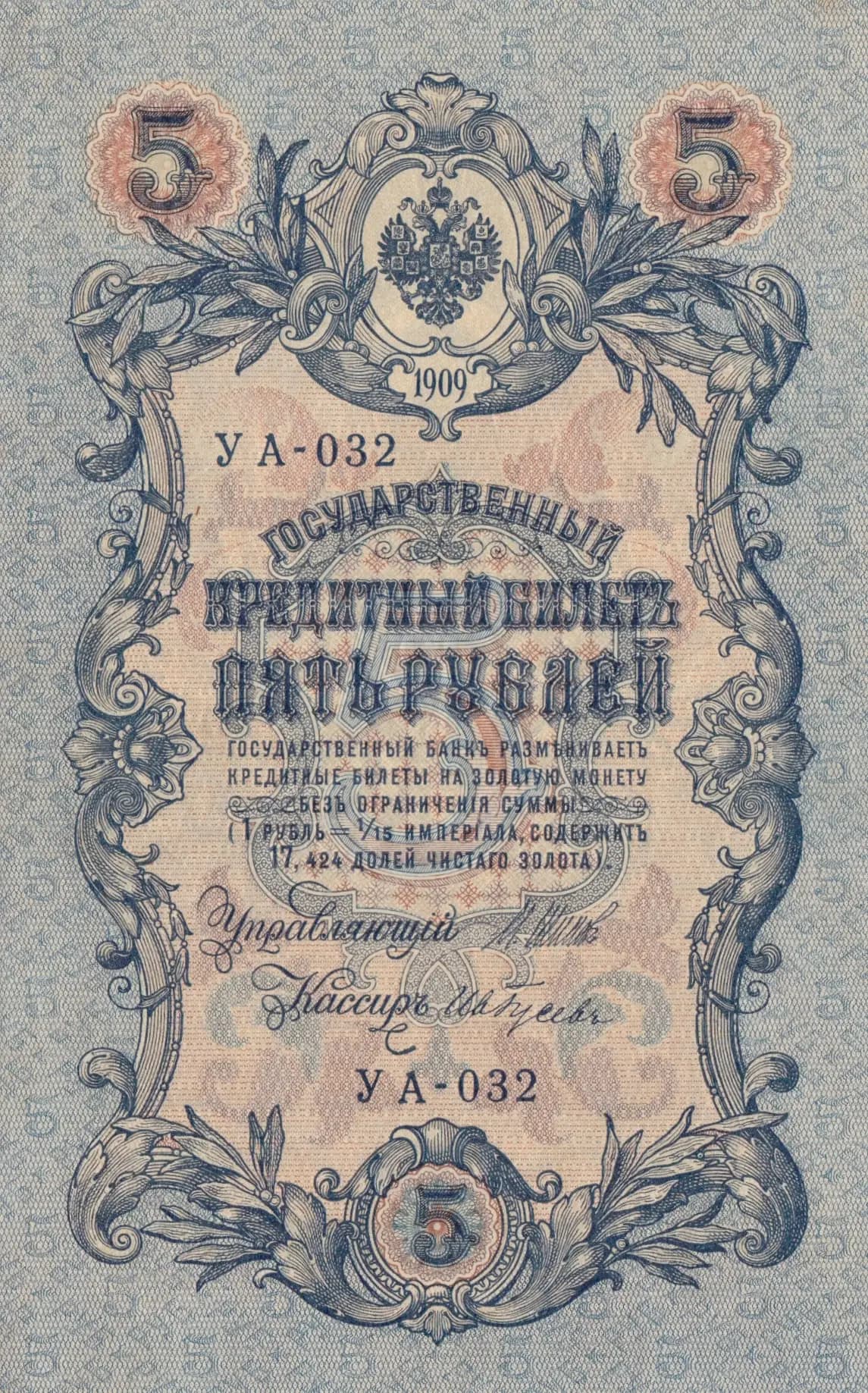
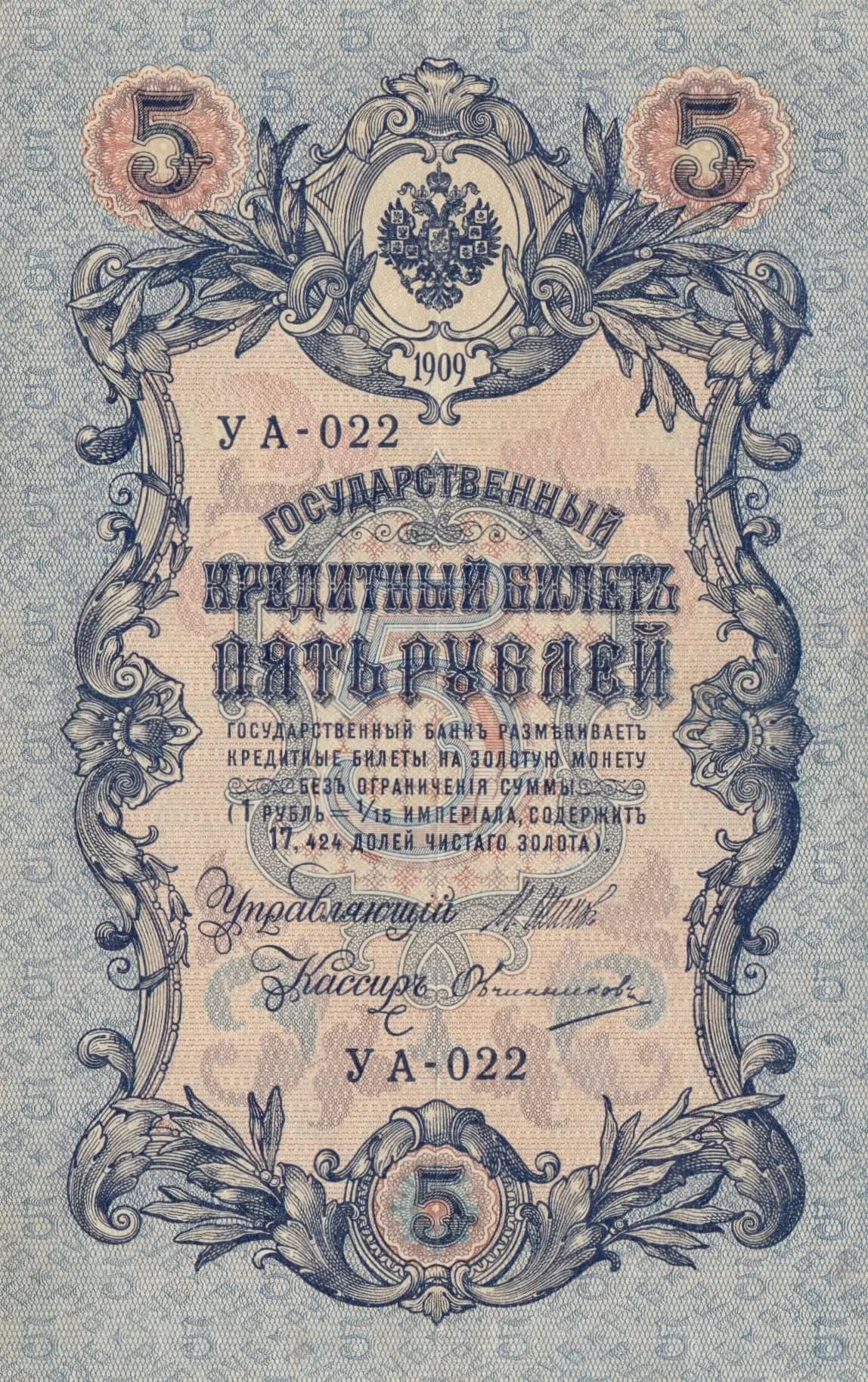
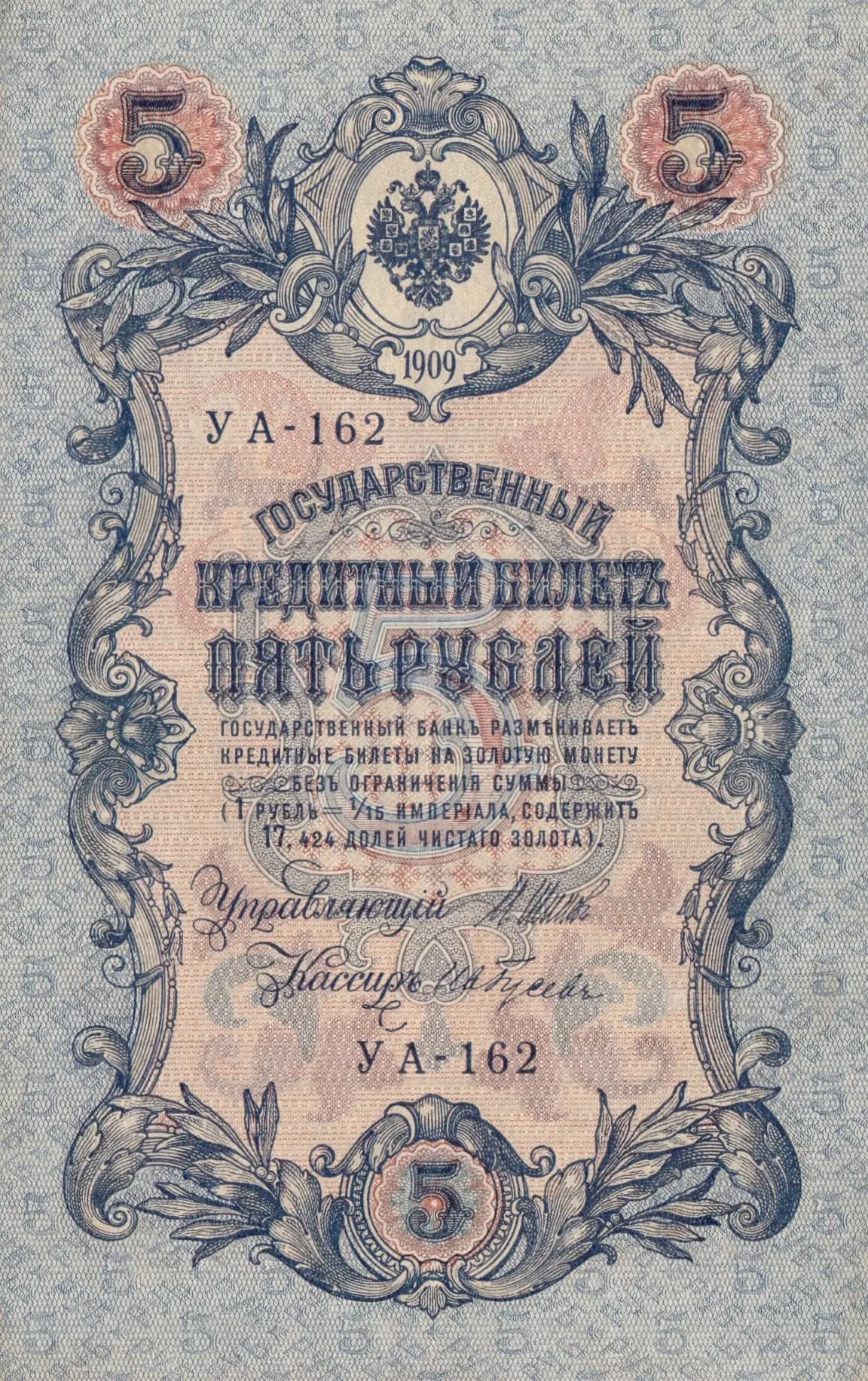
This is a VF-grade Russian 5 Rublei note from 1917, issued by the R.S.F.S.R. during the revolutionary transition period. The note displays exceptional engraving quality with an ornate decorative border in blue and pink tones, featuring the Imperial Russian double-headed eagle and elaborate coat of arms. The serial number УА-162 and handwritten signatures of the Managing Director and Cashier are clearly visible, with the note showing minimal wear consistent with its VF grade and age.
Common. The 5 Rublei denomination from the 1917 R.S.F.S.R. issue is a widely available note in the collector market. Large quantities of this design were printed during the 1909-1918 period, and many examples survive in various grades. VF specimens are particularly common, as this was a heavily circulated denomination that sees regular availability on the numismatic market at modest prices. There are no known special varieties or limited printings that would elevate the rarity status.
This note represents a transitional period in Russian monetary history, issued in 1917 when the Russian Empire was collapsing and the R.S.F.S.R. (Russian Soviet Federative Socialist Republic) was establishing itself. The design retains Imperial Russian heraldic elements—the crowned double-headed eagle and multi-quartered coat of arms—despite the revolutionary government that issued it, reflecting the complex political situation where Soviet authorities initially continued using Tsarist-era currency designs. The text references gold backing and the State Bank's authority, language carried over from earlier Imperial Credit Ticket designs, though such backing became increasingly theoretical during this chaotic period.
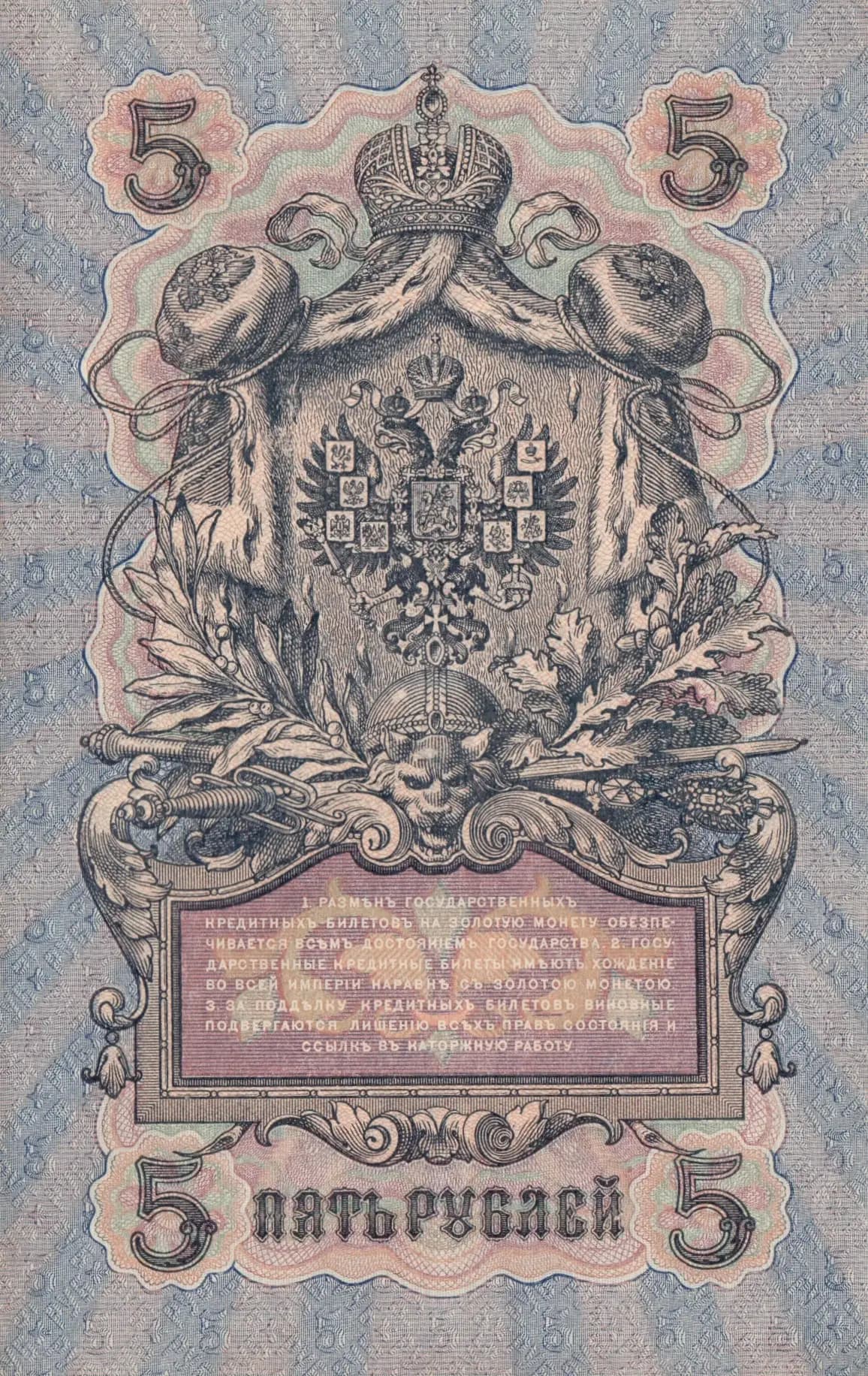
This banknote exemplifies the State Credit Ticket series that served as Russia's principal circulating currency. The obverse (front) features a centered Imperial Russian coat of arms—the crowned double-headed eagle within an elaborate cartouche flanked by ornamental scrollwork in blue and salmon pink. Large denomination circles bearing the numeral '5' are positioned in the upper corners. The reverse (back) presents an even more elaborate heraldic composition: a crowned double-headed eagle with fully spread wings serves as the central focal point, with a complex multi-quartered Imperial coat of arms beneath it (showing the various territories and titles of the Russian Empire), flanked by draped fabric or flag elements. Both sides employ an intricate engraved border with floral and scrollwork elements. The entire design utilizes a light blue-gray background with repeated fine-line patterns visible throughout. The color palette—dominated by light blue-gray with accents of pink/salmon and dark navy—creates visual interest while the fine engraving provides security and aesthetic sophistication. Handwritten signatures appear in designated blocks on the front, typical of currency of this era.
FRONT SIDE: Main heading: 'ГОСУДАРСТВЕННЫЙ КРЕДИТНЫЙ БИЛЕТ ПЯТЬ РУБЛЕЙ' (State Credit Ticket Five Rubles). Denomination: '5' (Arabic numeral, appears in upper left and right circular medallions). Serial number: 'УА-162' (appears at top and bottom). Year reference: '1909' (the design date, referring to the original Imperial series). Backing text: 'ГОСУДАРСТВЕННЫЙ БАНК РАЗМЕЩАЕТСЯ КРЕДИТНЫЕ БИЛЕТЫ НА ЗОЛОТО, МОНЕТУ ПО ПРАВУ ОГРАНИЧЕНИЯ СУММЫ (1 РУБЛЬ = 1/4 ИМПЕРИАЛА, СОДЕРЖИТ 17,424 ДОЛЕЙ ЧИСТОГО ЗОЛОТА)' (The State Bank issues credit tickets backed by gold coin within the limit of the sum; 1 ruble = 1/4 imperial, contains 17.424 parts of pure gold). Signature blocks: 'Управляющий' (Managing Director) and 'Кассир' (Cashier). BACK SIDE: Main text: '5 ПЯТЬ РУБЛЕЙ' (5 Five Rubles). Extended backing clause: 'РАЗМЕН ГОСУДАРСТВЕННЫХ КРЕДИТНЫХ БИЛЕТОВ НА ЗОЛОТО-МОНЕТУ ОБЕСПЕЧИВАЕТСЯ ВСЕМИ ГОСУДАРСТВАХ...' (Exchange of state credit tickets for gold coin is guaranteed by all states included in the scope; these credit tickets are granted circulation throughout the empire on equal terms with gold coin, have the same rights as gold coins, and are subject to [specific legal provisions]).
This note was produced using intaglio engraving (line engraving/copperplate printing), the standard security printing method for Russian Imperial and Soviet-era currency. The exceptionally fine detail visible in the ornamental borders, the repeated background pattern, the heraldic elements, and the overall clarity of impression are hallmarks of professional intaglio engraving. The depth and precision of the engraving lines, particularly visible in the decorative scrollwork and the multi-element coat of arms on the reverse, are consistent with work by Russia's State Security Printing Office (Государственный Экспедиция Заготовления Государственных Бумаг). This note likely uses the design plates originally created for the 1909 Imperial State Credit Ticket series, which were continued under Soviet authority.
This note carries the serial number УА-162 (UA-162), indicating it belongs to the УА (UA) series prefix. The signature variety shows 'Управляющий' (Managing Director) and 'Кассир' (Cashier) in handwritten form, which was standard for the 1917 issue period. The note references the 1909 design date, showing it was printed from the original Imperial series plates. No overprints, stamps, or other modifications are visible, indicating a standard issue note from the early 1917 emission period before more dramatic Soviet-era design changes occurred.