5 rublei 1917
“Sig.Bylinsky”
About This Note
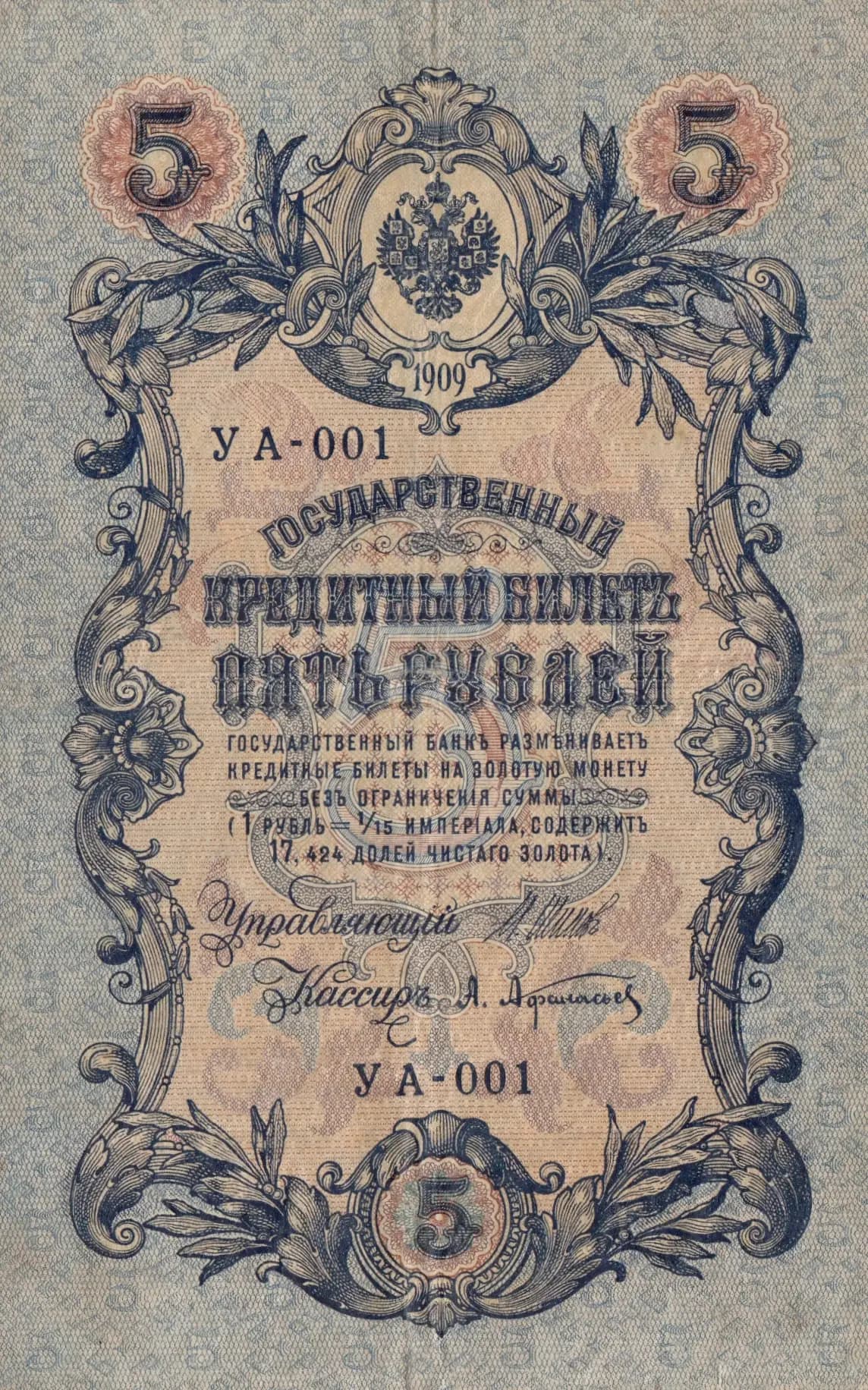
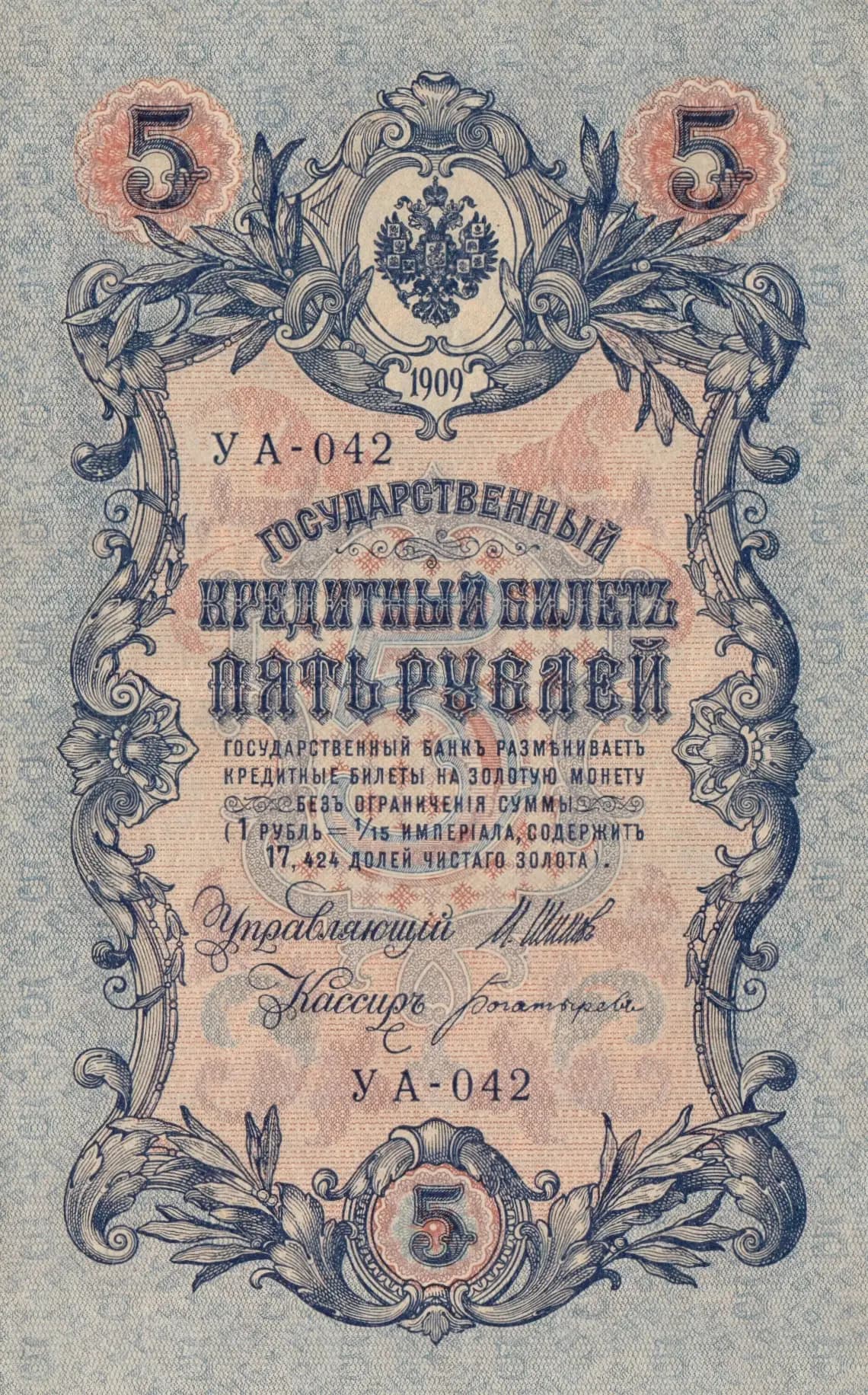
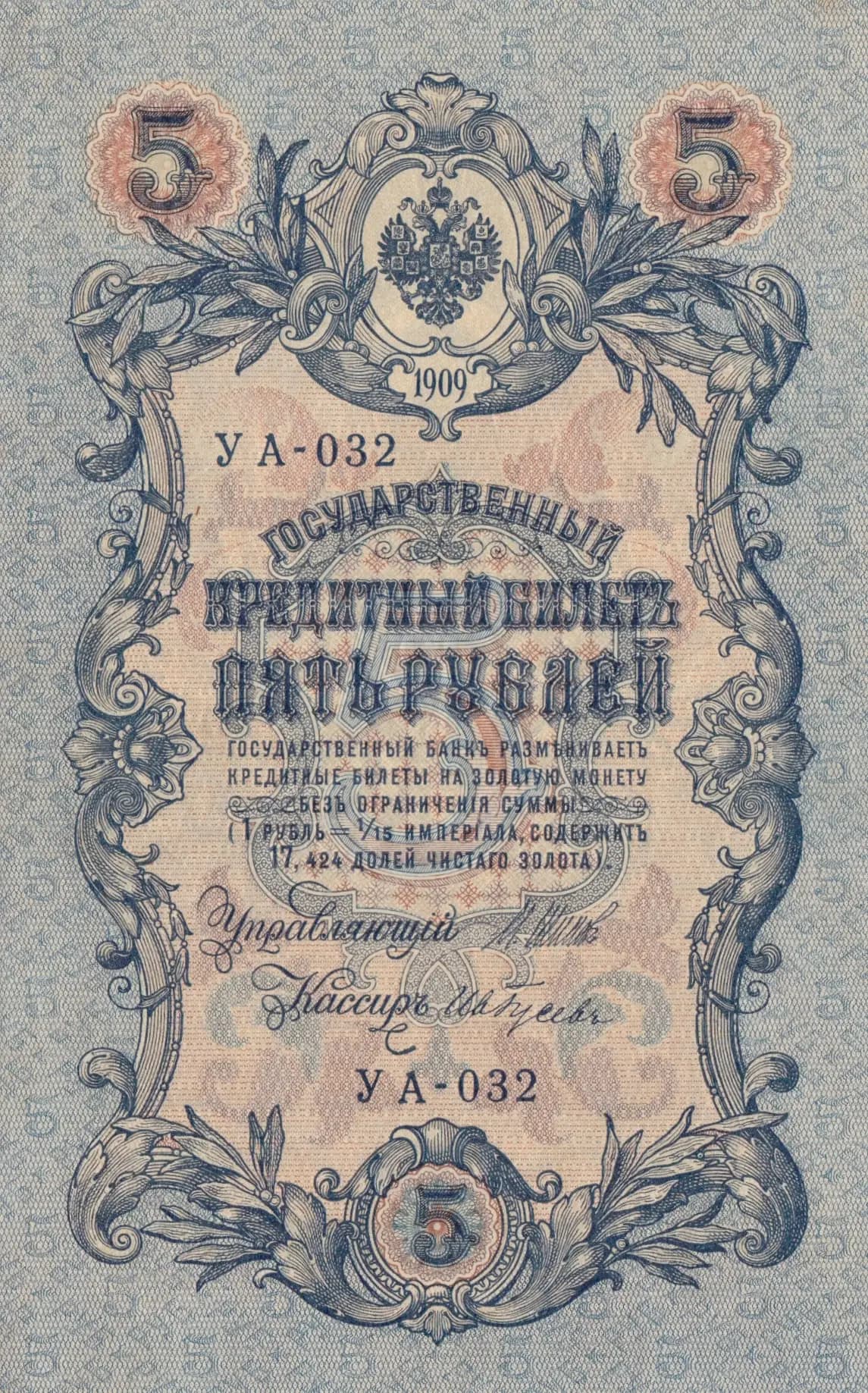
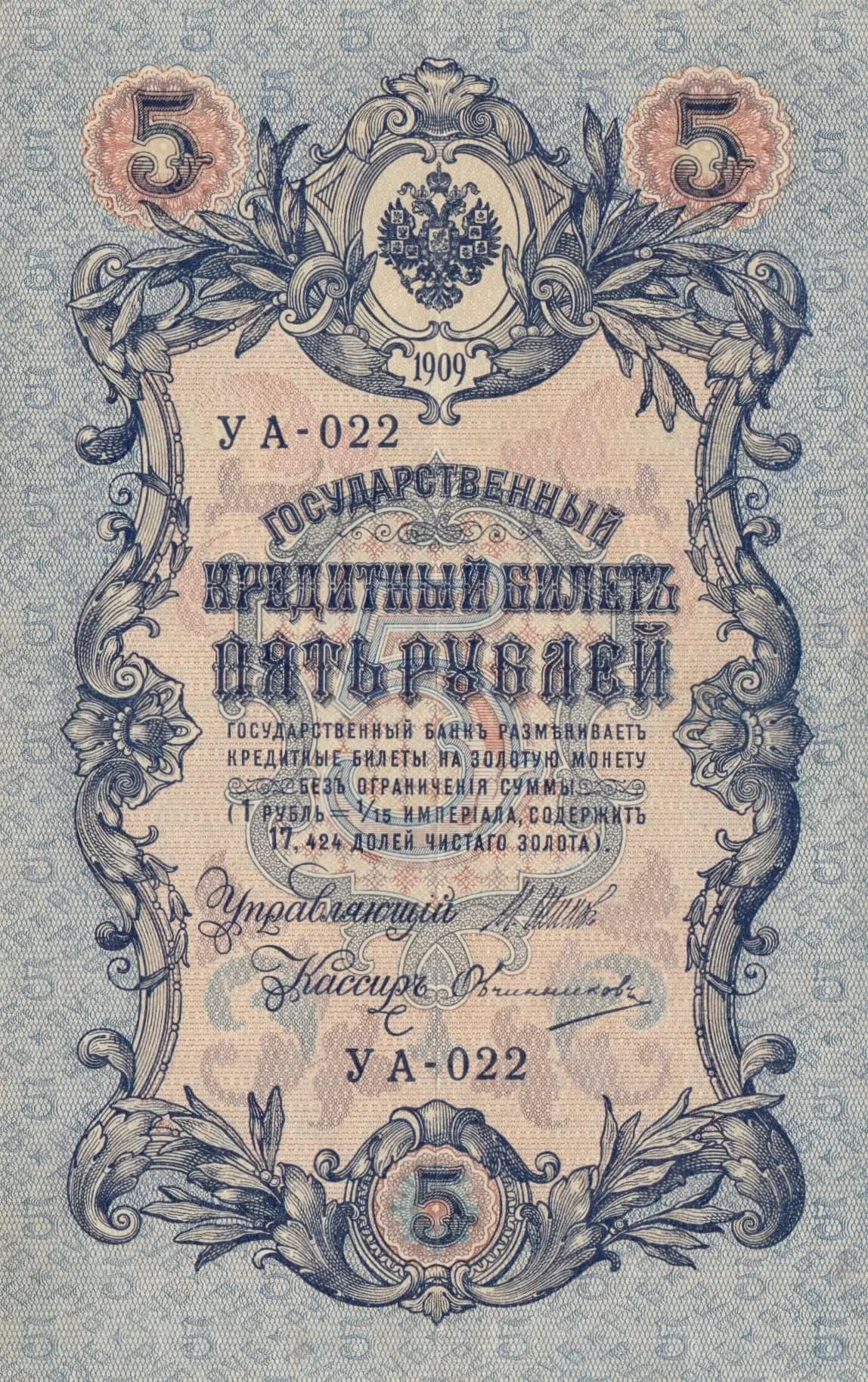
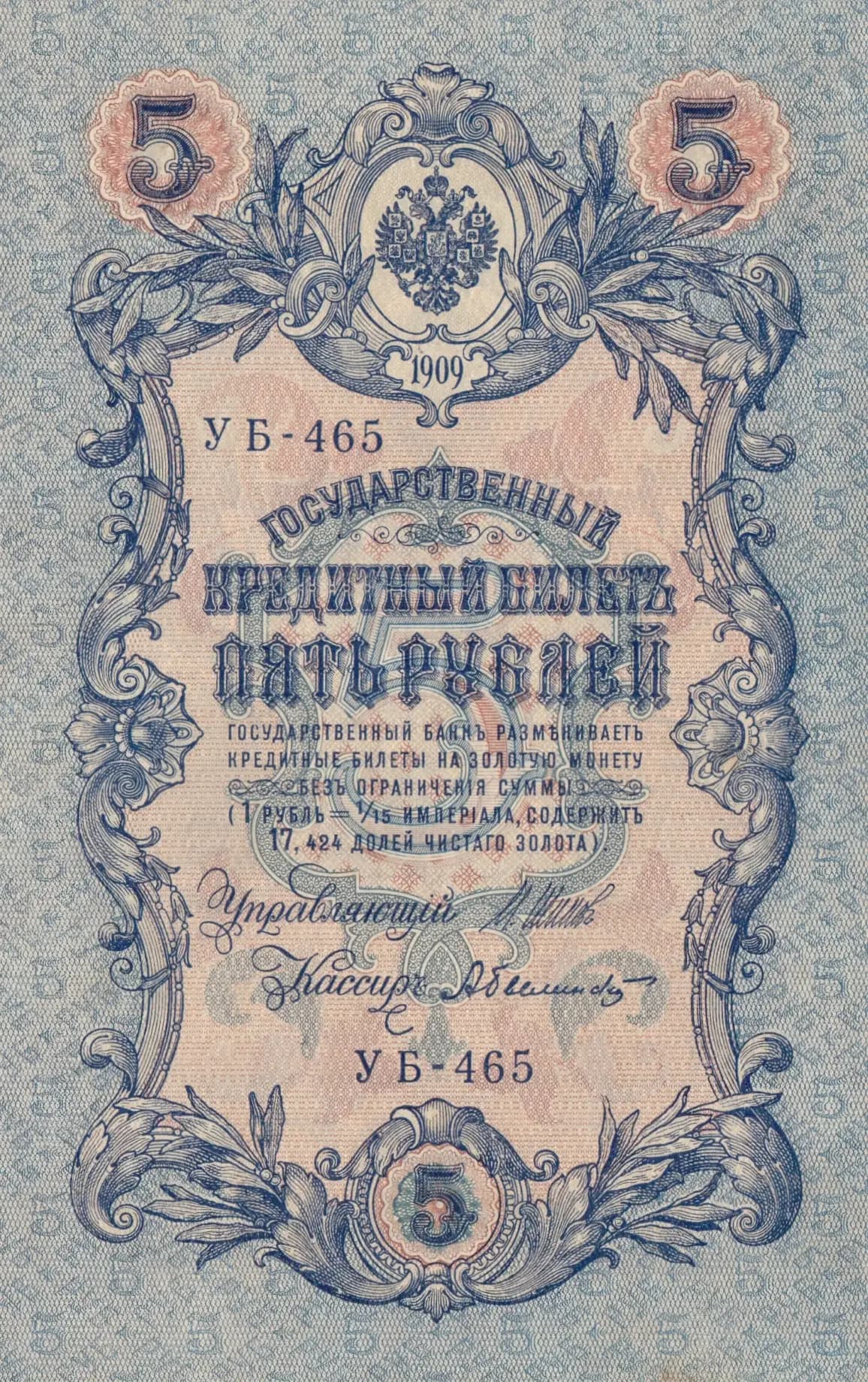
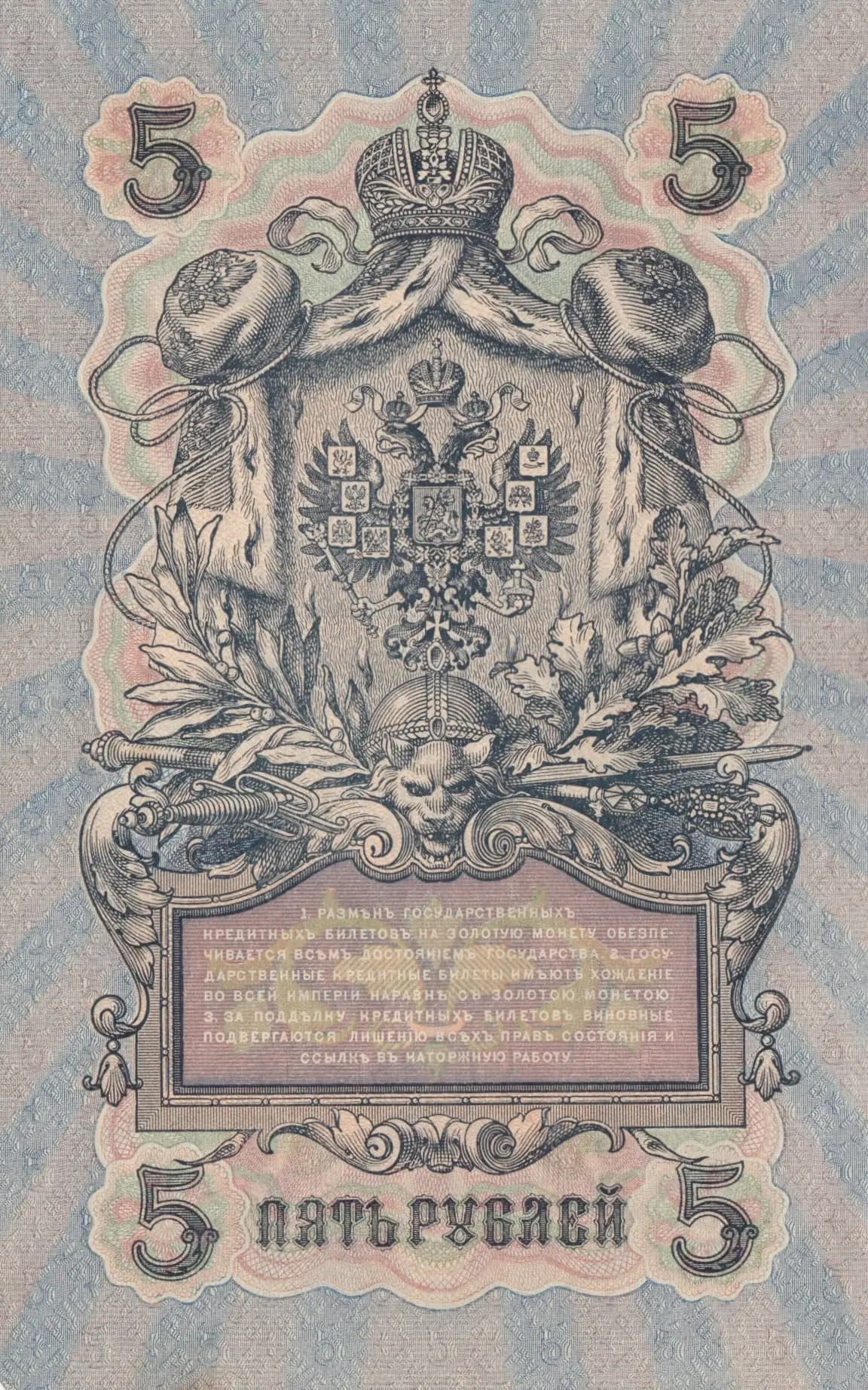
This is an exceptionally well-preserved example of the 1917 Russian Imperial 5 Rublei (Pick P-35(2-5)), graded EF, featuring the iconic double-headed eagle coat of arms prominently displayed on both sides within elaborate baroque-style ornamental frames. The note exhibits crisp, clear printing throughout with minimal wear and excellent color retention in its blue-gray and pink palette, making it a desirable specimen for collectors of Russian Imperial currency and early Soviet-era transition notes.
Common. The 1917 5 Rublei (Pick P-35(2-5)) represents a standard denomination issued during a tumultuous but high-volume period of Russian currency production. Despite the political upheaval of 1917, these notes were produced in significant quantities as the R.S.F.S.R. needed to maintain functional currency supplies during the transition period. Examples survive in relatively good numbers on the collector market. While condition grades of EF are desirable and represent better-preserved specimens, the underlying note type itself is not scarce.
This 5 Rublei note was issued by the R.S.F.S.R. (Russian Soviet Federative Socialist Republic) in 1917, during the tumultuous period following the October Revolution. The note retains Imperial Russian imagery—the double-headed eagle crowned coat of arms with regional emblems arranged in shield formation on the reverse—reflecting the transitional nature of currency during Russia's shift from Tsarist to Soviet control. The inscriptions emphasizing gold-backed redemption represent the final days of the gold standard system in Imperial Russia, making these notes historically significant documents of monetary collapse and regime change.
The obverse features a centered Imperial Russian coat of arms—the double-headed eagle wearing an imperial crown—within an elaborate ornamental frame of baroque scrollwork and floral designs. The denomination '5' appears in two circular medallions with pink/salmon coloring in the top left and bottom right corners. The reverse displays a more elaborate heraldic composition with the central double-headed eagle crowned and flanked by two large heraldic eagles holding ornamental items, topped with intricate laurel garlands. Below the main coat of arms is an elaborate shield containing a grid arrangement of smaller regional coats of arms representing the territories of the Russian Empire. The denomination '5' appears in four corner medallions on the reverse. Both sides utilize a sophisticated palette of blue-gray backgrounds with cream/beige and pink accents, employing multiple layers of fine-line engraving throughout. The overall design emphasizes the power and legitimacy of the Russian state through heraldic symbolism, with the regional emblems on the reverse serving to underscore the Empire's vast territorial expanse.
FRONT SIDE: 'ГОСУДАРСТВЕННЫЙ КРЕДИТНЫЙ БИЛЕТ ПЯТЬ РУБЛЕЙ' (State Credit Bill Five Rubles); 'ГОСУДАРСТВЕННЫЙ БАНК РАЗМЕНИВАЕТ КРЕДИТНЫЕ БИЛЕТЫ НА ЗОЛОТУЮ МОНЕТУ БЕЗ ОГРАНИЧЕНИЯ СУММЫ (1 РУБЛЬ = 7⅘ ИМПЕРИАЛА, СОДЕРЖИТ 17.424 ДОЛЕЙ ЧИСТОГО ЗОЛОТА)' (The State Bank exchanges credit bills for gold coins without limit of sum. 1 ruble = 7⅘ Imperial, contains 17.424 parts pure gold); 'Отрабатывающий Министр' (Acting Minister); 'Кассир' (Cashier); Serial designation 'УБ-465' and year '1909'. BACK SIDE: 'ПЯТЬ РУБЛЕЙ' (Five Rubles); 'РАЗМЕН ГОСУДАРСТВЕННЫХ КРЕДИТНЫХ БИЛЕТОВ НА ЗОЛОТУЮ МОНЕТУ ОБЕСПЕЧИВАЕТСЯ ВСЕМИ ДОСТОЯНИЕМ ГОСУДАРСТВА И ГОСУДАРСТВЕННЫЕ И КРЕДИТНЫЕ БИЛЕТЫ ВО ВСЕЙ ИМПЕРИИ НАРАВНЕ С ЗОЛОТОЮ МОНЕТОЮ. 3. ЗА ПОДДЕЛКУ КРЕДИТНЫХ БИЛЕТОВ ВИНОВНЫЕ ПОДВЕРГАЮТСЯ ЛИШЕНИЮ ВСЕХ ПРАВ СОСТОЯНИЯ И ССЫЛКА НА КАТОРЖНУЮ РАБОТУ' (The exchange of state credit bills for gold coins is guaranteed by all the property of the state and state and credit bills throughout the entire empire are on equal footing with gold coins. For counterfeiting credit bills, the guilty parties are subject to deprivation of all rights of status and exile to hard labor).
Steel engraving (intaglio printing), the standard security printing method for Imperial Russian banknotes of this period. The note exhibits characteristic fine-line engraving with multiple layers of detailed work visible in the ornamental borders, filigree patterns, and heraldic designs. The crisp impression and intricate detail patterns observed throughout both the front and back indicate the use of high-quality engraved steel plates. This was the primary production method employed by the Russian State Bank's security printing facilities for official credit bills of this era.
This specimen is identified as variety (2-5) per Pick catalog, indicating it is from the second through fifth printings of this design. The serial designation 'УБ-465' and the date '1909' (which appears on the note but predates the 1917 issue date) are characteristic of notes from the later Imperial series that continued in circulation during the Soviet transition. The presence of signatures marked 'Отрабатывающий Министр' (Acting Minister) and 'Кассир' (Cashier) are standard for this issue. No overprints or emergency markings are noted, suggesting this is from regular circulation stock rather than a special emergency issue variety.