5 rublei 1917
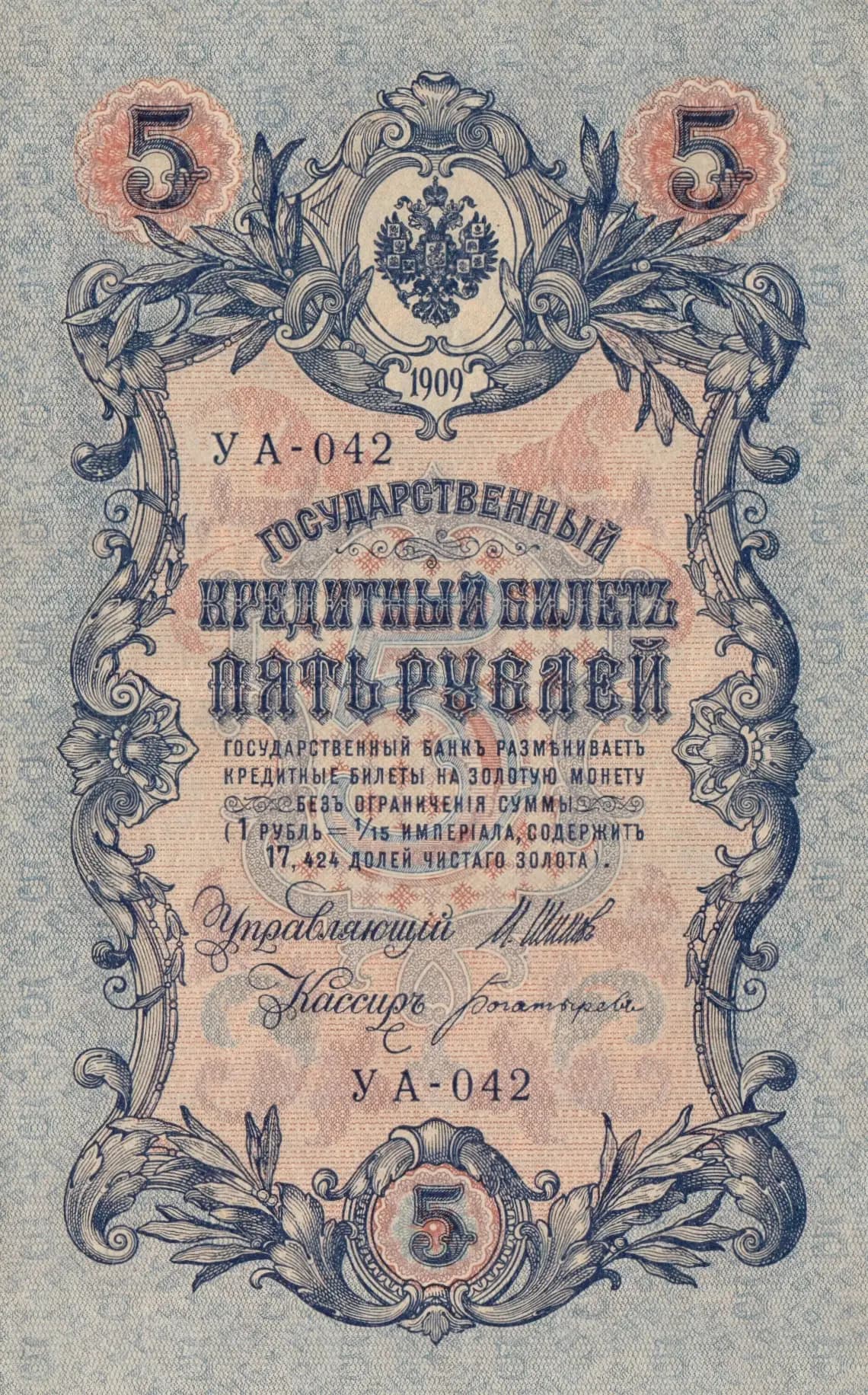
“Sig.Bogatyryov”
About This Note
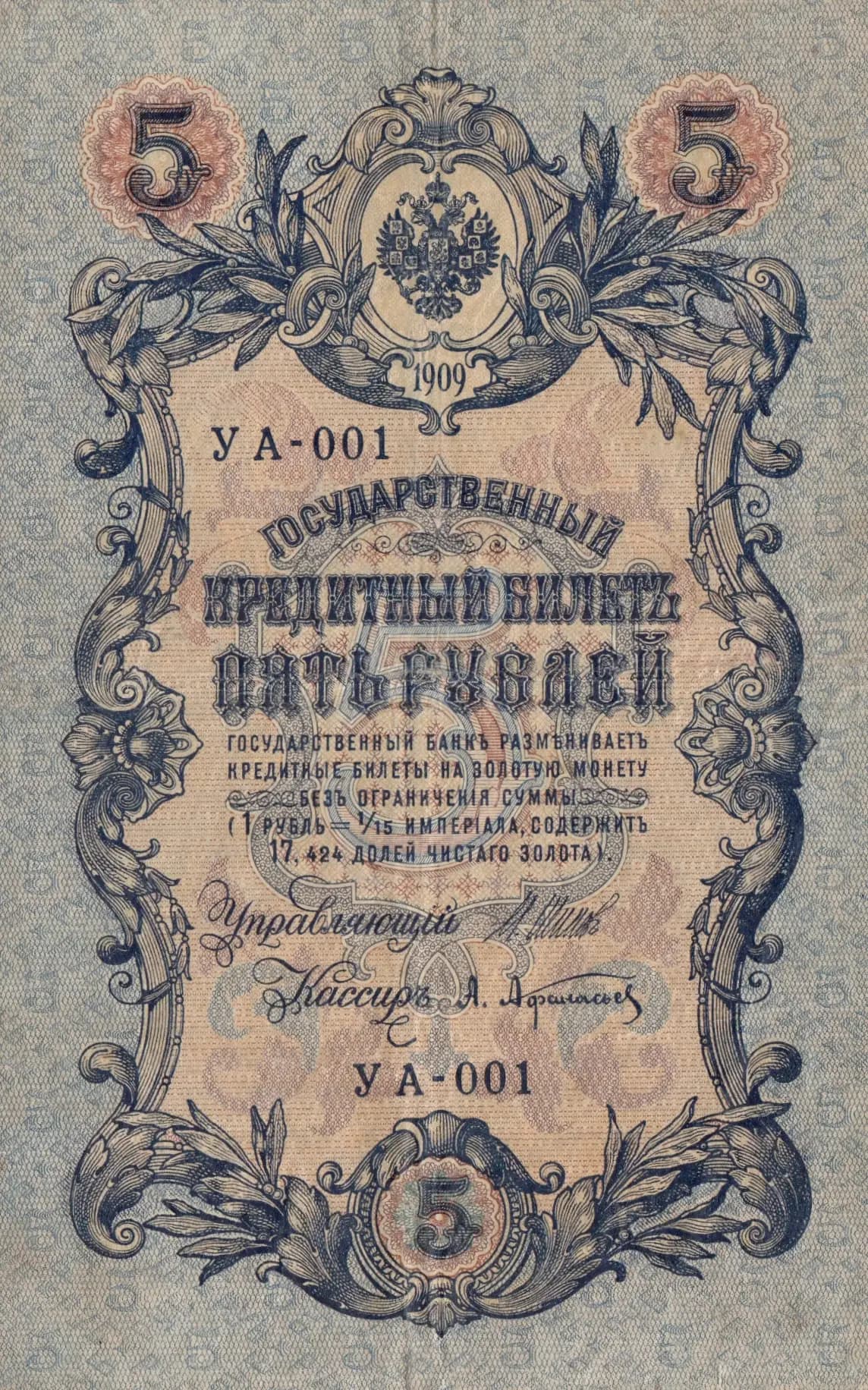
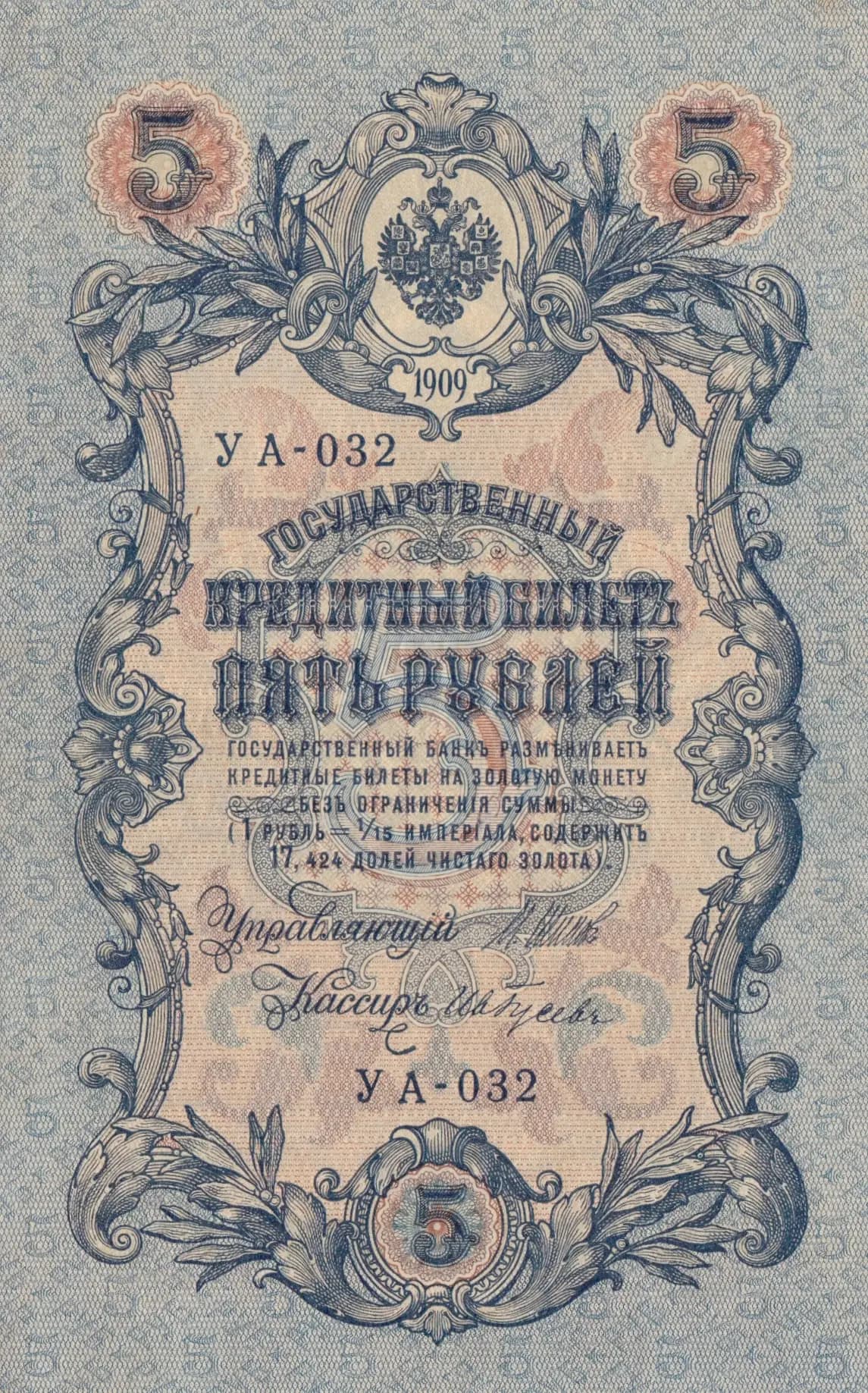
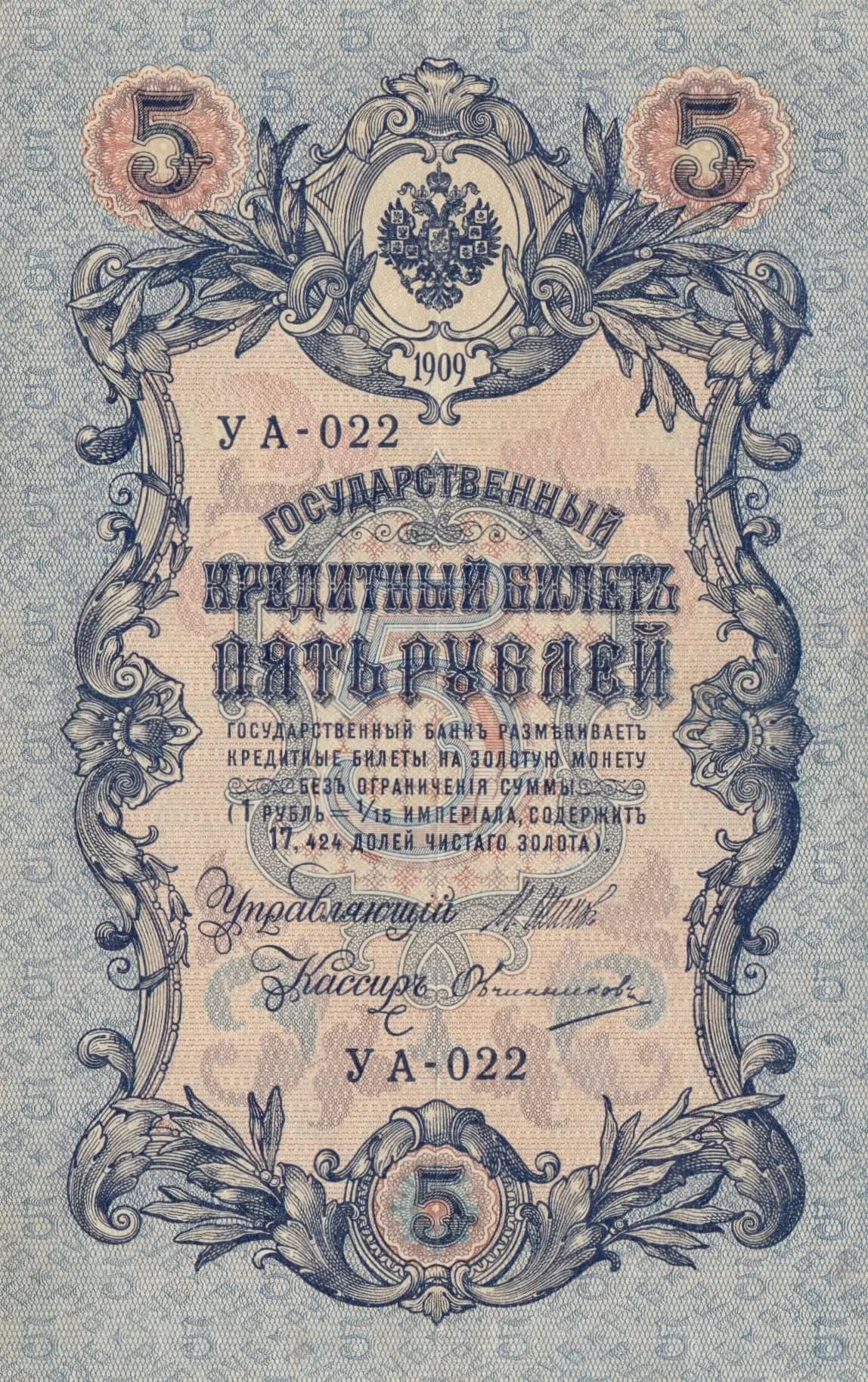
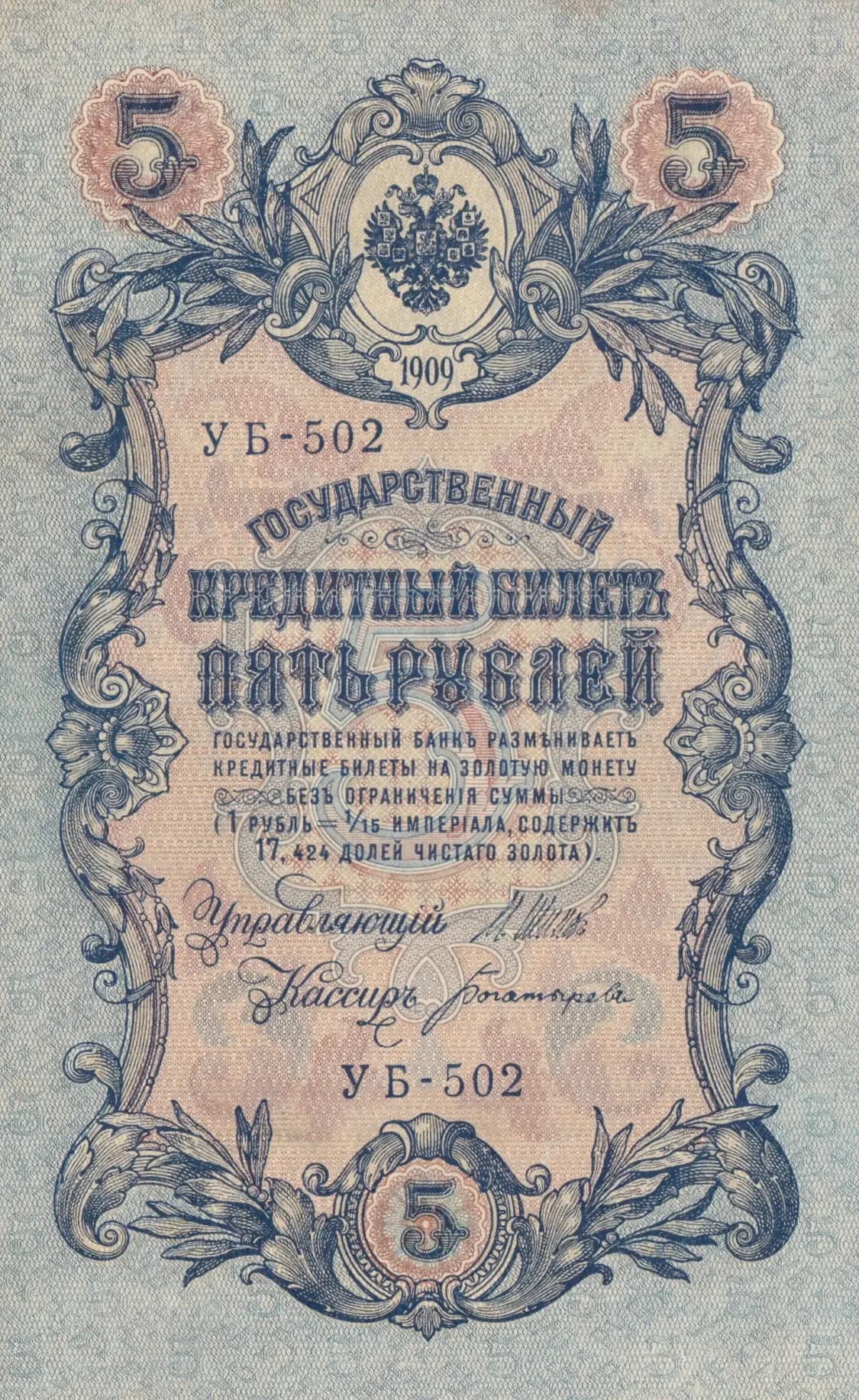
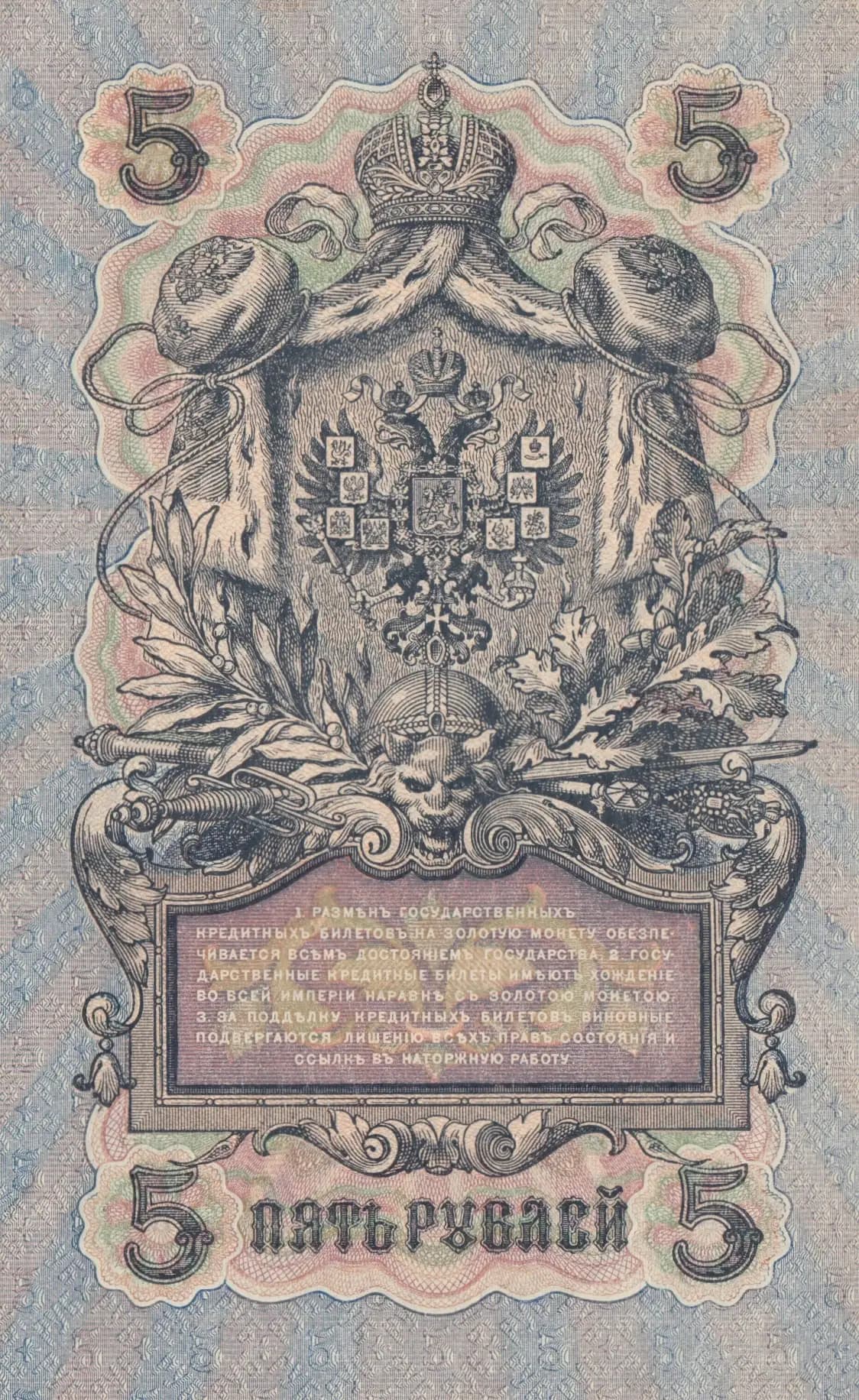
An exceptionally well-preserved example of the Russian Imperial 5 ruble State Credit Note from 1917, graded AU and displaying pristine condition with no visible wear, creases, or stains. The note features the iconic Russian Imperial double-headed eagle coat of arms prominently displayed on both sides, rendered in a sophisticated multi-color scheme of peach, blue, green, and cream with intricate ornamental scrollwork. This specimen represents the final years of Imperial Russian currency before the monetary upheaval of the Bolshevik Revolution, making it historically significant as the R.S.F.S.R. designation indicates its transition period.
Common. The 5 ruble denomination was a widely-circulated value during the Imperial period, and substantial print runs were produced across multiple years (including the 1909 design date shown here). While the 1917 issue year may suggest scarcity due to post-revolutionary upheaval, the Pick catalog P-35(2-3) designation indicates this represents one of several standard varieties from a relatively prolific printing series. AU condition specimens are desirable but not exceptionally rare, as these notes, though now over a century old, were printed in sufficient quantities that well-preserved examples remain available to collectors. The lack of documented price premiums for this specific Pick number in standard references supports a common classification.
This 5 ruble note was issued during 1917, a pivotal year when Imperial Russia was collapsing and the Bolsheviks seized power, creating the Russian Soviet Federative Socialist Republic (R.S.F.S.R.). The banknote's imagery—the crowned double-headed eagle with orb and scepter, heraldic shields, and declaration of gold backing—reflects the dying Imperial monetary system that guaranteed exchange at a fixed gold standard. Within months of this note's issue, such Imperial symbolism would become anathema to the revolutionary government, making notes bearing the Tsar's coat of arms historically poignant artifacts of the regime's final days.
Both sides of this Imperial banknote feature the Russian Imperial double-headed eagle coat of arms as the dominant central motif, symbolizing autocratic authority and imperial sovereignty. The front features the eagle within an ornamental cartouche surrounded by elaborate scrollwork and botanical elements (including laurel and palm fronds) in a classical Imperial design style. The reverse presents an enhanced heraldic composition with the crowned double-headed eagle holding the orb and scepter (symbols of imperial power) as its focal point, encircled by multiple heraldic shields representing the various regions and territories of the Russian Empire. The elaborate border work on both sides consists of fine-line engraved scrollwork, floral designs, and classical ornamental elements typical of late Imperial security printing. Denomination numerals appear in decorative circular frames in the corners. The color palette—cream base with peach, blue, and green overprinting—creates visual hierarchy and security depth. No portraits of the Tsar or individuals appear, distinguishing this design from some other Imperial notes.
FRONT SIDE: 'ГОСУДАРСТВЕННЫЙ КРЕДИТНЫЙ БИЛЕТ ПЯТЬРУБЛЕЙ' (State Credit Note Five Rubles) | 'ГОСУДАРСТВЕННЫЙ БАНК РАЗМЕНИВАЕТ КРЕДИТНЫЕ БИЛЕТЫ НА ЗОЛОТУЮ МОНЕТУ БЕЗ ОГРАНИЧЕНИЯ СУММЫ' (The State Bank exchanges credit notes for gold coin without limitation of amount) | '(1 РУБЛЬ = 1/15 ИМПЕРИАЛИ, СОДЕРЖИТ 17.424 ДОЛЕЙ ЧИСТОГО ЗОЛОТА.)' (1 Ruble = 1/15 Imperials, contains 17.424 parts pure gold.) | 'Управляющий' (Managing Director) | 'Кассир' (Cashier) | Denomination: '5' | Serial: 'УБ-502' | Date: '1909' (design date). BACK SIDE: 'ПЯТЬ РУБЛЕЙ' (Five Rubles) | '1. РАЗМЕН ГОСУДАРСТВЕННЫХ КРЕДИТНЫХ БИЛЕТОВ НА ЗОЛОТУЮ МОНЕТУ ОБЕСПЕЧИВАЕТСЯ ВСЕМ ДОСТОЯНИЕМ ГОСУДАРСТВА И ГОСУДАРСТВЕННЫЕ ЦЕННЫЕ БУМАГИ И МОНЕТЫ, ОБЕСПЕЧЕННЫЕ ВО ВСЕЙ ИМПЕРИИ НАРАВНЕ С ЗОЛОТОЮ МОНЕТОЮ.' (1. The exchange of State Credit Notes for gold coin is secured by the entire wealth of the State and State securities and coins are secured throughout the entire Empire on equal terms with gold coin.) | '3. ЗА ПОДДЕЛКУ КРЕДИТНЫХ БИЛЕТОВ ВИНОВНЫЕ ПОДВЕРГАЮТСЯ ЛИШЕНИЮ ВСЕХ ПРАВ СОСТОЯНИЯ И ССЫЛКЕ НА КАТОРЖНУЮ РАБОТУ.' (3. For counterfeiting credit notes, the guilty are subject to deprivation of all rights and exile to hard labor.) | Denomination: '5' (in all four corners).
This note employs multicolor letterpress and engraved intaglio printing on a cream-colored paper stock. The design was executed using four-color printing: peach/salmon, blue/navy, and green overprints on the cream base, a technique characteristic of Imperial Russian State Bank security printing. The fine, intricate line engraving visible in the ornamental borders, scrollwork, and heraldic details represents skilled intaglio work. The complexity of the multi-block color registration and the precision of the ornamental border design would have been produced by the Imperial State Bank's printing facilities or contracted security printers of the Okhrana period. The pristine reproduction of fine line details in this specimen indicates high-quality original printing.
Pick P-35(2-3) indicates this is the third listed variety of the 5 ruble 1909-design note, suggesting there are recognized variants within the 1917 Imperial issue. The serial number prefix 'УБ-502' is visible on the specimen. Signature varieties (Управляющий and Кассир) were standard for Imperial notes and would differentiate between issues. The 1909 design date on a 1917 specimen is characteristic of Imperial notes that continued using established designs through the final years. Collector attribution indicates signature 'Bogatyryov,' likely identifying one of the authorized signatories. Further documentation would be needed to precisely define the distinguishing features of the P-35(2-3) variety relative to P-35(2-1) and P-35(2-2).