5 rublei 1917
“Sig.Barysev”
About This Note
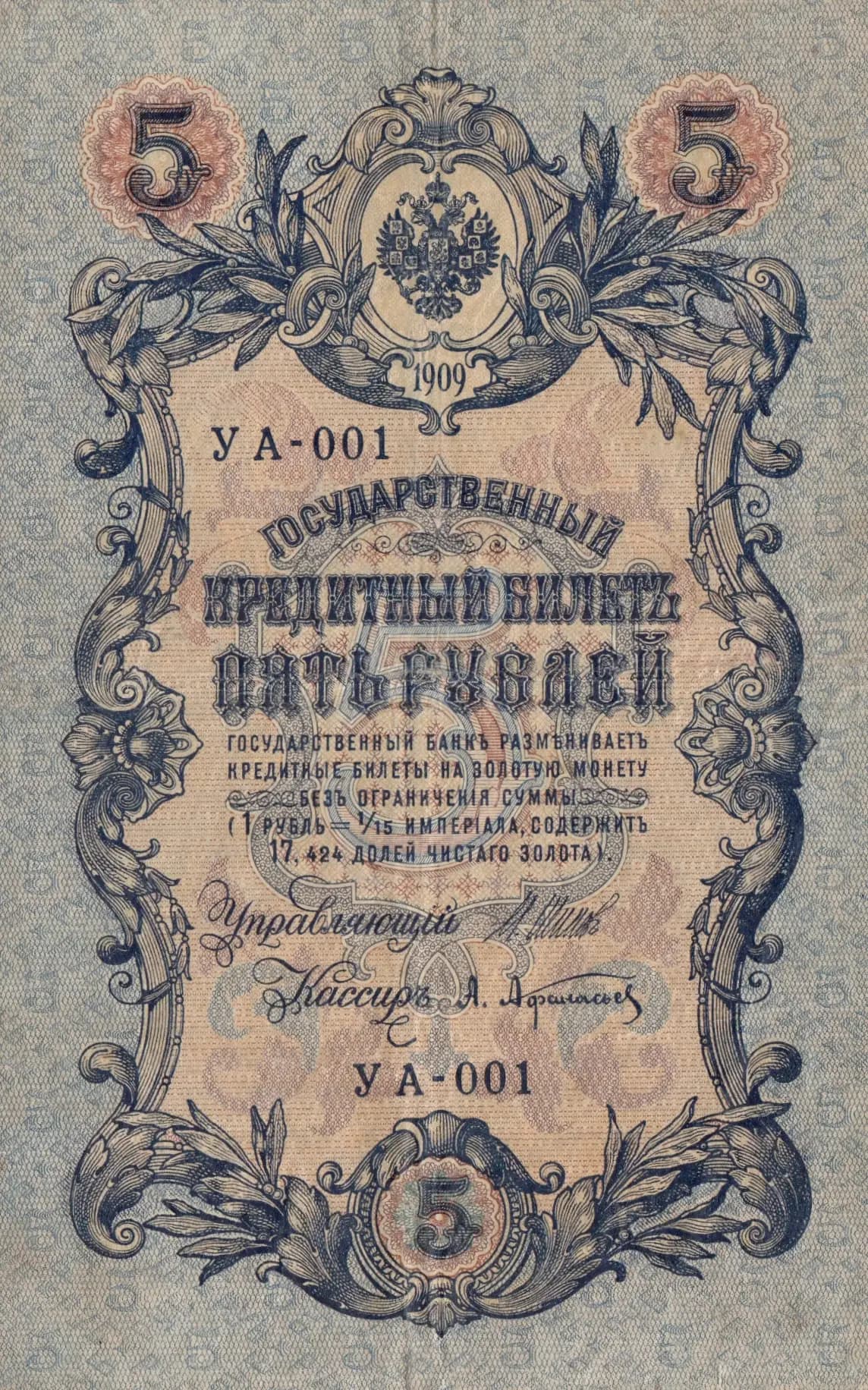
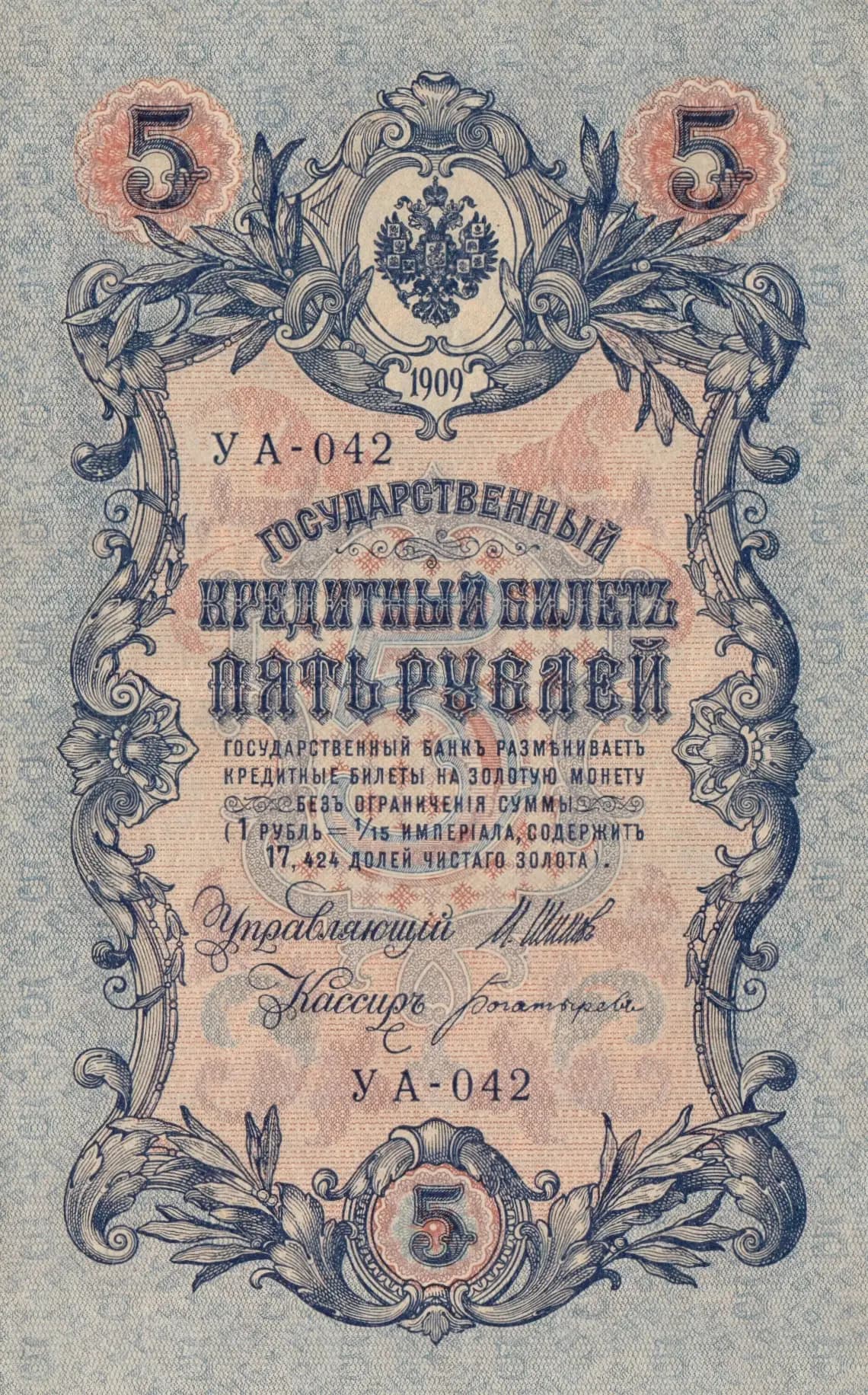
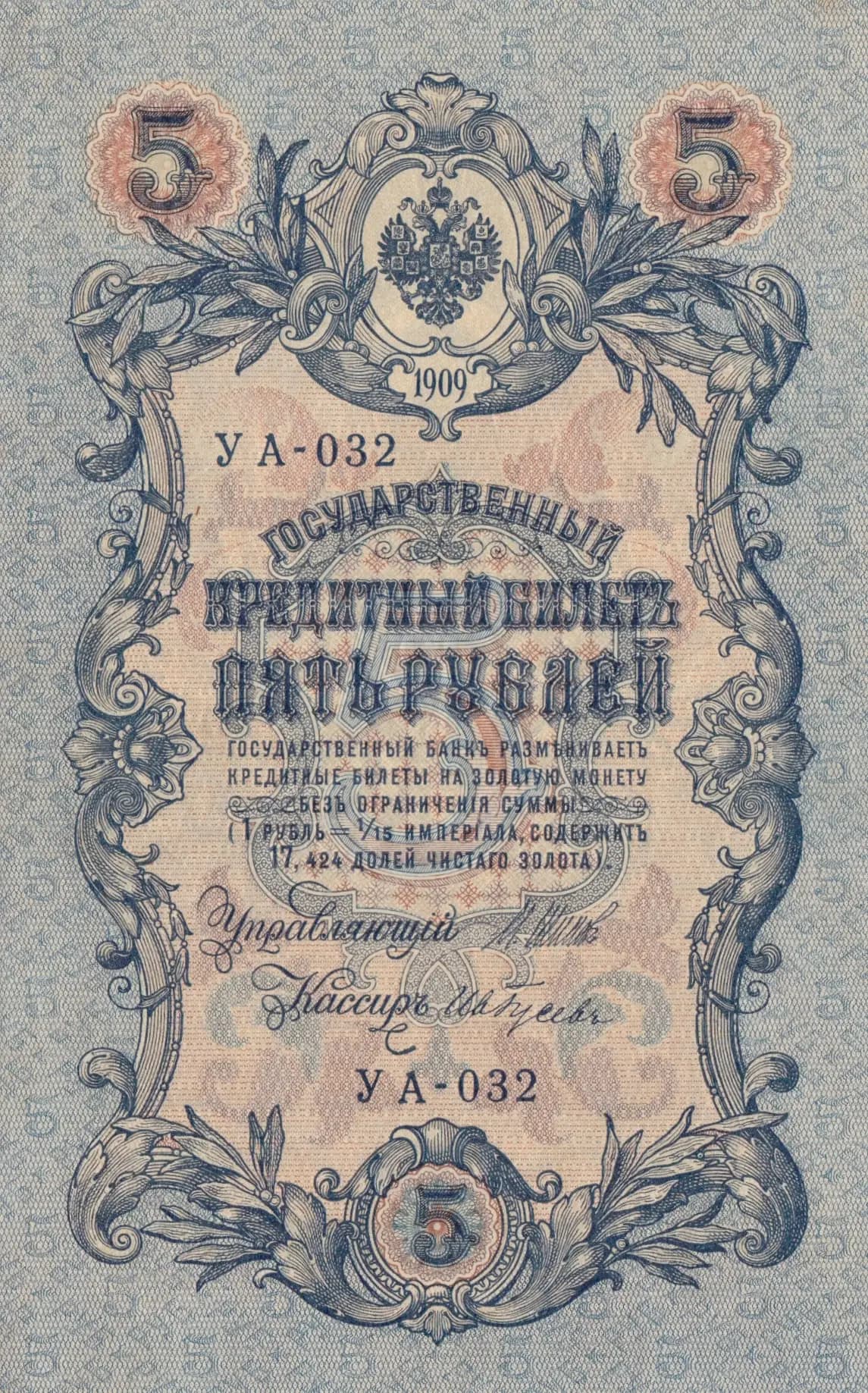
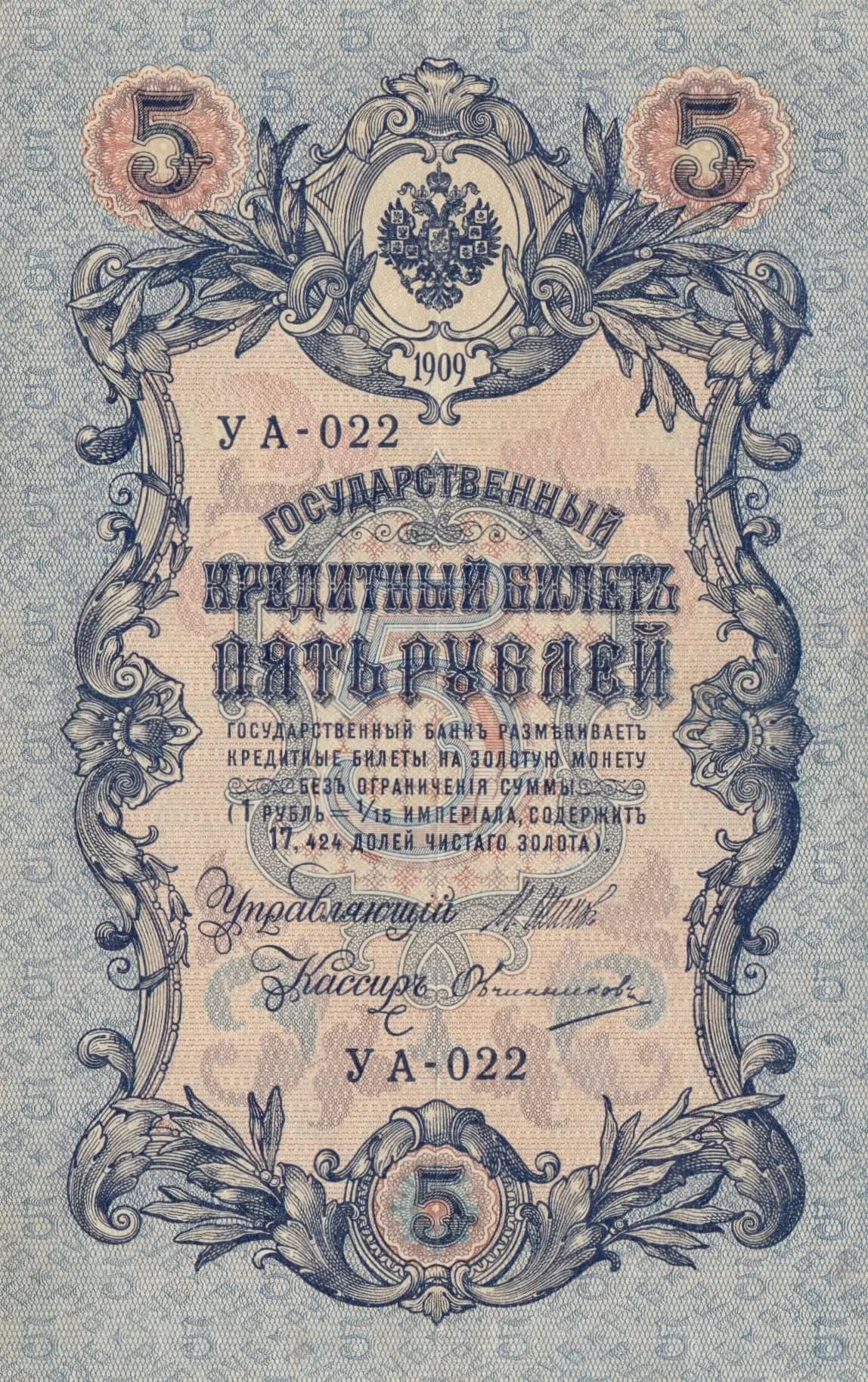
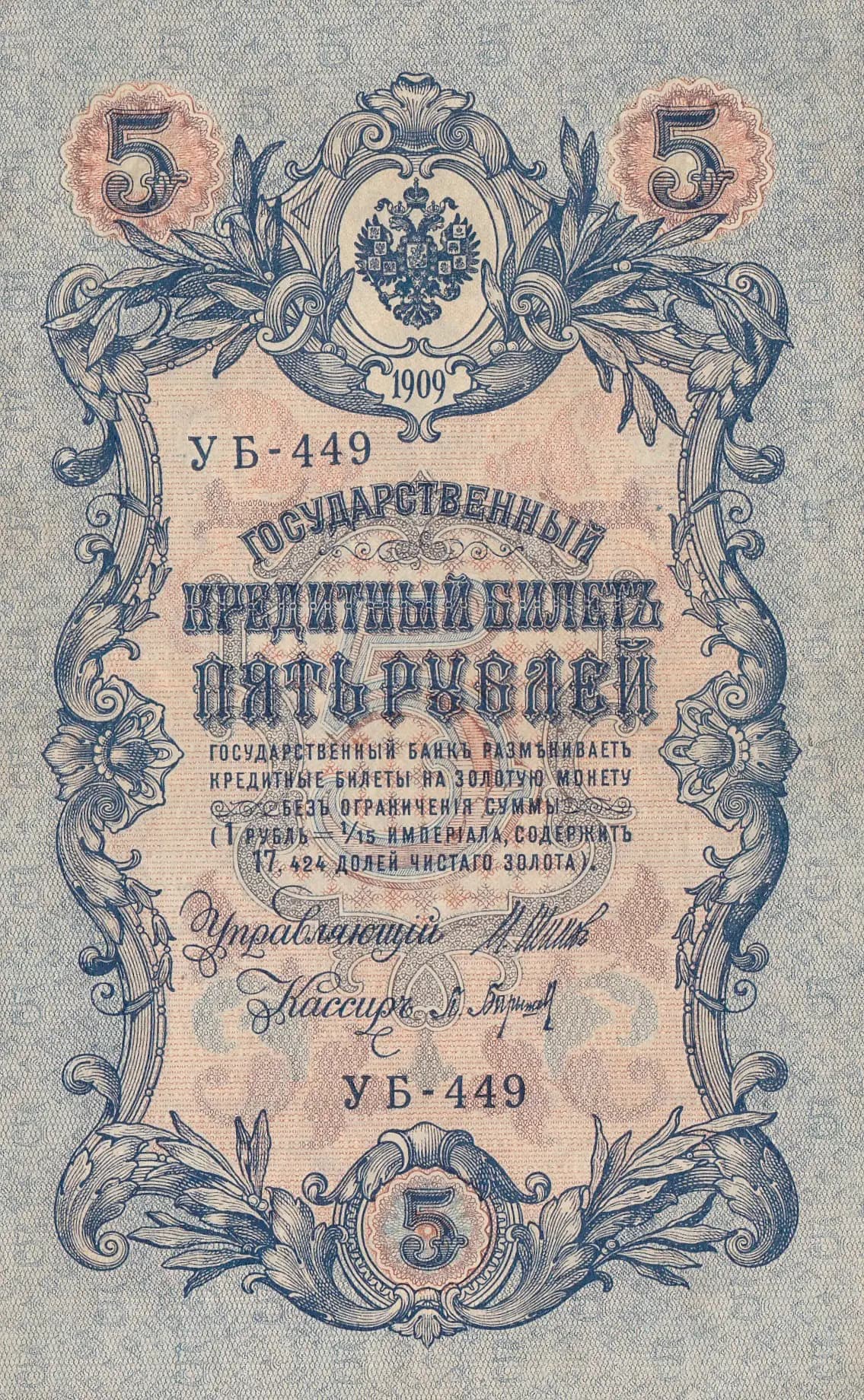
This is an AU-grade 5 Rublei from 1917, issued by the R.S.F.S.R. during the revolutionary period. The note displays exceptional condition with crisp printing and no visible wear, featuring the iconic Russian Imperial double-headed eagle prominently displayed within an ornate heraldic coat of arms. The intricate engraved design with baroque scrollwork, laurel wreaths, and complex heraldic elements demonstrates the sophisticated security printing standards of early 20th-century Russian currency, making this an impressive example of Imperial Russian monetary design during the transitional 1917 period.
Common. The 5 Rublei 1917 (Pick P-35) was issued in large quantities by the R.S.F.S.R. during 1917 and circulated widely despite the chaotic revolutionary period. Notes from this series remain relatively available in the collector market today, even in higher grades. The AU condition grade and lack of major varieties (such as significant overprints or signature variations noted in this specimen) does not substantially elevate rarity. While the historical significance of 1917 Russian currency attracts collector interest, this Pick number has not demonstrated the scarcity characteristics typical of rare notes.
This 5 Rublei represents a fascinating transitional moment in Russian currency history, issued in 1917 by the R.S.F.S.R. (Russian Socialist Federative Soviet Republic) during the revolutionary upheaval. The note retains the Imperial Russian double-headed eagle and elaborate heraldic symbolism from the Tsarist monetary system, reflecting the currency's backing by the State Credit system and its legal equivalence to gold coin throughout the Russian Empire. The 1917 date and R.S.F.S.R. issuer mark this as part of the short-lived bridge between Imperial and Soviet monetary systems, before the complete overhaul of Russian currency design.
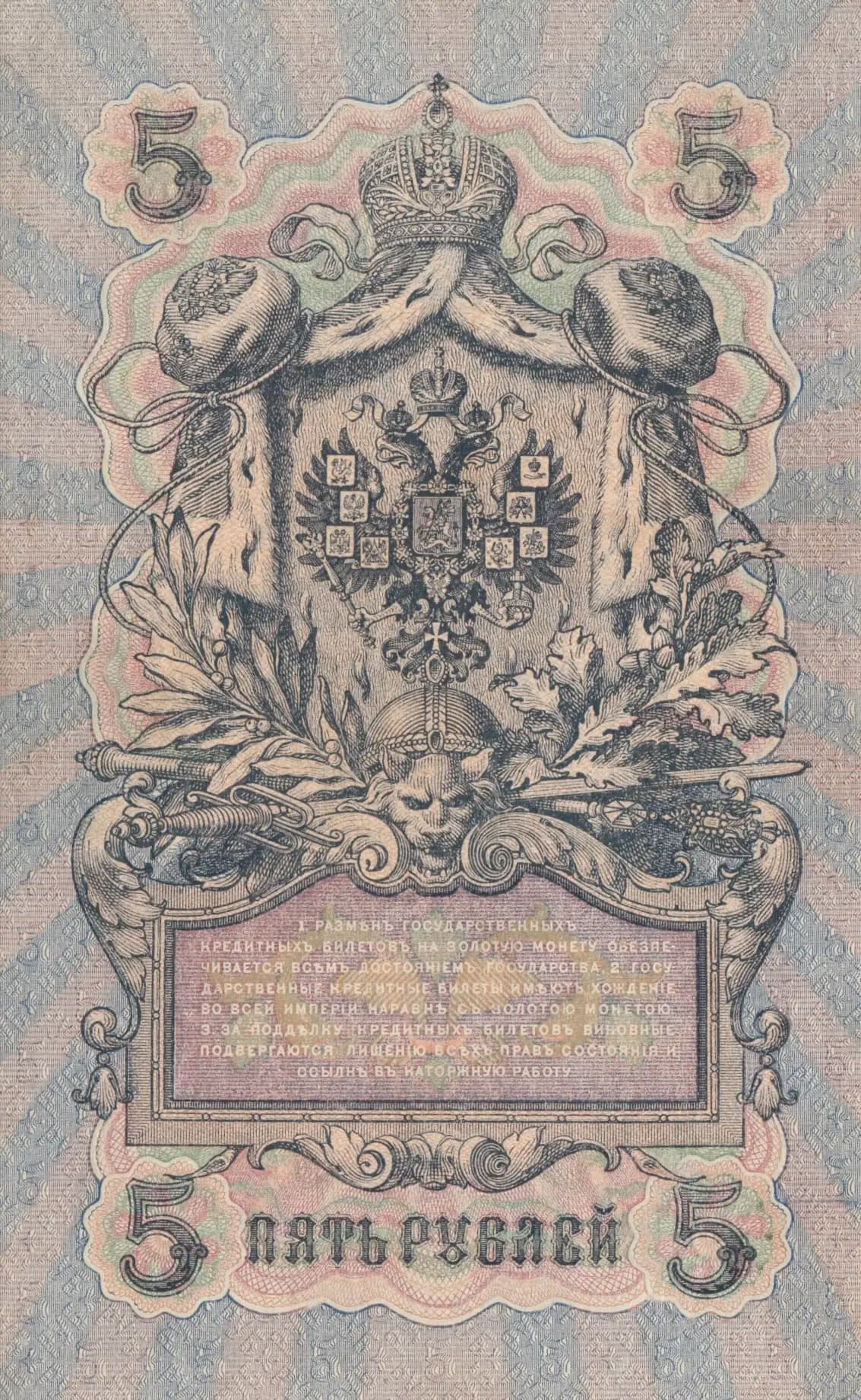
The obverse features a formal heraldic composition centered on the Russian Imperial coat of arms—the double-headed eagle displayed within an ornamental shield, surmounted by an imperial crown with flanking laurel wreaths symbolizing state authority and victory. The reverse presents an equally elaborate design with the crowned double-headed eagle as the primary heraldic device, accompanied by a complex quartered coat of arms incorporating multiple heraldic symbols including military insignia (swords and cannons), representing the various provinces and departments of the Russian state. Both sides employ an ornate baroque-influenced border with scrollwork, floral elements, and intricate engraved patterns. The denomination '5' appears in decorative circular cartouches in the corners of each side. The pale pink/beige paper stock with blue-black and green printing provides the distinctive coloration characteristic of this Imperial-era issue.
FRONT SIDE: Serial designation УБ-449 (UB-449); Year 1909; ГОСУДАРСТВЕННЫЙ КРЕДИТНЫЙ БИЛЕТ (State Credit Note); ПЯТЬ РУБЛЕЙ (Five Rubles); Serial number УБ-449 repeated. BACK SIDE: Denomination 5 in four corner circles; ПЯТЬ РУБЛЕЙ (Five Rubles) at bottom; Legal text regarding State Credit Notes: 'The denominations of State Credit Notes backed by gold currency are calculated by all the wealth of the State. State Credit Notes circulating throughout the entire Empire possess equal rights with gold coins [and are subject to all legal rights and provisions of the monetary system]' (the full text in the central cartouche is partially obscured in the image but conveys the note's legal status and gold backing).
This note was produced using intaglio engraving, a security printing technique involving deeply recessed lines that create the fine detail work, intricate scrollwork, and complex heraldic imagery visible throughout the design. The presence of extremely fine line work, delicate ornamental flourishes, and the crisp impression of the heraldic coat of arms are characteristic of high-security intaglio production. The multi-color printing (blue-black, green, and other tones on the pink/beige paper) was achieved through separate engraved plates for each color. The State Security Printing Works (Gosudarstvennaya Tipografiya) of Imperial Russia produced notes of this caliber, though specific printer attribution for Pick P-35(2-2) would require catalog cross-reference.
This specimen is cataloged as Pick P-35(2-2), indicating it represents the second series/variety of the 5 Rublei 1917. The serial number designation УБ-449 (UB-449) and the signature attribution to Barysev (noted in collector notes) may represent identifiable variety markers. The presence of the 1909 date notation on the obverse alongside the 1917 R.S.F.S.R. issuer designation reflects the use of earlier Imperial plates modified or reused for 1917 circulation. Collectors should verify whether the UB series prefix or specific signature presence constitutes a recognized variety, as 1917 Russian currency exhibits considerable variety in signatures, serial number formats, and printing sequence due to the transitional nature of the issue.