5 rublei 1917
“Sig.Chikhirzin”
About This Note
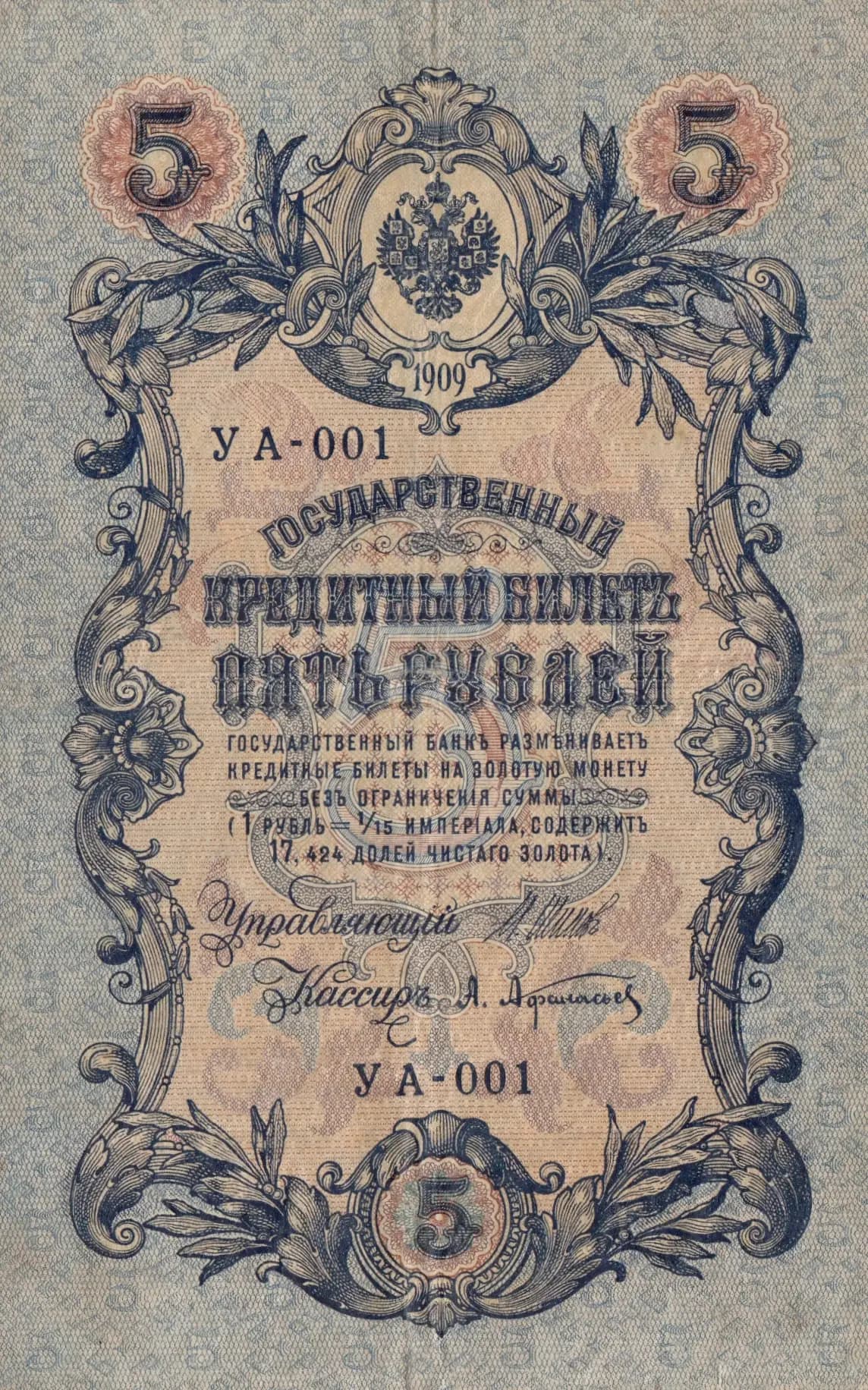
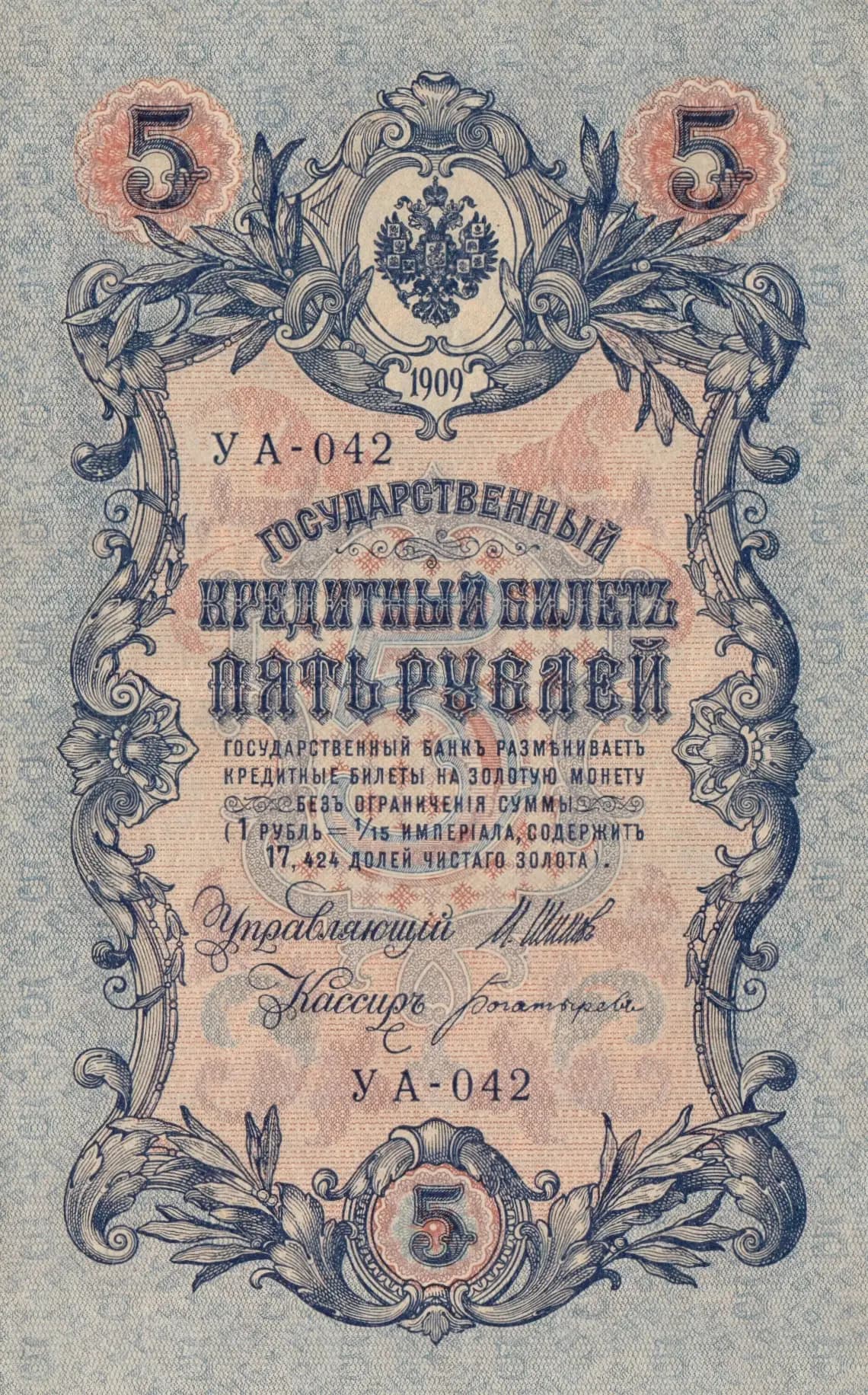
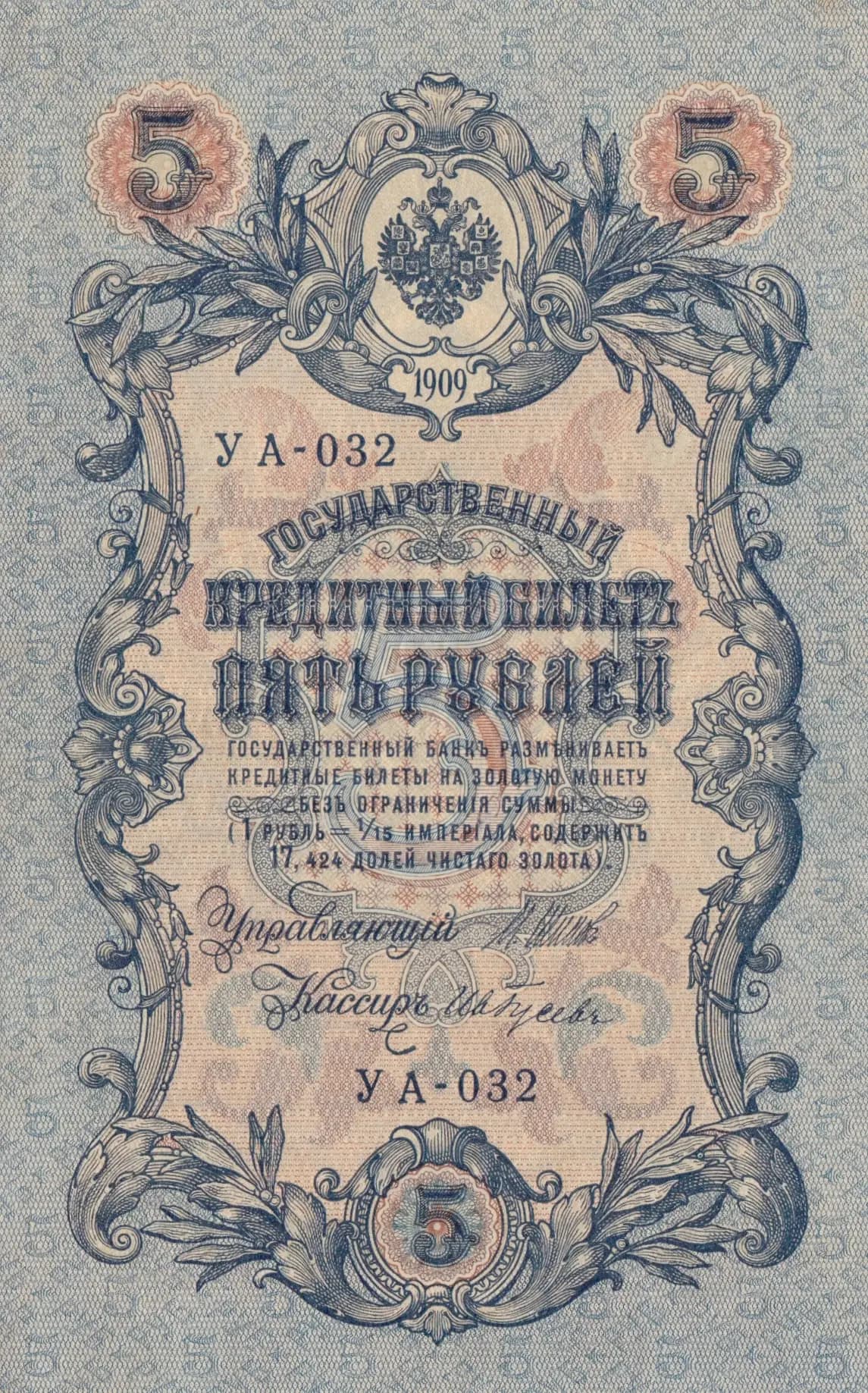
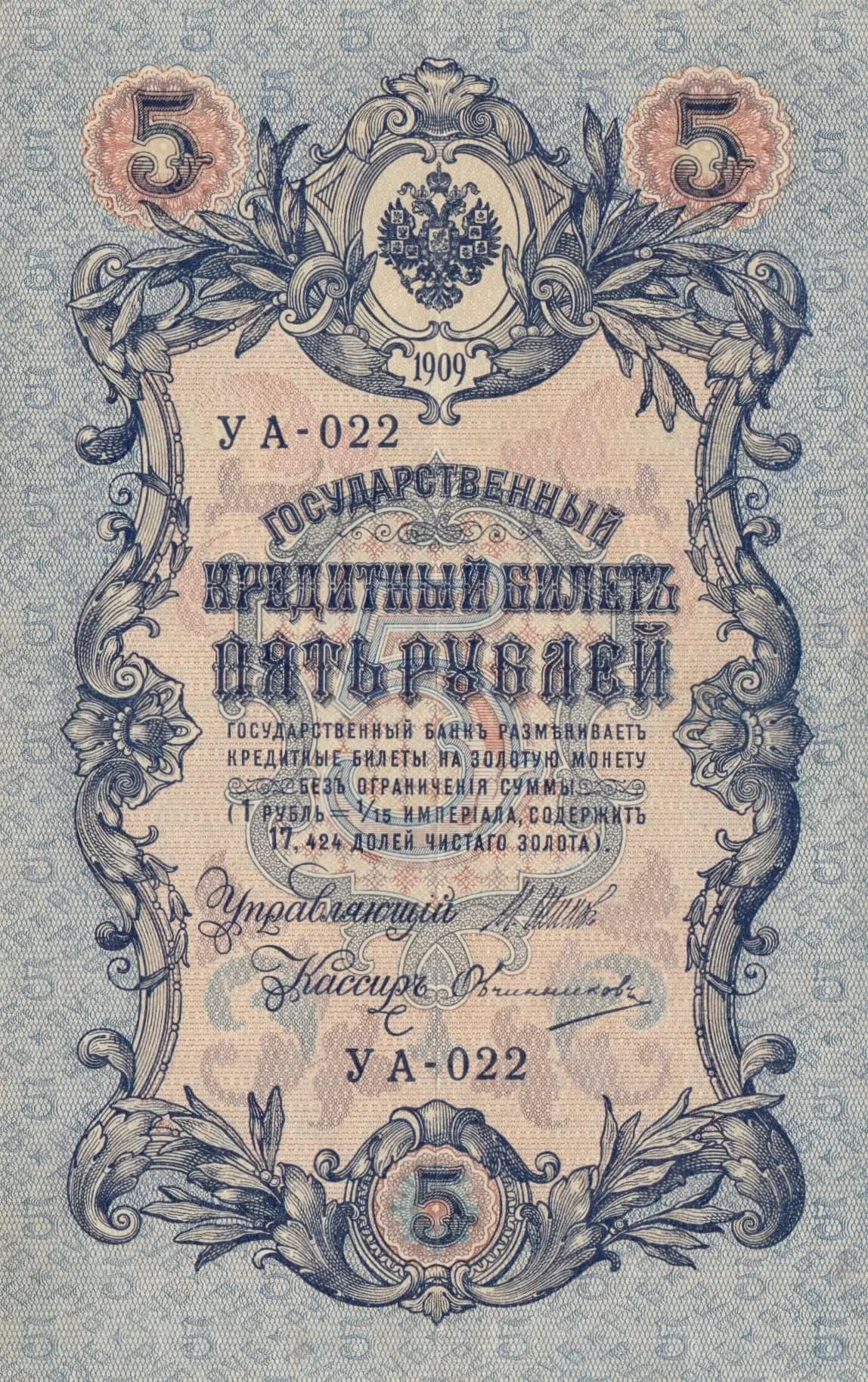
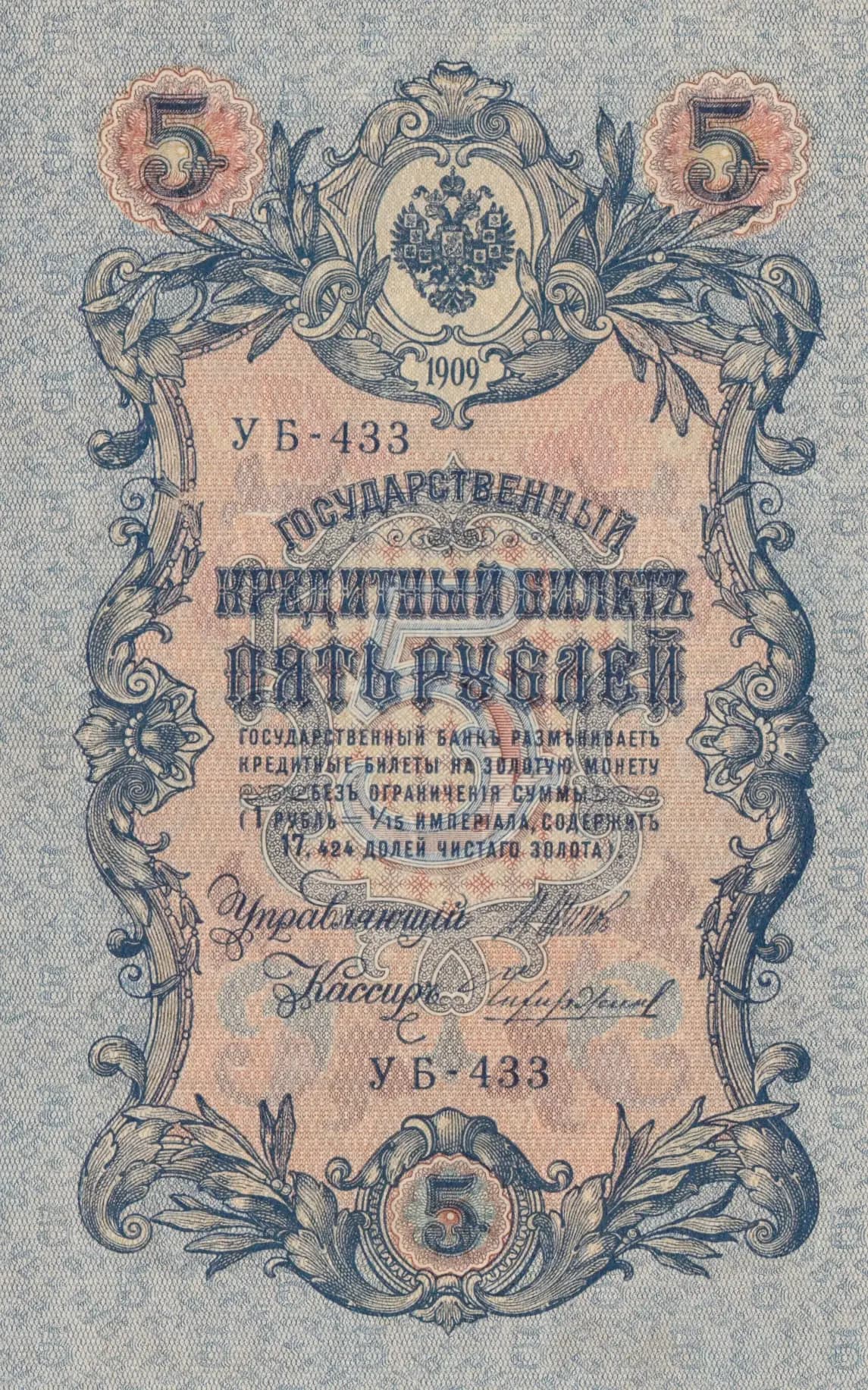
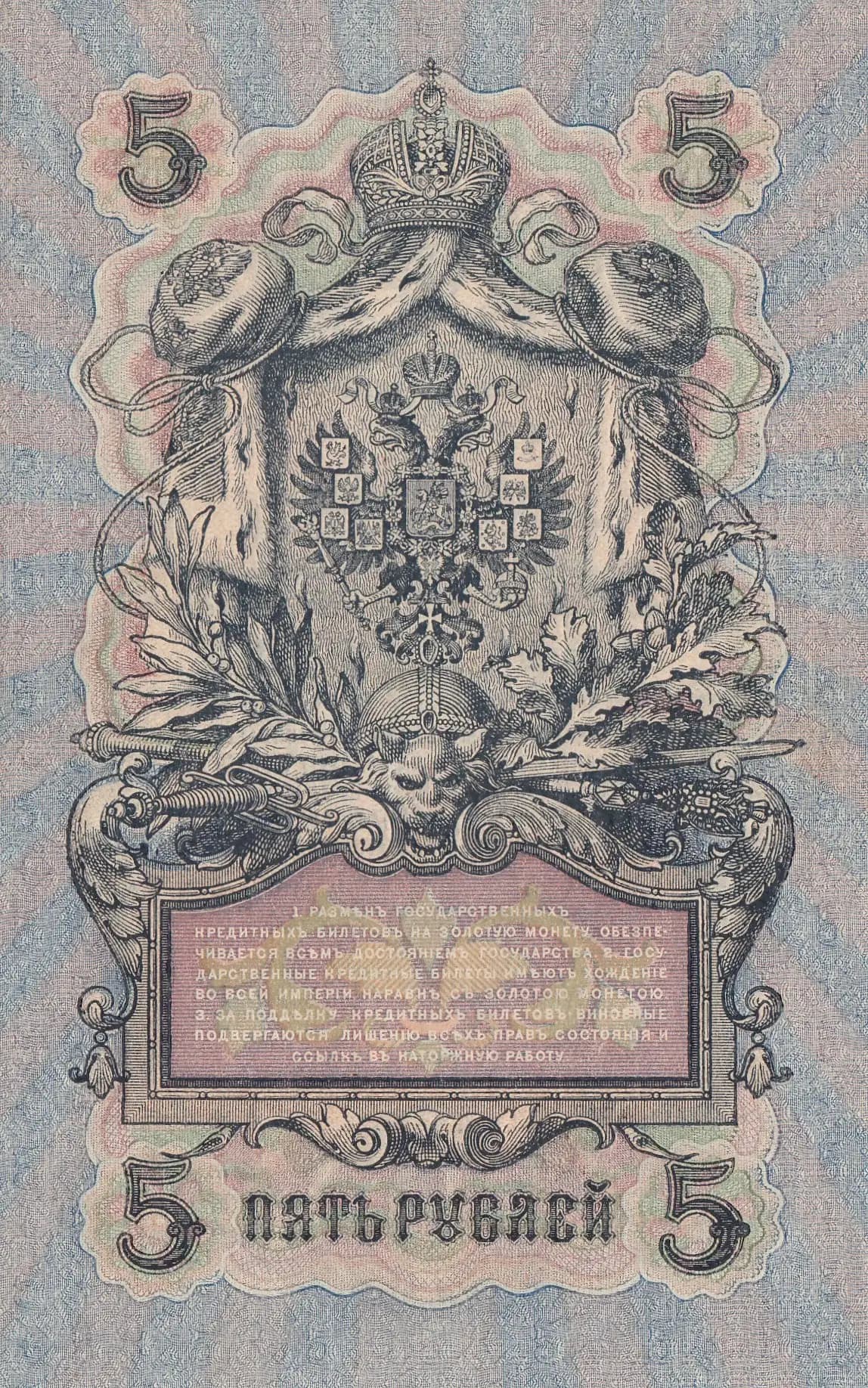
An exceptional example of a 5 Rublei State Credit Note from 1917, issued during the final year of Imperial Russian currency circulation. The note displays the characteristic ornate design of pre-Revolutionary Russian banknotes, featuring the Imperial double-headed eagle prominently on both sides within elaborate heraldic frames, rendered in fine detail with pale pink, blue, and brown color tones. Graded EF, the note shows no visible wear, creases, or damage, with vibrant coloring and crisp preservation throughout—a premium specimen of this transitional period currency bearing the signature of notable cashier Chikhirzin.
Common. The 5 Rublei denomination was one of the most frequently circulated denominations of the 1917 State Credit Note series, produced in large quantities to meet monetary demand during the final year of Imperial rule. While the transitional date (1917) holds historical significance, the absolute print run was substantial and substantial quantities survive in collections today. The Pick catalog designation P-35(2-12) represents a standard, frequently encountered variety. In EF condition, this note, while well-preserved, is not unusually scarce—these notes were printed in sufficient volume and many have been carefully preserved by collectors over the past century.
This 5 Rublei note represents the final iteration of Imperial Russian State Credit Notes, issued in 1917 as the Russian Empire entered its final year before the October Revolution. The note's design emphasizes state backing through its prominent Imperial double-headed eagle coat of arms and repeated references to gold-standard redemption (visible in the inscriptions), reflecting the monetary confidence of the pre-Revolutionary regime. The 1917 date places this note at the cusp of monetary upheaval—shortly after this note's issuance, the R.S.F.S.R. would replace Imperial currency with its own issues, making this series a poignant artifact of the regime's final fiscal authority.
Both sides feature the Russian Imperial double-headed eagle coat of arms as the central heraldic symbol, representing state sovereignty and authority. The front displays a symmetrical layout with two large numerals '5' in circular medallions flanking an ornamental oval frame containing the crowned double-headed eagle and the year 1909 (the original design date). The back presents an even more elaborate arrangement with the eagle within a heraldic shield, flanked by additional eagles, with denomination numerals '5' repeated in all four corners within circular cartouches. The design throughout employs fine ornamental scrollwork, floral and botanical motifs, and layered decorative borders. The color palette of pale pink/beige, dark blue, brown, and tan creates the typical Imperial-era aesthetic. The fine line engraving work and complex ornamental elements served both aesthetic and security functions characteristic of late Imperial banknote production.
FRONT SIDE: Denomination text reads 'ГОСУДАРСТВЕННЫЙ КРЕДИТНЫЙ БИЛЕТ ПЯТЬ РУБЛЕЙ' (State Credit Note Five Rubles). The central guarantee text states 'ГОСУДАРСТВЕННЫЙ БАНК РАЗМЕНИВАЕТ КРЕДИТНЫЕ БИЛЕТЫ НА ЗОЛОТУЮ МОНЕТУ БЕЗ ОГРАНИЧЕНИЯ СУММЫ' (The State Bank exchanges credit notes for gold coin without limitation of sum). Signature blocks are labeled 'Управляющий Банк' (Managing Director of the Bank) and 'Кассир' (Cashier). Serial designation 'УБ-433' appears twice. The date '1909' refers to the original design issue date. BACK SIDE: Large denomination text 'ПЯТЬ РУБЛЕЙ' (Five Rubles) appears prominently. A lengthy legal text regarding state credit notes and gold-standard backing provisions is present, affirming the note's redemption in gold coin and state guarantee of value.
This note was produced using intaglio (engraved) printing, evidenced by the fine, precise line work visible throughout the design, the depth of the ornamental detail, and the crisp definition of the heraldic elements and borders. The multiple color application—pale pink, blue, brown, and tan—suggests multi-pass color printing typical of high-security Imperial Russian State Bank notes. The State Bank of Russia's own security printing facilities produced these notes; this particular Pick number (P-35(2-12)) was part of the State Credit Note series manufactured under strict Imperial oversight. The complex ornamental design and fine engraving work served as inherent anti-counterfeiting measures.
The note is identified as Pick P-35(2-12), indicating it is a specific variety within the 5 Rublei 1917 State Credit Note series. The serial designation 'УБ-433' (UB-433) visible on the front represents the printing run or batch designation. The signature of 'Chikhirzin' (as noted in collector notes) in the Cashier position identifies this as signed by a specific State Bank official, a detail that may be relevant for specialized Russian Imperial currency collectors. The 1909 date on the note refers to the original engraving/design approval, not the issue date; the actual 1917 issue date appears in catalog records. Varieties of this series may be distinguished by different serial number ranges, signature combinations, and plate states, though this particular specimen is a standard example of the 1917 issuance.