5 rublei 1917
“Sig.Feduleyev”
About This Note
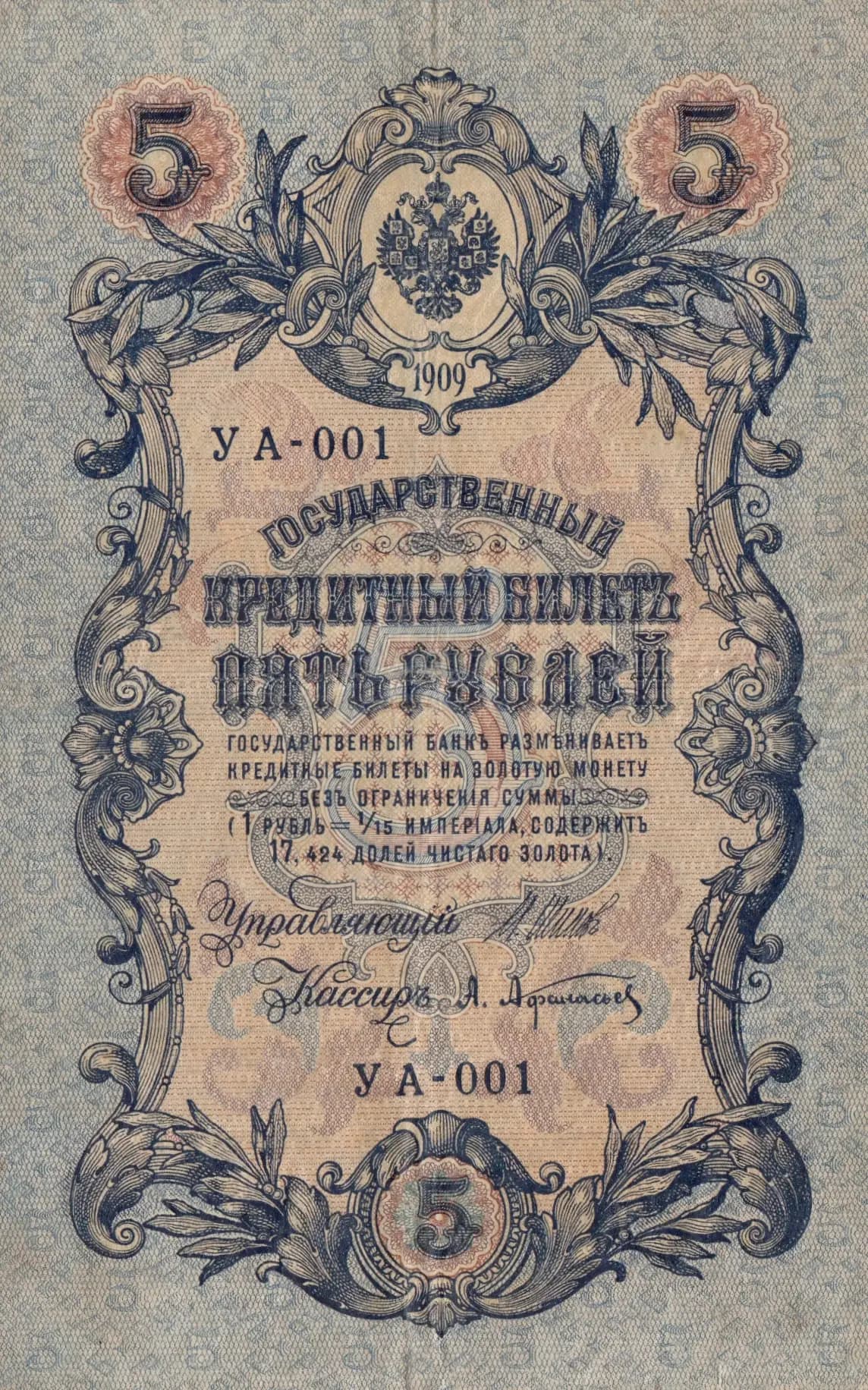
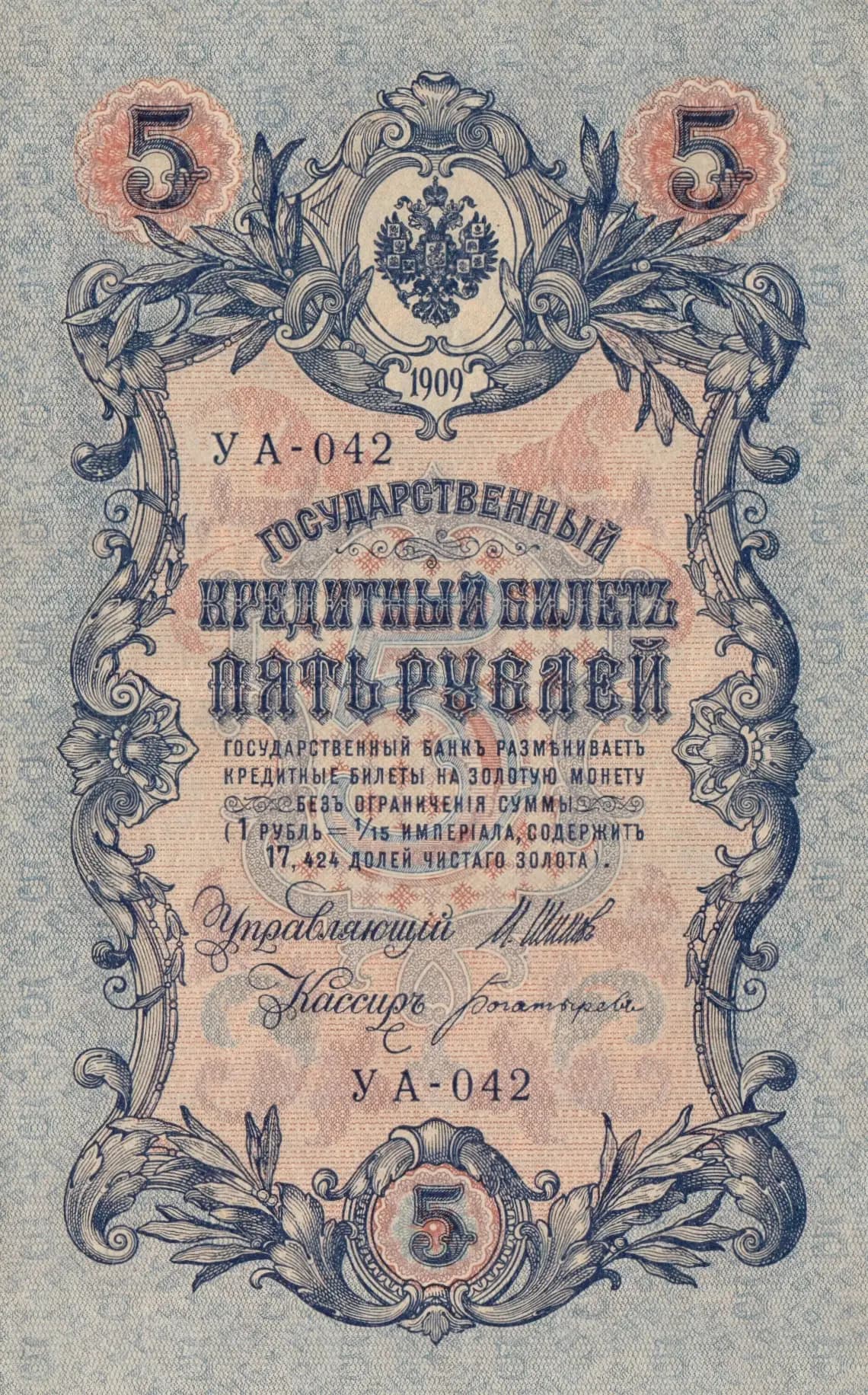
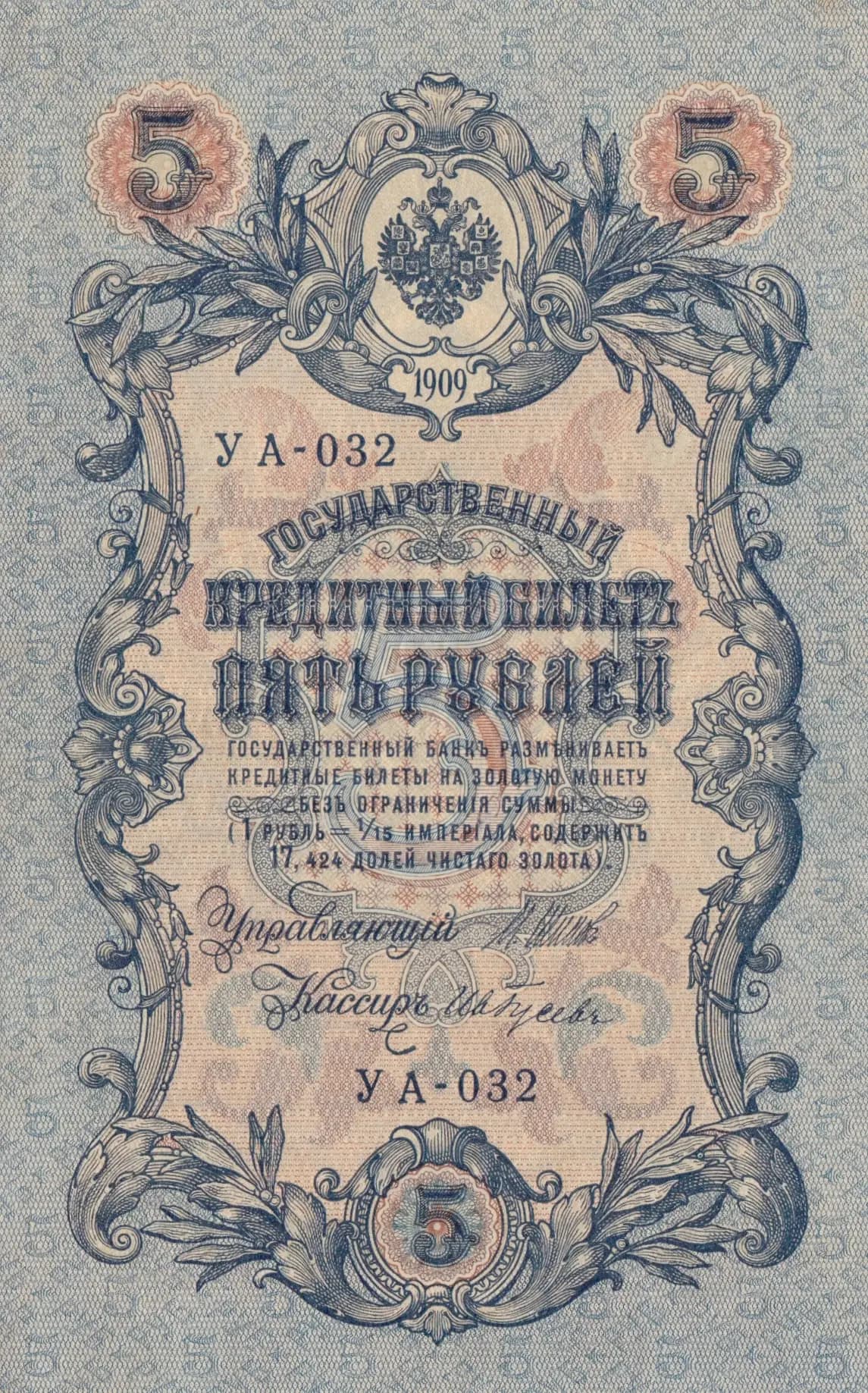
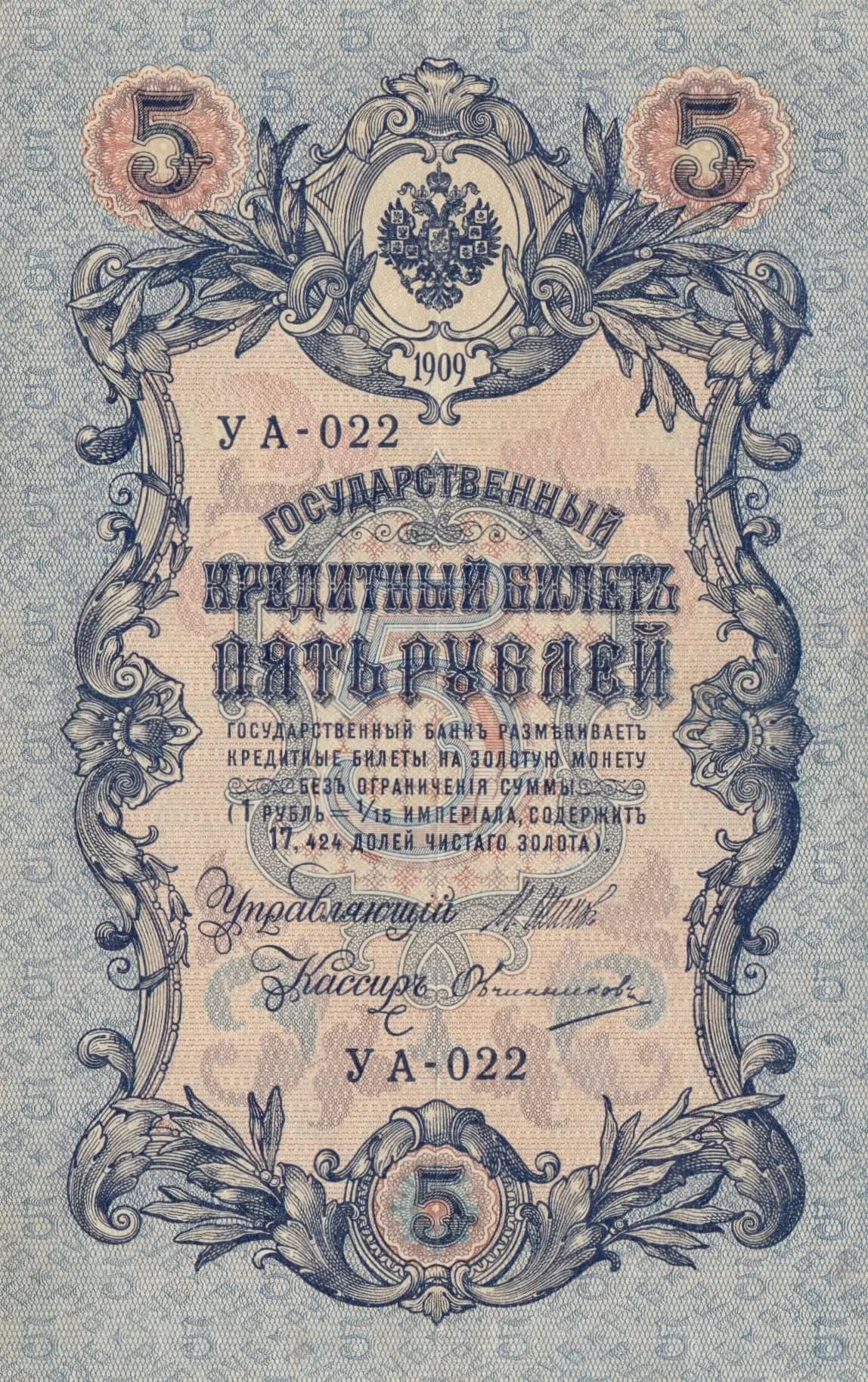
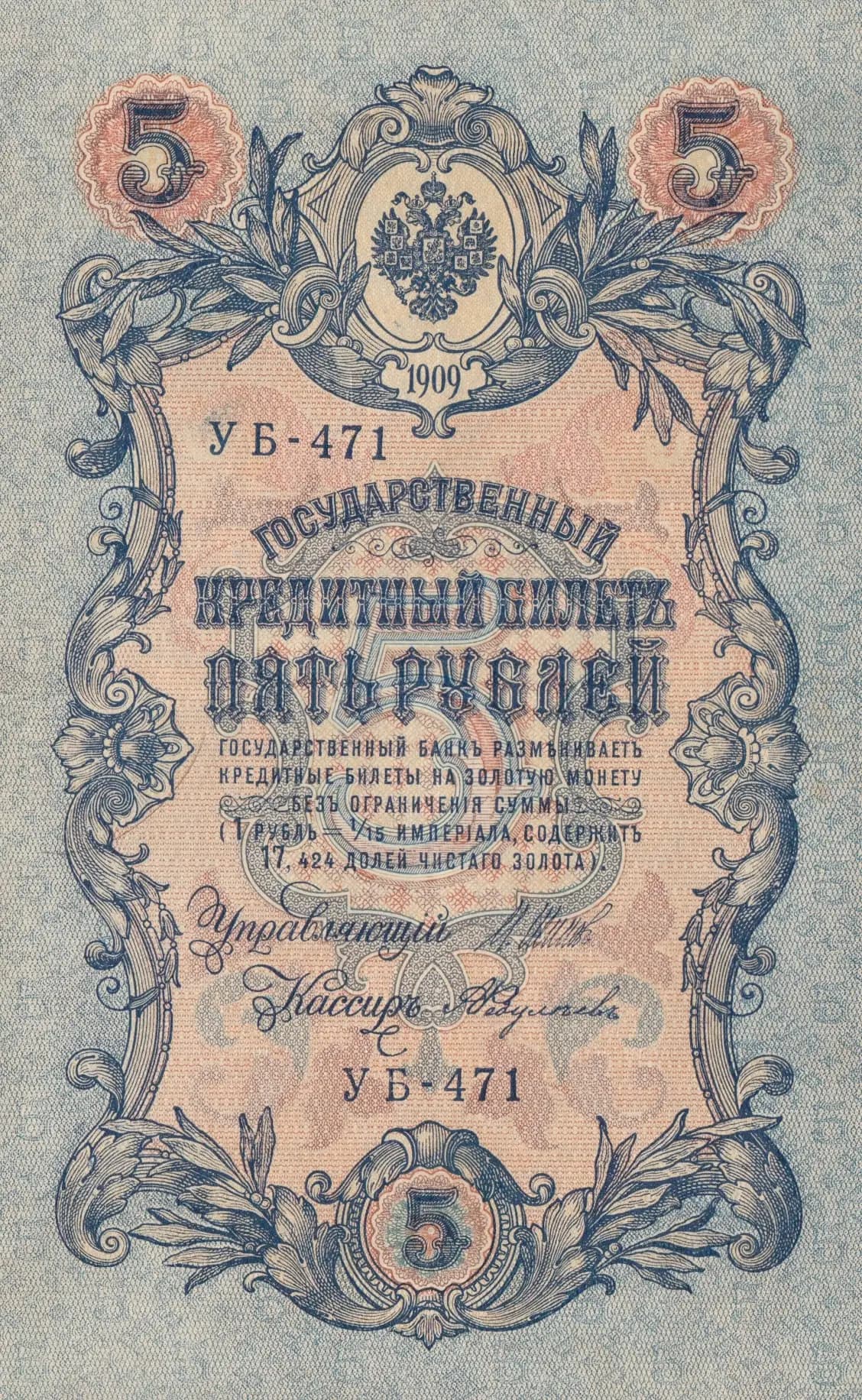
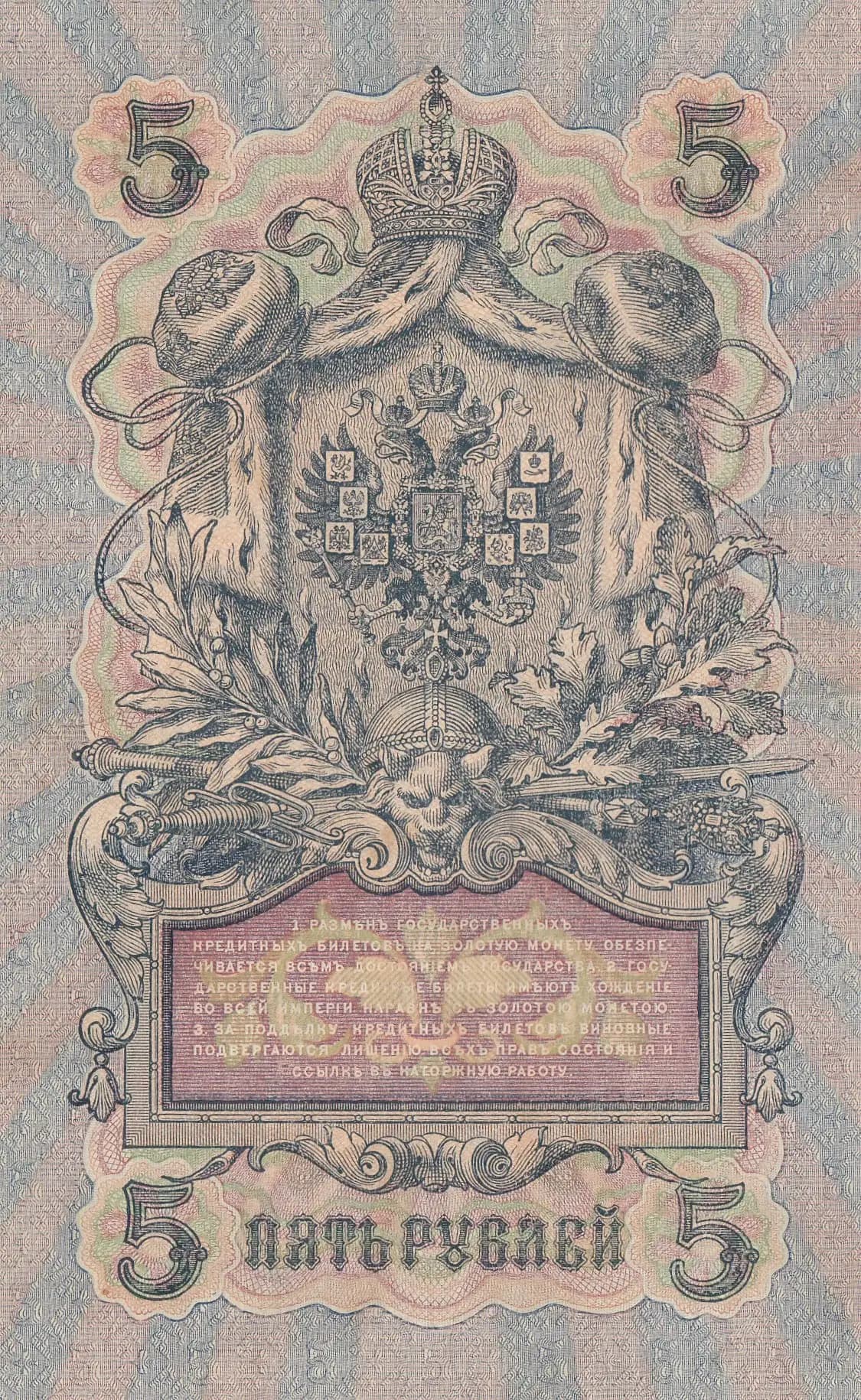
This is an exceptional example of a Russian Imperial 5 Rublei from 1917, issued by the R.S.F.S.R. during the revolutionary period. The note exhibits EF condition with vibrant peach, salmon, and blue coloration, sharp engraving details throughout, and no visible wear or circulation marks. The front features an ornate imperial double-headed eagle in a central oval medallion, while the reverse displays an elaborate imperial coat of arms with heraldic shields, making this a significant transitional piece from Imperial Russia to the Soviet era.
Common. The 5 Rublei denomination from the 1917 R.S.F.S.R. issuance was produced in substantial quantities as a transitional note during the revolutionary period. While the specific Pick 35(2-11) variety may have more limited print runs than some denominations, no historical evidence suggests this was a short-lived or heavily recalled issue. EF condition examples are desirable but not extraordinarily rare in the current market. This note represents a standard catalog issue from a well-documented emission rather than a scarce variety.
This 5 Rublei represents a unique moment in Russian monetary history, issued in 1917 as the Russian Soviet Federative Socialist Republic (R.S.F.S.R.) was consolidating power following the October Revolution. The note retains strong Imperial Russian design elements, including the crowned double-headed eagle and imperial coat of arms with multiple heraldic shields, reflecting the continued use of Imperial Bank designs even as the new Soviet state established its authority. The text explicitly states the State Bank's guarantee to exchange notes for gold coins, a promise that would soon become impossible as the Soviet regime abandoned the gold standard and transitioned to purely fiat currency.
Both sides of this note feature elaborate Imperial Russian baroque design elements. The front presents a centered crowned Imperial double-headed eagle (the primary symbol of Russian imperial authority) within an ornate oval medallion, surrounded by intricate scrollwork and floral decorative borders in blue and peach tones. The reverse displays an even more complex heraldic composition dominated by a crowned double-headed eagle at top center, beneath which is the Russian Imperial coat of arms consisting of multiple nested heraldic shields arranged in an elaborate baroque frame with allegorical and decorative elements. The color palette throughout emphasizes peach and salmon backgrounds with blue and green accents, creating strong visual hierarchy. Decorative cartouches containing the denomination numeral '5' appear in corner positions on both sides. All typography is rendered in Cyrillic script in a formal, classical style appropriate to the Imperial period, though the note was officially issued under Soviet authority in 1917.
FRONT SIDE: 'ГОСУДАРСТВЕННЫЙ КРЕДИТНЫЙ БИЛЕТ' (State Credit Note) / 'ПЯТЬ РУБЛЕЙ' (Five Rubles) / 'ГОСУДАРСТВЕННЫЙ БАНК РАЗМЕНИВАЕТ КРЕДИТНЫЕ БИЛЕТЫ НА ЗОЛОТУЮ МОНЕТУ БЕЗ ОГРАНИЧЕНИЯ СУММЫ (1 РУБЛЬ СОДЕРЖИТ 17,424 ДОЛЕЙ ЧИСТОГО ЗОЛОТА)' (The State Bank exchanges credit notes for gold coins without limitation of amount [1 ruble contains 17.424 parts of pure gold]) / 'УБ-471' (Serial designation UB-471) / '1909' (Date of original design) / 'Управляющий' (Manager) / 'Кассир' (Cashier) / Multiple denomination numerals '5' in decorative cartouches. BACK SIDE: 'ПЯТЬ РУБЛЕЙ' (Five Rubles) / 'ВСЕ ГОСУДАРСТВЕННЫЕ КРЕДИТНЫЕ БИЛЕТЫ ИМЕЮТ ОДИНАКОВУЮ ЦЕННОСТЬ И ПРИНИМАЮТСЯ ВО ВСЕХ ПЛАТЕЖАХ НА РАВНОМ ОСНОВАНИИ С КРЕДИТНЫМИ БИЛЕТАМИ ИМПЕРСКОГО БАНКА. ПОДДЕЛКА КРЕДИТНЫХ БИЛЕТОВ И ПОПЫТКА ПОДДЕЛКИ ПРЕСЛЕДУЮТСЯ СОГЛАСНО ЗАКОНАМ ГОСУДАРСТВА' (All state credit notes have equal value and are accepted in all payments on equal terms with Imperial Bank credit notes. Counterfeiting of credit notes and attempted counterfeiting are prosecuted according to state laws) / Denomination numerals '5' in all four corners.
Intaglio (engraved) printing on high-quality paper. The extremely fine line work, intricate cross-hatching visible in the heraldic designs, and the sharp definition of all decorative elements throughout both sides are characteristic of precision intaglio engraving. The complex layered baroque design elements, multiple overlapping decorative cartouches, and the exceptional clarity of fine details even in EF condition indicate use of a master engraving plate. This note was produced by the Imperial Bank's security printing facilities, with design continuity from the 1909 Imperial series maintained through the 1917 R.S.F.S.R. issuance.
Pick 35(2-11) specifically indicates this is from the second emission of the 5 Rublei series, with variety designations 2-11 suggesting this represents one of multiple sub-varieties based on signature combinations or minor design details. The note bears signature block designations for both 'Управляющий' (Manager) and 'Кассир' (Cashier), typical of Russian Imperial and early Soviet notes. Serial number designation 'УБ-471' indicates administrative or organizational batch coding. The 1909 date reference reflects the continued use of Imperial Bank design plates from that year, with overprinted or newly added 1917 authority marks (not clearly distinguishable in image but typical for this transitional emission). Collector attribution to Sig. Feduleyev suggests this example has provenance documentation from a significant collector of Russian currency.