5 rublei 1917
“Sig.Sofronov”
About This Note
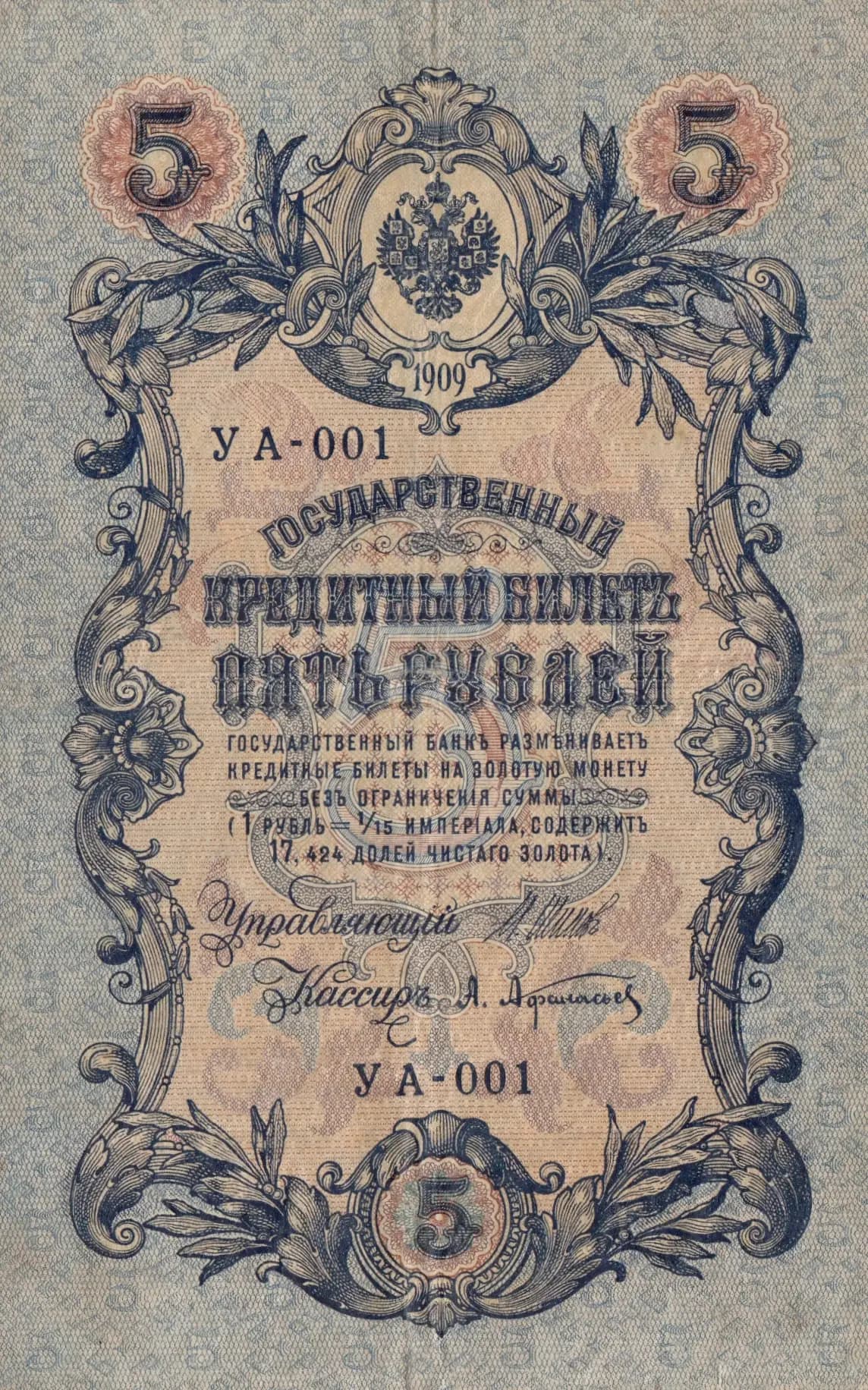
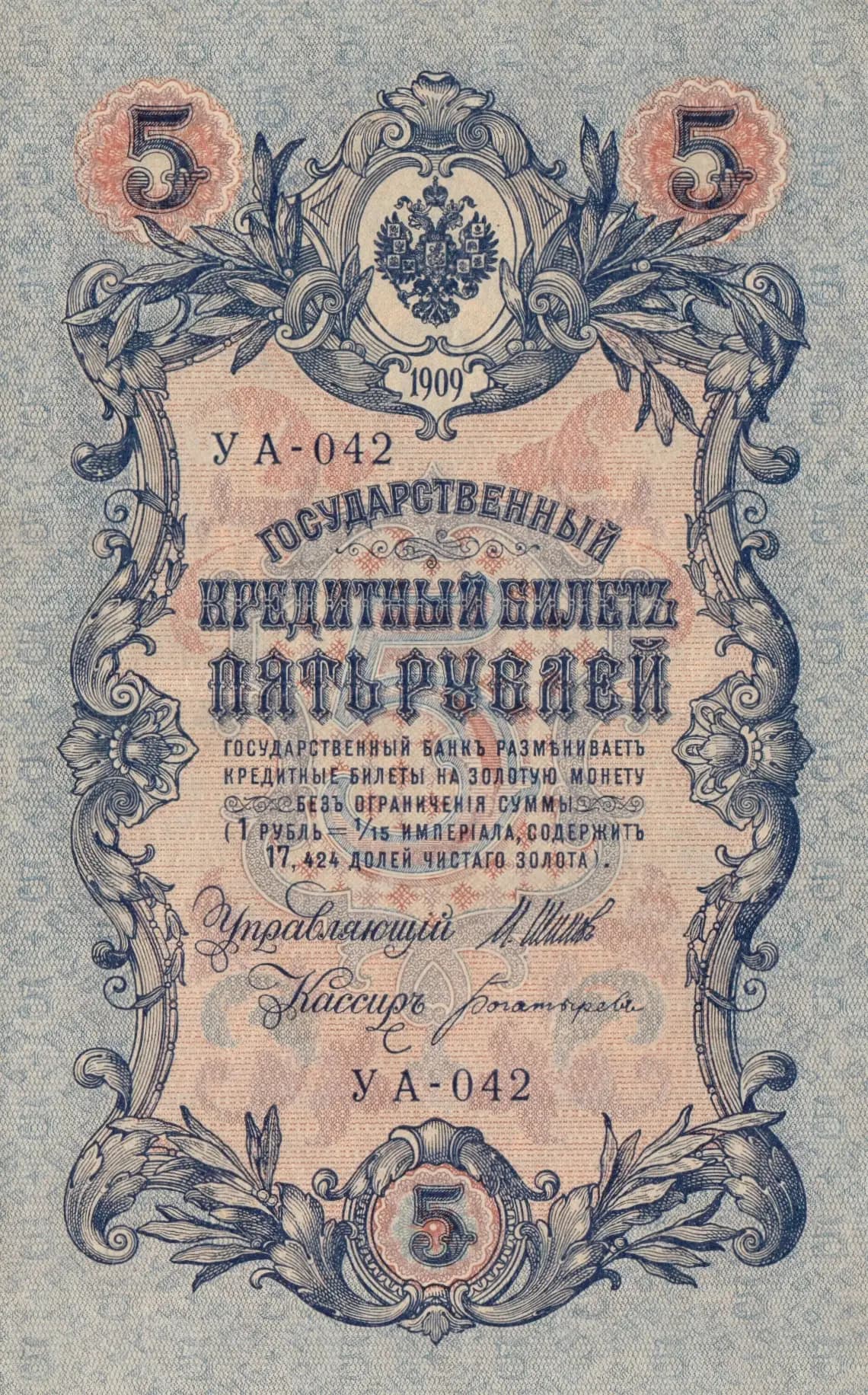
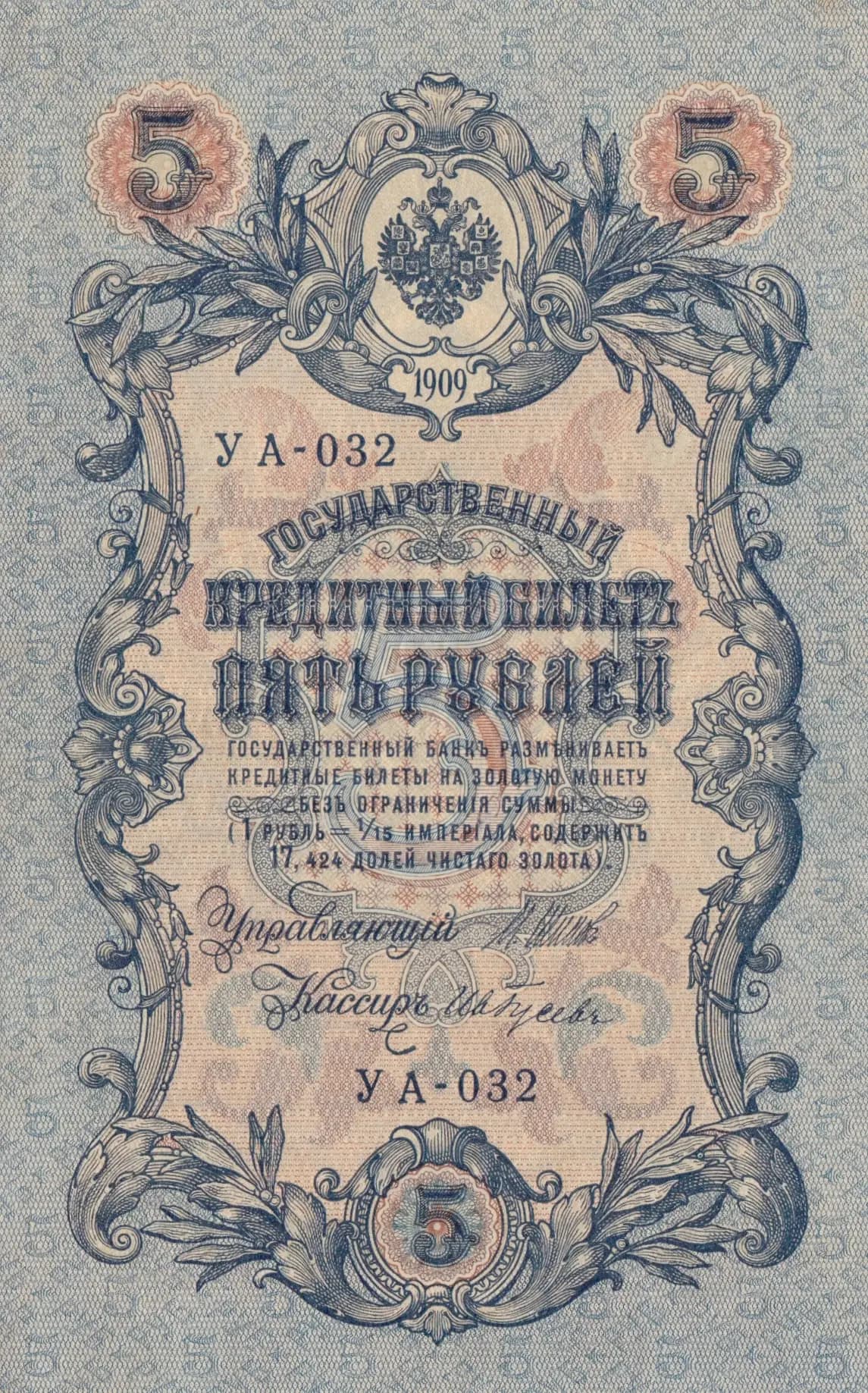
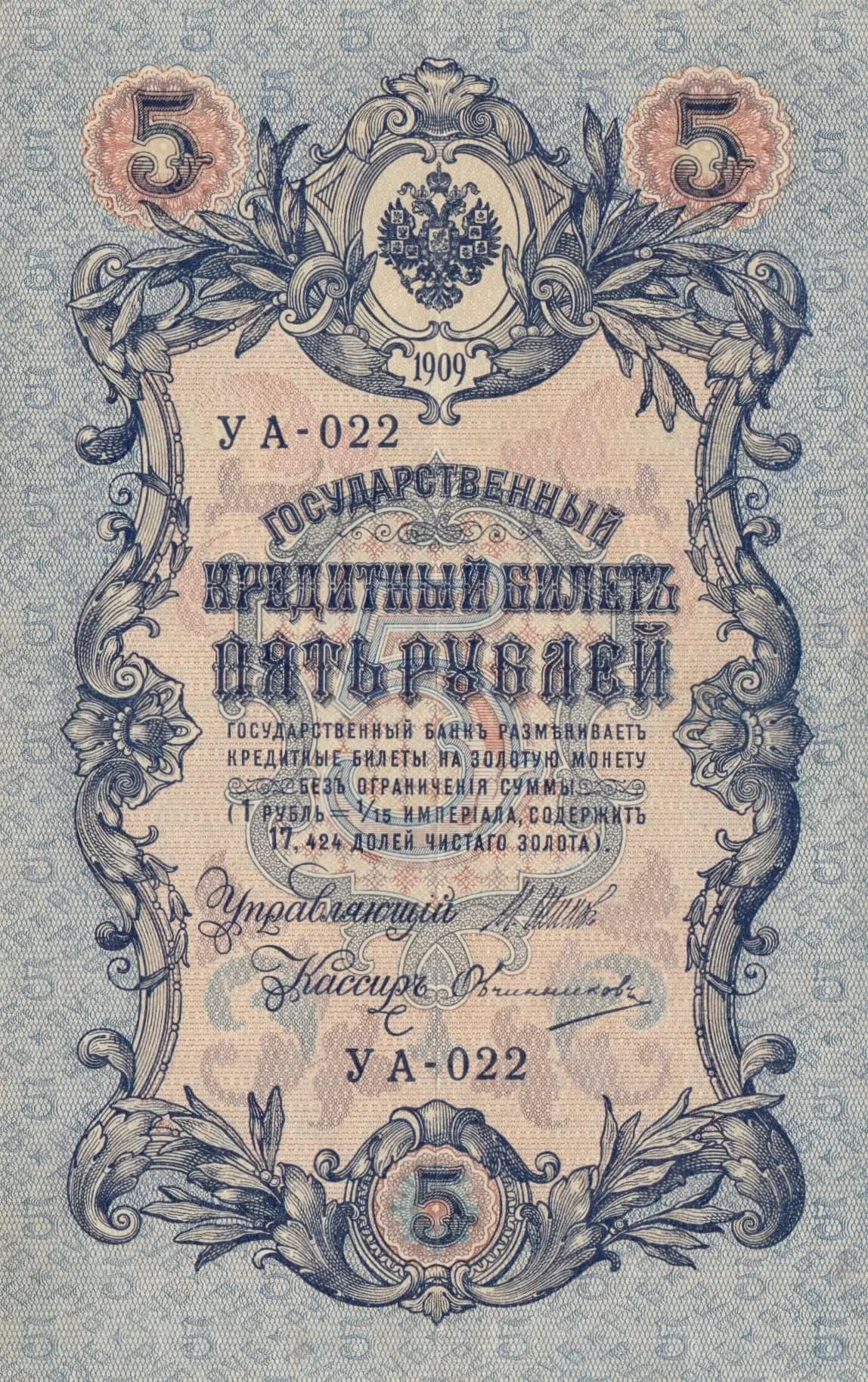
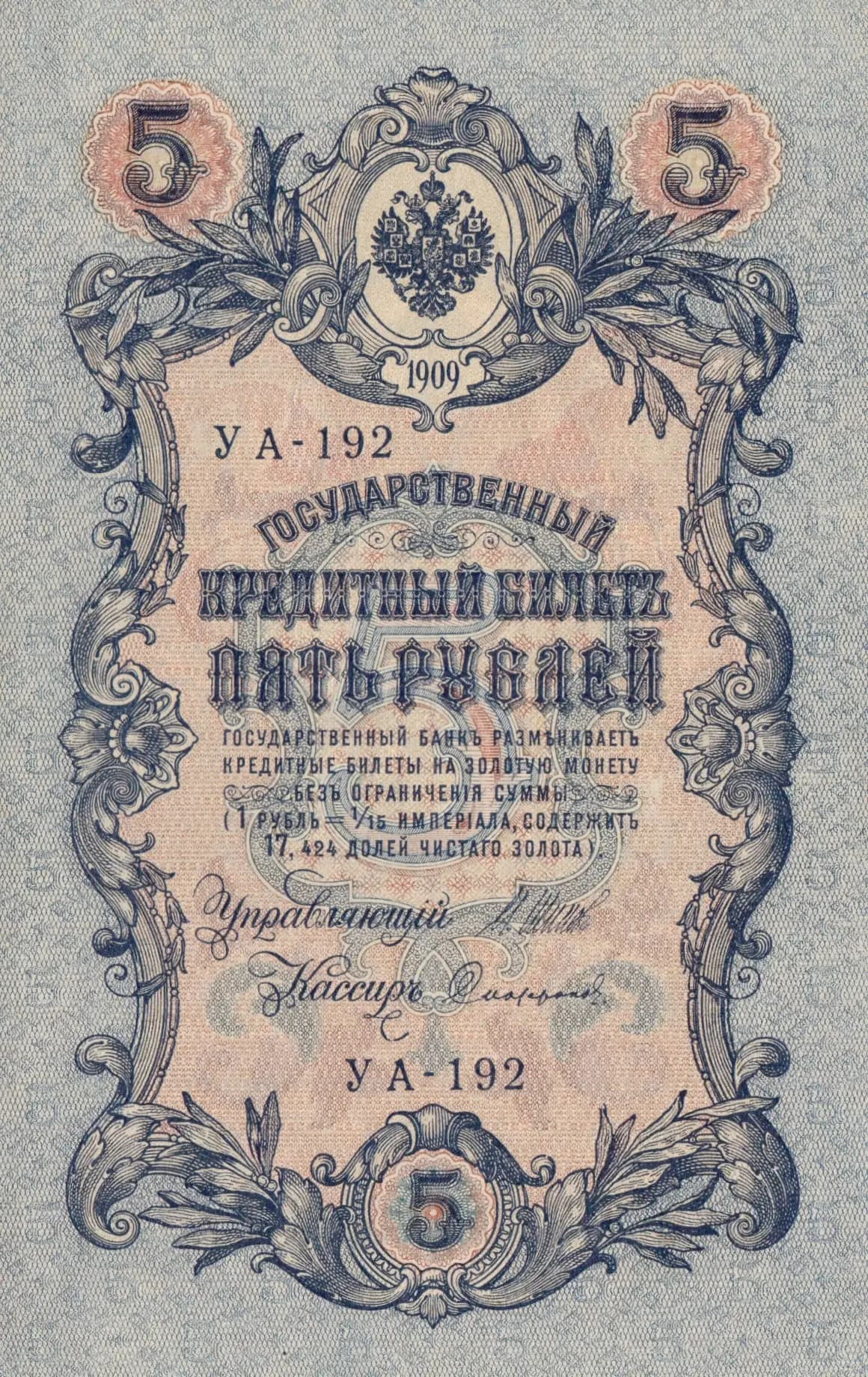
A striking 5 Rublei from the Russian Empire's final years, issued by the R.S.F.S.R. in 1917 during the tumultuous transition from Imperial to Soviet rule. This UNC example displays the magnificent Imperial State Bank design with its ornate engraved border, dual-faced heraldic eagle, and complex coat of arms rendered in vibrant peach, blue, and cream tones. The note's pristine condition and signature of Sofronov make it an exceptional example of a transitional-period Russian credit note, capturing the last gasps of Imperial numismatic tradition before the Bolshevik consolidation.
Common. The 1917 Imperial 5 Rublei notes, particularly those issued by the R.S.F.S.R. during the early Soviet period, were printed in substantial quantities before the monetary system collapsed. Print runs in the millions are typical for denominations of this value and era. While the specific signature variety (Sofronov) and condition (UNC) may have minor collector appeal, the Pick-35(2-10) cataloging designation indicates this is a standard, well-documented variety rather than a rare printing or emergency issue. The absence of overprints, special serial ranges, or short-run characteristics, combined with their survival in quantity today, confirms common classification. Rarity in this note lies in finding examples in pristine UNC condition rather than in the note's fundamental scarcity.
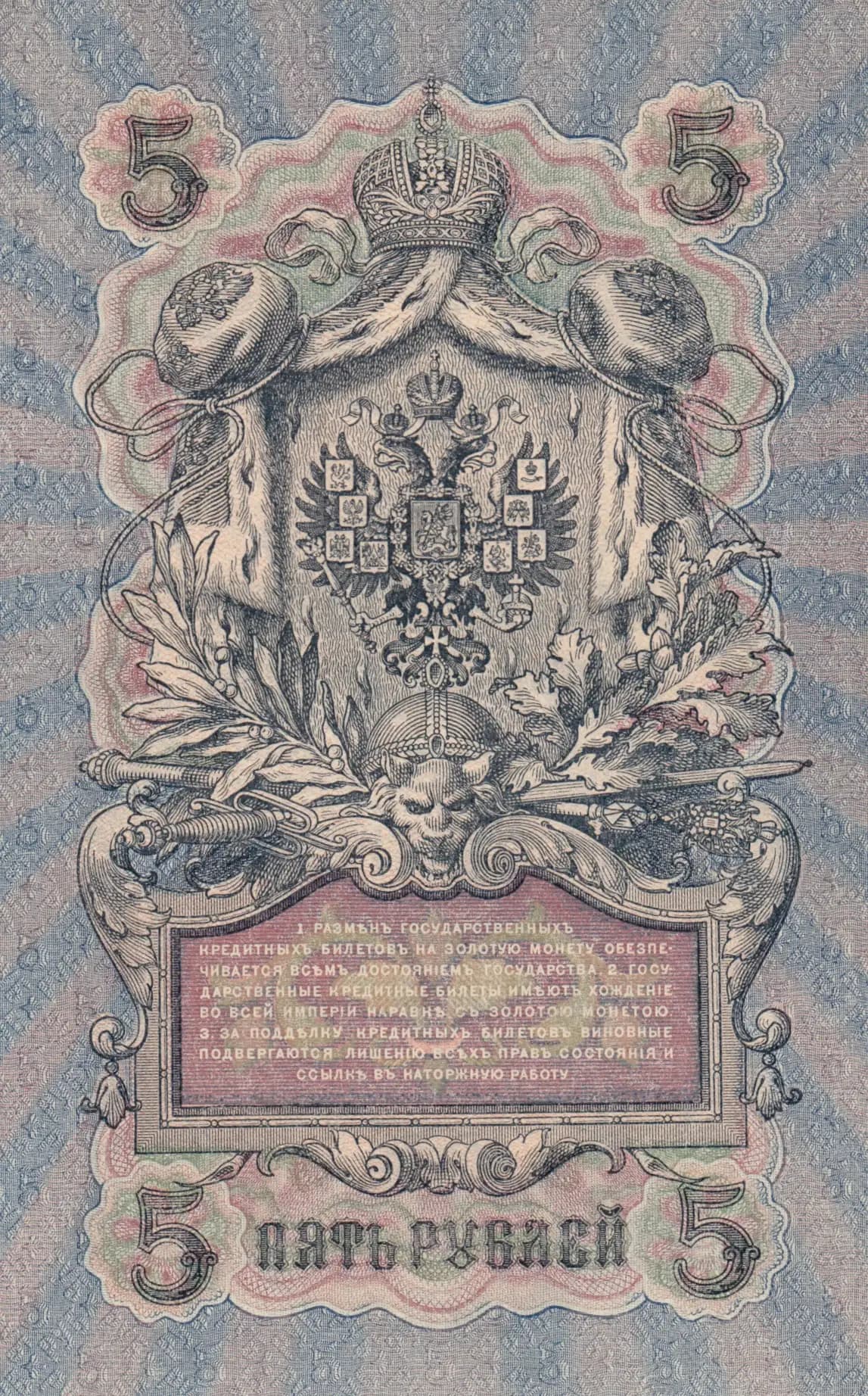
This note represents a fascinating historical crossroads: it bears the 1917 date of the Russian Revolution yet retains the full Imperial iconography—the crowned double-headed eagle, the State Bank's gold convertibility guarantee, and ornate heraldic supporters—reflecting the legal continuity claimed by the early Soviet regime. The R.S.F.S.R. issuer designation marks this as an official note of the Russian Socialist Federated Soviet Republic, issued during the chaotic transition period when Imperial credit notes were being withdrawn from circulation. The gold standard text visible on the reverse documents a monetary system that would collapse entirely within months, making this note a poignant record of Imperial Russia's final economic assertions.
The obverse (front) features a formal, symmetrical composition centered on the Imperial Russian double-headed eagle within an oval cartouche, crowned and adorned with the full regalia of the Russian Empire. The eagle is flanked by ornate floral scrollwork and architectural elements rendered in fine line engraving. The denomination '5' appears in large decorative circles at the top left and right corners, with the date '1909' (the original Imperial series date) in an ornamental frame at the center top. A comprehensive gold-backed guarantee text occupies the middle register, with spaces for signatures of the Official Director and Cashier at the lower center. The reverse (back) presents an even more elaborate heraldic composition: the crowned double-headed eagle dominates the upper third, flanked by heraldic supporters (eagles or lions holding shields), with a complex vertical arrangement of Imperial escutcheon elements below representing the various regions and territories of the Russian Empire. Four corner rosettes again display the denomination. A substantial red or crimson rectangular panel with white text near the bottom contains the legal backing clause. Throughout both sides, an intricate border of floral and geometric motifs frames the entire composition.
{"front":{"heading":"ГОСУДАРСТВЕННЫЙ КРЕДИТНЫЙ БИЛЕТ ПЯТИ РУБЛЕЙ","translation":"State Credit Note of Five Rubles","denomination":"5","date":"1909 (Imperial series date)","serialDesignation":"уА-192","goldReserveClause":"ГОСУДАРСТВЕННЫЙ БАНК РАЗМЕНИВАЕТ КРЕДИТНЫЕ БИЛЕТЫ НА ЗОЛОТУЮ МОНЕТУ БЕЗ ОГРАНИЧЕНИЯ СУММЫ (1 РУБЛЬ = 1/15 ИМПЕРИАЛА, СОДЕРЖИТ 17,424 ДОЛЕЙ ЧИСТОГО ЗОЛОТА) — The State Bank exchanges credit notes for gold coins without limitation of amount (1 Ruble = 1/15 Imperia, contains 17.424 parts of pure gold)","signatoriesLabels":"Официальный Директор (Official Director); Кассир (Cashier)"},"back":{"denomination":"ПЯТЬ РУБЛЕЙ (Five Rubles)","legalClause":"РАЗМЕН ГОСУДАРСТВЕННЫХ КРЕДИТНЫХ БИЛЕТОВ НА ЗОЛОТУЮ МОНЕТУ ОБЕСПЕЧИВАЕТСЯ ЗОЛОТЫМ ЗАПАСОМ, ХРАНЯЩИМСЯ В ГОСУДАРСТВЕННОМ КАЗНАЧЕЙСТВЕ И ВО ВСЕХ ГОСУДАРСТВЕННЫХ БАНКАХ, ИМЕЮТ ХОЖДЕНИЕ ВО ВСЕЙ ИМПЕРИИ НАРАВНЕ С ЗОЛОТОЮ МОНЕТОЮ... — The exchange of state credit notes for gold coins is secured by the gold reserve stored in the State Treasury and in all state banks. They circulate throughout the entire empire on equal footing with gold coins and according to the responsibility of credit notes with respect to rights and conditions..."}}
Intaglio engraving (line engraving), the dominant security printing method for Imperial Russian State Bank credit notes. The exceptionally fine detail visible in the border work, heraldic elements, and decorative rosettes is characteristic of high-security steel plate engraving employed by the Imperial Bank Printing Works (or contracted security printers). The layered fine-line architecture and complexity of the coat of arms suggest work by the top-tier Imperial printing establishment, likely the State Printing Works in St. Petersburg or a contracted security printer of equivalent caliber such as Giesecke & Devrient or similar European security houses that worked for the Russian Imperial Bank.
This note is identified as Pick-35(2-10), indicating it is the second denomination of the 1917 Russian R.S.F.S.R. series, 10th variety within that grouping. The signature of Sofronov (Софронов) appears to be a documented authorized signature for this period. The serial designation prefix 'уА' (Cyrillic 'u' and Latin 'A') may indicate a specific printing batch or series within the 1917 issuance. No overprints or emergency markings are visible, suggesting this is an ordinary emission rather than a wartime or crisis variant. Researchers of the R.S.F.S.R. 1917 issues should note signature combinations and serial prefixes as differentiating characteristics; the Sofronov signature variant documented here adds specificity to catalog attribution.