5 rublei 1909
“Sig.Shagin”
About This Note
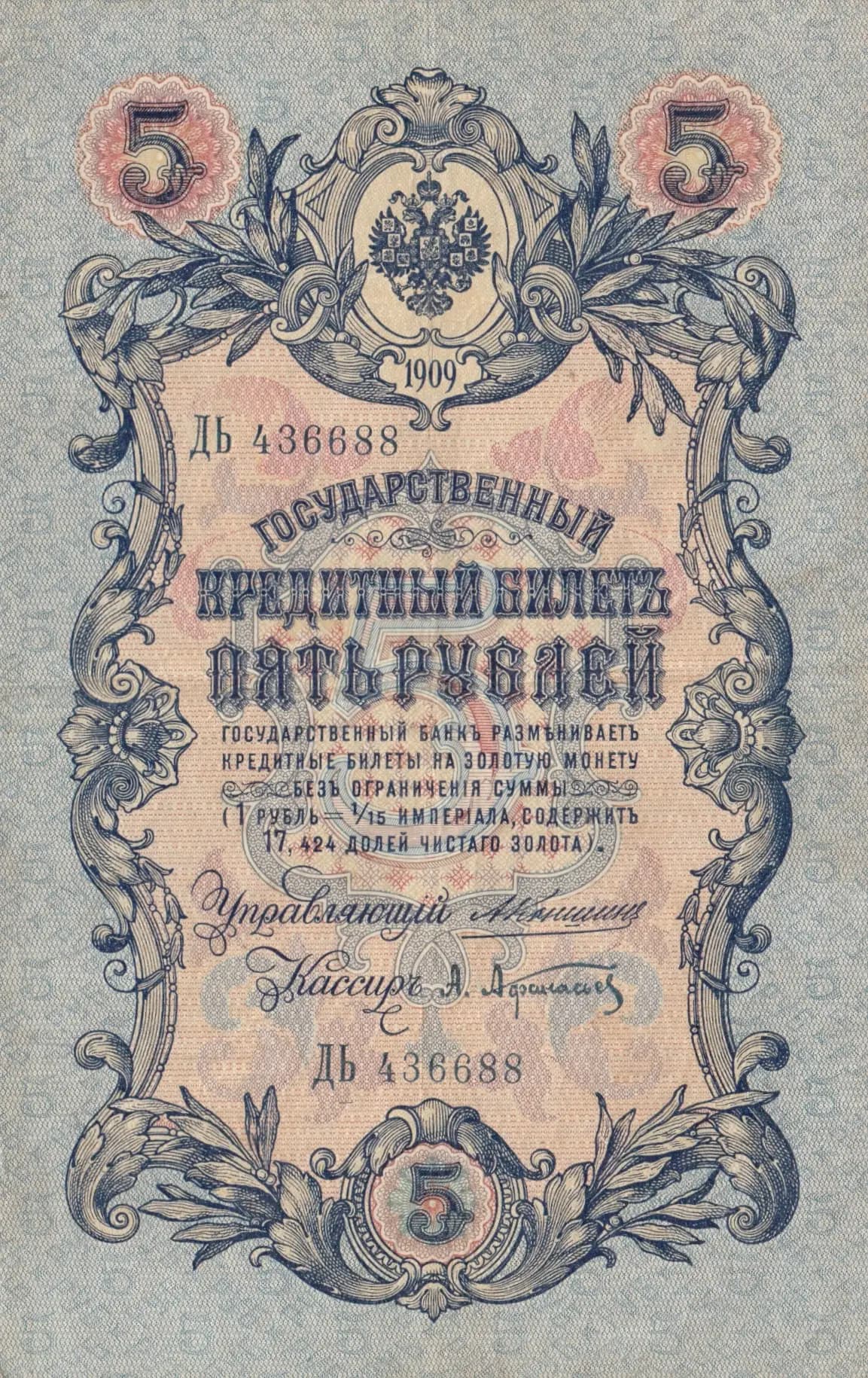
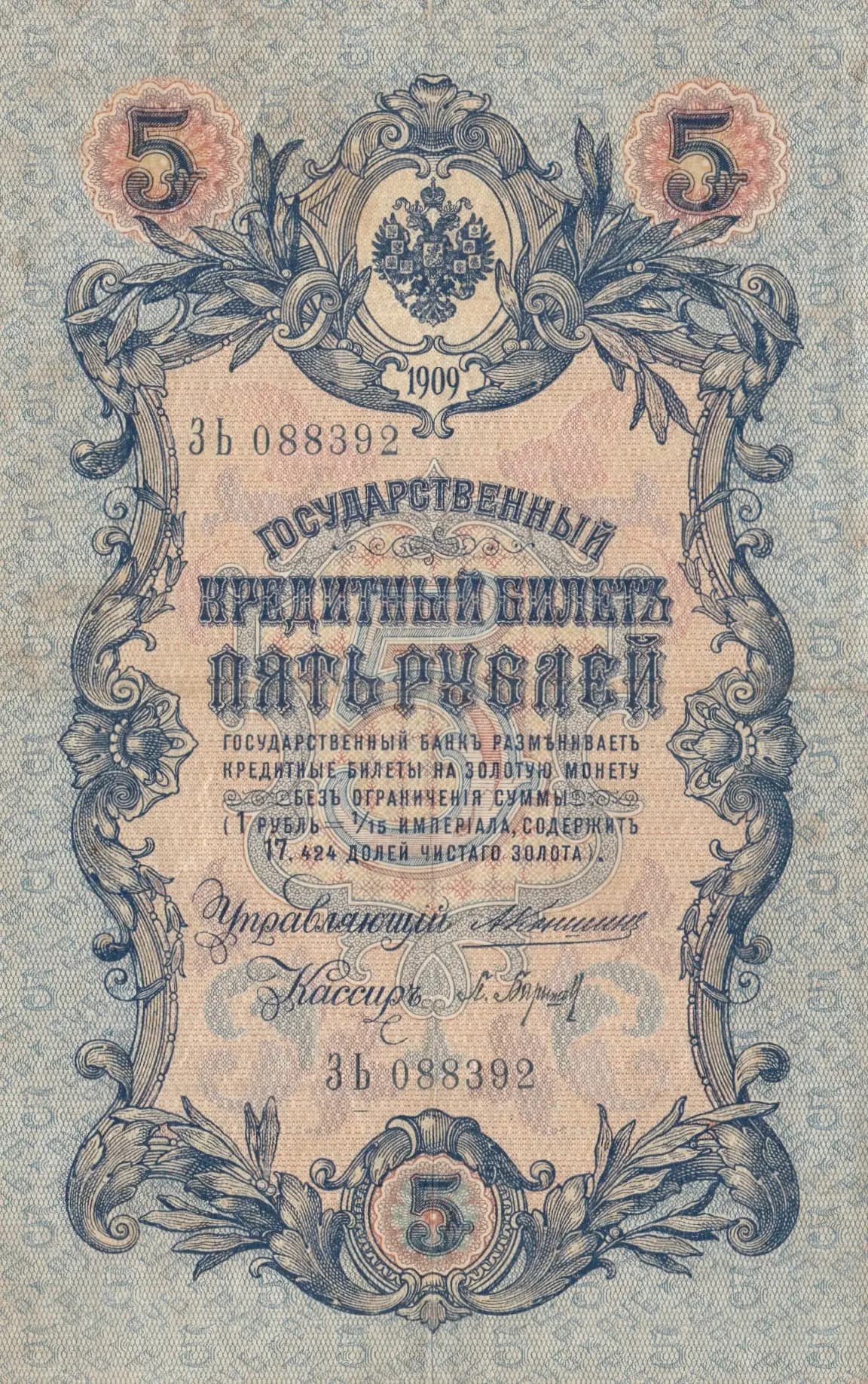
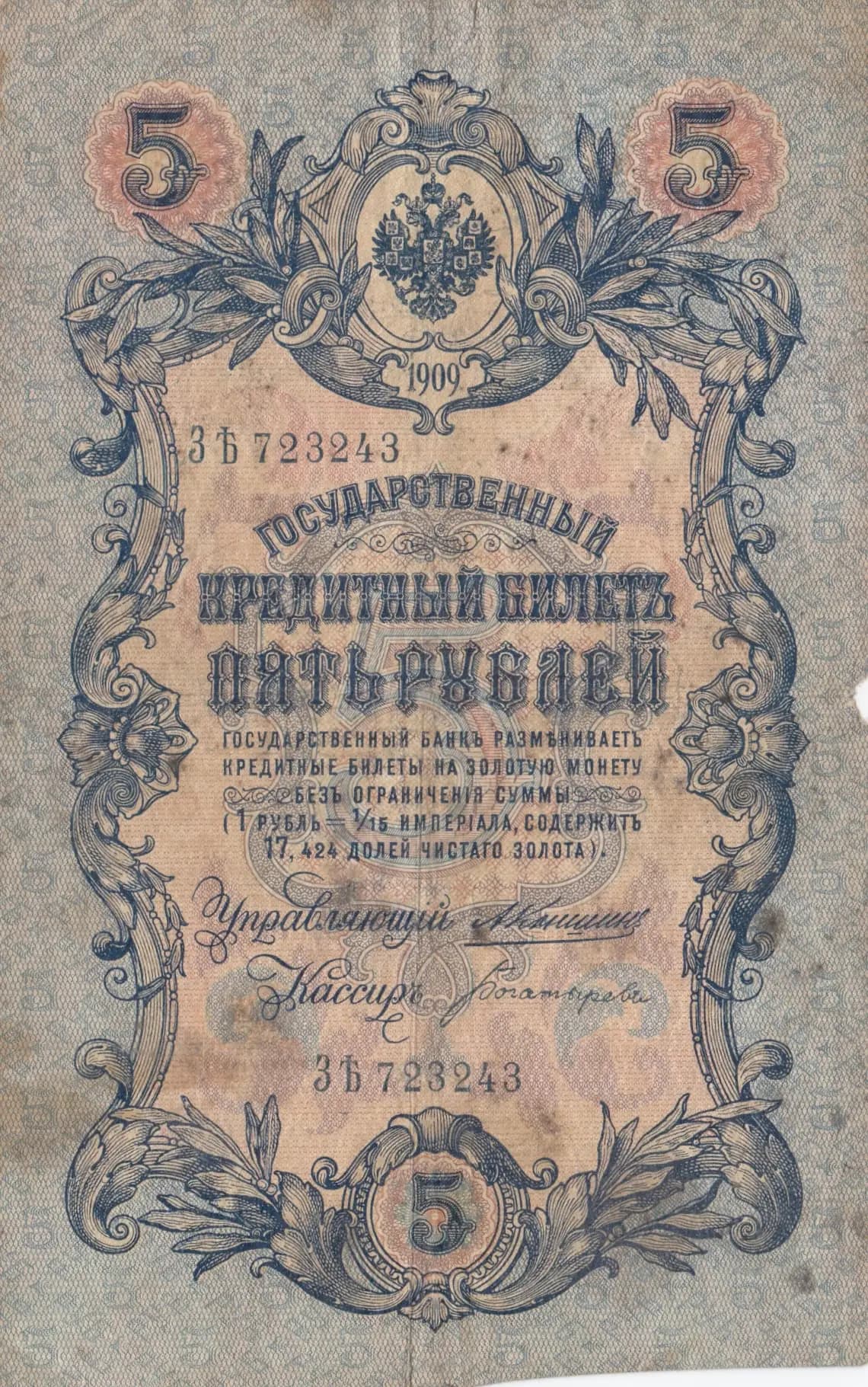
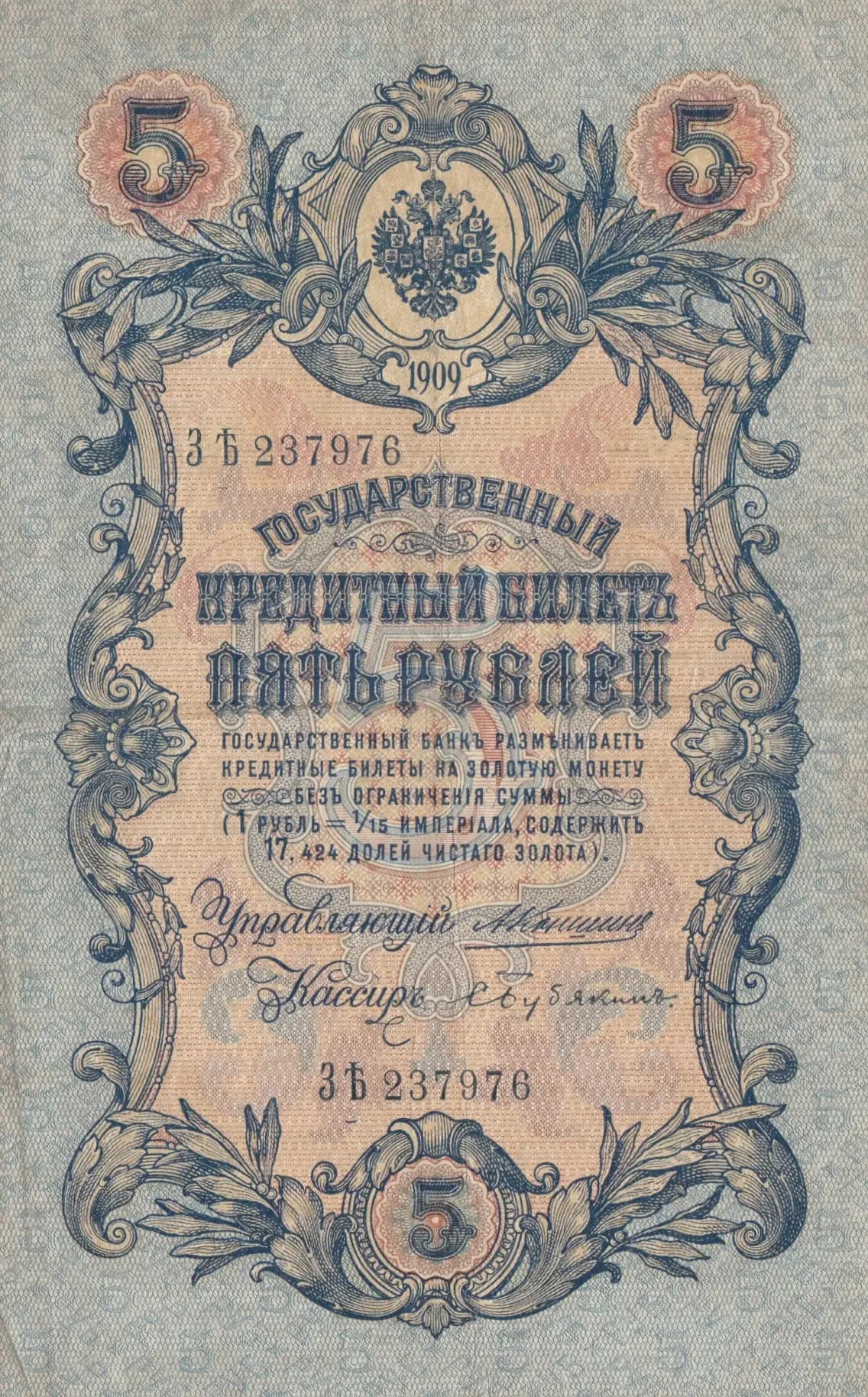
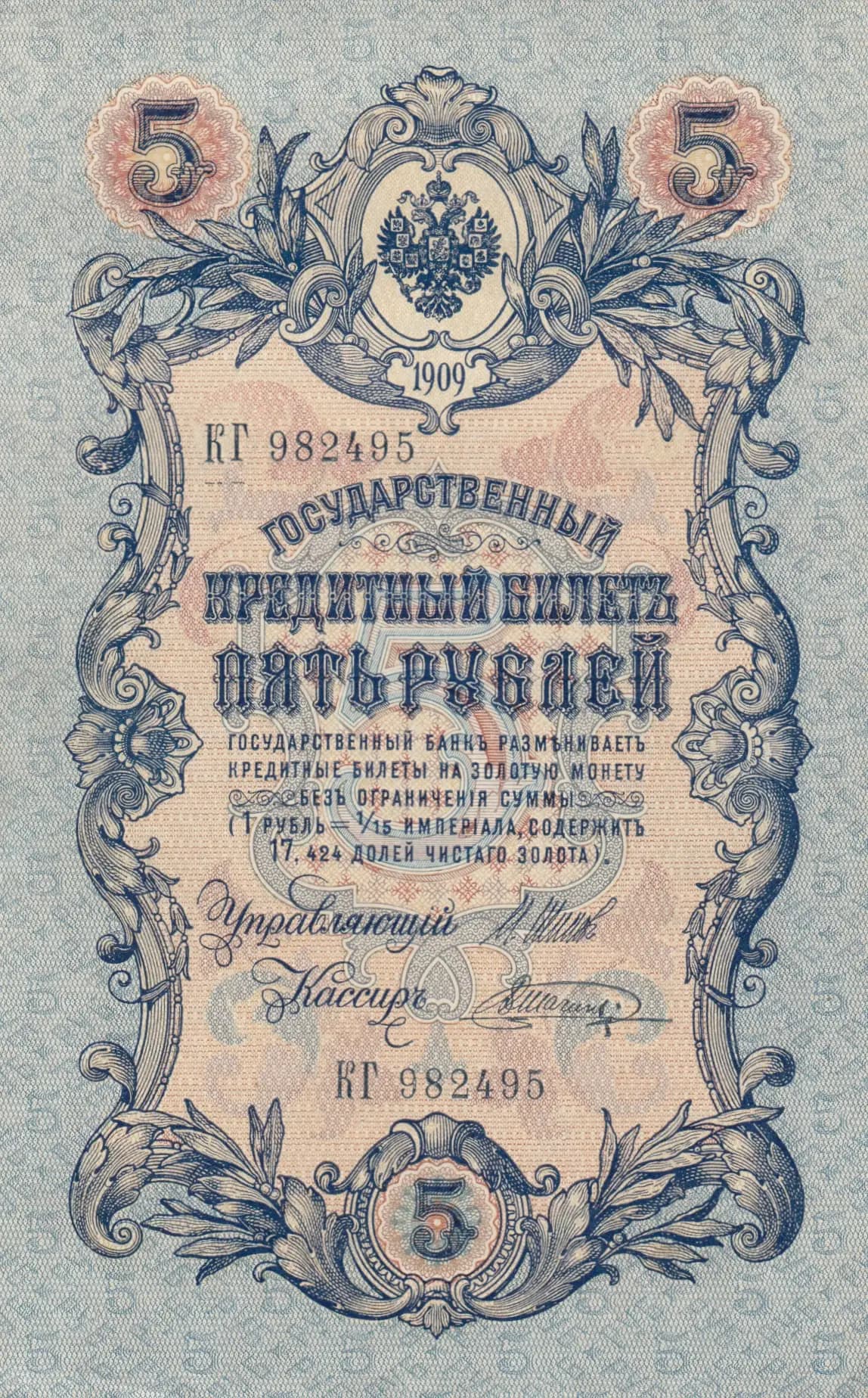
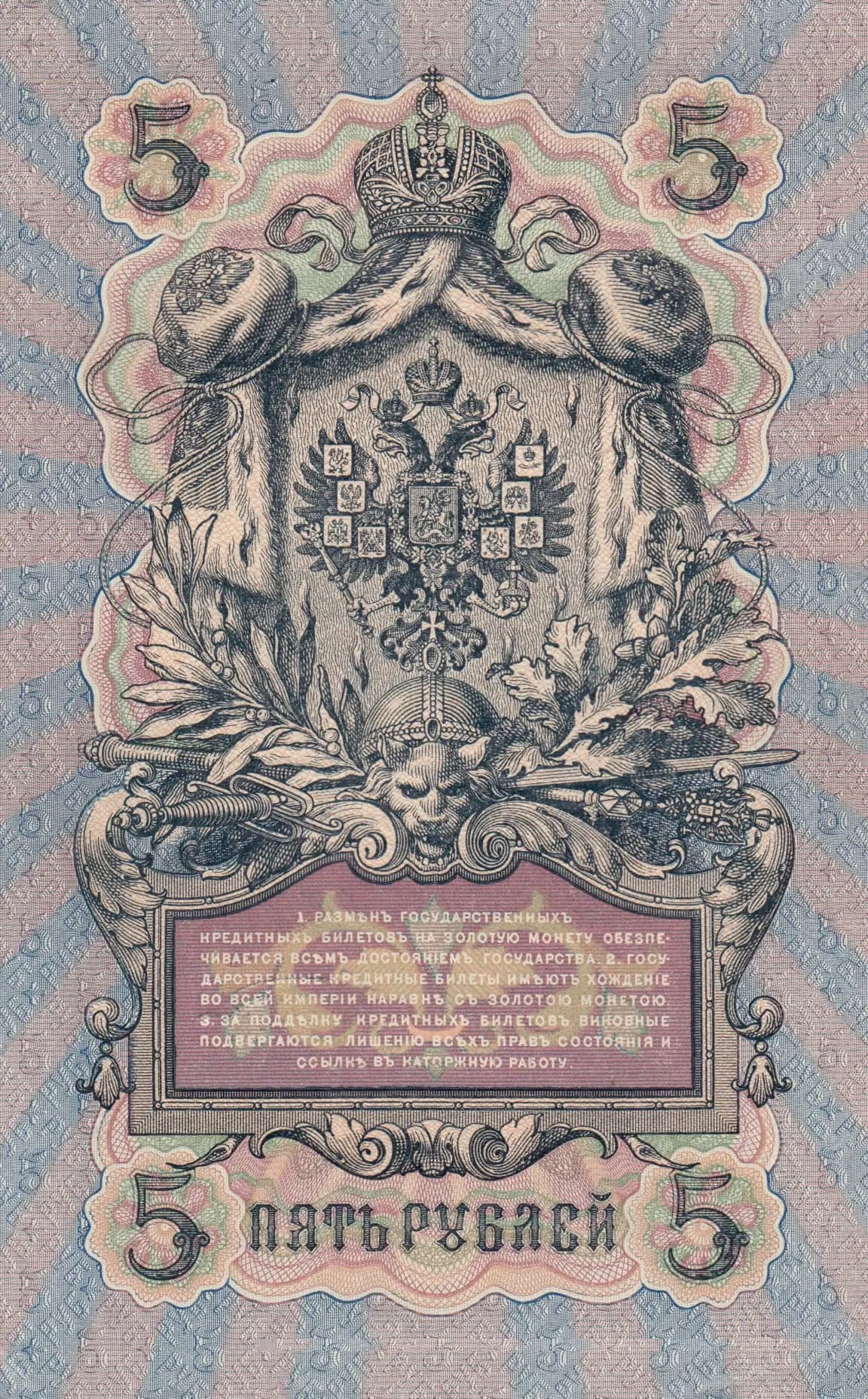
An exceptional example of a 5 rublei credit note from the Russian Empire dated 1909, graded AU with minimal wear and sharp printing throughout. The note displays the characteristic ornate design of early 20th-century Russian Imperial currency, featuring the double-headed eagle coat of arms prominently on both sides within elaborate baroque-style decorative borders rendered in blue, pink, and cream tones. This particular specimen with the KG 982495 serial number and bearing the signature of Shagin represents a well-preserved example of Russia's gold-standard currency system from the final decades before the 1917 Revolution.
Common. The 5 rublei denomination was one of the most widely issued and circulated denominations of Russian Imperial credit notes during the 1909-1917 period, with large print runs maintained to serve general commercial and retail transactions throughout the vast Russian Empire. Notes from this series remain readily available to collectors in various grades, though AU-graded examples in excellent condition command modest premiums over circulated examples. The specific variety with Shagin's signature (as noted in the collector notes) is within the standard signature varieties for this Pick number and does not constitute a rare variant.
This 5 rublei note was issued during the reign of Tsar Nicholas II under the gold standard system, with inscriptions explicitly guaranteeing exchange for gold coins (17.424 doley of pure gold per ruble). The prominent Imperial Russian coat of arms—the double-headed eagle with crown and orb—symbolized the absolute authority of the Russian Empire and its commitment to sound monetary policy. The note predates the Russian Revolution by eight years, representing the last stable currency system of Imperial Russia before the state's collapse and the subsequent hyperinflation that would render such notes worthless.
The note features an exceptionally elaborate design typical of Imperial Russian currency from this period. The obverse (front) centers on the Imperial Russian coat of arms within an ornate cartouche—specifically the double-headed eagle of the Romanov Dynasty, depicted wearing a crown and holding orbs in its talons, symbolizing imperial power and legitimacy. The reverse showcases an even more complex heraldic composition with the full Imperial coat of arms, featuring the central double-headed eagle surrounded by a shield containing the regional emblems of the Russian Empire's constituent territories. Both sides feature the denomination '5' in large, decorative numerals positioned in all four corners within rococo-style rosettes. The entire design is rendered in fine engraved line work with intricate scrollwork, laurel wreaths, floral and botanical motifs, and ornamental borders characteristic of late 19th/early 20th-century European security printing. The color palette combines blue, pink/salmon, green, and cream tones to create visual security and aesthetic appeal. The serial number (KG 982495) appears on both front and back.
FRONT SIDE: '5 РУБЛЕЙ' (Five Rubles); 'ГОСУДАРСТВЕННЫЙ КРЕДИТНЫЙ БИЛЕТ ПЯТИ РУБЛЕЙ' (State Credit Note of Five Rubles); 'ГОСУДАРСТВЕННЫЙ БАНК РАЗМЕЩИВАЕТ КРЕДИТНЫЕ БИЛЕТЫ НА ЗОЛОТУЮ МОНЕТУ БЕЗ ОГРАНИЧЕНИЯ СУММЫ' (The State Bank issues credit notes for gold coins without limit of sum); '1 рубль = 1/15 императала, содержить 17,424 долей чистого золота' (1 ruble = 1/15 imperial, contains 17,424 doley of pure gold); 'Управляющий Банк' (Managing Bank); 'Кассир' (Cashier); Serial number: 'КГ 982495'. BACK SIDE: 'ПЯТЬ РУБЛЕЙ' (Five Rubles); Legal text regarding exchange guarantee: 'РАЗМѢНЬ ГОСУДАРСТВЕННЫХЪ КРЕДИТНЫХЪ БИЛЕТОВЪ НА ЗОЛОТУЮ МОНЕТУ ОБЕЗПЕЧИВАЕТСЯ ВСЀМЪ ДОСТОЯНІЕМЪ ГОСУДАРСТВА' (Exchange of state credit notes for gold coins is ensured by all assets of the state); Warning against counterfeiting: 'ПОДЛИННОЙ КРЕДИТНЫХЪ БИЛЕТОВЪ ВИНОВНЫЕ ПОДВЕРГАЮТСЯ ЛИШЕНІЮ ВСЀХЪ ПРАВЪ СОСТОЯНИЯ И ССЫЛЬ ВЪ КАТАРЖНУЮ РАБОТУ' (Those guilty of counterfeiting credit notes are subject to deprivation of all rights of status and exile to hard labor).
Intaglio (engraved) printing on white bond paper, utilizing multiple color runs (blue, pink/salmon, green, and black) to produce the complex design. The Russian Imperial note-printing facilities (likely the State Printing House in St. Petersburg) employed the finest European engraving and printing techniques available. The fine line work throughout, the precision of the multi-color registration, and the intricate detail of the heraldic imagery are characteristic of high-security banknote production from the Imperial period. The serial numbers were applied separately through letterpress printing.
This note represents Pick 10b(16), which identifies it within the 1909 State Credit Note series with the specific signature variety. The 'KG' prefix of the serial number and the Shagin signature are documented signature varieties for this denomination and year. The note's AU condition grade and sharp printing characteristics distinguish it as a well-preserved example, though no overprints, errors, or unusual varieties are evident from the visual analysis. The note conforms to standard specifications for the 1909 5 rublei issue.