5 rublei 1909
“Sig.Afanasjev”
About This Note
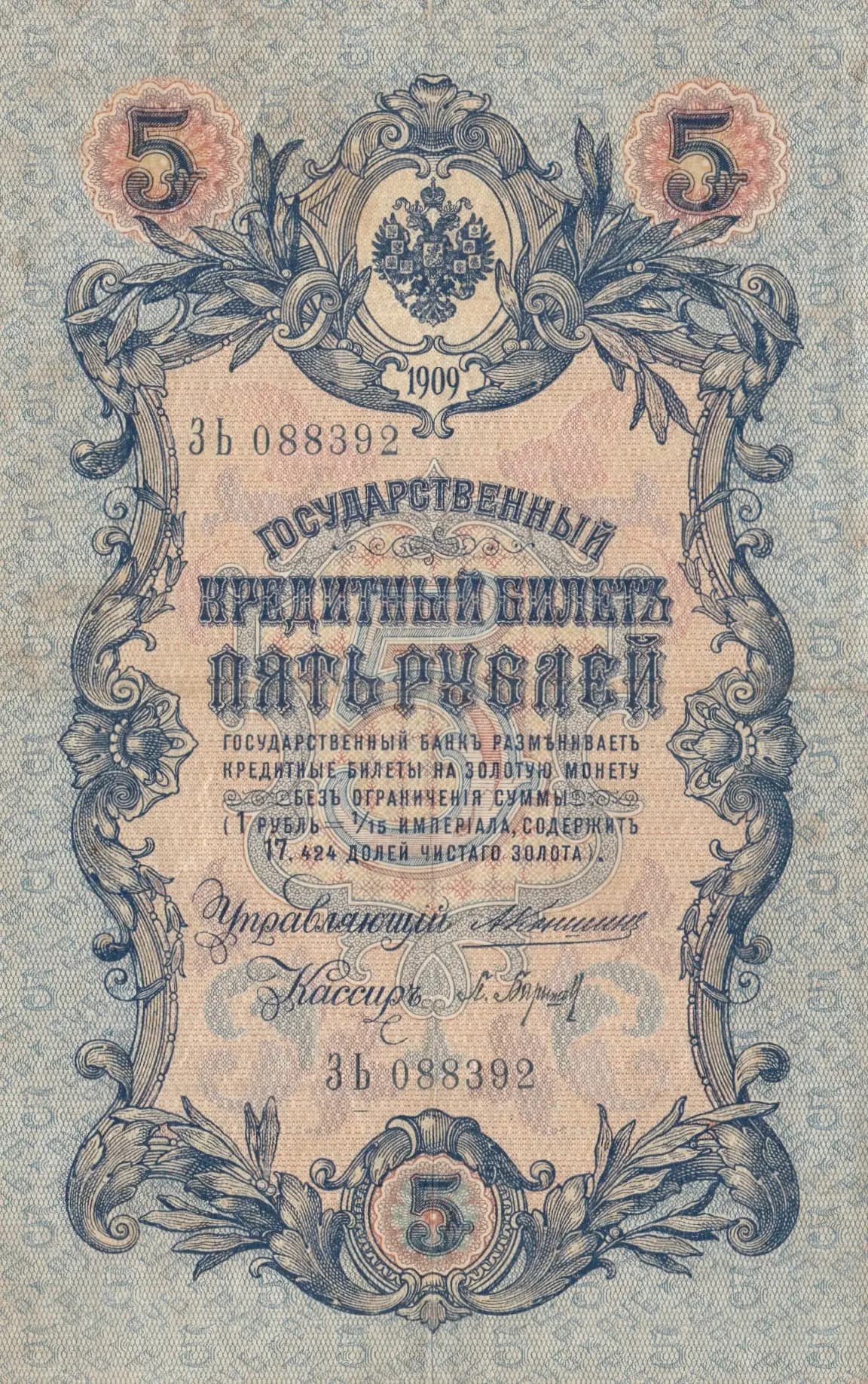
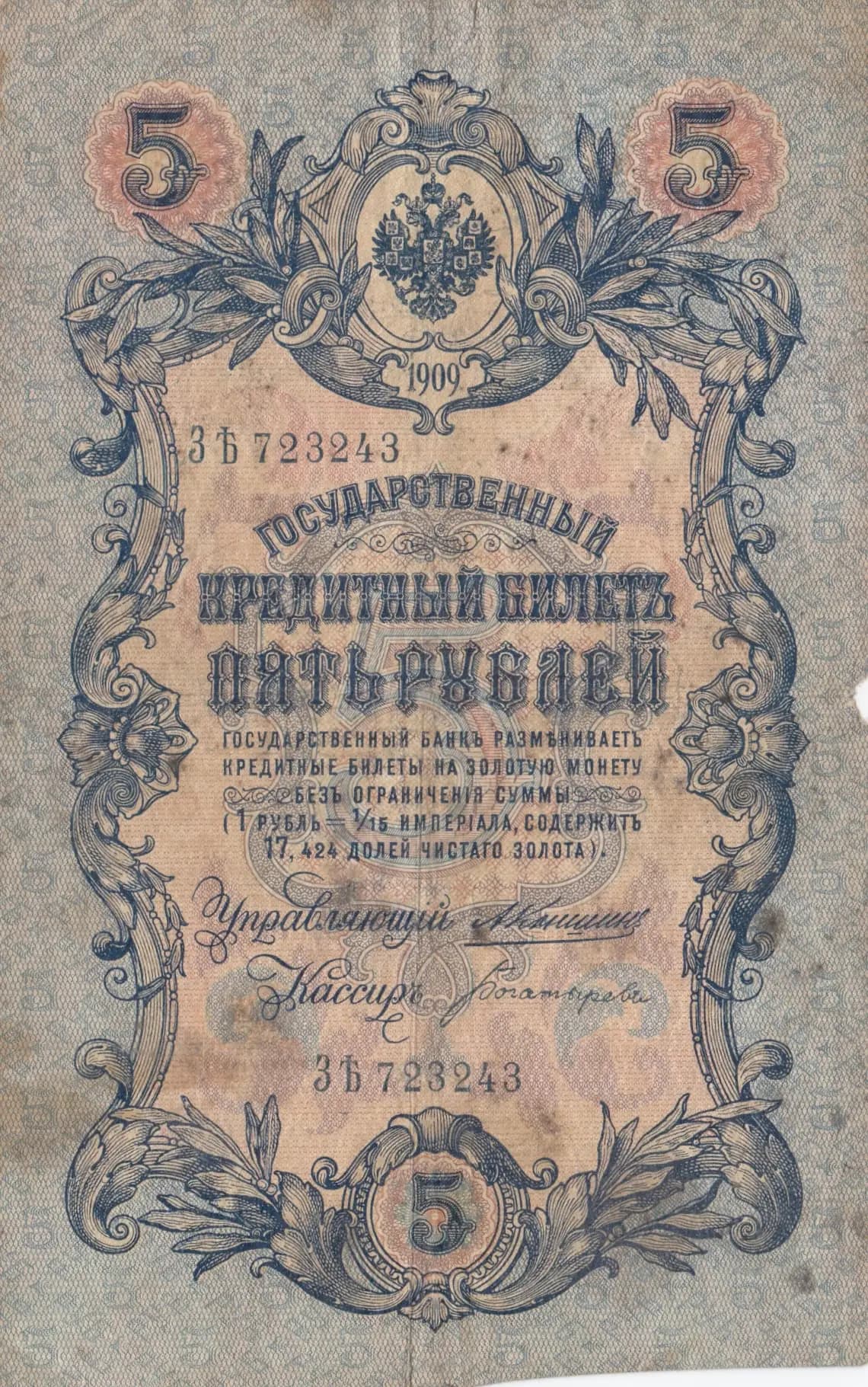
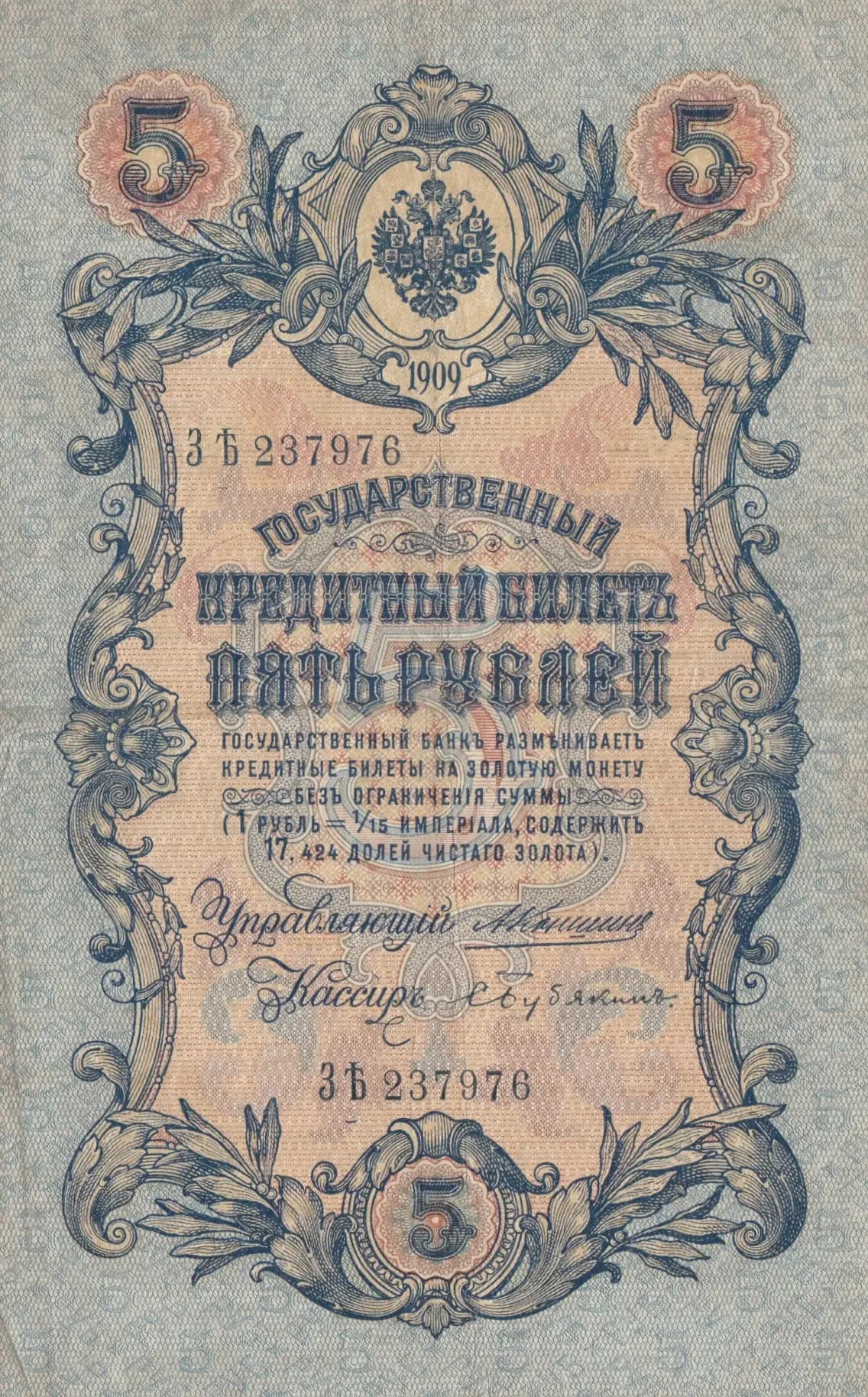
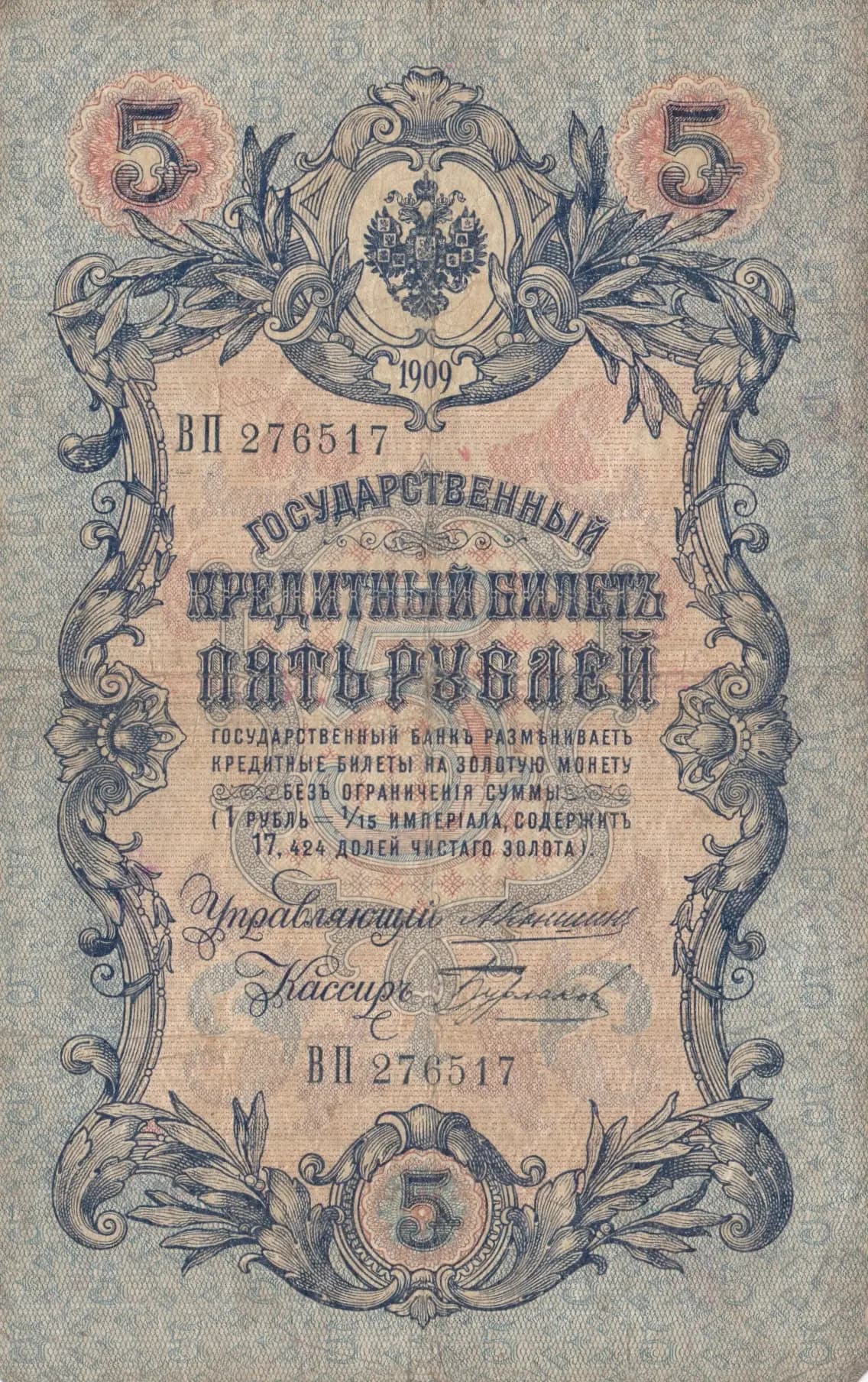
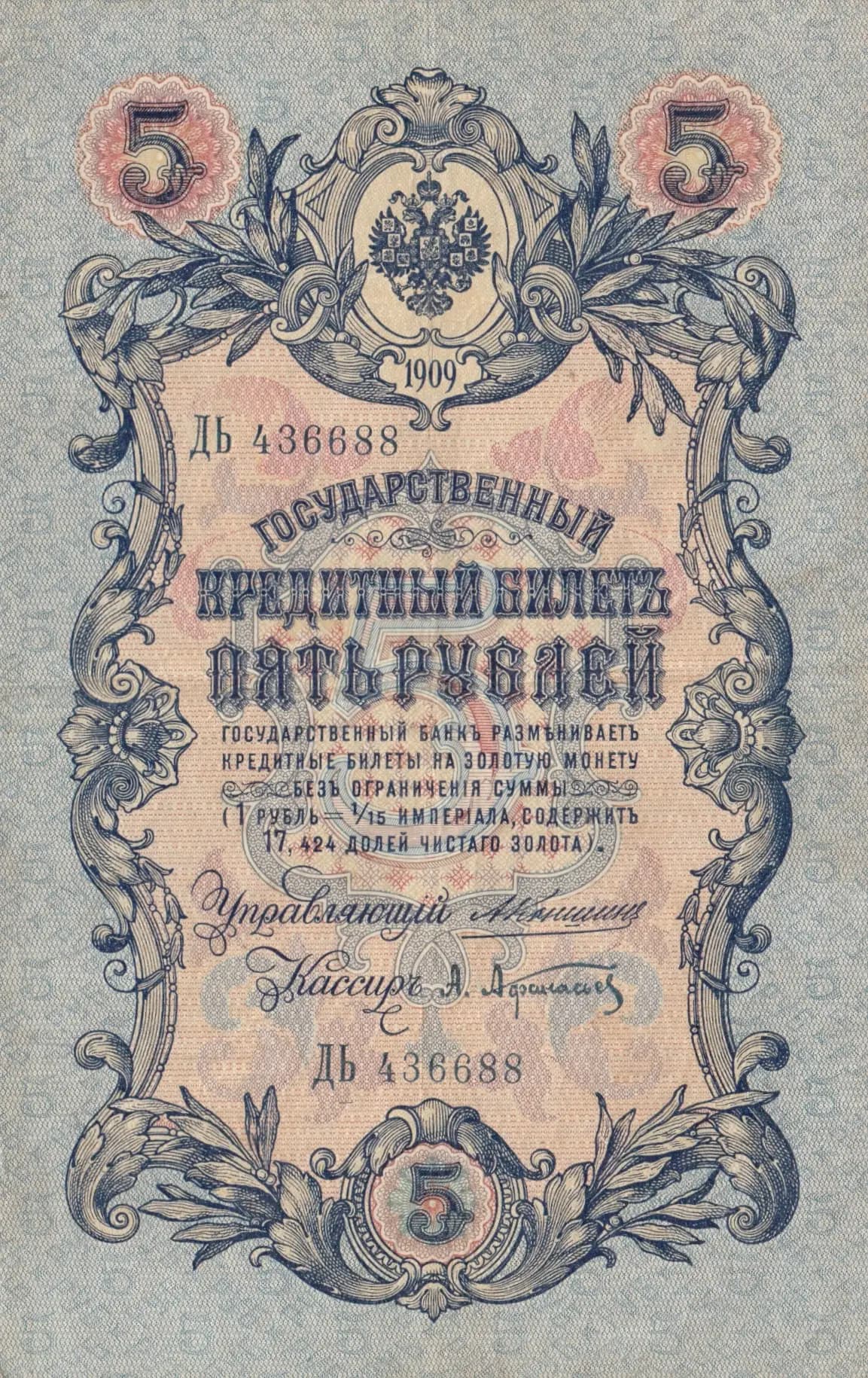
This is a striking example of the 1909 Russian Imperial 5 Ruble note (Pick P-10a(1)) in VF condition, featuring the iconic double-headed eagle coat of arms prominently displayed in ornate oval cartouches on both sides. The note exhibits excellent preservation with sharp, clear printing in the characteristic cream/beige, pink/rose, dark blue, and black color palette typical of this issue. The elaborate Baroque-style ornamental borders and fine engraving throughout showcase the sophisticated security features and artistic craftsmanship of Imperial Russian banknote production.
Common. The 1909 5 Ruble note is a standard issue from the latter Imperial period with substantial circulation. No specific print run limitations, short-lived issuing circumstances, or collector scarcity factors apply to this Pick number. While Imperial Russian notes have gained interest among collectors, this particular denomination and year remain widely available in the collector market. VF condition examples are regularly encountered.
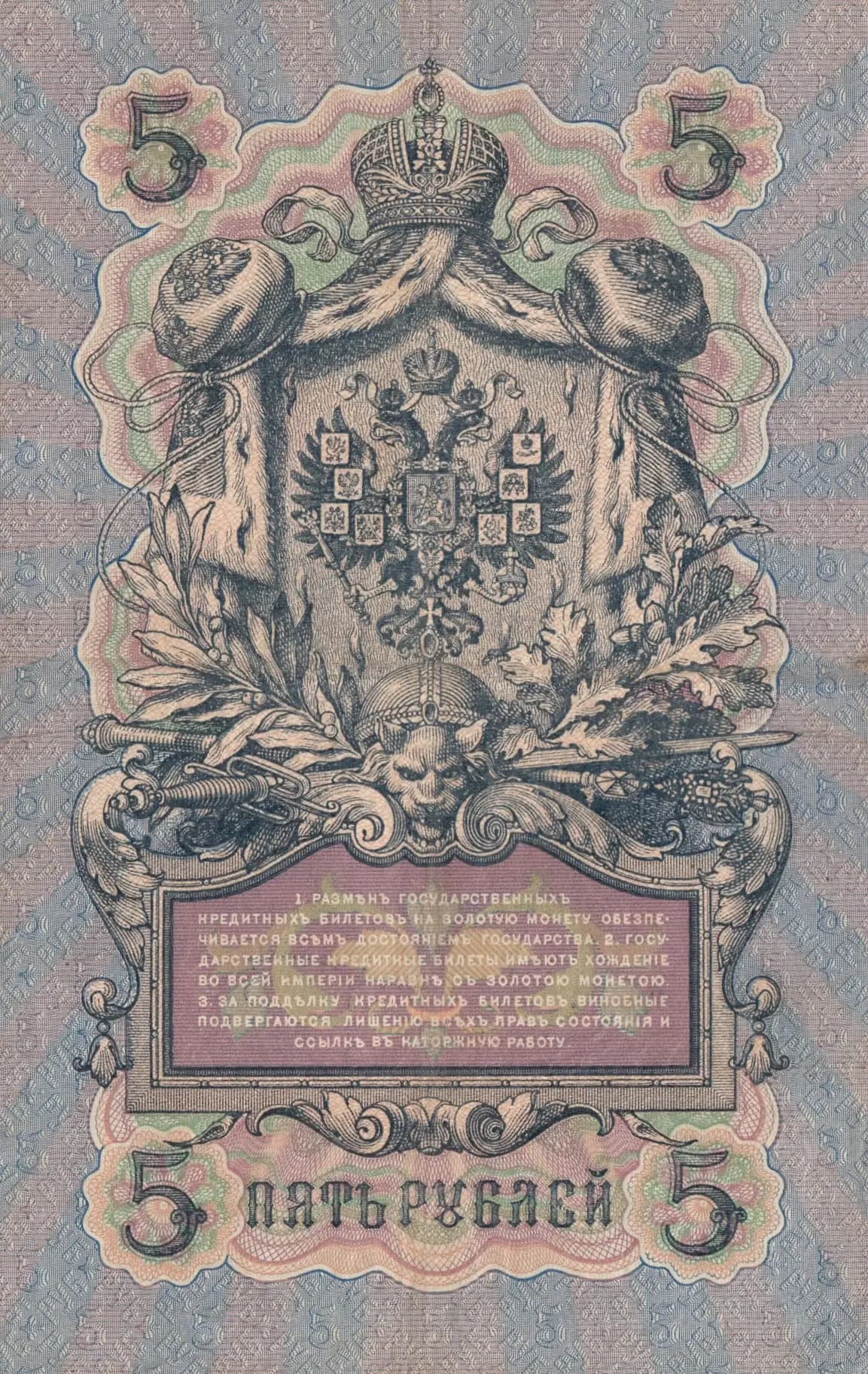
This note was issued during the final years of Tsarist Russia under the gold standard system, as evidenced by the inscriptions detailing the ruble's gold content (17.424 parts of pure gold per ruble, equal to 1/15 Imperial). The elaborate heraldic imagery on the reverse—featuring military regalia, cannons, anchors, and imperial emblems—reflects Russia's imperial power and territorial ambitions during the early 20th century. The note's promise of unlimited gold exchange backed by 'all the wealth of the state' underscores the confidence of the pre-Revolutionary Russian monetary system.
The front design centers on the Imperial Russian double-headed eagle coat of arms enclosed in an ornate oval cartouche, framed by elaborate Baroque scrollwork, laurel branches, and floral elements. The denomination '5' appears in decorative pink/rose rosettes positioned in the upper left and lower right corners. The reverse features a significantly more complex heraldic composition with the double-headed eagle as the central emblem surrounded by a grand arrangement of heraldic shields representing the various territories of the Russian Empire. Military and maritime symbols—crossed cannons, anchors, imperial orb and scepter—are integrated into the design, emphasizing the state's power and dominion. The numeral '5' repeats in all four corners on the reverse. Both sides employ a consistent color scheme of cream/beige base with blue, black, and pink/rose accents. The design is unsigned (no named engraver is indicated in the visual analysis), though ministerial and cashier signature lines appear on the front.
FRONT: Государственный Кредитный Билет / 'State Credit Note' | Пять Рублей / 'Five Rubles' | Государственный Банк Разменивает Кредитные Билеты На Золотую Монету Без Ограничения Суммы / 'The State Bank Exchanges Credit Notes for Gold Coins Without Limit of Amount' | Рубль = 1/15 Империала, Содержить 17,424 Долей Чистого Золота / 'Ruble = 1/15 Imperial, Containing 17,424 Parts of Pure Gold' | Управляющий Министр / 'Minister in Charge' | Кассир / 'Cashier' | Serial number: Дь 436688. BACK: Пять Рублей / 'Five Rubles' | Размен Государственных Кредитных Билетов На Золото Монету Обеспечивается Всем Достоянием Государства. В Государственные Кредитные Билеты Имеют Хождение Во Всей Империи Наравне Об Золотою Монетою. В Подделке Кредитных Билетов Виновные Подвергаются Лишению Всех Прав Состояния И Ссылке В Каторжную Работу / 'Exchange of State Credit Notes for Gold Coins is Backed by All the Wealth of the State. State Credit Notes Have Circulation Throughout the Entire Empire on Equal Terms with Gold Coins. Those Guilty of Counterfeiting Credit Notes are Subject to Deprivation of All Property Rights and Exile to Penal Labor'
Intaglio engraving (copperplate/steel plate engraving) using multiple passes for color separation. The fine-line engraving quality, intricate border work, and depth of the heraldic imagery are characteristic of high-security banknote production of the Imperial Russian period. The multi-color printing with distinct color layers (cream base, blue ornaments, black text, pink/rose denominational elements) indicates separate engraved plates for each color. The Russian Imperial banknotes of this period were typically produced by the State Printing Works (Государственный Печатный Двор) in St. Petersburg.
This specimen is identified as Pick P-10a(1), indicating it belongs to the first major variety of the 1909 5 Ruble design. The serial number Дь 436688 (with Cyrillic prefix 'Дь') is consistent with Imperial-period Russian notes. Collector attribution notes 'Sig. Afanasjev' in the catalog data may reference a historical collector's mark or signature variant, though the visual analysis does not indicate a named engraver or artist signature on the note itself. Varieties of this issue may exist based on signature combinations of state officials (Minister and Cashier), though these are not prominently distinct in the described imagery.