5 rublei 1909
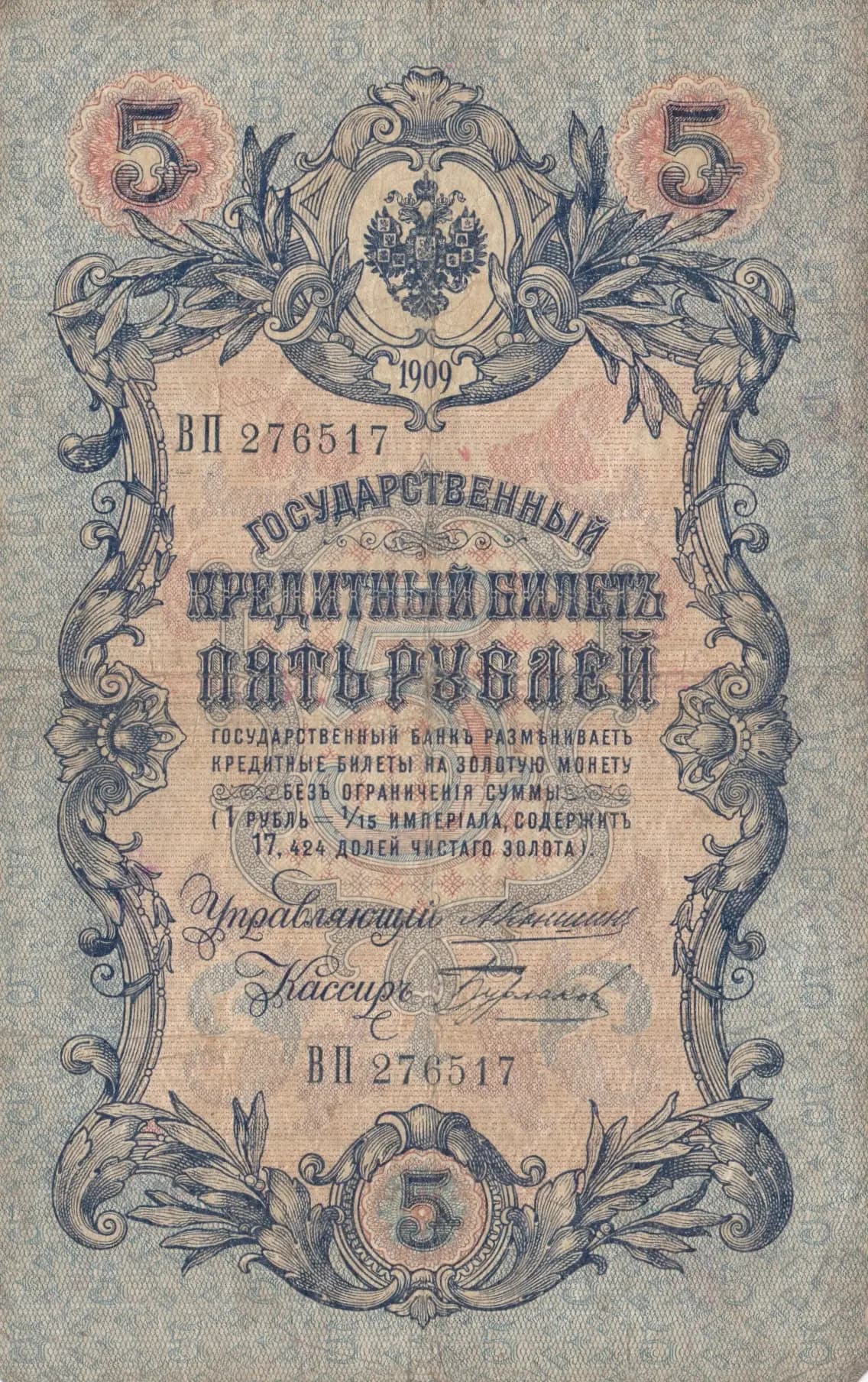
“Sig.Bubyakin”
About This Note
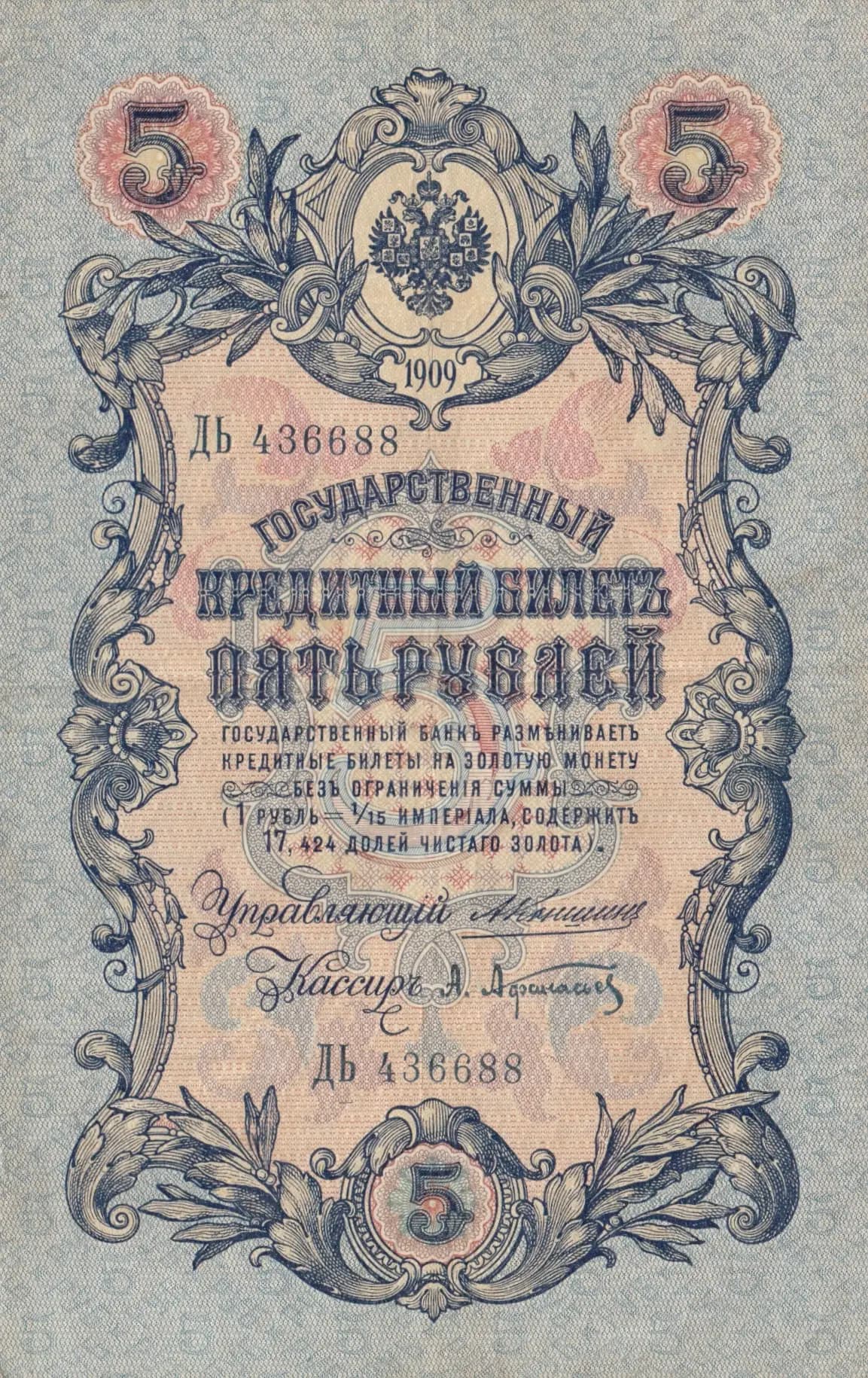
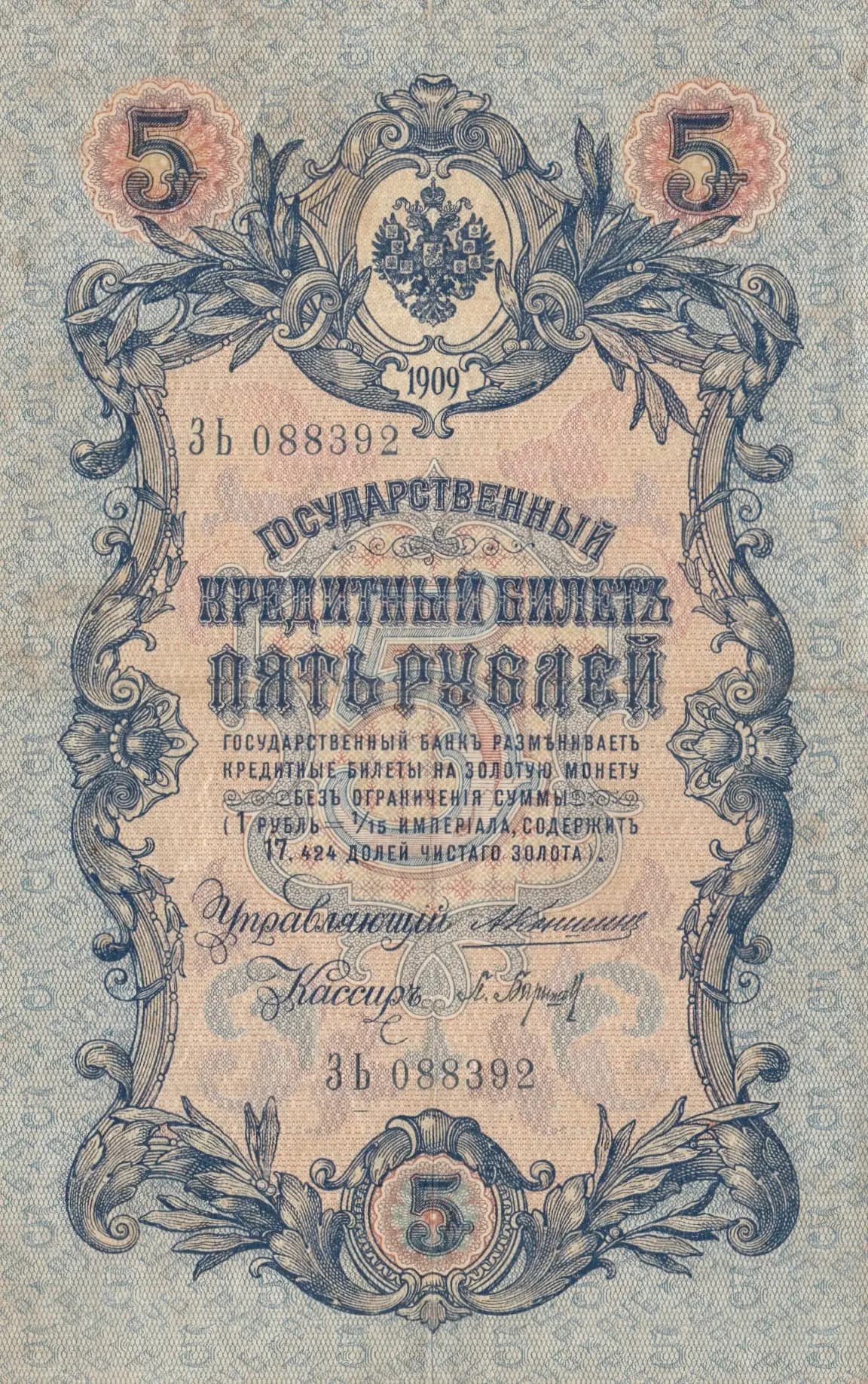
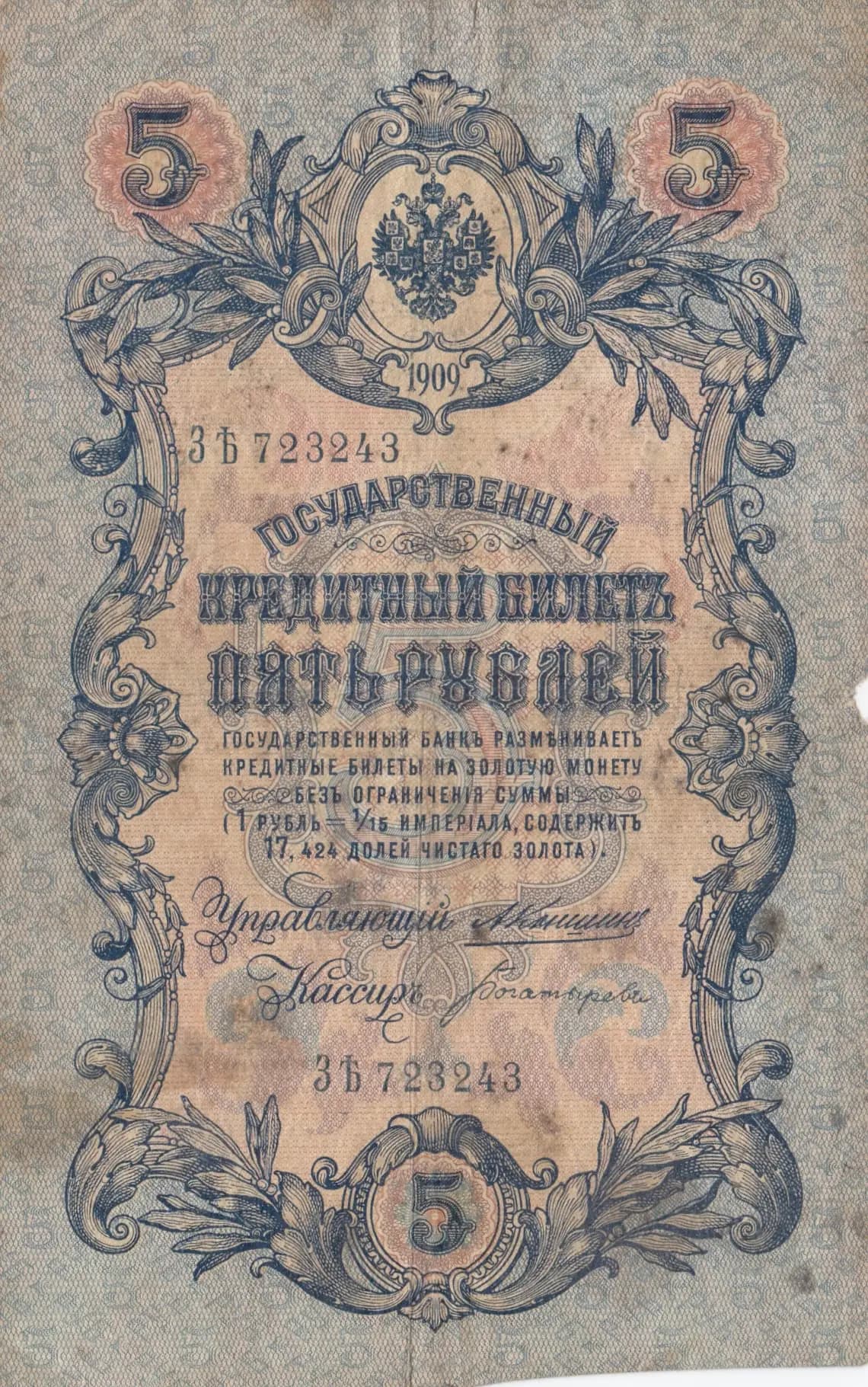
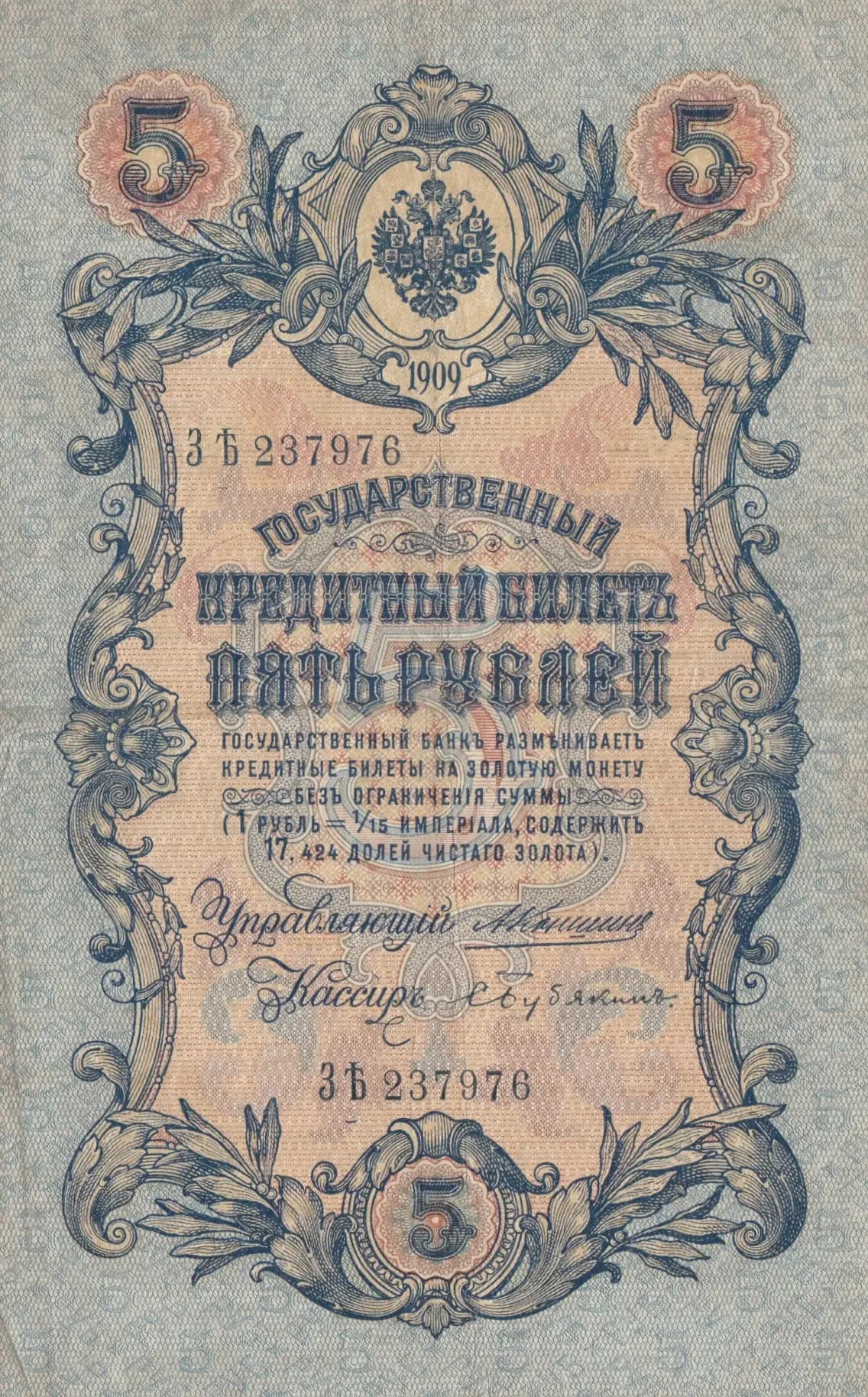
An attractive example of the Russian Imperial 5 rublei State Credit Note from 1909, presented in Very Fine condition with minimal circulation wear. The note features the iconic Russian Imperial double-headed eagle and elaborate heraldic imagery framed by intricate ornamental borders in pink/salmon and blue-grey tones. This piece represents a significant era of Russian monetary history, issued under the gold standard system and bearing stark warnings against counterfeiting that reflect the serious nature of currency production in the late Imperial period.
Common. The 5 rublei denomination from 1909 was produced in substantial quantities by the Russian State Bank as a workhorse denomination in everyday commerce. While Imperial Russian banknotes from this period are now over a century old and certainly not mundane, the 5 rublei denomination in VF condition represents a collectible note that appears regularly in numismatic markets. No evidence suggests this Pick number had a particularly limited print run, was subject to recall, or possessed special scarcity factors. The presence of collector notes and its inclusion in standard catalogs indicates it is widely held and traded among collectors.
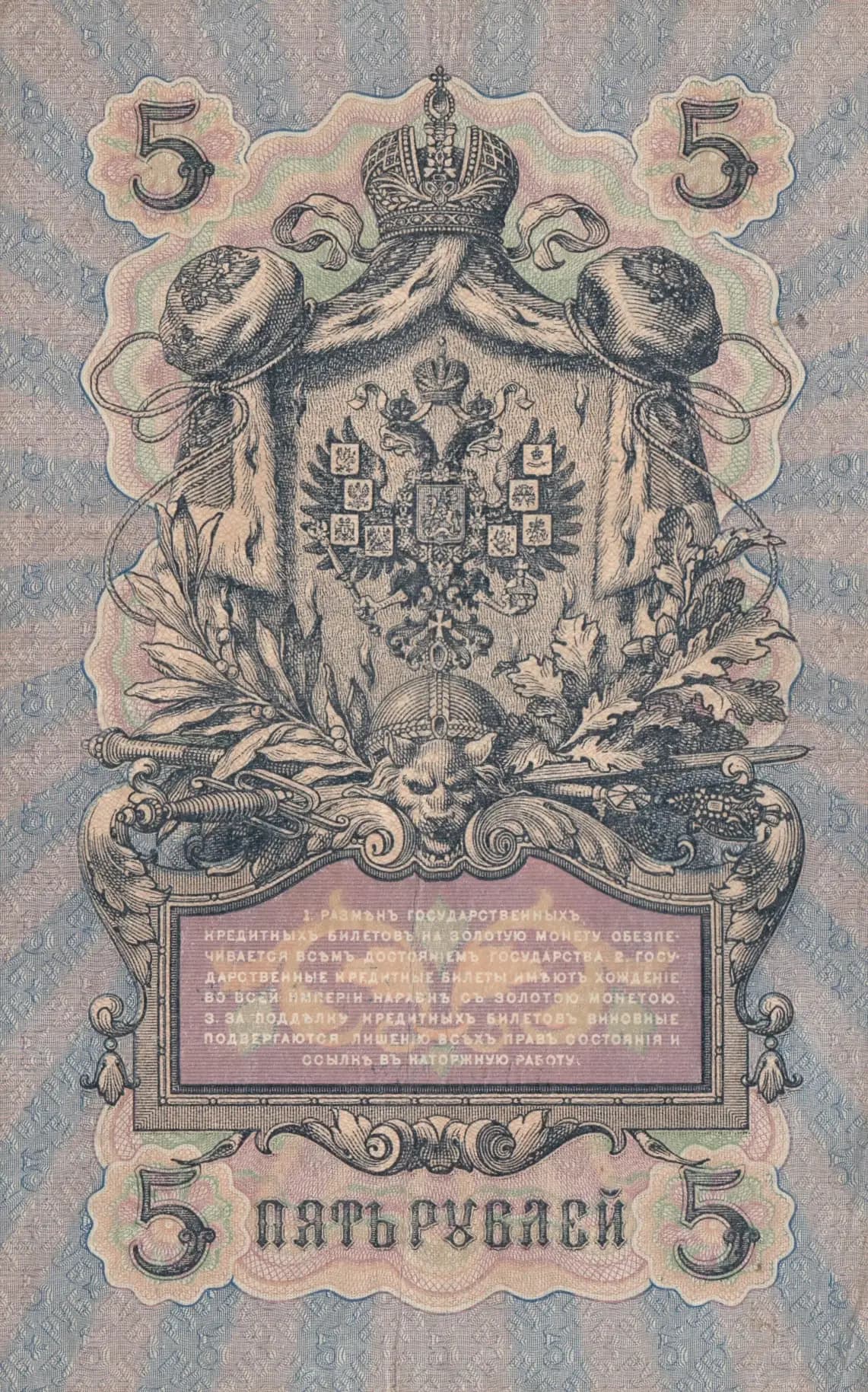
Issued by the Russian State Bank during the final years of the Russian Empire, this 5 rublei note exemplifies the gold-backed currency system established after the 1905 monetary reforms. The prominent Imperial double-headed eagle, crown, and heraldic shields depicted throughout reflect the authority and legitimacy the Tsarist government sought to project through its currency. The lengthy inscription on the reverse, guaranteeing redemption in gold and threatening hard labor in Siberia for counterfeiters, underscores the economic importance and legal gravity attached to these instruments in early 20th-century Imperial Russia.
This 5 rublei note displays the classical design aesthetic of Russian Imperial currency. The obverse features an elaborate oval cartouche centered on the Imperial coat of arms—the double-headed eagle crowned and bearing orbs and scepters, surrounded by multiple heraldic shields representing the Russian Empire's vast territories. The denomination appears in large ornate numerals within scalloped circular frames in all four corners, rendered in pink/salmon tones. The entire design is bordered by intricate scrollwork and floral elements in blue-grey and cream tones. The reverse mirrors this heraldic composition, with the crowned double-headed eagle as the dominant central feature, flanked by laurel wreaths and elaborate decorative sprigs. The color scheme of pink/salmon, blue-grey, and cream creates a balanced, dignified appearance befitting state currency. The extensive explanatory text on both sides—discussing gold backing and counterfeiting penalties—reflects the Imperial government's intent to educate the public about currency authenticity and monetary policy.
FRONT SIDE: 'ГОСУДАРСТВЕННЫЙ КРЕДИТНЫЙ БИЛЕТ' (State Credit Note), 'ПЯТЬ РУБЛЕЙ' (Five Rubles), '1909' (date), and the substantial text 'ГОСУДАРСТВЕННЫЙ БАНК РАЗМЕЩИВАЕТ КРЕДИТНЫЕ БИЛЕТЫ НА ЗОЛОТУЮ МОНЕТУ БЕЗ ОГРАНИЧЕНИЯ СУММЫ (1 РУБЛЬ = 1/15 ИМПЕРИАЛ, СОДЕРЖИТ 17,424 ДОЛЕЙ ЧИСТОГО ЗОЛОТА)' translating to 'STATE BANK ISSUES CREDIT NOTES FOR GOLD COIN WITHOUT LIMIT OF SUM (1 RUBLE = 1/15 IMPERIAL, CONTAINS 17.424 PARTS OF PURE GOLD)'. Signature lines for 'Управляющий' (Manager) and 'Кассир' (Cashier) appear, along with serial number '35237976'. REVERSE SIDE: 'ПЯТЬ РУБЛЕЙ' (Five Rubles) and the warning text 'РАЗМЕН ГОСУДАРСТВЕННЫХ КРЕДИТНЫХ БИЛЕТОВ НА ЗОЛОТУЮ МОНЕТУ ОБЕСПЕЧИВАЕТСЯ ВСЕМ ДОСТОЯНИЕМ ГОСУДАРСТВА. В ГОСУДАРСТВЕННОМ КАЗНАХРАНИЛИЩЕ ВСЕГДА ИМЕЮТСЯ В НАЛИЧИИ ЗОЛОТЫЕ МОНЕТЫ, РАВНЫЕ СУММЕ БИЛЕТОВ, НА ЗОЛОТУЮ МОНЕТУ. ЗА ПОДДЕЛКУ КРЕДИТНЫХ БИЛЕТОВ ВИНОВНЫЕ ПОДВЕРГАЮТСЯ ЛИШЕНИЮ ВСЕХ ПРАВ СОСТОЯНИЯ И ССЫЛКЕ В СИБИРЬ КАТОРЖНО-РАБОТЫ.' (THE EXCHANGE OF STATE CREDIT NOTES FOR GOLD COINS IS SECURED BY ALL THE WEALTH OF THE STATE. IN THE STATE TREASURY THERE ARE ALWAYS AVAILABLE GOLD COINS EQUAL TO THE AMOUNT OF NOTES FOR GOLD COINS. FOR COUNTERFEITING CREDIT NOTES, THE GUILTY ARE SUBJECT TO DEPRIVATION OF ALL RIGHTS OF STATUS AND EXILE TO SIBERIA WITH HARD LABOR.)
This note was produced using intaglio (copperplate) engraving, the standard security printing method for Russian Imperial banknotes. The fine line work visible in the decorative borders, the detailed heraldic imagery, the sharp definition of the Imperial eagles, and the precise rendering of ornamental elements all indicate professional engraving plates. The complexity of the multi-layer design and the difficulty of reproducing such intricate work would have served as an important anti-counterfeiting measure in the pre-modern era. The Russian State Bank's printing works produced these notes using traditional intaglio methods that remained state-of-the-art for banknote production in 1909.
This example bears the signature 'Sig. Bubyakin' as noted in the collector notes. For the 1909 5 rublei State Credit Notes, varieties exist based on different cashier and manager signatures. The serial number visible on this note (35237976) is consistent with standard numbering practices. The Pick catalog designation P-10a(5) indicates this is a standard variety of the 5 rublei denomination from this issuing authority and period. No overprints or special markings are evident from the visual analysis.