5 rublei 1909
“Sig.Schmidt”
About This Note
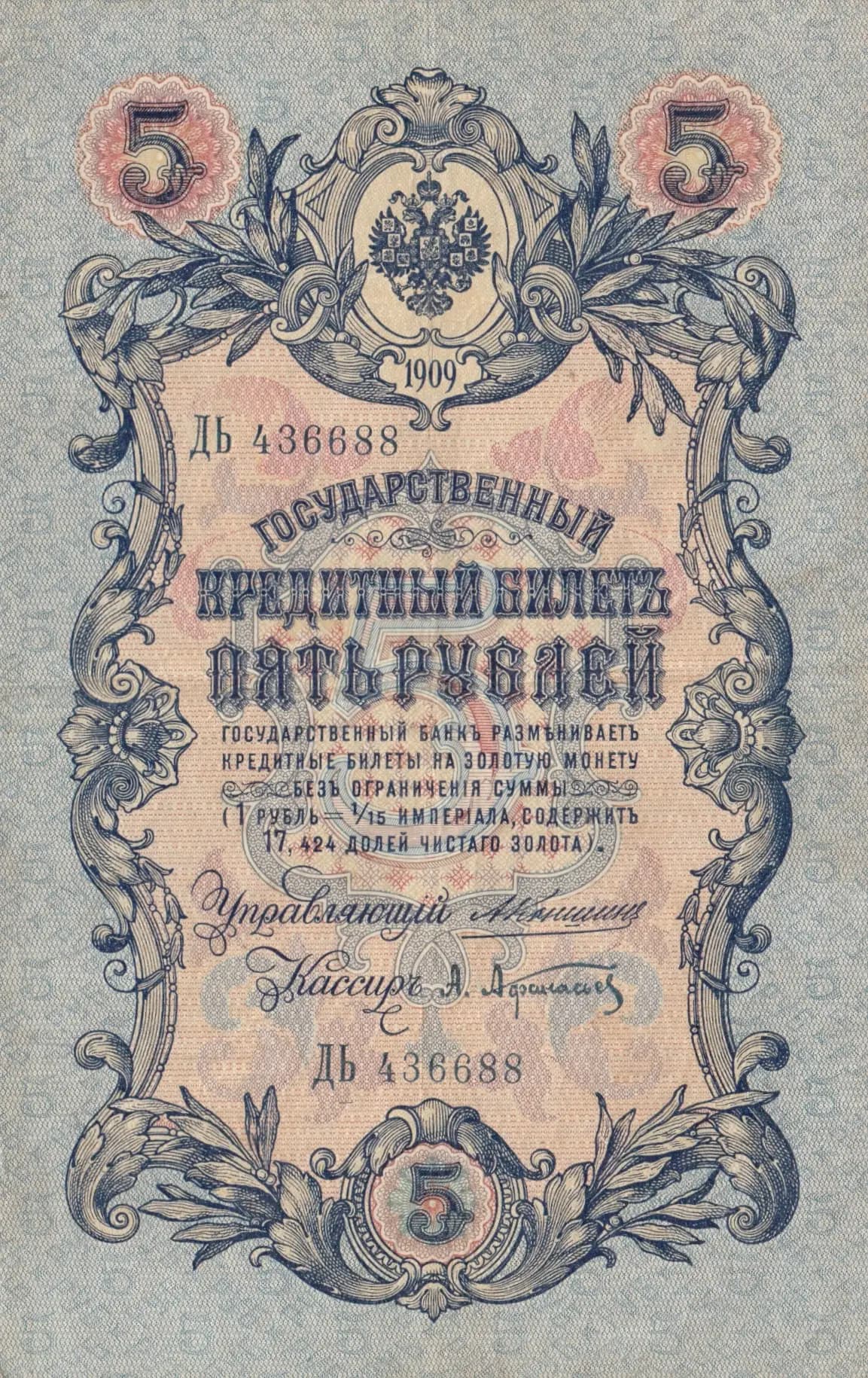
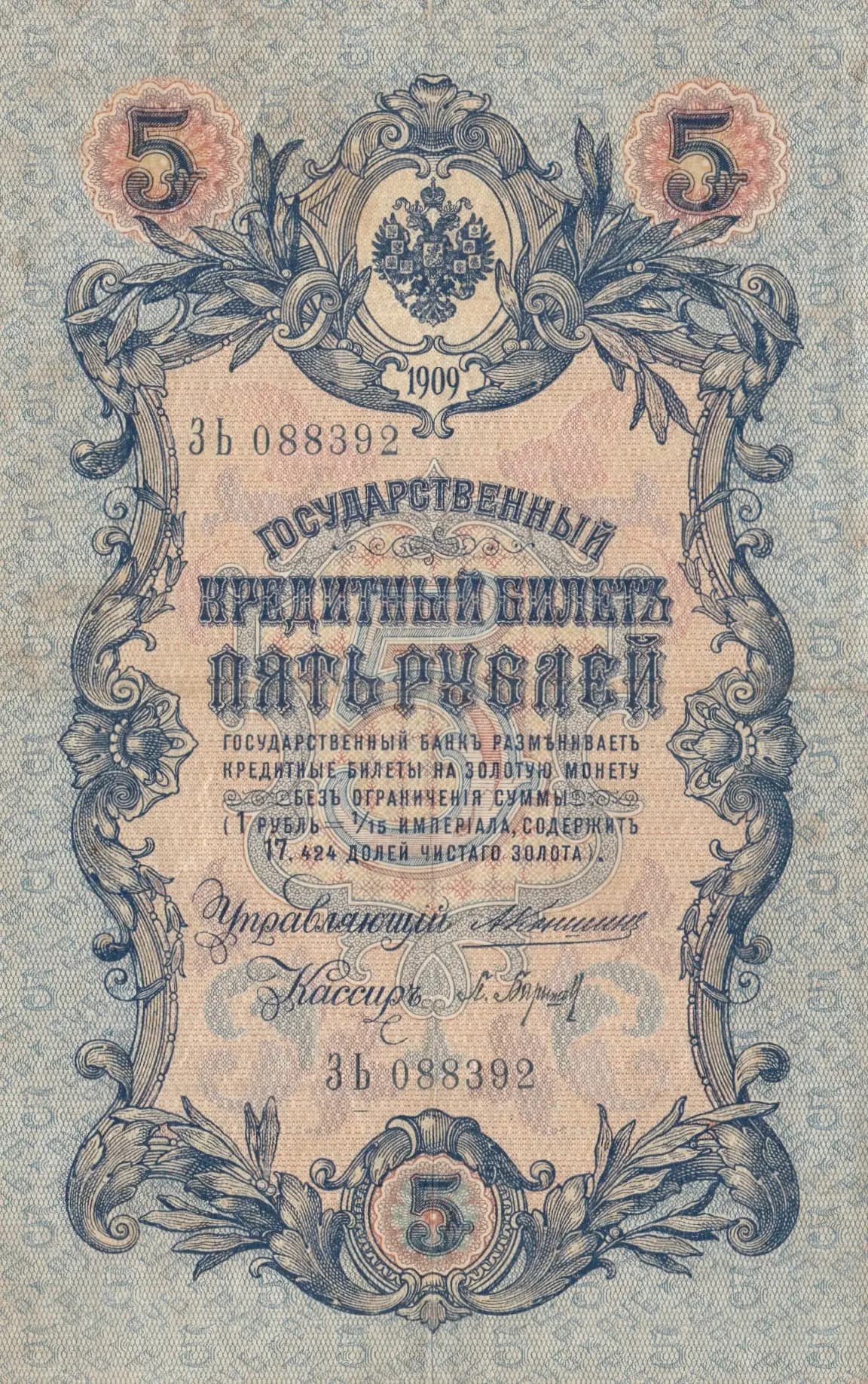
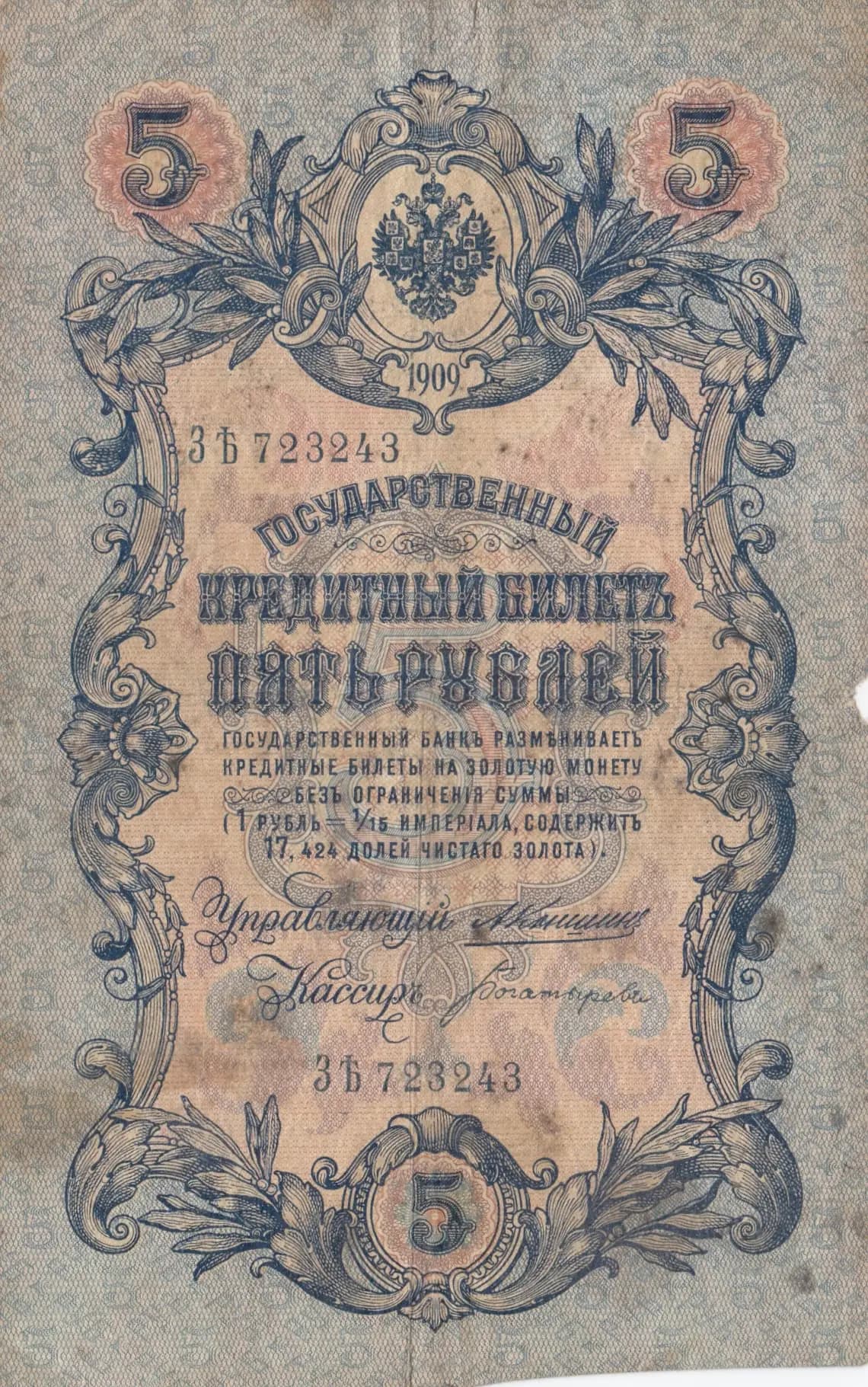
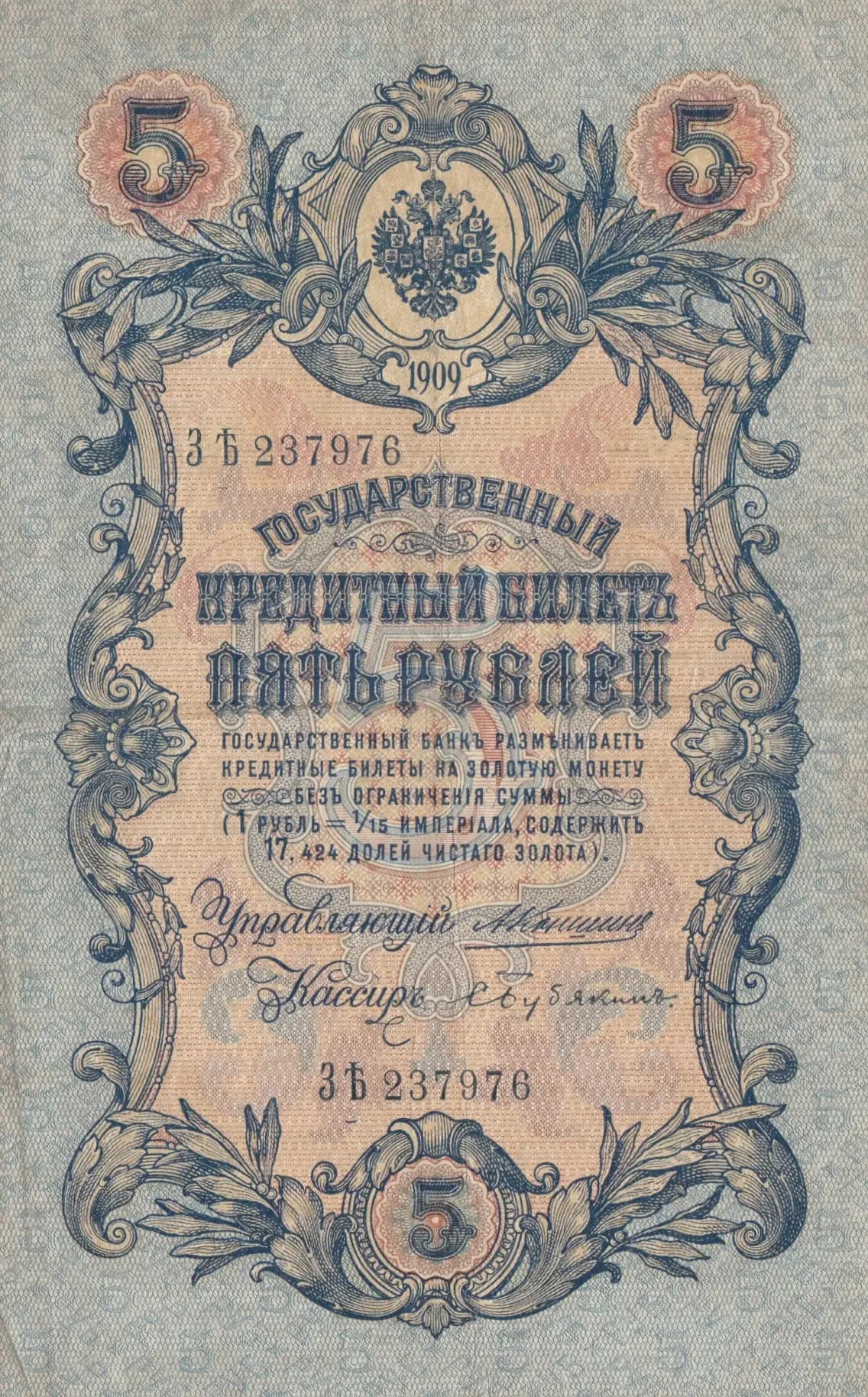
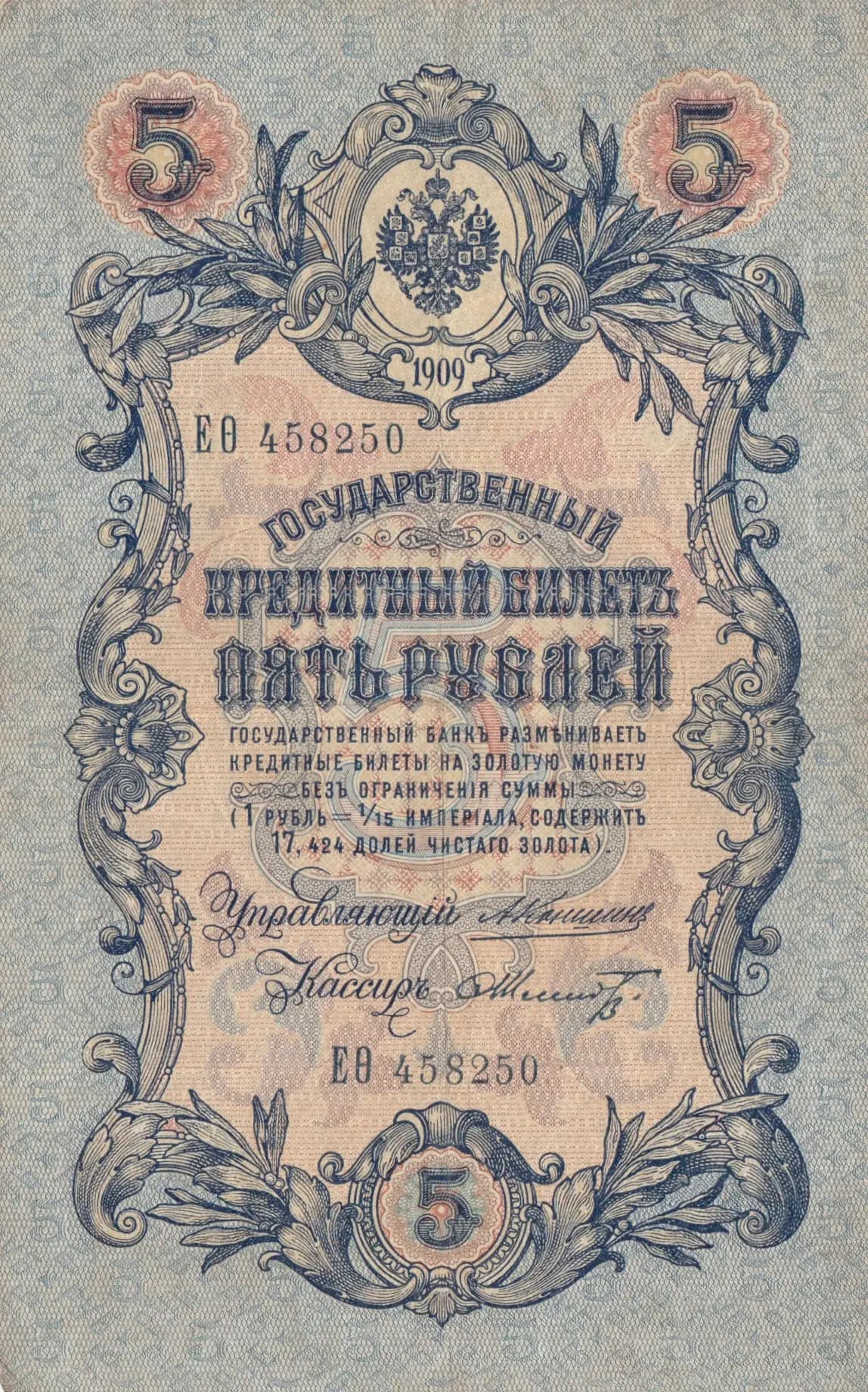
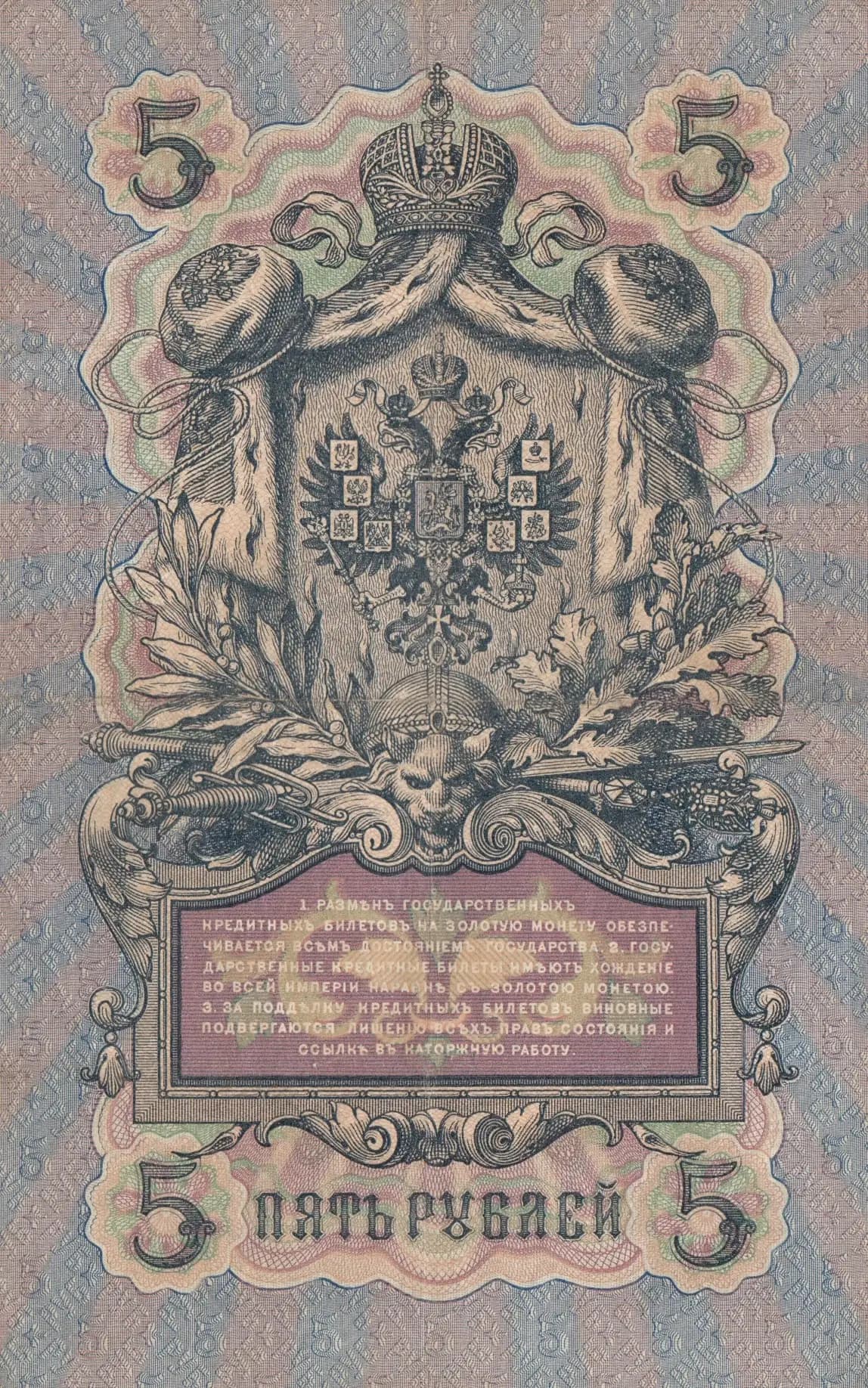
A stunning example of the 1909 Russian Empire 5 rublei State Credit Bill (Pick P-10a(27)), presented in VF condition with sharp, vibrant printing and no visible wear. The note showcases the Imperial Russian aesthetic with its ornate navy blue engraving on tan/beige paper, featuring the double-headed eagle coat of arms and decorative crown within elaborate cartouches. This signature example (Sig. Schmidt) represents a classic piece of early 20th-century Russian numismatic design before the fall of the Tsarist regime.
Common. The 1909 5 rublei is a standard, widely-produced denomination from the Russian Empire's State Credit Bill series. No significant print run restrictions, recall status, or issuing authority limitations apply to this Pick number. The VF condition grade, while desirable, does not alter the fundamental commonality of this note type in the collector market.
Issued during the reign of Tsar Nicholas II, this 1909 credit bill represents the Russian Empire's gold-backed currency system, as explicitly stated in the inscriptions guaranteeing exchange for gold coin without limit. The prominent Imperial coat of arms with the double-headed eagle and crown symbolized the absolute authority of the Romanov dynasty at the height of the Russian Empire's territorial power. These State Credit Bills circulated throughout the entire Russian Empire on equal footing with gold coins, reflecting the empire's commitment to the gold standard before World War I disrupted international finance.
This 5 rublei note presents a symmetrical, highly formal Imperial Russian design centered on the double-headed eagle coat of arms of the Russian Empire. The coat of arms features a crowned double-headed eagle with scepters, displayed prominently within an ornamental shield cartouche on both sides. The design employs elaborate neoclassical and rococo-inspired scrollwork with acanthus leaf and floral motifs forming decorative borders in navy blue engraving. Large ornate denomination numerals '5' appear in pink/salmon-colored corner cartouches on all four corners, emphasizing the note's value. The front features the year 1909 and official titles, while the back contains legal disclaimers about counterfeiting penalties and the gold-backed nature of the currency. The color scheme—navy blue engraving on tan/beige paper with pink/salmon and light green accents—was characteristic of Russian Imperial banknotes from this period. No portraits appear on this note; the focus is entirely on heraldic and decorative elements symbolizing state authority.
FRONT SIDE: Denomination '5' appears in ornate numerals in top corners. Year: 1909. Serial number: ЕО 458250. Main inscription: 'ГОСУДАРСТВЕННЫЙ КРЕДИТНЫЙ БИЛЕТ ПЯТИРУБЛЕЙ' (State Credit Bill of Five Rubles). Gold standard text: 'ГОСУДАРСТВЕННЫЙ БАНК РАЗМЕНИВАЕМЪ КРЕДИТНЫЕ БИЛЕТЫ НА ЗОЛОТУЮ МОНЕТУ БЕЗ ОГРАНИЧЕНИЯ СУММЫ (1 РУБЛЬ = 1/15 ИМПЕРИАЛА, СОДЕРЖАТЬ 17,424 ДОЛЕЙ ЧИСТАГО ЗОЛОТА)' (The State Bank exchanges credit bills for gold coin without limit of sum [1 ruble = 1/15 Imperial, contains 17.424 parts of pure gold]). Official signatures: 'Управляющий кассир' (Managing cashier) and 'Кассир Минец' (Cashier Minets). BACK SIDE: Denomination '5' in large numerals top and bottom corners. 'ПЯТЬ РУБЛЕЙ' (Five Rubles). Legal text warning: 'РАЗМЕН ГОСУДАРСТВЕННЫХ КРЕДИТНЫХ БИЛЕТОВ НА ЗОЛОТУЮ МОНЕТУ ОБЕЗПЕЧИВАЕТСЯ ВСЕМ ГОСУДАРСТВЕННЫМ ИМУЩЕСТВЕННЫМ И В ГОСУДАРСТВЕННЫХ КРЕДИТНЫЕ БИЛЕТЫ ИМЕЮТ ХОЖДЕНИЕ ВО ВСЕЙ ИМПЕРИИ НАРАВНЕ СО ЗОЛОТОЮ МОНЕТОЮ...ПОДДЕЛКУ КРЕДИТНЫХ БИЛЕТОВ ВИНОВНЫЕ ПОДВЕРГАЮТСЯ ПО ЗАКОНАМ ГОСУДАРСТВА И СМЯГЧАЮТСЯ К КАТОРЖНОЮ РАБОТУ' (The exchange of state credit bills for gold coin is secured by all state property...Credit bills circulate throughout the entire Empire on equal basis with gold coin...Counterfeiters of credit bills are subject to punishment under state law and condemned to hard labor).
Intaglio engraving with multicolor relief printing. The fine detail work visible throughout—particularly in the ornamental borders, coat of arms rendering, and scrollwork—indicates professional copperplate engraving. The multiple colors (navy blue, pink/salmon, light green, and cream) applied to the tan/beige base paper suggest simultaneous or sequential color printing typical of high-security banknote production of the era. The Russian Imperial banknotes of this period were produced by the State Security Printing Works (Государственная Типография), which employed the most advanced engraving and printing techniques available to prevent counterfeiting.
This note represents the P-10a(27) variety from the Pick catalog. The serial number ЕО 458250 indicates one of the standard production runs. The signature combination noted as 'Sig. Schmidt' in the collector notes may refer to a specific signature variety among the Managing Cashiers and Cashiers who authorized these notes. Signature varieties exist for Russian Imperial State Credit Bills depending on the specific officials in office during particular printing batches; however, without comprehensive signature catalogs, specific variety designations beyond the Pick number are not readily determinable from the visual evidence alone.