5 rublei 1909
“Sig.Zhikharev”
About This Note
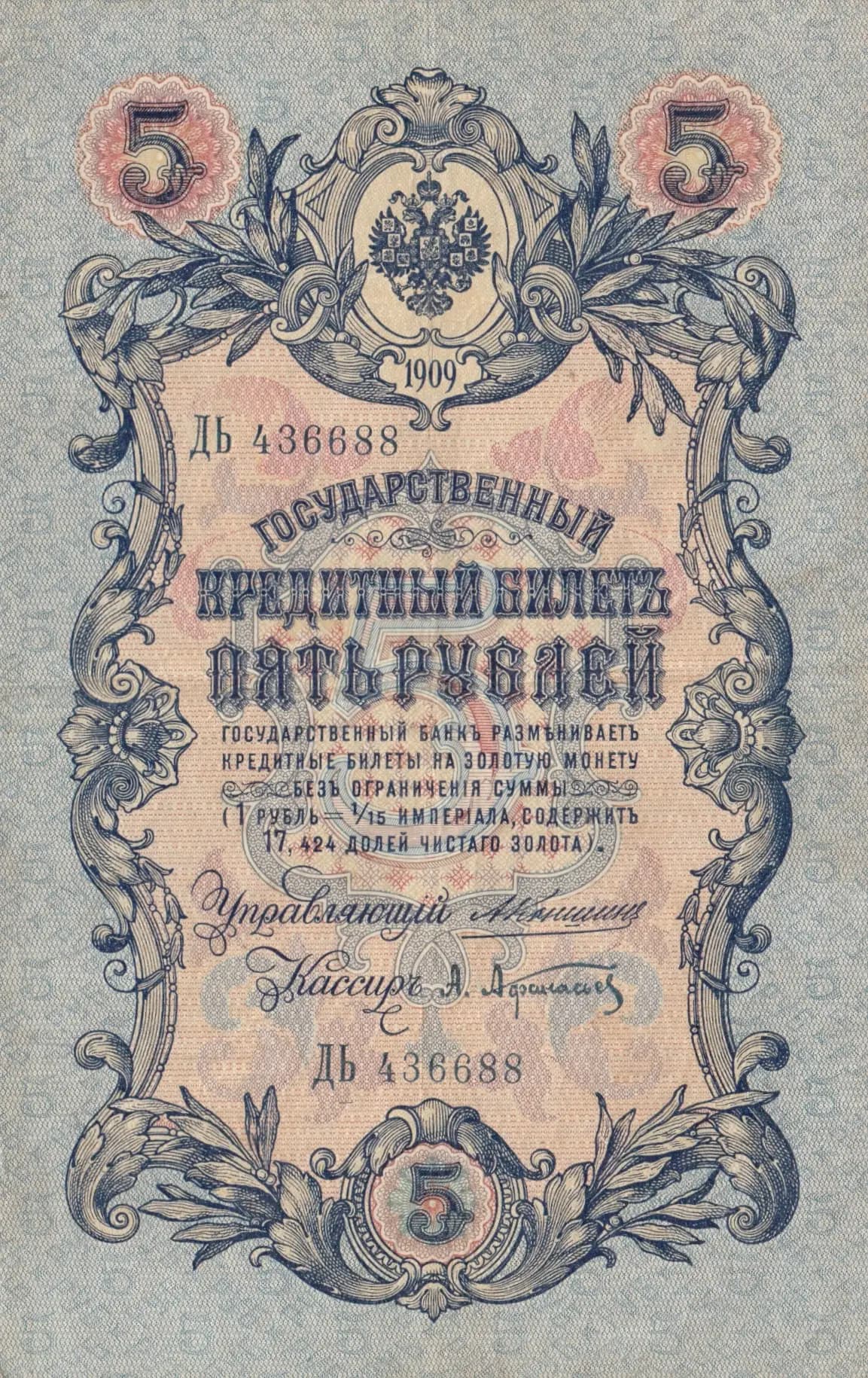
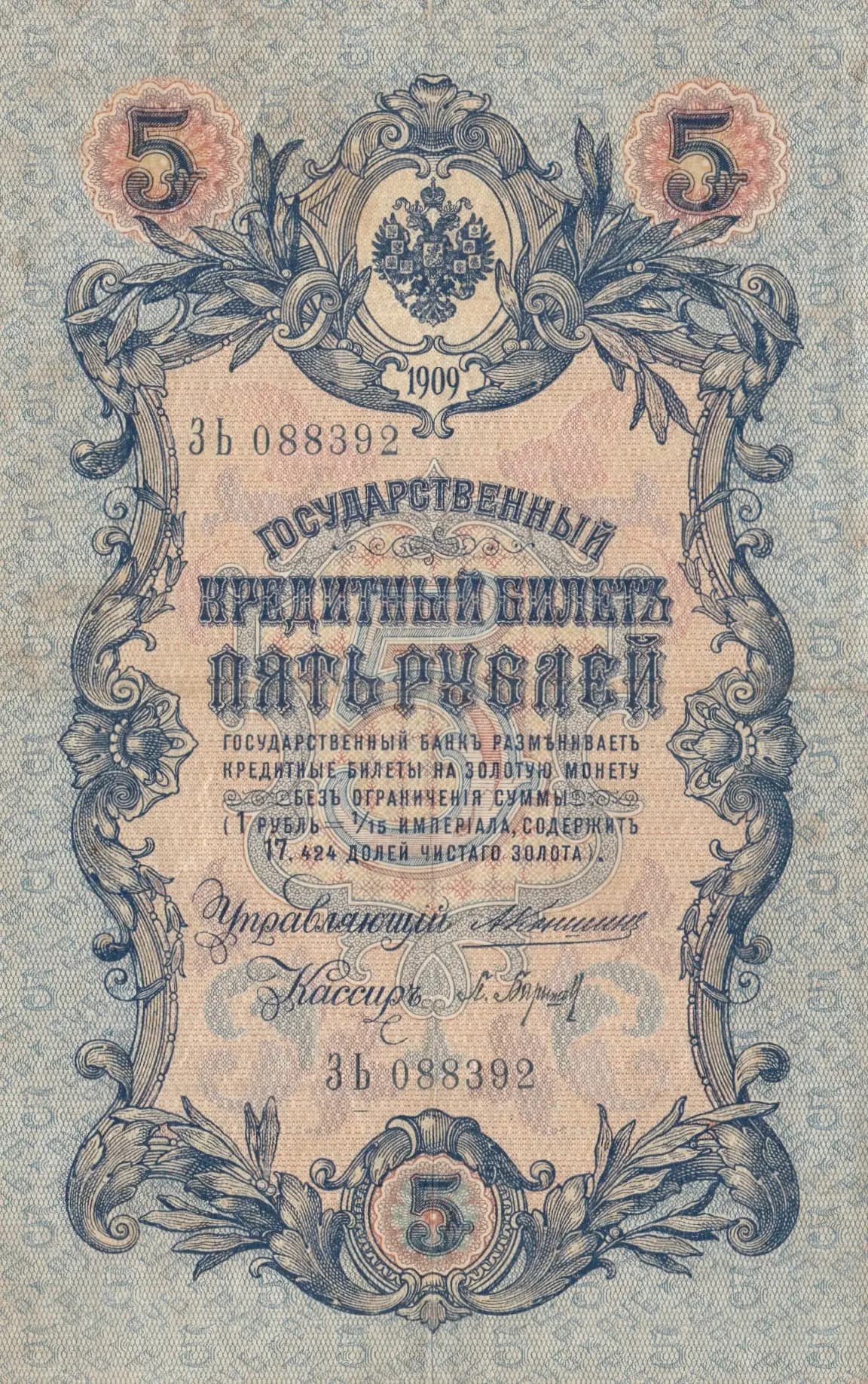
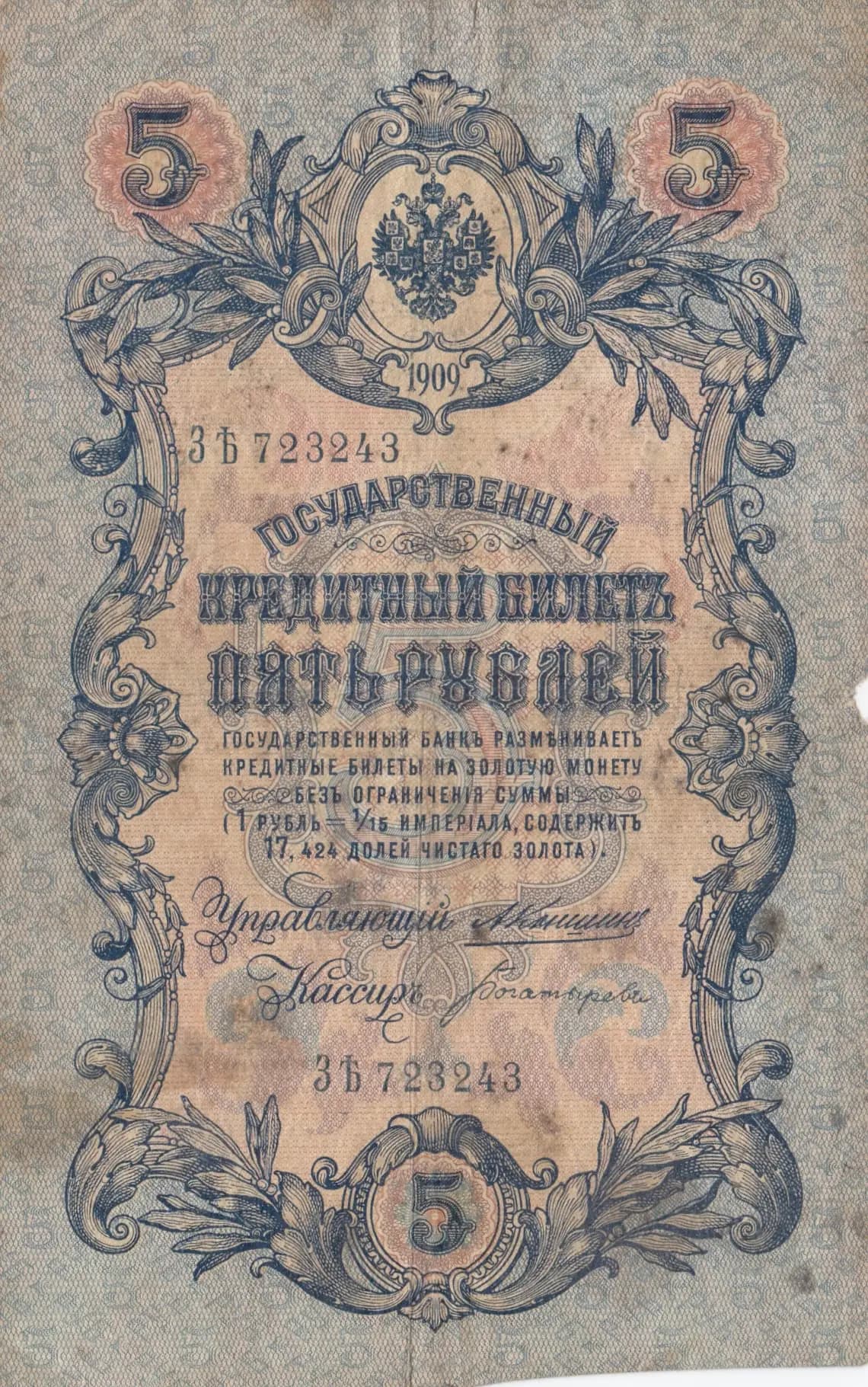
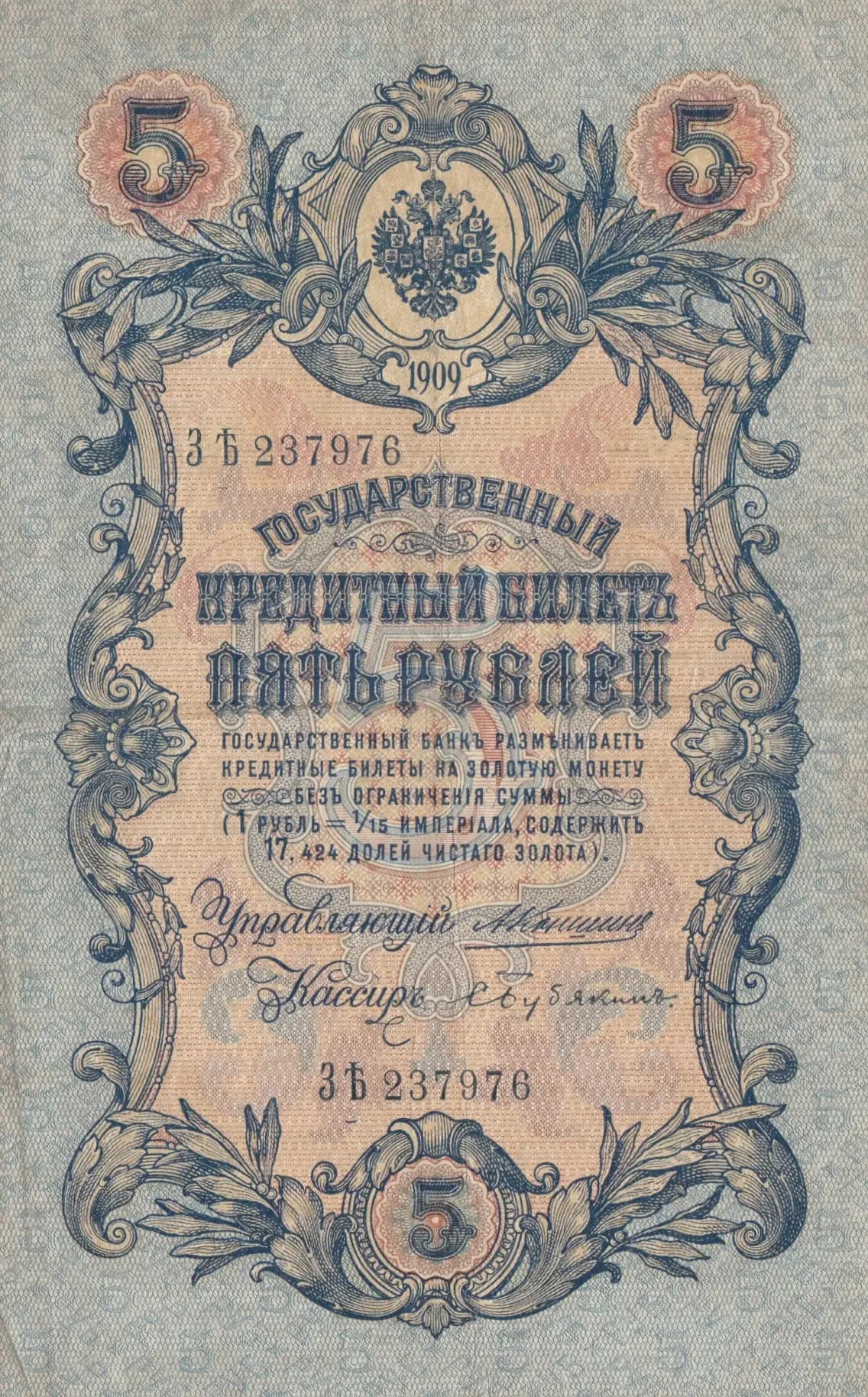
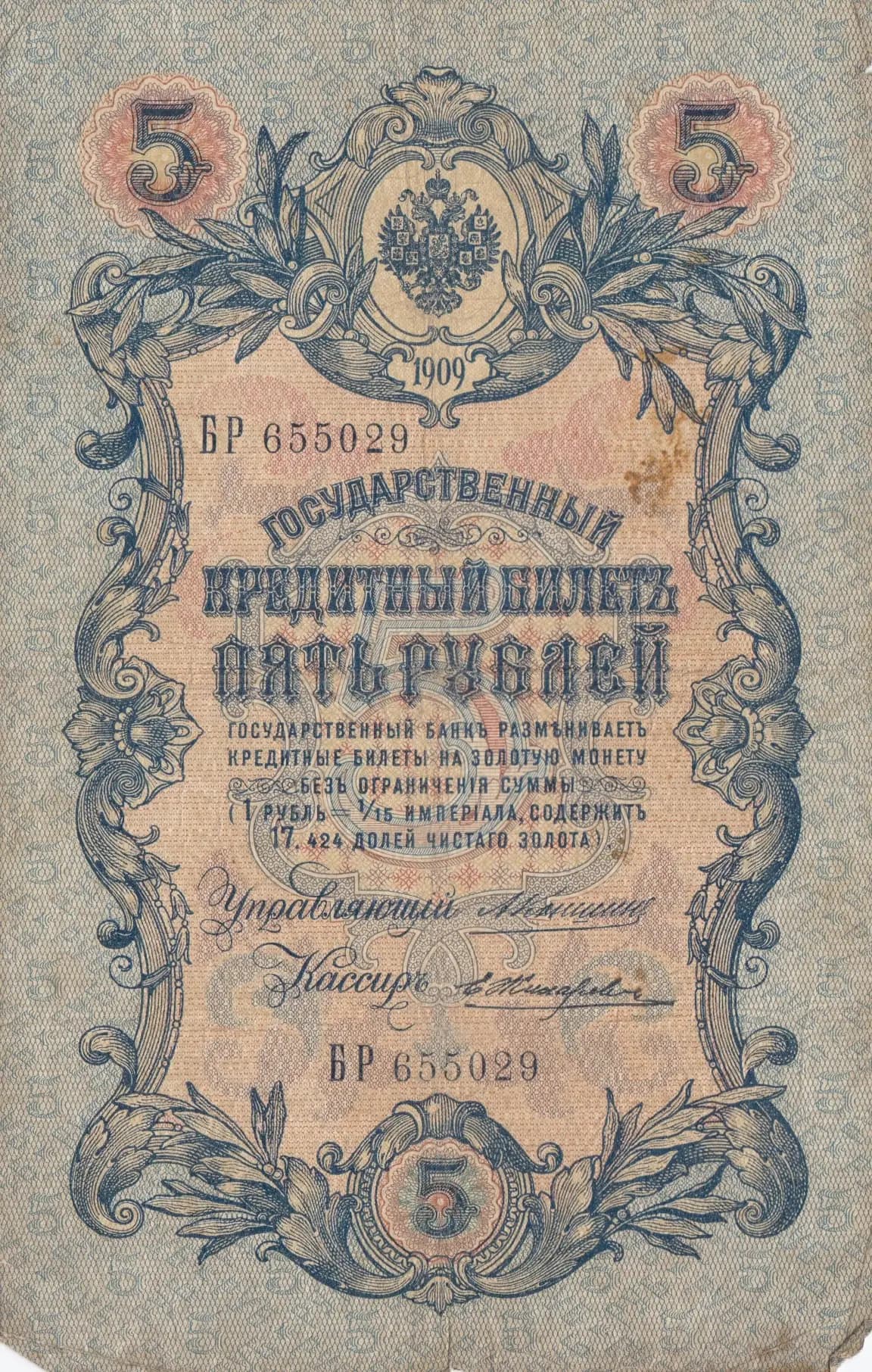
This is a Russian Imperial 5 ruble State Credit Note from 1909, presented in Fair (F) condition with visible signs of age including foxing, light staining, and circulation wear. The note exemplifies the high-quality engraved security printing of the late Tsarist era, featuring an ornate design centered on the crowned double-headed Imperial eagle. The serial number BR 655029 and the signature of Managing Director Zhikharev are visible, making this a documented example of early 20th-century Russian currency.
Common. The 1909 5 ruble Imperial note is a standard issue from a major denomination and year of the late Tsarist series, with no indication of limited print run, special status, or rarity factors. Millions of these notes were printed during their period of circulation, and examples survive in reasonable numbers in the collector market. Fair condition examples such as this one are particularly common, reflecting their circulation history.
This 1909 note was issued during the final years of the Russian Imperial banking system under the State Bank (Государственный Банк), which guaranteed convertibility to gold at a fixed rate—a key feature emphasized on the note's front. The double-headed eagle with imperial crown appears prominently on both sides, symbolizing the autocratic Russian state at a time of economic modernization and growing financial tension that would culminate in World War I and the 1917 Revolution. The denomination and design reflect Russia's participation in the international gold standard monetary system of the pre-war period.
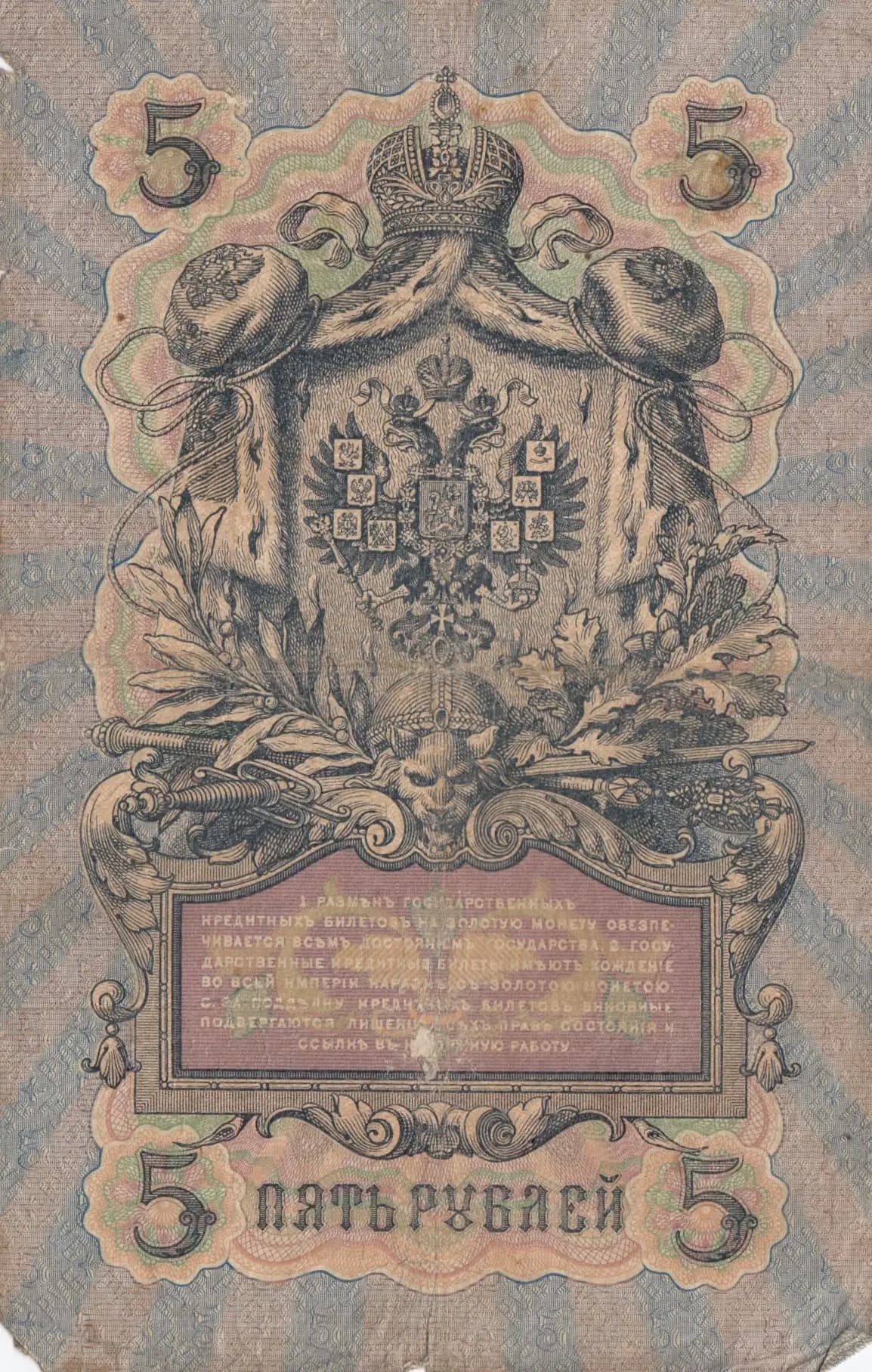
The 5 ruble note features the Imperial double-headed eagle as its central heraldic symbol, crowned and holding orbs in its talons, representing the power and authority of the Russian Empire. Both sides are enclosed in ornate borders of scrollwork and floral designs in peach/salmon, navy blue, and green inks against a tan/beige background. The denomination '5' appears in decorative cartouches positioned in the corners (four instances on the reverse). The front includes substantial text detailing the note's status as a State Credit Note and the gold convertibility guarantee that underpinned the late Imperial monetary system. The design demonstrates the classical engraved security printing style characteristic of late 19th and early 20th century European central banks.
FRONT SIDE: '5' (denomination in decorative cartouches); '1909' (year of issue); 'БР 655029' (serial number BR 655029); 'ГОСУДАРСТВЕННЫЙ КРЕДИТНЫЙ БИЛЕТ ПЯТИ РУБЛЕЙ' (State Credit Note of Five Rubles); 'ГОСУДАРСТВЕННЫЙ БАНК РАЗМЕНИВАEТ КРЕДИТНЫЕ БИЛЕТЫ НА ЗОЛОТО, МОНЕТУ БЕЗ ОГРАНИЧЕНИЯ СУММЫ' (The State Bank exchanges credit notes for gold coins without limit of sum); '1 РУБЛЬ = В15 ИМПЕРАТРЫХ СОДЕРЖИТ (17,424 ДОЛЕЙ ЧИСТОГО ЗОЛОТА)' (1 ruble = in imperial content contains 17,424 parts of pure gold); 'Управляющий' (Managing Director); 'Кассир' (Cashier). BACK SIDE: '5' (denomination in decorative cartouches, upper and lower corners); 'ПЯТЬ РУБЛЕЙ' (Five Rubles); additional text in cartouche regarding government guarantee (specific wording partially obscured in image).
Intaglio engraving (copperplate/steel plate printing), the standard method for high-security banknotes of the period. The intricate fine-line patterns, detailed coat of arms engraving, and multi-color printing (peach, navy, green, and red inks) are consistent with fine art engraving and printing techniques employed by the Russian Imperial state printing facilities. The fine line background textures and ornamental borders visible in the visual analysis are characteristic of engraved security work designed to prevent counterfeiting.
This note is signed by Zhikharev (Управляющий/Managing Director) as noted in the collector notation. The serial number BR 655029 indicates this is from the 'BR' series. The Pick catalog designation P-10a(11) suggests this is a specific cataloged variety; the signature variety (Zhikharev) may indicate one of the known signature variants for this issue. The 1909 date distinguishes it from other years in the Imperial 5 ruble series. No overprints or unusual markings are noted in the visual analysis.