250 rublei 1917
“Sig.Ovchinnikov”
About This Note
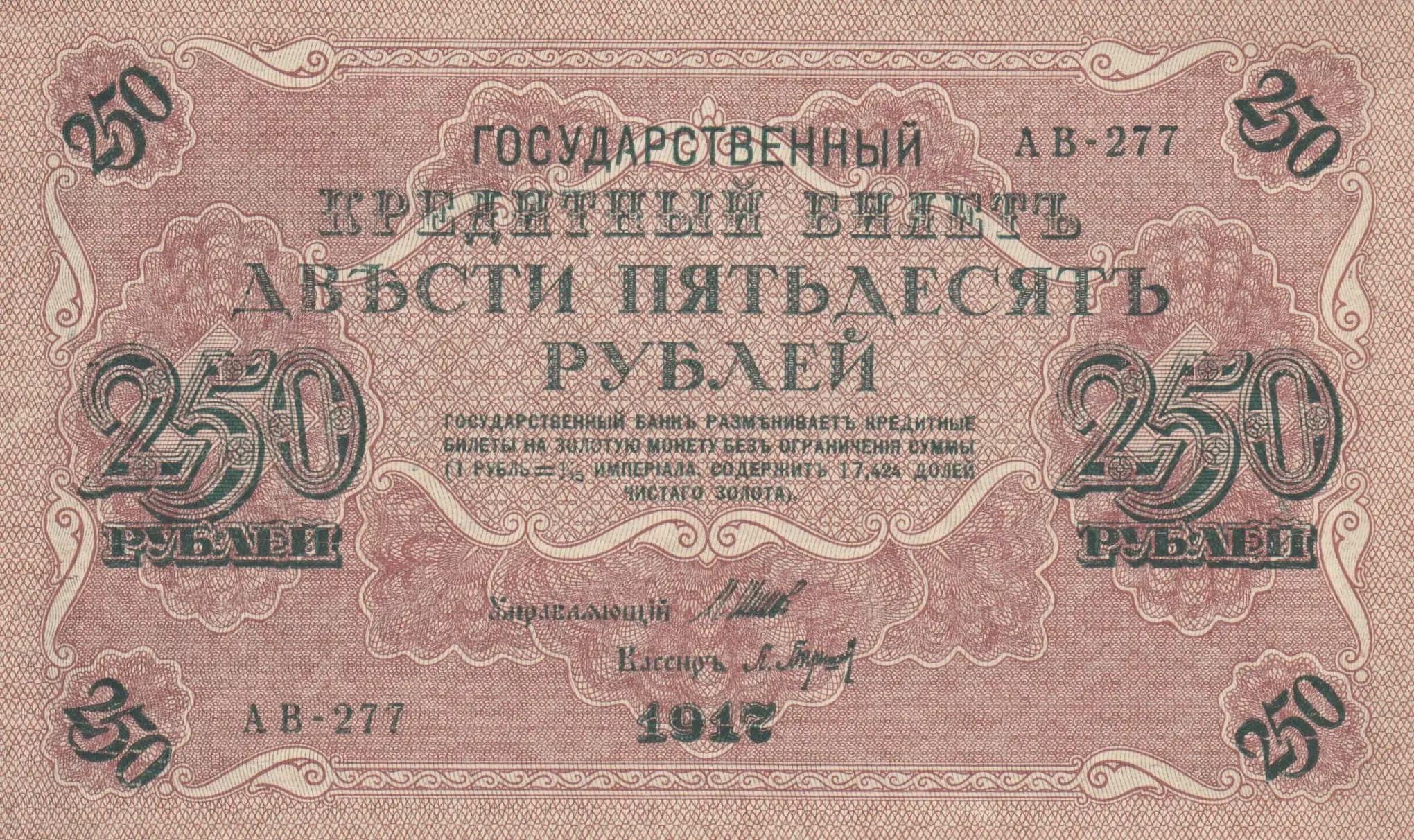
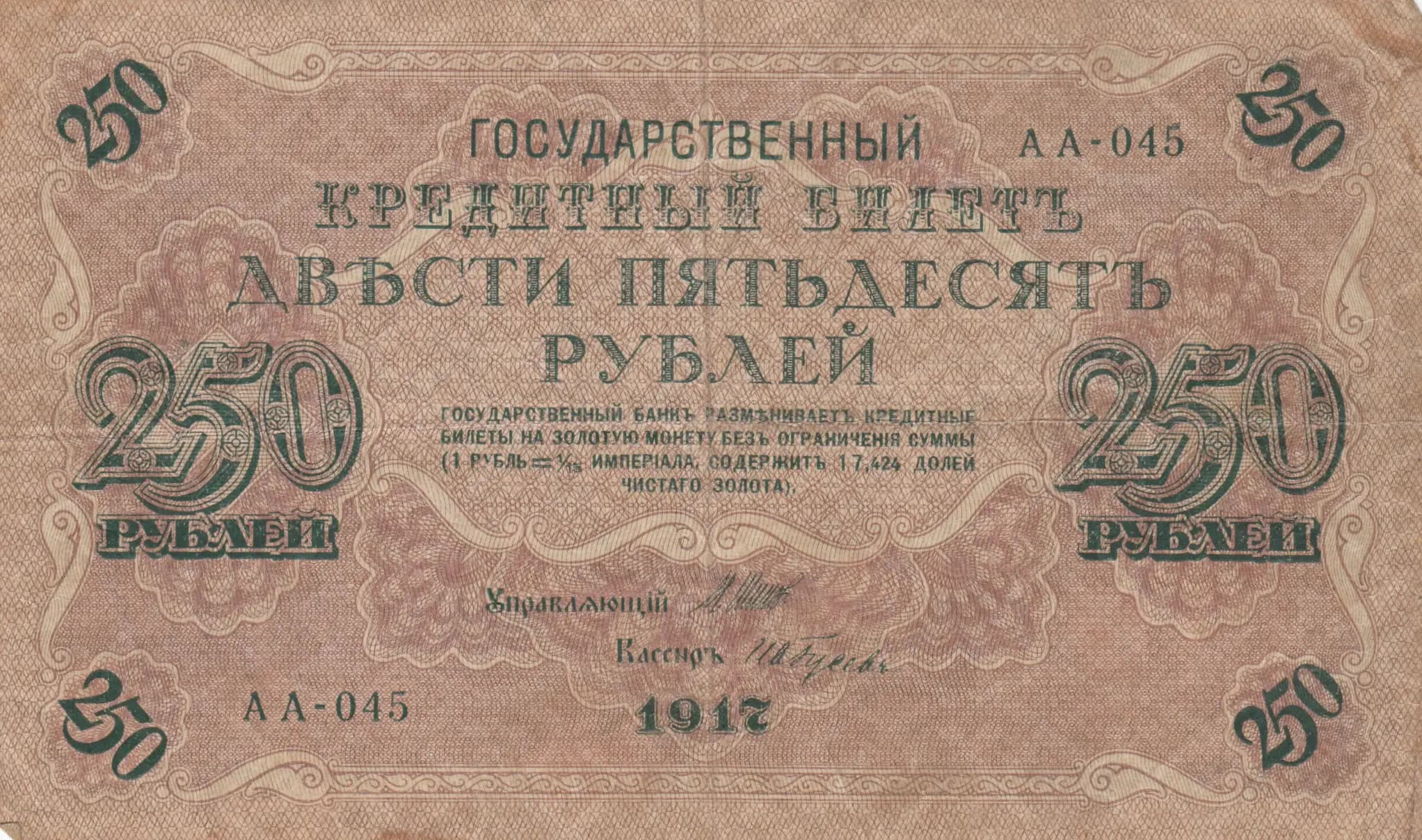
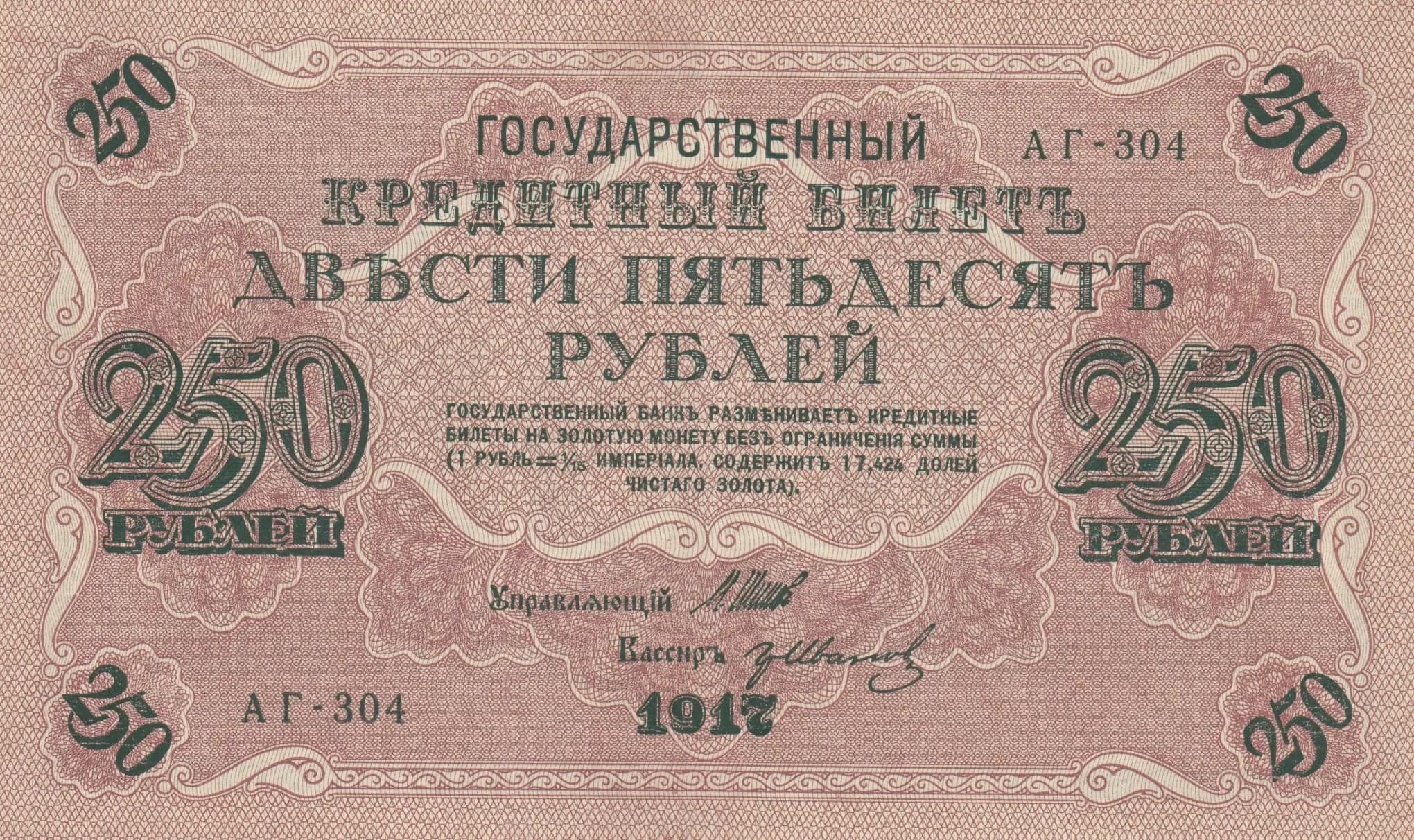
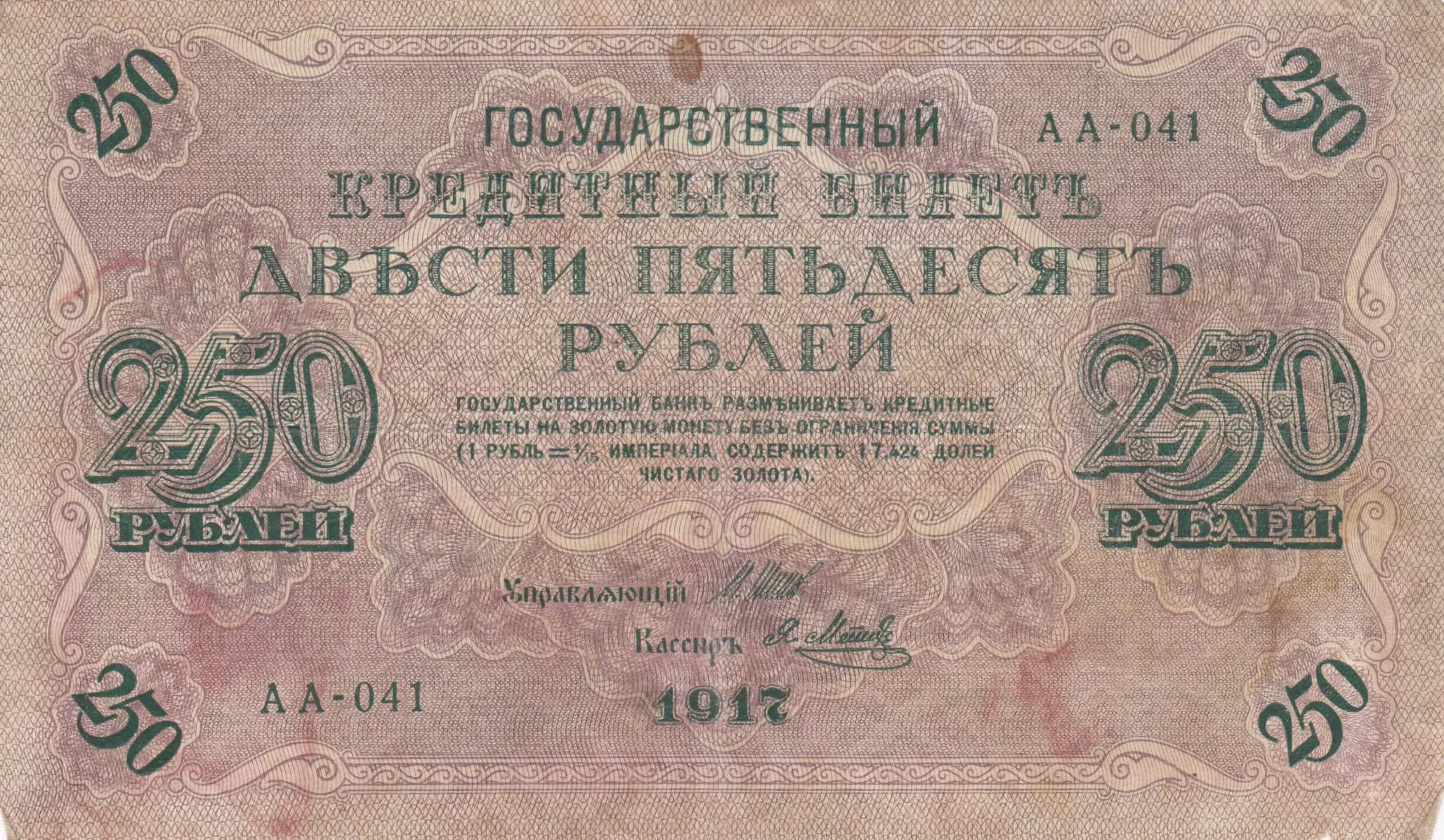
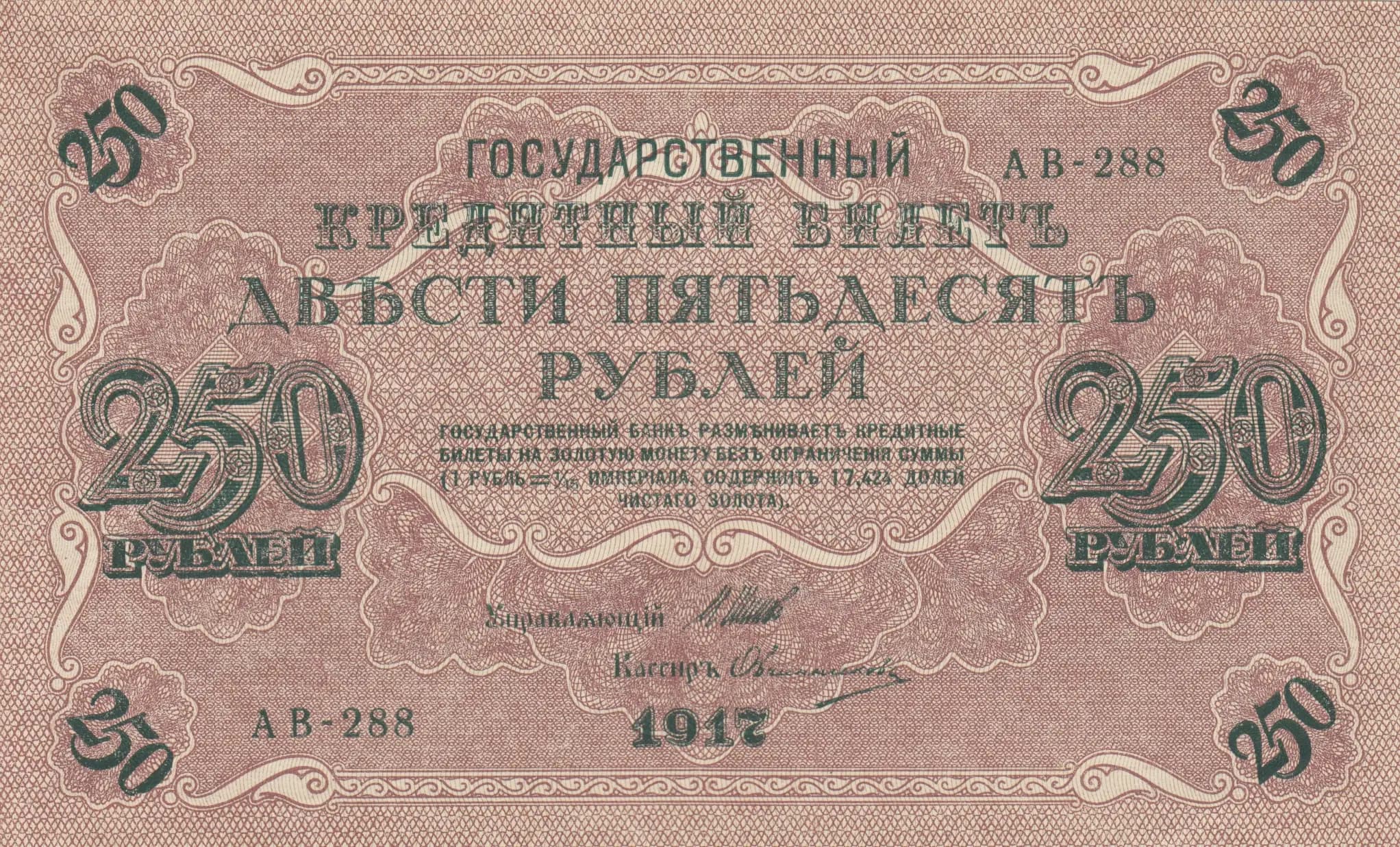
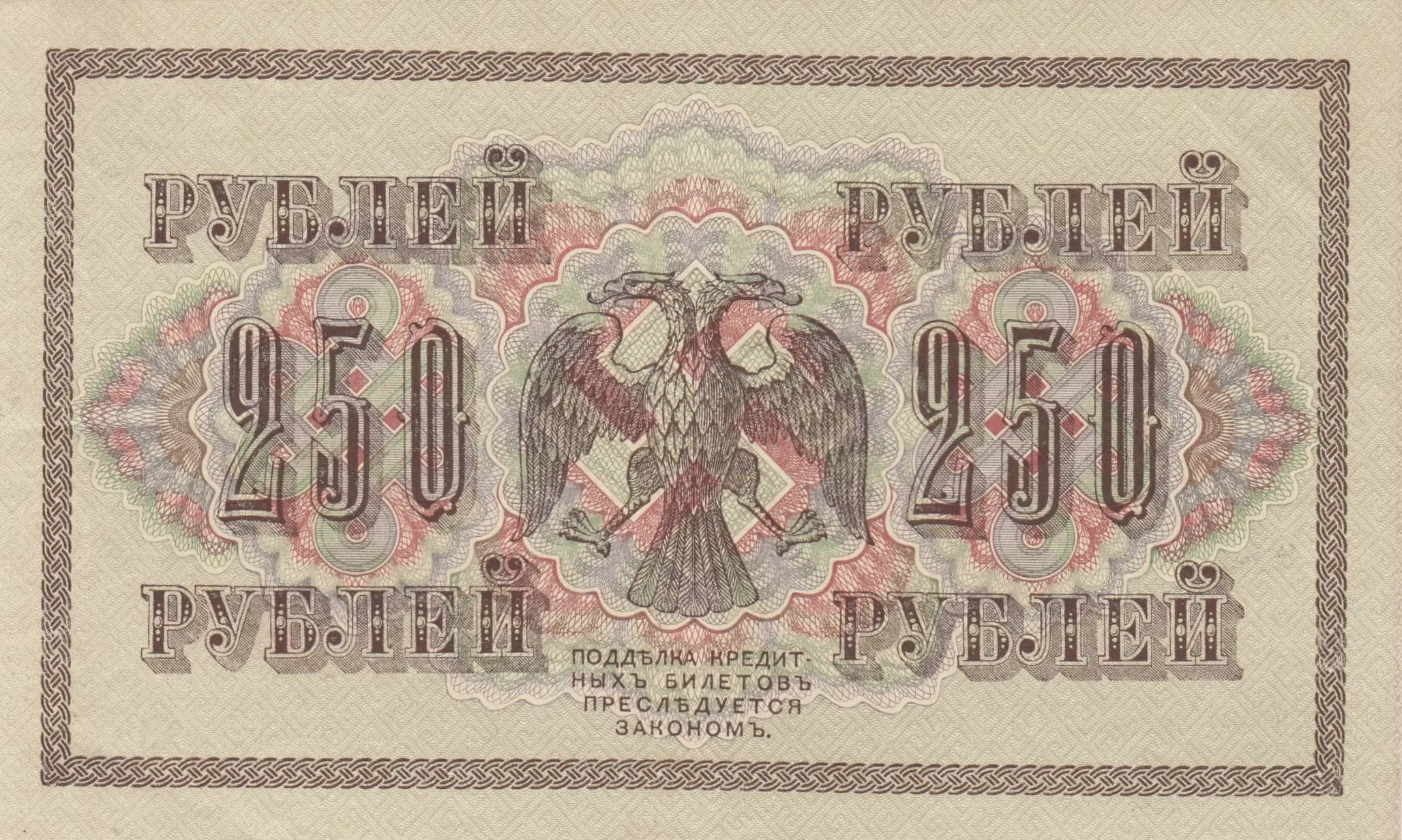
This 250 ruble note from 1917 represents a significant piece of Russian monetary history from the turbulent final year of Imperial rule. Graded EF, the note displays crisp, well-preserved printing in characteristic mauve and brownish-red tones with ornate guilloche borders and corner denomination numerals. The reverse features an exceptionally detailed double-headed imperial eagle within an ornate circular frame, a symbol of state authority that would soon become historically charged as the Bolshevik revolution unfolded.
Common. The 250 ruble denomination from 1917 was issued in substantial quantities during the transitional period. While historical significance is considerable, these notes remain relatively available in the collector market due to the large print runs typical of the era's high-denomination notes. The EF condition grade is desirable but not exceptionally scarce for this issue.
Issued during 1917 by the R.S.F.S.R. (Russian Socialist Federative Soviet Republic), this note represents the transitional period between Imperial Russia and early Soviet authority. The inscription referencing the State Bank's backing and the double-headed eagle symbol reflect the issuer's attempt to maintain monetary credibility during extraordinary political upheaval. The prominence of the imperial eagle and references to the State Bank underscore the note's place in the final months of centralized Russian financial authority before the currency system collapsed during the revolution and civil war.
The obverse features a formal, classical design centered on Russian text declaring the note's status as a state credit instrument, surrounded by ornate scrollwork and guilloche patterns in mauve and brownish-red. The denomination '250' appears prominently in all four corners in large numerals. The reverse displays the Imperial Russian double-headed eagle (the State Emblem of Russia) crowned and centered within an elaborate circular decorative frame composed of fine guilloche work. The eagle is rendered in brown/sepia with heraldic details highlighted in green, pink, and red. A braided border pattern frames the composition, with the denomination repeated on both sides of the eagle. This design represents the traditional Imperial heraldic authority, combining state symbolism with security features through intricate engraving.
FRONT SIDE: '250' (denomination in numerals); 'ГОСУДАРСТВЕННЫЙ КРЕДИТНЫЙ БИЛЕТ' (State Credit Note/Bank Note); 'ДВЕСТИ ПЯТЬДЕСЯТ РУБЛЕЙ' (Two Hundred Fifty Rubles); 'АВ-288' (Series designation); 'РУБЛЕЙ' (Rubles); '1917' (year of issue); Extended text regarding State Bank issuance of credit notes secured with full metal backing and specifications regarding composition. REVERSE SIDE: '250 РУБЛЕЙ' (250 Rubles - appears twice flanking the eagle); 'ПОДДЕЛКА КРЕДИТНЫХ БИЛЕТОВ ПРЕСЛЕДУЕТСЯ ЗАКОНОМ' (Counterfeiting of credit notes is prosecuted by law).
Intaglio engraving (line engraving and steel engraving), evidenced by the fine line work, complex guilloche patterns, and deeply impressed printing characteristics visible throughout both sides. The security features—including intricate border designs, textured background patterns, and finely detailed heraldic elements—are characteristic of high-security banknote production. Russian State Bank notes of this period were typically produced by the Imperial Printing Works (later Soviet printing facilities), using traditional intaglio methods with multiple passes for color security features.
Pick catalog P-36(2-9) notation indicates this is variety 2-9 within the 250 ruble 1917 issues, suggesting multiple signature varieties exist for this denomination. The series designation 'АВ-288' visible on the obverse may indicate a specific printing series. Collector note references 'Sig. Ovchinnikov' (likely signature variety). Researchers comparing notes should examine signature combinations and series prefixes, as these define specific varieties within the Pick P-36 classification for this denomination.