250 rublei 1917
“Sig.Gusev”
About This Note
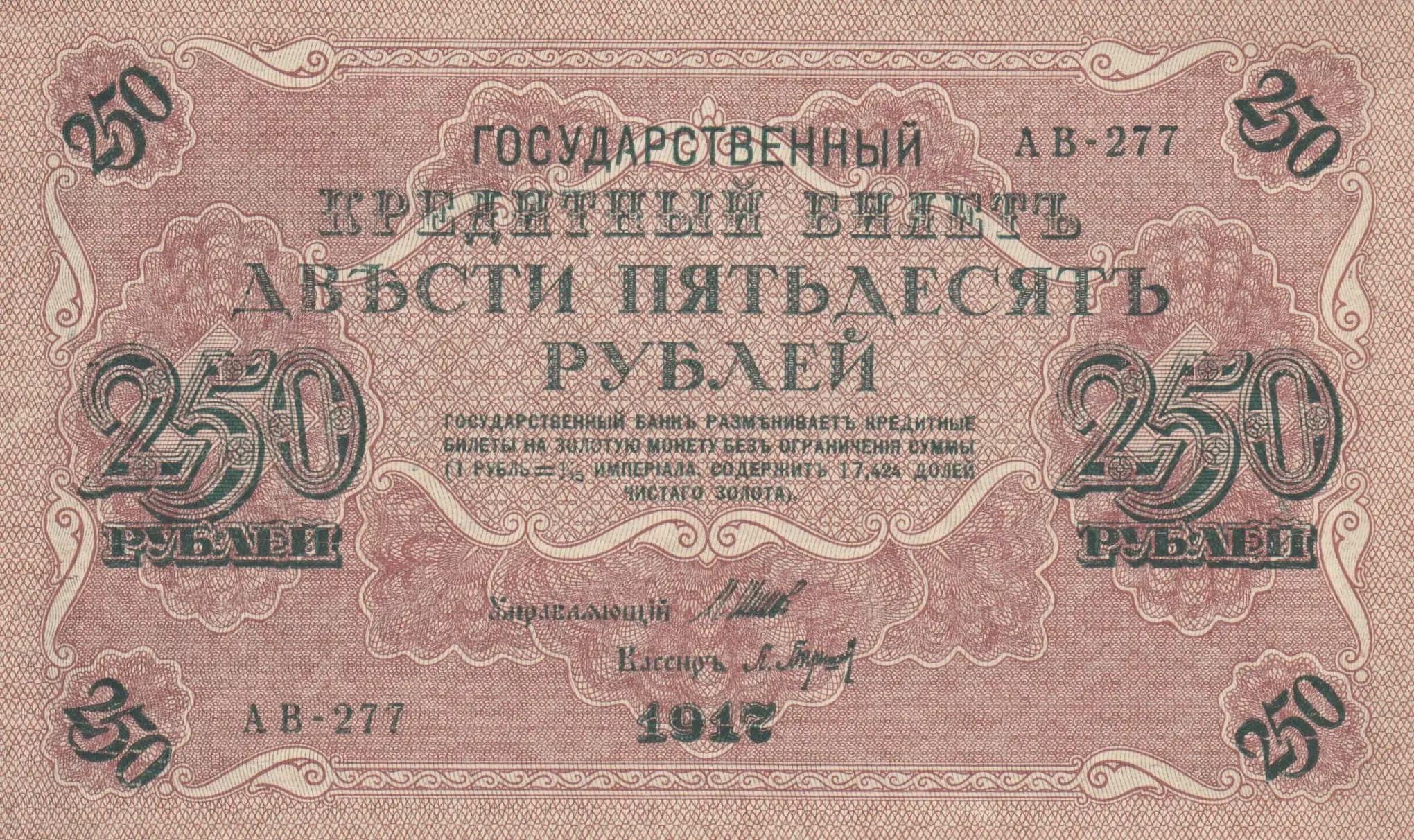
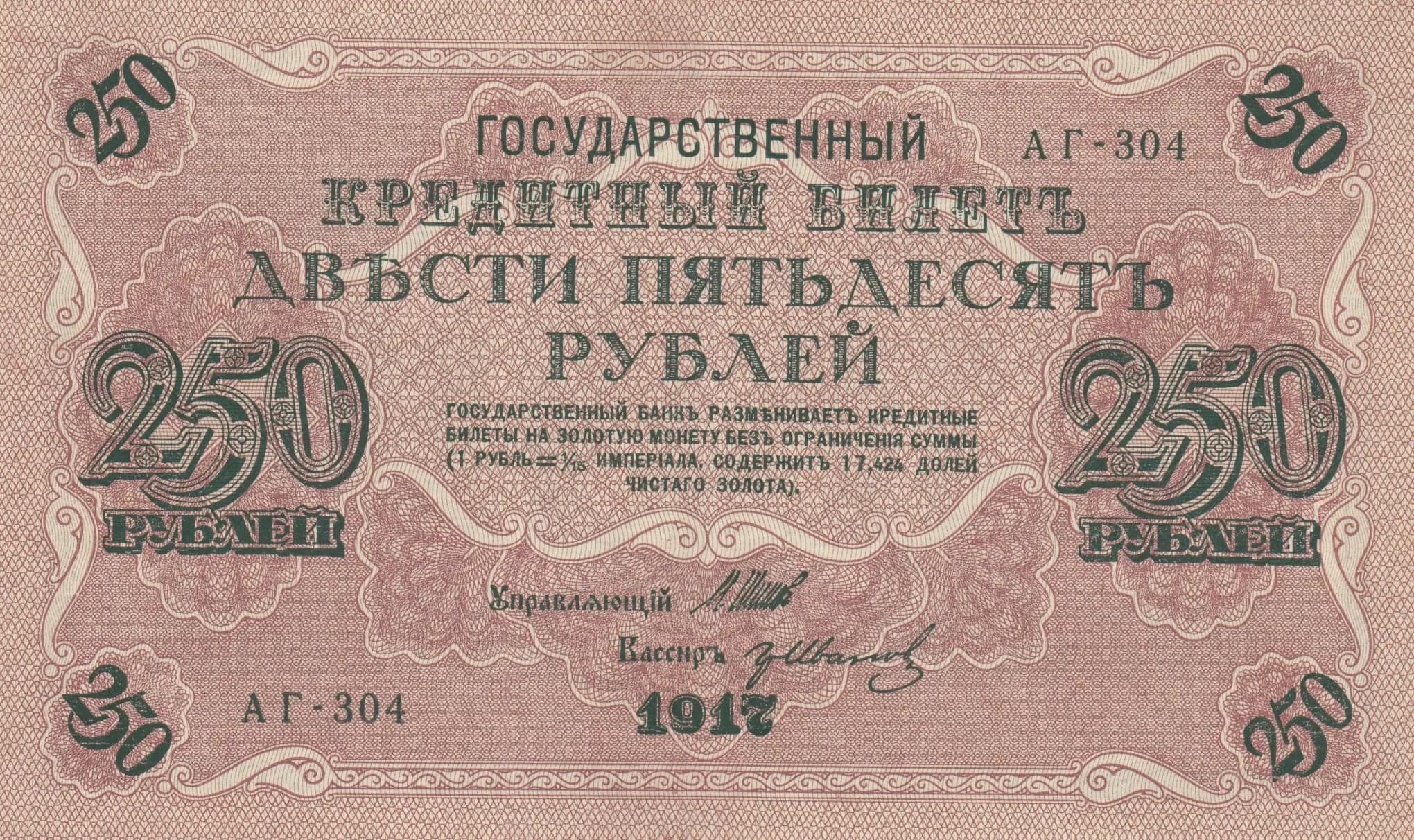
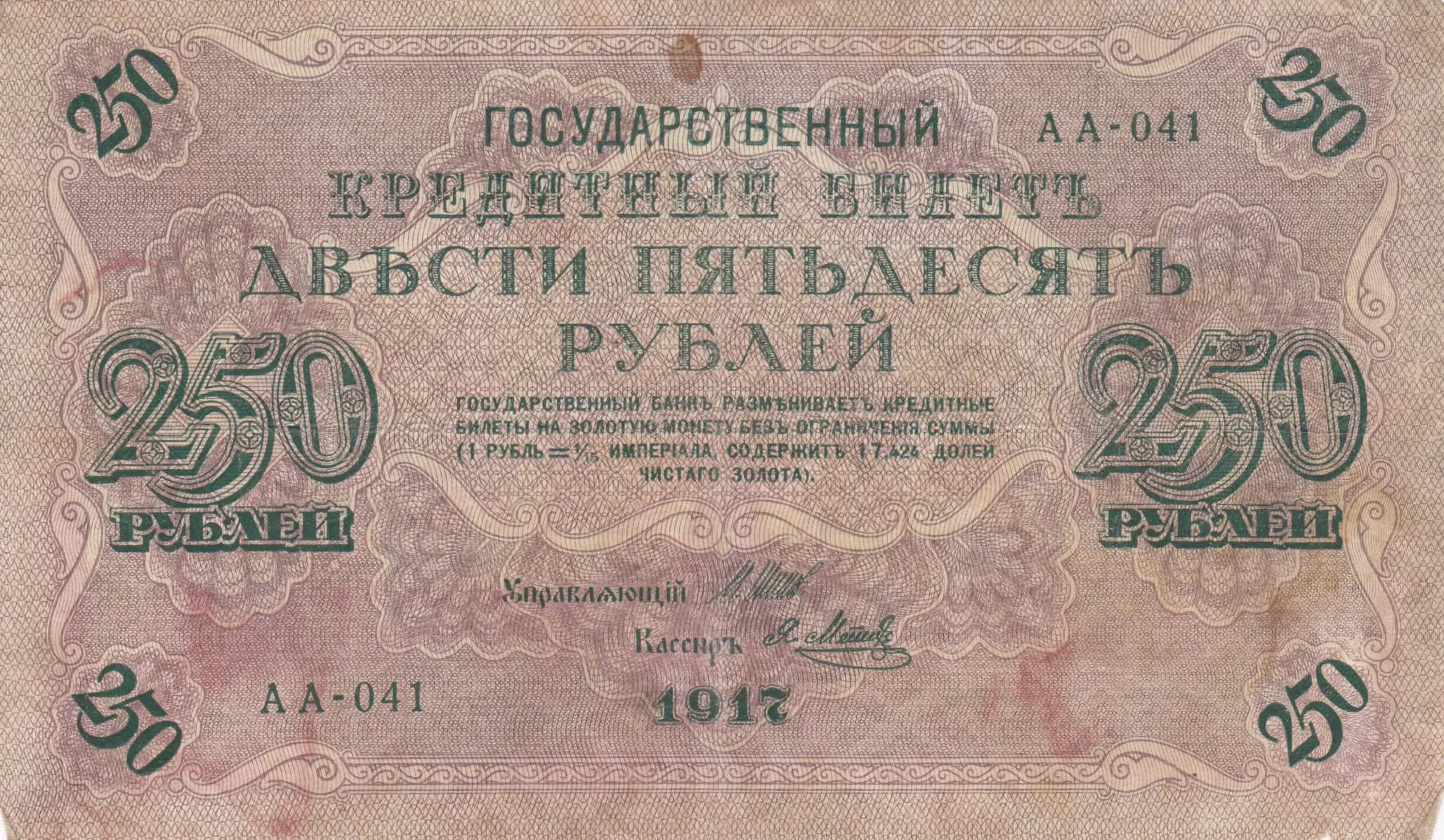
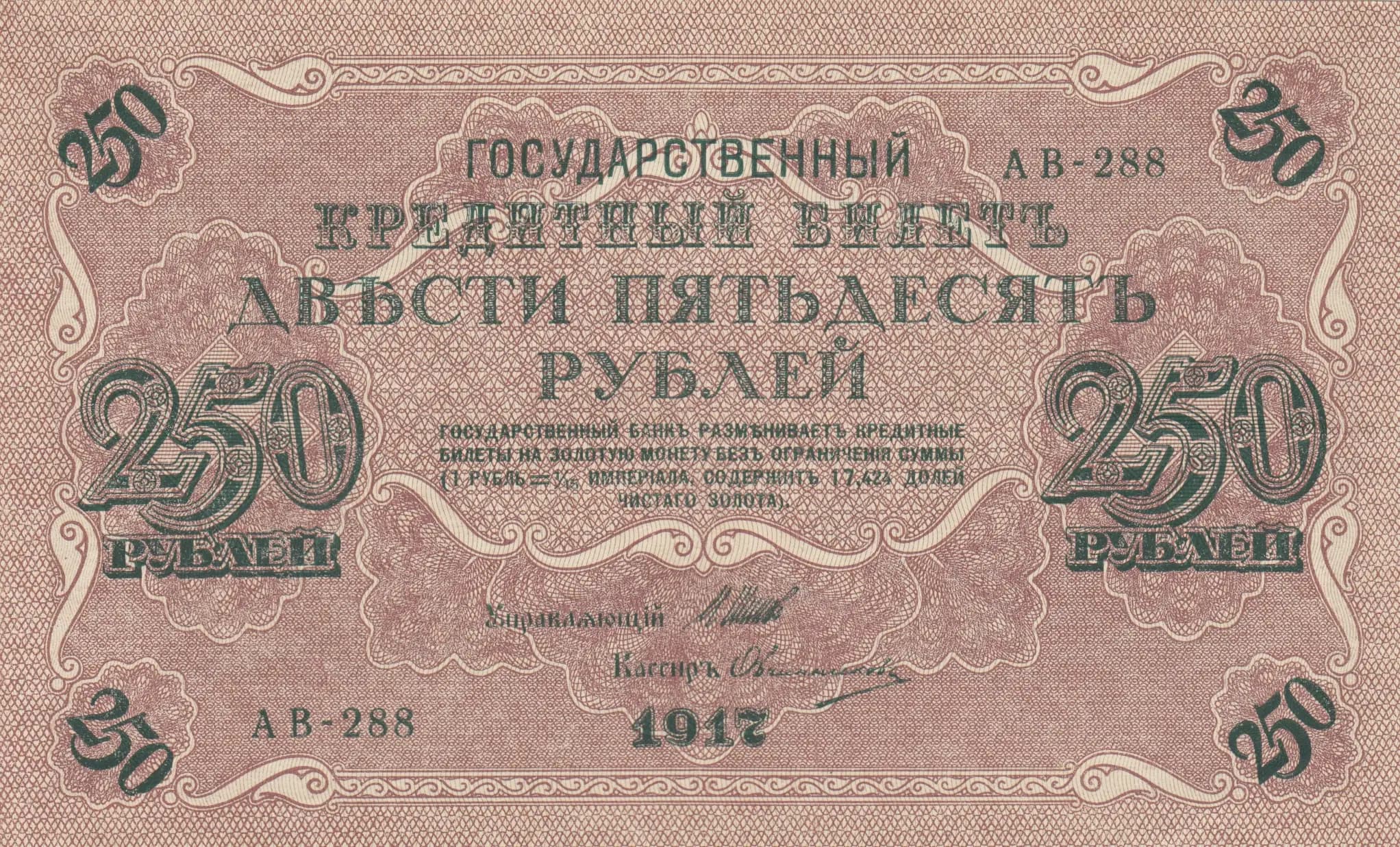
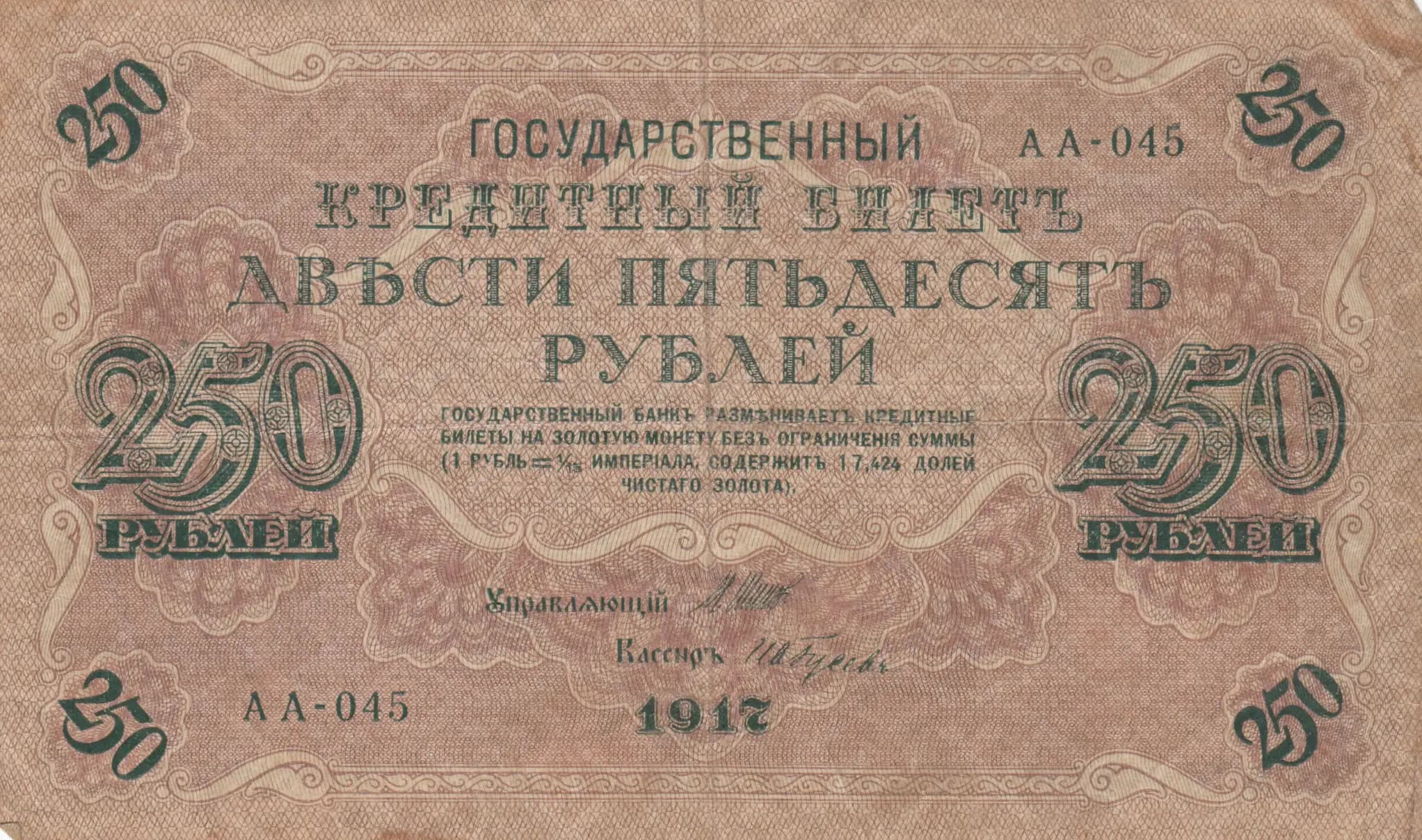
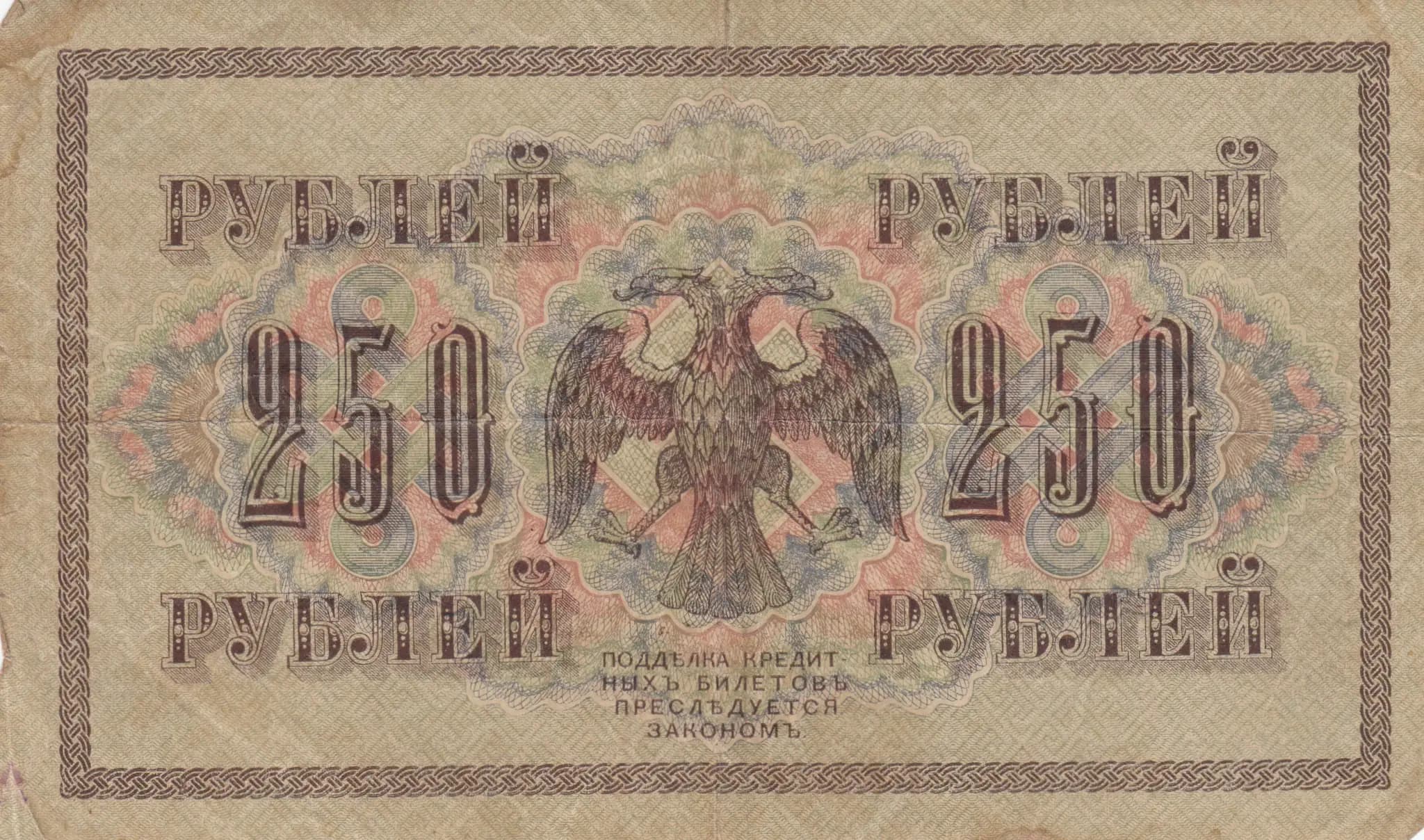
This is a VF-grade 250 Rublei note from the R.S.F.S.R. issued in 1917, during the tumultuous early years of the Russian Revolution. The note displays the characteristic tan/beige coloring and ornamental design typical of Imperial Russian State Credit Notes, with clear serial number АА-045 and handwritten cashier signature dated 1917. Despite age-related yellowing, foxing, and circulation creases, the ornamental borders and the striking double-headed eagle reverse remain reasonably well-preserved, making this a notable example of early Soviet-era currency.
Common. The 250 Rublei denomination from the 1917 R.S.F.S.R. series was part of a standard circulation issue during the Civil War period, with substantial print runs. VF-grade examples remain readily available in the collector market, typically trading in the $15-50 USD range depending on specific variety and serial number. While historically significant, these notes are not scarce in the numismatic marketplace.
Issued during the R.S.F.S.R. period (Russian Socialist Federative Soviet Republic, 1917-1922), this note represents the transitional currency between the Tsarist Imperial system and the early Soviet state. The reverse features the traditional double-headed eagle—the heraldic symbol of Russian state authority—which would soon be replaced by Soviet imagery, making these notes historically significant as the last major circulation issue bearing this imperial symbol. The gold standard notation on the front ('1 ruble = 1/4 Imperial, containing 1.7.424 parts pure gold') reflects the final attempt to maintain currency credibility during the economic chaos of the Russian Civil War.
The obverse features a formal text-and-ornament design characteristic of late Imperial Russian State Credit Notes. The central text block declares the denomination and gold-backing guarantee, flanked by ornamental corner designs and filigree borders. The denomination '250' appears in all four corners in dark green numerals. A handwritten signature line identifies the cashier and includes the issuance date. The reverse showcases the Imperial double-headed eagle—Russia's primary heraldic symbol—positioned centrally within an ornamental circular medallion with detailed engraved feathering. The eagle is flanked by large ornamental numerals '250' and the word 'РУБЛЕЙ,' with a full decorative border frame enclosing the entire design. This represents the last major circulation series to bear the Imperial eagle before Soviet redesigns.
FRONT SIDE: 'ГОСУДАРСТВЕННЫЙ КРЕДИТНЫЙ БИЛЕТ' (State Credit Ticket) / '250 РУБЛЕЙ' (250 Rubles) / 'ГОСУДАРСТВЕННЫЙ БАНК РАЗРЕШАЕТ КРЕДИТНЫЕ БИЛЕТЫ НА ЗОЛОТУЮ МОНЕТУ БЕЗ ОГРАНИЧЕНИЯ СУММЫ (1 РУБЛЬ — 1/4 ИМПЕРИАЛА, СОДЕРЖИТ 1.7.424 ДОЛЕЙ ЧИСТОГО ЗОЛОТА)' (The State Bank authorizes credit tickets for gold coins without limit of sum; 1 ruble equals 1/4 Imperial, containing 1.7.424 parts of pure gold) / 'Кассир' (Cashier) / Serial Number: 'АА-045' / Date: '1917'. BACK SIDE: '250 РУБЛЕЙ' (250 Rubles, appears twice flanking the eagle) / 'ПОДЕЛКА КРЕДИТНЫХ БИЛЕТОВ ПРЕСЛЕДУЕТСЯ ЗАКОНОМ' (Counterfeiting credit notes is prosecuted by law).
Intaglio (engraving/copperplate) printing, evidenced by the fine line work, intricate filigree patterns, and three-dimensional raised appearance of the ornamental details visible in both the borders and the central eagle medallion. The security features—including the complex border designs, fine line engraving in the eagle feathering, and watermark areas—are consistent with the high-security printing standards maintained by the Russian State Bank during this period. These notes were produced by the State Printing Works (Государственный печатный двор) using traditional engraved steel plates.
Serial number АА-045 with handwritten cashier signature dated 1917. The AA prefix indicates an early printing from the first series. Pick catalog P-36(2-6) indicates this is from the second to sixth issue group of the 250 Rublei denomination, suggesting this particular note falls within the standard variety. Handwritten signatures and dates on these notes show significant variation by individual cashier; notes signed by notable officials (such as Gusev, noted in the collector notes) may hold slight premium value to specialists, though this does not significantly elevate the rarity classification.