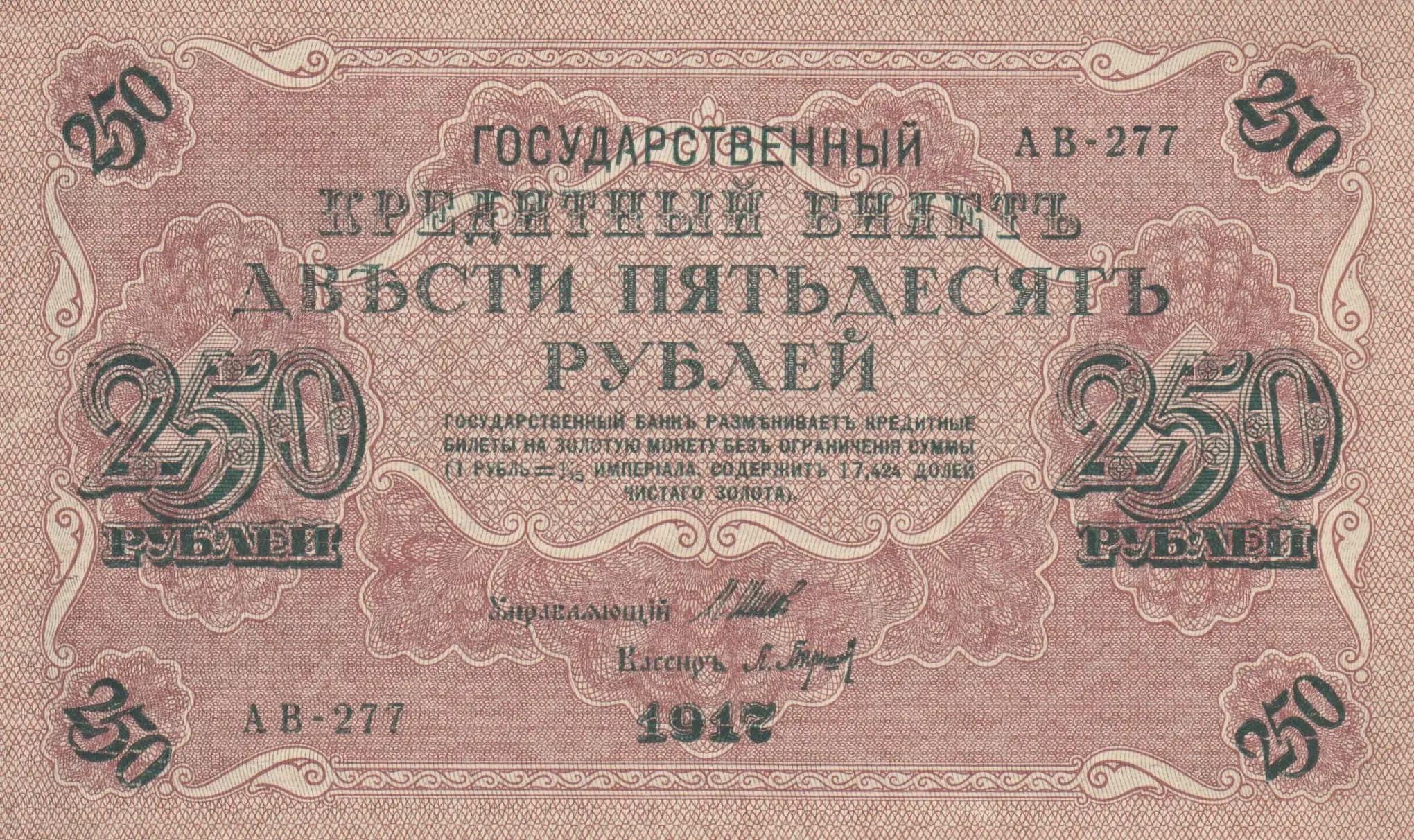
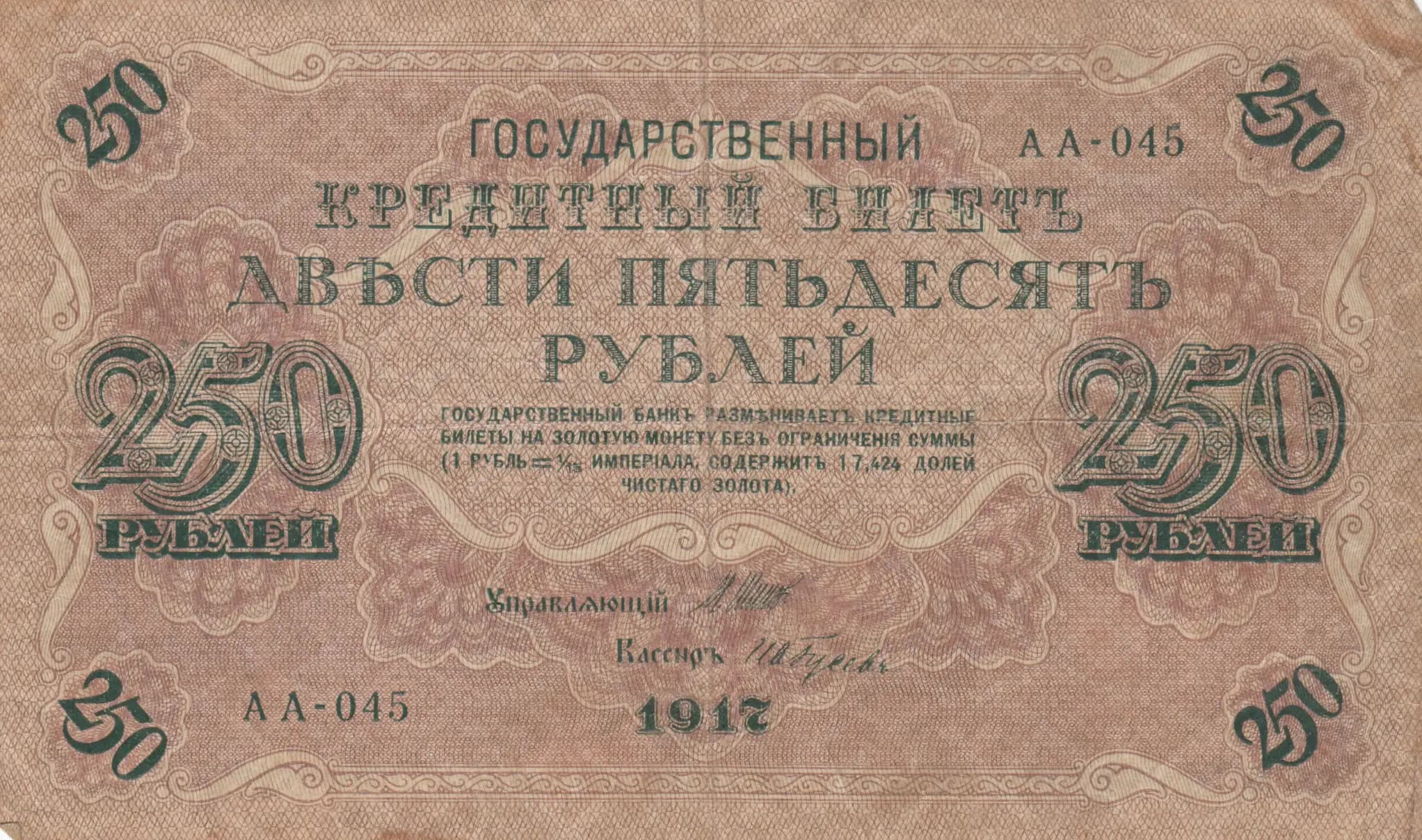
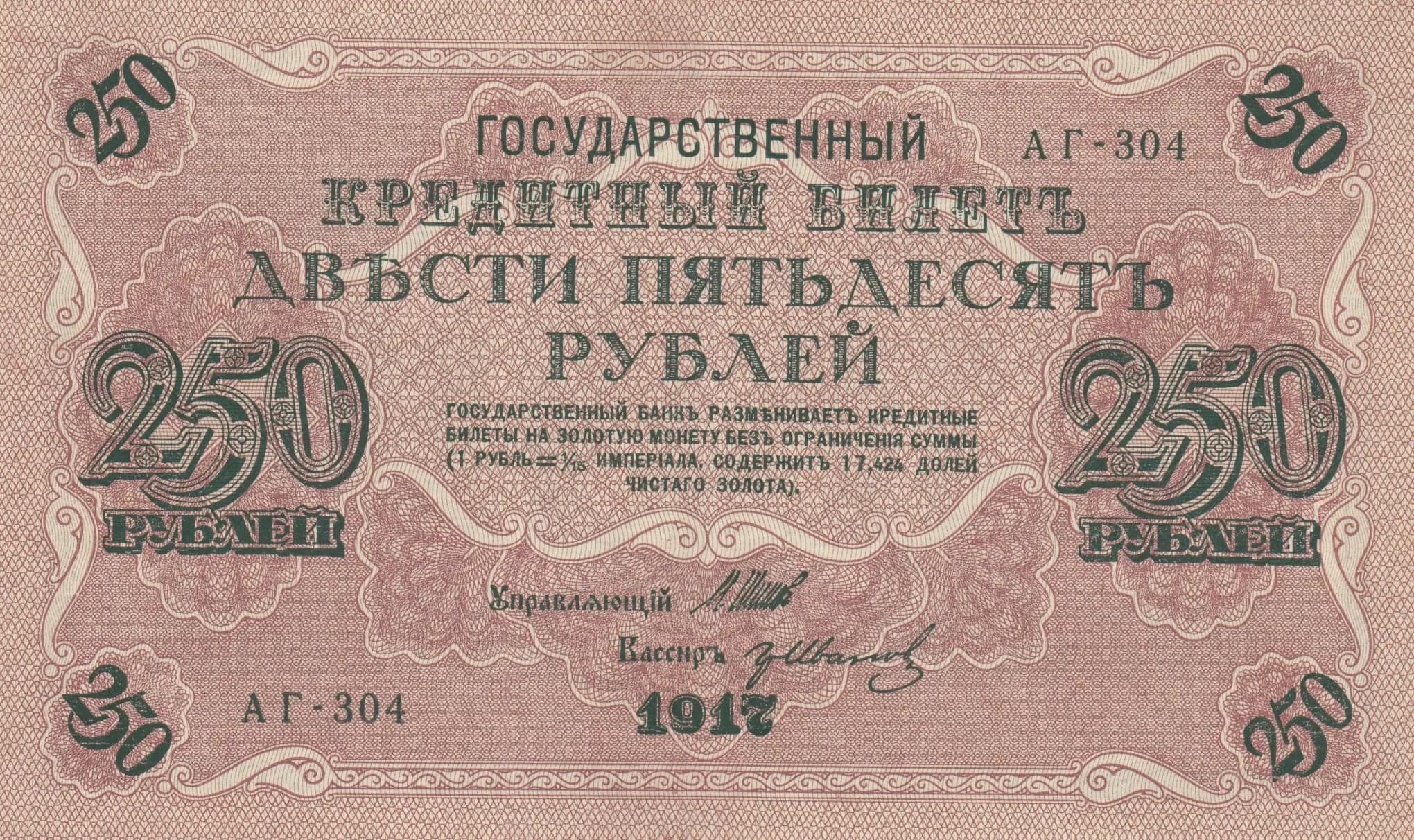
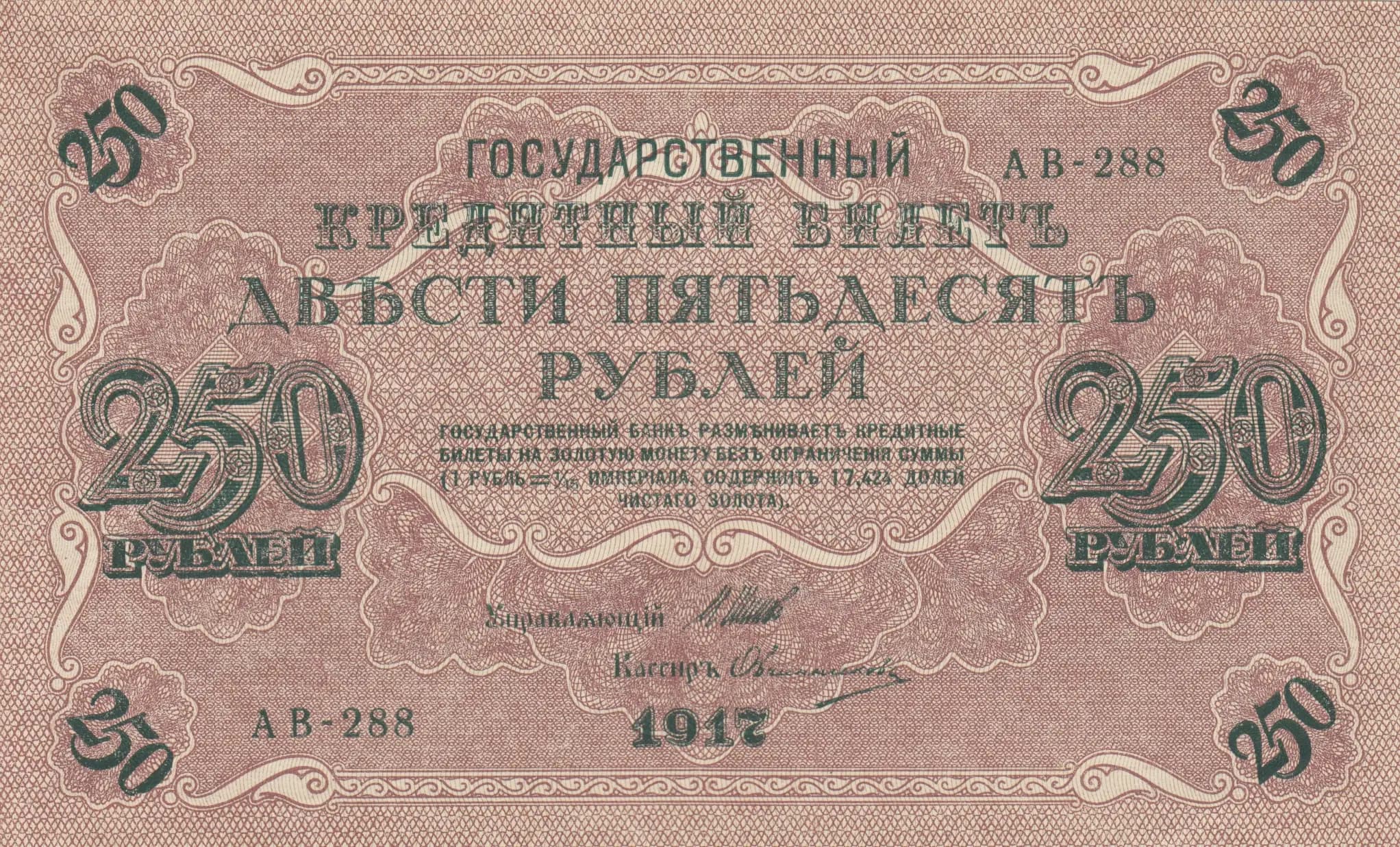
250 rublei 1917
“Sig.Y.Metz”
About This Note
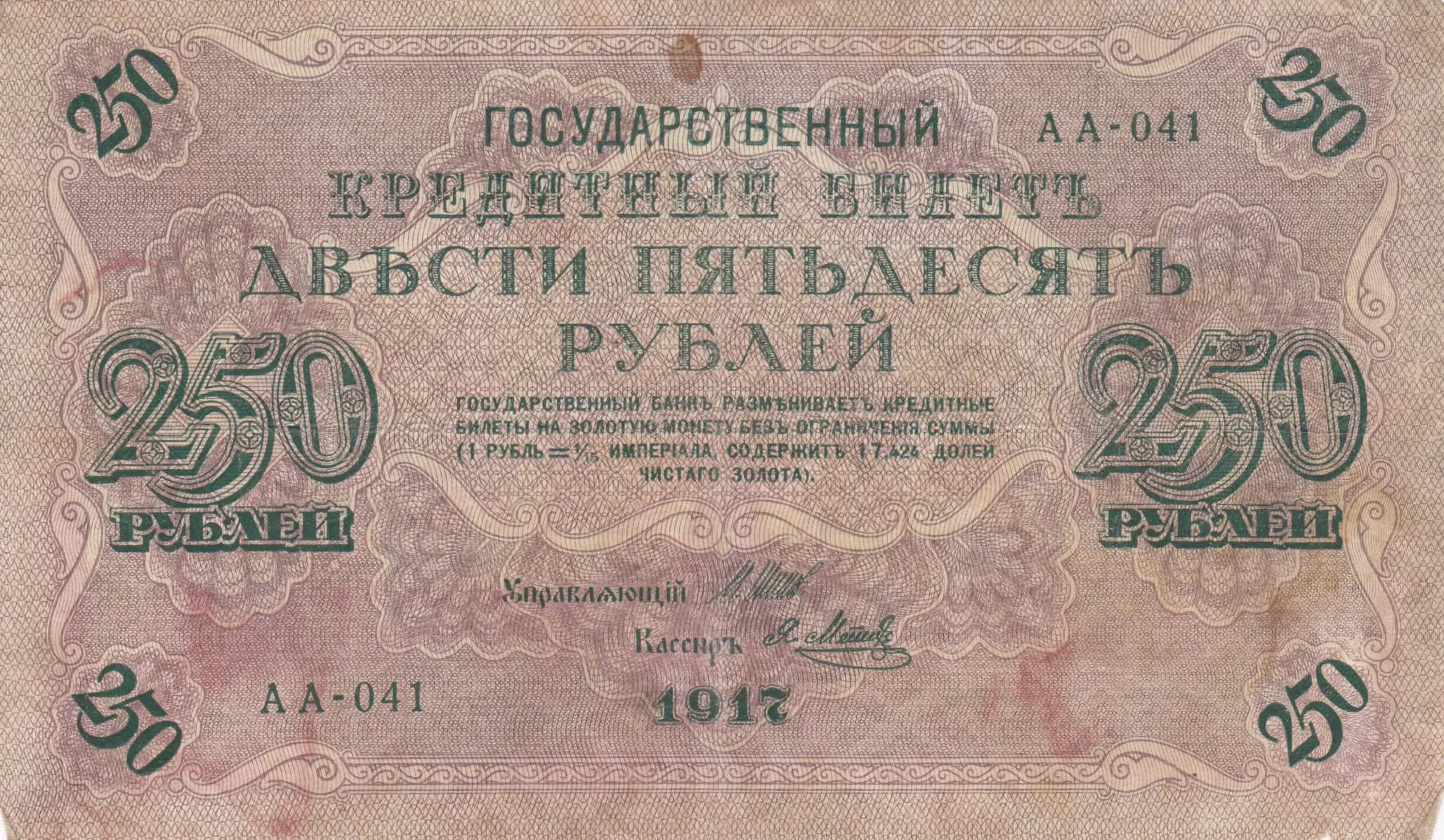
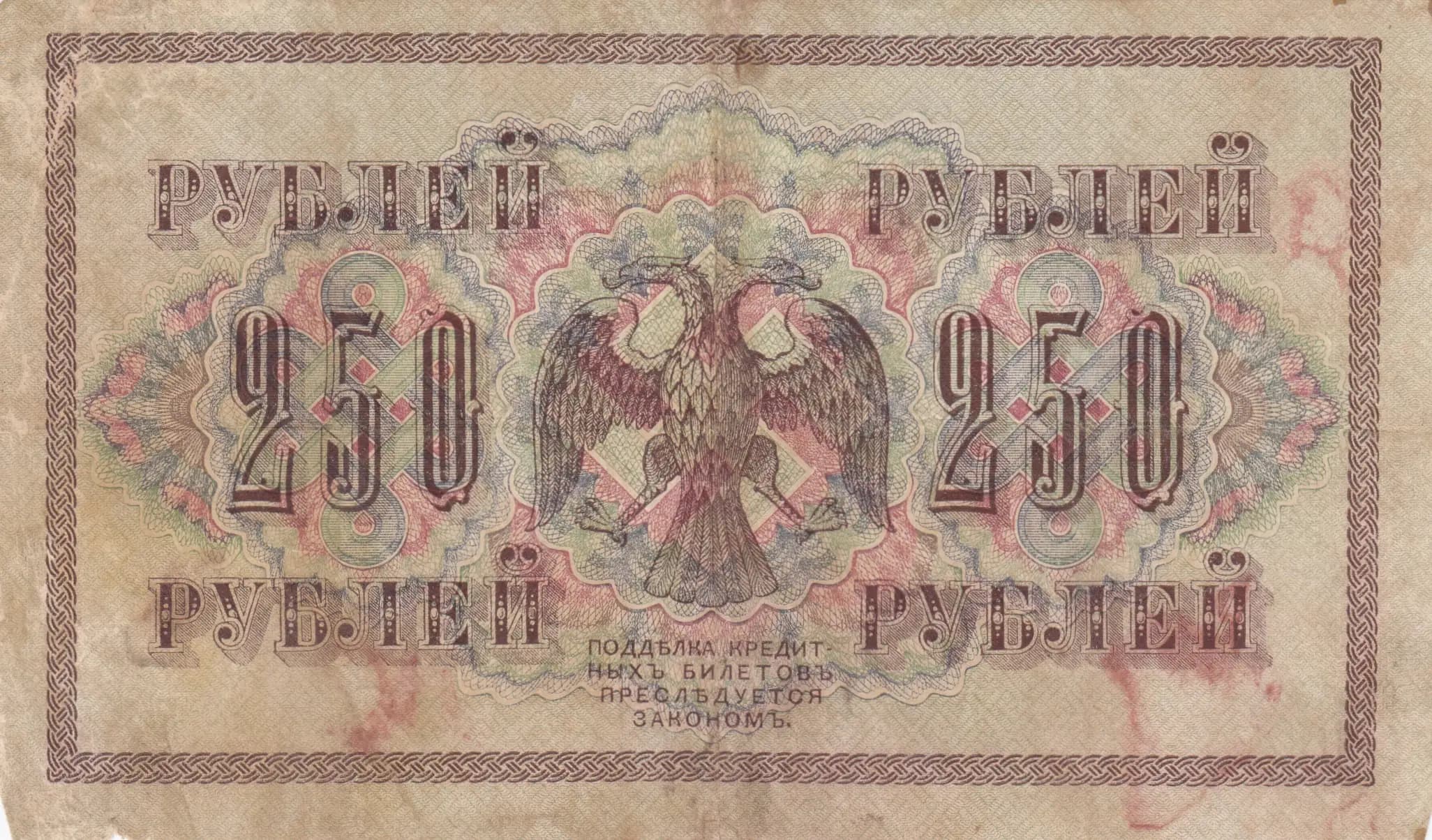
This 250 Ruble note from 1917 represents a critical transitional moment in Russian monetary history, issued by the R.S.F.S.R. during the revolutionary period. The note exhibits characteristic period deterioration with visible staining, foxing, and aged patina throughout, consistent with F-grade condition. The ornamental design features fine engraving with decorative scrollwork borders and the Imperial double-headed eagle on the reverse, making it a historically significant example of early Soviet-era currency.
Common. The 250 Ruble denomination from 1917 is a standard issue in the Pick catalog for R.S.F.S.R. notes, with no historical evidence of a restricted print run, early recall, or extraordinary scarcity. These notes circulated during a period of extensive monetary issuance, and surviving examples in various conditions are regularly encountered in the market. The F-grade condition is typical for notes of this age and does not command significant premium pricing. Such notes are generally available to collectors at modest valuations.
Issued in 1917 during the Russian Revolution, this credit note (kreditnyy bilet) represents the transitional currency system between Imperial and Soviet Russia. The reverse features the double-headed eagle with crown—a holdover from Imperial symbolism—while the front emphasizes the State Bank's commitment to gold backing at the redemption rate specified (1 ruble = ½ imperial with 17.424 grains of pure gold). This denomination and design reflect the monetary chaos of the revolutionary period, when multiple issuing authorities competed for legitimacy through traditional security features and legal language.
The note employs a classical Imperial Russian design template adapted for the transitional 1917 period. The front features a formal layout with denomination numerals positioned in all four corners, surrounded by ornamental border scrollwork in tan and beige tones with green and pink accents. The center contains the authoritative State Bank language and gold redemption terms, flanked by manager and cashier signature lines dated 1917. The reverse is dominated by a large ornamental frame containing the double-headed eagle with crown—the traditional symbol of Russian imperial authority—positioned centrally and serving as the primary design element. The interlocking geometric border pattern frames the entire reverse. The overall color palette of tan, beige, brown, and pink reflects period printing practices. This design is characteristic of Russian State Bank issues during the final phases of Imperial rule and early revolutionary period, emphasizing legal authority and gold backing to maintain public confidence.
FRONT: '250' (denomination in numerals); 'ГОСУДАРСТВЕННЫЙ КРЕДИТНЫЙ БИЛЕТ' (State Credit Ticket/Bank Note); 'ДВЕСТИ ПЯТЬДЕСЯТ РУБЛЕЙ' (Two Hundred Fifty Rubles); 'РУБЛЕЙ' (Rubles); Serial number 'АА-041'; Gold redemption guarantee: 'ГОСУДАРСТВЕННЫЙ БАНК РАЗМИНЫВАЕТ КРЕДИТНЫЕ БИЛЕТЫ НА ЗОЛОТО МОНЕТУ БЕЗВОЗМЕЗДНО СУММЕ (1 РУБЛЬ = ½ ИМПЕРИАЛА СОДЕРЖИТ 17.424 ДОЛЕЙ ЧИСТОГО ЗОЛОТА)' (The State Bank exchanges credit notes for gold coin without recompense at the sum: 1 ruble = ½ imperial contains 17.424 grains of pure gold); Signature designations: 'Управляющий' (Manager) and 'Кассир' (Cashier); Date: '1917'. BACK: '250' and 'РУБЛЕЙ РУБЛЕЙ' (Rubles Rubles) in large numerals; 'ПОДДЯЛКА КРЕДИТ-НЫХ БИЛЕТОВЪ ПРЕДУСМОТРЕНО ЗАКОНОМ' (The support/backing of credit notes is provided for by law).
Fine line engraving throughout, executed in the classical intaglio tradition typical of high-denomination Imperial Russian currency. The ornamental borders, scrollwork, and central eagle design all exhibit the hallmark characteristics of engraved security printing. The precision of the line work and the multiple color application (evident in the tan, beige, green, and pink tones) suggest multi-plate printing, likely using traditional bank note printing techniques. The note was likely produced at the State Bank's official printing facility in St. Petersburg/Petrograd, which maintained the highest security standards of the period.
Serial number prefix 'АА-041' is documented for this Pick number. The signature lines for Manager (Управляющий) and Cashier (Кассир) are blank or contain manuscript signatures typical of 1917 issues. Variations in this series are known to include different signature combinations and serial number prefixes. The specific variety is consistent with the 2-8 range noted in the Pick catalog designation P-36(2-8), indicating this falls within the standard cataloged series. The collector attribution to 'Sig.Y.Metz' suggests this note has been part of a notable collection with documented provenance.