250 rublei 1917
“Sig.Barysev”
About This Note
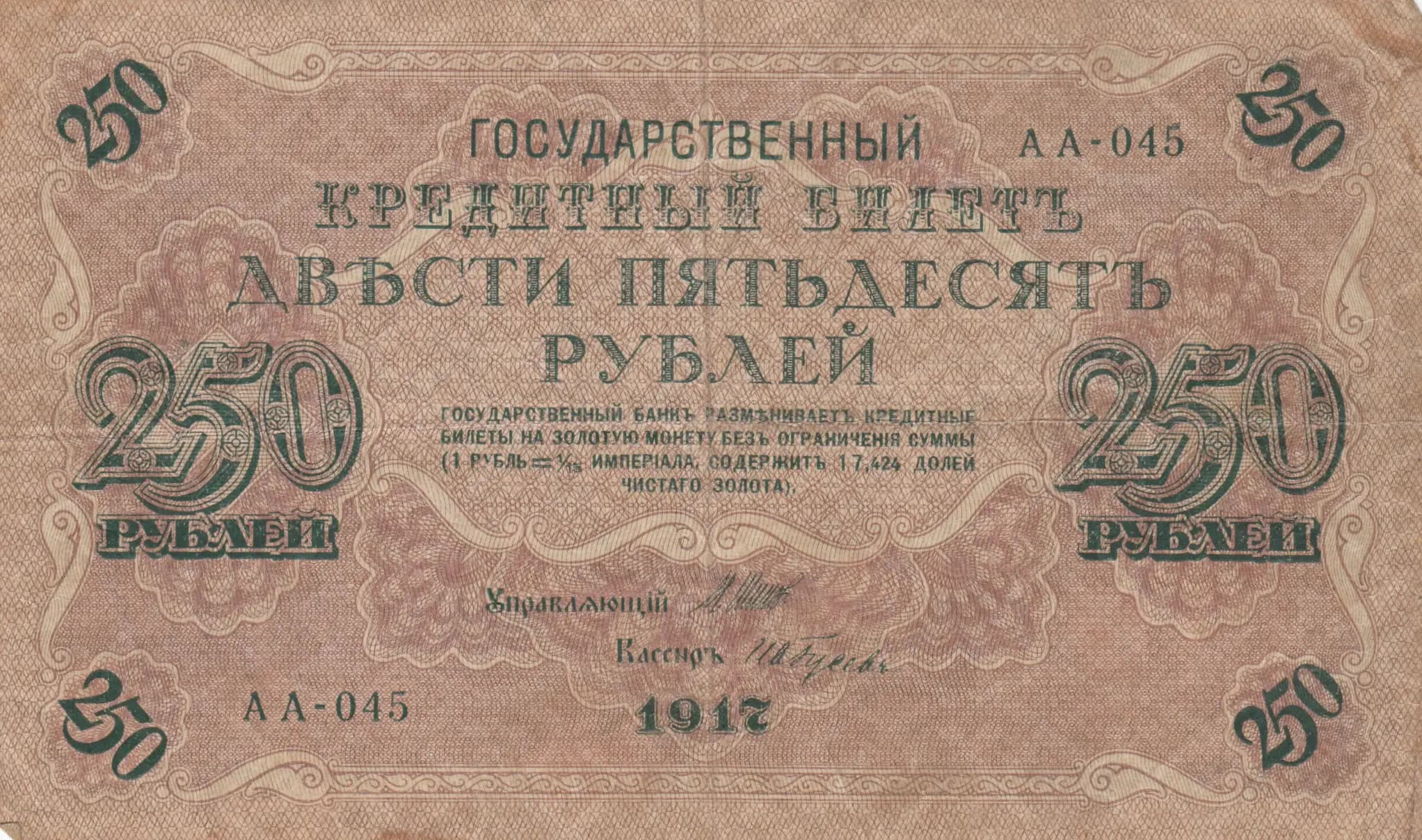
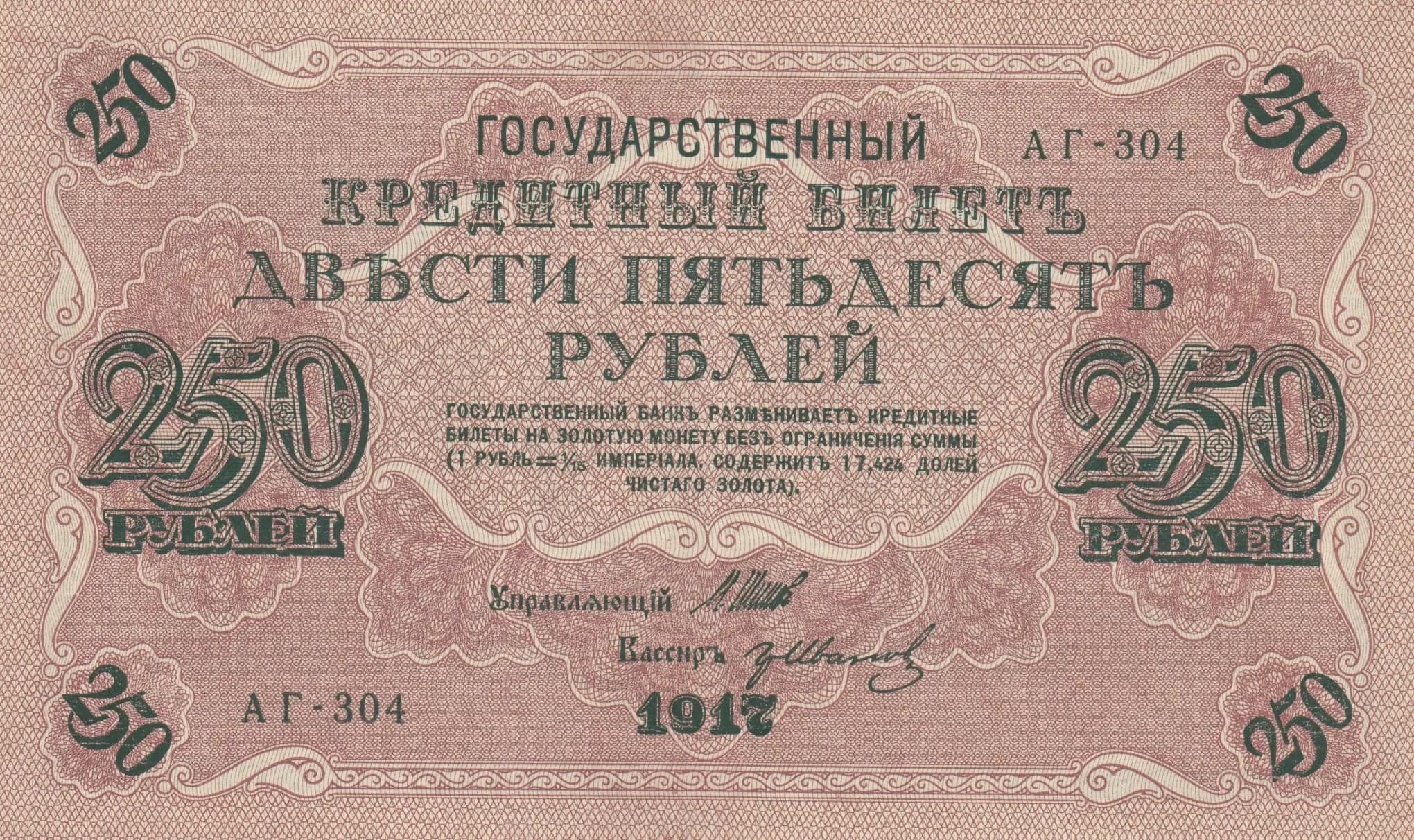
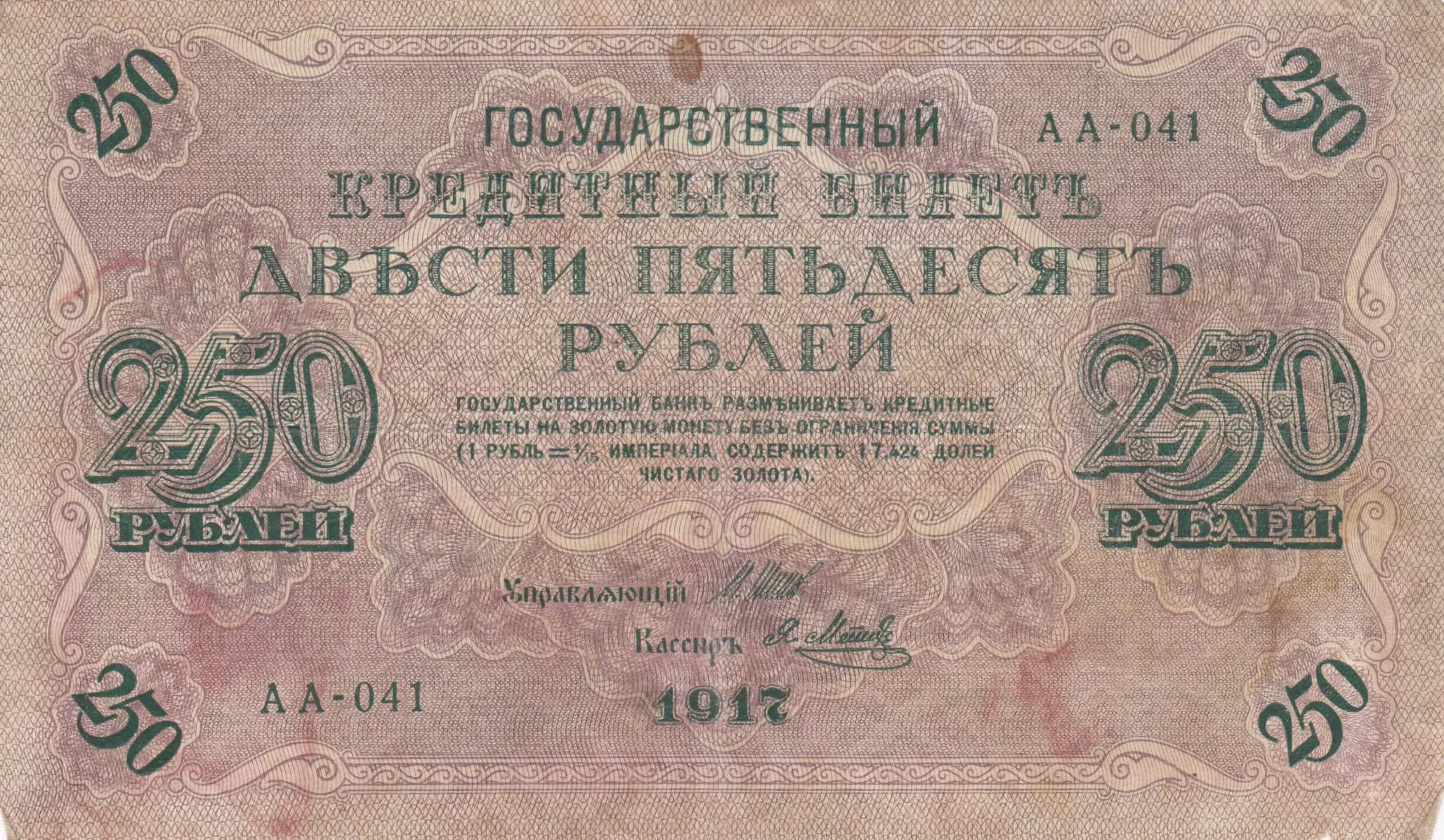
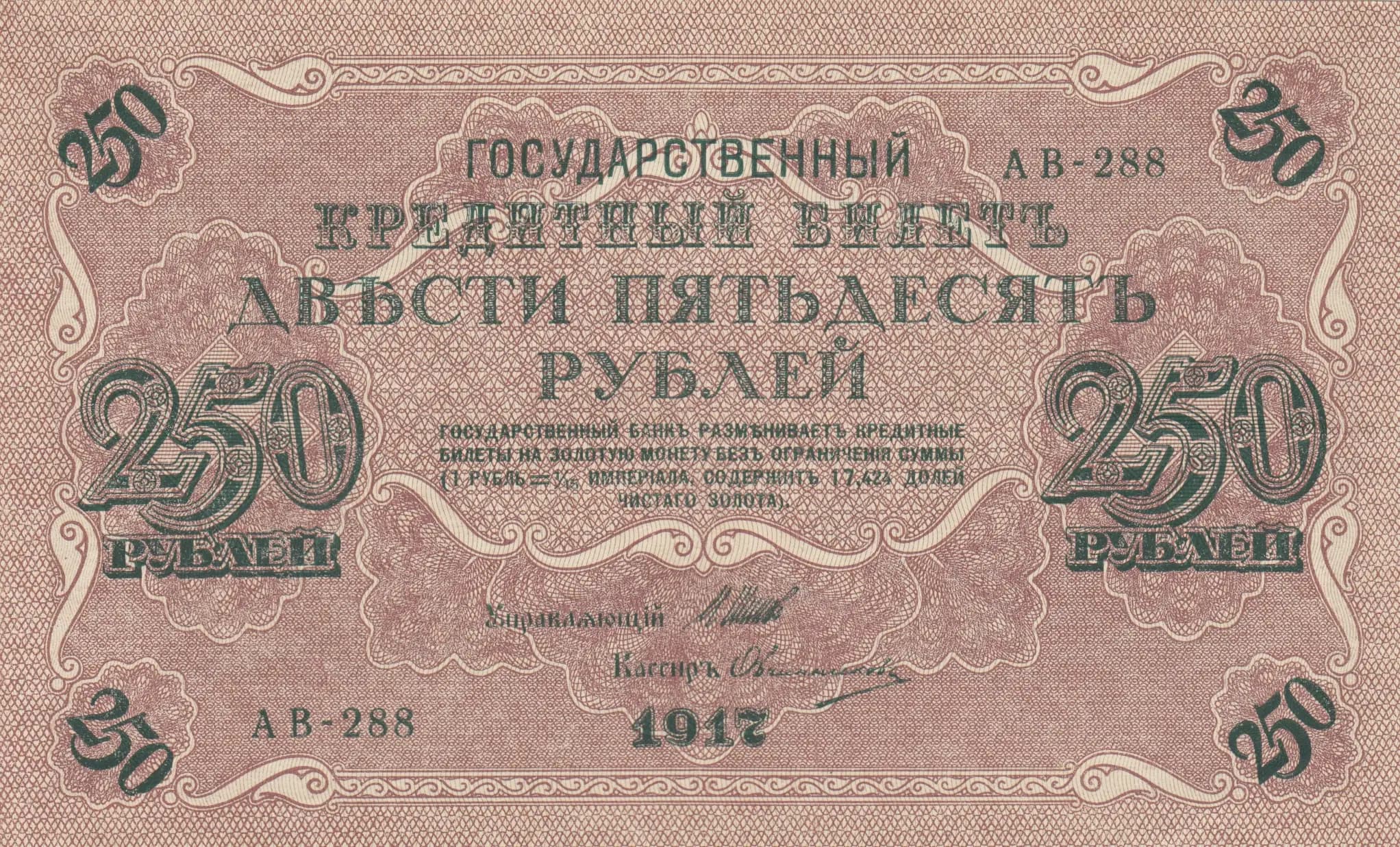
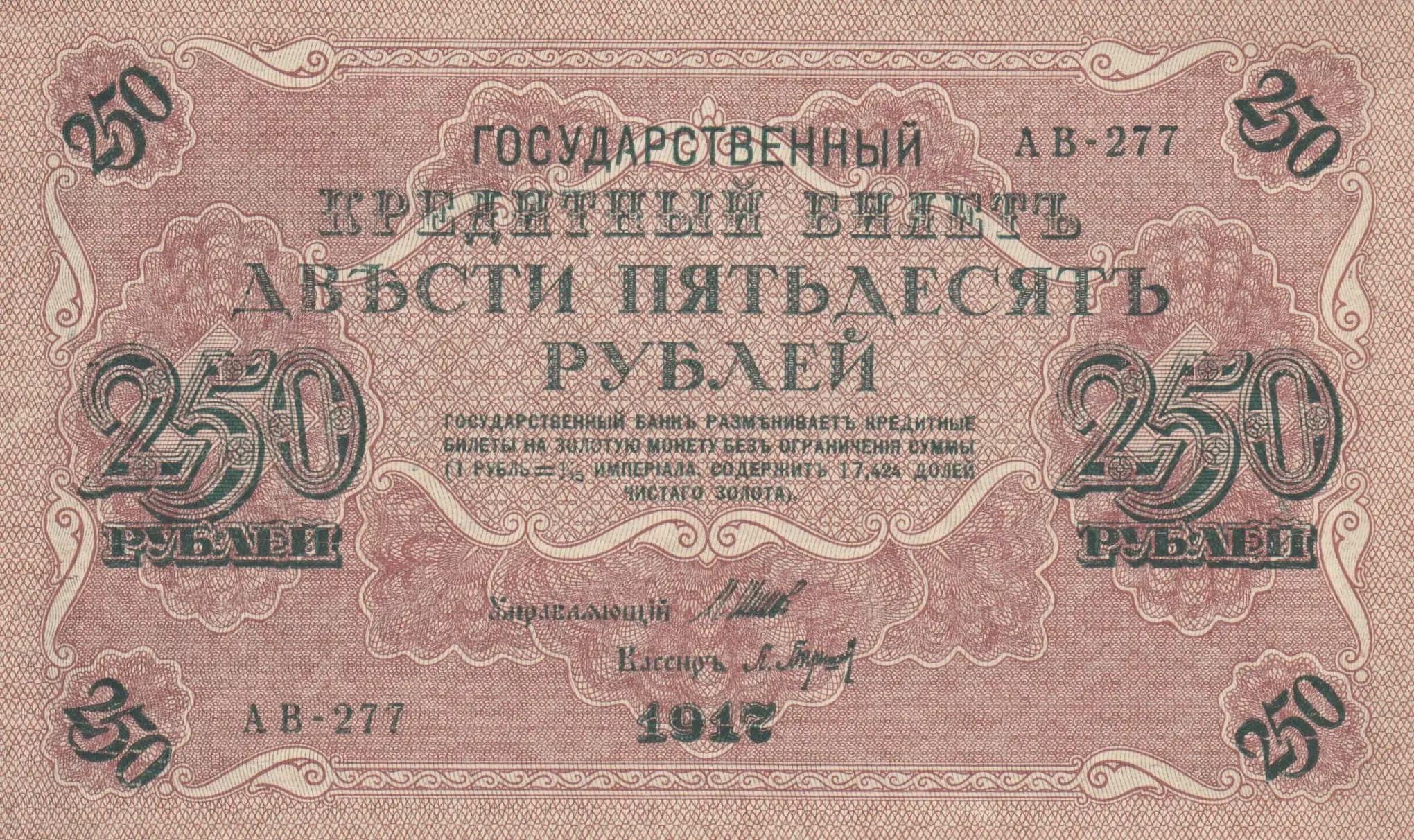
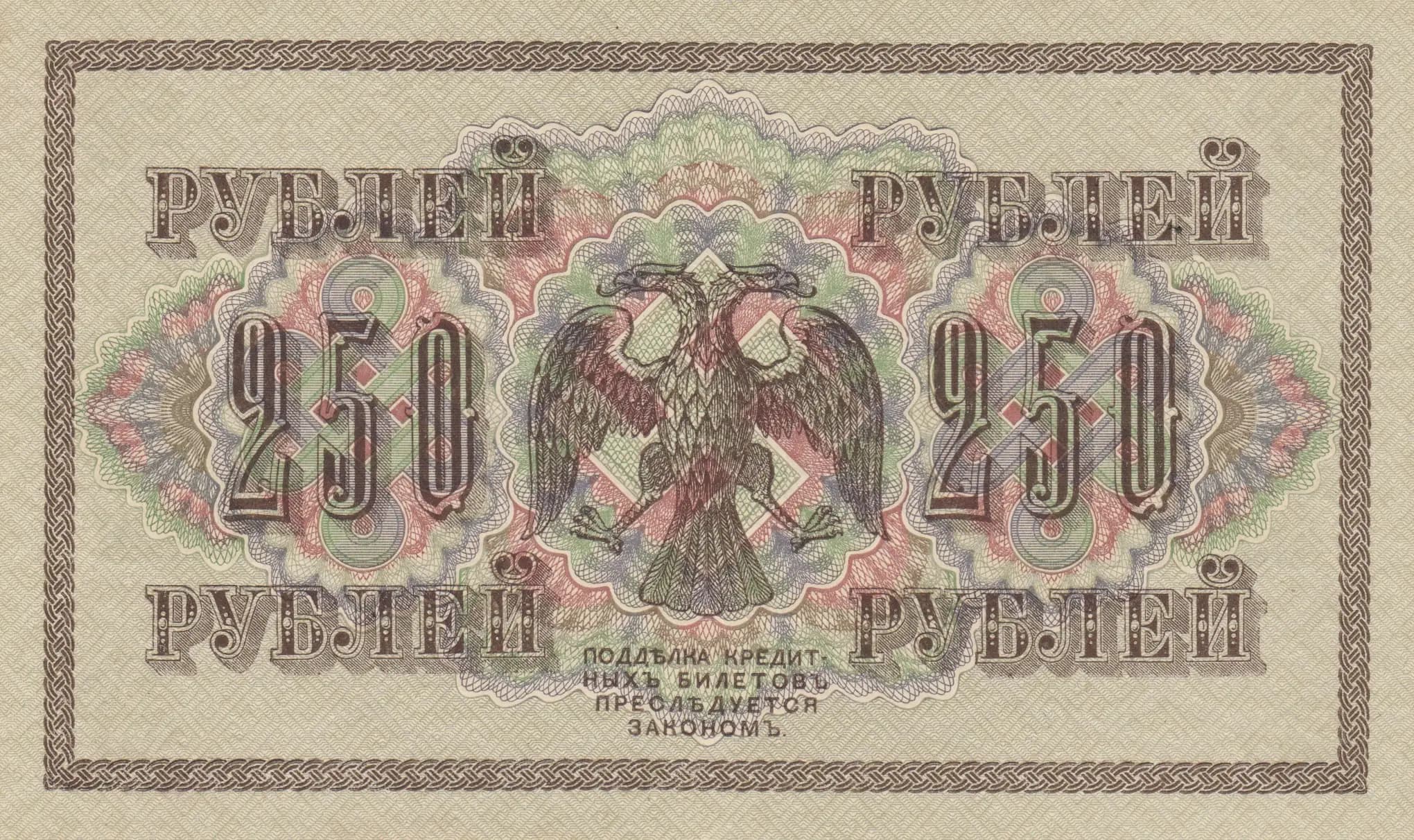
This is an exceptional example of a Russian 250 Rublei from 1917, issued by the R.S.F.S.R. during the revolutionary period. The note displays the characteristic ornate belle époque engraving style with mauve and rose coloring on the obverse and cream/tan tones on the reverse, featuring the imperial double-headed eagle that symbolized continuity with Tsarist monetary traditions even as the Bolsheviks consolidated power. In UNC condition, this example exhibits minimal aging despite its over 100-year age, with crisp detail visible in the fine-line security patterns and complex ornamental borders that showcase the sophisticated intaglio engraving of the period.
Common. The 250 Rublei denomination of 1917 was issued in substantial quantities by the R.S.F.S.R. as a high-denomination note necessary for large transactions during the inflationary revolutionary period. While specific print run figures are difficult to verify for this transitional issue, the frequency of surviving examples in collections and the straightforward nature of this Pick number (36-2-2, a standard cataloging variety) indicate substantial original circulation. The UNC grade is somewhat less common than circulated examples, but the denomination itself is not considered scarce among 1917 Russian notes.
The 250 Rublei denomination represents the high-value currency of the Russian Empire's final revolutionary year, issued as the R.S.F.S.R. (Russian Socialist Federative Soviet Republic) attempted to establish monetary authority during the October Revolution's aftermath. The retention of the imperial double-headed eagle on the reverse reflects the transitional nature of 1917 currency, as Soviet authorities had not yet fully replaced Tsarist iconography with revolutionary symbols. The stern anti-counterfeiting warning in Russian ("Counterfeiting of these banknotes is prosecuted by law") underscores the state's efforts to maintain monetary control during the period of maximum political and economic chaos.
The obverse features a formally symmetrical design characteristic of Imperial Russian banknote design, with the denomination 250 in ornate decorative corner frames arranged in all four corners. The center displays an elaborate ornamental cartouche containing the state designation and denomination spelled out in Cyrillic script. Fine-line security patterns form a continuous background throughout, creating a complex microprint-style security feature. The reverse is dominated by a heraldic double-headed imperial eagle (the State Seal of Russia) positioned within an ornamental frame, wearing a crown above and depicted with spread wings in the classical Russian heraldic style. Large denomination numerals flank the eagle on both sides within scalloped decorative frames, with 'РУБЛЕЙ' (Rubles) inscribed above and below. A decorative Celtic knot-style border frames the entire reverse design. The note employs a multi-color security printing technique with color gradients transitioning between mauve, rose, green, cream, tan, brown, and gray tones.
FRONT SIDE: 'ГОСУДАРСТВЕННЫЙ КРЕДИТНЫЙ БИЛЕТ' (State Credit Note/Banknote); 'ДВЕСТИ ПЯТЬДЕСЯТ РУБЛЕЙ' (Two Hundred Fifty Rubles); Serial designation 'АВ-277'; Year '1917'; Authority designations 'Кассир' (Cashier) and 'Управляющий' (Manager). REVERSE SIDE: 'РУБЛЕЙ' (Rubles) flanking the denomination; Central legal warning: 'ПОДДЕЛЬНА КРЕДИТ НИХ БИЛЕТОВ ПРЕСЛЕДУЕТСЯ ЗАКОНОМ' (Counterfeiting of these credit banknotes is prosecuted by law); Denomination '250' displayed prominently in decorative frames.
Intaglio (steel plate engraving) with multiple color printing. The fine-line patterns visible throughout the note and the exceptional detail of the imperial eagle design are characteristic of high-security intaglio engraving as practiced by Imperial Russian state printers. The multi-color security printing with evident color gradients suggests simultaneous multi-plate printing or successive color passes. For Pick-36(2-2), this note was produced by the Imperial Russian state printing authority (likely the State Printing House in Petrograd/St. Petersburg), maintaining the sophisticated security standards of Tsarist currency production even under revolutionary administration.
Pick-36(2-2) represents the second issue (2) of the second type (2) cataloging in the Pick standard for this denomination and year. The serial designation 'АВ-277' visible on this example represents the Cyrillic serial letter combination standard for 1917 notes. The signature line designations for 'Cashier' (Кассир) and 'Manager' (Управляющий) are consistent with standard state banking authority signatures of the period. Collector attribution 'Sig.Barysev' likely refers to a noted signature variety or a specific cashier/manager official whose signature appears on this note, making it a catalogable sub-variety for advanced collectors specializing in Russian 1917 notes.