250 rublei 1917
“Sig.Ivanov”
About This Note
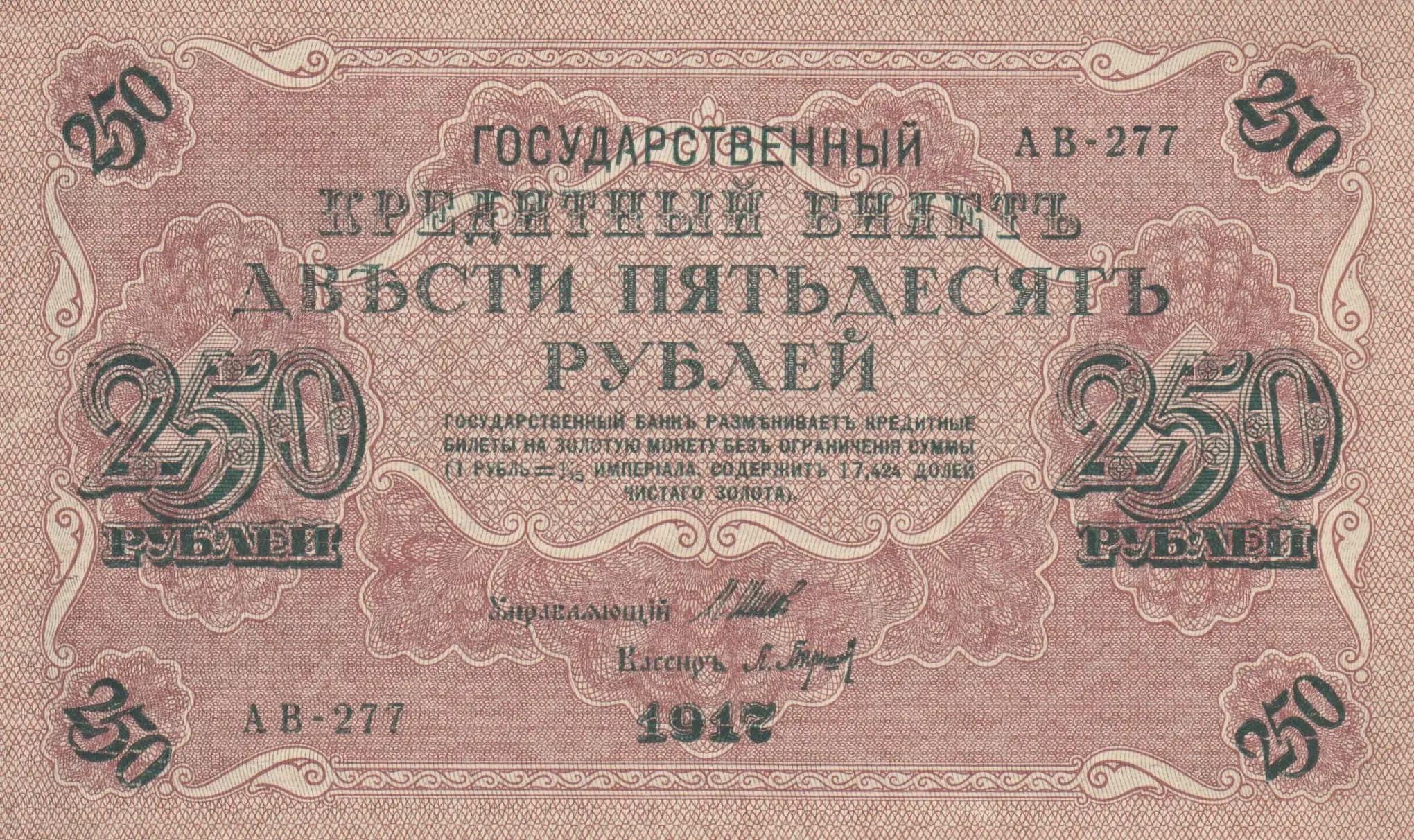
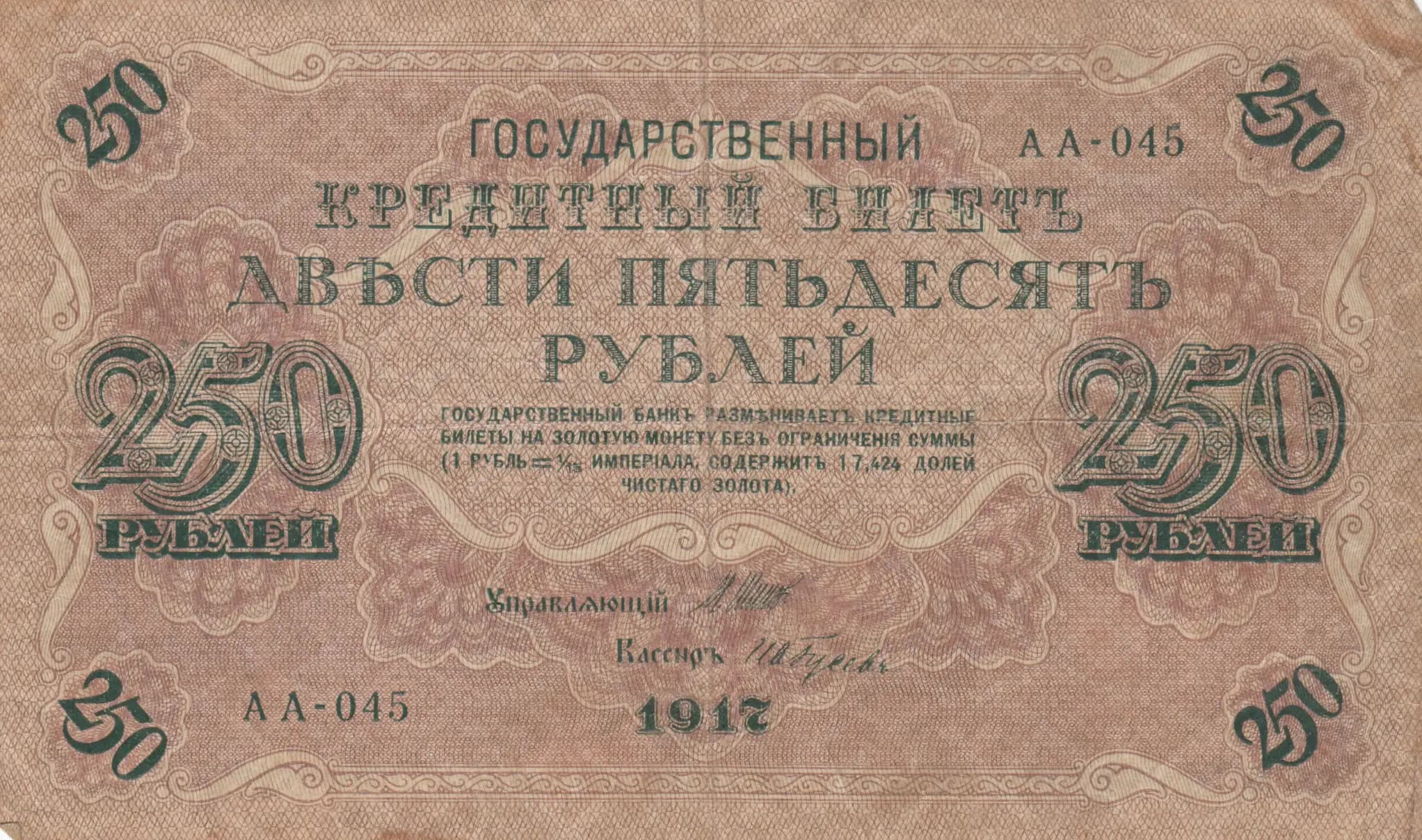
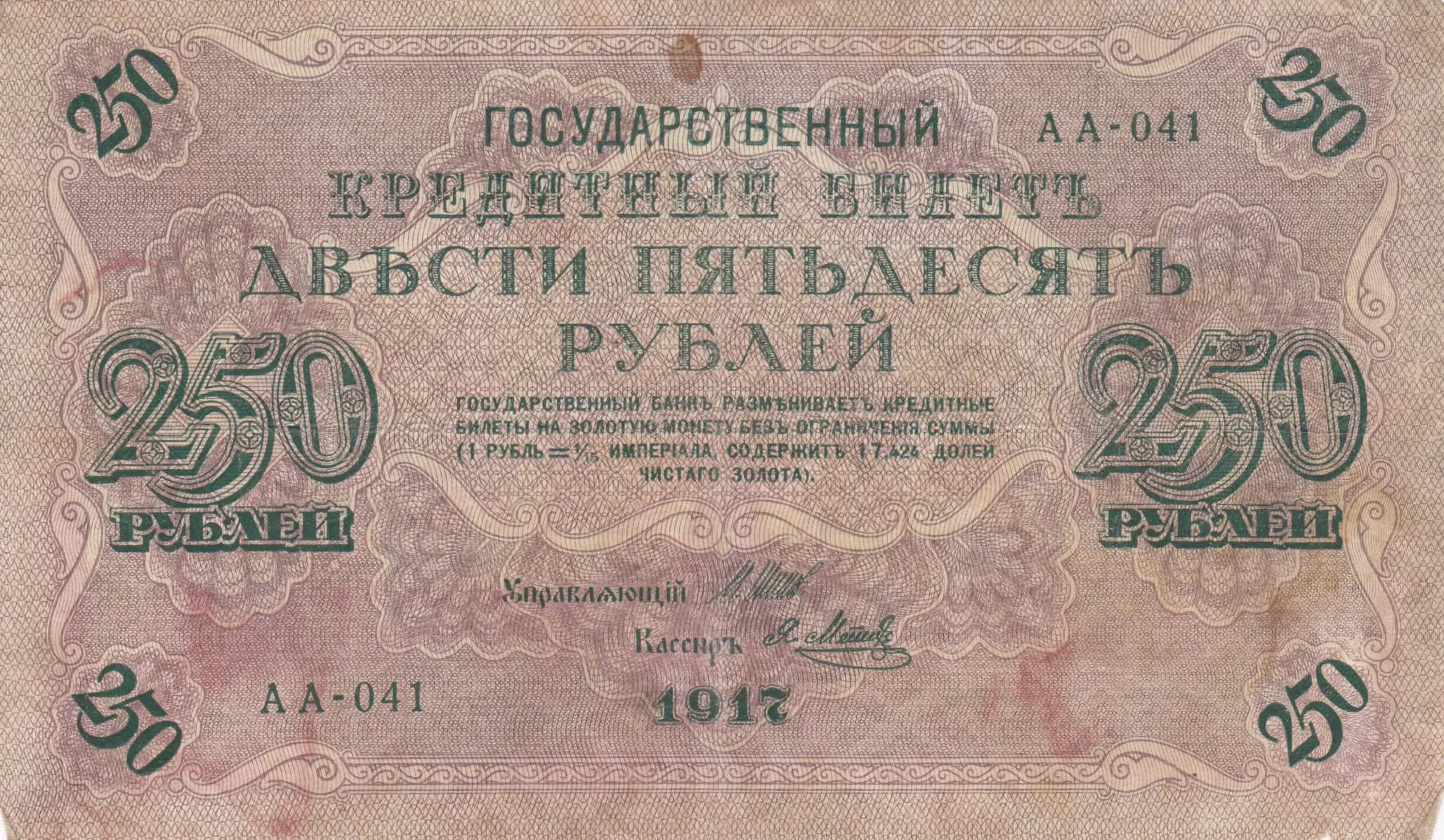
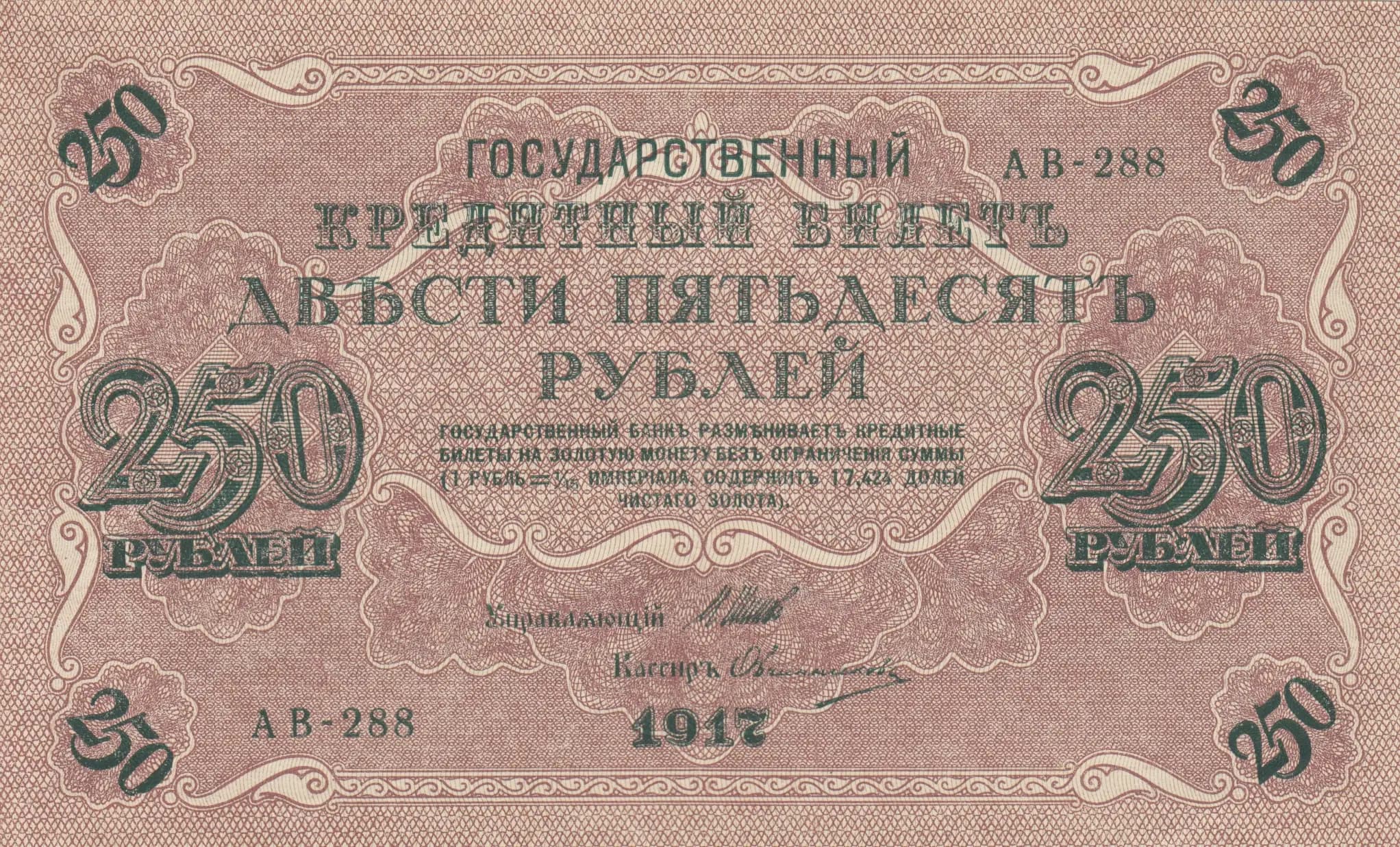
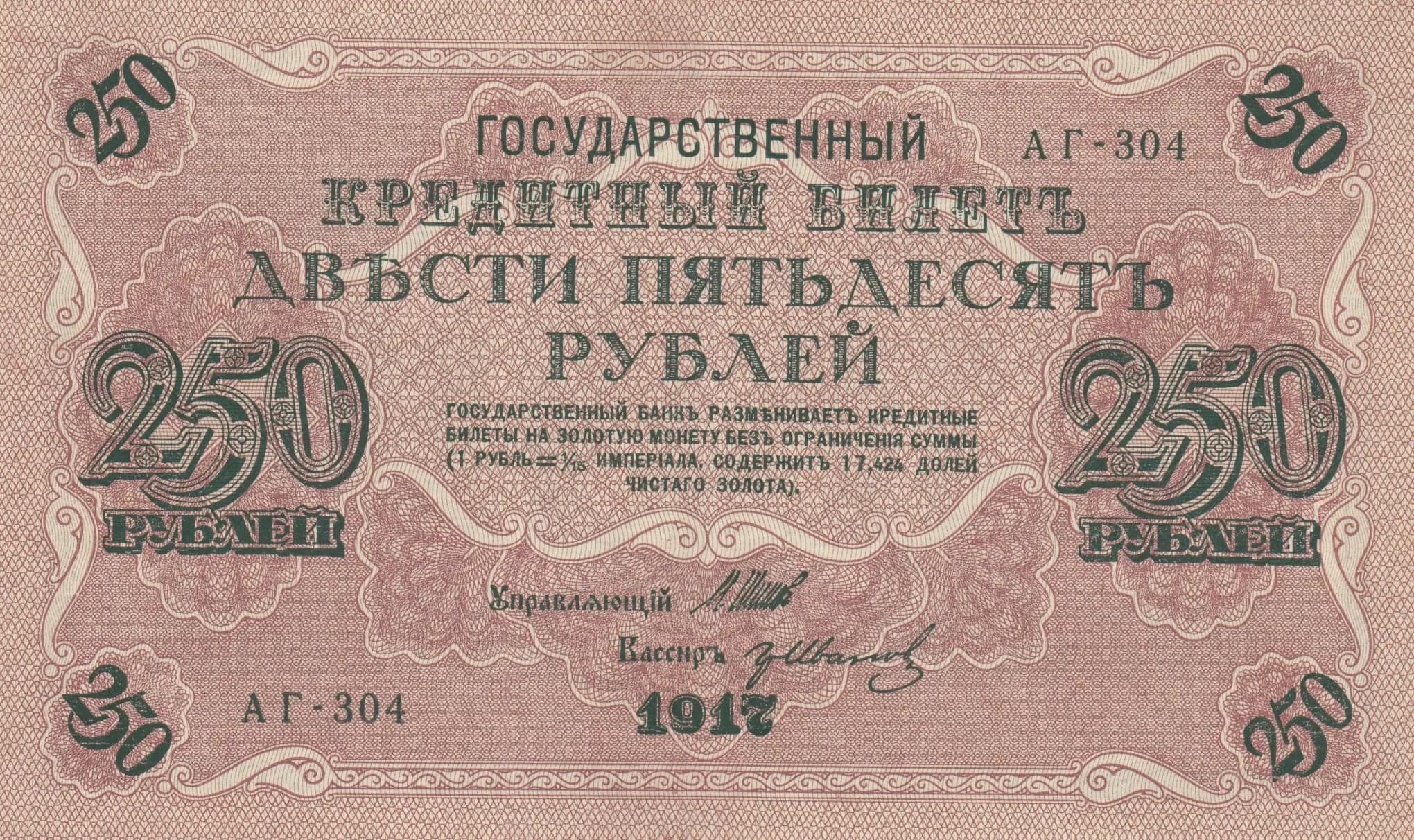
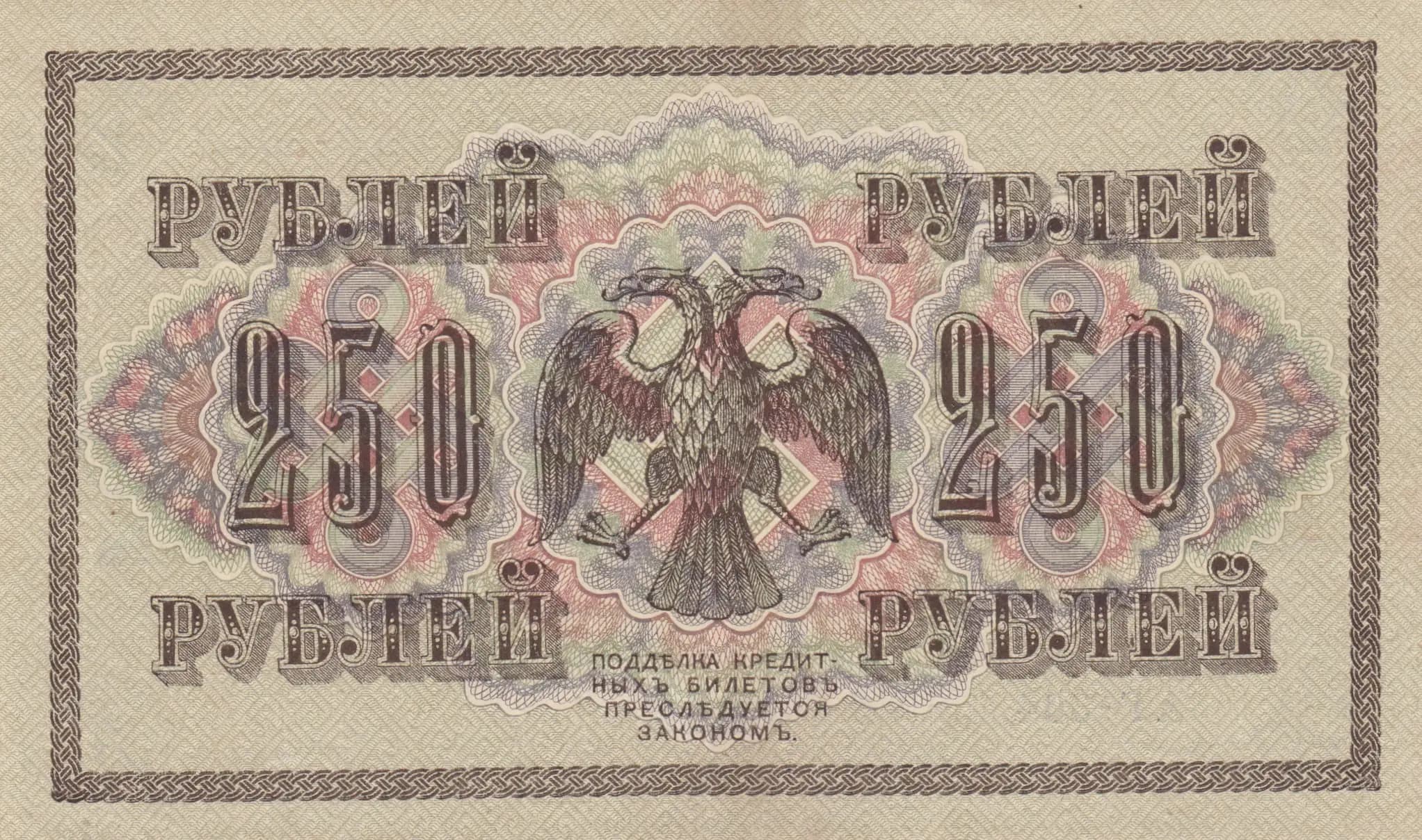
An exceptional example of the 250 ruble Imperial Russian credit note from 1917, graded EF and displaying pristine condition with no evidence of circulation. The note showcases the hallmark design elements of late Imperial Russian currency: ornate decorative borders, the double-headed eagle on the reverse, and dual-color printing in mauve/rose and cream with dark green and brown inks. This denomination represents one of the higher-value notes issued during the final year of the Russian Empire, making it a significant piece of numismatic history from the transitional period.
common. The 250-ruble denomination of 1917 was issued in substantial quantities as a high-denomination note during its brief period of use. While the hyperinflation and currency reform following the Russian Revolution rendered much of this currency obsolete, surviving examples are not scarce in the collector market. The EF grade indicates exceptional preservation rather than rarity of issue. No specific historical record suggests limited print runs or early recall of this Pick 36 variety.
Issued by the R.S.F.S.R. in 1917, this note reflects the monetary system of Imperial Russia during its final year, bearing the imperial double-headed eagle on the reverse as the official coat of arms. The inscriptions reference the State Bank's guarantee of gold redemption (1 ruble = 1/3 of an imperial gold coin with 17.424 parts pure gold), representing the last gasp of Russia's adherence to the gold standard before revolutionary upheaval rendered such guarantees meaningless. This 250-ruble denomination was among the highest denominations produced during this turbulent period of Russian history.
This 250-ruble note exhibits the classical Imperial Russian banknote design aesthetic. The obverse features an elaborate ornamental framework with flourishing scrollwork in all four corners, with the denomination '250' prominently displayed in each corner in large numerals. The center contains multiple lines of Russian text detailing the credit note's legal status and gold redemption guarantee. Two signature lines for official authorization appear near the bottom (Officiating and Cashier positions). The reverse showcases the Russian Imperial coat of arms: a double-headed eagle with spread wings in heraldic style, crowned above, positioned centrally and surrounded by the word 'РУБЛЕЙ' (Rubles) in multiple locations. A decorative braided border frames the entire reverse. The dual-color printing—mauve/rose with cream on the obverse, cream/beige with dark brown/black on the reverse—exemplifies the sophisticated polychromatic techniques employed by Imperial Russian security printers.
FRONT SIDE: 'ГОСУДАРСТВЕННЫЙ КРЕДИТНЫЙ БИЛЕТ' (State Credit Note); 'АВГУСТИ ПЯТЬДЕСЯТИ РУБЛЕЙ' (August Fifty Rubles, referring to the imperial monetary reform); 'ГОСУДАРСТВЕННЫЙ БАНК РАЗМЕНИВАЕТ КРЕДИТНЫЕ БИЛЕТЫ НА ЗОЛОТУЮ МОНЕТУ БЕЗ ОГРАНИЧЕНИЯ СУММЫ (1 РУБЛЬ = 1/3 ИМПЕРИАЛА, СОДЕРЖИТ 17,424 ДОЛЕЙ ЧИСТОГО ЗОЛОТА).' (The State Bank exchanges credit notes for gold coins without limit of amount - 1 ruble equals 1/3 imperial, contains 17.424 parts pure gold); Denomination: '250 РУБЛЕЙ' (250 Rubles); Series marking: 'АГ-304'; Date: '1917'; Signature lines marked 'Справляющий' (Officiating) and 'Кассир' (Cashier). REVERSE SIDE: '250 РУБЛЕЙ' (250 Rubles - appears four times); 'ПОДДЕЛКА КРЕДИТНЫХ БИЛЕТОВ ПРЕСЛЕДУЕТСЯ ЗАКОНОМ.' (Counterfeiting of credit notes is prosecuted by law.)
Steel plate engraving and intaglio printing, as evidenced by the crisp, finely-detailed line work throughout, the ornamental borders with intricate scrollwork, and the precisely rendered heraldic imagery of the double-headed eagle. The multi-color printing required separate passes or color application methods typical of high-security currency production. Russian Imperial notes of this period were typically produced by the State Printing Works (Государственная типография) or contracted European security printers; this Pick 36 series falls within the standard late-Imperial production protocols.
The specific variety notation is AG-304 as visible on the obverse. The Pick catalog designation P-36(2-7) indicates this falls within the standard range of 250-ruble notes from this printing series. Varieties within this series may be distinguished by signature combinations (the Officiating and Cashier signatories visible on this example) and potential serial number prefix variations, though the visual analysis does not provide complete serial number information to establish the precise sub-variety. The collector notation 'Sig.Ivanov' suggests identification by at least one signature authority, likely one of the officials whose names appear on the note.