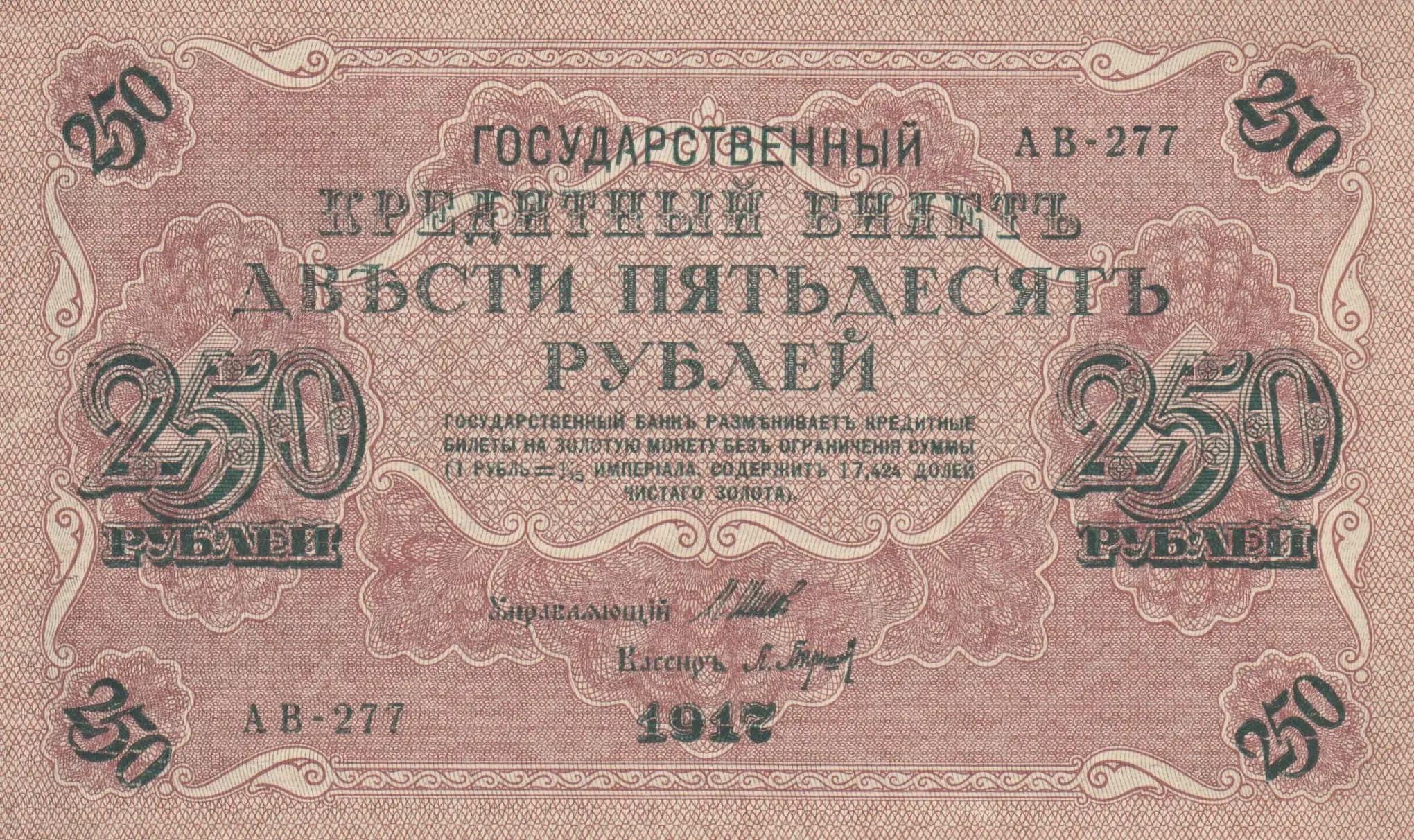
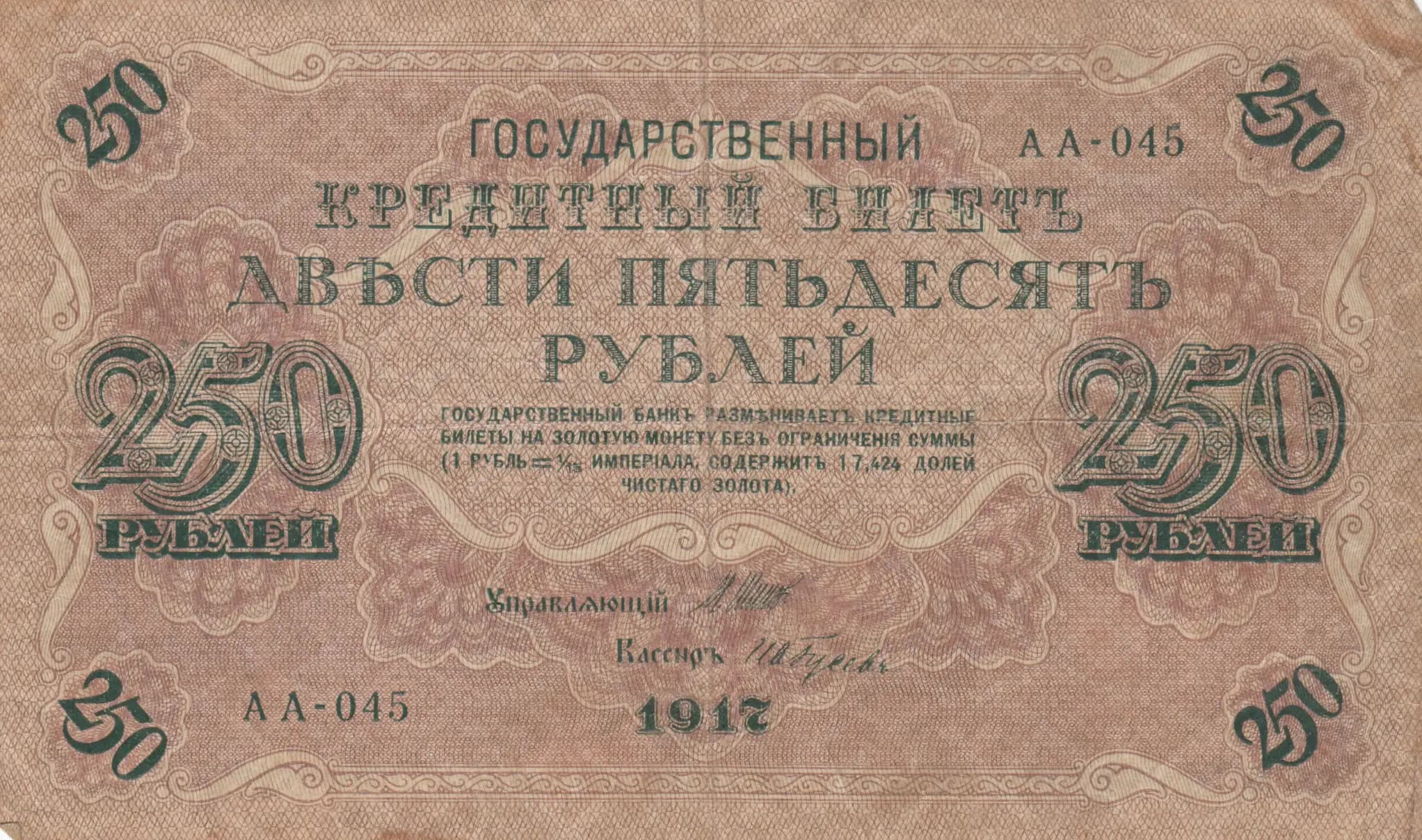
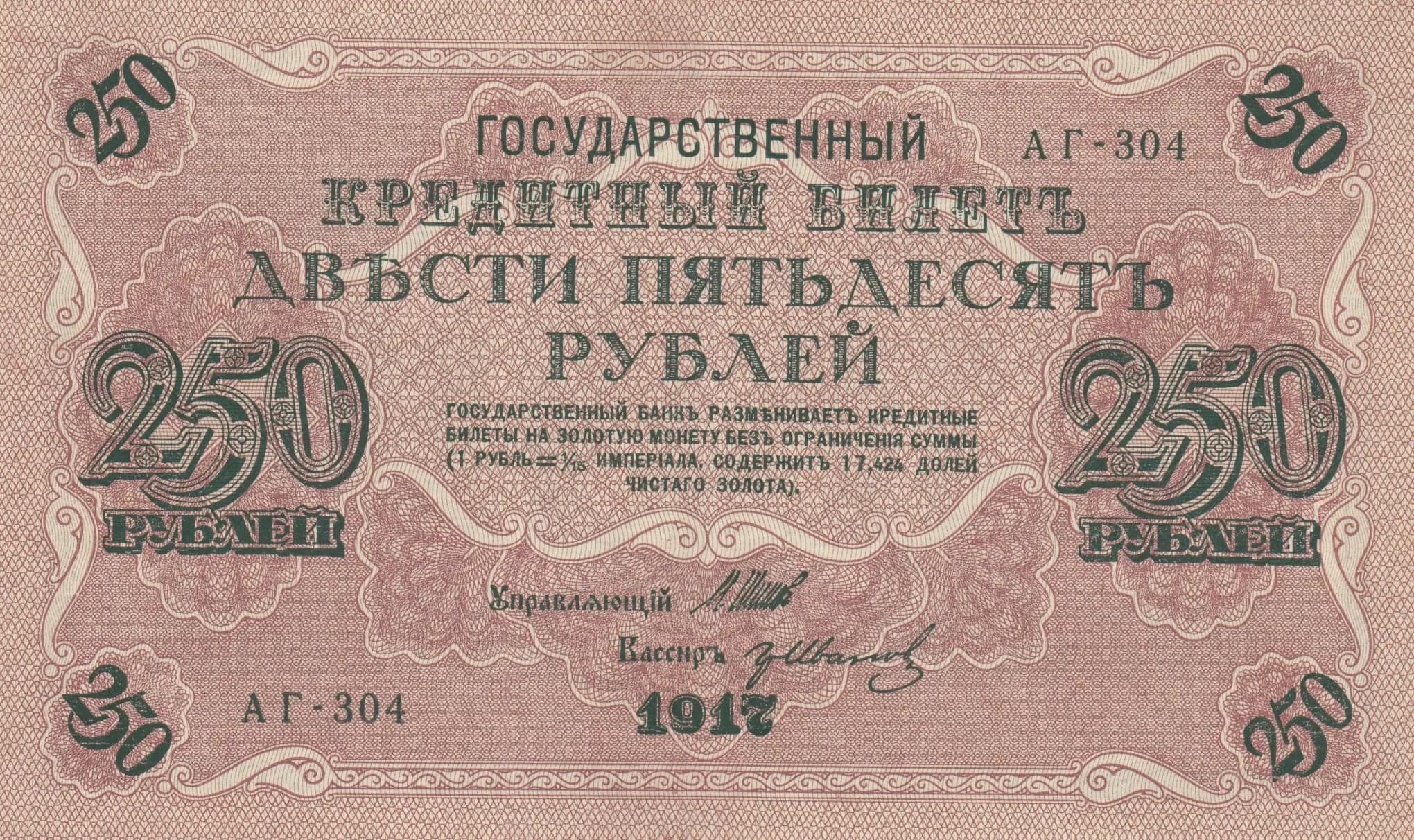
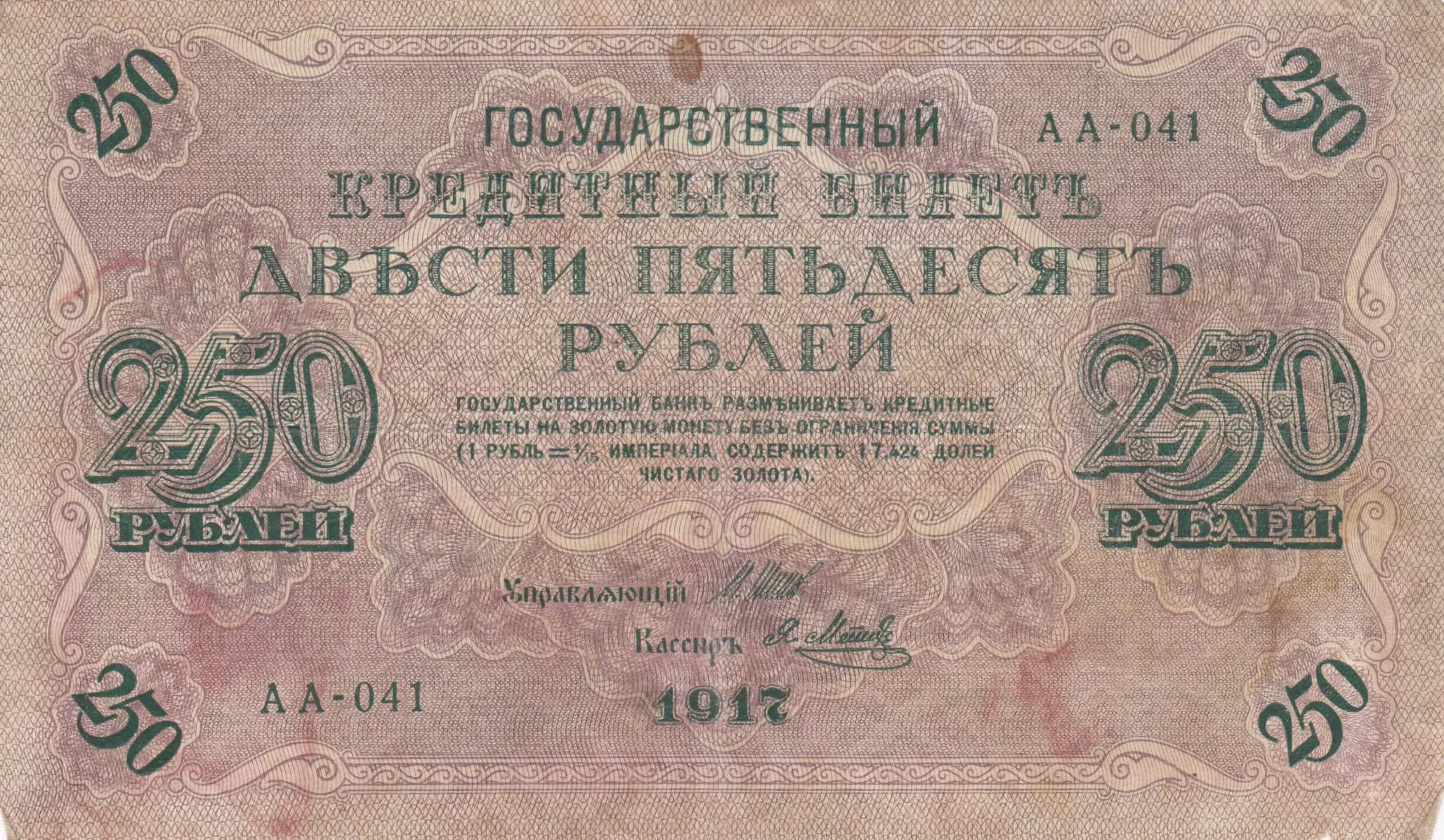
250 rublei 1917
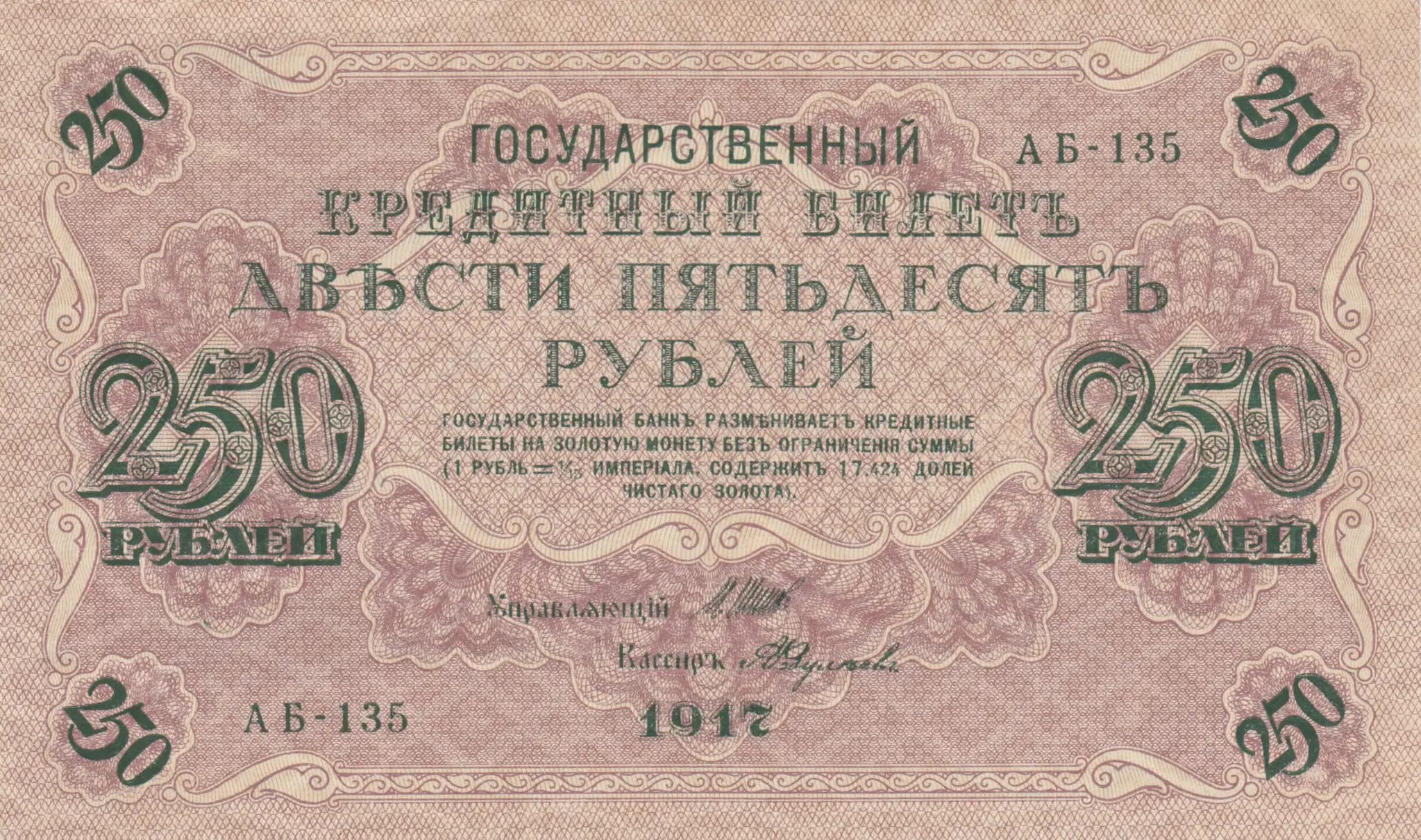
“Sig.Feduleyev”
About This Note
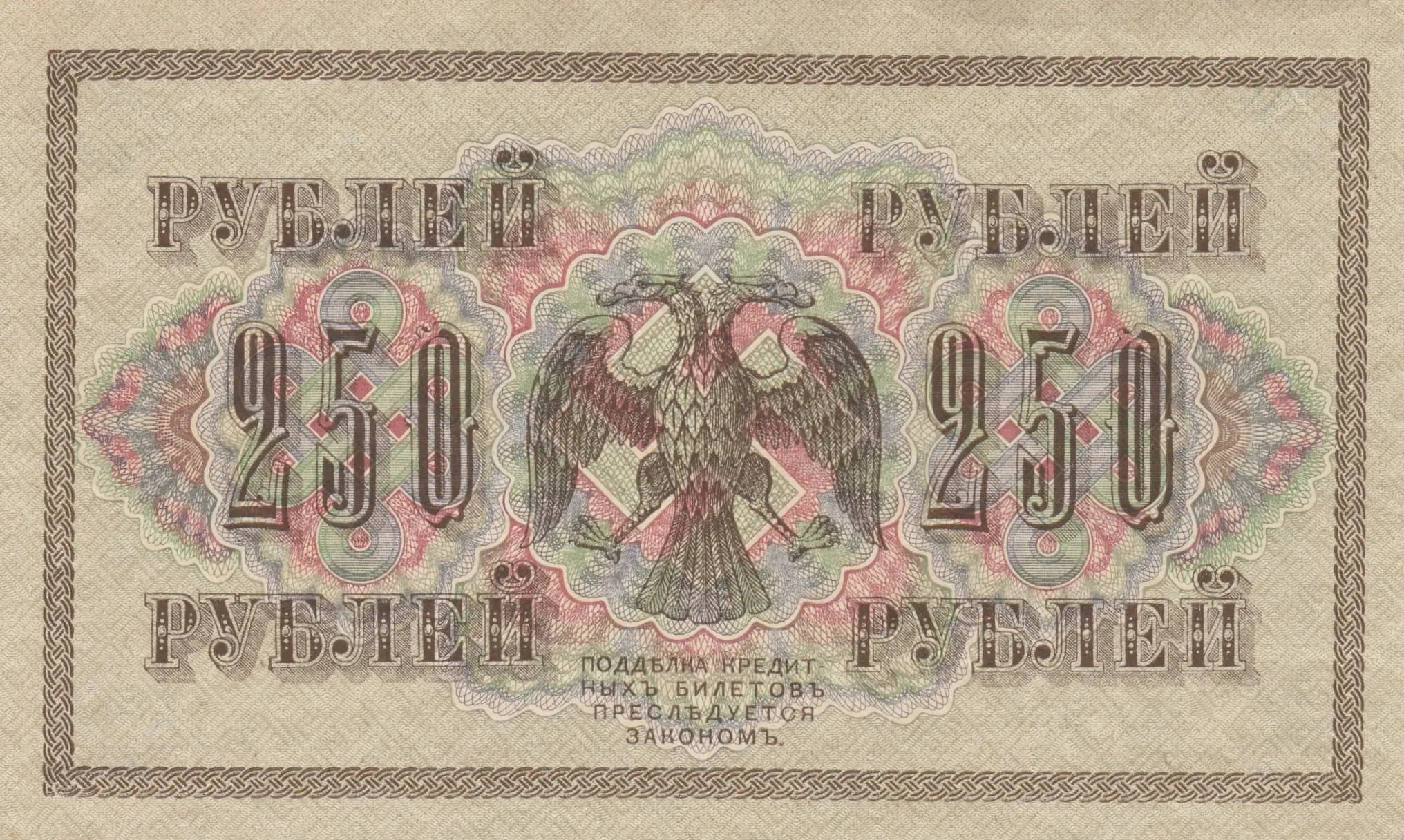
This 250 Ruble note from 1917 represents a transitional piece of Russian monetary history, issued during the turbulent year of revolution by the R.S.F.S.R. The note displays excellent condition (AU grade) with crisp, clear printing throughout, featuring the characteristic pinkish-mauve obverse and cream reverse with minimal wear. The design showcases the Imperial double-headed eagle on the reverse and ornate security printing on both sides, making it an attractive example of early Soviet-era currency before the hyperinflation that followed.
Common. The 250 Ruble note of 1917 (Pick-36) was issued in substantial quantities before the currency's collapse, and examples survive in reasonable numbers in both circulated and uncirculated grades. While AU-condition examples are more desirable than heavily circulated pieces, they do not command premiums suggesting scarcity. The 1917 date does not indicate rarity within this series—multiple denominations and varieties were issued throughout 1917. Unless this specific serial designation or signature variety is documented as scarce in specialized Russian numismatic literature, it should be considered common in the broader context of early Soviet currency collecting.
Issued in 1917 during the Russian Revolution, this credit note represents the final period of Tsarist monetary authority before complete transformation. The prominent double-headed eagle symbol on the reverse reflects the Imperial Russian state apparatus that was being dismantled during this tumultuous year. The text referencing gold convertibility ('содержит 7,874 доли чистаго золота') represents a claim already becoming meaningless as the currency collapsed in the months following 1917.
The obverse features a classical layout with the denomination '250' displayed prominently in all four corners within ornate frames. The background is rendered in pinkish-mauve tones with cream accents and dark green/teal typography. The central area contains the full text of the note's specifications in Russian Cyrillic, typical of Imperial Russian credit notes. The reverse presents a formal design centered on the Imperial Russian state symbol: a double-headed eagle with spread wings, depicted in fine engraved detail within an ornamental scalloped cartouche. This eagle design, the traditional emblem of Russian Imperial authority, is surrounded by decorative elements in complementary colors (pink, green, gray, and brown). The entire note is bordered by a geometric Greek key or Celtic knot pattern, a security design element common to higher-denomination Imperial notes. The denomination '250' appears again on both left and right sides of the reverse in ornate frames.
FRONT SIDE: '250' (denomination numeral); 'Государственный кредитный билет' (State Credit Note); 'Двести пятьдесят рублей' (Two Hundred Fifty Rubles); 'Государственный банк размениваемъ кредитные билеты на золото на основании положения суммы в рублях на империала. Содержит 7,874 доли чистаго золота.' (The State Bank exchanges credit notes for gold based on the regulation of the sum in rubles for imperial. Contains 7,874 parts of pure gold.); 'АБ-135' (Serial designation); '1917' (Year); 'Кассир' (Cashier); 'Расчётск.' (Calculation/Accountant). BACK SIDE: 'Рублей' (Rubles) appears twice framing the denomination '250'; 'Подлежащих кредитных билетовъ преследуется законом.' (Subject to credit notes, prosecuted by law/counterfeiting is prosecuted by law).
This note was produced using intaglio (engraved) printing techniques, evidenced by the fine detail visible in the eagle vignette, the ornate scrollwork borders, and the sharp denomination numerals. The multi-color printing suggests simultaneous or sequential intaglio passes to achieve the pinkish-mauve, cream, green, and brown color palette. The intricate geometric border patterns and security features are consistent with high-quality Imperial Russian banknote production standards of the period. The printer for Pick-36 issues is typically the Imperial Russian printing works; specific attribution may be found in detailed Davignon or Russian numismatic catalogs.
The serial designation 'АБ-135' and signature area marked 'Sig. Feduleyev' (likely the cashier or accountant signature) represent specific identifiers for this individual note. Within Pick-36(2-11), varieties may exist based on different signature combinations (Feduleyev or other officials), serial prefixes, and printing sessions. The '1917' date is standard for this series. Researchers should consult Russian and Soviet numismatic catalogs (such as works by Davignon or Russian State Bank archives) for detailed variety listings based on serial prefixes and signature combinations. The notation 'Sig. Feduleyev' in the collector notes suggests this may be a documented variety worth recording in specialized collections.