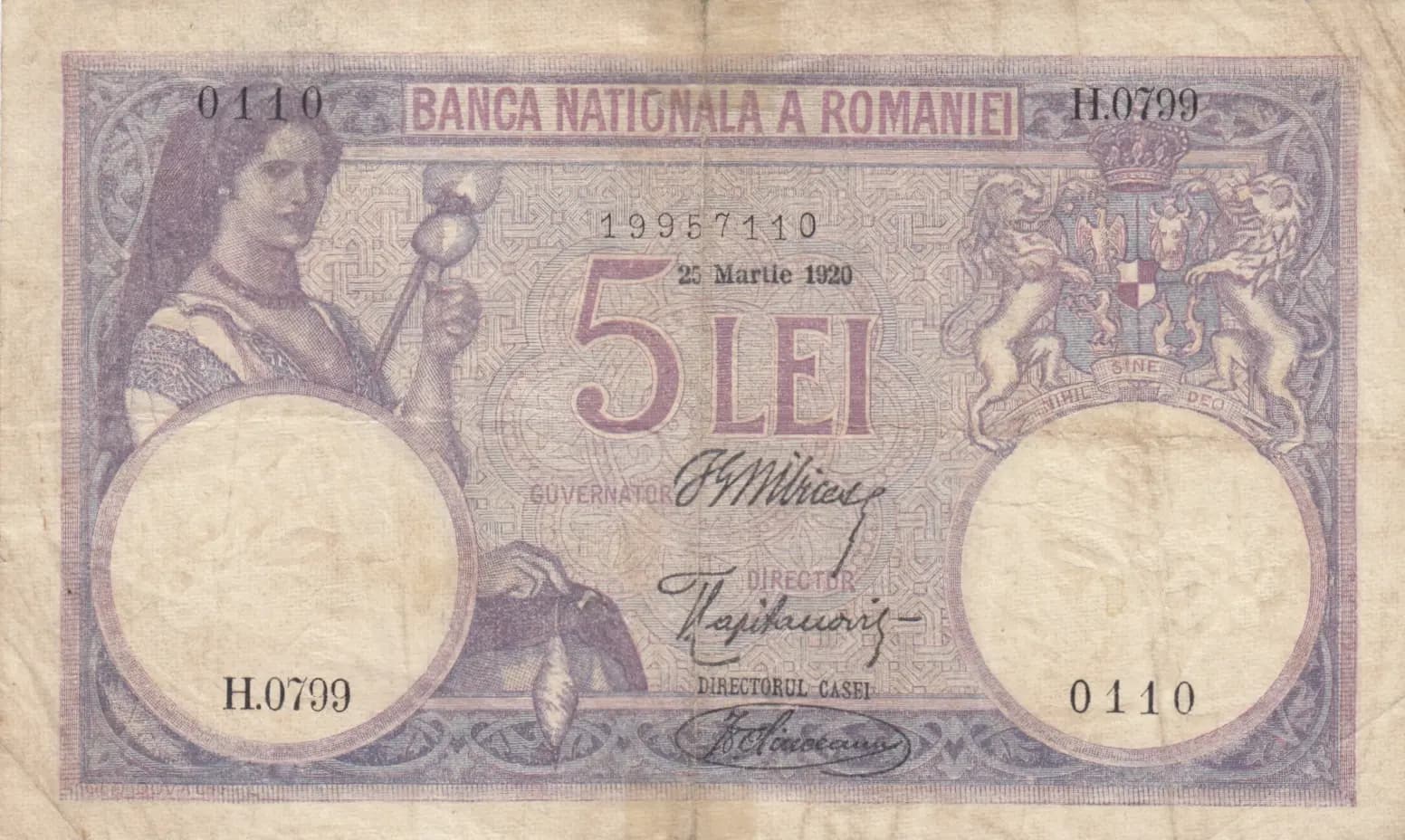
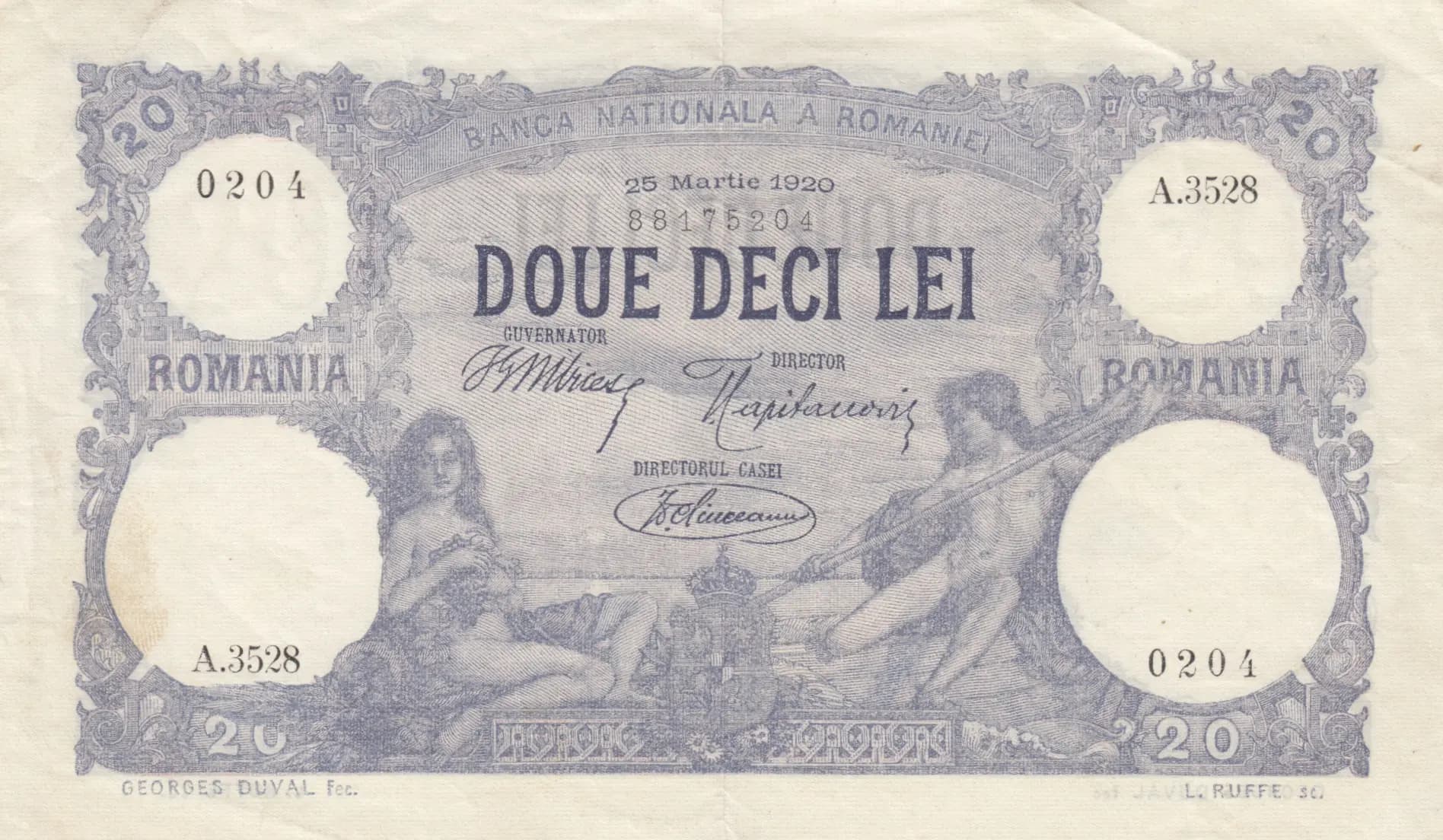
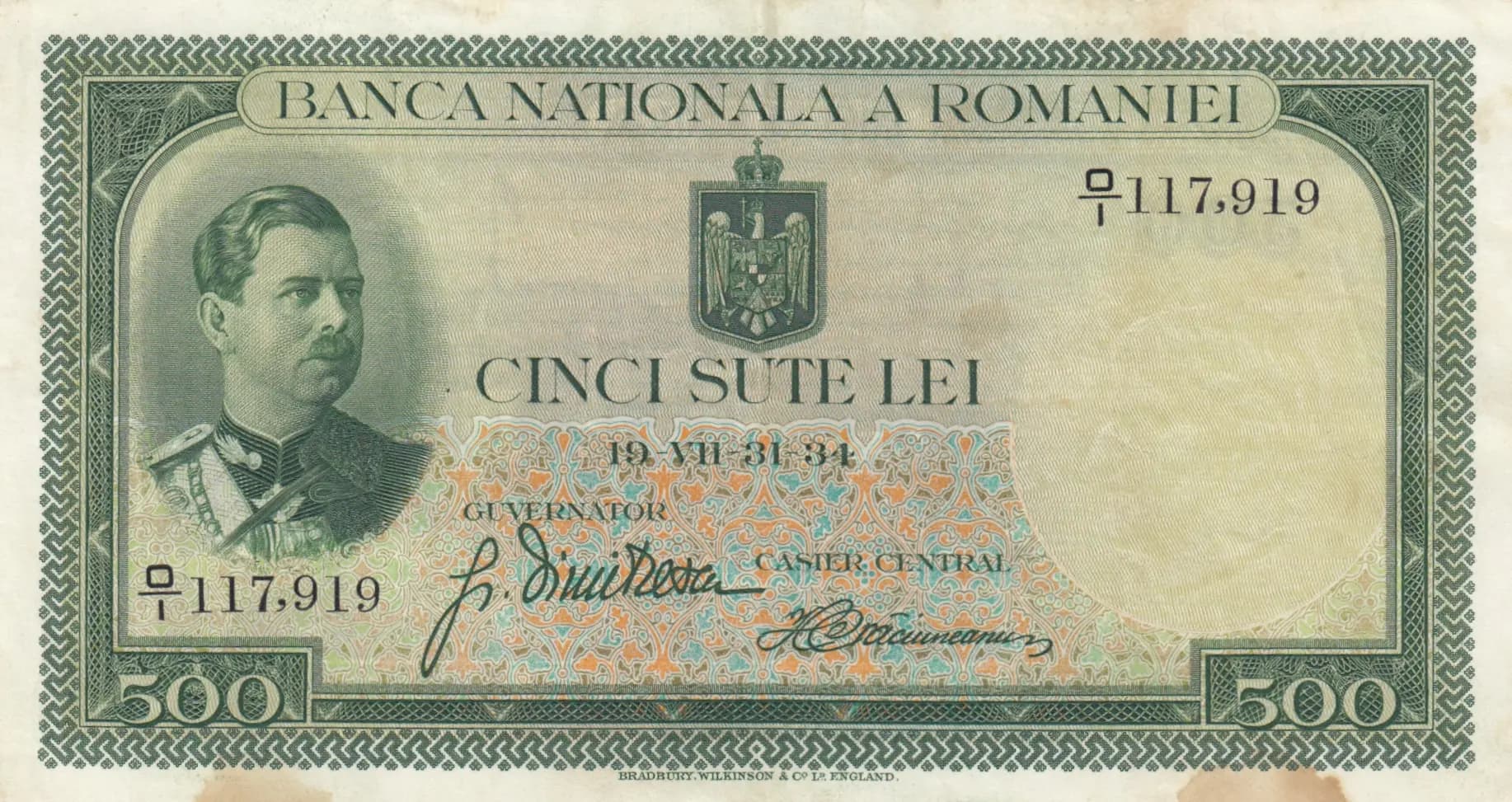
100 lei 1966
Market Prices
72 salesAbout This Note
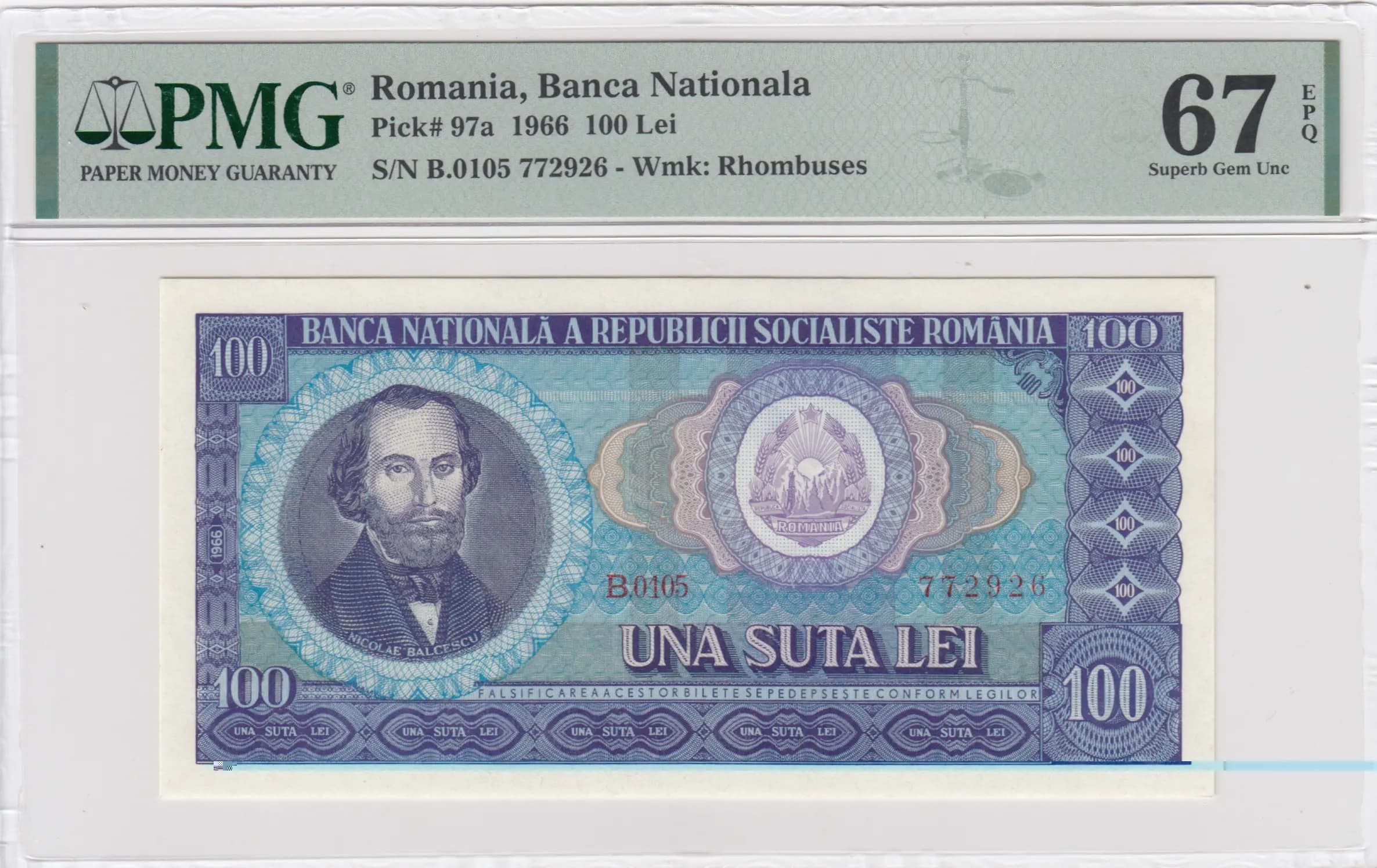
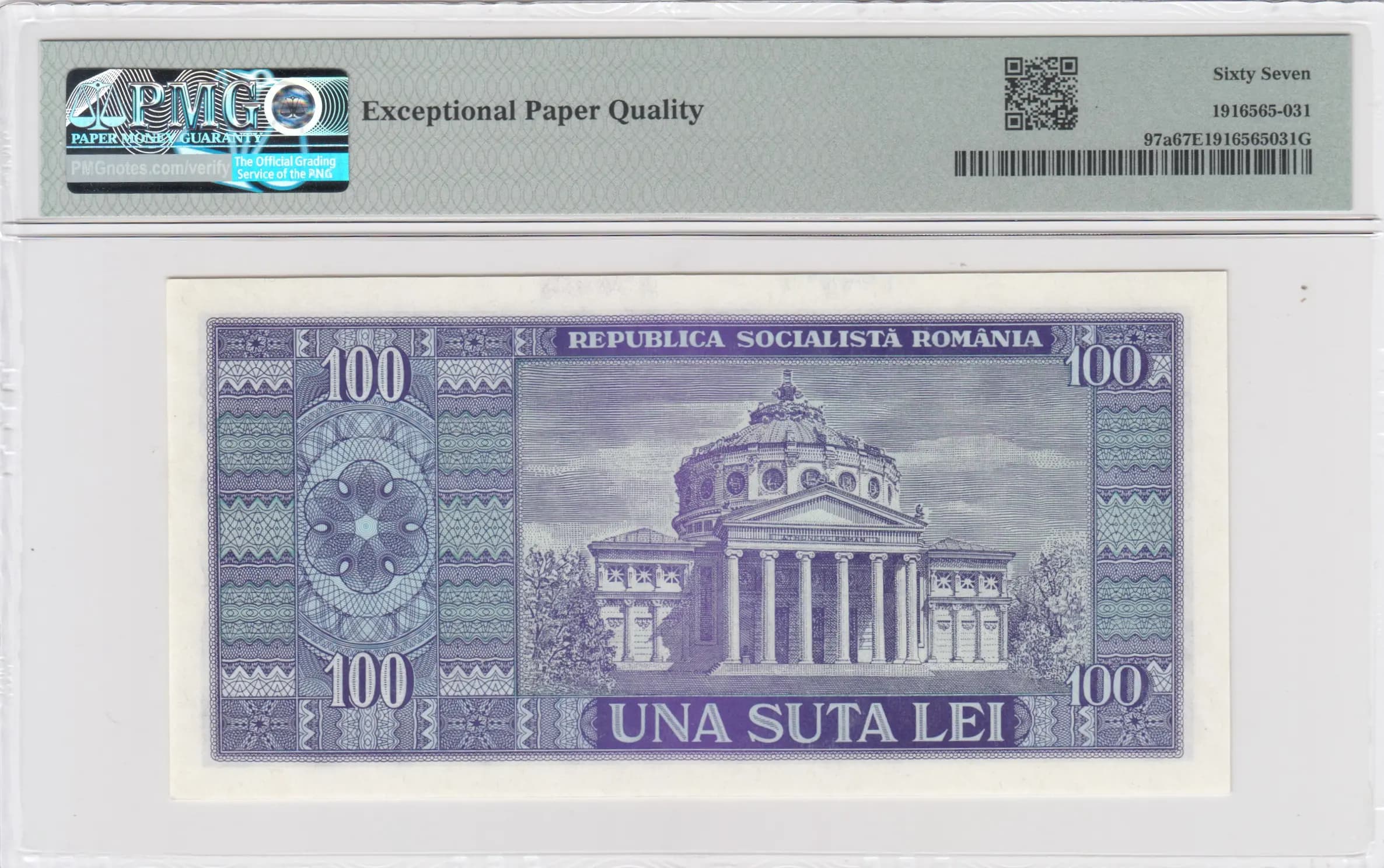
This PMG 67 EPQ graded 100 Lei from 1966 represents a high-quality example of Romanian Socialist-era currency in near-gem condition. The note displays sharp, crisp printing with excellent color saturation across its blue, purple, and green palette, showing no visible wear, creases, or circulation marks. The specimen showcases the era's sophisticated engraving work and remains highly collectible, with recent eBay sales of PMG 67 examples commanding $120+, reflecting strong collector demand for well-preserved Romanian notes from this period.
Common. The 100 Lei 1966 (P-97a) remains a commonly encountered note in the secondary market. eBay transaction history demonstrates consistent availability across multiple condition grades, with lower grades (F-VF) selling regularly for under $10 and even PMG-graded examples in lower grades (PMG 35, PMG 58) achieving modest prices. The 2019 catalog value of $12 for UNC examples and the regular market activity indicate substantial print runs and broad circulation. While PMG 67 examples are less frequently offered than lower grades, they represent high-condition specimens of an inherently common note rather than intrinsic scarcity.
Issued by the Banca Națională a Republicii Socialiste România during the height of Nicolae Ceaușescu's communist regime, this 1966 note reflects the state's propagandistic imagery and architectural pride. The obverse features Nicolae Băicescu, a 19th-century Romanian intellectual and revolutionary whose image was appropriated as a symbol of national struggle, while the reverse prominently displays the Athenaeum in Bucharest—one of the Socialist Republic's most prestigious cultural institutions—emphasizing state achievements and national identity during the Cold War era.
The obverse features a profile portrait of Nicolae Băicescu (1819-1891), the Romanian revolutionary, intellectual, and statesman, rendered in intricate engraved detail within an ornate circular frame on the left side. The central design showcases the state emblem—a radiating sunburst or eagle motif within a decorative oval cartouche, representing Communist authority. The reverse presents the Romanian Athenaeum (Ateneul Român) in Bucharest, a neoclassical edifice with a prominent dome and columned portico, emphasizing state cultural achievements. Both sides feature elaborate guilloche patterns, geometric borders with repeating circular medallions, and denomination markings in multiple locations. The watermark pattern consists of rhombuses, a common security feature for Romanian currency of this period.
Front: 'BANCA NATIONALA A REPUBLICII SOCIALISTE ROMÂNIA' (National Bank of the Socialist Republic of Romania); 'UNA SUTA LEI' (One Hundred Lei); 'NICOLAE BALCESCU' (Nicolae Băicescu); 'FALSIFICAREA ACESTOR BILETE SE PEDEPSESTE CONFORM LEGILOR' (Counterfeiting of these notes is punished according to the laws). Back: 'REPUBLICA SOCIALISTA ROMÂNIA' (Socialist Republic of Romania); 'UNA SUTA LEI' (One Hundred Lei). Series designation 'B.0105' and serial number '772926' appear on the obverse.
Intaglio engraving (recess/line engraving), evident from the fine line patterns, guilloche work, and sharp detail visible throughout the note. The complexity of the portrait's execution, the ornate cartouche, and the architectural rendering of the Athenaeum all demonstrate professional security printing standards. The watermark and color scheme (multi-color underprint with blue, purple, and green) indicate advanced banknote production techniques typical of state-issued currency during the 1960s Socialist period.
This example is designated P-97a (Pick 97a), indicating it is the primary cataloged variety for this denomination and year. The observed series designation 'B.0105' and serial number format are consistent with regular-issue production. No major varieties (overprints, signature variations, or printing errors) are evident in the visual analysis. The note represents standard production from the 1966 issue without significant variant characteristics that would distinguish it as a collecting variety beyond its PMG 67 EPQ grade.