10 filer 1919
About This Note
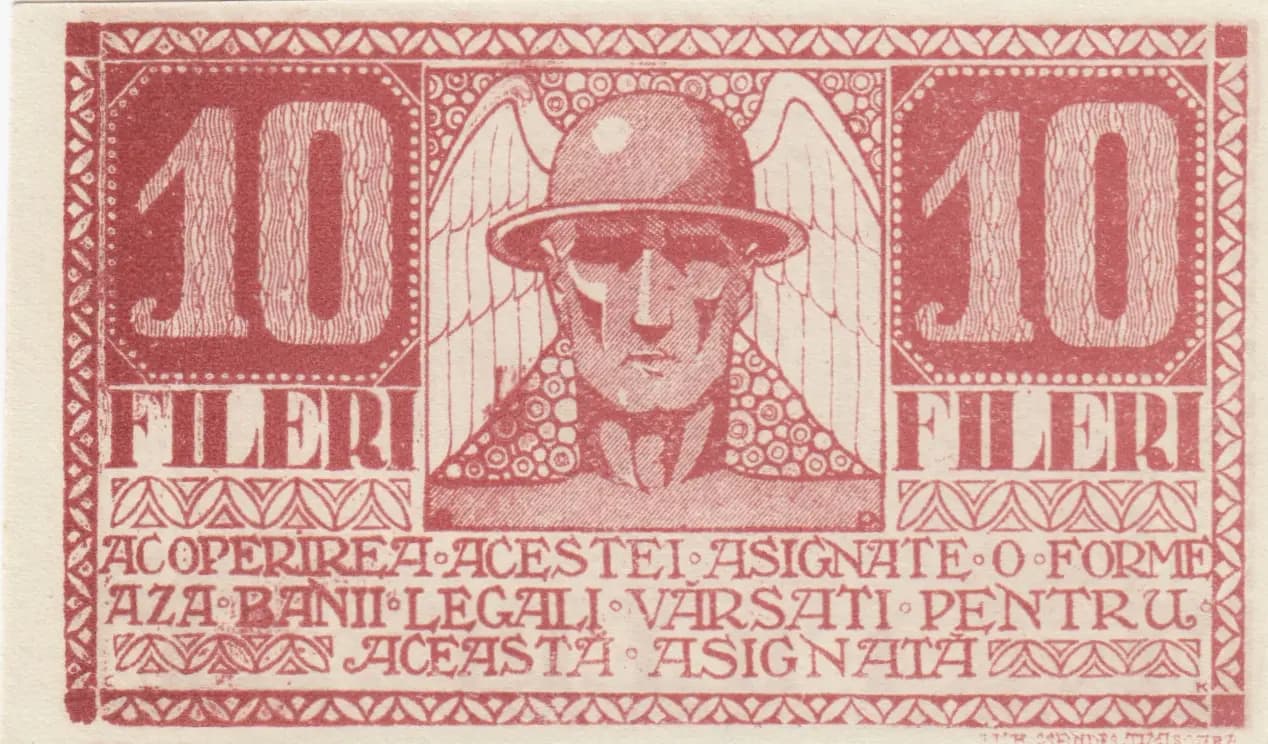
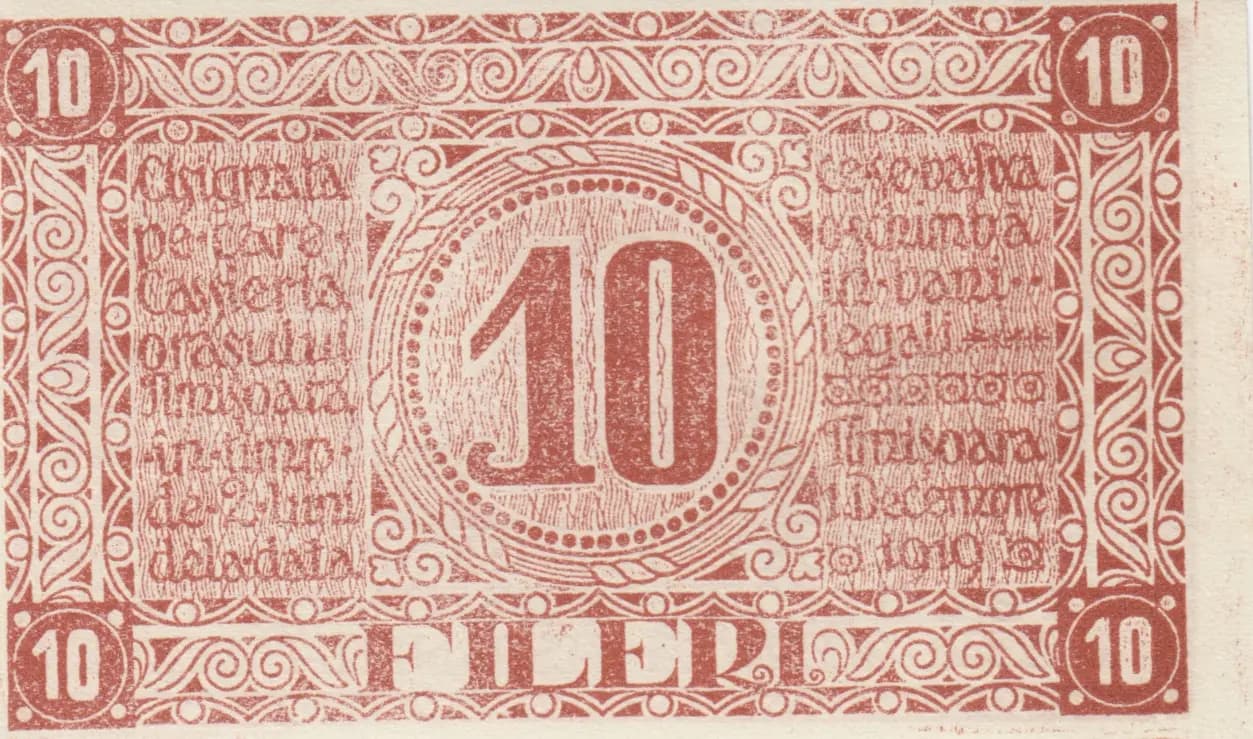
A striking 1919 Romanian 10 Filer note in Uncirculated condition, featuring an ornate allegorical winged figure in profile wearing a distinctive wide-brimmed hat on the obverse, rendered in red and cream tones with elaborate geometric diamond-patterned borders. The reverse displays a bold central denomination '10' surrounded by concentric circular dot patterns and ornamental scrollwork with corner denomination circles, exemplifying the intricate security printing practices of early interwar Romanian currency. This unlisted Pick catalog item represents an intriguing piece of Romania's transitional currency period, notable for its artistic Art Nouveau design elements and superior preservation.
Common. This note, despite being unlisted in standard Pick catalogs, represents a transitional currency piece from a well-established issuing authority during a period of high currency production in Romania. The denomination (10 Filer) was typical of fractional currency systems, suggesting substantial print runs for circulation. The UNC condition and visual quality indicate survival of examples in the numismatic market. Unless specific documentation exists regarding exceptionally limited mintage or early recall, notes of this type and period are encountered with reasonable frequency in European banknote collections and markets.
This 10 Filer banknote was issued during Romania's immediate post-World War I period, when the nation was consolidating its borders and currency system following the collapse of the Austro-Hungarian Empire. The allegorical winged figure likely represents Liberty or Romania herself, a common symbolic choice in nationalist post-war currency designs meant to reinforce the newly independent state's sovereignty. The Romanian-language text affirming legal tender status reflects the nation's deliberate assertion of monetary independence and linguistic identity during this formative period of Romanian statehood.
The obverse features an allegorical female figure representing Liberty or the personification of Romania, depicted in left profile wearing a broad-brimmed hat with wings extending behind the shoulders, rendered in fine cross-hatched line work characteristic of high-security banknote engraving. The figure is framed by elaborate geometric diamond-pattern ornamental borders forming a protective frame around all edges. Denomination numerals '10' are positioned prominently in rectangular boxes flanking the central portrait. The reverse abandons the portraiture for a purely geometric and symbolic design, centering on a large numeral '10' enclosed within concentric circles of minute dots (a standard anti-counterfeiting device), with the same numeral repeated in circular cartouches at all four corners, surrounded by flowing scrollwork and curved linear embellishments typical of Art Nouveau banknote aesthetics.
FRONT SIDE: '10' (numeral, appears twice in side denomination boxes), 'FILERI' (Filer/Filers, appears twice), and primary text reading 'ACOPERIREAA ACESTEI ASIGNATE O FORME AZA BANII LEGALI VIRSTATI PENTRU ACEASTA ASIGNATA' (The coverage of this assignment is formed as legal money paid for this assignment). BACK SIDE: '10' (numeral, appears five times—once in central circle and four times in corner circles), 'FILERI' (Filer, appears once at bottom).
Intaglio engraving (steel plate engraving), evidenced by the fine cross-hatching visible on the allegorical figure, the precise geometric line work of the borders, the detailed concentric dot patterns, and the sharp, raised-ink appearance of the inscriptions and numerals. The intricate security elements and ornamental detail are consistent with premium European security printing of the 1919 period, likely produced by an established banknote printer such as Bradbury Wilkinson or a similar facility contracted by the Romanian authorities.
No specific varieties (signatures, serial numbers, printer marks, or dated varieties) are discernible from the visual analysis provided. The note's unlisted Pick catalog status suggests it may represent a lesser-documented emission within Romanian currency sequence, and detailed variety information would require access to serial number ranges, printer attributions, or specialized Romanian numismatic references cataloging early filler/fileri denominations of 1919.