500 escudos 1966
About This Note
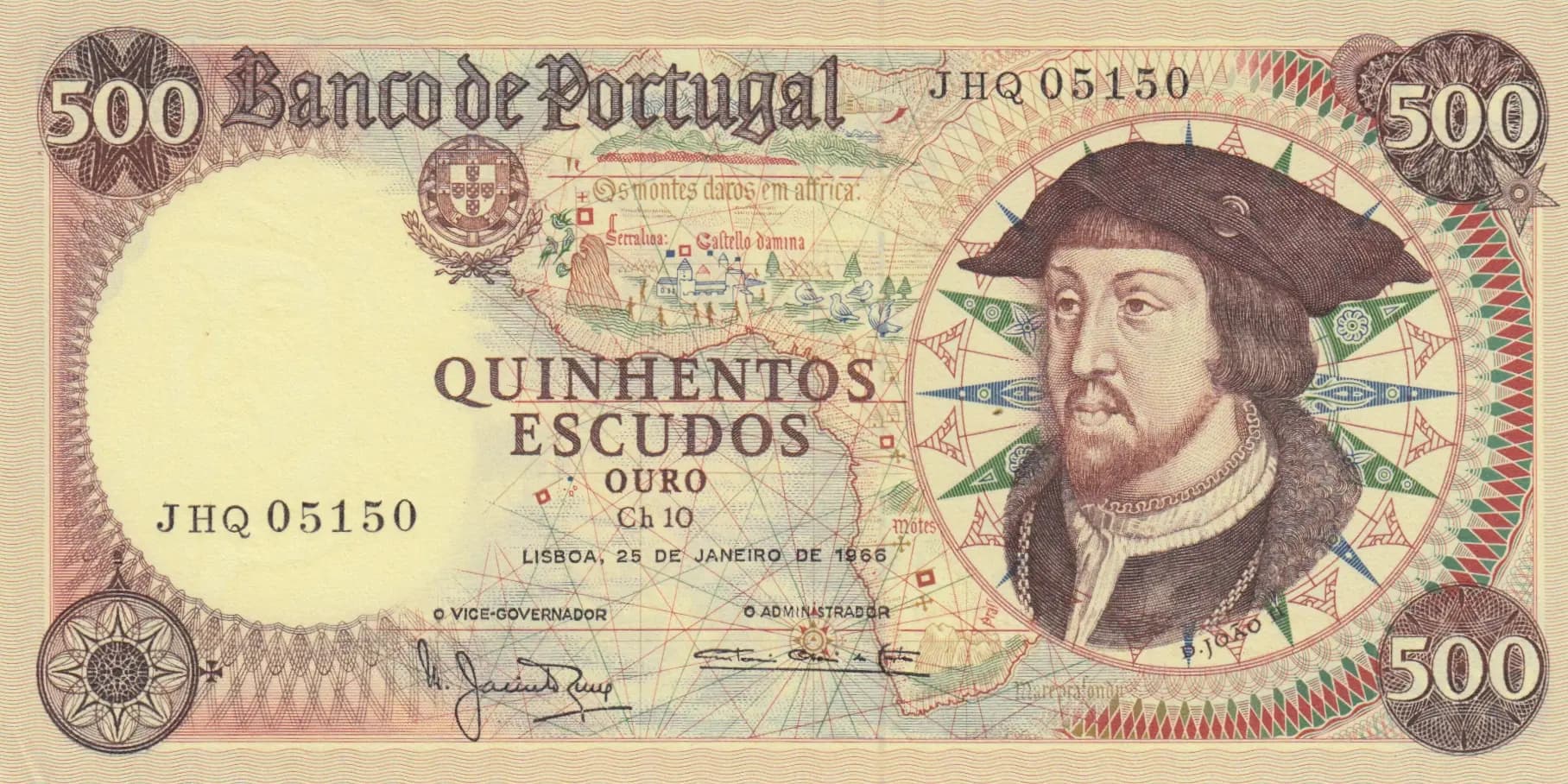
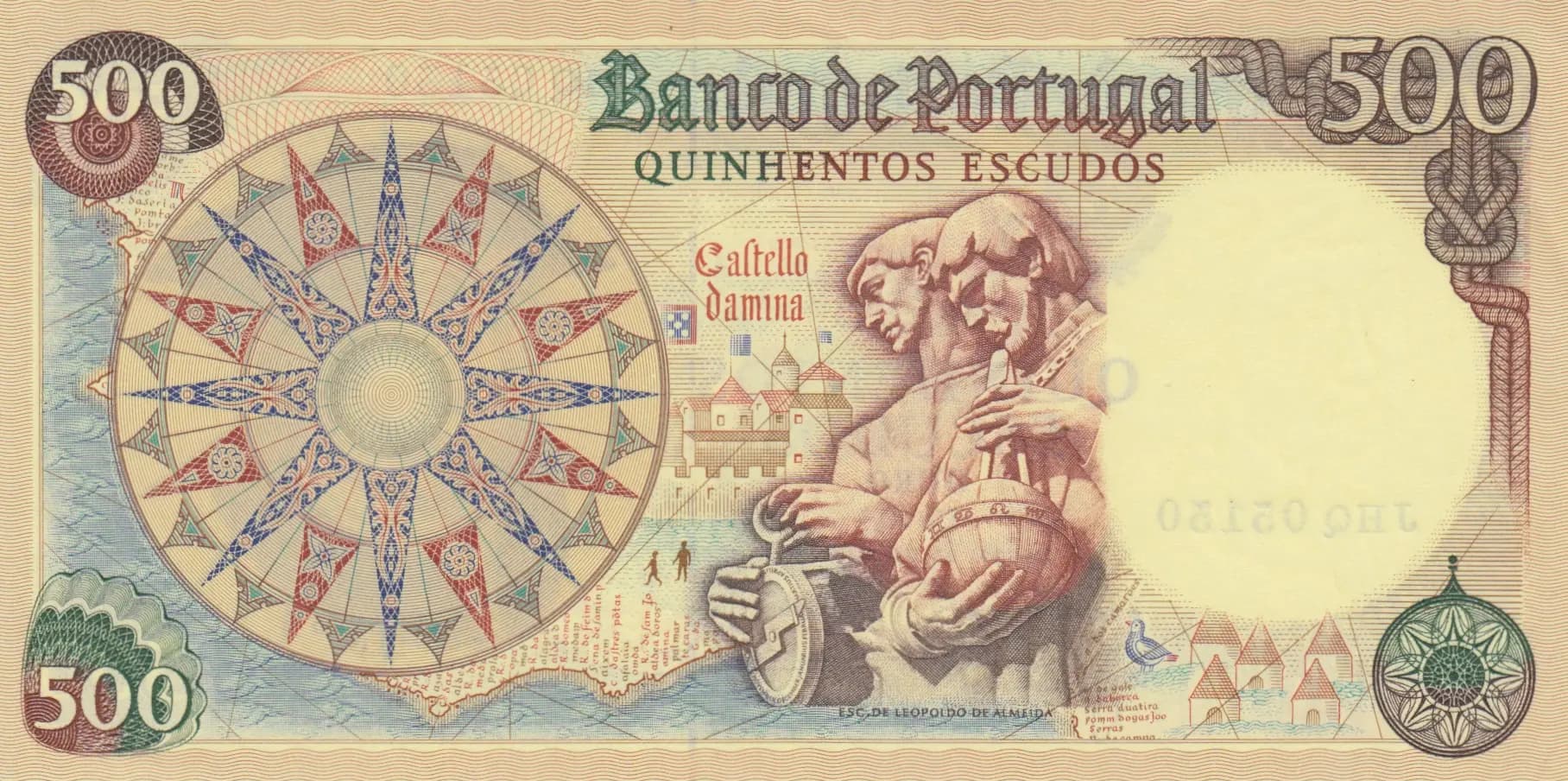
This 500 Escudos note from 1966 presents an exceptional example of Portuguese numismatic artistry in uncirculated condition. The banknote features a masterful engraved portrait of King João II on the obverse and allegorical figures representing navigation and discovery on the reverse, accompanied by an ornate compass rose design that reflects Portugal's Age of Discovery heritage. The pristine condition, intricate border work, and multi-color security printing make this an attractive specimen for collectors of Portuguese currency.
Common. The 500 Escudos denomination from 1966 was part of a standard circulation series issued by Banco de Portugal in substantial quantities. While the 1966 date represents the earlier printing of this design (with later printings in 1979), both issues were produced in sufficient volume to remain readily available in the collector market. UNC specimens, though more desirable than circulated examples, do not command premium prices and are regularly encountered in collections and dealer inventories.
Issued on January 25, 1966, during the Estado Novo regime under Prime Minister António de Oliveira Salazar, this note commemorates Portugal's maritime golden age through its iconography. The prominent compass rose, navigational instruments, and castle fortress imagery celebrate Portugal's historical role as a great seafaring nation and explorer of new territories, themes that were particularly emphasized during this period of Portuguese colonial presence in Africa.
The obverse features a three-quarter profile portrait of King João II (1455-1495), recognizable by his distinctive flat-topped hat and ornate collar necklace, facing left. Above the portrait is a stylized compass rose, symbolizing Portugal's maritime exploration. The reverse depicts two classical allegorical female figures (representing Navigation and Discovery or similar maritime virtues) in flowing robes, accompanied by a castle fortress and landscape with architectural elements. A large, elaborate wind rose occupies the left portion of the reverse with radiating triangular patterns in red and blue. Both sides are framed by ornate geometric border patterns typical of high-security engraving. The color palette—browns, reds, greens, creams, and mauves—creates visual depth and security complexity.
FRONT SIDE: '500' (denomination), 'Banco de Portugal' (issuing bank), 'QUINHENTOS ESCUDOS' (Five Hundred Escudos in words), 'OURO' (Gold), 'Ch 10' (Chapter 10), 'JHQ 05150' (serial number), 'LISBOA, 25 DE JANEIRO DE 1966' (Lisbon, January 25, 1966), 'O VICE-GOVERNADOR' (The Vice-Governor), 'O ADMINISTRADOR' (The Administrator). BACK SIDE: '500' (denomination), 'Banco de Portugal' (issuing bank), 'QUINHENTOS ESCUDOS' (Five Hundred Escudos), 'CASTELLO DOMINA' (Castle Dominates - the note's thematic title), 'ESC. DE LEOPOLDO DE ALMEIDA' (Sculpture/Design by Leopoldo de Almeida).
Intaglio engraving (recess printing/copperplate engraving), which was the standard security printing method for Portuguese banknotes of this era. The intricate line work, cross-hatching, fine detail in the allegorical figures, and complex border patterns are characteristic of intaglio production. This technique was executed by the Banco de Portugal's printing facilities or contracted security printers specializing in currency production.
This note is catalogued as Pick P-170a(3), indicating it is a specific variety within the 500 Escudos issue. The Pick designation (3) suggests this is the third variety or printing variant. Key identifying features include: the date 'LISBOA, 25 DE JANEIRO DE 1966' (January 25, 1966), the serial number prefix 'JHQ 05150', signature designations for the Vice-Governor and Administrator, and the design credit to Leopoldo de Almeida. Collectors should verify matching signature combinations and date variants to ensure proper cataloging of their specimens, as multiple printings and signature varieties are known within the 1966-1979 production period.